Every Person Who Has Been to Both Space and the Bottom of the Ocean

622.085 kilometres is what Guinness World Records certifies as the greatest vertical extent travelled by any individual within Earth’s exosphere. Guinness worked it out for Kathryn Sullivan by taking the apogee of the shuttle Discovery on its 1990 Hubble mission, 611.16 kilometres up, and adding the depth she dropped to three decades later. It is less an achievement than an accounting exercise. It is also the only figure that covers both halves of what these people have done.
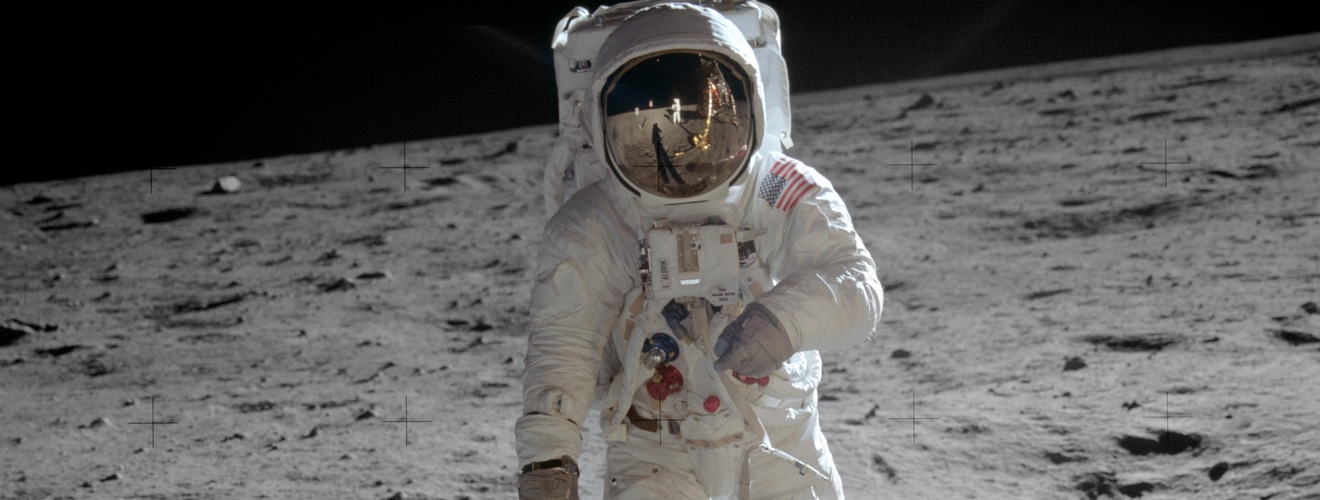
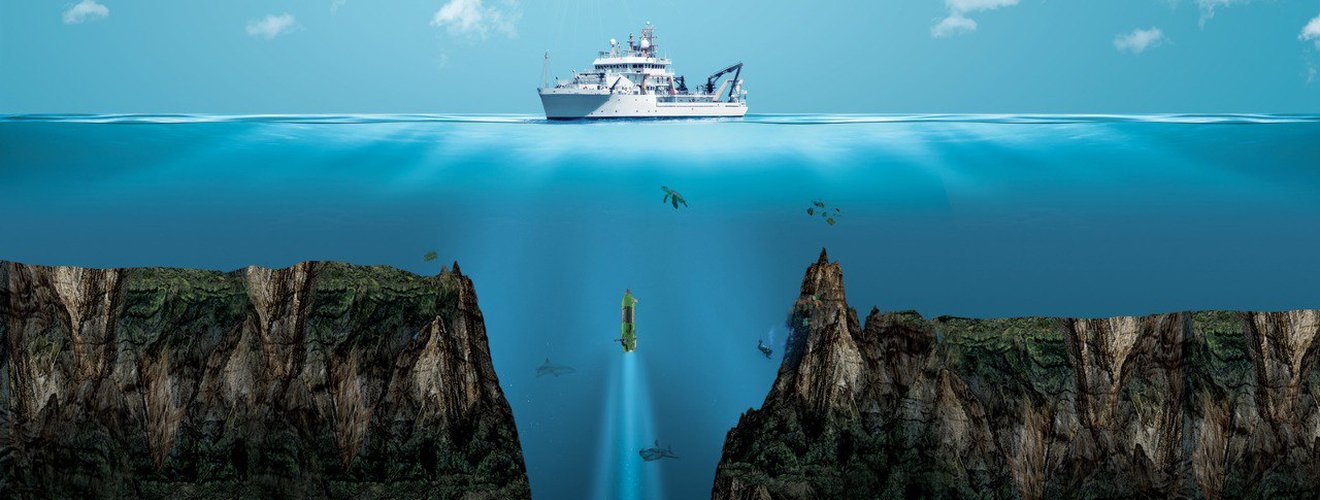
More people have walked on the Moon than have done both of these things. All twelve men who have walked on the Moon got there inside a four-year window with a superpower’s budget behind them. This roster assembled itself across four decades, mostly on private money, and most of it arrived in a rush between June 2020 and August 2022, because that is when a titanium sphere called Limiting Factor was going up and down the Mariana Trench like a lift.
Getting to the bottom remains the rarer half. Of the 33 people who have reached the deepest point in the Mariana Trench and been identified by name, only a handful have also crossed the Karman line going the other way. They are listed here in the order they completed the pair, which begins with an oceanographer who went to space first and reached the sea floor almost thirty-six years later.
Nine people have travelled both above the 100 km Karman line and down to Challenger Deep, the deepest surveyed point in any ocean. Kathryn Sullivan completed the pair first, in June 2020, and Aaron Newman most recently, in October 2025. Six of the nine reached space on suborbital flights rather than in orbit.
Kathryn Sullivan
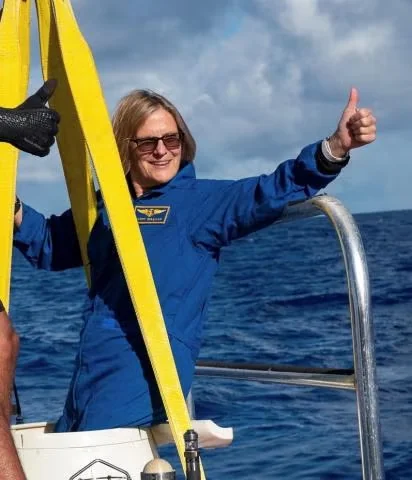
The ocean floor was the original plan. Sullivan spent graduate school aiming at marine geology and had an offer of a postdoc at Columbia’s Lamont-Doherty Earth Observatory with dives in Alvin. She held it open while she waited on NASA. ‘That’s what I was heading toward and aiming everything towards until NASA came along,’ she said in a 2007 oral history. The detour lasted a career.
She became the first American woman to walk in space on 11 October 1984, three hours and twenty-nine minutes outside on STS-41-G, and later flew the mission that put Hubble in orbit. Then in 2020 Victor Vescovo emailed to say he thought it was time a woman reached Challenger Deep. Sullivan suspects the recommendation travelled through Don Walsh, who with Jacques Piccard got there first in 1960 and had been her friend for years.
The deepest she had ever been before that was 8,500 feet, in Alvin, over the hydrothermal vents of the East Pacific Rise in 1996. The dive on 7 June 2020 took her more than four times further down, to a depth Guinness certifies at 10,934 metres. Her own gauges, she posted that day, read rather less.
Afterwards, EYOS patched a call between the ship and the International Space Station, so that a woman fresh from the bottom of the sea could compare notes with colleagues 408 kilometres up. She marvelled at how ordinary it felt. ‘I ate lunch 31,000ft below the surface of the ocean on Sunday. That’s crazy.’
Richard Garriott
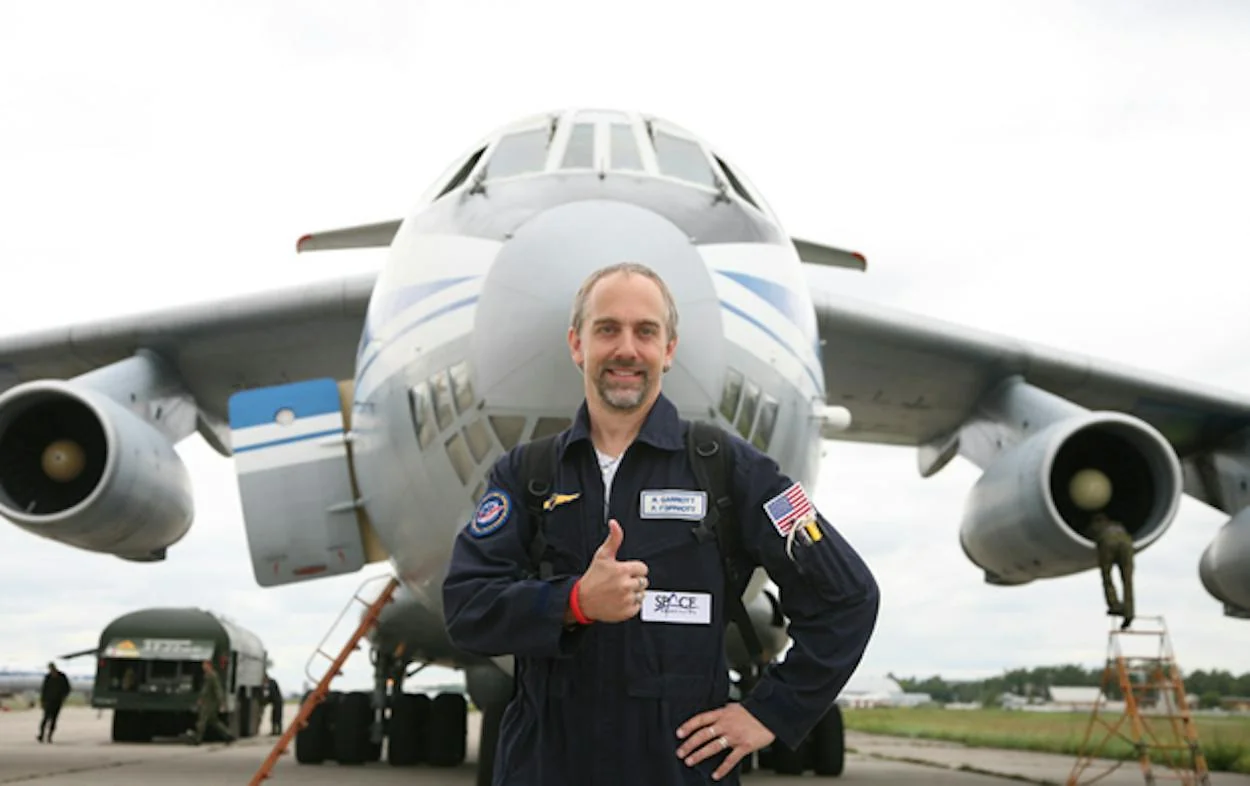
A NASA doctor told a thirteen-year-old in 1974 that, since he now needed glasses, he could never be a NASA astronaut. ‘I was crushed,’ Garriott told NBC News. ‘I had just been kicked out of the club that I felt everyone else was a member of.’ He went home and wrote fantasy games instead, twenty-eight of them before he finished high school, and the Ultima series that followed eventually made the eye chart irrelevant.
He sold Origin Systems to Electronic Arts in September 1992 for $35 million in stock. He later paid a reported $30 million for a seat on Soyuz TMA-13 and launched on 12 October 2008, becoming the first American whose parent had also been to orbit. His father Owen had flown Skylab 3 in 1973.
The dive came on 1 March 2021 and took twelve hours door to door, four down, four working, four back up, inside a titanium sphere about 1.46 metres across at the surface that squeezes to roughly 1.4 as the pressure builds. He took down a children’s book he had kept since he was young and a Lego submarine he built at eight. Vescovo, caught up in the schools poetry challenge Garriott had brought along, wrote a cinquain of his own on the seafloor and recited it back up to the children.
Asked to compare the two ends of his life’s ambition, he declined to be diplomatic. ‘Space will be hard to beat,’ he said, ‘so space still wins.’
Larry Connor
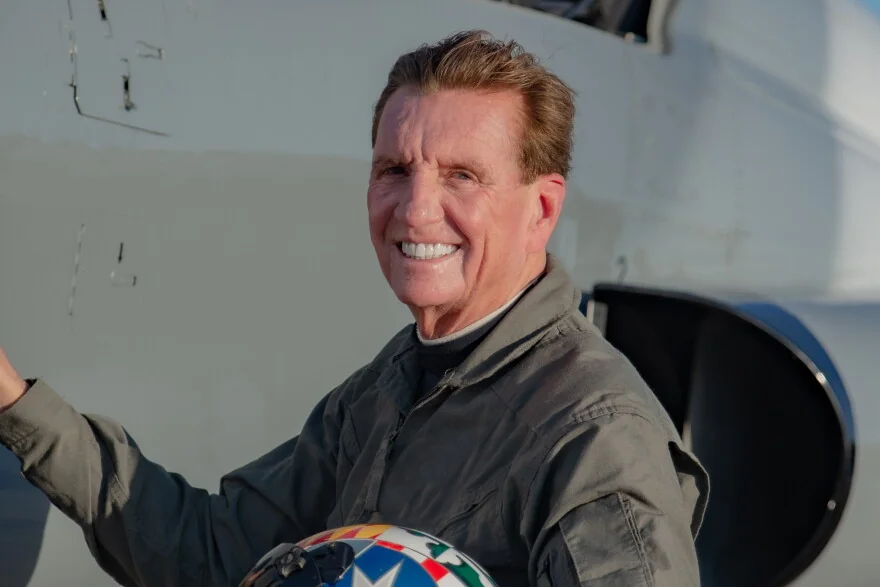
No human being had seen a Mariana snailfish alive in its own habitat until April 2021. Robots had filmed the species in the trench years before, but it took Connor and the submersible’s builder, Patrick Lahey, to go and watch one, on footage Caladan Oceanic’s chief scientist called ‘scientific gold.’ It lives deeper than nearly anything else with a backbone, and it still cannot reach the trench floor.
That the sea keeps animals we can barely reach is a neat reversal of the traffic in the other direction. Of the 61 animals sent into space, a tally in which the fruit flies of 1947 count as one, the earliest went up precisely because nobody yet knew whether a living body could stand it.
Connor runs a real-estate firm in Ohio and spends his weekends like a stunt double, with a Baja 1000 class win in 2014 and a Baja 500 two years later. He reached Challenger Deep on 15 April 2021 and launched for the International Space Station on 8 April 2022, under twelve months later. Axiom Space listed him in the seat marked Pilot, and he does fly, having competed in aerobatics.
He is unromantic about the descent. ‘Once you get below 600 feet, it’s pitch black,’ he told the Dayton Daily News, and four hours and twenty minutes of the trip down happen in that dark. Re-entry moved him rather more. ‘We were a house on fire coming down!’
Victor Vescovo
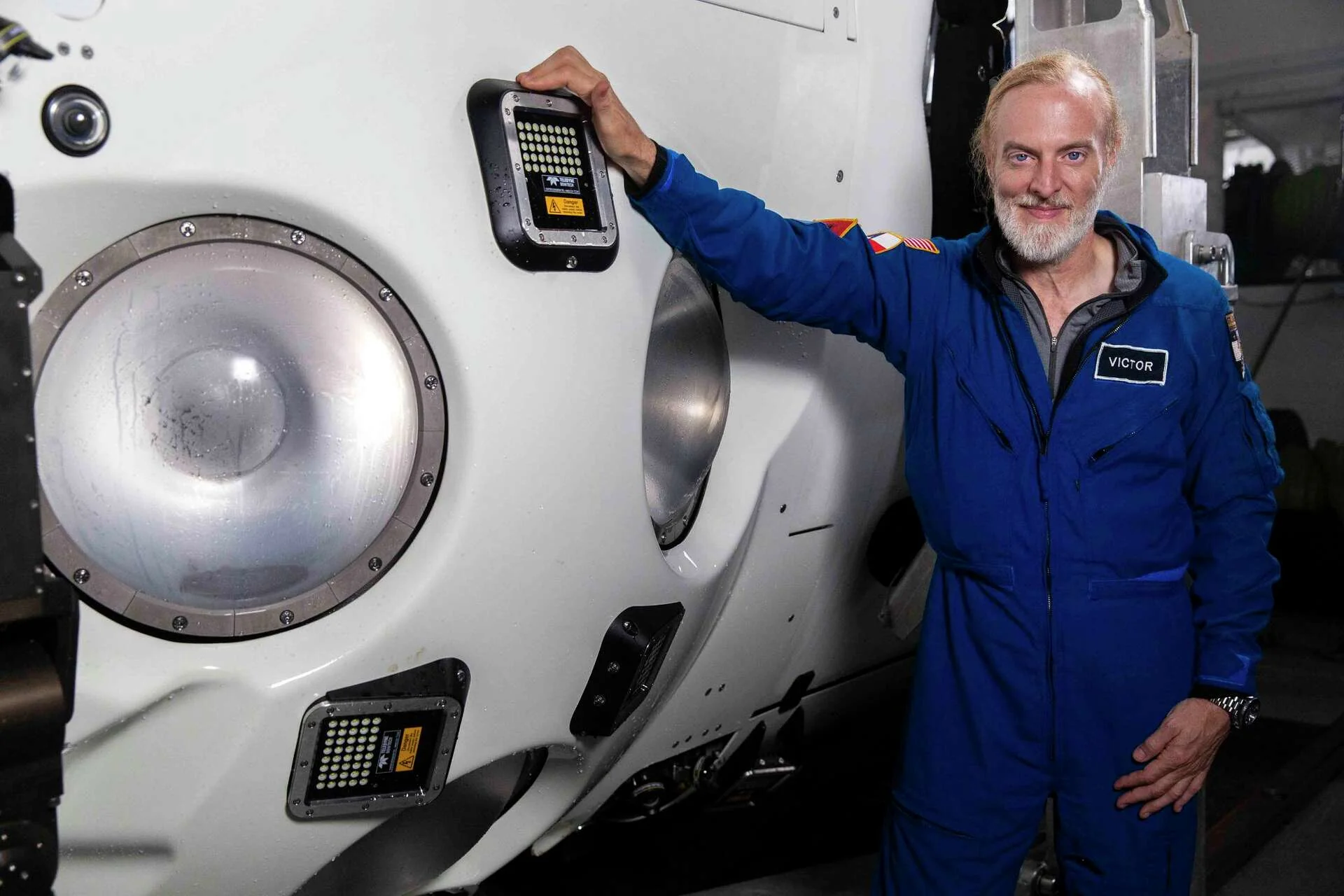
The United States Navy does not usually name a ship after somebody who is still alive to attend the ceremony. On 10 January 2025 it announced USNS Victor Vescovo, an ocean surveillance vessel honouring a retired reserve intelligence officer who had spent eight years commissioning, operating and personally piloting his own deep-sea submersible.
He has been to Challenger Deep fifteen times, more than anyone else on record: eleven dives into the Eastern Pool, two into the Western, two into the Central. The first, on 28 April 2019, made him only the fourth person ever to reach the bottom, and he went alone. Caladan Oceanic and Guinness put his solo dives that spring at a record 10,925 metres. ‘I had the very bottom of the ocean all to myself,’ he said, ’… setting out to explore like a 10-year-old on their first bicycle in an unknown town.’
He named the submersible Limiting Factor after a sentient warship in Iain M. Banks’s Culture novels, then used it to find things. His team located the destroyer USS Johnston at 6,456 metres and the destroyer escort Samuel B. Roberts at 6,895 metres, each the deepest wreck ever surveyed at the time it was found. They had gone down minutes apart, in the same 1944 battle. The seabed holds worse than warships, including every nuclear weapon lost and never recovered.
He flew New Shepard on 4 June 2022, then sold the entire system to Gabe Newell that November, saying he wanted a break.
Hamish Harding
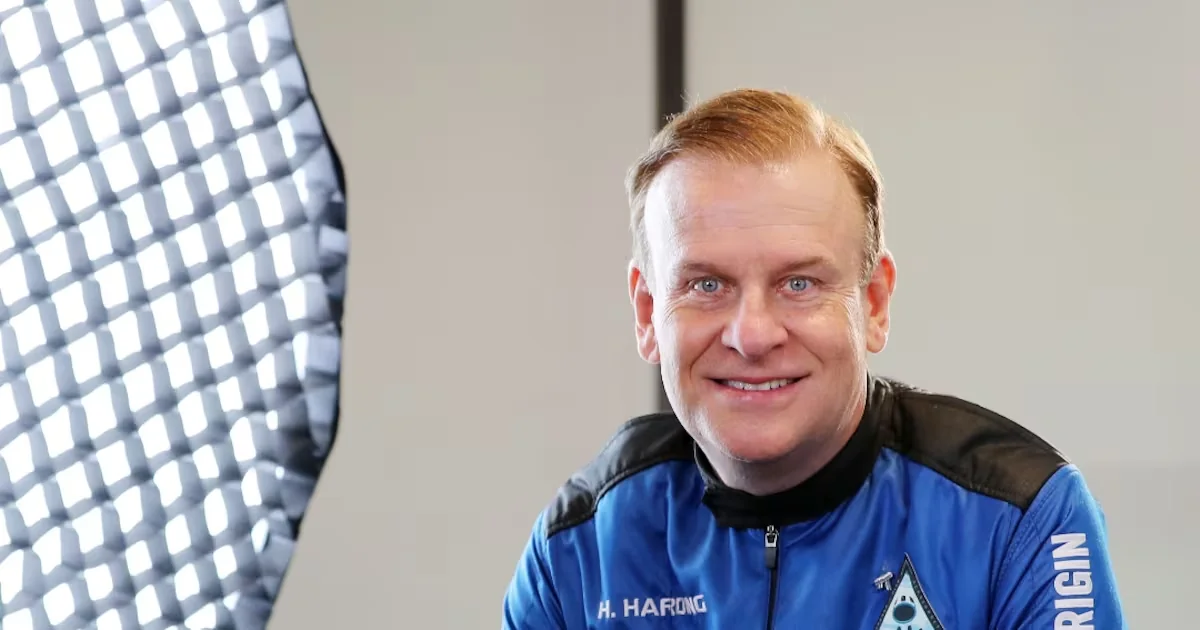
One of the submersible’s ten thrusters failed before it went anywhere. Harding and Vescovo decided to dive on the nine that worked, and then had to climb some 800 metres off the bottom to clear an unmapped plateau that Harding said resembled Table Mountain. They still stayed down four hours and fifteen minutes and covered 4.634 kilometres, setting two Guinness records in one go on 5 March 2021.
Harding brokered aircraft for a living out of Dubai, which goes some way to explaining the record he set in July 2019: fastest circumnavigation of the Earth via both poles by aeroplane, 46 hours 40 minutes and 22 seconds, with the retired station commander Terry Virts among the crew. His son Giles followed the trench dive from the support ship. Harding had taken Buzz Aldrin, then 86, to the South Pole on one expedition and Giles, then 12, on another, which, by Harding’s own account, made the boy the youngest person ever to reach it.
He and Vescovo flew New Shepard together on 4 June 2022 and joined this list in the same ten minutes, the only two people to have done so. Space tourists have earned the title, he argued afterwards, since ‘the definition of astronauts, rightly or wrongly, is anybody who’s been above the Karman line.’
On 18 June 2023 he was aboard OceanGate’s Titan when it imploded on its way down to the Titanic. He was 58.
Jim Kitchen
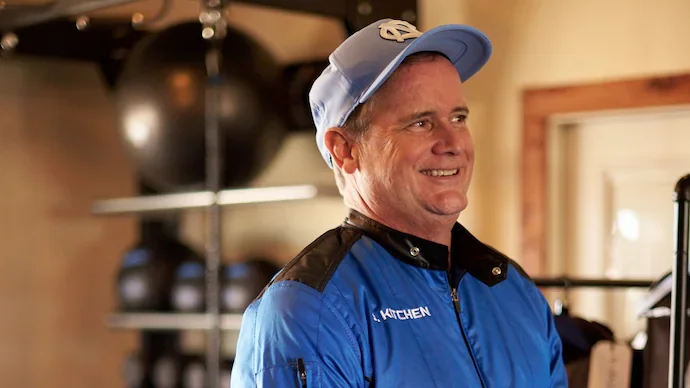
He asked how many times the submersible had been down to the wreck that season. The answer was none. Kitchen was sitting in OceanGate’s pre-dive briefing in June 2023, and he told the chief executive privately that he would not be boarding. Titan made the descent days later without him.
By then he had already done the two things that put him here, three months apart. He flew New Shepard on 31 March 2022, on the flight Pete Davidson had dropped out of and the rocket’s own chief architect stepped into, and he reached Challenger Deep on 5 July. ‘Being 66 miles above the Earth, I was riveted by the blackness of the universe,’ he wrote in Newsweek.
Kitchen teaches entrepreneurship at the University of North Carolina, which is a mild way to describe a man who has visited all 193 countries the United Nations recognises. He finished with Syria, calling himself one of the first Americans allowed back in since 2011, and he took his filled passports up on the rocket with him.
At the bottom he spent two and a half hours under roughly 16,000 pounds per square inch, with 96 hours of emergency oxygen aboard in case the sub snagged. The Titan dive he had been booked on was called off for weather in the end. He has admitted to survivor’s remorse all the same.
Dylan Taylor
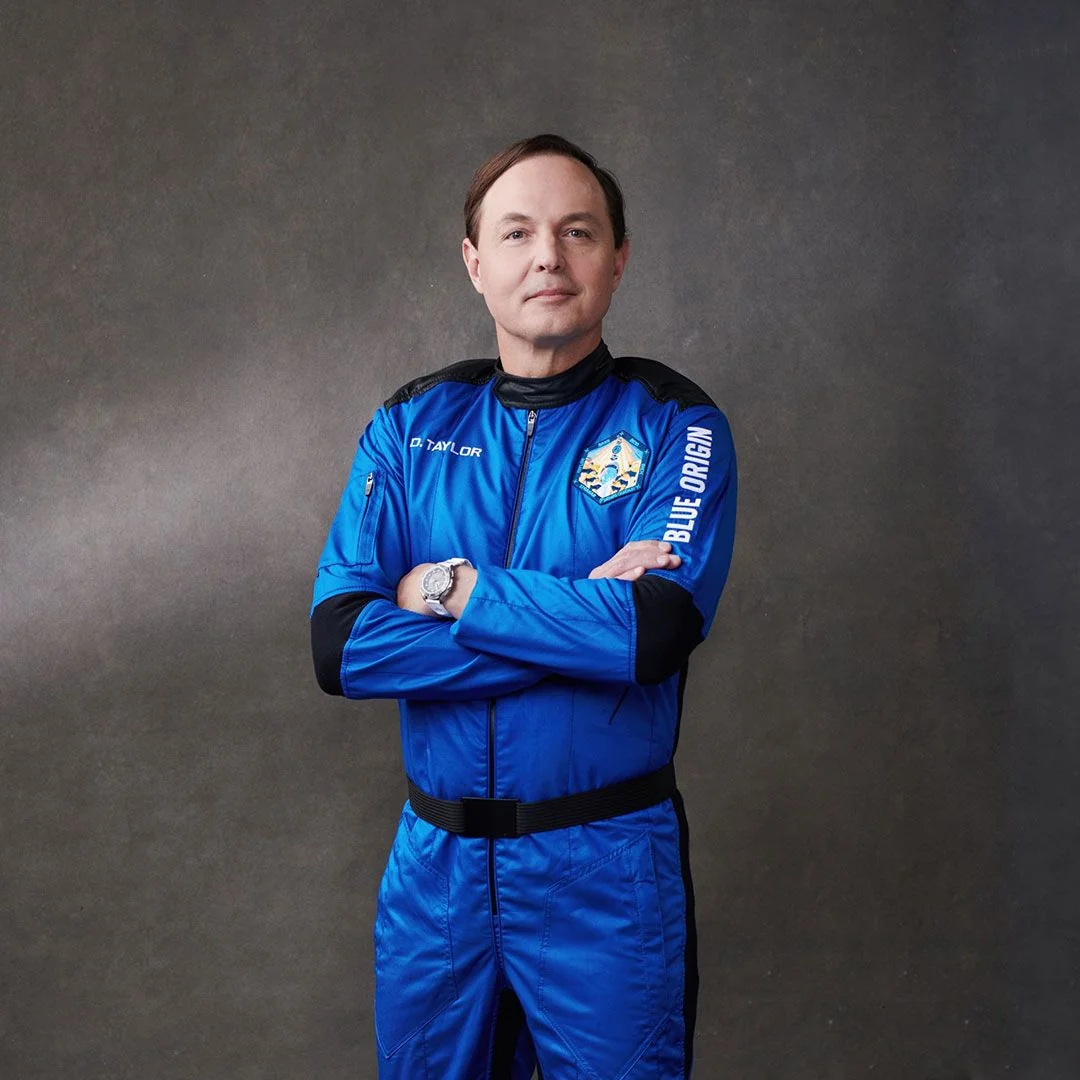
A mission patch from the space shuttle Challenger went down to the Challenger Deep with Taylor. It came from STS-51-L, the shuttle’s last flight, and was given to him by June Scobee Rodgers, the widow of its commander. Taylor is fond of the lineage. Challenger Deep takes its name from HMS Challenger, which sailed from Portsmouth on 21 December 1872 and first sounded those depths with a weighted rope. So does the shuttle whose patch he was carrying.
He flew New Shepard on 11 December 2021 beside Michael Strahan and Alan Shepard’s daughter, reaching 351,225 feet. The day before that launch the Federal Aviation Administration announced it was closing its Commercial Space Astronaut Wings programme, which had run since 2004. Taylor’s crew were the last people ever issued them.
He runs Voyager Technologies and founded Space for Humanity, a nonprofit that buys commercial seats for people who could not otherwise afford one. Its first sponsored flyer, the engineer Katya Echazarreta, went up on the New Shepard flight of 4 June 2022, sharing the capsule with two men on this list.
Taylor reached the bottom on 7 July 2022. Later that month he was on an OceanGate expedition to the Titanic, riding Titan down with Stockton Rush at the controls. In July 2022 that still counted as a reasonable holiday.
Vanessa O’Brien
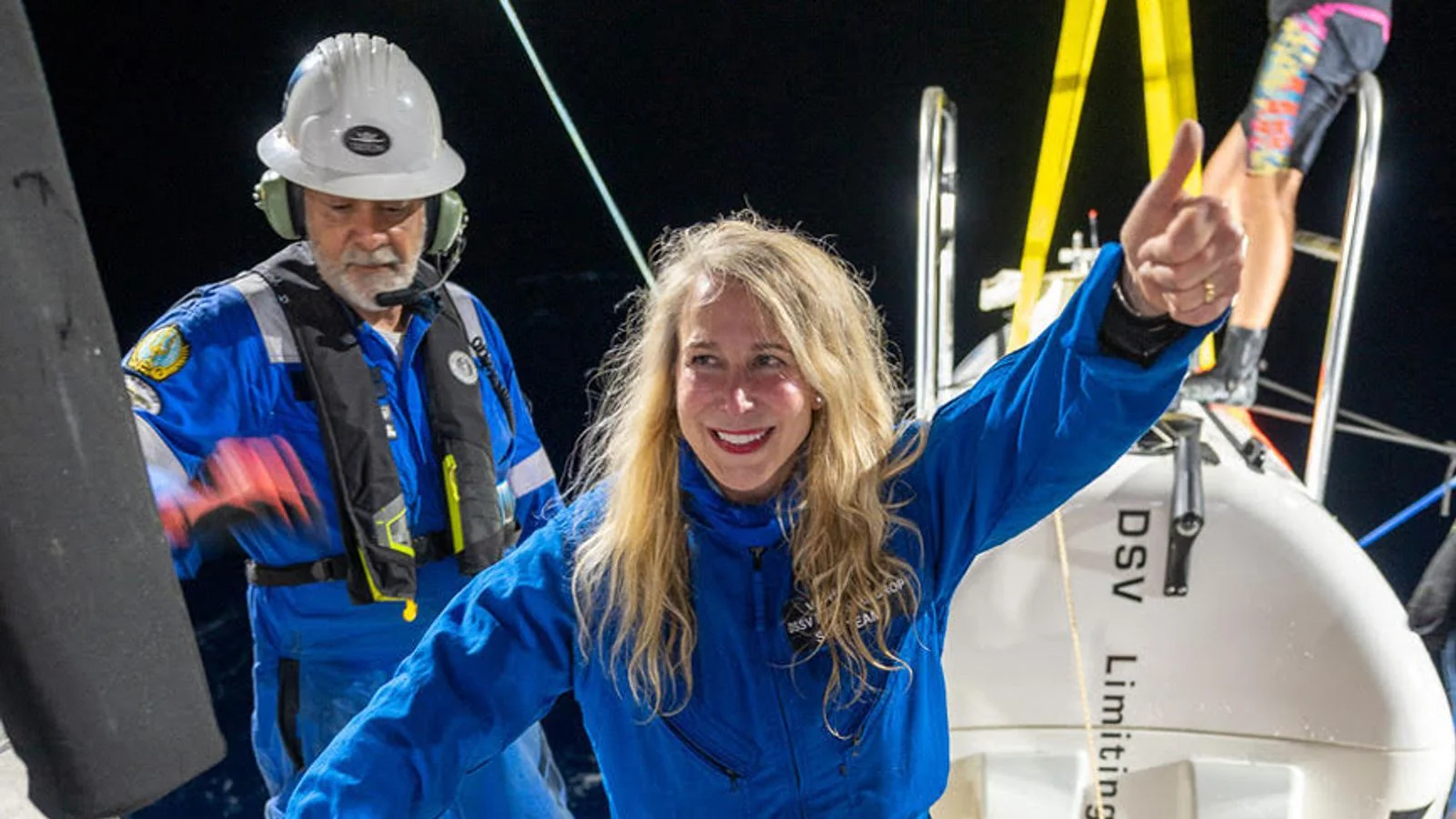
The suggestion arrived over shots of tequila. O’Brien had spent her career in finance, at Morgan Stanley, Barclays and Bank of America, until the 2008 recession made her redundant and a move to Hong Kong left her resigned to being ‘just the wife’. One night in the Kee Club a friend said she ought to climb Everest.
She summited on 19 May 2012, the first stage of climbing the highest peak on every continent in 295 days, a record for a woman at the time. On 12 June 2020, at 55, she rode Limiting Factor into the Eastern Pool. She and Vescovo mapped about a mile of the bottom and found it sloping by some 18 feet rather than flat, a reading recorded as still to be confirmed.
Blue Origin took her past 107 kilometres on 4 August 2022, closing what Guinness calls the Explorers’ Extreme Trifecta in 10 years and 77 days. She volunteered as the subject of a neuroscientist’s experiment into what the view does to a brain, scanned a week before the flight and again a few weeks after. The second scan showed a quieted parietal lobe, which Andrew Newberg, who ran it, described as a loss of self.
In Guinness’s books she is the first woman to reach ‘extremes on land, sea and air’. The first person to do it at all was Victor Vescovo, who had been at the controls when she reached the bottom.
Aaron Newman
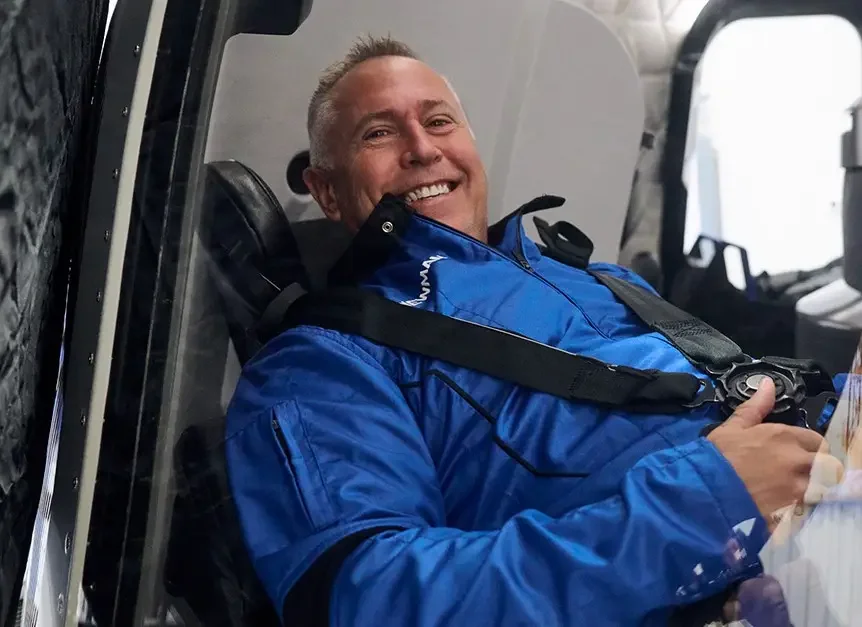
Of the six people who flew New Shepard on 8 October 2025, Newman was the only one also logged as a research subject, which meant having his inner ear tested before the flight and again after it for a Utah State University study on why spaceflight makes people ill. The capsule touched 350,438 feet and was back on the ground in ten minutes and twenty-one seconds.
He had taken care of the other half three years earlier. On 3 July 2022 Vescovo flew him into the Central Pool of Challenger Deep as mission specialist, on the fourth consecutive year the team had come back to the trench.
Newman is a software entrepreneur from Rochester, New York, a Gulf War veteran with six patents to his name, and a man who has attempted Everest twice. He turned back at 20,000 feet on the first try and told an interviewer he had already worked out seventeen things to do differently.
In August 2021 he had ridden OceanGate’s Titan down to the stern of the Titanic, a ten-hour round trip in the company of Stockton Rush and Paul-Henri Nargeolet. Asked about it after they died, he was flat about the risk. ‘By no means is this a Disney ride.’ He billed his spaceflight as a chance to spotlight the oceans for his nonprofit, Exploring Our Deep World, which maps the shipwrecks of western Lake Ontario.
Frequently Asked Questions
Who was the first person to go to both space and the bottom of the ocean?
Kathryn Sullivan, on 7 June 2020. She had already flown three shuttle missions between 1984 and 1992, so the ocean was the half she was missing. Guinness World Records certifies her as the first person to visit space and the deepest point on Earth, and as the first woman to reach Challenger Deep.
Does a suborbital flight count as going to space?
Under the international standard, yes. The Federation Aeronautique Internationale draws the boundary at 100 kilometres, and Blue Origin’s New Shepard clears it with room to spare. That is how most of the people here qualified. Virgin Galactic, whose flights top out below 90 kilometres, would not.
Is Challenger Deep the same thing as the Mariana Trench?
Challenger Deep is the deepest point inside it, near the trench’s southern end. Some divers have touched the trench floor at Sirena Deep without ever visiting Challenger Deep; Sirena is roughly 200 metres shallower and counts as a separate target. This list counts Challenger Deep only.
Why do reported depths for Challenger Deep disagree with each other?
Because the bottom is not a single place. Sonar mapping in 2019 showed three distinct basins down there, named the Western, Central and Eastern pools, and divers on this list have reached all three. Different instruments on different days also return different figures, so credible published depths vary by about twenty metres.
How much does it cost to dive to Challenger Deep?
A commercial seat aboard Limiting Factor was priced at $750,000, arranged through EYOS Expeditions and Caladan Oceanic. The submersible is a two-person machine 4.6 metres long and 3.7 tall, with a titanium hull pressure-tested at the Krylov Research Center in St Petersburg before anyone was permitted to sit inside it.
Do the people on this list know each other?
Rather well. Victor Vescovo personally piloted six of the other eight to the seafloor, and Patrick Lahey, who built the submersible, flew the seventh. Tim Macdonald took the eighth down. It is less a list of nine strangers with the same hobby than a small circuit of repeat customers with one Texan at the middle of it.
Is anybody likely to join this list soon?
Not immediately. Blue Origin paused New Shepard flights on 30 January 2026 for what it said would be no less than two years, having flown 38 times and carried 98 people above the Karman line. The ocean half is scarcer still, with no crewed descent to Challenger Deep publicly documented since July 2022.
- Guinness World Records – First person to visit space and the deepest point on Earth
- NASA Johnson Space Center Oral History Project – Kathryn D. Sullivan, 10 May 2007 (transcript via NOAA Voices)
- Caladan Oceanic – Expeditions
- Blue Origin – New Shepard to pause flights
- Axiom Space – Axiom Mission 1
- NBC News – NASA said no to my astronaut dream, so I found another way (Richard Garriott)
- Dayton Daily News – The extreme and world-record adventures of Larry Connor
- Newsweek – I’ve been to the ocean’s deepest point, the Mariana Trench. This is what I saw (Jim Kitchen)