Every Video Game Tune That Made the UK Singles Chart
The best-known tune in Tetris reached number 6 in Britain in October 1992, and it is not on this list. Doctor Spin, the act behind that “Tetris” single, was a one-off disguise for Andrew Lloyd Webber and the producer Nigel Wright, and the melody they set to a dance beat was never Nintendo’s to begin with. It is “Korobeiniki”, a Russian folk song taken from a poem Nikolay Nekrasov published in 1861, which Hirokazu Tanaka arranged for Nintendo’s handheld. Tanaka wrote only one of the game’s three music options from scratch. It was not the famous one.
Tetris was part of a rush. By December 1992 Music Week was crediting “the current console-led boom, along with its associated chart hits by Dr Spin, The Ambassadors Of Funk and HWA” with hauling computer games into the mainstream, in a feature that opened by warning that Sonic 2 was set to out-earn Simply Red. Playground arguments, the magazine speculated, were probably no longer about Madonna versus Michael Jackson but about “whether Sonic or Nintendo’s moustachioed Mario is best.”
This list is stricter than the craze was. A tune counts only if it was written specifically for the game, by the game’s own composer or sound team, and a record built on it – a cover, a remix, a sample, credited or not – entered the Official Singles Chart. A game’s arrangement of an older melody does not count, which is what sinks Tetris, and nor do pop songs that outside writers supplied to a game, however high they climbed. An album of Henry Mancini’s music for the television detective show Peter Gunn was named Album of the Year at the first Grammy Awards in 1959. Video game scores had to wait until 2023 for a Grammy category of their own. Checked against every Official Singles Chart from 1972 to October 2026, the survivors run from a Cornish rave producer hiding behind a pseudonym to a Drake album track.
Six video game tunes, each written for a game by its own composer or sound team, have reached the UK’s Official Singles Chart on records built on them: Pac-Man, Super Mario Land, Sonic the Hedgehog, Street Fighter II, Lazy Jones and the 2006 Sonic the Hedgehog. The records run from Powerpill’s “Pac-Man” (1992) to Drake and Giggs’s “KMT” (2017).
Pac-Man – Powerpill (1992)
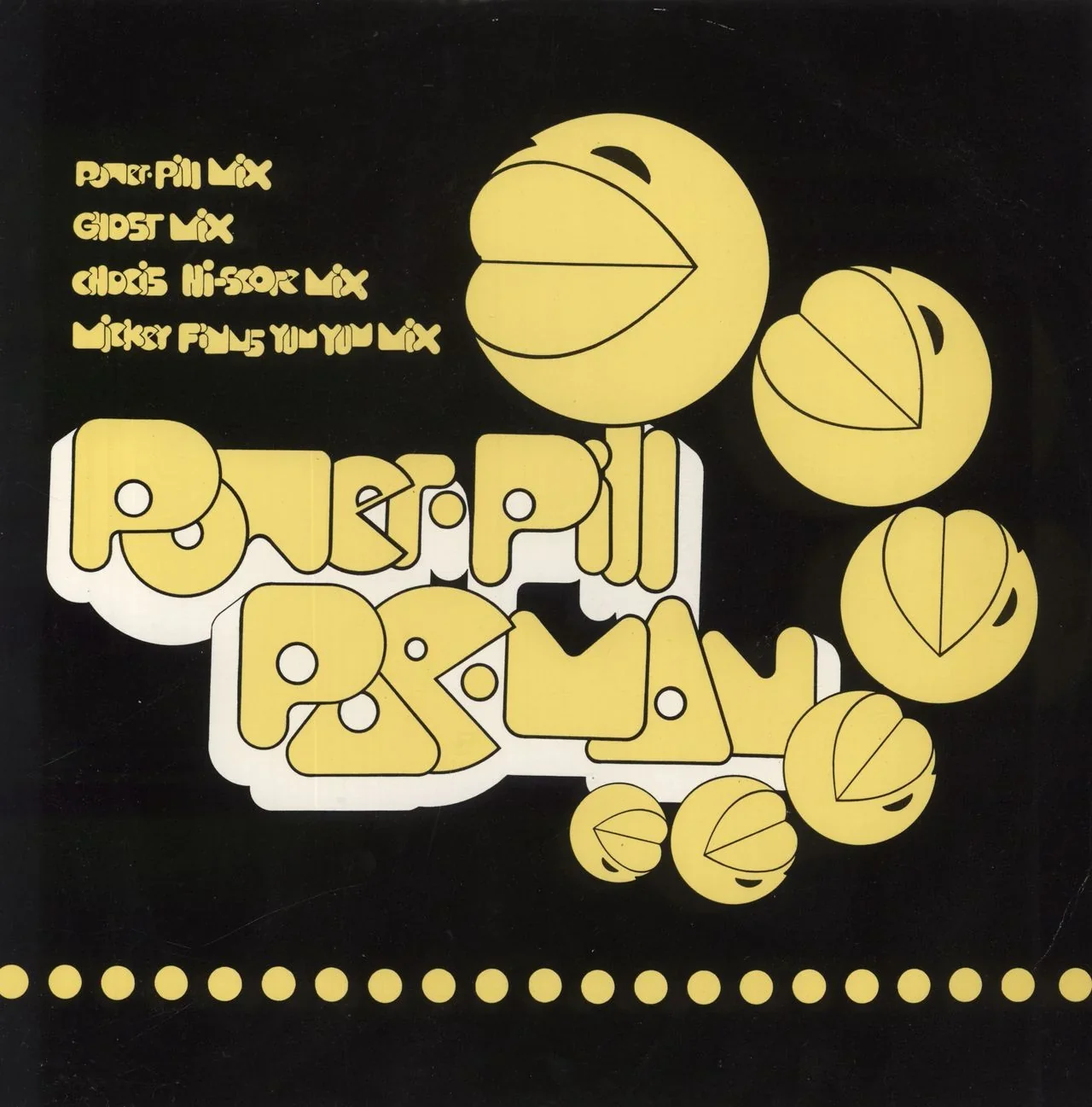
Music Week could not work out who Powerpill was, despite a dance column bound into its own issue of 23 May 1992 having already named him. Logging the act’s arrival at number 43 on its chart of 6 June, the magazine called it “a mystery that even the record company can’t clear up”, though there was “a suggestion that Cornish keyboards wizard Richard James – aka The Aphex Twin – is heavily involved.” The suggestion was right. Richard D. James wrote, produced and arranged the record, and the sleeve thanked the landlord: “Pac-Man courtesy of Namco Ltd.”
The tune at its heart is the game start music from Namco’s 1980 arcade machine, credited by Bandai Namco to Toshio Kai, who also made the game’s sound effects. Kai has said he set out to write in the southern rock vein of the Allman Brothers Band and drifted toward the Hungarian guitarist Gabor Szabo instead. James laid that jingle and a pile of Pac-Man sound effects over a breakbeat and added his own voice saying “Pac-Man” over and over. The release borrows from Namco’s New Rally-X as well, and had been held back while the samples were cleared.
It lasted three weeks, falling from 43 to 50 to 66 and out. That was still better than James had managed as Aphex Twin weeks earlier, when “Digeridoo” stopped at 55. Mixmag, two years later, dismissed it as “the truly awful 1991 techno rarity”, getting the year wrong and, presumably, the adjective right.
Supermarioland – Ambassadors of Funk featuring MC Mario (1992)
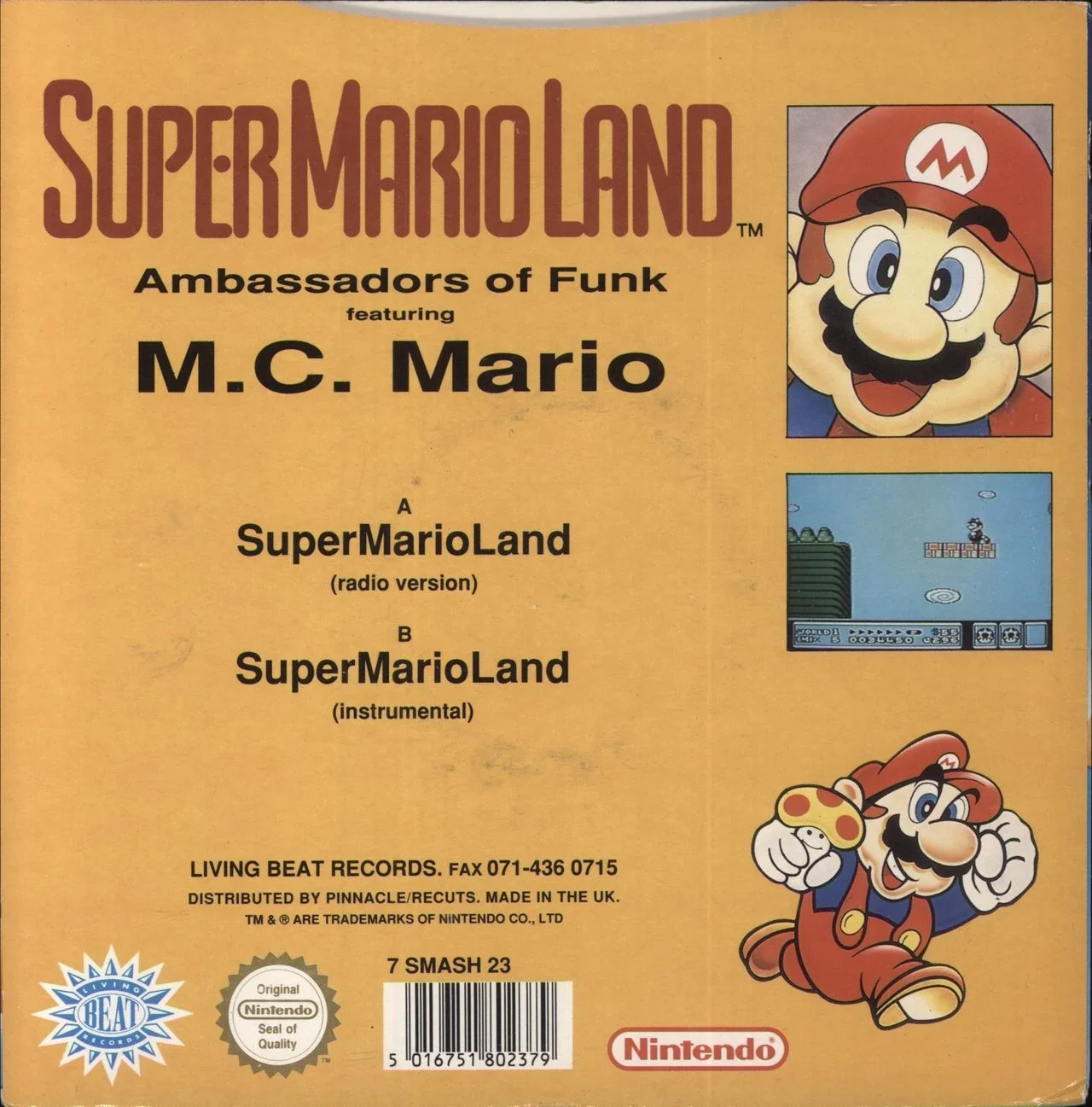
Simon Harris made the record first and asked Nintendo afterwards. A dance producer with no experience of games, he bought a Game Boy with just two cartridges, Super Mario Land and Tetris, and noticed, he told Eurogamer, that the Mario music sat at “around 122 beats per minute, with a 4/4 beat”, which is to say house tempo. He recruited the rapper Einstein, real name Colin Case, to play MC Mario, and only then got in touch with Nintendo, which, Harris says, loved both the idea and the track.
The music was Hirokazu Tanaka’s. He wrote it while he was also designing the sound hardware inside the Game Boy. Super Mario Land was one of the original Game Boy launch titles, on sale in Japan from 21 April 1989. Its tunes entered the Official Singles Chart at number 14 in the week ending 31 October 1992, climbed to 9, and peaked at number 8 a week later, spending eight weeks in all. Nintendo UK, Harris says, supplied pictures and access to the man in the Mario suit, who did the television rounds with the act.
Someone at Nintendo rang Tanaka to tell him that a remix of his music was “number 8 in the charts.” “Yeah, I was super happy when I learned about it,” he told VGC in 2025. Shigeru Miyamoto later gave Harris permission for a whole album, Super Mario Compact Disco, which was released in Japan in 1993. Harris’s verdict, years later: “nothing can beat Mario.”
Supersonic – HWA featuring Sonic the Hedgehog (1992)
Sega Force could barely contain itself. HWA’s new single, the magazine promised, “should poke a pointy stick in the eye of Nintendo’s half-hearted effort”, and “Sonic could take the Christmas Number One slot!” HWA stood for Hedgehog With Attitude, and the record billed Sonic the Hedgehog himself as the featured artist, though his part consisted of samples from his own game.
Behind him were the producers Jeremy Healy, formerly of Haysi Fantayzee, and Mat Clark. By Eurogamer’s account the track samples the Green Hill Zone music from the 1991 Sonic the Hedgehog, which Masato Nakamura, bassist of the Japanese band Dreams Come True, says he composed first. He was working with “a limit of only four sounds that could play at the same time”: a bass drum line, two chords and the melody. The record’s own songwriting credit reads “Wayne Brown/Writer Unknown”, which undersells Nakamura somewhat.
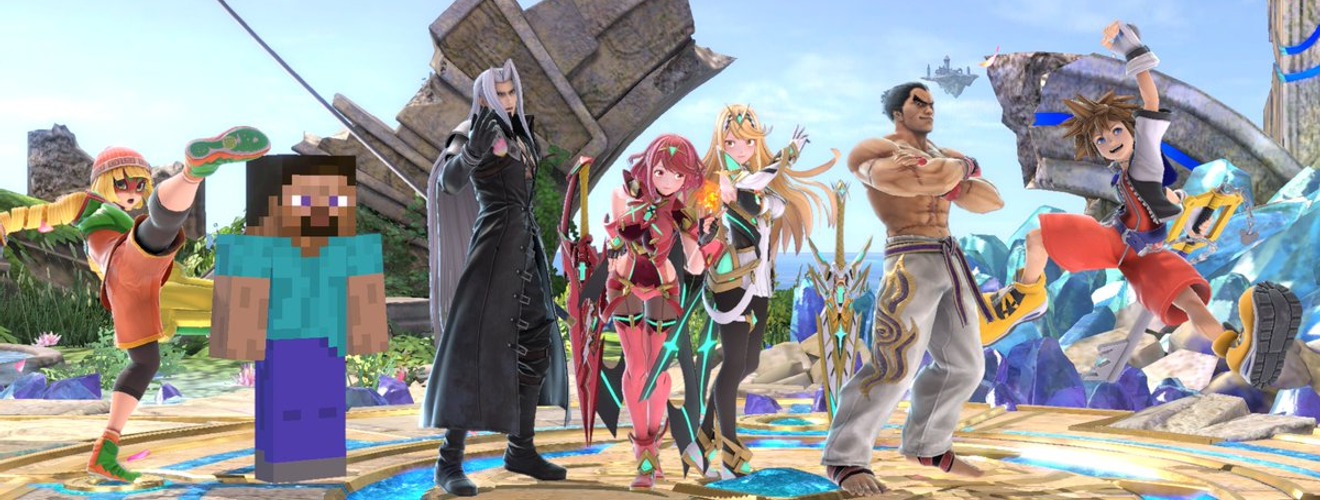
It was a charity single, with Sega’s proceeds going to the Nordoff-Robbins Music Therapy Centre, and it entered at number 35 in the week ending 5 December 1992, days after Sonic 2 went on sale. It peaked at 33 the next week, hovered between 37 and 40 over Christmas and was last seen at 48 in the new year. The hedgehog’s later appearances went better: in 2008 he joined the third-party characters in Super Smash Bros, announced by Nintendo as “the one whose Smash appearance has been most desired”.
Street Fighter II – World Warrior (1994)
Capcom said yes. That proved more enthusiasm than the record-buying public could manage. “AT LAST!!” shouted Living Beat’s advert in Music Week in March 1994, over the promise of “The only official Street Fighter II release featuring the original music and FX!!” The label sold it as the follow-up to Supermarioland, since World Warrior was Simon Harris again, with Einstein on the microphone. Harris had simply swapped a plumber for a martial artist.
The record runs on Street Fighter II’s title theme and a bass riff from the game, with an interlude built on the opening of Ken’s theme and sampled shouts from Chun-Li, Sagat and Dhalsim on top. Both themes belong to Yoko Shimomura’s score for the 1991 game; of the music, only Sagat’s theme and two short jingles came from her colleague Isao Abe. “Street Fighter II really was my baby,” Shimomura later said. Ken’s theme has drawn comparisons with Cheap Trick’s “Mighty Wings”, and she has allowed that she may have been inspired subconsciously.
When Nintendo added Ryu to the paid DLC fighters in Super Smash Bros on 14 June 2015, the Suzaku Castle stage that came with him carried versions of Ryu’s and Ken’s Street Fighter II themes. The single entered at number 70 in the week ending 16 April 1994, slipped to 84, and left after two weeks. Einstein’s rap includes the line “don’t look ’cause it’s gonna be bad”, which British record buyers appear to have taken as advice.
Kernkraft 400 – Zombie Nation (2000)
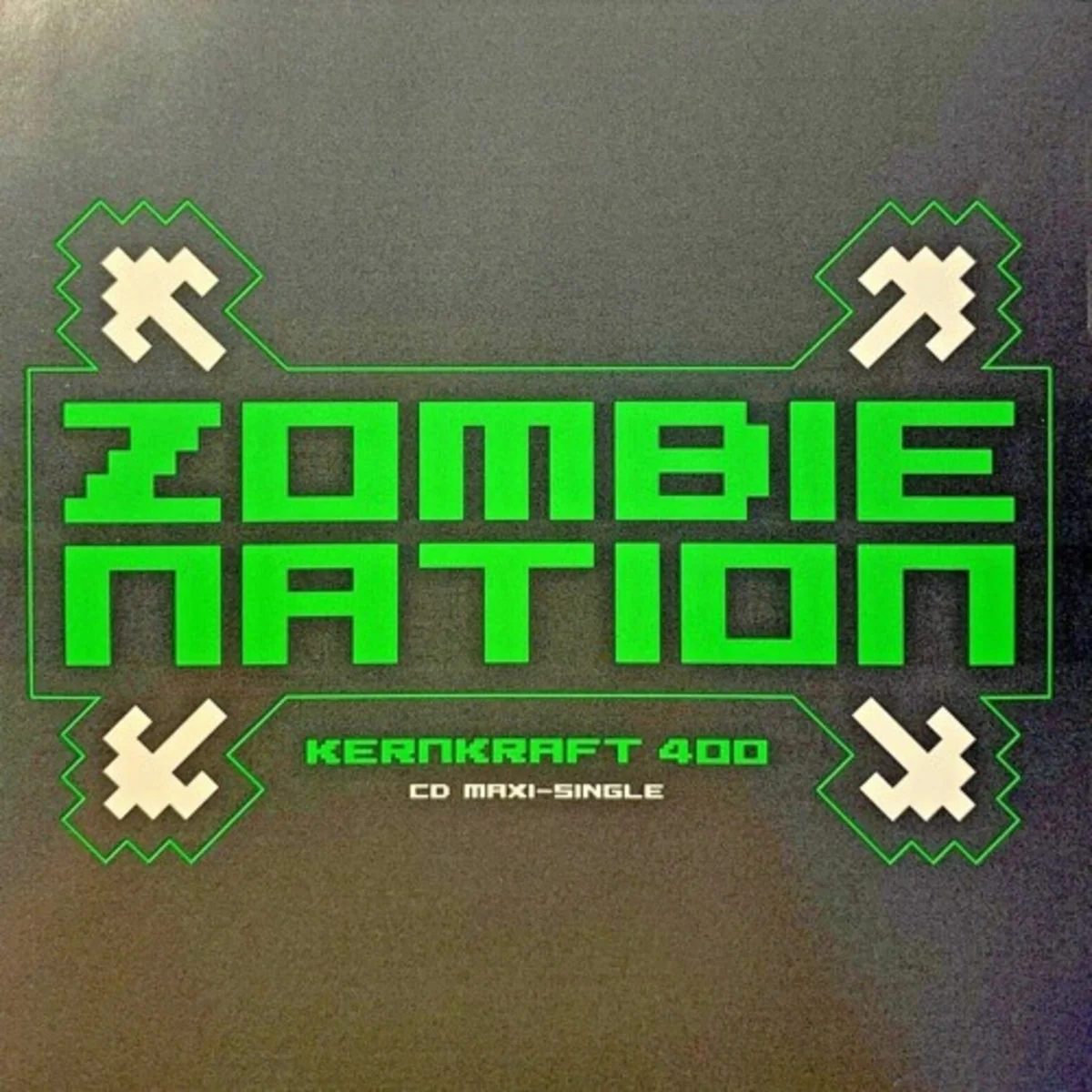
“At first, I wasn’t too bothered,” David Whittaker told Retro Gamer, on learning that a German techno record was built on his Commodore 64 music. “But when it was brought to my attention that there could be some money in it (for me) – I went after him – and won – more than I got for the whole game, I think.” The game was Lazy Jones, a 1984 collection of mini-games, and the tune was “Star Dust”, the music for a stage in which the player shoots balls of dust.
Florian Senfter, recording as Zombie Nation, rebuilt it on an Elektron SidStation synthesiser (“I had a C64!” he told Sound On Sound) and released it on DJ Hell’s Munich label Gigolo in 1999. The name, Senfter says, means something like Nuclear Power 400. It is also, he admits, nonsense. An import pressing reached number 61 in September 2000 before the UK single entered at number 2 in the week ending 30 September and stayed 15 weeks. A version credited to Digitek added a single week at 89 in October 2004. Muzik reported Whittaker’s payment only as an undisclosed sum; Music Week’s writer credits omit him.
On Top of the Pops, Senfter mimed his solo on a severed mannequin leg. Sports Illustrated later called it “perhaps the original stadium chant song”. At Penn State, officials cut it back after feeling Beaver Stadium “moving or bouncing” during the 2005 Ohio State game. Whittaker had written it for balls of dust.
KMT – Drake featuring Giggs (2017)
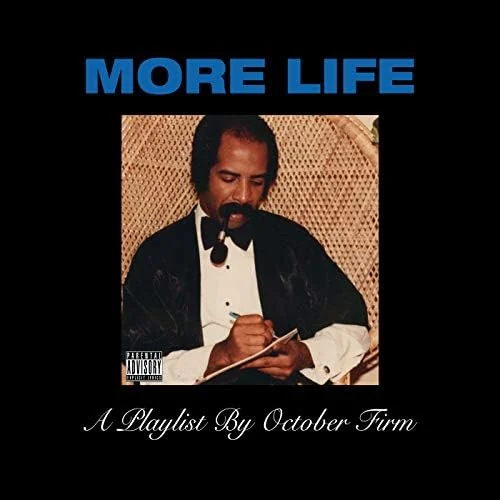
The strings at the start of “KMT” come from a Sega game, slowed down until they sound like a threat. The producers Ness and Chef Pasquale took the opening of “His World”, the main theme of 2006’s Sonic the Hedgehog, and pitched it into the backbone of a track for Drake’s More Life. The album’s credits list it plainly: “His World-Original version, courtesy of SEGA Group.”
“His World” was written for the game by Tomoya Ohtani, its sound director, and sung in its original form by Ali Tabatabaee and Matty Lewis of the band Zebrahead. What “KMT” takes is the grand string opening, written for a hedgehog and repurposed for two rappers. The title, short for “Kiss My Teeth”, is Jamaican slang for the tutting noise people make when they are unimpressed.
Giggs got his first UK top-ten single out of it. It arrived on the chart at number 9 in the week ending 30 March 2017, dropped to 21 the week after, and stayed for 11 weeks. Ohtani is not credited as a writer; the Sonic piece is listed as a sample. In September 2018 he replied to a Twitter user with a line that Wikipedia reads as his verdict on the sample: “I was very surprised. I feel honored.”
Frequently Asked Questions
What is the highest-charting video game tune in the UK?
Of the tunes on this list, Zombie Nation’s “Kernkraft 400” charted highest, at number 2. It held that spot on the charts dated 30 September and 7 October 2000, and both times Mariah Carey and Westlife’s “Against All Odds” kept it off the top. Its melody is David Whittaker’s music from the Commodore 64 game Lazy Jones.
Has a video game song ever been number one in the UK?
Yes, but not one written by a game’s own composer. Robbie Williams’s “It’s Only Us”, the FIFA 2000 theme written by Williams and Guy Chambers, spent one week at number 1 in November 1999 as a double A-side with “She’s the One”. Williams agreed to the deal on condition that Port Vale were put in the game.
Did Michael Jackson write music for Sonic 3?
Possibly, and in 2022 Sonic co-creator Yuji Naka wrote that Sega’s own version used Jackson’s music, but Sega has never officially confirmed it. “Stranger in Moscow”, a number 4 hit in 1996, is out because its Sonic 3 origin rests on keyboardist Brad Buxer, speaking to a French fanzine in 2009, and Jackson is its sole credited writer.
Why are Lemmings and Wizards of the Sonic not on the list?
Neither can be shown to use a melody written for a game. SFX’s “Lemmings”, number 51 in 1993, drew on Lemmings 2, whose soundtrack also arranges “The Blue Danube” and “Scotland the Brave”, and nobody has identified the single’s tune. Music Week called WestBam’s “Wizards of the Sonic”, number 32 in 1995, a tribute to computer games.
Did any video game record chart in the UK before 1992?
Yes. Yellow Magic Orchestra’s “Computer Game (Theme from the Invaders)” reached number 17 in 1980 and spent 11 weeks on the chart. It does not count here because its game content is a collage of arcade sound effects from Space Invaders and Circus rather than music composed for a game.
Does Ed Sheeran’s Pokemon song Celestial count?
No. “Celestial” reached number 6 in October 2022 and plays over the end credits of Pokemon Scarlet and Violet, but Sheeran wrote it with Steve Mac and Johnny McDaid and released it in collaboration with The Pokemon Company. It is a pop song attached to a game, not music the game’s composers wrote.
- Official Charts Company – Official Singles Chart archive
- Bandai Namco – Pac-Man staff and Toshio Kai’s sound credits
- Nintendo – Super Smash Bros. Brawl: Sonic
- Retro Gamer issue 29 – David Whittaker interview (Internet Archive)
- Music Week, 12 December 1992 (World Radio History archive)
- VGC – Interview with Nintendo composer Hirokazu Tanaka
- XXL – Drake’s More Life credits
- Sports Illustrated – Ranking the Top 10 Stadium Anthems