Every Founding Father Who Signed the Declaration of Independence
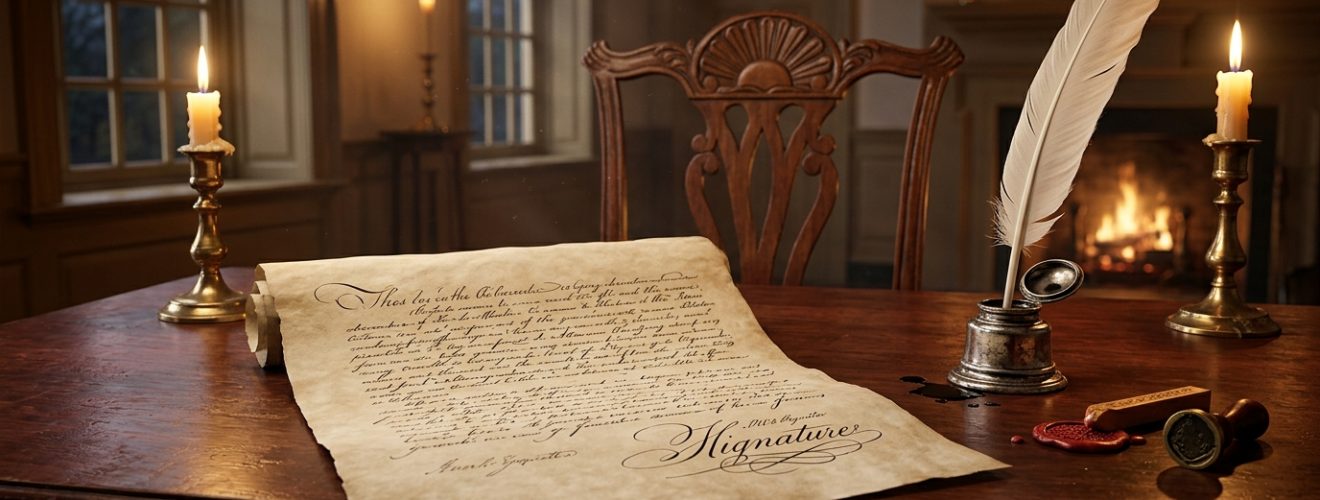
The leftmost column of names on the Declaration of Independence belongs to Georgia. New Hampshire is over on the right, John Hancock sits alone in the middle underneath the text in no column at all, and Matthew Thornton’s signature is wedged in at the foot of a column that had already run out of room. Hardly anyone pictures it that way. The six columns run south to north, which is the reverse of almost every list of the signers ever printed, including this one.
The signing is misplaced as well. What Congress approved on the fourth of July was a text, which went straight to John Dunlap’s shop, and what came off the press that night was a broadside carrying two printed names, John Hancock’s and the secretary Charles Thomson’s, and no signatures whatever. The order to have it fairly engrossed on parchment came on July 19. Most of the men signed the result on August 2, and seven of them were not there to do it. One of the five who drafted the thing, Robert R. Livingston of New York, never signed it at any point.
Which makes the test for this list a physical one rather than a political one. It is not who was in the room, or who voted, or who has since been promoted to Founding Father. It is whose name is on that sheet, which is why Thornton, elected in September, belongs on it, and why George Read, who voted against independence on July 2, belongs on it too. The 56 sat for the 13 original colonies that the document turned into states; everywhere else joined later and by other routes, including the four states that were independent countries first. They are set out below by colony, north to south.
Fifty-six men signed the Declaration of Independence. Congress adopted the text on July 4, 1776, but the engrossed parchment was not signed that day: about 49 of the 56 signed it on August 2, and the last of them did not add his name for months, possibly years, afterwards.
Josiah Bartlett
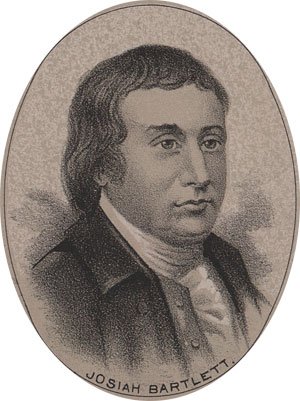
Loyalist arsonists burned the Kingston house to the ground in 1774, not long after its owner joined New Hampshire’s illegal revolutionary Provincial Congress. Josiah Bartlett rebuilt on the identical site. That is more or less the whole man. The house is still standing in Kingston, still owned by his descendants, and has never been restored.
He was a physician before he was anything else. He arrived in Kingston at twenty-one with about thirty dollars, a horse, saddle and bridle, a little medicine and a pocket case of surgeon’s instruments, and made his local name during a diphtheria outbreak that killed 114 residents, treating patients with quinine and cool liquids rather than the bleeding-and-starvation regimen the profession then preferred. The National Park Service’s federal survey of the signers says the roll call order made him probably the first delegate to vote for independence, and states without hedging that he was the second man to sign, immediately after Hancock.
In August 1777 he was re-elected to Congress and too worn out to go, so he rode north with John Stark’s New Hampshire men instead and treated the wounded at Bennington. Afterwards he sat as a judge with no legal training whatsoever, founded the New Hampshire Medical Society in 1791, and became the state’s first governor. Dartmouth had given him an honorary doctorate the year before. He had not earned that in the usual way either.
William Whipple
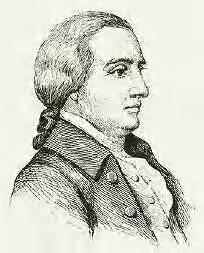
William Whipple went to the Revolution accompanied by a man he owned. Prince Whipple’s name appears on a petition sent to the New Hampshire legislature in November 1779, arguing that the God of Nature gave them Life and freedom upon the Terms of the most perfect Equality with other men. It is the Declaration’s own reasoning, aimed back at the men who signed it.
Whipple had made his money at sea before the war. The Park Service’s 1973 survey says he probably sometimes engaged in the slave trade as a young captain; the National Constitution Center puts it flatly, that he grew wealthy through the triangular trade in rum, wood and enslaved people. He was a brigadier general by 1777, commanded four New Hampshire militia regiments in the Saratoga campaign, and was present at Burgoyne’s surrender that October. He died in 1785 at fifty-five, after a heart complaint made him faint and fall from his horse while riding his court circuit.
The petition took longer. The New Hampshire House heard it on April 25, 1780 and denied it, and slavery stayed legal in the state until 1857. Prince Whipple and four other signatories were eventually manumitted. The Park Service counts 14 who were not, and cannot settle how many signed at all: its title says 19 and its own transcript lists 20. In March 2013, 233 years late, the New Hampshire Senate passed the petition unanimously.
Matthew Thornton
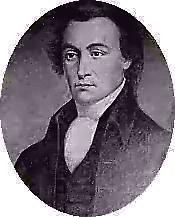
Nobody wrote down the day Matthew Thornton signed the Declaration of Independence. This is not a gap in the popular account but in the documents themselves. The National Archives says only that he found that he had no room to sign with the other New Hampshire delegates. GPO’s Ben’s Guide says only that he added his signature later at the bottom of the right column. Both describe where. Neither says when.
He was not elected to Congress until September 1776, and Harvard’s Declaration Resources Project records his November 4 appearance in Philadelphia as an arrival rather than a signature. The distinction collapses constantly, including in the National Constitution Center’s own summary line, which has him permitted to sign In November. What survives is a position, not a date: his name sits alone at the foot of the right-hand column, below the Connecticut men, in the only white space left.
What he did beforehand is better recorded. He was president of New Hampshire’s Provincial Congress and of its constitutional convention, chaired the Committee of Safety, and helped draft the constitution the state adopted in January 1776, the first American colony to adopt one. Afterwards he sat on the Superior Court from 1776 to 1782 without legal training, gave up medicine, bought a farm and ran the Merrimack ferry. He was, by one account, an agreeable companion who loved to shower others with entertaining anecdotes and tales of fictitious adventures.
John Hancock
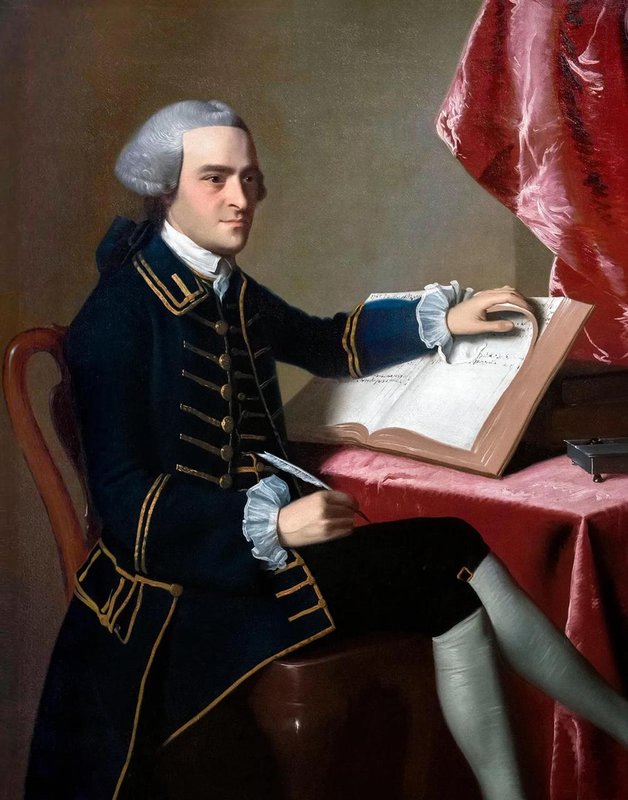
In August 1764 a childless uncle died and left John Hancock a shipping business, a house on Beacon Street, several enslaved people and thousands of acres, making him at a stroke one of the wealthiest men in colonial America. His father, a Congregational pastor, had died when Hancock was seven and left nothing of the sort. In 1768 customs officers seized his ship Liberty and charged him with smuggling. He had certainly been doing it, and John Adams defended him until the charge was dropped.
He presided over the Continental Congress from 1775 to 1777, which meant presiding over its flight. On December 12, 1776, threatened by the British, Congress adjourned and reconvened eight days later in Baltimore, which is how that city joined every city that has served as the U.S. capital. A light wagon carried the parchment after it.
The famous thing about him is the wrong thing. He did write large and he did sign alone beneath the text in the centre of the page, but the line about King George reading it without spectacles cannot be traced back beyond an 1841 newspaper, and the Park Service’s own federal biography repeats it anyway as tradition. He became Massachusetts’s first governor in 1780 and died in office in 1793 at fifty-six. His funeral was the most lavish of the era. He would have judged that entirely correct.
Samuel Adams
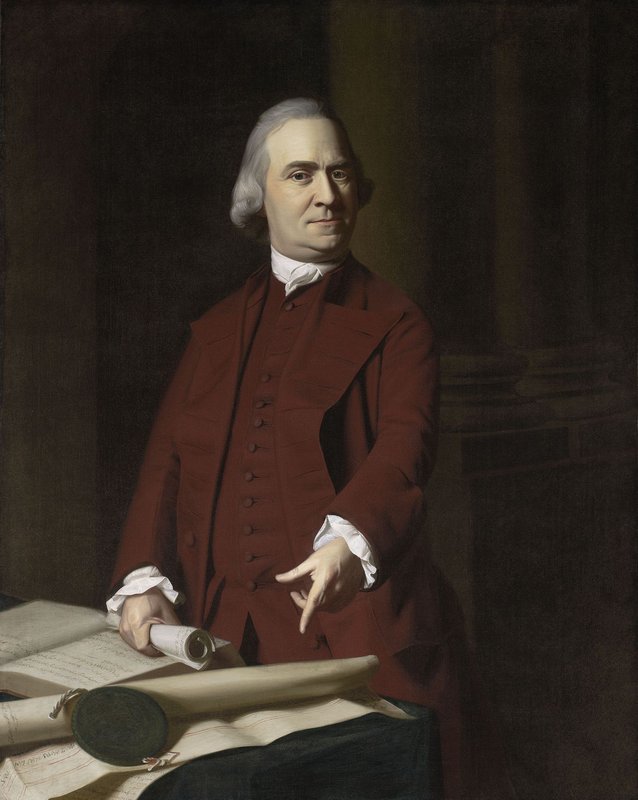
He could not afford the clothes to attend the First Continental Congress. Friends bought them for Samuel Adams, and supplied the money to travel, so that the most effective agitator in Massachusetts could reach Philadelphia in 1774 looking like a delegate. He was past 50 by then, and had been some 8,000 pounds in arrears since his eight years as Boston’s tax collector.
He had been failing at things for most of his adult life, and the Park Service’s survey is blunt about it, calling him a failure by most standards in every occupation he tried. A quavering voice and a shaking hand made him a poor speaker, so between 1768 and 1769 he wrote more than twenty newspaper essays as Vindex and Candidus rather than take a podium. His Harvard thesis of 1743 had asked whether it be lawful to resist the supreme magistrate, if the commonwealth cannot be otherwise preserved, and answered yes, more than three decades before Congress reached the same conclusion.
He organised the funeral for the victims of the Boston Massacre, which drew over two thousand people, and wrote of the tea in the harbour that you cannot imagine the height of joy that sparkles in the eyes of all we meet on this occasion. When Hancock died in office, Adams, his lieutenant governor and long-standing rival, took the chair and won three further terms of his own. He died in 1803 still living, as the same federal account has it, in honest poverty.
Robert Treat Paine
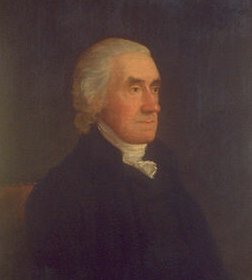
Congress gave Robert Treat Paine a nickname and meant nothing kind by it. The Park Service’s survey records that he was known as the Objection Maker because he argued against so many proposals. It is a strange legacy for a man Massachusetts then trusted as its chief law officer from 1777 to 1790.
In 1770 he had prosecuted the soldiers of the Boston Massacre while John Adams led their defence. Adams won the acquittals and Paine won a reputation throughout the colonies. A fair division of the spoils. Paine had graduated from Harvard in 1749, the year his father lost the family money, and tried teaching, trade and shipmastering before giving in to the law.
As attorney general he argued the Commonwealth’s case on appeal in Commonwealth v. Jennison, the 1783 prosecution arising from the Quock Walker suits whose outcome is credited with ending slavery under the Massachusetts constitution. He had already shown he would use the law that way. Writing on August 21, 1779 about a man named Prince Harden, who claimed his freedom on the grounds of military service, Paine told the man holding him that unless you give him a proper manumission in the course of a week an action will be commenced. He left the bench in 1804 when deafness made the work impossible. Hannah Mather Crocker remembered afterwards that no man loved wit better than he did.
John Adams
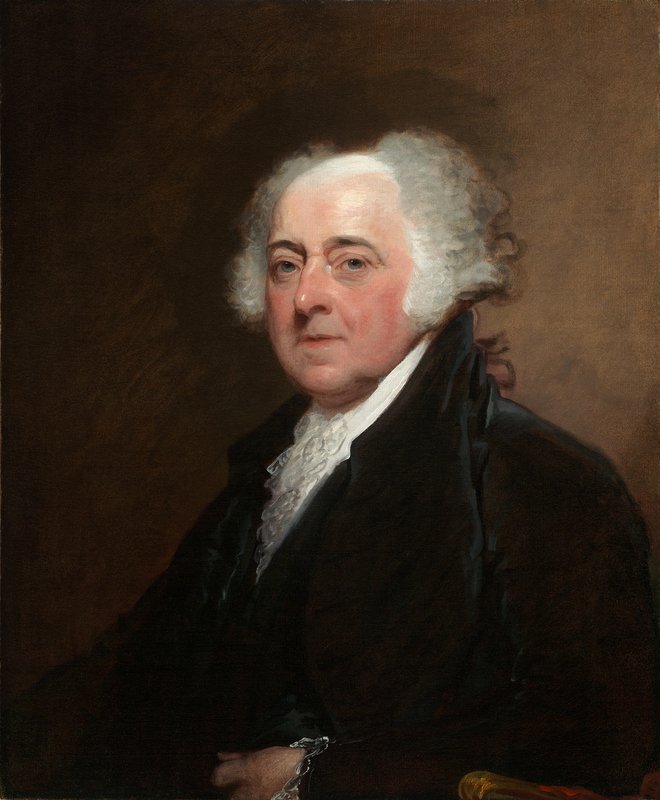
Only the last of the three reasons John Adams gave for handing the drafting to Jefferson was a compliment. Reason first, you are a Virginian, and a Virginian ought to appear at the head of this business. Reason second, I am obnoxious, suspected, and unpopular. You are very much otherwise. Reason third, you can write ten times better than I can. That is Adams recalling it long afterwards, and his memory of that summer is not to be leaned on; he also remembered signing on July 4, which nobody did.
His real work was on the floor. The Park Service reckons he made no major changes to Jefferson’s draft but defended it from its detractors and argued it through to passage. Richard Stockton called him the Atlas of American Independence. He chaired 25 of the more than 90 congressional committees he sat on.
He was elected vice president in 1789 with 34 electoral votes against Washington’s 69, described the office as the most insignificant office that ever the invention of man contrived, and was mocked as His Rotundity for suggesting the president be addressed as Highness. He took the presidency himself in 1797, second in a succession that now takes in every man who has served as president. He died at Quincy on July 4, 1826, the Declaration’s fiftieth anniversary, a few hours after Jefferson.
Elbridge Gerry
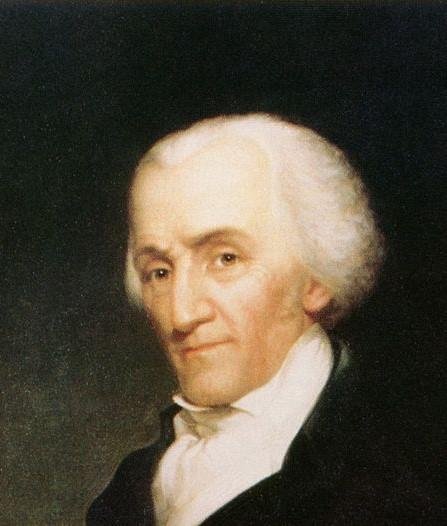
A word was coined at his expense and has outlived everything else about him. In 1812, as governor of Massachusetts, Elbridge Gerry signed a redistricting bill, a Federalist newspaper decided one of the new districts looked like a salamander, and the cartoon that followed attached his name permanently to the practice of drawing a map to win.
He had a talent for ending up on the wrong side of a room. He missed the August 2 signing altogether and was back in Congress by the start of September. In 1787 he spent four months arguing at the Constitutional Convention, rising to speak 153 times, and then refused to sign the result, joining only George Mason and Edmund Randolph in that. Sent to France by Adams in 1797 as the lone non-Federalist on a three-man commission, he so annoyed his colleagues during the XYZ Affair that he was recalled; his carriage was stoned on the way home and he was burned in effigy.
Opinions of him ran to extremes. John Adams wrote that if every Man here was a Gerry, the Liberties of America would be safe against the Gates of Earth and Hell. Charles Thomson, the Congress secretary who watched all of them, thought Gerry’s pleasure seems proportioned to the absurdity of his schemes. He died in office as Madison’s vice president on November 23, 1814, of a heart attack suffered on his way to preside over the Senate.
Stephen Hopkins
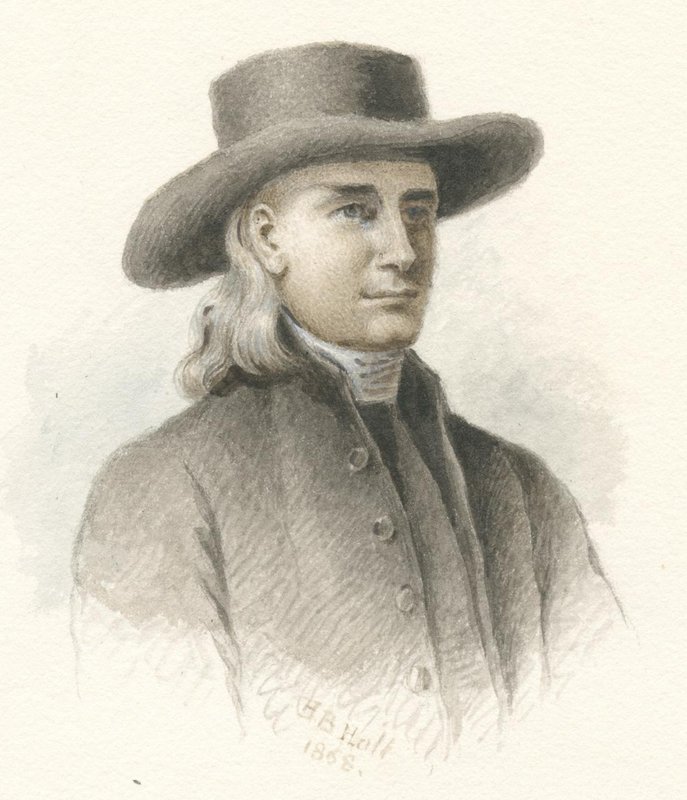
Palsy shook his hand so badly that he had to steady it with the other one to write, and the line he is supposed to have delivered while doing it has become the most quoted sentence of the whole ceremony. My hand trembles, but my heart does not. The trouble is the paper trail. The earliest printing anyone has found is the Adams Sentinel of Gettysburg for August 2, 1841, which gives it in a longer and better form, that if my hand trembles, John Bull will find my heart won’t, and frames it as an account of a visit to John Adams in 1818. The historian J. L. Bell, who is hard on this sort of thing, calls that chain evidence to be reckoned with.
Stephen Hopkins was 69 by the National Archives’ count, 68 by the National Constitution Center’s, and second either way only to Franklin, and useful long before Philadelphia. He was first chancellor of Rhode Island College, founded at Warren in 1764 and now Brown University, and went into iron with the Brown brothers, building a foundry that later cast cannon for the army.
In 1774 he wrote Rhode Island’s law banning the importation of slaves, one of the earliest antislavery statutes in the country. He had opened a pamphlet a decade earlier by calling liberty the greatest blessing that men enjoy and slavery the heaviest curse that human nature is capable of. His gravestone calls him self-educated, yet among the most learned of men.
William Ellery
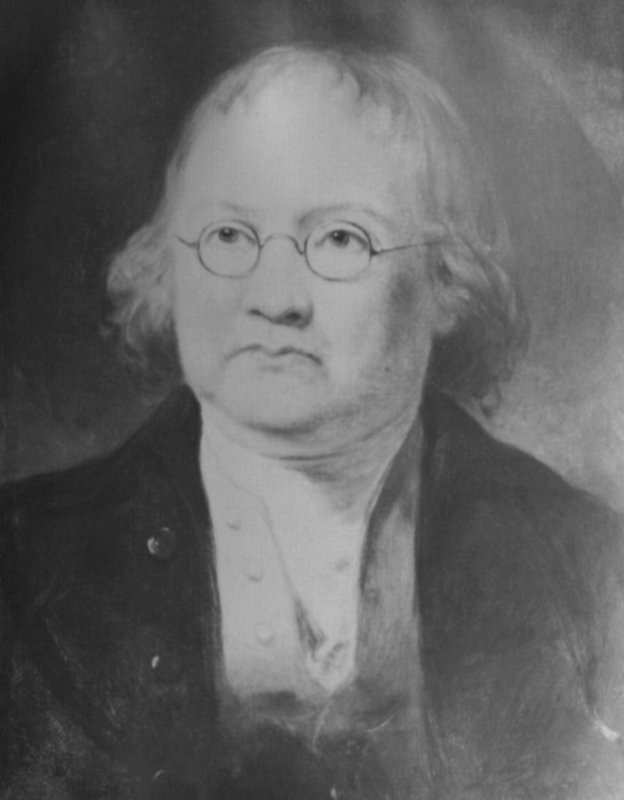
Whatever we know about how the signing actually looked comes from a man who had been in Congress barely three months. William Ellery took the Rhode Island seat in May 1776, after Samuel Ward became too ill to keep it, and on August 2 he positioned himself deliberately next to the secretary’s table. I was determined to see how they all looked as they signed what might be their death warrant, he wrote, and eyed each closely as he affixed each name to the document. His verdict: undaunted resolution was displayed in every countenance.
That is the fact everyone wants from the signing and almost everyone attaches to the wrong day. Ellery was watching on August 2, not July 4.
He was not a grand figure and knew it. He rode to Congress on horseback rather than pay for a carriage, and observed that there is, I am sure, no dignity in my person or appearance. The British occupation of Newport from 1778 destroyed his house and property, and he did not recover financially until Washington made him the port’s customs collector in 1790, a job he kept for about thirty years. Late in life he set out his own career as a list: a clerk of the court, a quack lawyer, a member of Congress, one of the lords of the Admiralty, a judge, a loan officer, and finally a Collector of the customs.
Roger Sherman
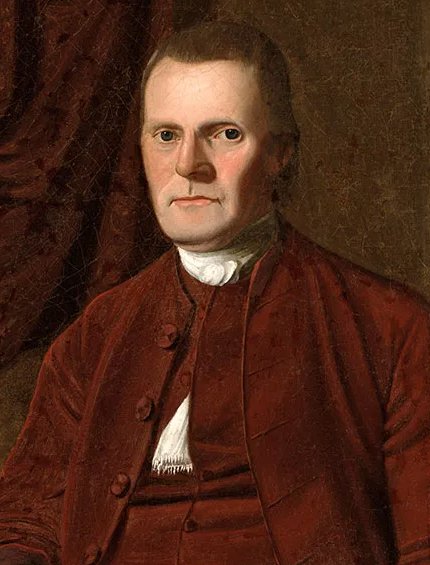
Four founding documents came out of that era and Roger Sherman signed all of them: the Continental Association of 1774, the Declaration, the Articles of Confederation and the Constitution. He is the only man who did. Robert Morris gets swapped into this claim regularly and signed three, missing the Continental Association because he was not at the First Continental Congress. John Dickinson also signed three, missing the Declaration because he would not.
The Association is the load-bearing document in that sentence, and it is the one nobody remembers.
Sherman was a shoemaker’s son with a winter term or two of schooling. His father died in 1741 without a will, leaving him at nineteen to buy out his mother and siblings on 109 acres while supporting the household. He taught himself law from books, was admitted to the Connecticut bar in 1754 having never seen the inside of a law school, and ended up on the state Superior Court. In the summer of 1776 he sat on the committee drafting the Declaration, the committee drafting the Articles, and the Board of War and Ordnance simultaneously.
Jefferson pointed him out on the Capitol steps as a man who never said a foolish thing in his life. The manufacturer Jeremiah Wadsworth put it less kindly and more usefully, warning Rufus King that Sherman was cunning as the Devil and that trying to outmanoeuvre him was like catching an Eel by the tail.
Samuel Huntington
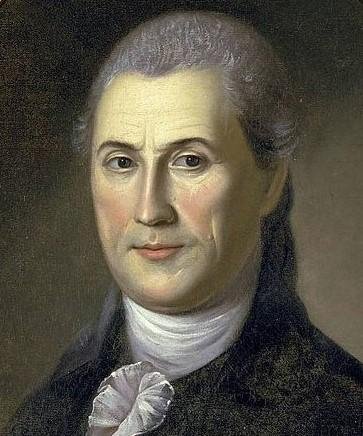
Samuel Huntington’s title from March 1, 1781 was President of the United States in Congress Assembled. It is why he keeps turning up among the 14 men who were president before George Washington. It was not that office. The office was largely ceremonial, with no executive authority: he handled correspondence and signed documents, and the presidency the Constitution invented was still six years away. What he actually presided over was Congress approving the Articles of Confederation, which is a better claim than the one people make for him.
He came to it from nowhere in particular. He was a farmer’s son who started work as a cooper at sixteen, never went to college, and read law out of borrowed books until Connecticut admitted him to the bar. Congress chose him as its president in September 1779 on the grounds that he had no regional axe to grind; Benjamin Rush called him a sensible, candid, and worthy man, and wholly free from State prejudices. A visiting Englishman in 1794 found him a respectable looking man grown gray in the service of his country, of strong sense in conversation.
He became Connecticut’s chief justice in 1784, its lieutenant governor the same year while still on the bench, and its governor from 1786 until he died in office in January 1796. Princeton, Yale and Dartmouth all gave him honorary degrees. He never earned an ordinary one.
William Williams
Appointed a delegate on July 11, 1776, William Williams reached Philadelphia on July 28, having missed the entire independence debate, and signed the parchment five days later anyway. He then died on August 2, 1811, thirty-five years to the day after most of the 56 put their names to it.
His birth date is a genuine mess. The National Archives says April 18, 1731. The federal Biographical Directory of Congress says March 29. The Park Service gives only the year and breaks no ties. He is the thinnest signer on the list for anyone trying to research him, which is a poor return for a man who had already published a furious pseudonymous letter to George III in the Connecticut Gazette on July 1, 1774, imagining the king promising to have colonists drag’d in chains across the wide ocean.
Two things he did stand out. In the winter of 1780, with a French regiment quartered at Lebanon, he moved his own family out of their house and handed it to the officers. And after Benedict Arnold burned New London in 1781, Williams, who had been criticised for resigning his militia colonelcy at the start of the war, rode 23 miles in three hours to help defend the town. He arrived to find it already on fire.
Oliver Wolcott
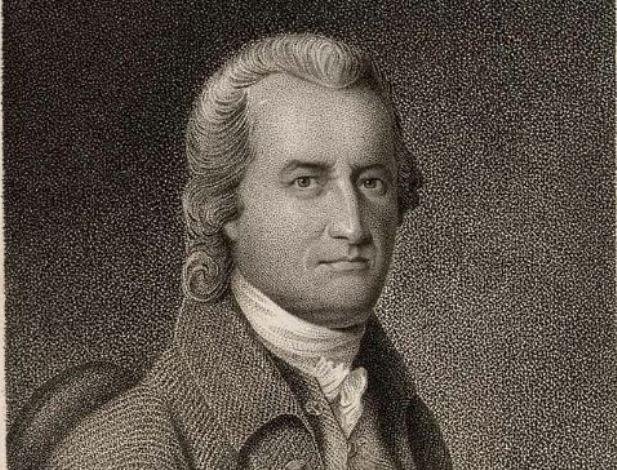
In 1776 a mob in New York pulled down the equestrian statue of George III, and a good deal of the king ended up at Oliver Wolcott’s foundry in Litchfield, where his family and neighbours melted him into ammunition. Wolcott kept the count himself. An account of the number of cartridges made 42,088, he wrote, which is his total and not the statue’s: at an estimated two tons of lead and twenty cartridges to the pound, as much as a ton of George III is still missing.
He was not in Philadelphia for any of the summer’s business. He fell seriously ill in 1776 and left Congress, and the Park Service will go no further than putting his signature on the parchment sometime after he came back in October. He was the youngest of the 15 children of Roger Wolcott, later a colonial governor of Connecticut, graduated top of his Yale class in 1747, and had been sheriff of Litchfield County for twenty years before the war gave him anything more interesting to do.
It did. As a brigadier general he led Connecticut militia north in September 1777 to join Horatio Gates against Burgoyne. He had already written, in February 1776, that the difference with Great Britain had become very great and might end in a total disseverance. In 1796 he succeeded Samuel Huntington as governor and died in office himself the following year, which by then was becoming a Connecticut tradition.
William Floyd
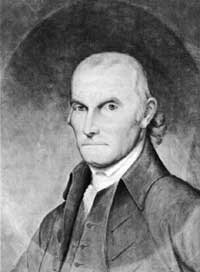
British forces took Long Island after the Battle of Brooklyn in August 1776 and held William Floyd’s farm at Mastic for the next seven years, using it as quarters. He did not get it back until 1783. His wife had time before she fled to bury the family silver, and she took the children across the Sound to Connecticut, where she died at Middletown in 1781 without seeing the house again.
Floyd sat in Congress for New York, whatever the National Archives says. Its own signers gallery sheet prints his state as NJ, which is wrong, and every other record has him where he obviously was, at Brookhaven on Long Island.
He was not a talker. Edward Rutledge is supposed to have counted him among the good men who never quit their chairs, meaning he made no speeches and missed no votes, and there is no record of him saying anything memorable in eight years. Like the rest of the New York delegation he had no instructions permitting a vote for independence and sat out both July 2 and July 4, waiting for the province to catch up. He lived another four decades after the war, sat in the first Congress under the Constitution in 1789, and was still voting for Jefferson as a presidential elector in 1804. When he died in 1821 at 86 his estate still had six enslaved people living on it.
Philip Livingston
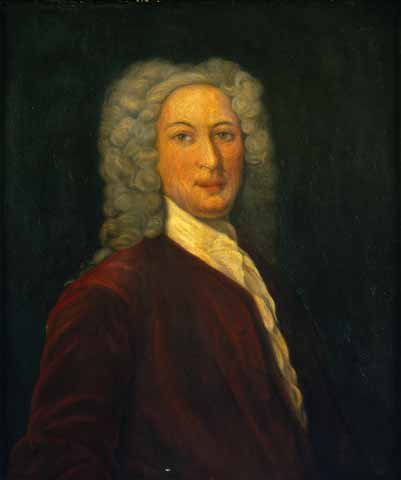
Three men of one family bear on this list and only one of them ever signed anything. Philip Livingston, the signer, was first cousin to Robert R. Livingston, who sat on the committee that drafted the Declaration and then declined to put his name to it, and full brother to William Livingston, the first governor of New Jersey. Getting the three of them straight is most of the work of reading anything about him.
The occupation of New York cost him both his houses. The Duke Street residence in Manhattan became a barracks for British soldiers and the Brooklyn Heights estate became a Royal Navy hospital, and he sold other property to keep the war going, expecting to recover afterwards.
He did not get an afterwards. He died on June 12, 1778 of what the century called dropsy, still a sitting New York state senator and still a delegate, at York in Pennsylvania, where Congress had gone after Philadelphia fell. He was in effect at his desk. He had founded New York City’s first chamber of commerce and helped govern its first hospital, and neither the chamber nor the war outlived him in any form he recognised. His cousin Robert, the one who would not sign, went on to swear in the first president of the United States.
Independence outlived him by five years.
Francis Lewis
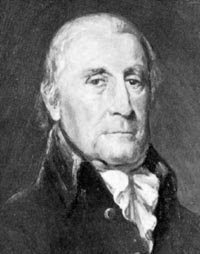
Soldiers ransacked the Queens house after the Battle of Brooklyn, destroyed the books and papers, broke the furniture, and took Elizabeth Lewis away under arrest. That much every account agrees on. What the popular version does with it afterwards is where the trouble starts.
She was held for several months, exchanged, and died in 1779. She did not die in captivity, though the story is usually told as if she had, and the imprisonment did wreck her health. Snopes, which has spent years on the chain email that spread this material, is careful even about the motive, saying only that the raid was possibly in retaliation for her husband being a signatory. The email drops the possibly.
Francis Lewis already knew what captivity was. He had been taken at the fall of Fort Oswego in August 1756 and spent seven years a prisoner of France, and Britain compensated him with 5,000 acres in New York, a grant that bought precisely no loyalty. He was at the Stamp Act Congress in 1765 and helped organise the Sons of Liberty in the city. Afterwards he rebuilt the business with his son, signed the Articles of Confederation, and reached 89, dying among his books and his grandchildren. The National Archives puts that death on December 30, 1802. The National Constitution Center says the 31st.
Lewis Morris
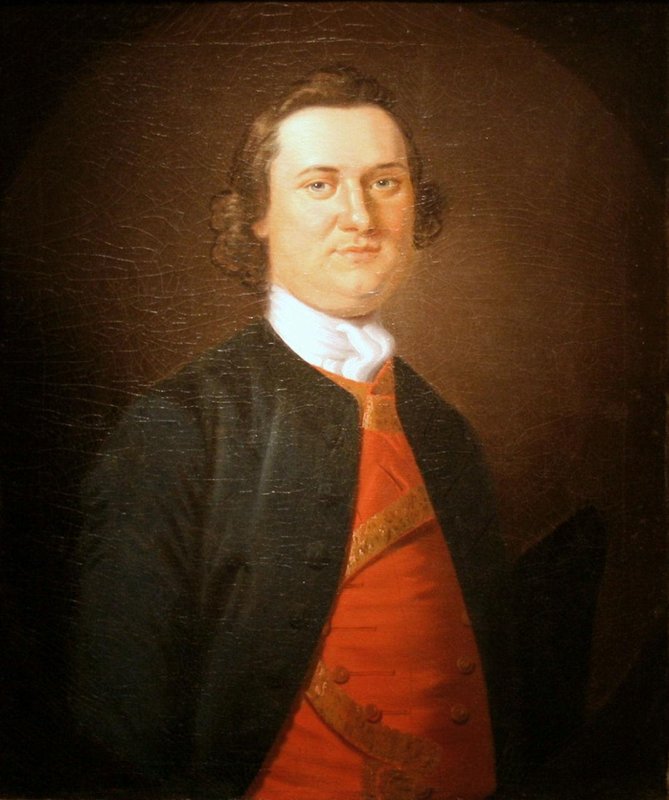
Both armies wrecked Morrisania. The Continental Army got there first, commandeering the Westchester estate in 1776; the British came later and looted the manor house, burned the fences, destroyed the crops and drove off or killed the livestock, leaving the place in considerable ruin. It is a useful corrective to the usual telling, in which the enemy alone does the damage.
Lewis Morris had been born in that house, tutored in it, and sent from it to Yale at sixteen. He became Third Lord of the Manor in 1762, at 36, with seven of his eventual ten children already born. He also could not vote for independence: New York’s instructions did not allow it, so he abstained on July 2 and July 4 like the rest of his delegation, and Harvard records him back in Congress by September 8 or earlier, which is a return date and not a signature.
He rebuilt. After the war he and his wife restored the estate, and he took up the new agricultural writing seriously enough to introduce cross-bred cattle and hogs to replace what had been driven away. His younger brother Gouverneur took his congressional seat in 1777 and Lewis went home to the state senate and a county judgeship instead. He voted to ratify the Constitution in 1788, and died in January 1798, aged 71, on land he had twice lost.
Richard Stockton
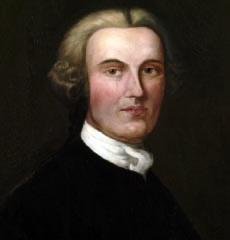
Only one signer went to prison specifically for having signed, and his conduct there is still argued about. Loyalists dragged Richard Stockton from his bed in the winter of 1776, after he had got his family clear, and he went to New York’s Provost Jail and was treated, Snopes records, like a common criminal.
Then the record gets uncomfortable. Christian McBurney, writing for the Journal of the American Revolution, found that within a month Stockton apparently signed a declaration of allegiance to the king, and a document dated December 29, 1776 has the Howes granting him a full pardon. John Witherspoon, his friend and fellow New Jersey delegate, wrote home that March that Stockton signed Howe’s declaration and also gave his word of honor that he would not meddle in the least in American affairs during the war. Others read the same pardon as the routine parole any captured gentleman received. On December 22, 1777 Stockton took a second oath, this one to Congress, and was dismissed. McBurney’s own verdict is that he should not be celebrated as a great Whig hero, and the comment thread beneath the article disagrees with him at length.
He never recovered his health or his money. Benjamin Rush, his son-in-law, put the damage at not less than 5,000 pounds. He died of cancer at Morven in February 1781, aged 50, with the question still open.
John Witherspoon
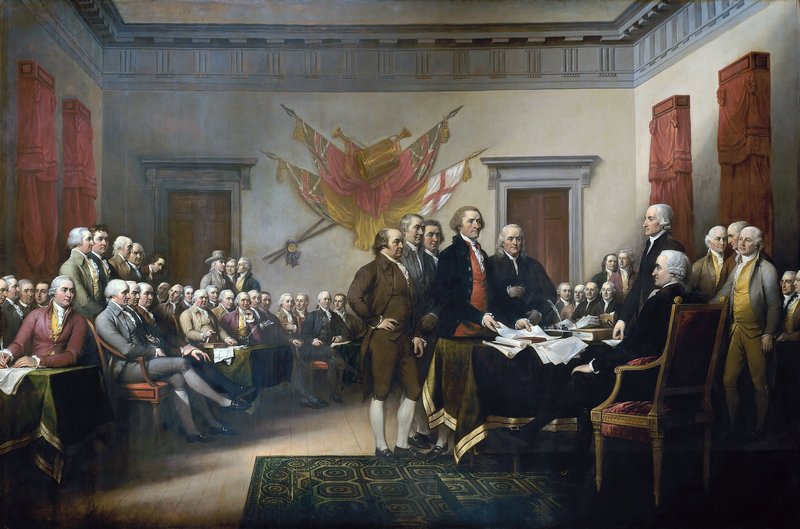
Only one active clergyman signed, and he ran a college as well. John Witherspoon had already been locked up at Doune Castle in Scotland in the 1740s for opposing the Jacobite rising, and it took two years of persuasion to get past his wife’s objections and bring him to Princeton in 1768 to head the College of New Jersey.
The teaching is the astonishing part. His students included James Madison, Aaron Burr, Philip Freneau and Hugh Henry Brackenridge, and the running tally of what the rest of them became reads like a census of the early republic: 37 judges, 12 members of the Continental Congress, 28 senators, 49 congressmen and 10 cabinet officers. When the British came through New Jersey in November 1776 he shut the college; the troops took Nassau Hall and burned the library.
It cost him a son as well. James Witherspoon was killed at Germantown on October 4, 1777, and Snopes, going through the chain email that has signers losing sons wholesale, finds his is the one confirmed case. At 68, a couple of years after his first wife died, he married a 24-year-old widow who bore him two more daughters. He went blind by 1792 and died at his farm in November 1794. The inventory of his estate listed two enslaved people, which is the sort of line the man who taught Madison about liberty leaves behind him.
Francis Hopkinson
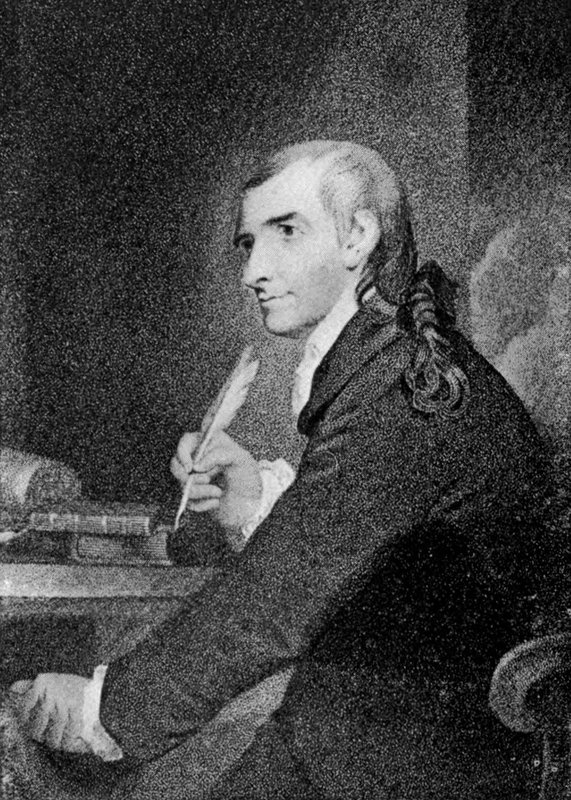
In 1780 Francis Hopkinson sent Congress an invoice. He had designed the flag of the United States of America, he wrote to the Board of Admiralty, along with the Great Seal and various other devices, and he proposed that a Quarter Cask of the public Wine would settle the account. The Treasury Board declined. Its report of October 27 held that he was not the only person consulted on the designs and therefore cannot claim the sole merit of them, which is a government’s way of saying it would rather not open the question.
Congress never settled who designed the flag and neither will anyone else. What is on the record is the bill and the wine.
Hopkinson was the most decorative man in the room. He served in Congress from June to November 1776 and, according to the Park Service, relieved his ennui by drawing caricatures of his colleagues. He wrote what is probably the first American secular song and what is probably the first American attempt at an opera, the hedges being the Park Service’s own. His son Joseph wrote Hail Columbia. In December 1780, the same year as the wine, he was impeached as Pennsylvania’s admiralty judge on charges of taking money from litigants and selling appointments, stood trial, was acquitted and kept the job. He died suddenly in 1791, at 53.
John Hart
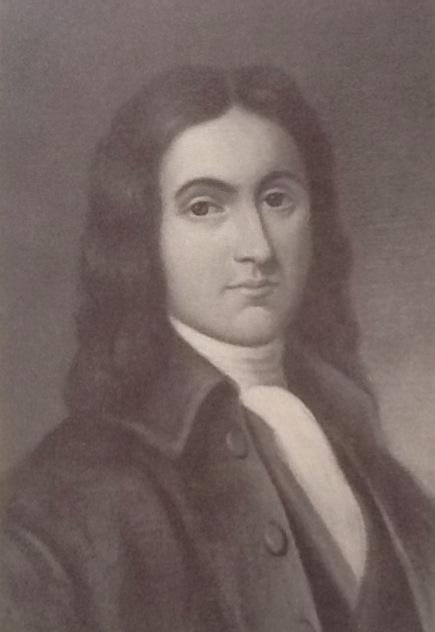
Almost everything you have read about John Hart’s last years is wrong, and Snopes has the receipts. The chain email that supplies the popular version has his wife dying in his arms as he fled, has him hiding in caves for more than a year, and has him dying of exhaustion and a broken heart. His wife had in fact died several weeks before he went into the Sourland Mountains. The British were driven out of the neighbourhood inside a month. He got home, was re-elected to the New Jersey Assembly in 1778, and died of kidney stones.
What actually happened to his farm is better than the invention. In December 1776 British and Hessian troops raided the Hunterdon County property and damaged it without destroying it, and Hart, a marked man as Speaker of the Assembly, went to ground until the recapture of Trenton on December 26 let him come back. Eighteen months after that, from June 22 to 24, 1778, he invited about 12,000 Continental soldiers to camp in his fields on their way to Monmouth, and Washington came to dinner.
He fell ill on November 9, 1778, two days after riding home from Trenton, suffered for more than 6 months and died on May 11, 1779. He is buried at Hopewell, a short walk from the ground where the army had camped.
Abraham Clark
He had two sons in the Continental Army, and the British took both and put them aboard the prison hulk Jersey in New York harbour, where hundreds of men died. They offered to release them if Abraham Clark would recant. He would not. The chain email that has been circulating about the signers for thirty years upgrades this to sons killed, which is the sort of edit that makes a true story worse.
Clark was an only child and too frail as a boy for farm work, so he read instead, and taught himself enough law to practise it without, the Park Service thinks, ever being admitted to the bar. He became the poor man’s counselor, giving advice free or taking payment in produce. The National Archives files his occupation as Lawyer, Surveyer, which is tidy and misses the point entirely.
He had been the Crown’s high sheriff of Essex County before the war and spent the decades after it alternating between state and national office, opposing ratification of the Constitution until it came with a Bill of Rights and then serving two terms in the House.
He died in 1794, aged 68, of sunstroke. He had been standing out in the sun too long supervising the building of a bridge on his own farm.
Caesar Rodney
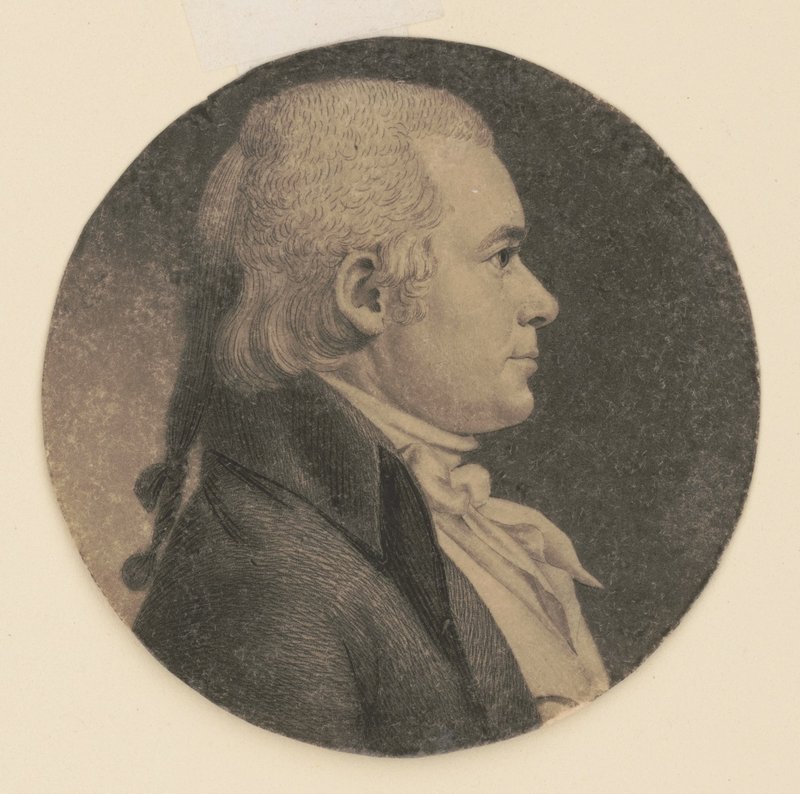
In 1932 Delaware put a marker in the churchyard of Christ Episcopal Church in Dover recording that Caesar Rodney had been buried on his farm and re-interred there in 1887. Nobody now believes it. A second state marker at the farm, installed in 1994 and replaced in 2005, says he lies in an unmarked family cemetery on the property and mentions no reinterment at all. In 2007 the director of the Delaware Public Archives told the Associated Press that the elegant Dover marker, name and all, is not his grave. Delaware has managed to lose one of its two signers.
The ride is on firmer ground, though not as firm as the paintings suggest. He covered roughly 80 miles from Dover on the night of July 1, 1776, through a thunderstorm, crossing no less than fifteen streams and rivers, and arrived, as he told his brother, time enough to give my voice in the matter of independence. Whether he did it on a horse is another question. The closest modern reconstruction of the trip concludes he probably used both a horse and a carriage.
He was already dying while he did it. A cancer had been eating his face since 1768 and an operation had left a hole, he wrote, quite to the bone. He wore a green silk veil over it for the rest of his life.
George Read
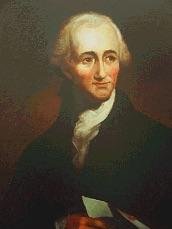
Rodney had to ride because of George Read. On July 1, 1776 he and Thomas McKean were the only Delaware delegates in the room and they split, so McKean sent word to Dover to fetch the third man. The Park Service is precise about how unusual this made him: George Read was the only signer who actually voted negatively on July 2, as distinct from the Pennsylvanians who absented themselves or the New Yorkers who abstained as a bloc.
A caveat the paintings never carry: Congress voted by colony, not by head, so what the Journals record is Delaware’s division rather than a roll call of names. Read’s no is a reconstruction, but a well-founded one.
Having lost, he threw himself at the thing he had voted against with the enthusiasm of a convert, proposing that anyone who broke faith with the Declaration should have his name published in the Public Newspaper as a betrayer of the civil rights of America and forever be deemed infamous and a traitor. He chaired the committee that drafted Delaware’s constitution, ran the state as acting president from late 1776 until Rodney replaced him, sat in the first United States Senate, and finished as the state’s chief justice. A colleague at the Constitutional Convention said his voice was feeble and his articulation so bad that few can have patience to attend him.
Thomas McKean
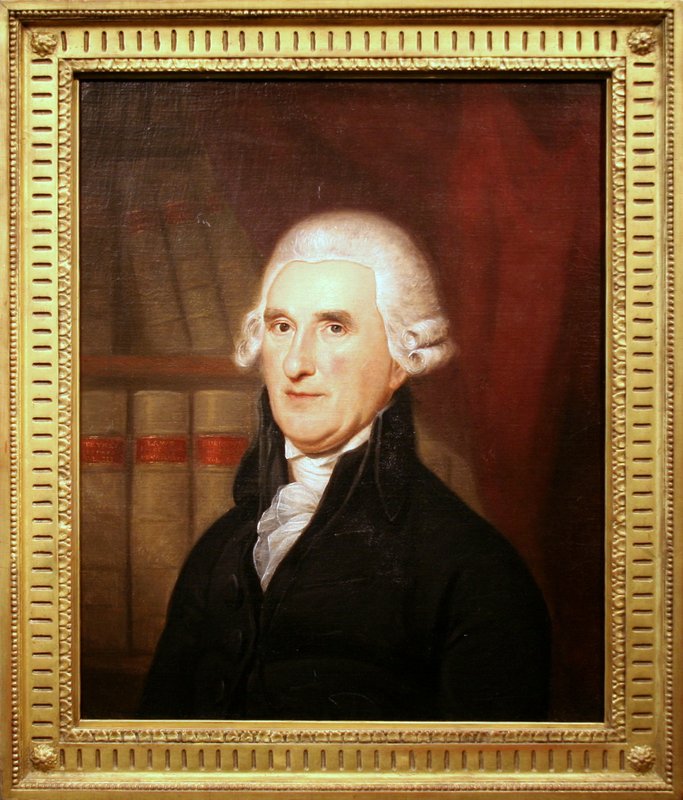
No day can be fixed for Thomas McKean’s signature, and that is the interesting thing about him rather than a footnote to it. He was not re-elected to Congress in October 1776, so his name is missing from Mary Katherine Goddard’s January 1777 broadside, the first printing to publish the signers at all. The first printing that included him was Francis Bailey’s edition of the Pennsylvania statutes in 1782, which McKean himself edited. Harvard’s considered position is that most historians believe he signed the engrossed parchment by 1781 at the latest.
His own account survives, and even that is contested. He wrote that he signed the declaration after it had been engrossed on parchment, where my name, in my own hand writing, still appears. Two good sources date that sentence to a letter of September 26, 1796. A third finds nearly identical wording in a deathbed letter of June 16, 1817.
The rest of him is well documented and slightly absurd. He was chief justice of Pennsylvania for twenty-two years while holding office in Delaware at the same time, then governor of Pennsylvania for three terms, handing out jobs so freely that the legislature tried to impeach him in 1807. In 1765, at the Stamp Act Congress, he provoked its president into challenging him to a duel. The man left town instead.
Robert Morris
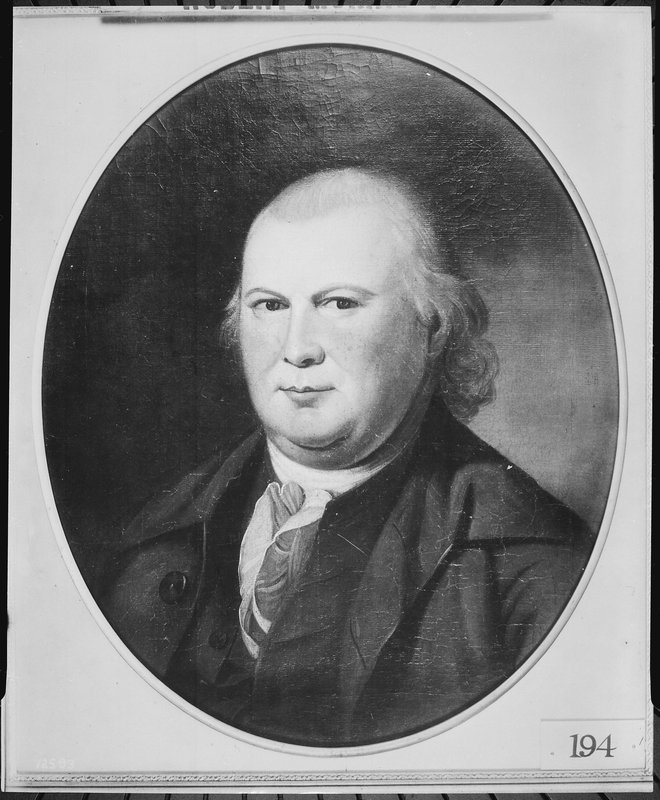
Pennsylvania voted against independence on July 1, 1776 by four to three. The next day Robert Morris and John Dickinson, neither of whom had changed his mind, simply stayed away, and the remaining delegates carried the colony three to two. Morris then signed the parchment in August. He explained himself to Horatio Gates that October in a sentence worth more than most of the oratory of the period: I am not one of those politicians that run testy when my own plans are not adopted. I think it is the duty of a good citizen to follow when he cannot lead.
He signed three of the era’s four founding documents, missing only the Continental Association, and he financed a great deal of the war on his own credit. As Superintendent of Finance he bought supplies personally, issued notes against his own name, and helped found the Bank of North America in December 1781, the first bank the government ever chartered.
Then it went. The Panic of 1797 ruined him and he spent from February 1798 to August 1801 in debtors’ prison, released only after Congress passed a bankruptcy act partly to get him out. The half-built mansion he had commissioned from Pierre Charles L’Enfant stood empty as Morris’ Folly until it was pulled down. He had once owned the western half of New York State. He died in 1806 owning his father’s gold watch.
Benjamin Rush
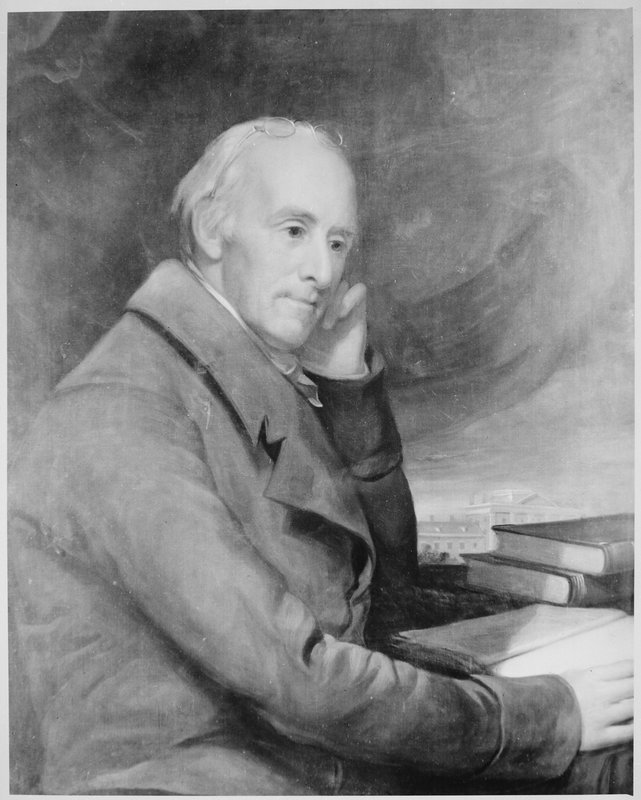
He was 30, and Pennsylvania did not send him to Congress until after the vote for independence had already happened, which makes him one of the men on the parchment who had no part in the decision it records. He signed anyway. Benjamin Rush then spent the war making enemies: as surgeon general of the army’s Middle Department he accused his superior of maladministration, Congress investigated, Congress vindicated the superior and found that Rush had been under-reporting patient deaths and not visiting the hospitals he ran, and Rush angrily resigned in January 1778.
He is also the reason we know anything reliable about the signing itself. His 1811 letter to John Adams preserves Benjamin Harrison’s joke at the table, which is the best-attested thing anybody said that day, and it means the article’s most quotable moment comes from a man who was not in the room when independence was voted.
The medicine has aged less well than the politics. He advised Meriwether Lewis to pack emetics, mercury-laced laxatives and the equipment for bloodletting, and never abandoned heroic medicine as the rest of the profession moved past it. He stayed in Philadelphia through the yellow fever epidemics of 1793 and 1798 rather than flee, and died in 1813, at 67, of typhus caught from a patient.
Benjamin Franklin
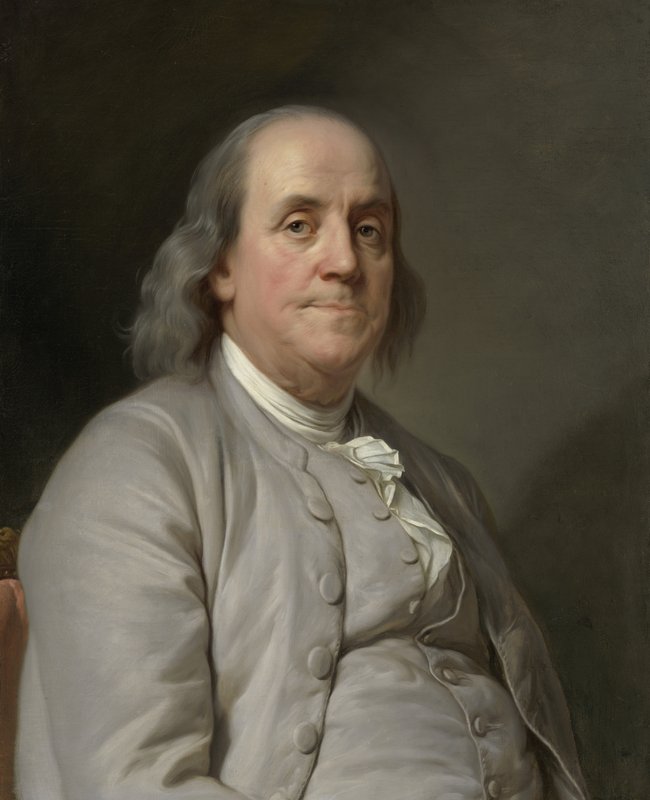
Seventy years old and with a great many documents already behind him, Franklin signed the parchment in August 1776 and then went on signing things for another fourteen years. The one that mattered most to him came at the end. On February 3, 1790 he put his name, as president of the Pennsylvania Society for Promoting the Abolition of Slavery, to a petition asking the First Congress to devise means for removing the Inconsistency from the Character of the American People. A House committee tabled it on March 5. He died on April 17.
The National Archives is unsentimental about the arc. As a young man Franklin owned slaves and ran advertisements for their sale in the Pennsylvania Gazette, and it was only after the Constitution was ratified that he became an outspoken opponent of slavery. The petition was his last public act and it lost.
The line everyone attaches to him he probably never said. We must all hang together, or assuredly we shall all hang separately has no printed trace before 1811, when Alexander Graydon’s memoirs credited an equivalent joke to Richard Penn; the Franklin version first appears in an 1840 edition of his works. The Park Service files it as a traditional anecdote. What he did say, dying in Philadelphia, was recorded by a man at the bedside: a dying man can do nothing easy.
John Morton
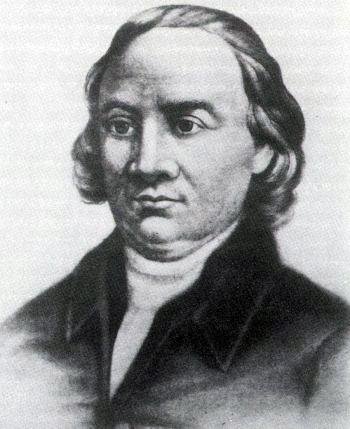
Not even the National Archives can say when John Morton was born or when he died. Its gallery table marks his birth c. 1724 and his death c. 1777, and a straight count down all 56 rows shows he is the only signer with both ends of his life flagged uncertain in that dataset. The other sources add numbers rather than settling anything: the Park Service says 1725 and the spring of 1777 at age 51, the National Constitution Center says 1725 and June 18, 1777 at age 52. Three sources, three ages at death.
That is a peculiar fate for the man who decided the vote. Pennsylvania’s delegation was split on July 1, 1776, and Morton’s sudden and crucial switch to the side of Franklin and James Wilson meant that on the final vote the next day those three ballots outweighed Thomas Willing and Charles Humphreys, with Robert Morris and John Dickinson purposely absent.
He was a surveyor by training, trained by his own stepfather, and worked his way up to justice of the peace, high sheriff of Chester County and an associate justice of the state supreme court while still farming. The National Archives records his occupation, in one word, as Farmer. He chaired the committee that produced the Articles of Confederation and then died, on some day nobody wrote down.
George Clymer
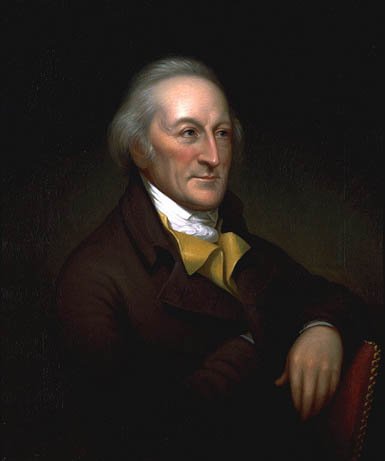
Orphaned at a year old, George Clymer inherited from his sea-captain father what the National Constitution Center describes as little more than a few personal items and an enslaved man who died soon afterward. His aunt’s husband took him in, made him a clerk in the family firm and eventually a full partner, and by 1776 he was rich enough to be useful.
He was not in Congress for the vote. He was at the state constitutional convention instead, and signed the parchment on August 2 with the rest of the new Pennsylvania men. Then, in December 1776, when Congress fled Philadelphia for Baltimore, Clymer stayed behind with Robert Morris and George Walton to keep the government’s business moving. The British repaid him after Brandywine in September 1777 by making a detour to wreck his house in Chester County while his wife and children hid in the woods.
He is also one of only 6 men who signed both the Declaration and the Constitution, with Franklin, Robert Morris, George Read, Roger Sherman and James Wilson. Afterwards he did a term in the House, spent three years collecting the federal excise on spirits, which cannot have made him popular, and retired to the Philadelphia Agricultural Society and the Pennsylvania Academy of Fine Arts. Major William Pierce, sketching the men at the Constitutional Convention, got him down as a respectable man, and much esteemed.
James Smith
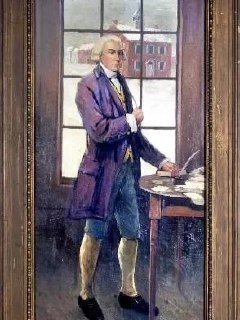
The iron business ruined him. Smith went into manufacturing from 1771 to 1778 to prop up a thin law practice and lost 5,000 pounds, and his verdict on his two partners is the best sentence he left behind: one was a knave and the other a fool.
He had a good evening before that. On July 6, 1776, weeks before he signed anything, he rode into York with two other men and a printed broadside of the Declaration and read it aloud in the town square. Pennsylvania sent him to Congress only on July 20, after the vote was over, and he reached Philadelphia in time to add his name and nothing else. He had missed the debates entirely.
His birth is unknowable in the ordinary way. The National Archives and the Park Service both put him at 87 when he died on July 11, 1806; the National Constitution Center gives the same day and makes him 86. Nobody has a birth date to settle it with. What is certain is that he was York’s only lawyer until 1769, that he wrote a 1774 pamphlet recommending both a boycott of British goods and an intercolonial congress before either happened, and that his colleagues remembered him, in two federal accounts almost word for word, as a wit, a conversationalist and an eccentric.
George Taylor
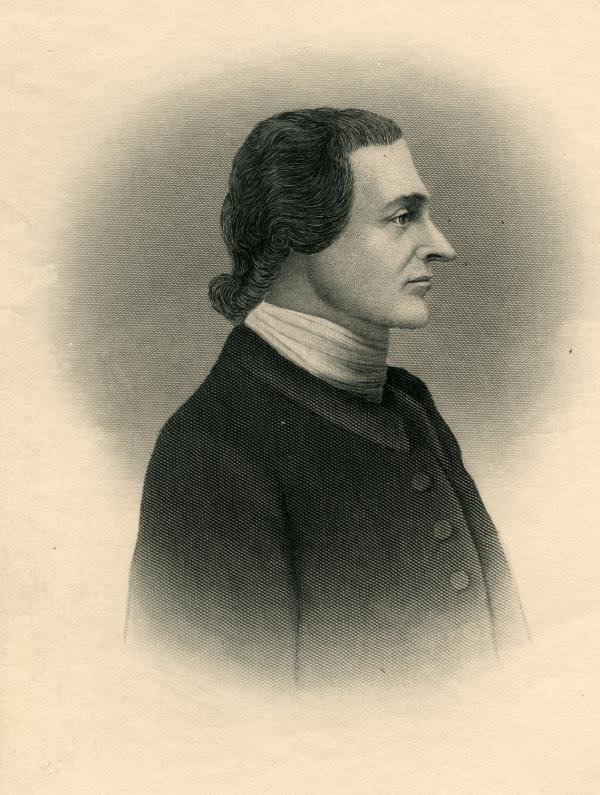
Passage from Ireland in 1736 cost George Taylor his freedom for a term of years. He was 20, and an ironmaster at Coventry Forge near Philadelphia paid his fare in exchange for indentured labour, which meant shovelling coal. He was promoted to clerk in the furnace office, and when his employer died in 1741 he married the widow and took over the works.
It is the best rags-to-riches story on the parchment and it comes with a warning attached. No source calls him the only signer who arrived as an indentured servant. Reviewing where all 56 men came from, the federal survey of 1973 comes as close as anyone gets without saying it: a few were of humble origin; one, George Taylor, had come to America as an indentured servant. One is not only, and the difference is the sort that gets a page corrected.
The National Archives lists his occupation as Merchant, which he was not. He leased and ran Coventry Forge, Durham Furnace and Greenwich Forge, and made ordnance for the Continental Army. He was elected to Congress in July 1776, after the vote, signed in August, and in January 1777 went to Easton to help negotiate a treaty with the Six Nations. He died in February 1781, aged 65.
James Wilson
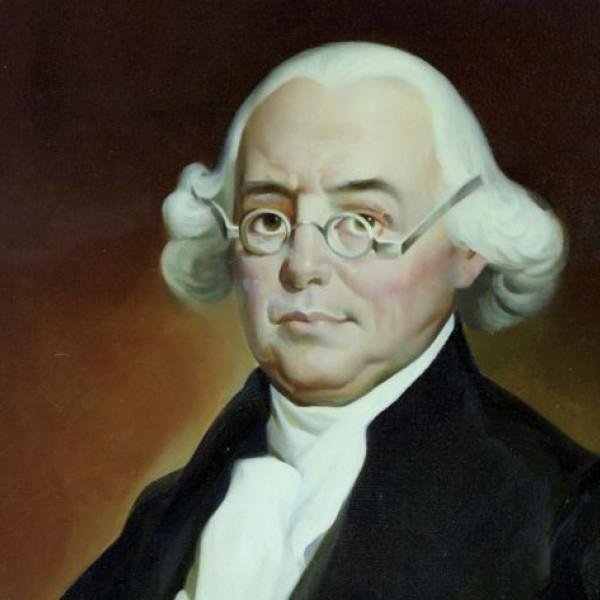
Mount Vernon’s profile of him carries a claim that is true only in its full form. James Wilson was the only person who signed the Declaration of Independence, the United States Constitution, and served as a Supreme Court Justice. Drop the Constitution from that sentence and it becomes false, because Samuel Chase also signed the Declaration and also sat on the Court. The middle document is doing all the work.
Wilson had the best legal mind in the room and the worst financial judgement. He wanted to be the first Chief Justice; Washington gave the job to John Jay and made him an associate justice instead. He came up with the Electoral College, begrudgingly, on the Constitutional Convention’s committee for unfinished business. In October 1779 a Philadelphia mob attacked his house over his defence of accused Loyalists and about 35 colleagues barricaded themselves inside with him, an affair remembered as Fort Wilson, which left 6 men dead and more than 17 wounded before cavalry broke it up.
The panic of 1796 destroyed him. He was jailed for debt in New Jersey, freed when his son paid, and fled to North Carolina to escape other creditors. He died at Edenton on August 21, 1798, aged 55, in the house of another Supreme Court justice.
George Ross
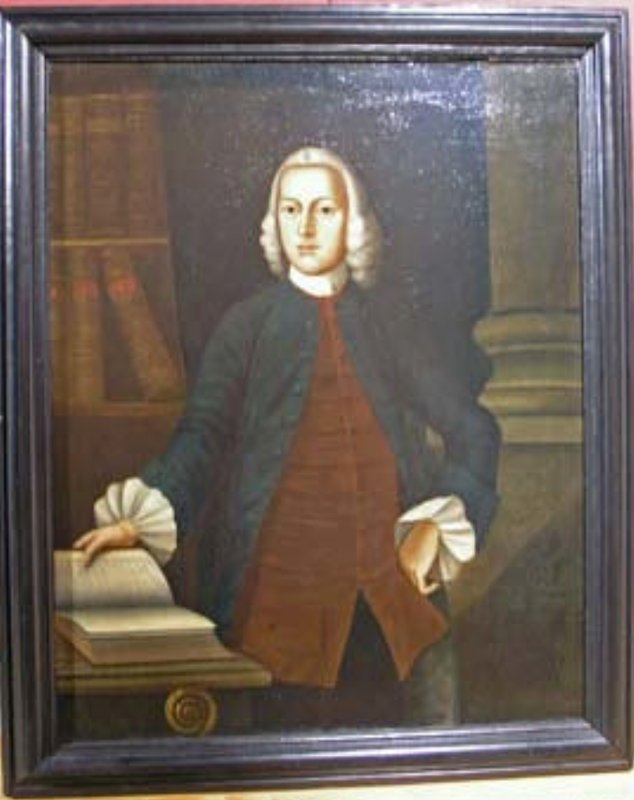
Some lists of the men who joined Congress too late to vote for independence include George Ross and some do not, and both are defensible. He was not a member during the voting on July 1 and 2, 1776, and got his appointment soon enough to sign on August 2. He had also sat in Congress before, sent by a provincial convention in 1774. The gap in the middle is what makes him a boundary case, and any tidy number of new members is tidier than the record.
Before that he had been on the other side. He was a crown prosecutor in Pennsylvania for twelve years and, the National Constitution Center says, a loyal supporter of the King and Parliament until his election to the provincial legislature in 1768 started to change his mind. The Park Service notes his Loyalist leanings survived into his first congressional posting.
Illness forced him out of Congress in January 1777 and killed him in July 1779, at 49, probably of gout. His nephew John was married to Elizabeth Griscom, better known as Betsy Ross, which is the only reason most people have heard the surname. The flag story rests on an 1870 speech by her grandson and no credible evidence beyond it.
Samuel Chase
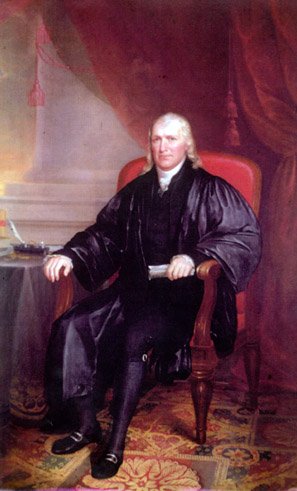
Samuel Chase is the reason James Wilson’s famous distinction needs all three of its parts. Chase signed the Declaration and sat on the Supreme Court too, from 1796 to 1811, so it is only the Constitution that makes Wilson unique. What Chase has instead is an impeachment. The House impeached him on March 12, 1804, and the Senate acquitted him on all 8 articles on March 1, 1805; a majority voted guilty on 3 of them and every one fell short of the two-thirds needed.
He earned his seat the hard way. In 1776 he went to Montreal with Franklin on a congressional mission to bring Canada into the union, which failed. Getting back to Philadelphia on June 11 to find Maryland still refusing to let its delegates vote for independence, he and Charles Carroll rode to Annapolis, recruited William Paca and spent a fortnight campaigning until the convention gave way in time for Maryland to vote yes on July 1.
He was nicknamed the Demosthenes of Maryland for his courtroom manner, which was forceful and a little showy. The Park Service’s federal history rates him among the ablest jurists on the bench before John Marshall, and also records that he lost his congressional seat in 1778 over a profiteering scheme built on what he had learned there.
William Paca
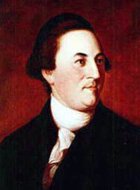
Washington resigned his commission in front of him. On December 23, 1783, in what is now Maryland’s Old Senate Chamber at Annapolis, the general handed his authority back to a Continental Congress that was sitting there at Governor William Paca’s own invitation, and in the same room and the same session that body ratified the Treaty of Paris. It is the closest thing the Revolution has to a curtain line, and Paca arranged the venue.
His ancestry has been quietly corrected underneath him. A federal survey published in 1973 calls him probably of Italian descent, and that is the version that got into circulation; the Maryland State Archives has since traced the family to the Peakers of Gloucestershire, Wiltshire and Devonshire, with an ancestor settled in Anne Arundel County by 1651.
Before independence he defended a fellow legislator jailed for refusing to pay the tax that funded Anglican clergy salaries. In 1776 he was one of the three Marylanders who talked their own province into permitting the vote. He spent his own money outfitting Maryland troops in 1777, sat as a judge for years afterwards, laid the cornerstone of Washington College at Chestertown in 1782, putting up 50 pounds of his own to head the subscription list, served three one-year terms as governor, and finished as a federal district judge. He married three times and buried two wives.
Thomas Stone
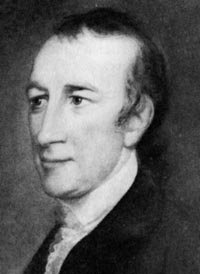
A smallpox inoculation that went badly wrong is why Thomas Stone left Congress. His wife Margaret had joined him in Philadelphia, reacted badly to it, and declined through the 1780s until she was bedridden. He gave up the law and public life to look after her. She died in June 1787, aged 36. He died on October 5 the same year, in Alexandria, where his doctors had sent him to wait for a sea voyage meant to lift his spirits.
Friends believed he had died of a broken heart, the National Constitution Center writes, and it is worth being precise about what that is: a modern encyclopedia’s characterisation, not a period diagnosis and not a claim anybody made at the time.
Everything before that is thin. Little is known of his early life, the same source begins, and the Maryland State Archives can only add that he went to the county school and read law under Thomas Johnson at Annapolis. He was a delegate in 1774, again in 1775 and 1776, again in 1777 and 1778, and again in 1783 and 1784, sat in the Maryland Senate almost continuously from 1777 until he died, and was elected to the convention that wrote the Constitution but declined to go. He is buried on his own estate.
Charles Carroll of Carrollton
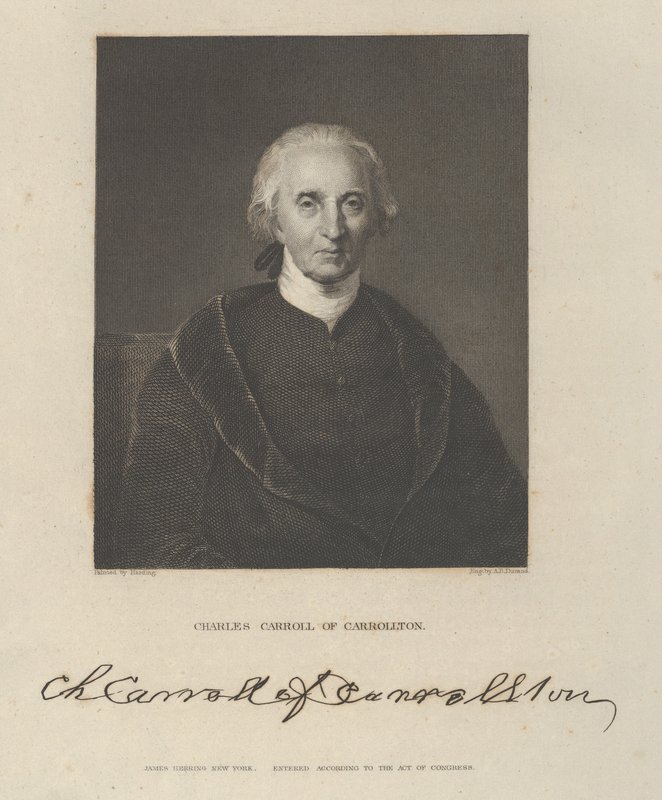
Maryland did not make him an official delegate until July 4, 1776 itself. Charles Carroll reached Philadelphia on the 18th and signed on August 2, most willingly, having long intended to defend the liberties of my country, or die with them. He had been kept out of the First Continental Congress altogether because of what the Maryland State Archives calls his legal disabilities as a Catholic, and had gone anyway, as an unofficial observer.
His signature is the only one on the parchment that carries a place. That was not defiance but bookkeeping: Maryland had several prominent Charles Carrolls, including his own father, Charles Carroll of Annapolis, and the federal survey of the signers ties his adoption of the name to his return from Europe in 1765, a decade before there was any Crown official to provoke.
He outlived all of them, dying on November 14, 1832 at 95, the last of the 56 and, by the federal survey’s account, the longest lived. He had been one of Maryland’s first two senators, held around 80,000 acres across three states, and helped found the Baltimore and Ohio Railroad, laying its cornerstone on July 4, 1828 at almost 91. At the time of his death, the Maryland State Archives records, Carroll enslaved more than 350 human beings.
George Wythe
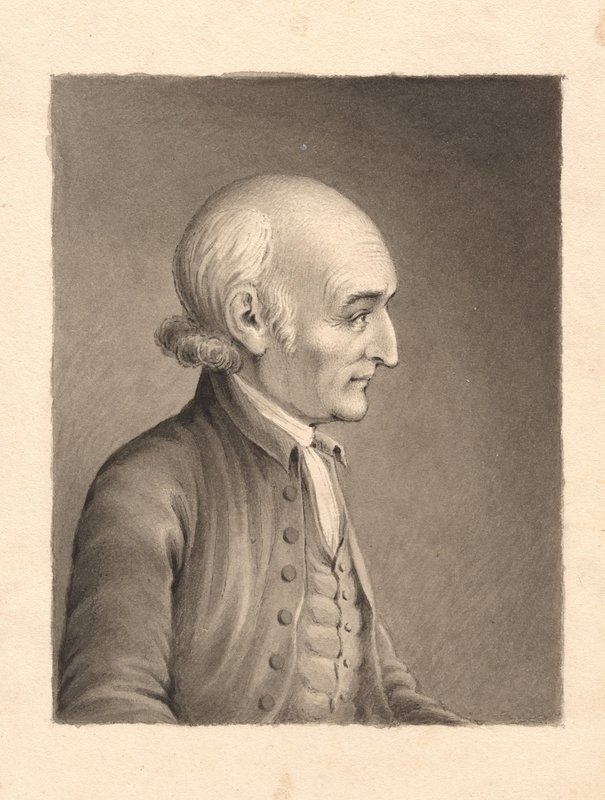
George Wythe and his doctors believed he had been poisoned, and the law then arranged that nobody would ever know. He died at Richmond on June 8, 1806. His great-nephew and principal heir, George Wythe Sweeney, was tried for the murder and acquitted, convicted only on two forgery counts in a separate matter. Lydia Broadnax, the free Black woman who worked in the house, was poisoned alongside Wythe and survived, and was, in Encyclopedia Virginia’s exact words, legally barred from testifying against a white man.
The teaching is the reason the name survives. Wythe trained Thomas Jefferson in the law between 1762 and 1767, and afterwards John Marshall, James Monroe and, as an old man running a private school in Richmond, a teenaged Henry Clay. In 1779 Jefferson and the other officials of William and Mary created the first chair of law at any American college and gave it to him, making him the country’s first law professor.
He was not in Philadelphia on August 2 and signed later; Harvard’s date for him is a return to Congress, not a signature. He sat on Virginia’s High Court of Chancery for 28 years. He freed the people he had enslaved in his will.
Richard Henry Lee
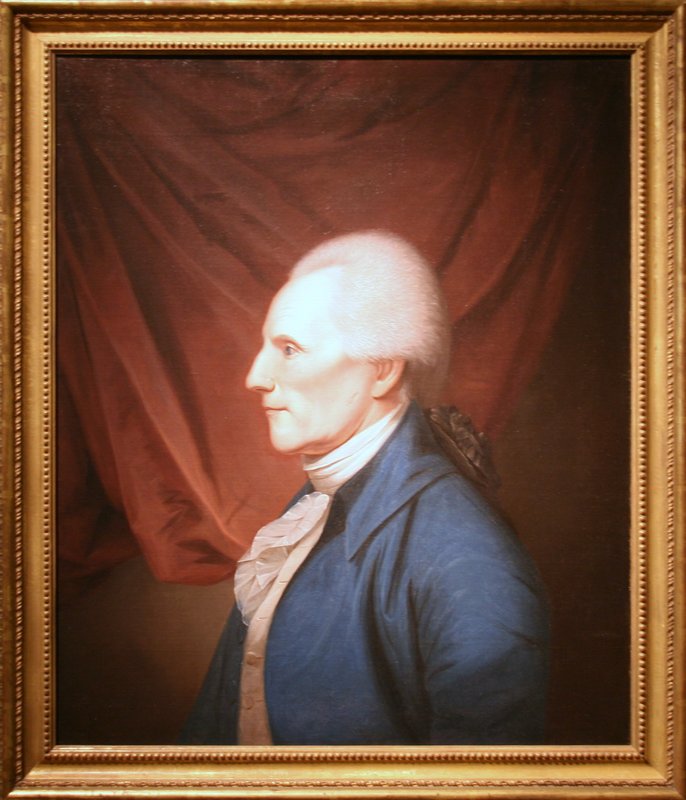
Independence was moved on June 7, 1776 and the man who moved it went home six days later. Richard Henry Lee’s resolution, seconded by John Adams, held that these United Colonies are, and of right ought to be, free and independent States, that they are absolved from all allegiance to the British Crown. On June 13 he left Philadelphia for Virginia, apparently because of illness in the family, and did not come back to put his name on the parchment until well after the ceremony. Harvard’s late-signers table gives him August 27, which is the day he returned to Congress rather than the day he signed.
The resolution was not his invention either. It was, the Park Service says, his condensed redraft of instructions sent to him by a convention that had met at Williamsburg on May 15.
He had been ahead of most of them for a decade. In 1766 he drew up a nonimportation agreement for his own county against the Stamp Act, and in 1768 he wrote to John Dickinson proposing that the colonies set up committees to correspond with each other, an idea that took another five years to happen. He fought ratification of the Constitution for want of a bill of rights, then entered the Senate and pushed his amendments through. He and Francis Lightfoot Lee were the only brothers on the parchment.
Thomas Jefferson
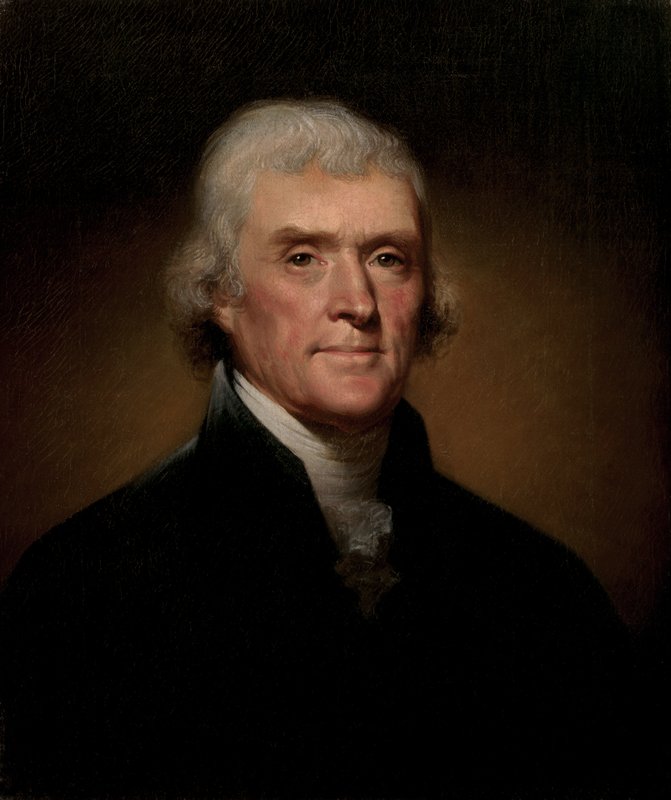
In 1823 Jefferson set down what had happened in the drafting room, and it is the closest thing to a minute anyone kept. The committee, he wrote, unanimously pressed on myself alone to undertake the draught. I consented; I drew it; but before I reported it to the committee I communicated it separately to Dr. Franklin and Mr. Adams requesting their corrections. He was 33 years old.
Congress then cut it. The longest deletion was a passage arraigning the king for the slave trade, which began he has waged cruel war against human nature itself, violating it’s most sacred rights of life and liberty in the persons of a distant people who never offended him. South Carolina and Georgia objected because they wanted the trade to continue, and, by Jefferson’s own account, northern delegates objected because their people had been pretty considerable carriers of them to others. He enslaved more than 600 people across his life, about 130 at Monticello at any time, and served two terms as one of the presidents who owned slaves while in office.
He also spent decades remembering, wrongly, that he had signed on July 4. He wrote it to a correspondent in 1786 and repeated it in his notes. The contemporaneous letters say otherwise.
Benjamin Harrison
Somebody made a joke while the parchment was going round, and for once we know what it was. Benjamin Rush wrote it down for John Adams on July 20, 1811. Harrison, a very large man, turned to the very slight Elbridge Gerry and said: I shall have a great advantage over you Mr. Gerry when we are all hung for what we are now doing. From the size and weight of my body I shall die in a few minutes, but from the lightness of your body you will dance in the air an hour or two before you are dead. It procured a transient smile, Rush noted, and then the room went quiet again.
Dr. James Thacher printed his own version in 1823 with different wording, which is what makes it usable. J. L. Bell, who has spent years dismantling stories of this kind, judges it this way: for a story from the Revolution not written down at the time, the agreement of two documented witnesses is about as strong as our evidence can get.
Harrison chaired the Committee of the Whole through the independence debates and was governor of Virginia from 1781. His colleagues called him the Falstaff of Congress for his bulk and his fondness for good wine. His son and his great-grandson both became president of the United States.
Francis Lightfoot Lee
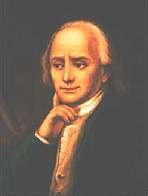
The date of his death depends on which authority you ask. The National Archives and one standard reference give January 11, 1797; Encyclopedia Virginia gives the 17th. Both camps agree his wife Rebecca died on January 7, which is why the same disagreement is usually reported as a second one, whether he outlived her by four days or by ten. It is one conflict, not two, and it has been repeated as two for a long time.
The archives are unreliable about the beginning as well. The National Archives puts his birth at Mount Pleasant; two other accounts put it at Stratford Hall, the Lee family seat in Westmoreland County. Everyone agrees on October 14, 1734.
Of the two Lee brothers who signed, Francis was the quieter by a wide margin. He was shy, a poor speaker, rarely rose to debate at all, and frequently voted against his own brother. He sat on the military and marine committees and helped draft the Articles of Confederation without leaving much of a mark on any of it. In 1779 he went home, weary of office and longing for the peace and quiet of Menokin, and stayed there. He and Rebecca had no children. He is buried in her family’s graveyard rather than his own.
Carter Braxton
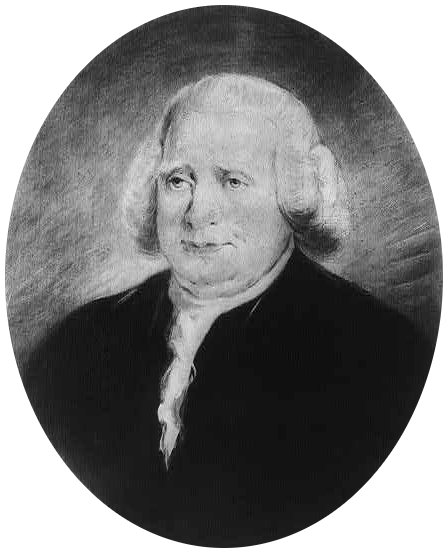
Independence, he warned his uncle in April 1776, is in truth an elusive bait which men inconsiderably catch at, without knowing the hook to which it is affixed. That is the National Constitution Center’s wording; two other sources render the bait delusive rather than elusive, and one has men catching at it inconsiderately. The letter is real and the sentiment is his. The exact words are not settled, which is a fair description of Carter Braxton generally.
The federal survey calls Benjamin Harrison the most conservative of the Virginia signers except for Braxton himself, which is one way of saying nobody in that delegation came to independence more grudgingly. The British took most of his shipping and wrecked some of his plantations. He also backed a privateer, the Phoenix, which seized a neutral Portuguese vessel and left him tangled in the diplomatic complaint and the lawsuits that followed. He was born at Newington Plantation in King and Queen County in September 1736 and died at Richmond in October 1797, aged 61, having spent the intervening years alternately rebuilding and dismantling the same fortune.
The chain email says he died in rags. Snopes says he did not, by any stretch of the imagination, though he had certainly ruined himself again by then through his own bad judgement. His two wives bore him 18 children, more than any other signer managed.
Thomas Nelson Jr.
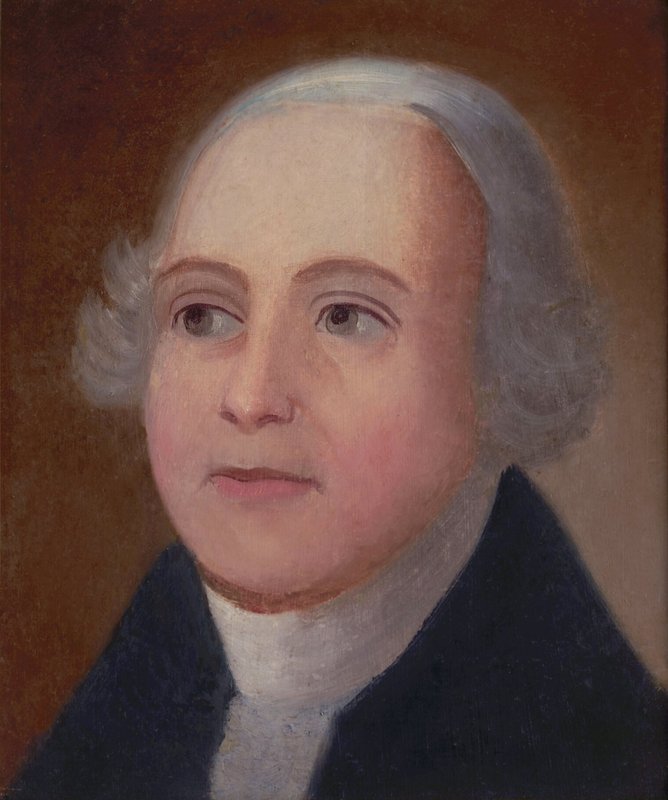
Under the heading of legend, the government that runs the battlefield files the best story about him. A legend of the battle, its page says, has Nelson offering money to the first American artillerist to hit his home. He believed British officers would be occupying the house. That is a bounty on a target, not a man ordering the destruction of his own property, and the popular version has drifted a long way from it. The house was not destroyed either; it is still standing.
What he actually did was worse for him. The Park Service says he made a personal loan of over 2,000,000 dollars to finance Virginia’s war costs that the state never repaid; a recent scholarly account describes the mechanism more precisely, that the assembly tried to raise the money from Virginians who would not part with it and Nelson pledged his own assets as the guarantee. An assembly recommended paying him 10,000 pounds in 1784 and lost the receipts.
Sources cannot agree on how long he outlived Yorktown: two Park Service pages give 6 years and 8 respectively. He died on January 4, 1789, nine days after his fiftieth birthday. He had carried Virginia’s independence resolution to Philadelphia himself in 1776 and handed it to Richard Henry Lee.
William Hooper
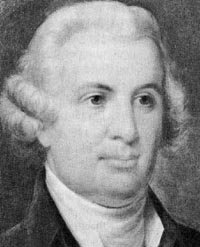
Writing to his friend James Iredell on April 26, 1774, more than two years before anyone in Philadelphia would say it aloud, William Hooper laid out what was coming. They are striding fast to independence, he wrote of the colonies, and ere long will build an empire upon the ruins of Great Britain. The letter earned him the title Prophet of American Independence, though not until 1894, when it was used for a commemorative address delivered over his reburied remains.
A mob had once had him in the street. During the Hillsborough riots of 1770 the Regulators dragged Hooper through the town, and the following year, as deputy attorney general, he rode with the government forces that broke them at Alamance.
The war took his houses. One was burned and Finian, his home on Masonboro Sound, was shelled, and after Wilmington fell in January 1781 he became a fugitive, moving between friends’ houses around Windsor and Edenton while malaria and a badly swollen arm made him useless. His wife and two of the children fled to Hillsborough by wagon. He resigned from Congress in 1777 and never held national office again. When his neighbours did not elect him to the 1788 ratifying convention, held within sight of his own house, he never recovered from it.
Joseph Hewes
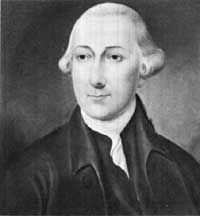
The best-known thing about him is a title he never held. Joseph Hewes is regularly called the father of the American Navy, and no authoritative source gives him that name; the phrase is claimed for John Paul Jones, John Barry and John Adams among others, and Hewes appears on none of those lists. What he did do was get Jones his first commission, over John Adams’s objection that the Navy’s first captaincies should go to New Englanders. The Park Service’s survey puts it plainly enough: Hewes sponsored the American career of his friend John Paul Jones.
He was a Quaker-raised merchant from Edenton who came to independence late and then all at once. John Adams recorded the moment on the floor of Congress: he started suddenly upright, and lifting up both his hands to Heaven, as if he had been in a trance, cried out, It is done! and I will abide by it.
He was dropped from the North Carolina delegation in 1777 after John Penn’s faction accused him of profiting from his trade work for the Secret Committee. He resigned for good on October 29, 1779, and was dead within weeks, at 49. NCpedia dates the death to November 10; the National Archives prints October 10, which falls before the resignation it does not dispute. Congress voted to attend the funeral in a body and mourned him for a month.
John Penn
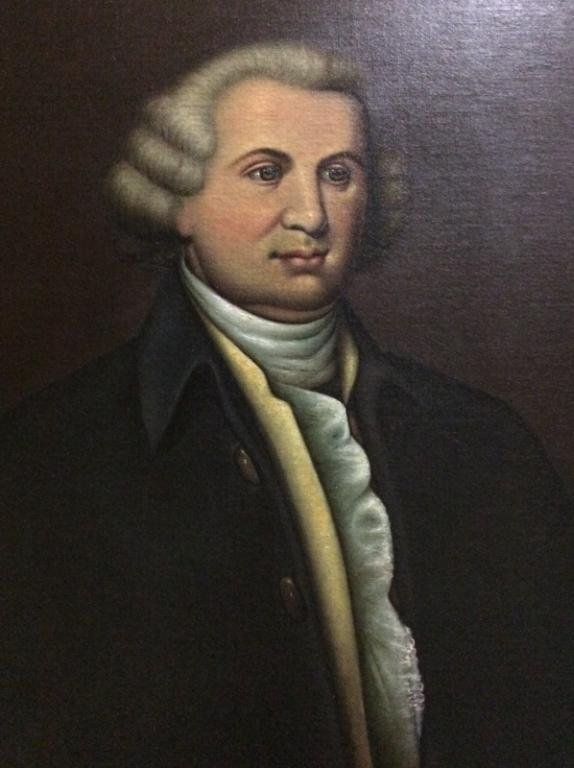
Duelling was still a live risk in 1779, and John Penn talked his way out of one on the walk to the ground. NCpedia’s account is precise and unheroic: as he assisted the elderly Laurens across a street on the way to the dueling ground, Penn proposed that their plans be abandoned. Laurens agreed but continued to disdain Penn’s politics and abilities. The secretary of Congress later reported that Laurens took to answering him in debate by singing, Poor little Penny, poor little Penny.
He was the North Carolina delegate who turned up most. NCpedia counts 1,038 days in attendance, longer than any of his colleagues from the state during the war, which is a strange record for a man who had taught himself law out of a relative’s borrowed library after being orphaned at 18.
He also took Joseph Hewes’s seat off him, leading the faction that accused Hewes of profiteering. In September 1780 the Assembly made him the leading member of an emergency Board of War whose other two members were mostly absent, so he ran the thing alone until it was abolished four months later for usurping the governor. His body was dug up in 1894 and moved to Guilford Courthouse, where he shares a monument with William Hooper.
Edward Rutledge
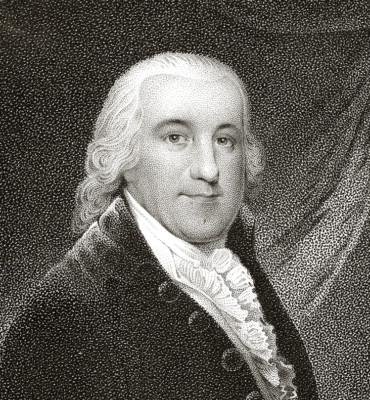
South Carolina’s delegation said no on July 1, 1776 and yes the following morning, and the man who turned it round was the same one who had led the resistance. Edward Rutledge was 26. He had opposed Richard Henry Lee’s resolution in June and written to John Jay that no reason could be assigned for pressing into this measure, but the reason of every Madman, a shew of spirit. Then he decided unanimity mattered more than he did and talked his colleagues into it overnight.
He left Congress that November to fight, took a captaincy in the Charleston artillery, and was at Moultrie’s defeat of the British at Port Royal Island in February 1779. When Charleston fell he was taken, paroled, arrested a second time on suspicion of organising resistance, and finally exchanged in July 1781.
Washington asked him twice in the 1790s to take a seat on the Supreme Court and thought of him for secretary of state and minister to France, and he stayed in South Carolina for all of it. He was no radical about anything else: he worked to have African American soldiers expelled from the Continental Army and argued at the constitutional debates for protecting what he called provincial distinctions. He died in office as governor in January 1800, aged 50.
Thomas Heyward Jr.
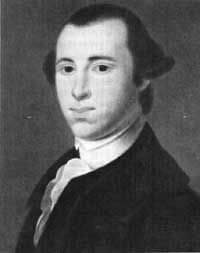
Charleston fell in May 1780 and three of South Carolina’s four signers went to prison for it. Thomas Heyward Jr., captured at the head of his battery, was shipped with Edward Rutledge and Arthur Middleton to the British fort at St. Augustine and held there until July 1781. While he was gone the British stripped White Hall, his plantation, and carried 130 of the people he had enslaved to the sugar plantations of Jamaica.
He nearly did not make it home. On the voyage back he went overboard and saved himself by holding on to the ship’s rudder until somebody could reach him.
The story has been told, the National Constitution Center says carefully, that in prison he wrote a parody of God Save the King and called it God Save the Thirteen States. The Park Service’s own volume tells the same story without the hedge and adds that he sang it on Independence Day shortly before his release. Two federal sources, one confident and one not, and no way to settle it. Heyward went home, founded the Agricultural Society of South Carolina in 1785 and was its first president, and rented one of his Charleston houses to George Washington for a week. He died in 1809, on a day three sources give three ways.
Thomas Lynch Jr.
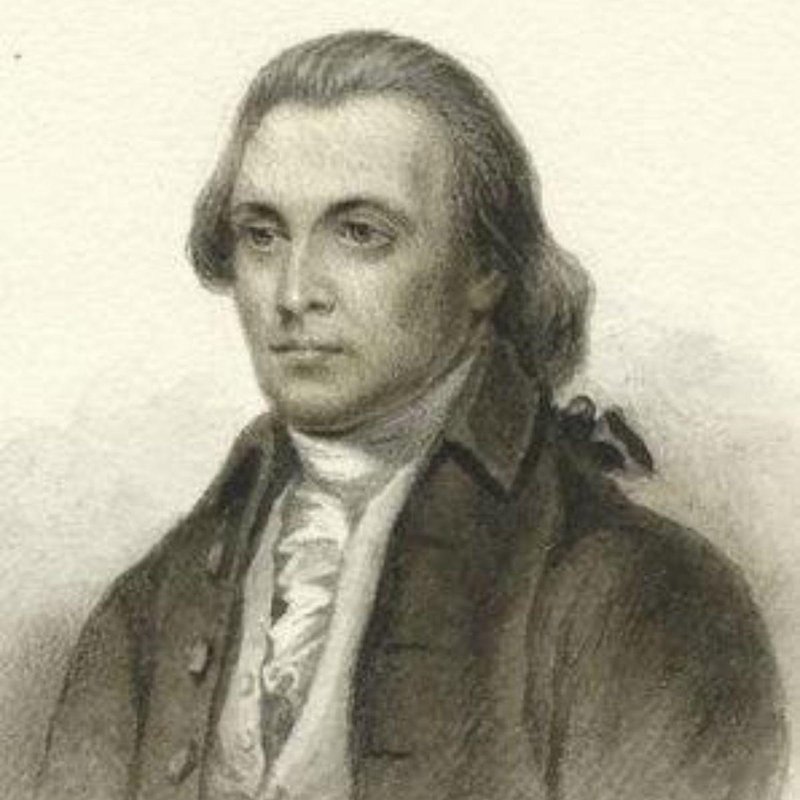
The fifty-second name in the standard list of signers belongs to a man with no grave, no body and no confirmed date of death. On December 17, 1779 Thomas Lynch Jr. and his wife took ship for the south of France, hoping the climate would help his health, and the ship was lost somewhere en route to the West Indies. Nobody knows when. The National Archives records his death as c. 1779 and his age as 30, which is the lowest number in that column for any of the 56.
His father sat in the same Congress. Thomas Lynch Sr. suffered a stroke in early 1776 that left him unable to perform his public duties, and the son was elected that March and presented his credentials on April 24, at 26. The South Carolina Encyclopedia calls him the second-youngest member of Congress.
He had trained for the bar at the Middle Temple and given it up on getting home in 1772 to plant rice instead, though the National Archives still lists him as a lawyer. His autograph is not especially rare, whatever the surrounding company might suggest: a 1960 survey found 81 of his signatures, many of them in books from his own library. The Park Service calls his one of the most tragic lives of all the signers.
Arthur Middleton
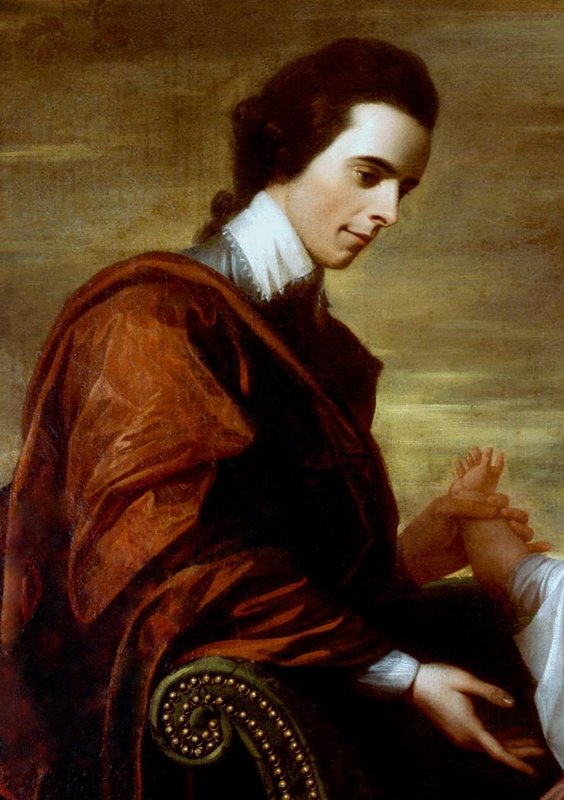
Twenty plantations, 50,000 acres and about 800 enslaved people were what Arthur Middleton stood to inherit as his father’s eldest son, and he was educated to match: sent to England at 12, through Hackney and Westminster, out of Cambridge at 18, then the Middle Temple and three years touring Europe collecting opinions about music, painting, sculpture and architecture.
He came home an extremist, which is the Park Service’s word. He advocated the tarring and feathering of Loyalists and confiscation of the estates of those who had fled the country, helped raid the royal armories and raised money for the war. In March 1778 South Carolina elected him governor and he refused it, partly because he disliked the new constitution’s democratic drift and partly because he still hoped for a settlement with Britain, which is an unusual combination of reasons.
Captivity taught him nothing gentler. Released in July 1781, he went back to Congress and pushed for the execution of Lord Cornwallis. The British had taken everything portable from Middleton Place and destroyed what they could not carry, and he spent his last years putting it back together. He died of a fever on New Year’s Day 1787, aged 44, and was buried in the family mausoleum on the estate where he was born.
Button Gwinnett
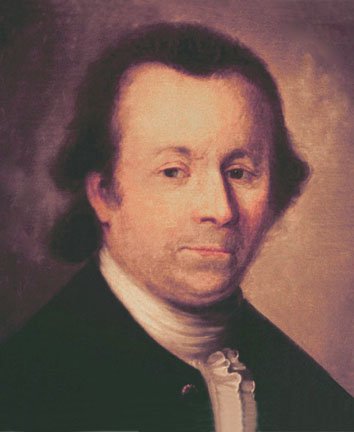
Being shot dead less than a year after signing turned out to be very good for the market in his handwriting. A census taken in 2008 found 51 surviving Button Gwinnett signatures, 40 of them in institutional collections, which leaves very few in circulation; a letter sold at Sotheby’s in 2010 for 722,500 dollars, beating a record of 270,000 dollars set at Christie’s in 2002.
He had failed at almost everything before politics. Apprenticed to a Gloucester greengrocer and then a Staffordshire ironmonger, he opened a store in Savannah in 1765 that went under, borrowed 3,000 pounds to buy St. Catherine’s Island and set up as a planter, and lost the island to his creditors in 1773. They let him carry on living on it.
John Adams had rated him in Philadelphia, writing that Hall and Gwinnett are both intelligent and spirited men, who made a powerful addition to our Phalanx. Passed over for command of Georgia’s Continental battalion in favour of Lachlan McIntosh, he watched the rivalry curdle until McIntosh stood up in the Georgia assembly in May 1777 and called him a scoundrel and lying rascal. Gwinnett challenged him. Both men were hit. Gwinnett died of it, on a day the National Archives gives as May 15 and the New Georgia Encyclopedia as May 19. His grave has never been located either.
Lyman Hall
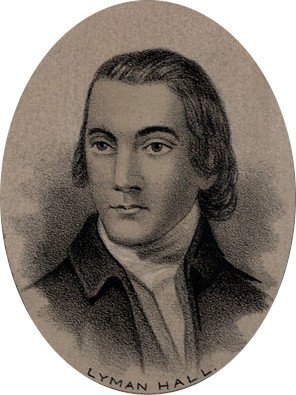
Georgia sent nobody to the First Continental Congress. It was the only colony that did not, and when it finally sent someone to the second one it was not really the colony that sent him: in March 1775 the parish of St. John’s elected Lyman Hall on its own authority. Congress admitted him as a nonvoting member. He sat through the debates in Philadelphia and abstained from anything decided by a vote of colonies, because he did not represent one.
Before medicine he had been a minister, ordained in 1749 and dismissed from his pulpit two years later on charges of immoral conduct, then restored after confessing, then out of the ministry altogether by 1753 and into a medical training instead.
The war burned him out twice over. Sunbury, the town he had settled in, was destroyed by the British in January 1779; they wrecked his plantation and his town house and confiscated what was left, and he did not come back until 1782. As governor he pressed for a state university, chartered in 1785, which is usually reported as his founding it. The federal survey lists him only as a trustee of a proposed State university and gives the founding credit to George Walton. He spent years afterwards untangling Button Gwinnett’s estate.
George Walton
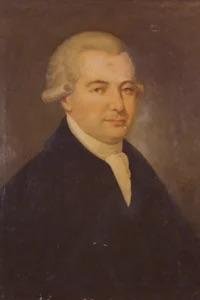
George Walton’s parents were both dead before he was 12, and the uncle who took him in apprenticed him to a carpenter who would not give the boy a candle to read by at night. He read anyway. The National Constitution Center notes he was unusual among the signers in that his parents were poor, which in this company is an understatement.
He was wounded in the thigh and captured at the siege of Savannah in the winter of 1778, and exchanged the following September for a navy captain. He came home to find Georgia already had a governor installed by a rival faction, so his own faction installed him as a second one, and the state ran with two claimants until a legally elected legislature gave the job to a third man in January 1780.
Then the duel caught up with him. Walton had taken Lachlan McIntosh’s side against Button Gwinnett, and in 1783, while he was in Philadelphia, he learned that the Georgia legislature had censured him for his involvement in the business. Of three Georgia signers, one was killed in a duel and another was formally censured over it. It did his career no harm at all: chief justice of the state, governor again, and a seat in the United States Senate.
Frequently Asked Questions
Was the Declaration of Independence signed on July 4, 1776?
No. The National Archives states that the document was dated July 4 but wasn’t actually signed until August 2. What Congress approved that day was the wording. The printer worked through the night on a broadside that carried only Hancock’s name and the secretary’s, both of them set in type. No parchment existed to sign.
How many of the signers signed on August 2, 1776?
About 49 of the 56. Harvard’s Declaration Resources Project puts the figure at 49 most likely, which is a scholarly estimate and not a roll call, since Congress kept no record of who was at the table. The other seven added their names over the following months and years.
Who was the last person to sign the Declaration of Independence?
Thomas McKean of Delaware, though no source supplies a date. He was not re-elected in October 1776, which is why his name is absent from the January 1777 broadside that first published the signers, and most historians put his signature no later than 1781.
Who were the youngest and the oldest signers?
Edward Rutledge of South Carolina at 26 and Benjamin Franklin at 70. A federal survey of all 56 gives the range in exactly those terms. Rutledge was a few months younger than Thomas Lynch Jr., another South Carolinian, who was born earlier in the same year of 1749.
Which delegates sat in Congress for the Declaration and never signed it?
John Dickinson of Pennsylvania is the best known of them. He did not vote for independence at all, absenting himself on July 2 so his colony could carry, and the National Archives records that he clung to the idea of reconciliation with Britain. He never signed.
Were any of the signers executed or killed for signing?
None. The viral account in which signers are hunted down, tortured and put to death is false, and Snopes finds that not one of them died a prisoner and none was tortured. Several lost houses, ships and fortunes, and one lost a son in combat. Nobody was executed.
Did all thirteen colonies vote for independence?
Twelve of the 13 did. The National Archives records the vote of July 2, 1776 as carried by 12 colonies, with New York not voting because its delegates had no instructions permitting it. New York approved on July 9, and the 4 delegates who did sign put their names to the parchment regardless.
- National Archives – Declaration of Independence, transcription of the engrossed parchment (the 56 names)
- National Archives – The Declaration of Independence: A History
- National Park Service – Signers of the Declaration, Ferris ed. 1973 (govinfo PDF)
- GPO Ben’s Guide – Signing the Declaration: the six columns and their order
- United States Senate – The Impeachment of Samuel Chase
- Library of Congress – Creating the United States: the Declaration and slavery
- National Park Service – Thomas Nelson Jr.
- National Park Service – the 1779 New Hampshire freedom petition of Prince Whipple and others