Every Player on the 2026 U.S. Women's Olympic Hockey Roster
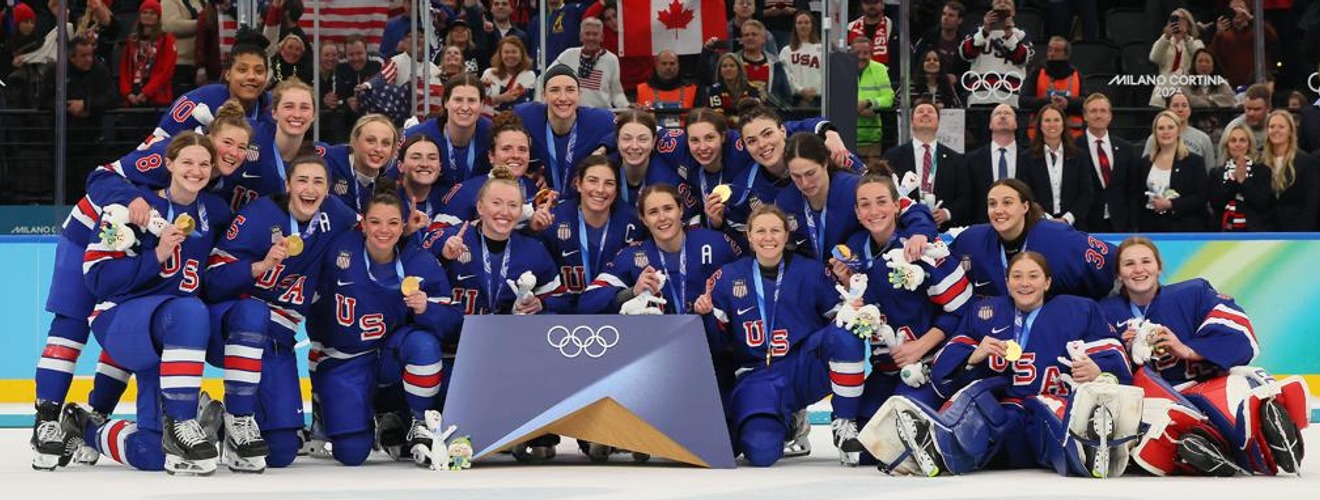
Two goals were scored against the United States women’s hockey team at these Olympics. Not two a game. Two in total, across seven games and a fortnight, one a breakaway in the opening match, the other a shorthanded goal that put Canada ahead in the final. The Americans scored thirty-three at the other end.
That is a strange way to win a gold medal, because it means almost none of the tournament was in doubt and all of the drama was compressed into about four minutes on the last night. Canada led with 2:04 to play. Hilary Knight tied it with the goaltender pulled. Megan Keller won it in overtime, and the thing that had been missing since 2018 was back.
The roster that did it mixes professionals from a league in its third season with college students who had exams waiting for them, which is a combination hockey has not sorted out and possibly never will. Three days later all 25 players on the American men’s team beat Canada in overtime too, by the same score, in the same building. Here is every woman who got there first.
Twenty-three players made up the United States women’s Olympic ice hockey roster at the 2026 Milano Cortina Games. The team went 6-1-0-0, beat Canada 2-1 in overtime in the final on February 19, and took the programme’s third Olympic gold medal, its first since 2018.
Lee Stecklein
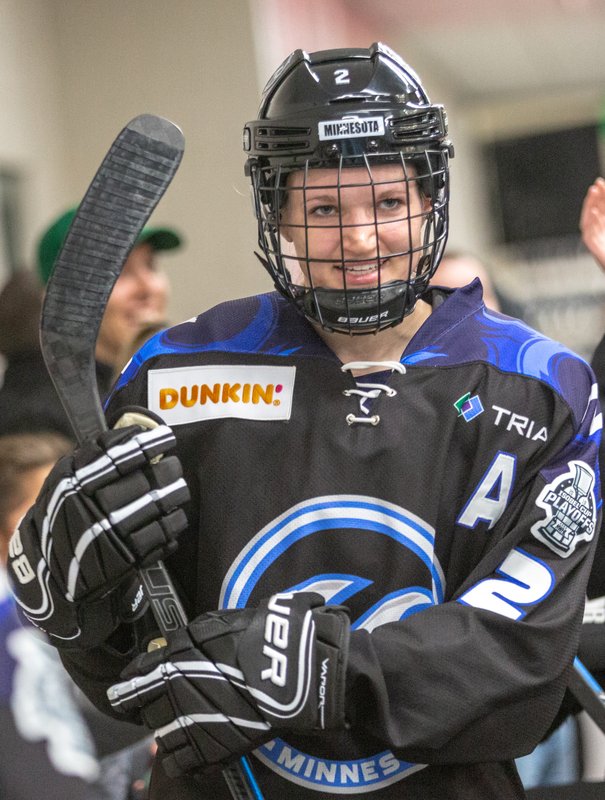
Four Olympics in, Lee Stecklein has a medal from every one of them, a harder trick than it sounds when the opponent is usually Canada. Sochi silver in 2014, Pyeongchang gold in 2018, Beijing silver in 2022, Milan gold in 2026. Kendall Coyne Schofield has the identical set, and the two of them debuted together twelve years ago.
She is not, however, the most decorated Olympian on this roster. That is the captain, Hilary Knight, who has been to five Games. Stecklein has been to nine world championships since 2013 and won seven of them, which is the sort of record that gets a player described as a stay-at-home defender and then quietly ignored.
Her tournament in Milan amounted to two assists in seven games, one on a shorthanded goal against Italy and one on Cayla Barnes’s goal against Sweden. That is what the job looks like on a team that gave up two goals in a fortnight.
As a Minnesota freshman she was part of the 2012-13 side that finished 41-0-0, still the only perfect season in the history of NCAA women’s hockey, and she left the school a three-time national champion. Her mother played soccer for Wisconsin. Her Minnesota Frost, champions in 2024 and 2025, were knocked out in five games by Montreal weeks after she came home from Italy.
Cayla Barnes
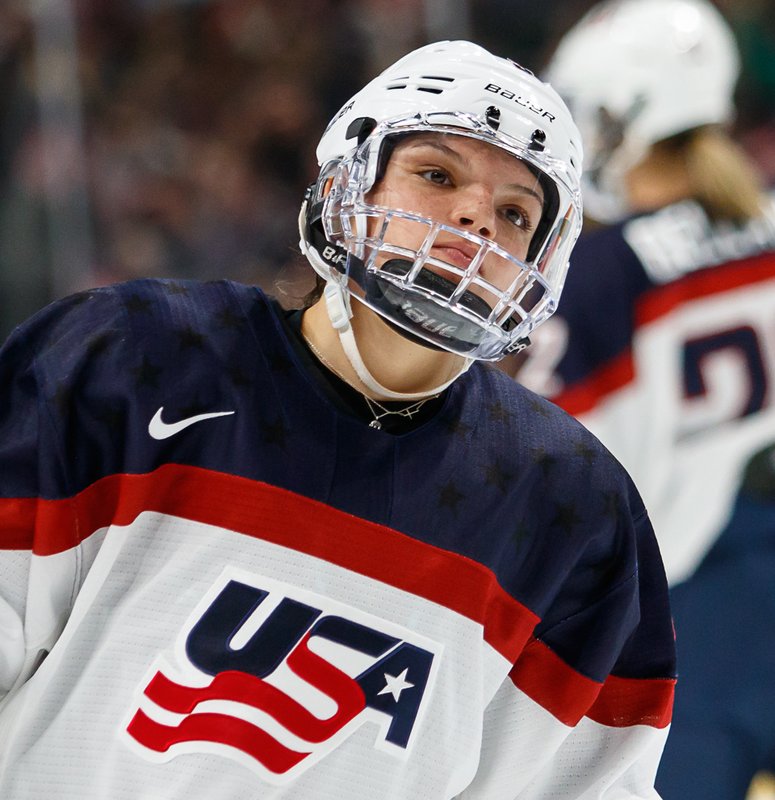
At five foot two and 139 pounds, Cayla Barnes is four inches shorter than any other defender on this roster, and the only skater who matches her height is a forward. She has spent a career being underestimated by people who read the roster sheet before watching the game.
She graduated from Boston College in May 2023 with a year of eligibility still on the shelf and used it at Ohio State, drawn by a coach who promised nothing more elaborate than hard work and winning. Barnes delivered a national title Boston College had never given her, assisting the only goal in a 1-0 win over Wisconsin in the 2024 final and posting a plus-71 rating that led the country.
Milan was her third consecutive Olympics, after gold in 2018 as the youngest player on that team and silver in 2022. She scored once, five minutes into the semifinal against Sweden, and that was her entire tournament on the scoresheet.
She is the first player to win three straight golds at the under-18 world championship, and was named its best defender twice. The youngest of five and the only girl among four brothers, she was put into figure skates first, at her mother’s insistence, and got out of them as soon as she could.
Caroline Harvey
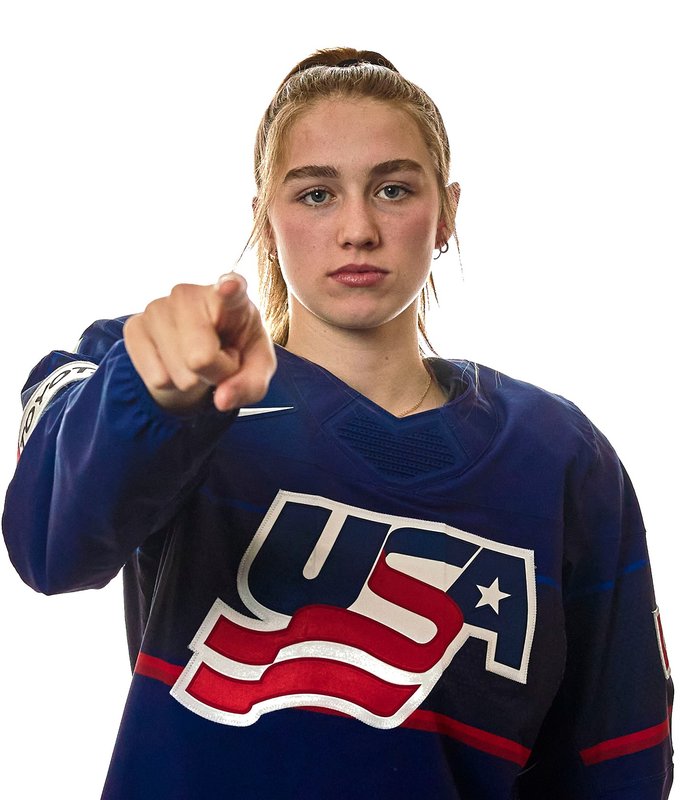
Caroline Harvey spent three years of her childhood training at Ramalho’s West End Gym in Lowell, Massachusetts, the boxing gym the film The Fighter was shot in, and Dicky Eklund told her father she hit like a truck and wanted to enter her in a youth tournament. Her mother said no. Hockey has since made the point on its own.
She was named the 2026 Olympic tournament’s Most Valuable Player and its Best Defenceman, the only American to win an individual award at the Games, and she tied Megan Keller for the scoring lead with nine points in seven games. Keller ranks first in the official table only on the tiebreaker of an extra goal. Two defenders on the same team outscored every forward at the entire Olympics.
A month later she and Wisconsin beat Ohio State 3-2 at Penn State’s rink for the programme’s ninth national title. Their coach is Mark Johnson, who led the scoring for the 20 Americans on the 1980 Olympic gold medal roster and has been at Wisconsin since 2002.
She won the Patty Kazmaier that spring too, the third defender ever to take it, and the IIHF named her its player of the year. She wears number 4 because Bobby Orr did.
Megan Keller
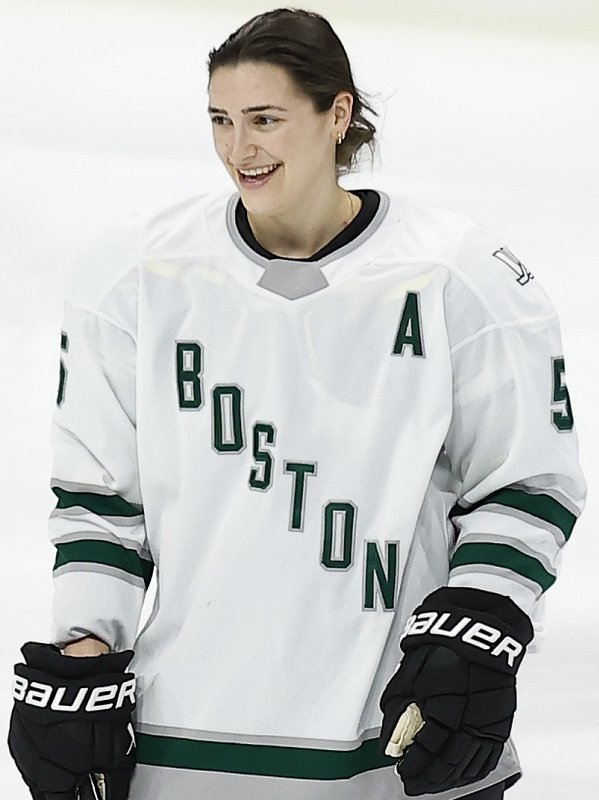
The gold medal was decided 4:07 into three-on-three overtime, when Megan Keller beat Claire Thompson, took a pass from Taylor Heise and put a backhand past Ann-Renee Desbiens. She had already set up the goal that got the Americans there, Hilary Knight’s equaliser with the goaltender pulled. She finished on nine points, more than any forward managed at the Games.
The puck went to the Hockey Hall of Fame, into an Olympics ’26 case in Toronto, where it sits beside the puck Jack Hughes scored with three days later and a jersey Knight wore.
Boston College credits her with three Hockey East Best Defenseman awards and, separately, four All-Star First Team selections, which are two different honours and are regularly reported as one. She left the school its leading scorer among defenders with 158 points and the only Boston College defender to win Hockey East player of the year, which she did twice.
She took the 2017-18 college season off to win Olympic gold in Pyeongchang and went back for her senior year afterwards. In November 2025 she became only the second captain in the history of the Boston Fleet. Above her childhood bed, her father kept a stencil reading Dream until your dreams come true.
Rory Guilday
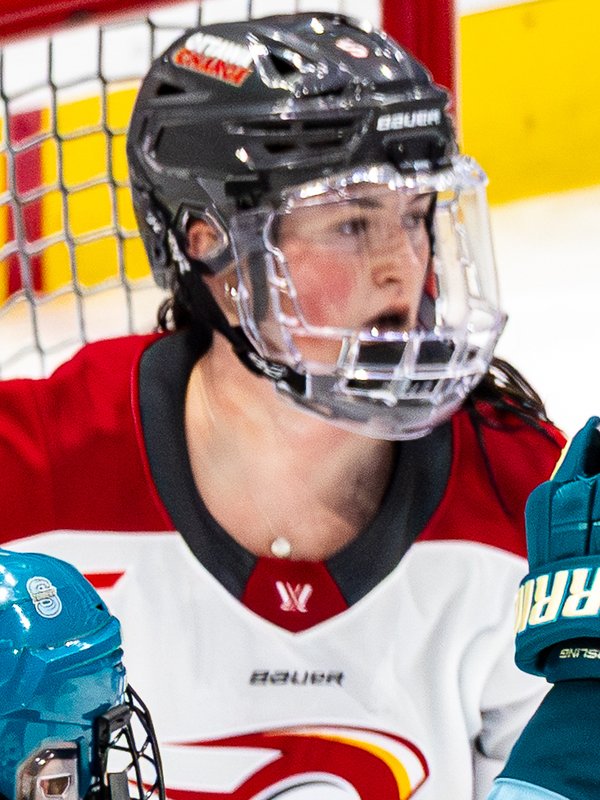
In seventh grade Rory Guilday was diagnosed with a brain tumour that produced an optic nerve glioma. A year of chemotherapy followed, contact sports were out, and she lost most of the sight in her right eye. She rebuilt her balance, went back to skating, and ten years later stood on an Olympic podium.
She played her college hockey at Cornell, where she was a four-year defender, captained the team for two of them, finished with 52 points in 105 games, and helped the Big Red to a Frozen Four and their first conference title in eleven years. Her coach there called her one of the best defenders in the world and said he had never seen a player with a shot like hers who was also that physically strong. She is the first Cornell player of either sex to play Olympic hockey for the United States, and she grew up in Chanhassen, Minnesota, seven states away from Ithaca.
In Milan she did not record a point in seven games and took two minor penalties, the correct line for a depth defender on a team nobody solved. She won the Class AA Herb Brooks Award as a Minnetonka High School senior in 2021, an award named for the coach of the Miracle on Ice team.
Haley Winn
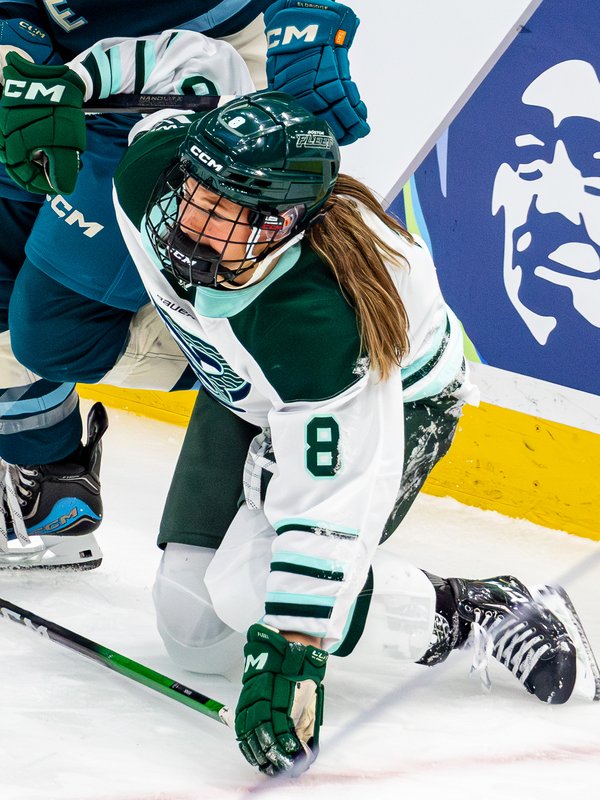
Seventy-four days separated Haley Winn’s first professional hockey game from her first Olympic one. She debuted for the Boston Fleet on November 23, 2025, made the Olympic roster at twenty-two, and by the following May had been voted the PWHL’s rookie of the year.
She scored six minutes into the win over Switzerland, set up by Harvey and Knight, and added three more assists over the tournament for four points in seven games. Not bad for someone whose professional career was younger than the roster announcement.
She left Clarkson with 130 points in 151 games, second among defenders in that programme’s history, seven points behind Erin Ambrose, and swept her conference’s player and defender of the year awards as a senior. Boston drafted her second overall in 2025 and put her straight onto the top pairing beside Megan Keller, who said she did not look like a rookie and always had her back.
She is the youngest of four and the only girl; all three older brothers played college hockey, all three as defenders. She played forward as a child until a game in Buffalo when, by her mother’s account, she came racing back from the front line and stripped the puck off a breakaway. The family understood what she was after that.
Kirsten Simms
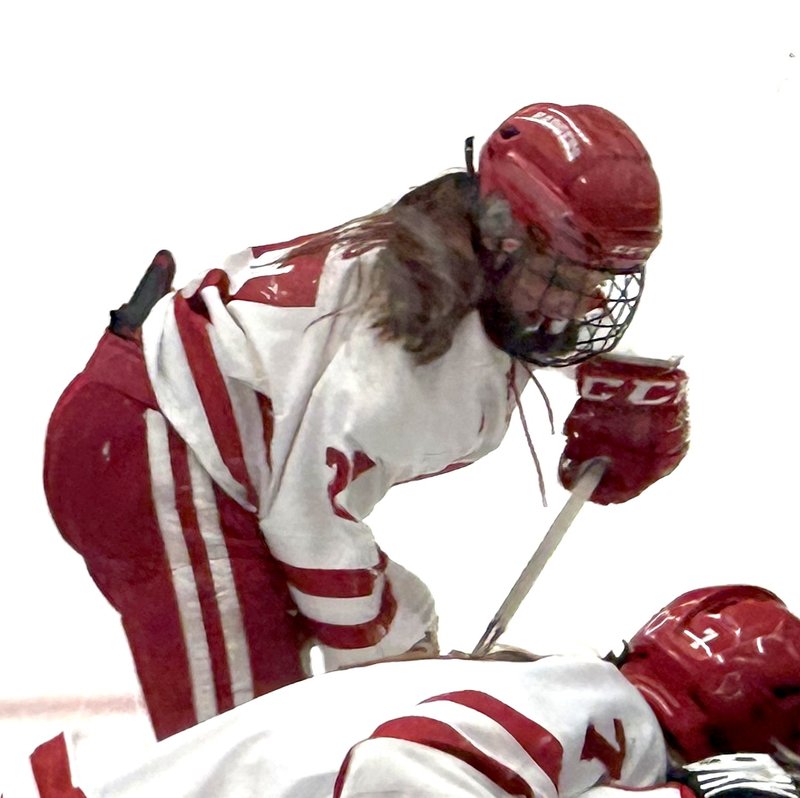
Kirsten Simms is the second-youngest skater on this roster, which is worth stating only because she is routinely called the youngest. Joy Dunne, born in June 2005, is about nine months her junior and the youngest player on the team once the goaltenders are counted.
What Simms actually owns is a habit of scoring at the exact moment a season would otherwise end. In the 2025 national championship game she tied it on a penalty shot with 18.9 seconds left and then won it in overtime, and was named the tournament’s most outstanding player. On March 20, 2026 she scored fifty seconds into overtime to beat Penn State in the Frozen Four semifinal, which happened to be the hundredth goal of her college career, scored at the same rink where she got her first.
She is the fifth Wisconsin player to reach a hundred, after Hilary Knight, Brianna Decker, Meghan Duggan and Lacey Eden. As a sophomore she led the entire NCAA with 75 points in 39 games, and she has three national championships, in 2023, 2025 and 2026.
In Milan she scored once, on a power play against Canada in the preliminary round, set up by Tessa Janecke and Abbey Murphy. Toronto took her eighth overall four months later.
Laila Edwards

In November 2023, at a Rivalry Series game against Canada, Laila Edwards became the first Black woman to play for the United States women’s senior national team. That is the precise version. Looser retellings have begun folding it together with a separate 2026 milestone, and the two are not the same achievement.
The other thing worth stating precisely is her position. She came up a forward, is still described as one almost everywhere, and moved to defence in 2025 to strengthen a team that then won the world championship. The IIHF’s official roster and the tournament’s own scoring table both list her at these Games as a defender, and the media all-star team named her one, alongside Caroline Harvey.
She finished with eight points in seven games, tied for third in tournament scoring, and set up Hilary Knight’s tying goal in the final with the goaltender pulled. She scored against Canada and against Italy.
At twenty she was named MVP of the 2024 world championship, the youngest winner that award has had. She skipped her own high school graduation to play an under-18 world championship, where she was also named MVP. In June, San Jose made her the first player it ever drafted.
Kelly Pannek
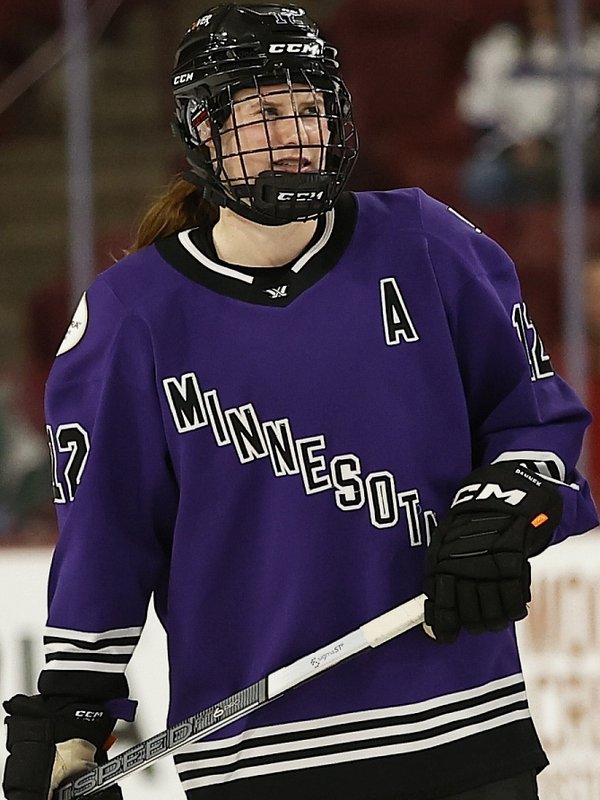
As a high school sophomore Kelly Pannek scored a hat trick in twenty-two seconds. The Minnesota state record before that was fifty-four seconds, so she did not so much break it as remove it, and she finished the 9-2 win with four goals and an assist.
Milan was her third Olympics and her third medal, after gold in 2018 and silver in 2022. In the Pyeongchang final she assisted the tying goal with 6:21 left, the one that forced the overtime and the shootout that ended a twenty-year wait. In Milan she was quieter, setting up Hayley Scamurra against Czechia and Cayla Barnes against Sweden, and nothing else across the fortnight. Three Olympics, three medals, and a quiet one to finish on.
At Minnesota she put up 186 points in 157 games and won consecutive national titles. She was a Patty Kazmaier finalist as a senior and, in high school, was named Minnesota’s best soccer player of 2013, which suggests the hat trick was not a fluke of the sport.
Her middle name became public only in November 2025, when Team USA posted about the squad’s middle names before the Games. It is Maureen. Her Frost lost a fifth game in Montreal in May and the three-peat went with it.
Grace Zumwinkle
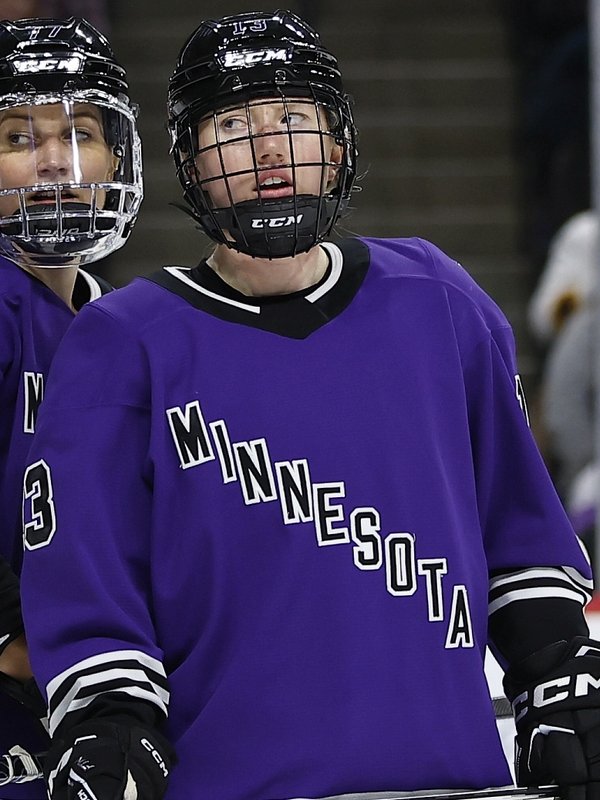
The first hat trick in the history of the PWHL belongs to Grace Zumwinkle, scored on January 6, 2024, in a 3-0 win over Montreal in front of what was then a record crowd at the Xcel Energy Center. Two Walter Cups followed in consecutive years.
Her international career has a gap in it that is easy to misread. She did not miss an Olympics. She was left off the 2023 world championship roster altogether, was named only an alternate in 2024, and had to play her way back onto the 2025 team that won gold before the Olympic roster was even a question. Getting dropped and returning is a more interesting career shape than never being dropped.
In Milan her only point was an assist on Kendall Coyne Schofield’s second goal against Italy, shared with her linemate Britta Curl-Salemme.
She finished at Minnesota with 109 goals, third in the programme’s history, and is one of five Gophers with a hundred goals and a hundred assists. As a freshman she became the first first-year player to win her conference’s scoring title in seven years. Her father played college football, her mother played college tennis, and she was a three-sport athlete before hockey took over.
Hayley Scamurra
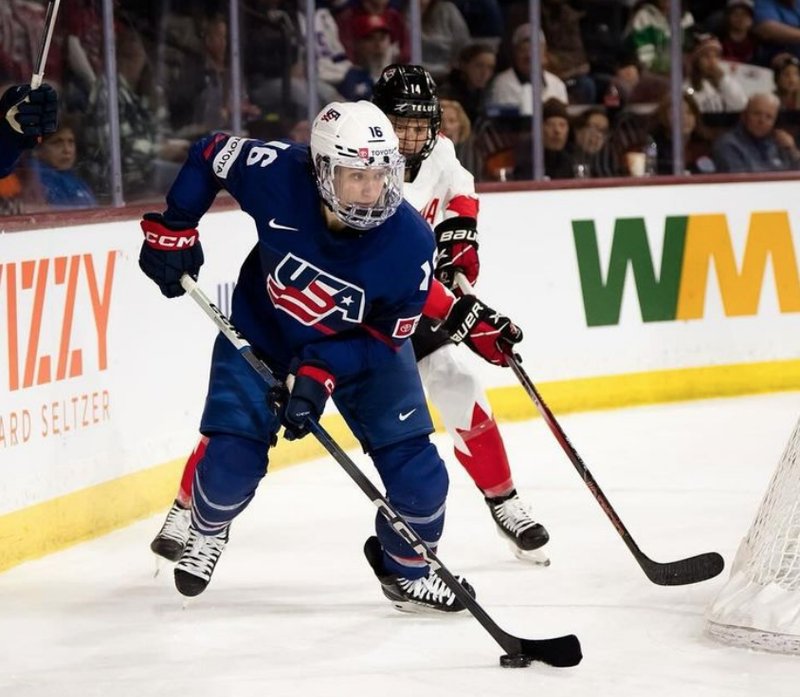
USA Hockey never invited Hayley Scamurra to a development camp. Not as a teenager, not as a college player. She went off to junior hockey in Ontario instead, played four years at Northeastern, turned professional in a league that no longer exists, and got her first call to the senior national team on January 25, 2019, at twenty-four, which in this sport is roughly a decade late.
Milan was her second Olympics and her first gold. She scored three goals in seven games, two of them against Czechia in the opener and one against Sweden in the semifinal.
Her father Peter was the first Buffalo-born player to reach the NHL and spent four seasons with Washington, and he built her a backyard rink when she was three. At seven, on a boys’ team he coached, she wrote down that she intended to become an Olympian. He kept the card on the refrigerator.
Weeks after the Olympics she won the Walter Cup with Montreal, becoming the first player in the league’s history to take an Olympic gold and a championship in the same season. She then signed with an expansion team in Las Vegas, her fifth professional club in six years.
Britta Curl-Salemme
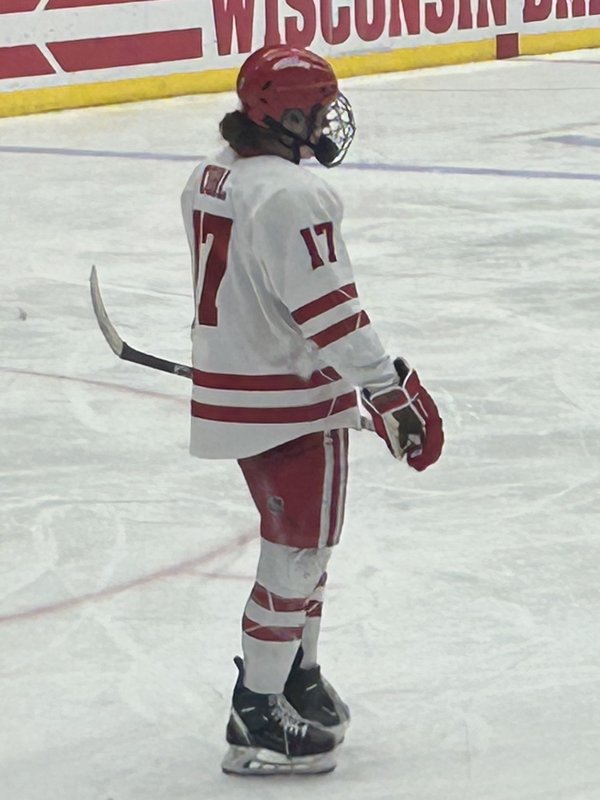
Britta Curl-Salemme went to Wisconsin, captained it twice, and left as the programme’s leader in games played, with 179 points in 181 of them and three national titles. She is one of six players on this roster who came through Mark Johnson’s programme, a number usually given as four because only four of them were still enrolled.
Wisconsin named her captain in September 2022 and again the following year. Both captaincy seasons reached a Frozen Four and the first won a championship.
In Milan she had a goal and five assists in seven games. The goal was shorthanded, in the 6-0 quarterfinal against the host nation. She is the first hockey Olympian Bismarck, North Dakota has sent anywhere.
Her father flooded a backyard rink every winter. She played five seasons for a co-op team called the Bismarck Blizzard, scored 189 goals, and won four consecutive state titles. In the second match of the 2025 professional finals she tied the score with sixteen seconds left and settled it in the extra period, which is a useful thing for a teammate to be able to do.
She married Andrew Salemme in September 2024. The IIHF’s roster still lists her under her maiden name.
Hilary Knight
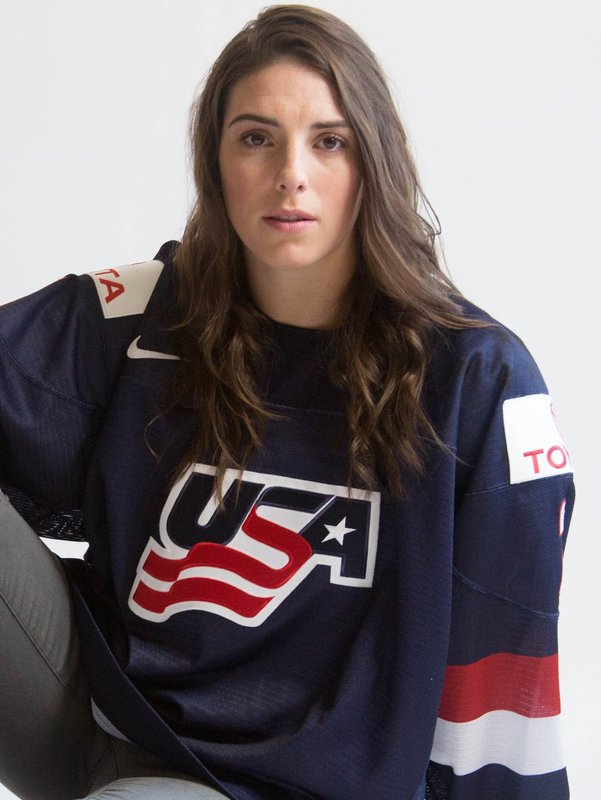
With 2:04 left in the gold medal game and Aerin Frankel pulled for an extra skater, Hilary Knight deflected a Laila Edwards shot past Ann-Renee Desbiens. It was her fifteenth Olympic goal and her thirty-third Olympic point, both American records regardless of sex, and it is the reason there was an overtime at all.
She was doing it on a torn knee ligament. She had left the ice in the second game of the tournament, against Finland on February 7, after a collision with Ida Kuoppala, and said nothing about it until a television appearance on March 2, when she mentioned that she had played through a torn medial collateral ligament. Seattle had already ruled her out by then.
She had scored her thirteenth Olympic goal in the opener and her fourteenth in the Finland game, the one that tied a record she had shared with Natalie Darwitz and Katie King. She was injured in the same game she tied it.
At thirty-six, in her fifth Olympics, she was named captain on January 30 and carried the flag at the closing ceremony, the third hockey player ever to do it. At Wisconsin she scored 143 goals, more than any player the school has had, men’s or women’s.
Tessa Janecke
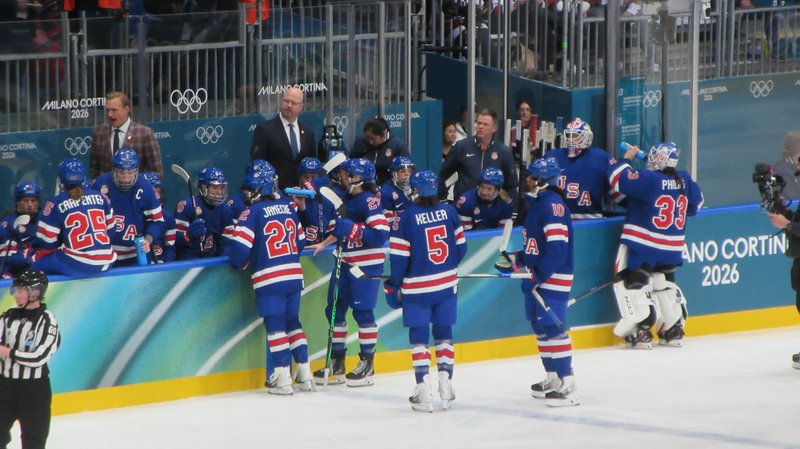
Penn State women’s hockey had never put a player on a United States Olympic roster. Its only previous Olympian of any nationality was a Swede who graduated in 2021 and went to Beijing for Sweden. Tessa Janecke ended that in Milan, and finished as the programme’s leading scorer on 201 points.
She recorded five assists and no goals in seven games, which undersells the tournament considerably: two of them came in the opener against Czechia, one on a Kirsten Simms power-play goal against Canada, and one in each of the two knockout rounds before the final.
She was, at twenty-one, one of the college players on a roster otherwise stocked with professionals, an arrangement that would once have been the entire argument about Olympic eligibility. Basketball settled its version of that argument in 1992, when the United States assembled the 1992 Dream Team roster that opened Olympic basketball to NBA players. Hockey has arrived somewhere stranger, with both kinds on the same bench.
She had already won a world championship in overtime, scoring the golden goal against Canada in 2025, and described it afterwards as happening to be in the right spot at the right time. In June, Las Vegas took her third overall, the highest any Penn State woman has been drafted.
Hannah Bilka
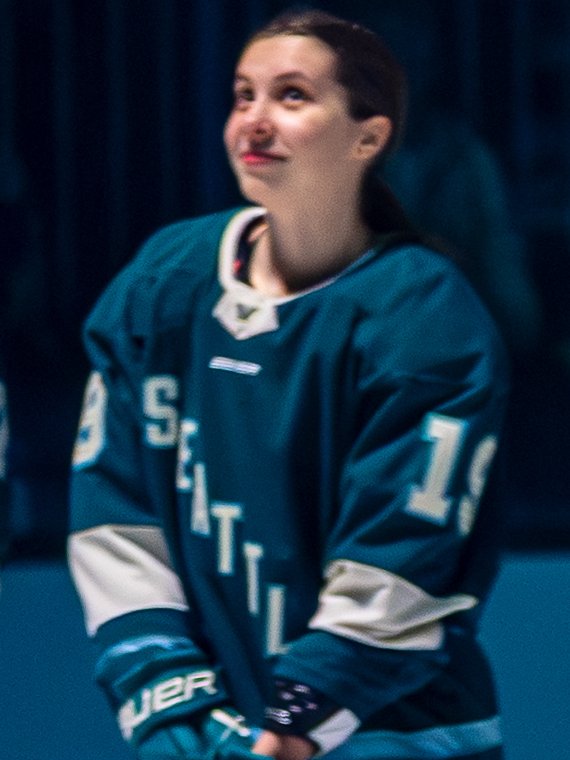
Four goals is what led the 2026 Olympic tournament, and Hannah Bilka scored four, tied with a Swede for the outright lead and finishing with seven points in seven games. Of the three Americans on the tournament’s media all-star team, she was the forward.
She very nearly scored a fifth that mattered more than all of them, getting free at 4:35 of the second period in the final off passes from Taylor Heise and Abbey Murphy, and putting the shot over the net.
She spent four years at Boston College and then a graduate season at Ohio State, a move announced in March 2023, and won a national championship there while leading the team in scoring. Boston drafted her fourth overall in 2024 and Seattle took her third in an expansion draft a year later.
She is from Coppell, Texas, which is not a place that produces Olympic hockey players, and she won a national rookie of the year award as a freshman.
The gold medal cost her the rest of her season. An upper-body injury from the Olympics shut her season down on March 10 after only fourteen games, which was almost precisely how her previous professional season had ended, also on international duty.
Joy Dunne
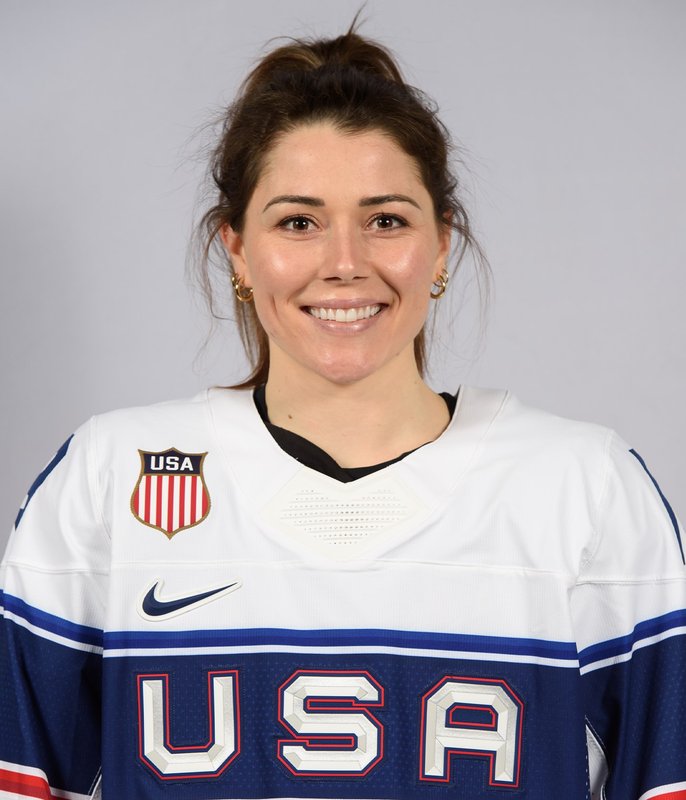
Born in June 2005, Joy Dunne was the youngest person on this roster, younger than every skater and every goaltender, and she scored in her first Olympic game. That was against Czechia, with Tessa Janecke supplying the pass, and she scored again unassisted against Switzerland four days later, adding two assists in the same game.
She finished with two goals, three assists and a plus-seven rating in seven games, and by the final she was taking a regular shift among players who had been to three Games.
She is the youngest of six children in a family that plays this sport almost exclusively. Her sister Jincy played at Ohio State, won silver at Beijing in 2022 and now plays professionally in New York. Of the four Dunne sisters who play hockey, Joy is the only forward.
In her first Ohio State season she was voted the best freshman in the country and already had a world championship gold and a silver before she arrived in Italy.
When she found out she had made the Olympic team, she and Jincy both cried. Her sister, who had been watching the whole climb from a professional dressing room, offered the shortest possible assessment of her: she has the heart of a lion.
Alex Carpenter
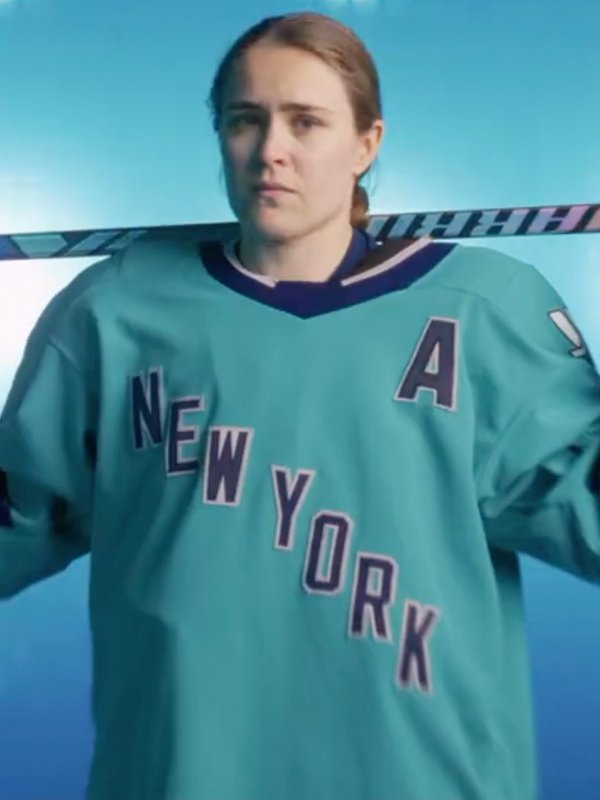
Alex Carpenter did not win a gold medal at the 2018 Olympics. She was cut. The surprise leaked before Christmas 2017, and USA Hockey confirmed the final roster without her on New Year’s Day, announced by the head coach during the second intermission of the Winter Classic. The Americans then won the thing without her, which is the detail that makes it a story rather than a disappointment.
Two weeks later she signed with a club in Shenzhen, partly because her father was coaching the men’s team in the same organisation. Her actual Olympics before Milan were Sochi in 2014 and Beijing in 2022, silver both times. This was her third Games and her first gold, eight years after the one that got away.
She scored the first goal of the tournament, a power-play deflection of a Megan Keller shot against Czechia, and another against Finland two days later, finishing with three goals and three assists.
Her father Bobby was the first American to go straight from high school into the NHL, third overall in 1981, and won three Stanley Cups with New Jersey, one playing and two coaching. Between them the family had banked three championships before Alex finally got her gold.
Kendall Coyne Schofield
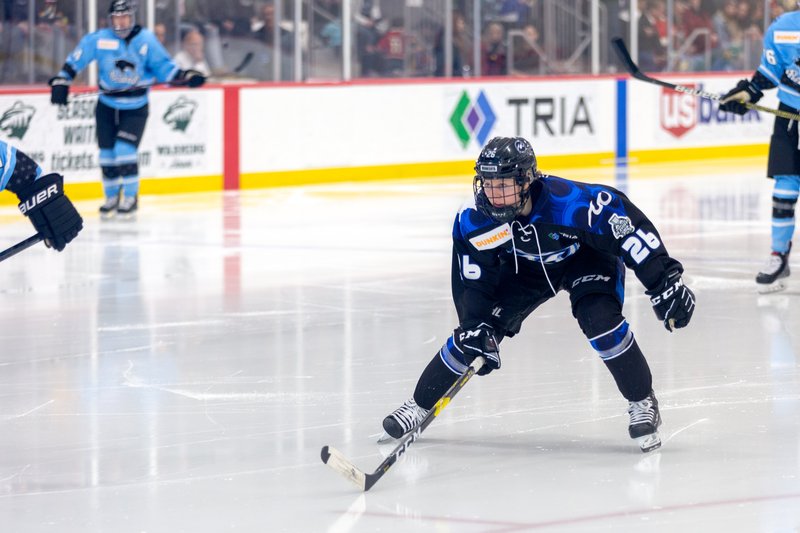
On January 26, 2019, in San Jose, Kendall Coyne Schofield became the first woman to skate in the NHL All-Star fastest skater competition and went round in 14.346 seconds. She finished seventh of eight, ahead of Clayton Keller, and under a second behind Connor McDavid. Seventh place has rarely done more work for a sport.
She scored three goals in Milan and every one came in an elimination game: two in the second period against Italy and one against Sweden. She captained the team in Beijing in 2022; in Milan the letter went to Knight and she simply played.
Her four Olympics have produced four medals, two gold and two silver, and her eleven world championships have produced eleven more. She won the Patty Kazmaier at Northeastern in 2016, a season in which she led the country in goals, goals per game, points per game, shorthanded goals and hat tricks.
She got hurt in the gold medal game itself and was placed on long-term injured reserve eight days later, backdated to the final.
She is married to a Super Bowl-winning offensive lineman, has a son born in 2023, and in 2024 voiced a hockey announcer in a Pixar film, which is a career few of her teammates can match.
Taylor Heise
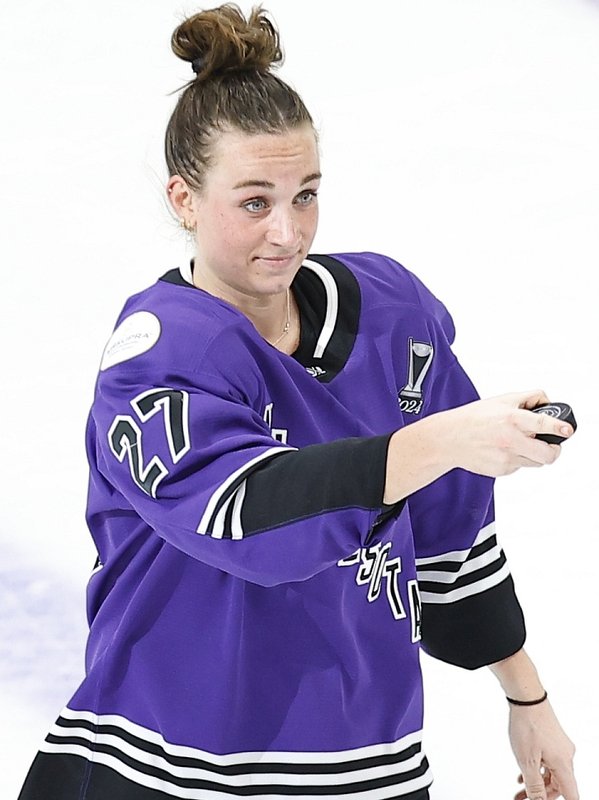
The pass that won the gold medal came from above the Canadian blue line, and Taylor Heise made it. Megan Keller took it, beat Claire Thompson and scored. Heise had spent the tournament doing exactly that: an American analyst noted on air that she had been passing up shots in favour of passes, and the observation aged about as well as an observation can.
She also set up Hannah Bilka twice, against Switzerland and against Italy.
She won the Patty Kazmaier in 2022, a season of 60 points and the second-most shots on goal in Minnesota’s single-season history, becoming the programme’s third winner after Amanda Kessel and Krissy Wendell. Minnesota took her first overall in the inaugural professional draft in September 2023, her name read out by Billie Jean King, and she scored the first goal in the Frost’s history that January.
She grew up in Lake City, Minnesota, played high school hockey at Red Wing, was named the state’s best player in 2018 and captained Minnesota in both her junior and senior years.
She is engaged to a Minnesota basketball player who used seven seasons of college eligibility, which suggests a household with an unusual tolerance for long campaigns.
Ava McNaughton
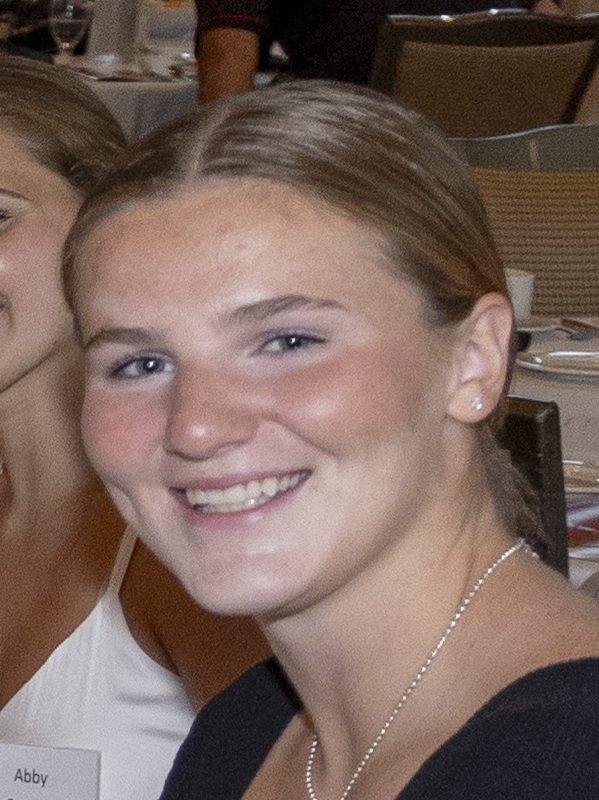
One minute and forty-eight seconds. That was the entire Olympic tournament of Ava McNaughton, who came on for the closing minutes against Switzerland after Gwyneth Philips had played 58:12, and did not concede. It completed a combined shutout, the second of five in a row, and it was the only action she saw in seven games.
Six weeks later she made 34 saves and was named the most outstanding player of the national championship as the Badgers took their ninth title, and their second in a row, past Ohio State by a goal. She is the fourth Wisconsin goaltender to win that award, after Jessie Vetter, Kristen Campbell and Cami Kronish.
She went 20-3-0 as a freshman and then 36-1-2 as a sophomore, with a save percentage of .944 and the best goals-against average in the country. No Wisconsin goaltender has won more games in a season.
She was one of four players on this roster enrolled at Wisconsin during the Games, alongside Harvey, Simms and Edwards.
She got interested in hockey at six, watching the women’s tournament at the 2010 Olympics. She had been figure skating with her sister and switched, and always volunteered to go in goal. Only a certain kind of child does that.
Aerin Frankel
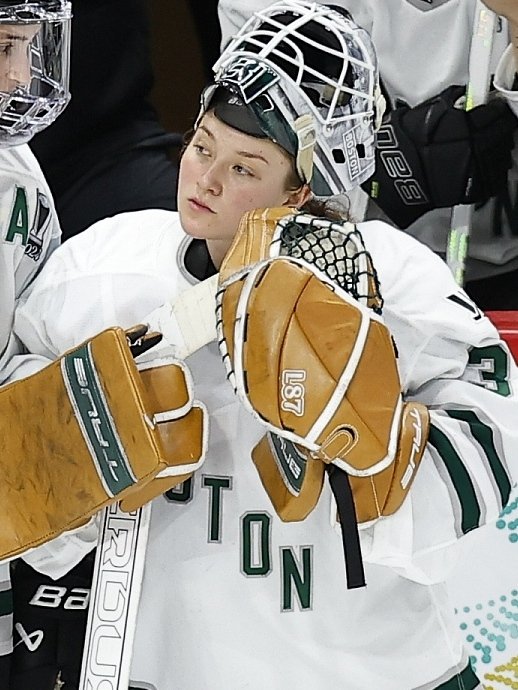
Both of the goals the United States conceded at these Olympics went in on Aerin Frankel. She won all five of her starts with a goals-against average of 0.39, a save percentage of .979 and three shutouts, and made 30 saves on 31 shots in the final while her team killed all three Canadian power plays.
The goaltender she beat that night was Ann-Renee Desbiens, which closes a loop that had been open for five years. Frankel was the fourth goaltender to win the Patty Kazmaier, in 2021, after Ali Brewer, Jessie Vetter and Desbiens herself. That same 2021 Northeastern team lost the national championship game to Wisconsin in overtime.
Her senior season set the NCAA record for save percentage at .966, with nine shutouts and twenty wins, all of them the best in the country. She holds Northeastern’s career wins record with 103, from 139 games, along with 39 shutouts, a save percentage of .949 and a goals-against average of 1.31. Her 2021 team lost the national championship game to Wisconsin in overtime, which is a useful thing to have behind you when a Wisconsin-trained goaltender is standing at the other end of an Olympic final.
Hilary Knight, asked about her after the final, said she had been lights out all year and that she was glad the world finally got to see it.
Gwyneth Philips
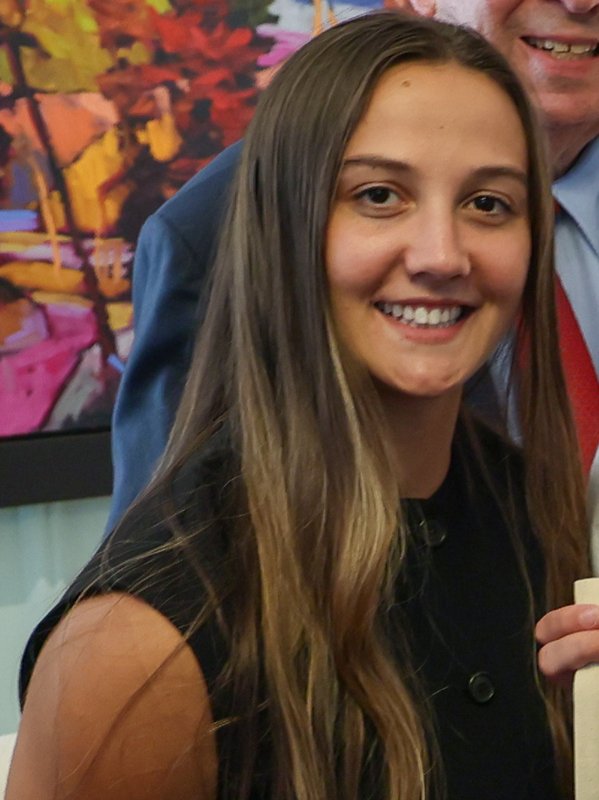
Gwyneth Philips was born in Athens, Ohio, which is where Ohio University sits, and which is why she is regularly credited to a school she never attended. She went to Northeastern, finished five seasons with a career save percentage of .958, the highest in the history of NCAA hockey, and started every game of two consecutive seasons.
At the Olympics she played the whole quarterfinal against Italy and stopped all six shots she faced in a 6-0 win, and made her debut four days earlier against Switzerland, playing 58:12 and making twenty saves before McNaughton finished it. Two of the team’s five shutouts were hers.
In her first professional postseason she played all eight games, won four including a shutout, and was named the playoff most valuable player. Every game of that final went to overtime.
Before college she was a two-sport athlete in Pittsburgh, captaining her school to a league title as a senior in 2019 after winning it in 2016 and 2017 as well, and playing lacrosse alongside it. Her club took her fourteenth overall in 2024, the first goaltender chosen that year. She signed an extension with Ottawa in July 2025, before any of this was on the table.
Abbey Murphy
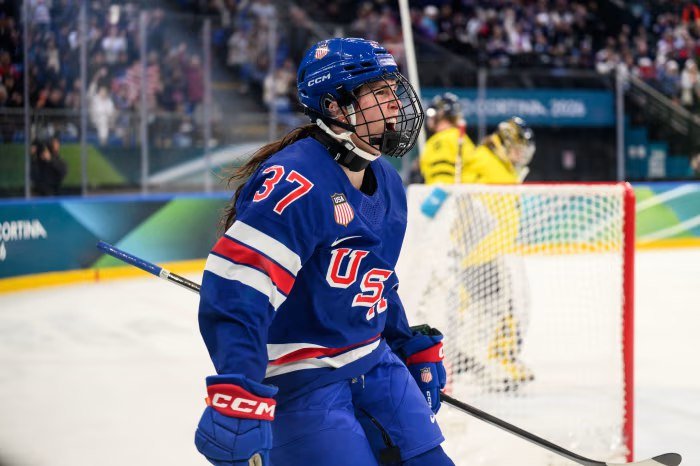
Seven seconds is the fastest anyone has scored at a women’s world championship, and Abbey Murphy did it on April 7, 2023, taking a faceoff win from Abby Roque, going past two defenders and beating the Swiss goaltender before most of the building had sat down.
She is the player opposing benches complain about. In the 5-0 win over Canada she recorded three assists, one of them a backhand feed to Hannah Bilka that had no business working, and drew four penalties against Canadian players. She took one penalty herself in the entire tournament. A Canadian broadcaster called her embellishment atrocious and embarrassing on air; the Canadian head coach called her very effective and said his team had to decide whether to match her or ignore her. Both were describing the same game.
She finished ninth in tournament scoring, on seven points.
Her Minnesota coach, who has had her since 2020, says other teams curse at her because she works the areas in front of the net in a sport that does not allow body checking, and that he has never seen a player like her. She spent six seasons in college, using a pandemic year and an Olympic redshirt, and turned professional as the second overall pick.
Frequently Asked Questions
Who scored the winning goal for the USA women in the 2026 Olympic final?
Megan Keller, on a backhand 4:07 into overtime after Taylor Heise found her above the blue line and she got past Claire Thompson. Hilary Knight had forced the extra period at 57:56 with the goaltender pulled, set up by Laila Edwards and by Keller herself.
Who was the captain of the 2026 U.S. Olympic women’s hockey team?
Hilary Knight, named on January 30, 2026, in her fifth Olympic Games. Megan Keller and Alex Carpenter wore the alternate letters. Kendall Coyne Schofield, who had captained the team in Beijing four years earlier, played without a letter in Milan and scored three goals anyway.
Who won awards at the 2026 Olympic women’s hockey tournament?
Caroline Harvey took the Most Valuable Player award and the Best Defender award, and was the only United States player to win an individual honour at the Games. Three Americans made the media all-star team: Harvey and Laila Edwards on defence, with Hannah Bilka up front.
Was Hilary Knight injured at the 2026 Olympics?
Yes. She tore a knee ligament in the second game, against Finland on February 7, and played the rest of the tournament on it without telling anyone. She disclosed it on television on March 2, by which point her club had shut her down for a month.
How many college players were on the 2026 U.S. Olympic women’s hockey roster?
Seven were still enrolled: four at Wisconsin, plus one each at Penn State, Ohio State and Minnesota. The other sixteen played professionally in the PWHL. Wisconsin’s four were Caroline Harvey, Kirsten Simms, Laila Edwards and the goaltender Ava McNaughton, all of them coached there by Mark Johnson.
Did Alex Carpenter win gold at the 2018 Olympics?
No. She was cut from that roster on January 1, 2018, and the United States won without her. She had gone to two previous Games, taking silver at each, and Milan finally gave her a gold at thirty-one, eight years late.
Which goaltender started for the USA in the 2026 Olympic gold medal game?
Aerin Frankel, who was beaten once on thirty-one shots. She started five of the seven games and finished with three shutouts, a 0.39 goals-against average and a .979 save percentage. Gwyneth Philips started the other two, with Ava McNaughton relieving her for the closing minutes of one.
- USA Hockey: 2026 U.S. Olympic and Paralympic Hockey Teams Announced
- IIHF: United States Women’s Ice Hockey Roster, Olympic Winter Games Milano Cortina 2026
- USA Hockey: GOLDEN – U.S. Women Clinch Olympic Gold With 2-1 Overtime Win Over Canada
- IIHF: USA – Canada, Women’s Gold Medal Game Centre Recap (19.02.2026)
- NHL.com: United States Rallies Late, Tops Canada in OT for Women’s Olympic Gold Medal
- Team USA: official athlete profiles
- PWHL: official player and Olympic statistics
- University of Wisconsin Athletics: women’s hockey records