Every Player on the 2026 U.S. Men's Olympic Hockey Roster
On February 22, 1980, a team of American college players beat the Soviet Union 4-3 at Lake Placid, and for the next four and a half decades that game did all the work. It was the reference point for every American hockey team that followed, the thing every roster was measured against and found wanting, and it had the peculiar effect of turning the best night American hockey ever had into something it could not get out from under.
Forty-six years later, on the same date, the United States played Canada for an Olympic gold medal in Milan. Jack Hughes scored 1:41 into overtime. The wait that the college and amateur players on the 1980 Olympic roster unknowingly began was over. It is an odd thing to say about men who won, but that is what one triumph does when nothing follows it.
This team was not a collection of amateurs. It was the first American Olympic team in twelve years to be picked from the NHL at all. Bill Guerin assembled it, Mike Sullivan coached it, and a man raised in the Arizona desert wore the C. It went through the tournament without losing. Its leading scorer was a defenceman, its best player was a fifth-round goaltender, and one of its gold medallists never took a shift. Here is every one of them.
Twenty-five players made up the United States men’s Olympic ice hockey roster at the 2026 Milano Cortina Games, comprising fourteen forwards, eight defencemen and three goaltenders. The team finished 6-0 and beat Canada 2-1 in overtime on February 22 to take the country’s third Olympic hockey gold, and its first since 1980.
Auston Matthews
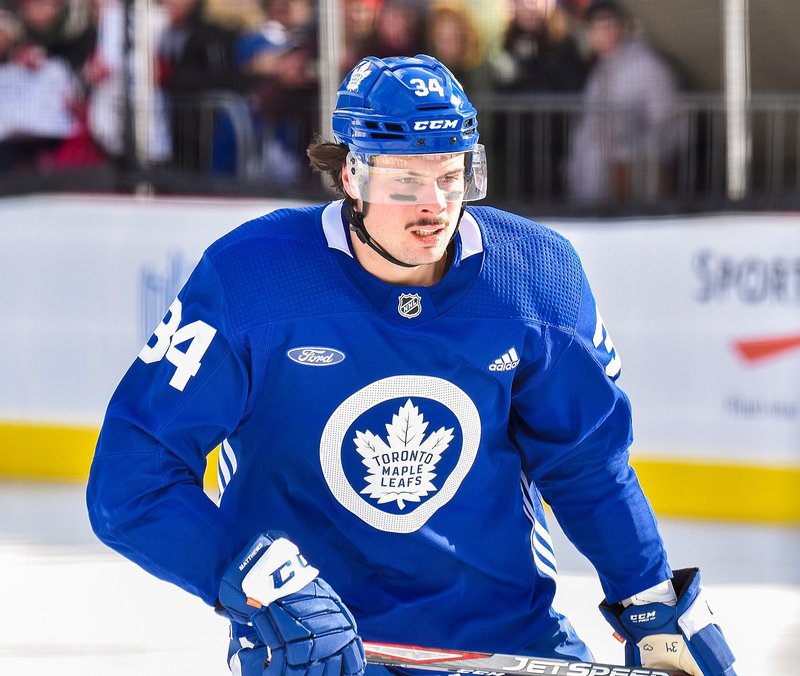
Two months after Auston Matthews was born in San Ramon, California, his family moved to Scottsdale, and he learned the game in the desert rather than in any of the places that usually produce American centres. He reached the 2016 draft by an unusual road, spending a season with the Zurich Lions of the Swiss National League because he had missed the 2015 draft class by two days. His father liked to point that out to reporters. Two days the other way and Matthews would have been arguing with Connor McDavid and Jack Eichel over who went first. Toronto took him first overall in his own year instead, and he scored four goals in his NHL debut on October 13, 2016, which nobody in the modern era had done.
On February 8, 2026, general manager Bill Guerin named him captain of the Olympic team and gave the alternate letters to Matthew Tkachuk and Charlie McAvoy. Matthews scored three goals in Milan, a power-play goal against Latvia and two against Germany, and set up the goal that opened the final.
Three weeks after he lifted the gold medal, on March 12, a knee-on-knee collision with Anaheim’s Radko Gudas tore his MCL and ended his season at 53 points in 60 games. He had won the Hart Trophy, the Ted Lindsay, the Calder and a Rocket Richard before any of this. The medal was the one that had been missing.
Jack Eichel
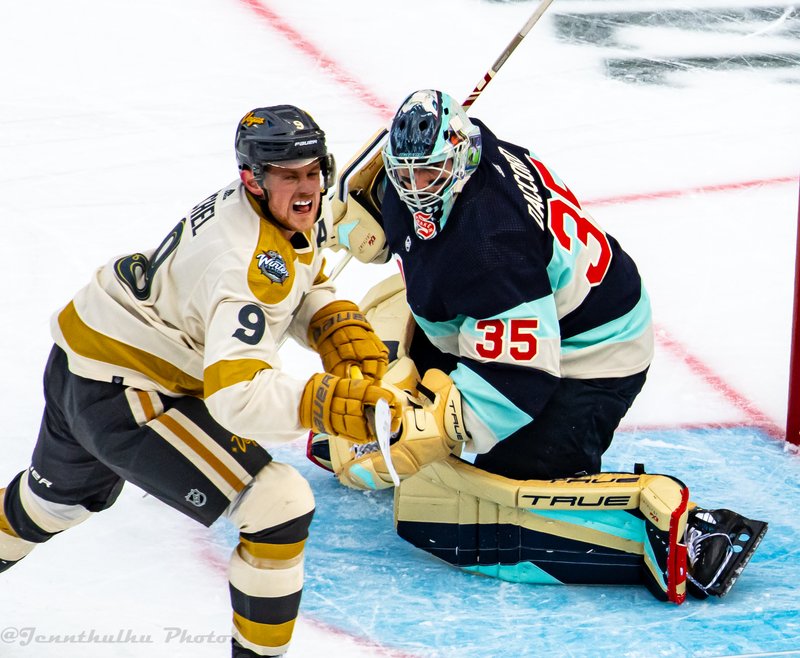
Buffalo would not let Jack Eichel have the operation he wanted. In April 2021 he needed a herniated spinal disc dealt with, and the procedure he preferred, an artificial disc replacement, had never been performed on an active NHL player. The club refused to clear it. The standoff ended with the Sabres stripping him of the captaincy on September 23, 2021, and trading him to Vegas six weeks later for two players and two draft picks. Vegas cleared the surgery. He played his first game in nearly a year on February 16, 2022, and won the Stanley Cup in 2023, in what was somehow the first playoff appearance of his career.
That Cup, added to the 2015 Hobey Baker Award he won as a Boston University freshman with 71 points in 40 games, left him one trophy short of a set only one man had ever completed. The gold medal in Milan finished it. Eichel and Neal Broten of the 1980 team are the only two players who have won a Hobey Baker, an Olympic gold and a Stanley Cup.
He scored in the comeback against Denmark, 57 seconds after setting up Brady Tkachuk’s tying goal, and in the semifinal against Slovakia he scored 19 seconds after assisting on Tage Thompson. He first wore the American jersey at fifteen, at a Youth Olympics in Austria. He had to wait until 2026 for a real one.
Quinn Hughes
A defenceman led the United States in scoring at these Games, which is not something that happens often. Quinn Hughes finished with eight points in six games, one goal and seven assists, ahead of every forward on the roster, and the IIHF named him the tournament’s Best Defenceman. Not one American forward was named to the media all-star side.
His goal was the only one he scored and it won a quarterfinal outright. Tied 1-1 with Sweden at 3:27 of overtime on February 18, he carried the puck into the slot and beat Jacob Markstrom with a wrist shot off the post. He also had a hand in the goal that put the Americans ahead of Canada.
He had arrived at the Olympics through a strange door. On December 12, 2025, Vancouver traded its own captain to Minnesota for two forwards, a defenceman and a first-round pick. The general manager on the receiving end was Minnesota’s Bill Guerin, who two months later was running the Olympic team Hughes would win it for.
Hughes was born in Orlando and raised in Toronto, where his father worked for the Maple Leafs. His mother, Ellen Weinberg-Hughes, won a silver medal with the United States women’s team at the 1992 world championship. Both his brothers play for New Jersey. By August he was telling reporters he was open to re-signing in Minnesota. “I mean, I really like it here,” he said, which from a captain traded midseason is a considerable concession.
Charlie McAvoy
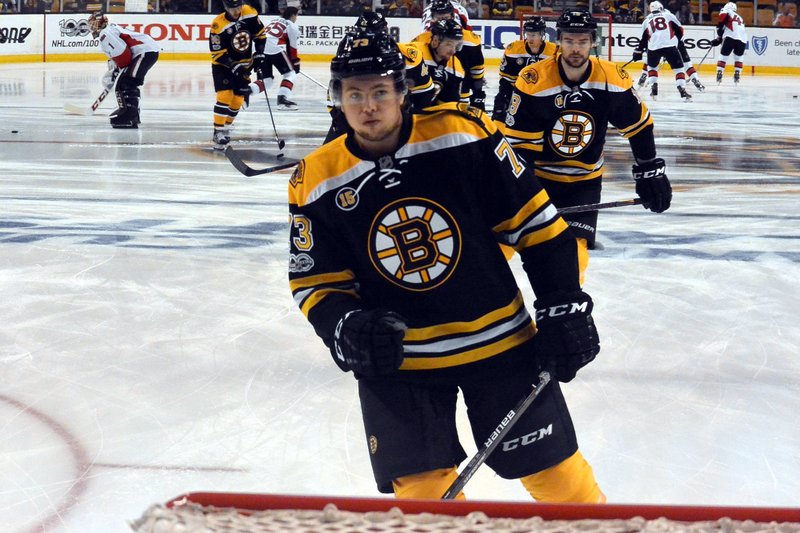
On February 18, 2025, the Boston Bruins announced that Charlie McAvoy had been admitted to Massachusetts General Hospital. What had looked like an upper-body injury turned out to be an infection, and it ended his 4 Nations Face-Off two games in, an alternate captain watching the final from a hospital bed. His interim coach confirmed that April that he would not play again that season.
The Olympics gave him back what the infection had taken. He wore an A again, played all six games, and went home with the gold medal. He also did not appear on a single scoresheet. Across six games his name turns up in no goal and no assist, because the job in Milan was to smother other teams’ best lines rather than decorate the summary sheet, and the Americans conceded nine goals in the whole tournament.
The rest of his season reads like an inventory of a hard trade. A Noah Dobson slap shot broke his jaw on November 15, 2025, took out several teeth, and put a metal plate in his face and twenty pounds off his frame on a liquid diet. In March, Samuel Helenius drove him face-first into the glass and cost him more teeth. He broke his right hand in the second game of Boston’s playoff series against Buffalo and played the last four wearing a small cast under his glove, unable to hold his stick properly.
Matthew Tkachuk
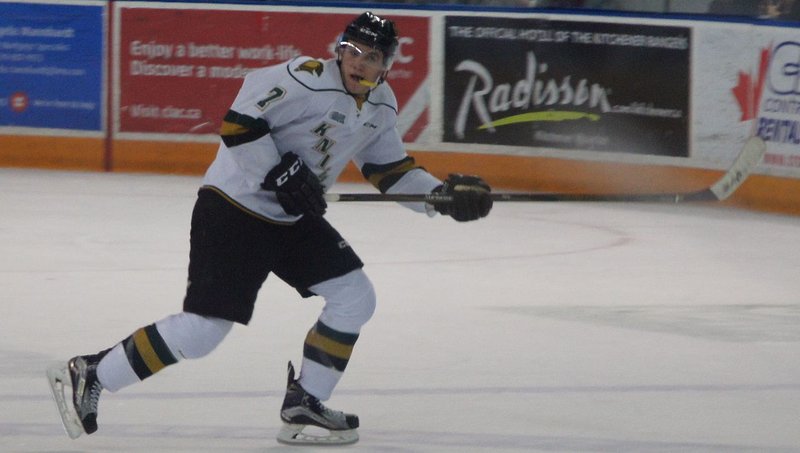
Their father went to four Olympics and came home with one medal. Keith Tkachuk played for the United States at Albertville, Nagano, Salt Lake City and Torino between 1992 and 2006, and the only thing he won across all of it was a silver in 2002. Both of his sons won gold at their first attempt, on the same afternoon, in the same building.
Matthew arrived in Milan barely fit. During the 2025 4 Nations Face-Off he tore an adductor and suffered a sports hernia on the same side, played all twenty-three games of the Stanley Cup playoffs anyway, tied for Florida’s scoring lead with twenty-three points, won the Cup, then had surgery that kept him out of the first forty-seven games of the following season. He did not play an NHL game again until January 21, 2026. That gave him roughly three weeks of hockey before the Olympic break.
He wore an A, played all six games and recorded six assists without scoring, which included setting up his brother’s first Olympic goal. He also began the sequence in the semifinal, forecheck to turnover to finish, that ended with Eichel scoring.
Four months later his father got the honour that had eluded him. On June 22, 2026, the Hockey Hall of Fame announced Keith Tkachuk’s induction. In August 2025 he had told ESPN that his kids were his Hall of Fame. He now has both.
Brady Tkachuk
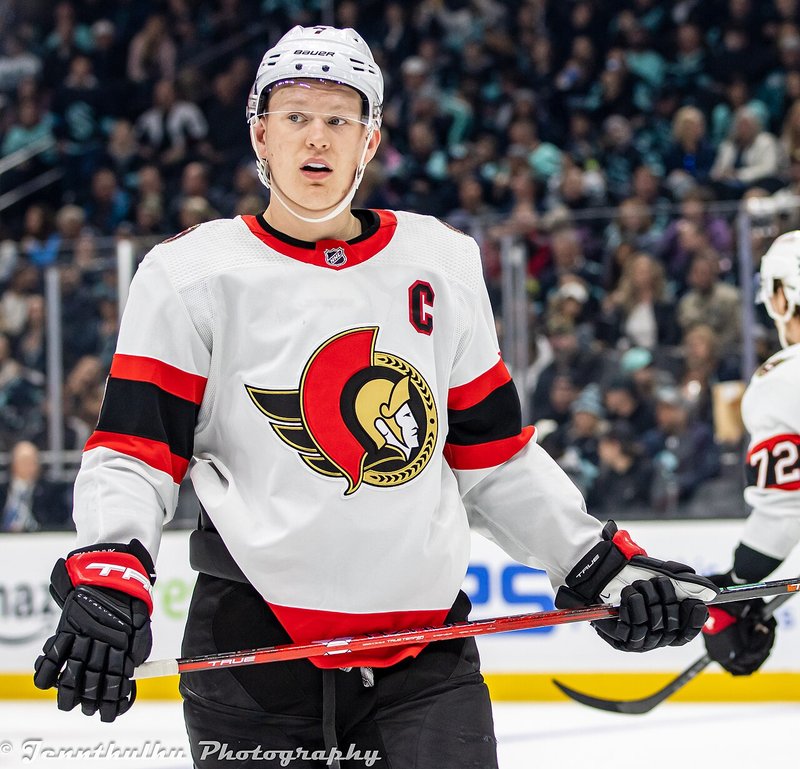
Five minutes and twenty-nine seconds into the tournament, Brady Tkachuk scored the first American goal of the 2026 Games and the first Olympic goal of his life, converting a pass from his brother. He finished with three goals and two assists, tied the game against Denmark off an Eichel faceoff win, forced the turnover in the semifinal that his brother’s forecheck had created, and closed out that same game with a breakaway backhand.
He had reason not to be there at all. On October 13, 2025, Nashville’s Roman Josi cross-checked him into the boards, and his coach put the recovery at four weeks or more. He was captain of Ottawa at the time, and had been since 2021.
The strangest thing that happened to him in Milan happened after the final whistle. Pulled aside for doping control while the celebration started without him, and facing a sample requirement he could not immediately meet, he settled in to wait. Two teammates in the same position missed the dressing room entirely. Tkachuk drank, by his own count, about five beers, three Powerades and two waters over roughly forty minutes, produced 100 millilitres against a required ninety, and made the team bus.
On June 21, four months after winning gold as Ottawa’s captain, he was traded to Florida to play alongside Matthew. The Senators got two first-round picks in the 2026 draft, a conditional 2029 first and a 2027 second for him.
Dylan Larkin
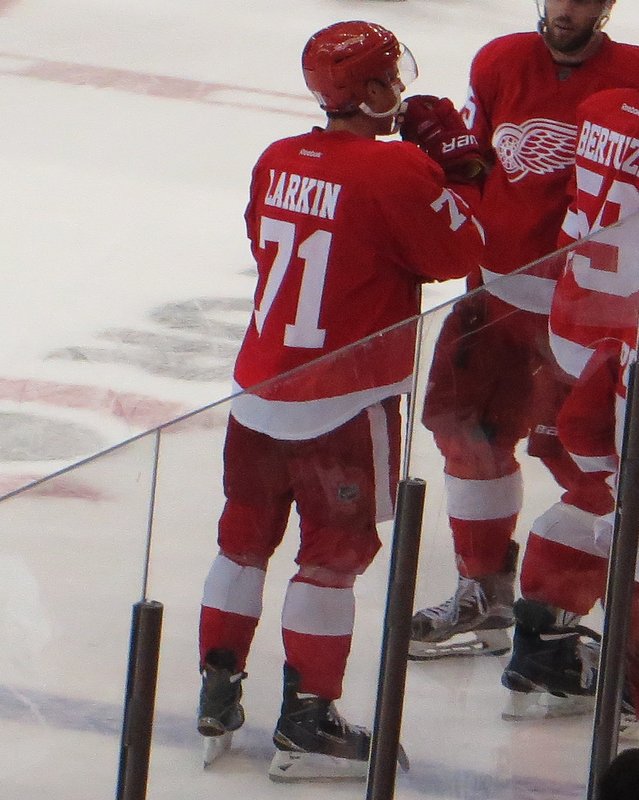
Dylan Larkin set the fastest lap the NHL had ever timed: 13.172 seconds at the 2016 All-Star Skills Competition in Nashville, breaking a mark Mike Gartner had held since 1996. It is the sort of record that gets a player remembered for the wrong thing. What he did in Milan was quieter and mattered more.
He scored twice, and both goals opened an elimination game the United States went on to win. In the quarterfinal against Sweden he redirected a Jack Hughes point shot past Markstrom at 11:03. Two days later, 4:19 into the semifinal, he took a Werenski feed and put the Americans ahead of Slovakia. He did it while skating as the third-line centre and a penalty killer, a considerable demotion from Detroit, where he has centred the top line and worn the captaincy since 2021.
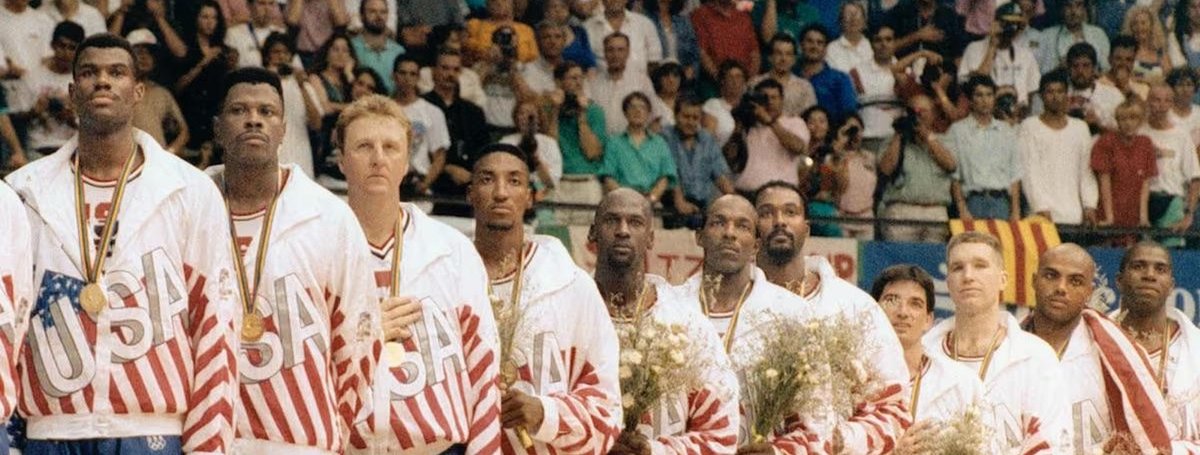
This was his first Olympics, and it could not have been anything else. The NHL had not sent players to a Winter Games since Sochi in 2014, a twelve-year absence that made the question moot for almost everyone in the American dressing room. Olympic basketball had settled the same argument in the other direction decades earlier, when FIBA voted to admit professionals and the United States assembled the 1992 Dream Team roster that ended Olympic basketball’s amateur era.
Werenski called Larkin the heartbeat of the team. He wore no letter at all.
Brock Nelson
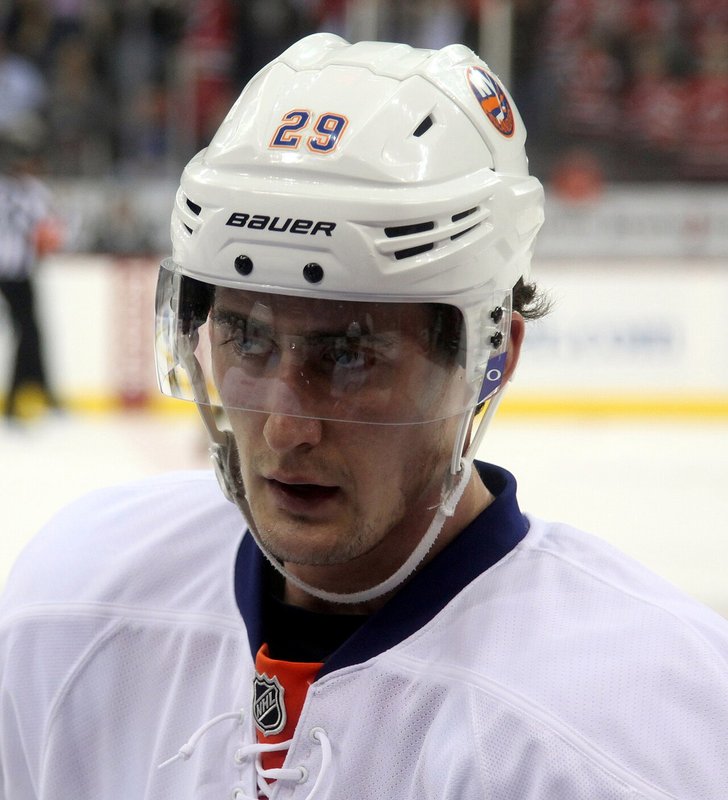
Bill Christian led the 1960 United States Olympic team in scoring with seven goals and five assists and won gold at Squaw Valley. His son Dave won gold with the 1980 team at Lake Placid. His grandson is Brock Nelson, who won gold in Milan in 2026, which makes three generations of one family with an Olympic hockey gold medal and a fourth Winter Games in the ledger, since Bill’s older brother Gordon took a silver in 1956 and is the only one of them who never won the thing outright.
Dave Christian, who is sixty-six, was in the building for the final. Nelson called their moment afterwards pretty emotional and said what he told his uncle was simply, “We did it. Crazy that it was 46 years to the day when they beat the Russians.” His grandfather, eighty-eight, could not make the trip.
All of them come from Warroad, Minnesota, population about 1,830, which calls itself Hockeytown USA and has a decent claim. Bill and Roger Christian founded a hockey stick company there in 1964 and made wooden sticks for four decades before it was sold in 2009. According to NHL.com, no American men’s Olympic team has ever won gold without a Warroad player in the lineup.
Nelson, thirty-four and the oldest man on the roster, scored twice in the opener against Latvia. Both goals were set up by Jack Hughes.
J.T. Miller
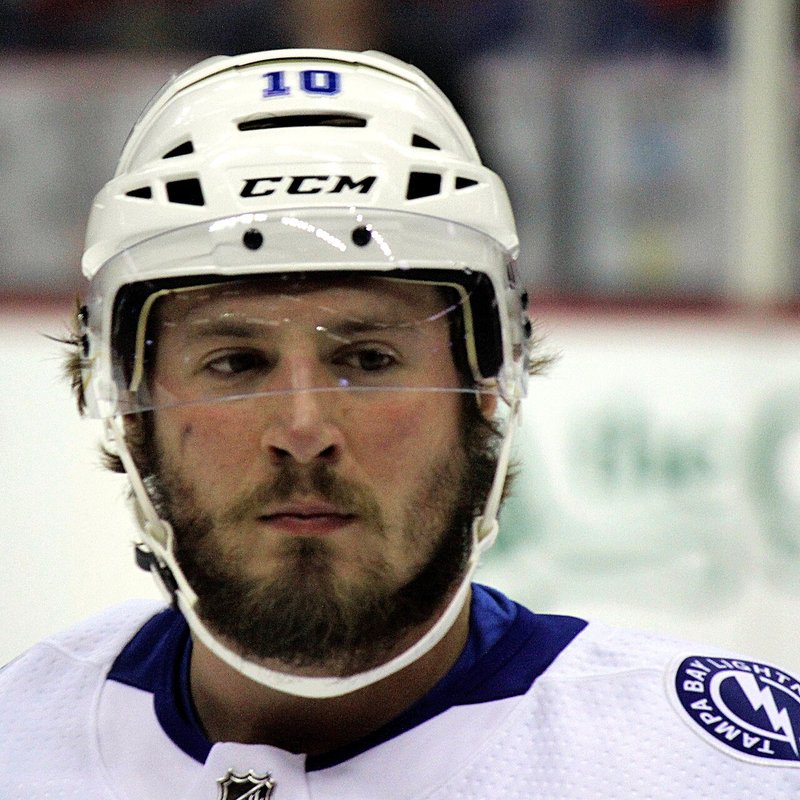
Seventeen years passed between J.T. Miller joining USA Hockey’s National Team Development Program at sixteen and finally standing on an Olympic roster at thirty-two. He was the second-oldest player in Milan, behind only Nelson, and he spent the tournament on the fourth line killing penalties and taking faceoffs, without registering a single point in six games.
He was completely at peace with it. “I embrace that. I’m just trying to be myself,” he said, and on why the thing mattered at all: “It’s not really for me, I think it’s more for my kids.”
The road there had been unusually eventful. The Rangers drafted him fifteenth overall in 2011, traded him to Tampa Bay in 2018, and watched him spend six seasons in Vancouver piling up 437 points in 404 games, including a 103-point year. That stint ended in a publicly strained relationship with Elias Pettersson and a trade back to New York on January 31, 2025. On September 16 of that year the Rangers made him the twenty-ninth captain in franchise history, which meant that fourteen years after they drafted him he was leading the team that had picked him.
The line most often quoted from him in Milan was about somebody else. Describing Larkin, he said, “he just brings energy all day long...his presence, it resonates in the whole room.” It is a generous thing to say from the fourth line.
Jack Hughes
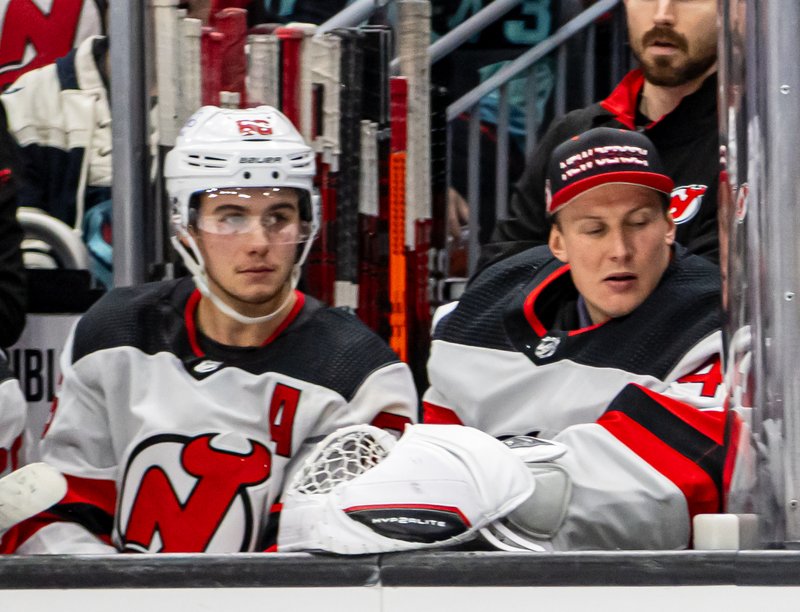
At 1:41 of overtime in the gold medal game, Jack Hughes one-timed a cross-ice pass from Zach Werenski past Jordan Binnington and ended the longest drought in American hockey. He had lost two front teeth minutes earlier, to a high stick from Canada’s Sam Bennett, and stayed on the ice with a bloodied mouth. The first teammate to reach him was his brother, who told him it was all good, only chips, he was going to be fine. His mother, watching live, said afterwards that she was very glad he wears a mouthguard. He had the teeth repaired properly on March 17.
He finished with four goals and three assists, one point behind his brother, and two of those goals came in the semifinal rout of Slovakia. The Americans had watched the 23 American women who had already beaten Canada in overtime do the same job three days earlier at the same tournament.
There is a second Jack Hughes in this story. A Harvard defenceman of that name, born in 1957, was among the last players cut from the 1980 United States team, in the same trim that removed Ralph Cox, roughly two weeks before Lake Placid. He went on to play 46 NHL games for the Colorado Rockies, the franchise that moved in 1982 and became the New Jersey Devils. The Devils took the other Jack Hughes first overall in 2019. They are not related.
Jake Guentzel
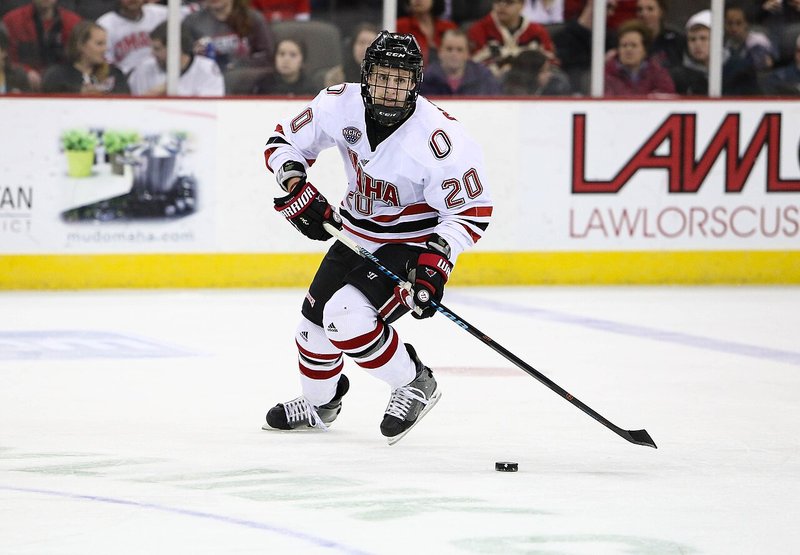
Jake Guentzel arrived in Milan already holding a Stanley Cup, and he had won it in the most improbable way available. As a Pittsburgh rookie in 2017 he scored thirteen goals and twenty-one points in twenty-five playoff games, one goal short of the rookie record and level with Dino Ciccarelli and Ville Leino for rookie points in a single postseason, and the Penguins beat Nashville in six.
He did it on Sidney Crosby’s wing, which is the sort of qualification that follows a player around. It is also quantifiable. Over Guentzel’s Pittsburgh career Crosby assisted on 114 of his goals, 52 percent of the 219 he scored there, second only to the 140 Crosby has set up for Evgeni Malkin. Pittsburgh has never settled which way that cuts.
Pittsburgh traded him to Carolina in March 2024, Carolina flipped him to Tampa Bay that June for a third-round pick, and Tampa signed him the next day for seven years and 63 million dollars. Not bad for the seventy-seventh pick of the 2013 draft.
In Milan he scored once, a one-timer at 47:24 in the comeback against Denmark, and finished with a single point. He was the most opportunistic forward on the roster, which sounds like faint praise for a man with a Cup and a nine-million-dollar salary, and turned out to be exactly the compliment it looks like.
Matt Boldy
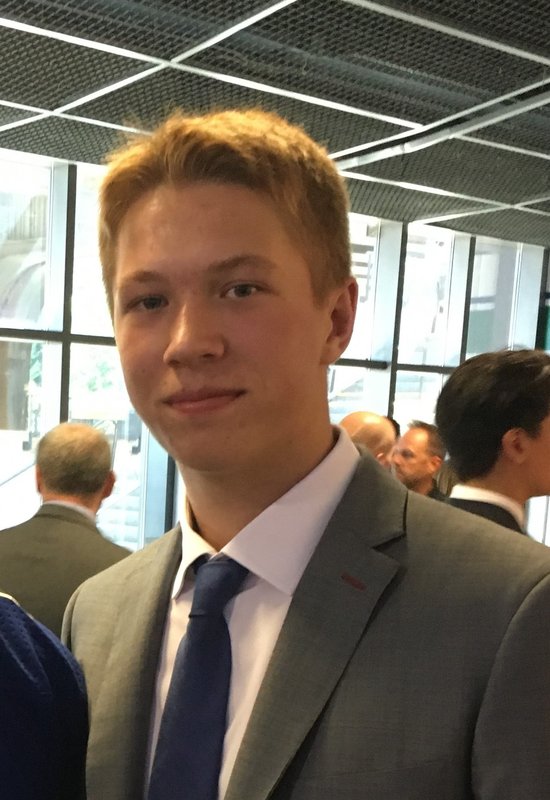
Six minutes into the gold medal game, Matt Boldy flipped the puck over two Canadian sticks, drove in alone on Binnington and beat him with a backhand. Matthews and Quinn Hughes got the assists. It was the first goal of the final and, by the end of the night, one of only two the Americans scored.
That was the end of a genuinely useful tournament rather than a lucky night. Boldy tied the Denmark game with a wraparound off his own rebound at 3:35, set up Quinn Hughes’s overtime winner against Sweden, and fed Jack Hughes for the fifth goal in the Slovakia semifinal, finishing with two goals and two assists in six games.
He came out of Boston College, where he led the Eagles with thirty-one points in twenty-two games in the shortened 2020-21 season and made the Hobey Baker top ten before leaving early to sign with Minnesota in March 2021. The Wild had taken him twelfth overall in 2019, and by the end of the 2024-25 season NHL.com had him among the ten best forwards in the league.
He has never won a major individual NHL award. His contract, seven years and 49 million dollars, was signed in January 2023, well before any of this, so the gold medal cost Minnesota nothing it had not already spent.
Kyle Connor
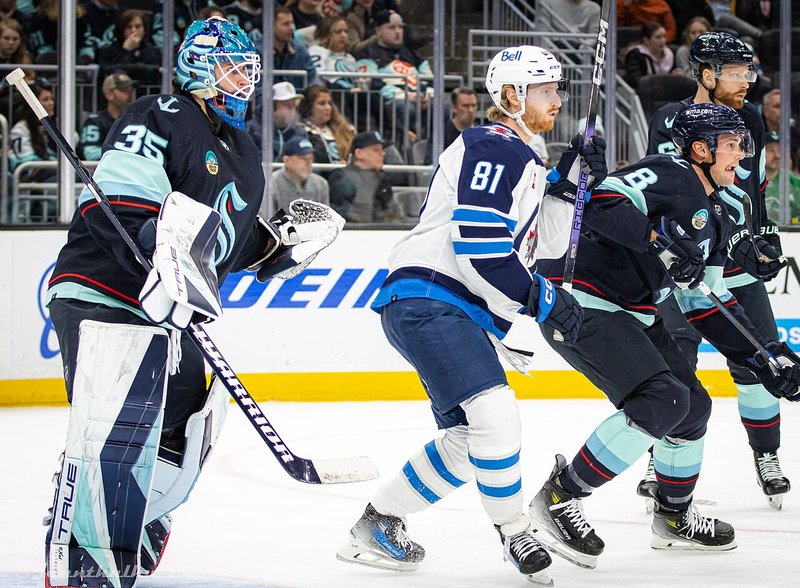
Kyle Connor did not record a point in Milan. Twenty-six American goals went in across six games and not one of them was his, which is a strange line for a man who was on pace for one of the best goal-scoring seasons of his career.
Being overlooked is close to a career theme. In 2017-18 he led all NHL rookies with thirty-one goals and received not one first-place Calder vote, finishing fourth, outside the three official finalists, one of whom was his future Olympic teammate Clayton Keller. His own coach in Winnipeg described the problem with unusual candour in 2024: “He’s an elite player in this league. We like to keep him as our little hidden secret.”
The hardware did eventually arrive, in the quiet categories. He won the Lady Byng in 2022, made two All-Star Games, and was named to the First All-Star Team in 2025. He reached 500 points in 541 games, the second-fastest pace in franchise history. In October 2025 Winnipeg gave him eight years and 96 million dollars.
He plays in a market that American national broadcasts barely visit, and he went home from Italy with an Olympic gold medal, which most of the great goal scorers of his generation do not have. Not scoring one of the twenty-six seems, in that light, a survivable oversight.
Clayton Keller
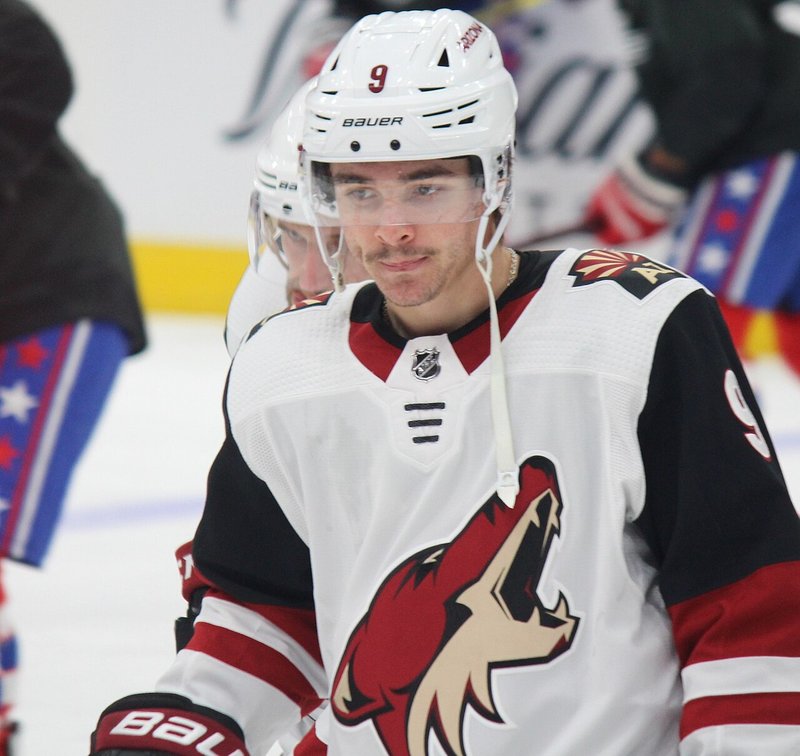
One day after his father Bryan died on Thanksgiving Day 2025, Clayton Keller played. He logged 18:07 against Dallas on November 28, was named the game’s first star, and his team lost 4-3. He captained the Utah Mammoth through the rest of that season without missing a game, finished with 88 points in 82, and put up 34 of them in his last twenty-five games.
The franchise he was drafted into no longer exists under the name he was drafted by. Arizona took him seventh overall in 2016; the Coyotes were rendered inactive on April 18, 2024 when the league approved the move of their assets to Salt Lake City; the relocated club played its first game that October under the placeholder name Utah Hockey Club, and only became the Utah Mammoth on May 7, 2025. Keller was named the first captain in its history before it had settled on a name.
He nearly lost the career entirely in 2022, carried off on a stretcher against San Jose on March 30 with a fractured leg and roughly six months of rehabilitation ahead of him.
In Milan he registered nothing at all across the tournament, which for the leading scorer of an NHL club is an odd way to win a gold medal. He was also on the ice for a defence nobody solved. Both things are true.
Tage Thompson
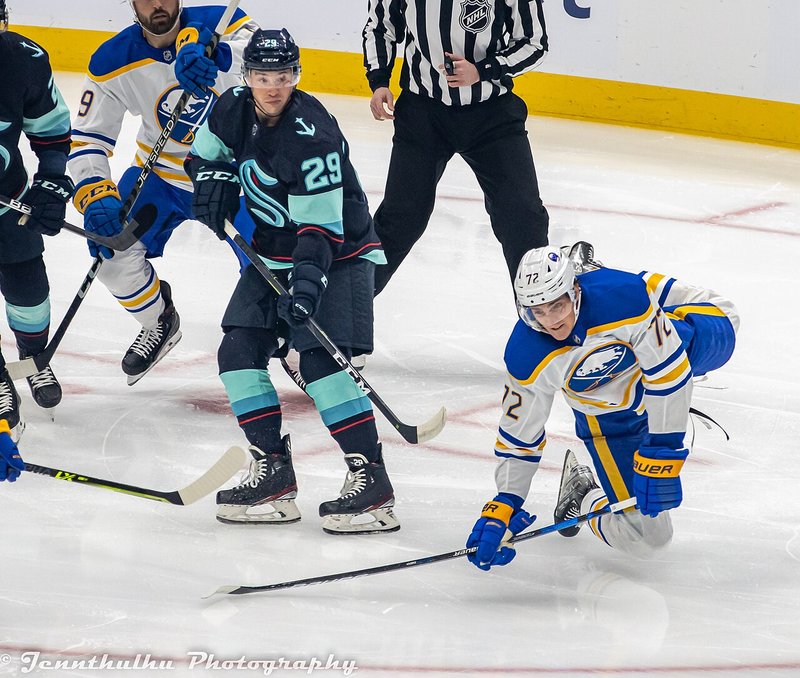
At six foot six, Tage Thompson is tied with goaltender Jake Oettinger as the tallest man on the roster and stands two full inches above the next-tallest forwards, Brady Tkachuk and Brock Nelson. He plays like someone who has worked out what to do with it. With 41 seconds left in the first period of the semifinal, Jack Eichel slid him a no-look pass at the bottom of the left circle and Thompson one-timed it past Samuel Hlavaj to make it 2-0 on Slovakia.
That was his third goal of the tournament, after a backhand under the bar against Latvia and one against Germany. He left that semifinal in the third period as a precaution, took a skate off and walked up the tunnel, and Mike Sullivan said afterwards he expected him to play the final. He did.
St. Louis drafted him twenty-sixth overall in 2016 and traded him to Buffalo two years later in the package for Ryan O’Reilly, which looked at the time like the minor piece. His breakout came in 2022-23 with 47 goals and 94 points, including five goals in a single game against Columbus.
Buffalo then did something it had not managed in fourteen years. On April 4, 2026 the Sabres clinched a playoff spot, ending the longest active drought in the league, and beat Boston in six.
Vincent Trocheck
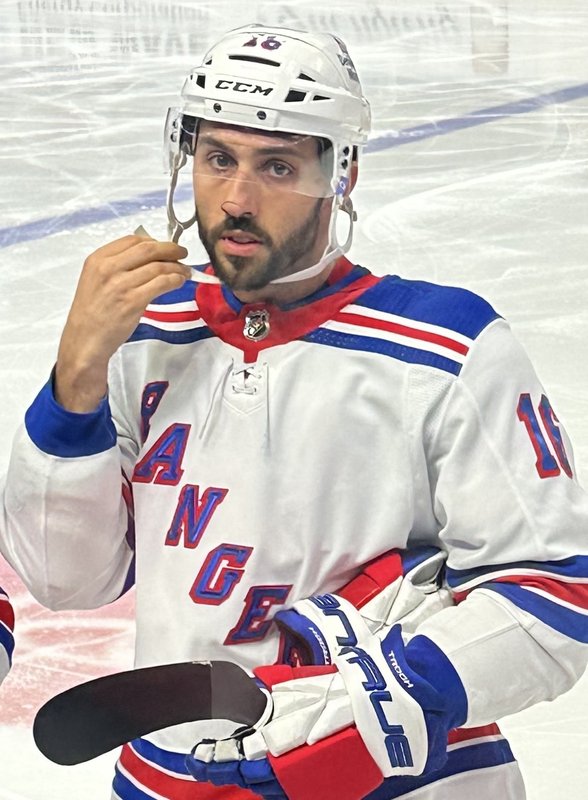
Florida waited until the third round to take Vincent Trocheck, sixty-fourth overall in 2011, and at five foot eleven and 187 pounds he was undersized by the standards of a draft class that was not especially large to begin with. He had not come through American college hockey either, but through the Ontario Hockey League, where in 2013 he won both the Eddie Powers Memorial Trophy and the Red Tilson Trophy before turning professional.
Fifteen years later he was the third-oldest skater on an Olympic roster, younger only than Nelson, Miller and the goaltender Connor Hellebuyck. He picked up two assists in Milan, on Nelson’s second goal in the opener and on Brady Tkachuk’s breakaway in the semifinal, and played the kind of tournament that does not generate headlines and does generate gold medals.
Florida traded him to Carolina in February 2020 in a five-piece deal, and he signed with the Rangers in July 2022 for seven years and 39.375 million dollars. He played all eighty-two games in three of his four New York seasons and cleared fifty points in five consecutive years.
On July 1, 2026, the Rangers traded him to Utah, which is to say to Clayton Keller. On the years of speculation that preceded it he was unbothered. “The whole trade rumors, they happen, I’ve been part of them before,” he said, and reckoned he had embraced every year of it to the fullest.
Zach Werenski
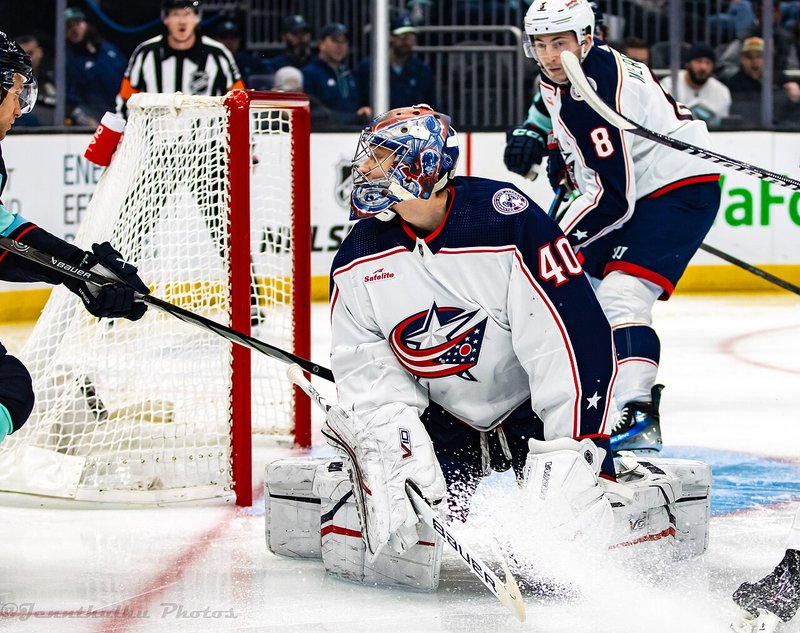
The pass that ended forty-six years of American waiting went cross-ice. Zach Werenski carried the puck into the Canadian zone at 1:41 of overtime, looked across, and put it on Jack Hughes’s stick in the slot. It was the last of six points he collected in Milan, and not even his busiest night: he had three assists in the semifinal alone, setting up Larkin once and Hughes twice, on top of a goal against Germany and an assist against Latvia.
He arrived at the Olympics as the second-highest-scoring defenceman in the NHL that season, behind only Evan Bouchard, and left without the tournament’s Best Defenceman award, which went to the teammate who had outscored him. He got a bigger one in June. On the second of that month, Werenski won the Norris Trophy with 113 first-place votes to Cale Makar’s 47, on the back of an eighty-one-point season that led all Columbus scorers for the second year running.
He is the tenth defenceman in league history to lead his own team in scoring in consecutive seasons. He did it for a Columbus side that spent the year playing in memory of Johnny Gaudreau, whose jersey still hangs in their room.
Columbus drafted him eighth overall in 2015 out of Michigan, the same draft and the same programme as Kyle Connor. His career there has been repeatedly interrupted, by a sports hernia and by a shoulder that cost him all but thirteen games of a season.
Noah Hanifin
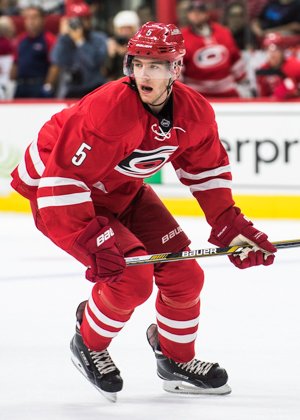
Noah Hanifin enrolled at Boston College at seventeen, as the second-youngest player in the programme’s history, and left after a single season when Carolina took him fifth overall in the 2015 draft. He was in the NHL at eighteen and past four hundred games by twenty-four, the sixth-youngest American ever to reach that mark.
In Milan he did something defencemen on that roster mostly did not, which was score. With the Americans leading Denmark 3-2 late in the second period on February 14 he made it 4-2, part of a night that finished 6-3. He added assists against Germany and Slovakia.
His career reads like a lesson in how much a single trade can spawn. Carolina sent him and Elias Lindholm to Calgary in June 2018 for Dougie Hamilton, Micheal Ferland and the draft rights to Adam Fox, who went on to win a Norris Trophy in New York. Calgary moved him to Vegas in a three-team deal in March 2024, and Vegas extended him for eight years and 58.8 million dollars a month later.
The following spring produced a tidy piece of symmetry. Vegas knocked Keller’s Utah out in the first round, went all the way to the Stanley Cup Final, and lost it to Carolina, and to Jaccob Slavin, who had stood on the same blue line in Milan four months earlier.
Brock Faber

Los Angeles drafted Brock Faber, never played him, and then traded him home. The Kings took him forty-fifth overall in 2020 and two years later, on June 29, 2022, sent his signing rights and a first-round pick to Minnesota for Kevin Fiala. Faber grew up in Maple Grove, twenty minutes from the arena. Minnesota signed him to an eight-year extension in July 2024, having acquired him for a winger.
He is one of only two men on this roster who had been to a Winter Olympics before. Named to the Beijing team in 2022 as a nineteen-year-old University of Minnesota sophomore, he played all four games and recorded an assist as an American side made up of college players, because the NHL was not there, finished fifth.
Between the two Games he was named Big Ten Defensive Player of the Year, captained the Golden Gophers to the 2023 NCAA championship game, lost it to Quinnipiac, and made his NHL debut two days later. His rookie season made him a Calder finalist, runner-up to Connor Bedard.
In Milan he scored the fourth goal in the win over Germany, set up by both Tkachuks. By late March 2026 he had fifty points in seventy-four games, reaching that mark faster than any defenceman in Wild history, ahead of Ryan Suter and Matt Dumba.
Jake Sanderson
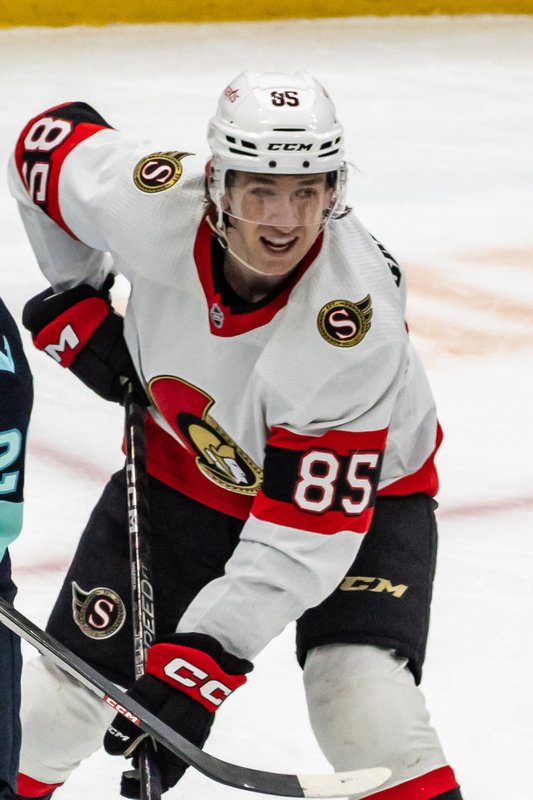
His father won two world championships for Canada. Geoff Sanderson played seventeen NHL seasons, retired in 2008 with 355 goals, and took gold with Canada at the 1994 and 1997 world championships. Jake was born in Whitefish, Montana, holds both passports, and chose the United States, which is the sort of decision that gets settled young and then quietly determines what a family watches on television every February.
He is the other member of the roster with a previous Olympics behind him. At nineteen he went to Beijing in 2022, having been placed in COVID isolation in California days before the Games, and played anyway; the Americans lost a quarterfinal shootout to Slovakia. In Milan he recorded two assists, both in the same game against Germany, took ten shots across the tournament, and helped kill a five-on-three in the second period of the final, when a scoring chance of his own sailed wide of Binnington.
Ottawa took him fifth overall in 2020 after one year at North Dakota, and signed him for eight years and 64.4 million dollars in 2023. He wears eighty-five for both club and country.
His 2025-26 season was his best and his shortest: career highs in goals and ice time across sixty-seven games, tenth in Norris voting, third in Lady Byng voting with eight penalty minutes all year, and then a concussion in the third game of the playoffs that ended it.
Jaccob Slavin
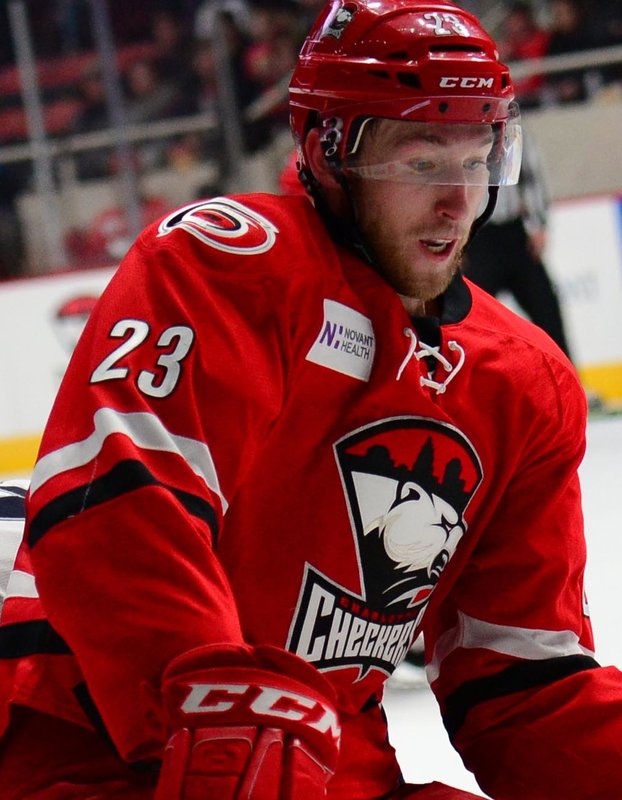
Two Americans have won an Olympic gold medal and a Stanley Cup in the same season, and there were forty-six years between them. Ken Morrow did it first, taking gold with the 1980 team on February 24 and the Cup with the New York Islanders on May 24, three months to the day, the first of four straight. Jaccob Slavin did it second. Carolina beat Vegas 3-0 in the sixth game of the 2026 Final at T-Mobile Arena to take the series 4-2, four months after Slavin had played all six games on the American blue line in Milan.
He is a curious sort of star, in that his best statistic is an absence. Slavin has won the Lady Byng twice, in a season in which he took one minor penalty across fifty-two games while averaging nearly twenty-three minutes a night, and again in a season of four minors in eighty-one games. There is no obvious way to be that good and that harmless at once.
Carolina drafted him in the fourth round, 120th overall, in 2012, out of Colorado College, and he has never played for anyone else. Before 2026 the Hurricanes had reached three Eastern Conference Finals with him and won a single game across all three of them. “We’ve been close, we’ve been close, we’ve been close,” he said afterwards, and called the Final the last step they had needed to take.
Jackson LaCombe
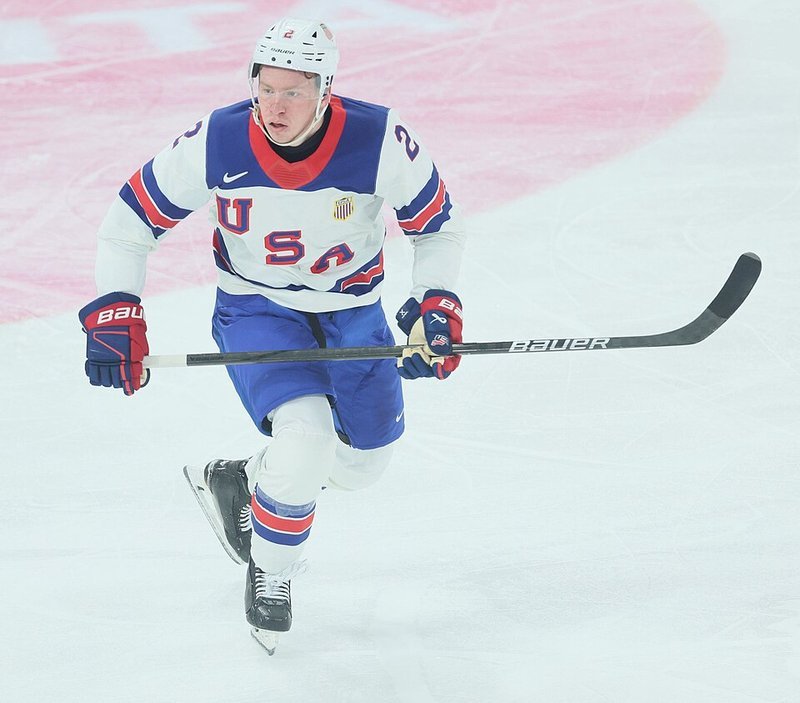
Jackson LaCombe was not on the team. The roster announced on January 2, 2026 did not include him, and it might never have, except that a deflected Alexis Lafreniere shot struck Seth Jones eight minutes into that same day’s Winter Classic. Nineteen days later LaCombe got the call, twelve days after his twenty-fifth birthday and twenty-two days before the tournament opened.
Then he did not play. Not a minute, not a shift, in any of the six games. He was the eighth defenceman, travelled with the team, and stood on the podium in Milan with a gold medal around his neck, which is either the luckiest thing that has ever happened to a hockey player or a fairly bleak fortnight, depending on temperament. His was the first reading. “The team is so good, and there are so many great players there. Everyone has a different role,” he said, and added that he had simply had a great deal of fun.
The rest of the year suggests the selectors were onto something. Anaheim’s second-round pick in 2019, out of Minnesota, LaCombe scored fourteen goals in 2025-26, the most by a Ducks defenceman since 2011, finished with fifty-eight points, and put up nine more in a first-round playoff win over Connor McDavid’s Edmonton. His coach compared his development to Duncan Keith’s. His teammate Troy Terry said he did not have a weakness.
Connor Hellebuyck
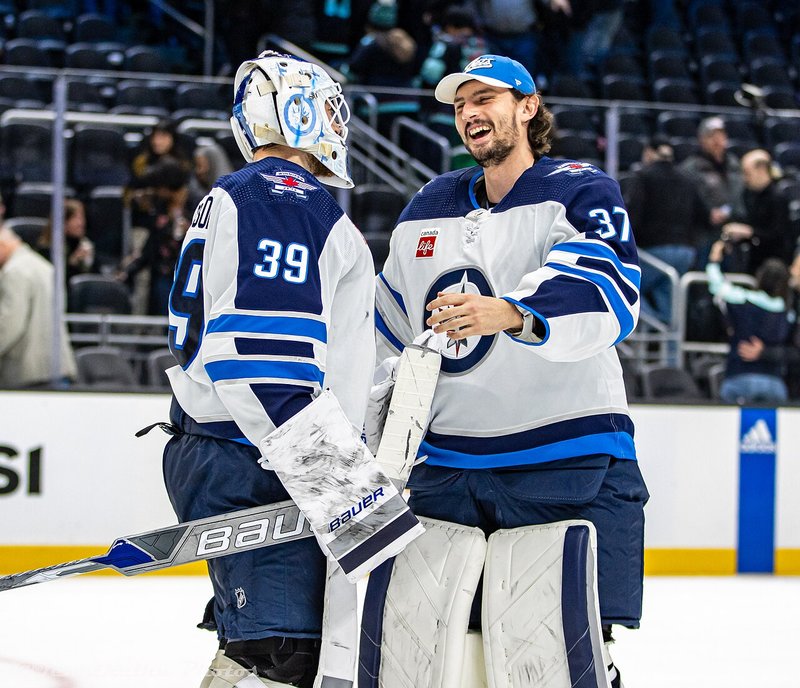
Winnipeg took Connor Hellebuyck with the 130th pick of the 2012 draft, in the fifth round, where teams are mostly guessing. He has since won three Vezina Trophies and, in 2024-25, the Hart Trophy as the league’s most valuable player, the first goaltender to manage that since Carey Price a decade earlier.
In the final he faced forty-two shots and stopped forty-one, including a third-period stick save on Devon Toews from point-blank range with the puck already at the goal line’s edge. Across five starts he posted a .9562 save percentage and a 1.18 goals-against average over 305 minutes and 137 shots, and was named the tournament’s Best Goaltender. He recorded no shutouts at all, which tells you something about how the Americans won: not by keeping teams off the board, but by never letting a game get away.
He is the fourth American named Olympic Best Goaltender, after Willard Ikola in 1956, Jack McCartan in 1960 and Ryan Miller in 2010, and only the second to do it in a year the United States also won gold. McCartan was the other, and that was in 1960.
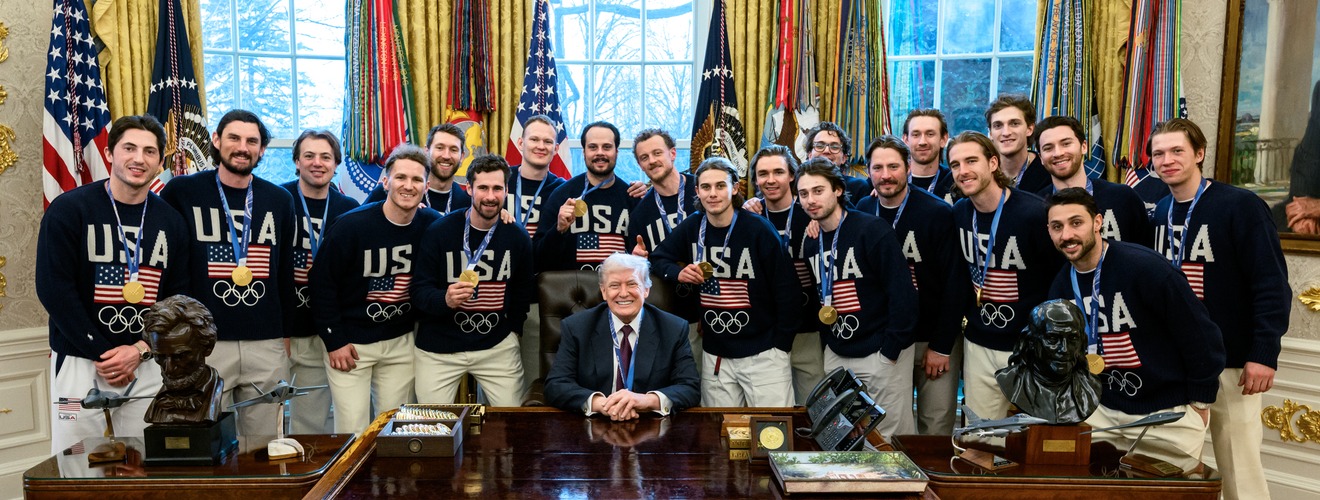
Seven weeks later his club was eliminated from playoff contention entirely. Fans had taken to calling him the Secretary of Defense, and he posed with a plaque bearing the title on the charter to Washington, where the President announced he would receive the Presidential Medal of Freedom.
Jake Oettinger
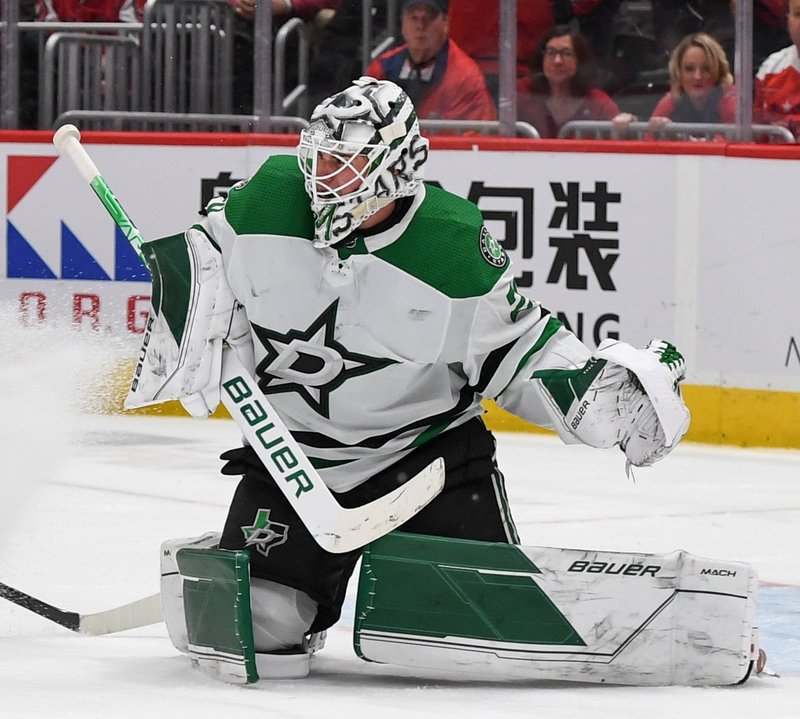
Jake Oettinger did not play a minute at these Olympics. The tournament’s own goaltending records list two American netminders, Hellebuyck with five starts and Jeremy Swayman with one, and Oettinger sat through all six games without once going through the door. He has a gold medal.
He was distinctly unsatisfied by the whole business. After Dallas went out in the first round that spring he offered an assessment that would sound self-pitying from almost anyone else: “I don’t feel like I accomplished any of my goals. I want to win a Stanley Cup, I want to win a Vezina Trophy, and I want to be a starting goalie for Team USA, and none of those things happened.” He was, at the time, an Olympic champion.
Dallas took him with the twenty-sixth pick in 2017 out of Boston University, and his only individual honour to date is a 2024 All-Star selection. He went 35-12-6 with a 2.59 goals-against average in 2025-26, then watched his team blow a 2-1 series lead and lose to Minnesota in six after three consecutive Western Conference Finals.
He also skipped the White House visit, and gave a reason more disarming than any of it: he wanted to get his game right, and he had a three-month-old at home he had been carrying around the world.
Jeremy Swayman
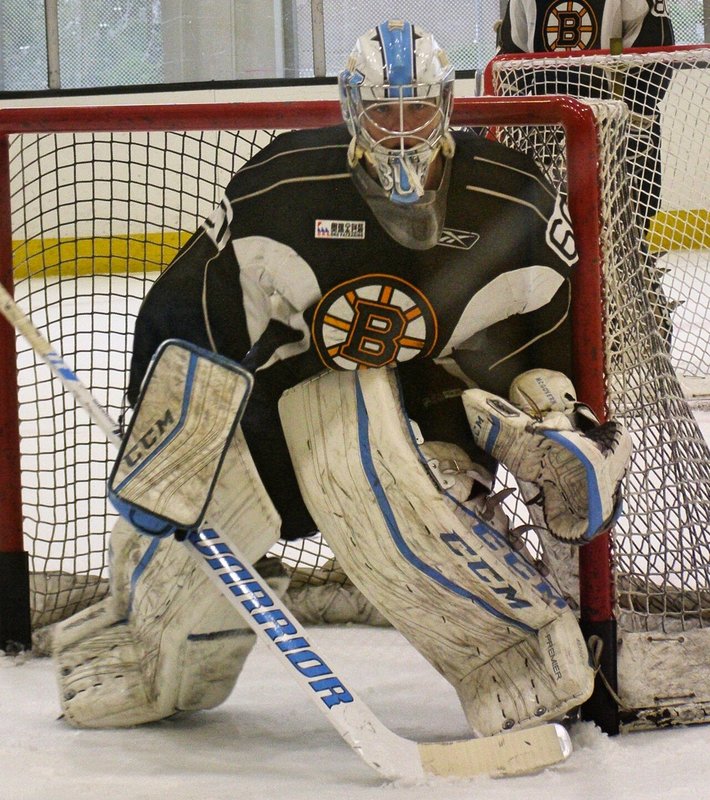
Anchorage is not where Olympic goaltenders come from. Jeremy Swayman grew up playing youth hockey there, went to Maine, and was taken 111th overall in 2017, and on February 14, 2026 he started an Olympic game against Denmark and made eighteen saves in a 6-3 win. It was the only game he played. He watched the other five.
It was not comfortable. A Nicklas Jensen shot from just inside the centre line handcuffed him for Denmark’s second goal, and the heavy underdogs led 2-1 inside the first period before the Americans took the game over in the second.
Boston had nearly lost him eighteen months earlier. He held out of training camp from September 18, 2024, in a contract standoff that turned public when Bruins president Cam Neely remarked that he had 64 million reasons why he would be playing. They settled on October 6 for eight years and 66 million dollars.
The season that followed was the worst of his career, an .892 save percentage, and the one after it was among his best: 31-18-4, a .908, and a Vezina finalist nomination. He credited the bad year without hesitation, saying he did not think he would be there without it. His coach’s advice throughout the slump had been to stop the puck.
Frequently Asked Questions
Who scored the winning goal for the USA in the 2026 Olympic hockey final?
Jack Hughes, at 1:41 of overtime, from a cross-ice pass by Zach Werenski. A high stick from Sam Bennett had cost him two front teeth minutes before, and he stayed on. Matt Boldy had scored the American goal in regulation, six minutes into the game.
Who was the captain of the 2026 U.S. Olympic men’s hockey team?
Auston Matthews, named on February 8, 2026 by general manager Bill Guerin. Charlie McAvoy and Matthew Tkachuk served as his alternate captains. He scored three times at the Games and captained Toronto in the same season, until a knee injury ended it in March.
Who was the oldest player on the 2026 U.S. Olympic hockey roster?
Brock Nelson, at thirty-four. J.T. Miller was the next oldest, and Vincent Trocheck the third-oldest skater. At the other end, Brock Faber was twenty-three. Nelson and Faber both come from Minnesota, which supplied more of this roster than any other state.
Which U.S. players won awards at the 2026 Olympic hockey tournament?
Two. Connor Hellebuyck was named Best Goaltender with a .9562 save percentage, and Quinn Hughes was named Best Defenceman. Both made the media all-star team. No American forward did. Canada’s Connor McDavid was tournament MVP with 13 points, a record for an Olympics with NHL players in it.
Why did NHL players return to the Olympics in 2026?
Having sat out Pyeongchang and Beijing, the league had been absent for twelve years, so the 2026 tournament was the first best-on-best Olympics in twelve years. For all but two of these twenty-five players, Milan was a first Olympic appearance.
Was anyone added to the 2026 U.S. Olympic hockey roster late?
Yes. Jackson LaCombe replaced Seth Jones on January 21, 2026, after Jones was struck by a deflected shot during the Winter Classic on January 2. LaCombe never dressed for a game in Milan and still received a gold medal as the team’s eighth defenceman.
Did any 1980 Miracle on Ice player have a connection to the 2026 team?
Dave Christian, a 1980 gold medallist, is the uncle of forward Brock Nelson and watched the final in person. Ken Morrow’s 1980 gold and Stanley Cup double was matched in the same season by defenceman Jaccob Slavin in June 2026.
- USA Hockey: 2026 U.S. Olympic and Paralympic Hockey Teams Announced
- IIHF: United States Men’s Ice Hockey Roster, Olympic Winter Games Milano Cortina 2026
- USA Hockey: GOLDEN – U.S. Men Win Olympic Gold With 2-1 Overtime Victory Over Canada
- IIHF: Canada – USA, Men’s Gold Medal Game Centre Recap (22.02.2026)
- NHL.com: United States Roster for 2026 Winter Olympics Includes Keller, Werenski