Every Character Sakurai Publicly Considered But Rejected for Smash
Most game directors bury their rejected ideas in design documents nobody will ever read. Masahiro Sakurai publishes his. For more than two decades he has told the public, in his own words, which characters he considered for Super Smash Bros. and turned away – in fan Q&As on his official sites, in his long-running Famitsu column, and in on-camera fighter presentations.
Smash lore has never been short of rejection stories. The trouble is where they come from – which is usually somewhere other than Sakurai. Fans repeat them until they harden into fact, and some of the most famous ones dissolve the moment you ask for the sentence where Sakurai actually said it. The stories that survive that question turn out to be stranger than the folklore, and considerably better documented.
So the standard here is single and strict: Sakurai himself, or the official site he wrote for, on the record, naming the character and the game. A leaked roster does not clear that bar. Neither does a datamined filename, nor another developer’s fond memory of a request he once made, however often the story gets retold. What the filter leaves is the complete public record of the fights Sakurai decided not to stage, from the Nintendo 64 original through Ultimate’s last DLC pass – every entry carrying the reason he gave, and more than a third of them carrying a sequel he never promised: the slow, eventual yes.
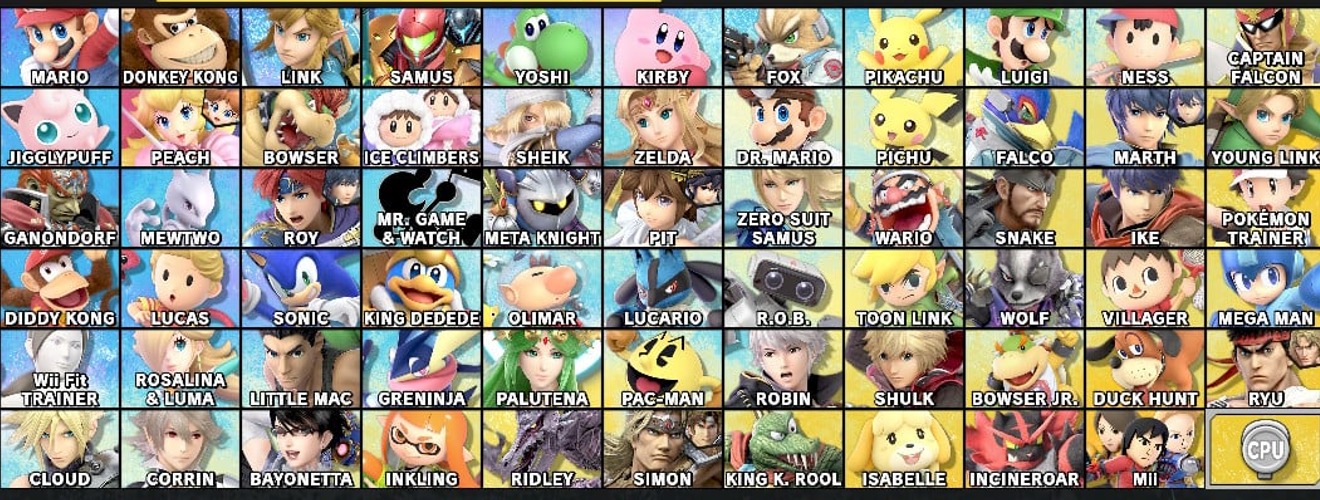
Masahiro Sakurai and the series’ official sites have publicly named 29 characters as considered and rejected for a specific Super Smash Bros. roster, and this list collects them in 24 entries. The span runs from poll notes posted in 1999 to an on-camera aside in June 2021.
Bowser, King Dedede, and Mewtwo
On June 1, 1999, the official Super Smash Bros. website posted the results of a fan poll about a hypothetical sequel, and tucked into the notes was a sentence that quietly rewrote the original game’s history: ’Bowser, Dedede, Mewtwo and so forth, were actually planned additions to the original Smash Brothers, but for various reasons they regrettably ended up getting cut.’
Sakurai had already been swatting down rumors about two of them. Asked on the same site whether Bowser and King Dedede were hidden unlockables, he wrote: ’It’s not true. (But until halfway (in development) they were being worked on.)’ The parenthesis is doing remarkable work in that sentence. These were not idle sketches; they were half-built fighters, abandoned close enough to finished that players swore they had seen them. The poll only rubbed it in. Bowser led its Super Mario category with 169 write-in votes, Mewtwo topped the Pokemon list with 35, and King Dedede took Kirby’s with 46.
All three made it in eventually. Bowser and Mewtwo joined Melee’s roster in 2001, and King Dedede held out until Brawl in 2008. Only Mewtwo needed a second arrival: absent again after Melee, he was announced in October 2014 and released on April 28, 2015 as the first of the paid DLC fighters added to Super Smash Bros – $3.99 for one platform, $4.99 for both – though Club Nintendo members who registered both new versions by March 31, 2015 got him free. The apology had a deadline.
Marth
Marth was wanted from the very beginning, which makes his the gentlest rejection on this list. Interviewed for a Fire Emblem 25th-anniversary book, Sakurai said: ’I wanted to include Marth in the original Smash Bros. game, as a sword-wielding character.’ Link already supplied power; Sakurai wanted ’someone with finesse, a swordsman who relied more on technique.’
The problem was arithmetic. Beyond its starting eight, Smash 64’s fighters were ’created only on the premise of being able to reuse some movements and parts of the models of pre-existing characters,’ as Sakurai put it – which is how Luigi, Captain Falcon, Ness, and Jigglypuff got in, and the beginning of a tradition catalogued in every secret character unlock method in Smash history. A wholly original swordsman had no skeleton to borrow. Marth was out before anyone knew he had been in.
He did not wait long. Sakurai says he ’had decided to include Marth at the start’ of Melee’s development and ’pushed hard’ for him, adding Roy once he learned a new Fire Emblem was coming. The affection outlasted the project. Marth’s Japanese voice actor, Hikaru Midorikawa, went uncontacted after Brawl and concluded the character had been left out of the next game entirely. Sakurai’s explanation: the Melee lines were ’so great’ he thought there was no topping them, so re-recording never seemed necessary.
Clefairy
Smash 64’s hidden Pokemon slot came down to a two-way audition, and the judging criterion was not strength but stage presence under fire. In The 64 Dream magazine, May 1999, Sakurai laid it out: ’the two that remained until the end were Clefairy and Jigglypuff,’ and Jigglypuff won because, going by character personality, she ’felt more suited to being the one who takes hits.’
Both finalists shared something structural that Marth never had: a round pink body Kirby’s skeleton could carry, which is as cheap as character development gets. SmashWiki’s Clefairy entry confirms the pairing plainly – both were considered as a clone of Kirby, and Jigglypuff was chosen.
Clefairy was no obscure also-ran. It shipped with the original Pocket Monsters Red and Green on February 27, 1996, comfortably clear of the 37 Pokemon designs cut from Red and Green, and when Pokemon got its first manga chapter in the April 1996 issue of CoroCoro Special, the story was named for Clefairy’s Japanese name, Pippi, and the first Pokemon the hero catches is a wild Clefairy. In print, Clefairy got there before nearly everyone. In Smash, it did appear in the first two games – as a Poke Ball summon, unleashing Metronome – before slipping out of even that job, leaving Jigglypuff to take the hits it was told it lacked the personality for.
Balloon Fighter, Urban Champion, Bubbles, and Excitebike Racer
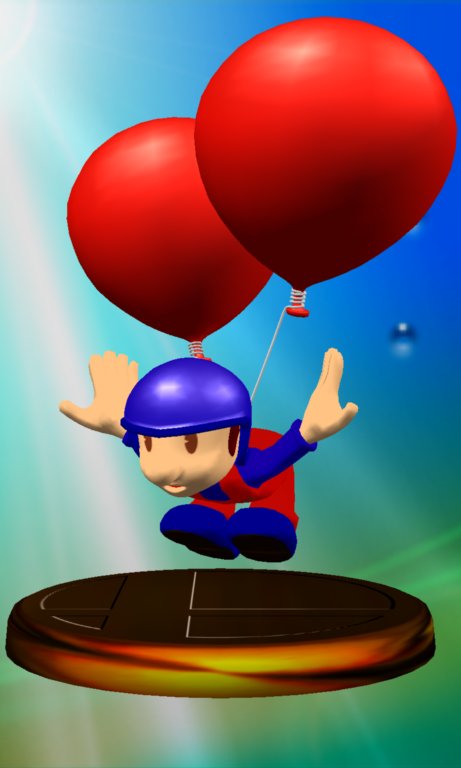
In a character update posted to Melee’s official Japanese site on October 9, 2001, Sakurai did something game directors almost never do: he published the losers’ bracket. Melee would carry one representative of the Famicom era, chosen by process of elimination, and he named the four candidates cut to get there, each with a reason. Balloon Fight’s flier ’seems like he wouldn’t be able to do anything after his balloons are popped.’ Urban Champion’s brawler ’seems like he doesn’t have a lot of moves.’ Clu Clu Land’s Bubbles – ’don’t know how she would fight.’ Excitebike’s racer would need ramps built to jump – though Sakurai added that the ramps were not really the issue.
It was a murderers’ row of 1984. Urban Champion arrived on the Famicom that November 14, Clu Clu Land on November 22, Excitebike on November 30 – released sixteen days apart – and Balloon Fight’s arcade original opened in the same year. Against four founding citizens of the Famicom, the Ice Climbers took the slot by doing things nobody else could do.
Most of the losers got a consolation. The Balloon Fighter and an Excitebike machine became Melee trophies; a horde of Excitebike riders later stormed Brawl as a collective Assist Trophy; Balloon Fight was rebuilt as a full playable stage in 2014 and returned in Ultimate. And Urban Champion, judged short of moves, still gets the last word: his victory jingle closes Brawl’s Famicom Medley, right where the loop starts over.
Ayumi Tachibana
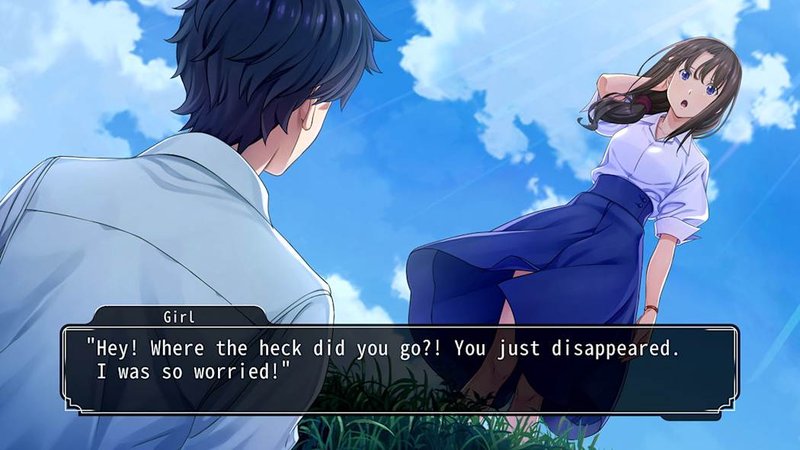
Melee contains a trophy most of the world never saw. Number 289 exists in the Japanese version only, honoring Ayumi Tachibana, the schoolgirl detective of Famicom Detective Club – and it is as close as she has ever come to a roster she was nearly on.
Sakurai told the story himself on a Nico Nico broadcast, reported in March 2015: ’I was thinking about it during the Melee days, Famicom Detective Club... Ayumi even has her own Trophy in that game. But in the end, there’s no way she’d work overseas.’ The same development cycle waved through two Fire Emblem swordsmen carrying precisely the same overseas problem, and their Smash exposure helped carry Fire Emblem around the world. Ayumi got the opposite treatment: even her consolation trophy was fenced inside Japan, a region lock applied to a runner-up prize.
Her series eventually made the crossing without Smash’s help. The two Famicom Disk System mysteries – the first released across two disks in April and June 1988 – were remade and localized worldwide on May 14, 2021. Then Emio – The Smiling Man, the franchise’s first new case in 27 years, arrived on August 29, 2024, with Ayumi playable for stretches of the story. Her Melee trophy has her solving a friend’s murder and then opening her own investigative agency – and it is filed, not under the game it describes, but under Famicom Detective Club Part II. Even the consolation prize could not keep her straight.
Wario
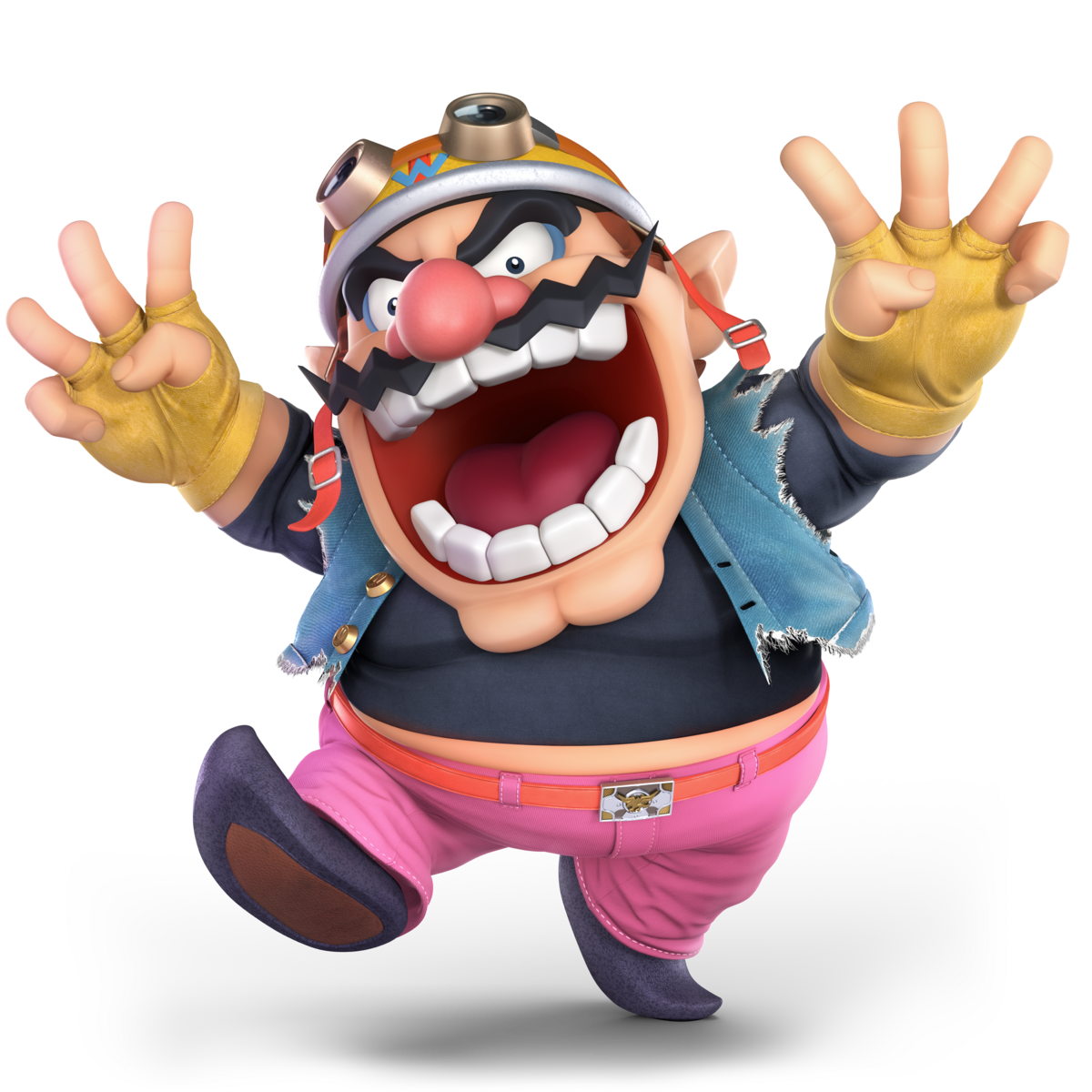
By Sakurai’s own accounting, Wario cost exactly one Mewtwo. On Melee’s official site, he told readers that the development resources spent on Mewtwo – or on Marth and Roy together – could have produced Wario instead, and that with time for one more character, ’Wario would have made it in.’ The reason there was no room verges on the diplomatic: Melee already leaned hard on the Mario family, and one more of its heavies risked tipping the roster.
There was a shortcut available, and he named it drily: a Wario with exactly Mario’s build, using exactly Mario’s moves – that one, he wrote, he could make. The public’s preference was already on the record. In the Smash 64-era sequel poll, Wario finished third among the Mario-series requests with 65 votes, a single vote behind Princess Peach.
Wario finally walked in through Brawl’s front door, unveiled at E3 2006 and built as the fully distinct fighter that shortcut would never have produced: dash attacks and throws out of Wario Land, a home stage from WarioWare, and a Final Smash, Wario-Man, activated by eating a clove of garlic. The wait has kept paying dividends. In July 2026, Nintendo Switch Online added the original Wario Land: Super Mario Land 3 to its library – a game older than Wario’s entire Smash career.
Lucas
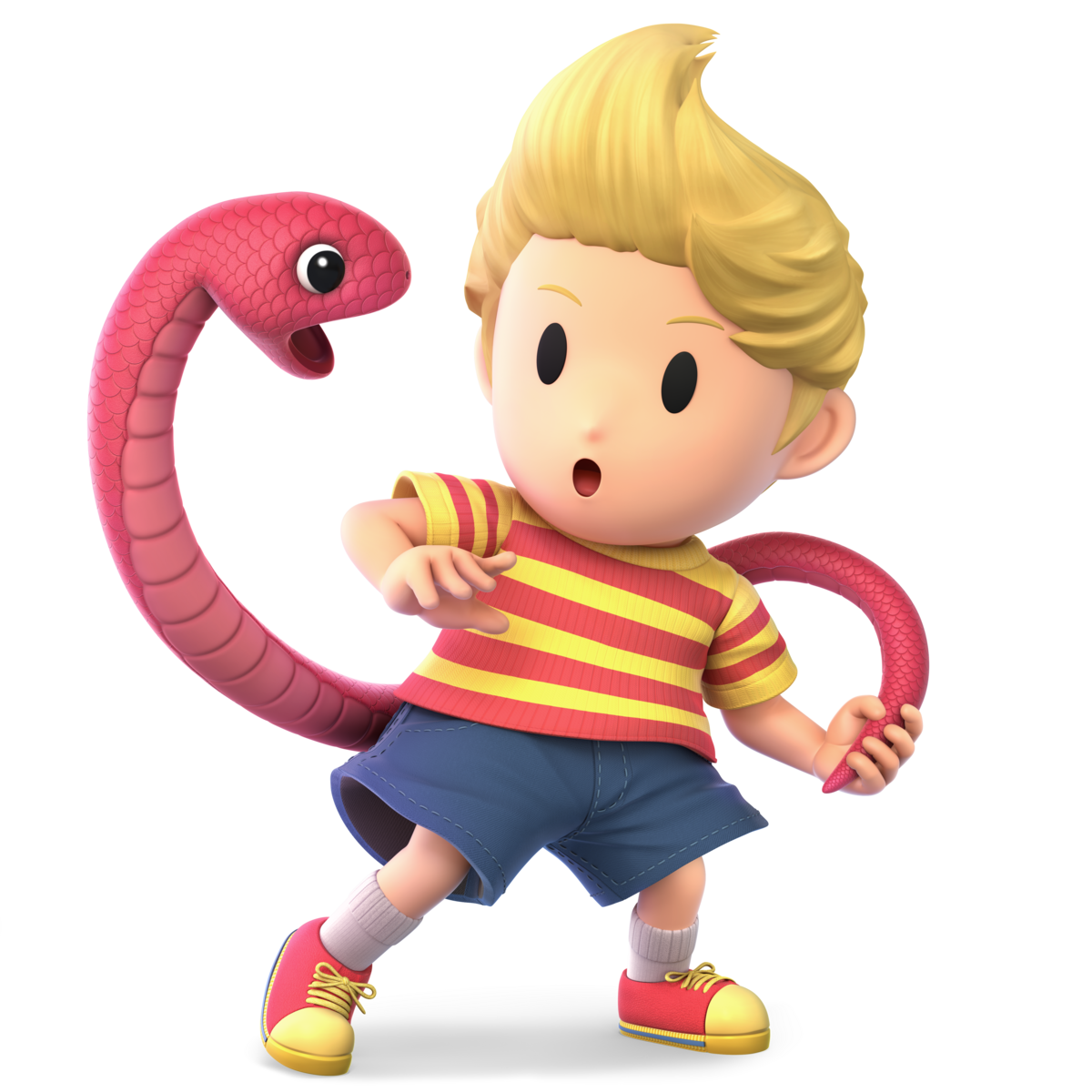
The Ness page on Melee’s official website, dated July 17, 2001, contains a quiet confession: ’Actually, at first, I planned to change him into the protagonist of Mother 3, but for various reasons during the delay, I settled back on the original idea.’ Sakurai could not use the boy at all. The Nintendo 64 version had already been shown in public, cast and all, at Space World 1999 – the two boys then romanized Lucca and Klaus – and then it stopped.
The hiatus he worked around so politely became one of gaming’s longest sagas. Mother 3 finally shipped in Japan on April 20, 2006 – nearly five years after that page went up – sold roughly 200,000 copies in its first week, and has never received an official English localization. Lucas, the protagonist in question, made his debut in Brawl in 2008, meaning his first appearance of any kind outside Japan came in somebody else’s game, throwing a PK Thunder that passes clean through opponents where Ness’s version stops on contact.
The clock has kept running. Mother 3 turned twenty on April 20, 2026, and the tributes in Japan included a commemorative Casio G-Shock wristwatch. There is still no English release, and none announced. A watch is at least an honest anniversary gift: it tells you exactly how long you have been waiting.
Solid Snake
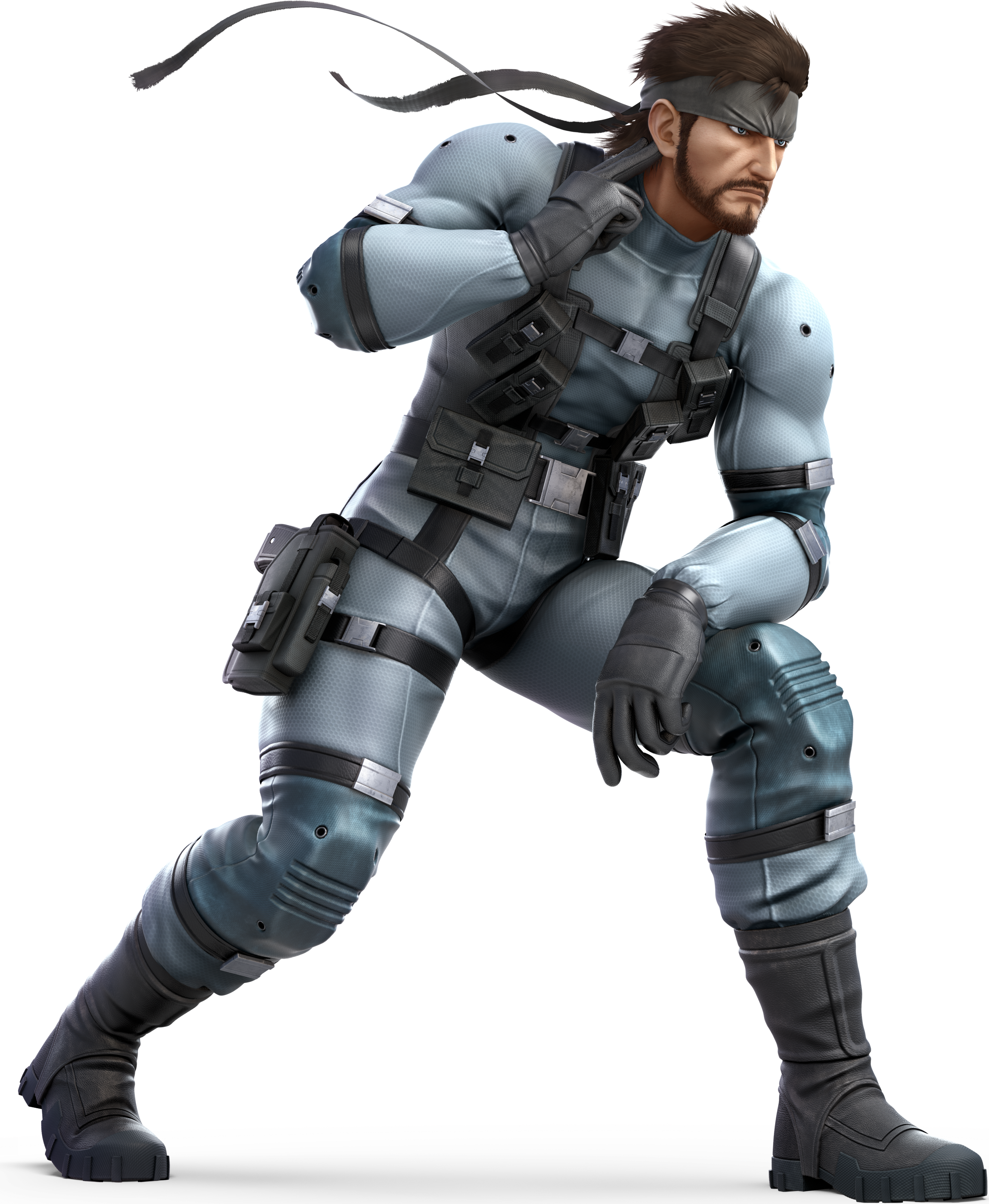
Hideo Kojima wanted Snake in Smash because his son was unimpressed. ’My child likes Super Smash Bros., so we play it a lot together,’ Kojima explained. ’And he told me that there’s no character that you made in that game.’ So Kojima did what auteurs do. He picked up the phone.
Sakurai has told the rest without varnish: Kojima ’phoned me and practically begged me to put Snake in the game’ during Melee’s development, when the roster was long past locked. The answer was no, with an asterisk. Once Sakurai took charge of the project that became Brawl, he went back to Kojima, and the deal was finally done. Snake arrived in 2008 alongside Sonic as the first two of the third-party characters who eventually joined Smash, a soldier fighting Nintendo mascots with C4 and grenades on a recreation of Shadow Moses Island, his Codec calls voiced by the original English cast.
Then Smash dropped him. The entire Metal Gear universe sat out the 3DS and Wii U generation – no fighter, no stage, not even a trophy – before Ultimate restored him in 2018. He has since developed a sideline in turning up where he is least expected: in March 2026, Ubisoft added him to Rainbow Six Siege as a playable Operator. Some characters wait to be asked. Snake’s people call.
Dixie Kong
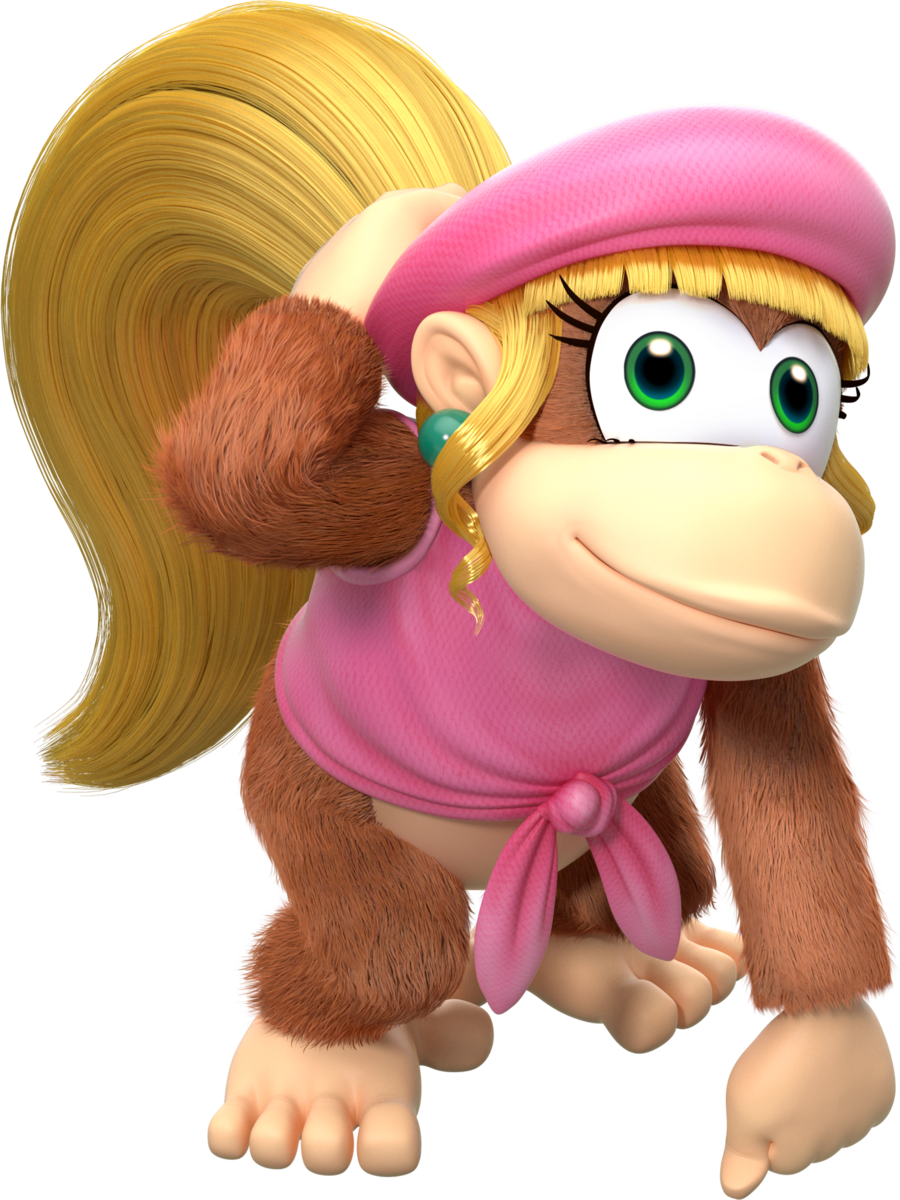
’We would build a system that instantly swapped the two by touch.’ That is Sakurai describing, in Weekly Famitsu’s February 29, 2008 special issue, the fighter Diddy Kong was originally going to be: half of a pair. ’Actually, we intended to put Diddy Kong out paired with Dixie Kong,’ he said, echoing their double act from the Super Nintendo. ’But there were various difficult parts, and we cut it early on.’ Dixie had been marquee material since November 1995, when Donkey Kong Country 2: Diddy’s Kong Quest introduced her helicopter ponytail, and she went on to headline the next game and co-star in Tropical Freeze in February 2014. In Smash, the early cut left her permanently in orbit: trophies, a sticker, a Mii hat, and an Ultimate spirit battle staged – for reasons known only to the spirit team – against a pink Isabelle on Jungle Japes, with a pink Diddy Kong for company.
Diddy went in alone and never left. Dixie’s half of the idea outlived Smash entirely: on January 20, 2026, Nintendo’s update to Donkey Kong Country Returns HD made her playable as a swap-in partner for Diddy, with her own jump animation. The system Sakurai described cutting turned out to need another eighteen years and a different game.
Blastoise
There is no kind way to lose a roster spot to your own earlier evolutionary stage, but Blastoise at least lost it to a coherent theory. In the same post-Brawl debrief that revealed the Dixie Kong cut, Sakurai walked through how he had assembled the Pokemon Trainer’s team: the three fighting starters would sit at three different sizes and stages of the evolutionary line – one early form, one middle, one final. Charizard held the big slot. Ivysaur took the middle. And for the small one: ’I thought Squirtle would have more character presence than Blastoise.’
A tortoise with twin water cannons losing on presence to its own larval form is a distinctly Sakurai verdict, and it ended a modest Smash career already in progress. Blastoise had been a Poke Ball summon in the original 1999 game and in Melee, surfacing to blast Hydro Pump across the stage. After the Trainer decision it never appeared from a Poke Ball again – not in Brawl, not in Smash 4, not in Ultimate.
What remains is scenery. Blastoise swims silently in the background of the Kalos Pokemon League stage, watching fights it was ruled out of, and its Ultimate spirit battle is fought against a giant Squirtle – which, under the circumstances, reads less like a tribute than a taunt.
Krystal
The Krystal decision was settled by arithmetic, and Sakurai showed his work. Nintendo Dream asked in 2008 whether she had a realistic shot at Brawl: ’For Krystal, we didn’t have any of the technical modeling knowledge that we had cultivated with Fox and Falco, so it was like making a brand-new character from scratch.’ Building Wolf, he explained, would take about 70 percent of that effort. Wolf got the slot.
Surviving on a technicality would at least have been new for her. Krystal began as one of two leads in Dinosaur Planet, a Rare adventure for the Nintendo 64 that Nintendo folded into Star Fox after Miyamoto noticed how closely Rare’s hero resembled Fox McCloud. She was nearly deleted in the merger. Designer Takaya Imamura saved her alone – scrapping her would be a waste, he thought, so he flew to Rare with a stack of drawings, redrawing her, by his own account, after the comic heroine Vampirella. She debuted in Star Fox Adventures in September 2002 and was a full team pilot by Assault.
No Smash roster has ever carried her. Ultimate made her an Assist Trophy that freezes fighters with her staff, speaking lines lifted straight out of Star Fox Assault. The reuse is the theme. When Nintendo brought Star Fox back on Switch 2 on June 25, 2026, the announced cast ran from Fox and Falco down through Star Wolf to Pigma. Krystal, who survived the deletion of her own game, is not on it.
Geno
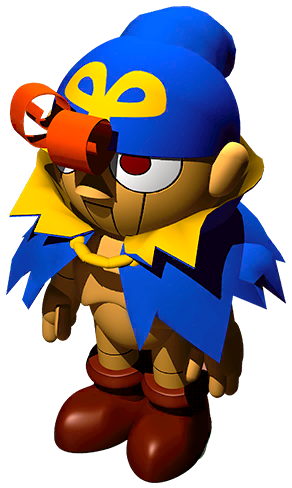
Geno is a wooden doll possessed by a star spirit, and Sakurai wanted him on the roster. ’I thought it would be great if I could add him’ to Brawl, he told Nintendo Dream in an issue on sale February 20, 2016, ’but in the end it didn’t become a reality.’
Notice what that sentence does not say. Geno was born in 1996 inside Super Mario RPG: Legend of the Seven Stars, a Mario game built by Squaresoft – which is why his rights sit with Square Enix, and why nearly everyone who writes about his absence points at the licensing. Sakurai never has. His entire explanation is that it did not happen. In the same interview he testified to the demand: ’when talking about older characters, Geno always gets a lot of requests’ – requests old enough that Nintendo’s original write-in poll had him tied for eighth among Mario picks with Mallow, at five votes apiece.
What fans got instead was cloth. Geno became a Mii Gunner costume in Smash 4’s DLC waves, then returned in Ultimate on December 22, 2020, five days after the Sephiroth broadcast revealed him – a puppet’s outfit, sold twice before the Switch remake of his own game arrived in November 2023. The costume, Sakurai suggested, was the closest he could get to the fighter. Nintendo separately published a QR code for the promotional Mii wearing it, one of seventeen, so you could at least scan your way to the doll.
Animal Crossing Villager
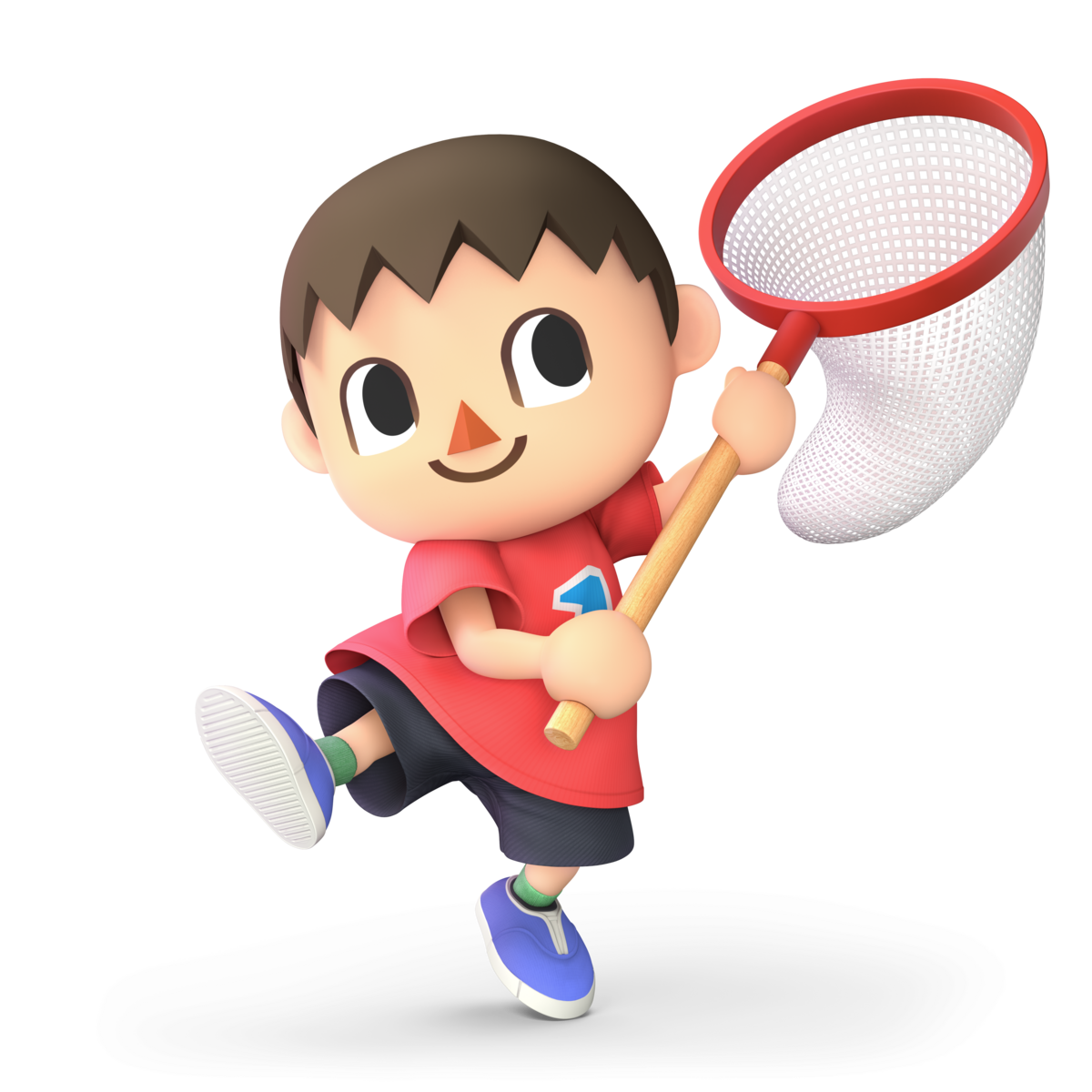
Temperament, not feasibility, is what kept the Villager out of Brawl. Sakurai’s Famitsu column vol. 430 – written, he notes, the morning after E3’s first day – put it plainly: during Brawl’s planning he had ’removed the Villager, the protagonist of Animal Crossing, from consideration because he wasn’t suited for battle.’
The paper trail on this one runs deeper than a column. The 2005 Brawl proposal page that ruled out the Nintendog puts a red arrow over the Villager too, under the same handwritten commandment about characters too far from the fighting image. What he lacked was not a moveset but belief. His test, set out in the same column, was concrete embodiment: if he could picture the character, he could build it, and what mattered was whether the image in his head was dancing powerfully or not.
By June 11, 2013 he could envision it. The Villager led off E3 as one of Smash 4’s first three announced newcomers, alongside Mega Man and Wii Fit Trainer, and the fixed smile that had failed Brawl’s audition promptly read as something else entirely: the internet took one look at the axe in his hand and started drawing him as a psychopath. His trailer opened with a Smash invitation arriving in the mail – the first of them, and a flourish Ultimate would return to again and again for its DLC reveals.
Nintendog
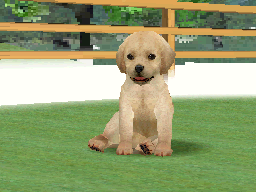
Somewhere in Sakurai’s 2005 pitch document for Brawl, a Nintendogs puppy sits beneath a red arrow. The caption above it is a design commandment: things this far from Smash’s fighting image ’will not be put out as a playable character even though its popularity is high.’ Then, in parentheses, the afterthought on which the dog’s entire future turned: ’(items and the like might be OK?)’
That slide, published by Nintendo itself inside an Iwata Asks interview, is effectively the whole record of the Nintendog’s candidacy. How far the dog’s candidacy went before the ruling, nobody knows – Source Gaming’s 2016 survey of unused fighters concluded ’it’s unknown how far into consideration Nintendog got,’ and researchers who have gone looking since report the same blank. What survives is the ruling itself, in Sakurai’s own proposal, with the consolation clause already attached.
The parenthesis was prophecy. The dog debuted in Brawl as precisely the item the proposal predicted – an Assist Trophy that bounds up to the screen, blocks everyone’s view of the fight – and it has held the job across three games while changing breeds like uniforms: a Labrador in Brawl, picked for its popularity across many regions, a French Bulldog in Smash 4, and a Toy Poodle among the Assist Trophies in Super Smash Bros Ultimate. The fighter question is now generally filed under closed. Duck Hunt already employs the dog Smash needs.
Miis
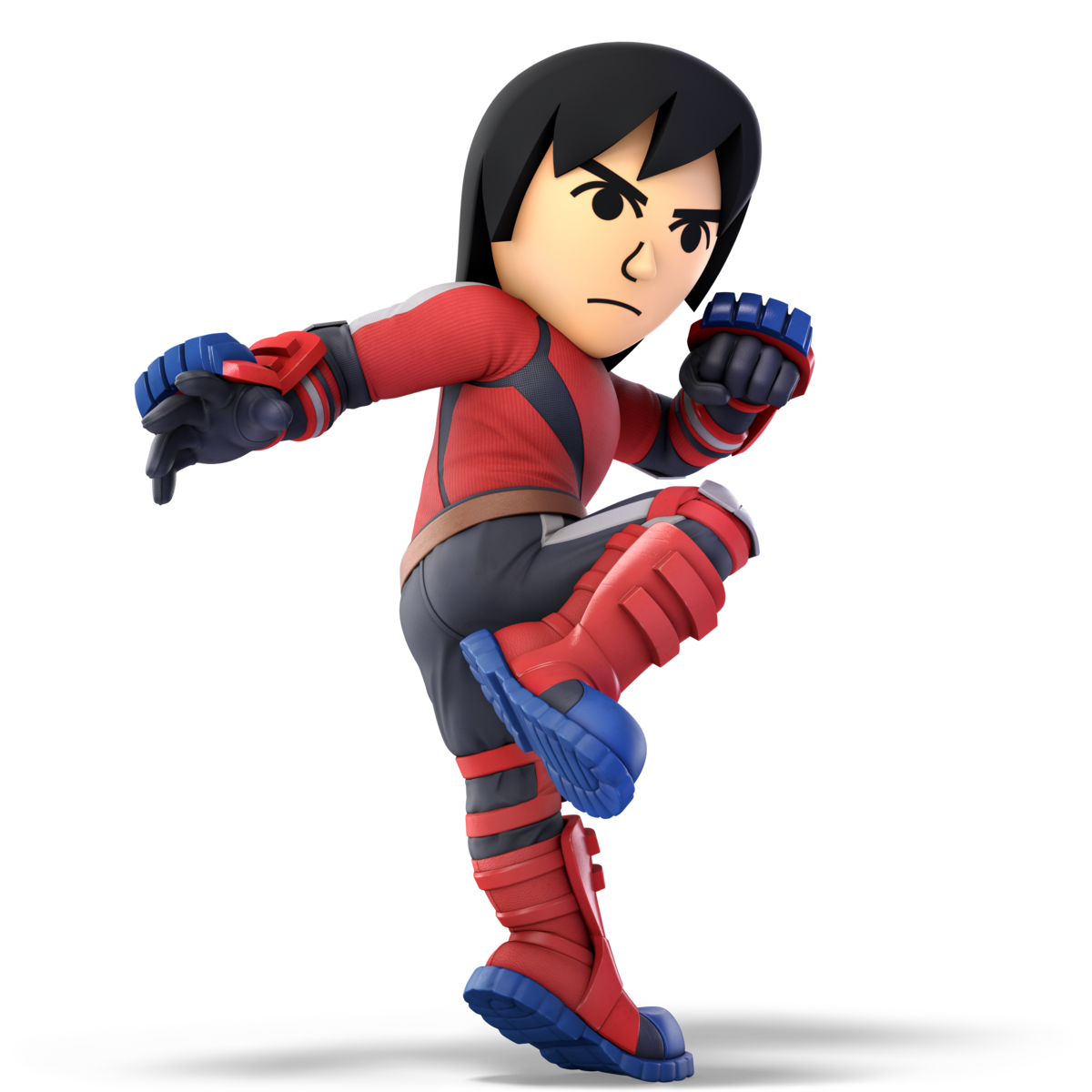
One minute. That, by his own account, is roughly how long Sakurai weighed the idea of playable Miis for Brawl – his Famitsu column vol. 455 records that ’after thinking about it for about 1 minute, I dismissed that idea immediately.’ The fear was ’bullying incidents.’ Put a real person’s face in a fighting game, and somebody will make a punching bag of somebody.
What changed by Smash 4 was not the worry but the Mii itself. By 2014 the Mii had become each player’s personal icon – the face on the home menu, the avatar carried from console to console – and Sakurai had found a second use for it: an answer. Fans requested fighters that no budget, no copyright lawyer, and sometimes no video game at all could deliver – his footnote names Attack on Titan and Dragon Ball – and custom Mii Fighters let him hand the problem back with a straight face. If you want them that badly, build them.
The bullying concern did not vanish; it got a policy. At launch, Mii Fighters could not be matched against strangers online – friends only, on the sensible theory that you can consent to being punched by a friend’s caricature. Within that fence, the design went maximalist: three full movesets – Brawler, Swordfighter, and Gunner – each selecting 4 of 12 custom specials, 36 moves in all. Rejected in a minute for Brawl, the Miis came back as three fighters the player has to build.
Pac-Man
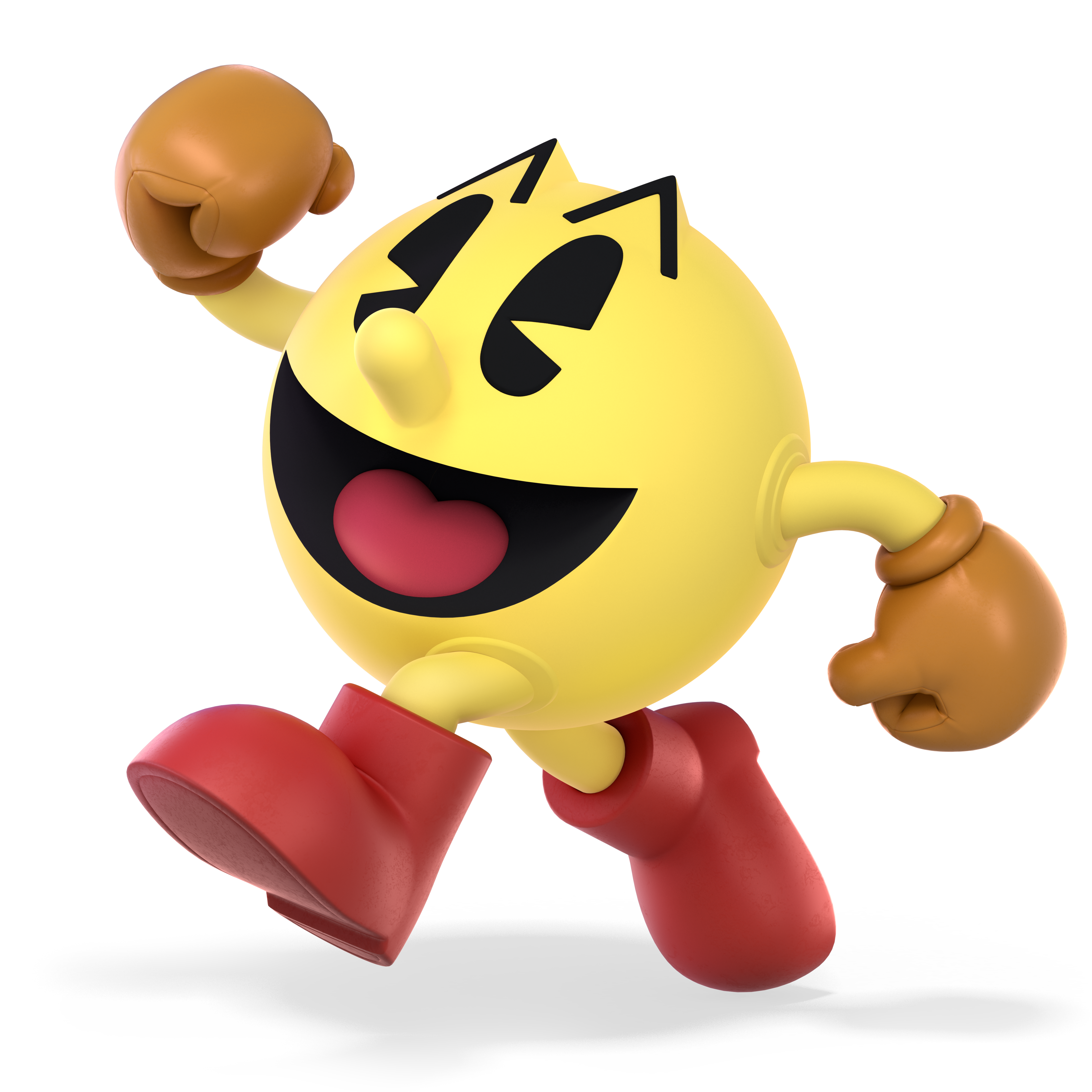
The suggestion came from Shigeru Miyamoto, mid-Brawl: ’What do you think about Pac-Man as a guest character?’ Sakurai’s private reaction, faithfully recorded in his own Famitsu column vol. 456, was ’There’s no way!’ He could not find a fighter anywhere in ’that mascot oh-so reminiscent of a pizza missing a slice.’
What changed his mind was not the character but the org chart. Smash 4 was being co-developed with Bandai Namco, and a Namco representative suddenly made industrial sense. Even then Sakurai negotiated like a curator: he would take Pac-Man only in his classic form, the sphere with arms and legs, and not the white-eyed look from the CGI cartoon then on television. If the old design were rejected, he wrote, he thought about dropping Pac-Man altogether. The moveset he built is a museum exhibit – a fire hydrant from Pac-Land, ghosts and bonus fruit from the original maze, and a taunt that cycles through sprites of old Namco arcade characters.
Sakurai announced the result himself at an E3 2014 media roundtable on June 10, 2014, to what he describes as loud cheering in a small room. The circle had closed. Designed by Toru Iwatani for the 1980 arcades, Pac-Man entered Smash carrying a trophy description that cites Guinness World Records naming him the most successful coin-operated arcade game ever made. Not bad for a shape Sakurai once declared unusable.
Ice Climbers
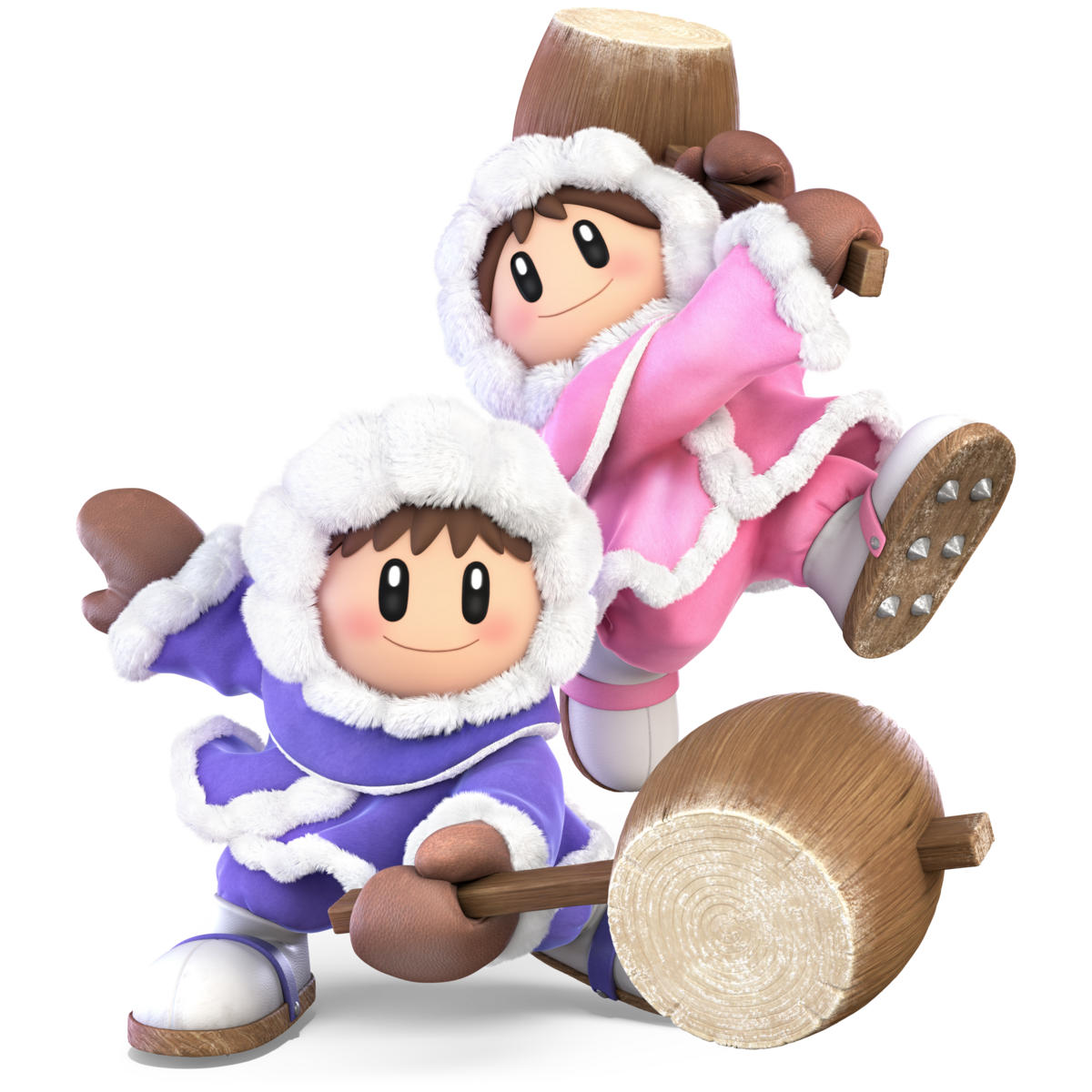
The Ice Climbers were rejected mid-career – cut not before arriving, but after two games on the roster. Popo and Nana had been playable since Melee in 2001, sharing one roster slot as a two-for-one novelty, and they carried the act through Brawl untouched. Then Smash 4 arrived on two machines at once, and the pair met the 3DS.
Sakurai’s Famitsu column, reported in mid-September 2014, reads like an engineering post-mortem. The Ice Climbers ’were playable during development on the Wii U’ version, he wrote, but moving two synchronized characters demanded processing power a handheld already at its limit could not spare: ’I couldn’t get them to work no matter how hard I tried, so I gave up on them.’ His book on the period goes further – he stripped joints out of their models and even switched off gravity, and the pair still would not run; Olimar and his Pikmin were nearly as hard to rescue, and that rescue he managed. So the Ice Climbers spent a generation as a trophy – the only Smash generation to contain them without letting anyone play them.
Ultimate repaired it. Announced in the E3 2018 reveal trailer on June 12, 2018, the Ice Climbers returned after a ten-year absence – as unlockables. The pair that could not run on a 3DS now had to be earned.
Takamaru
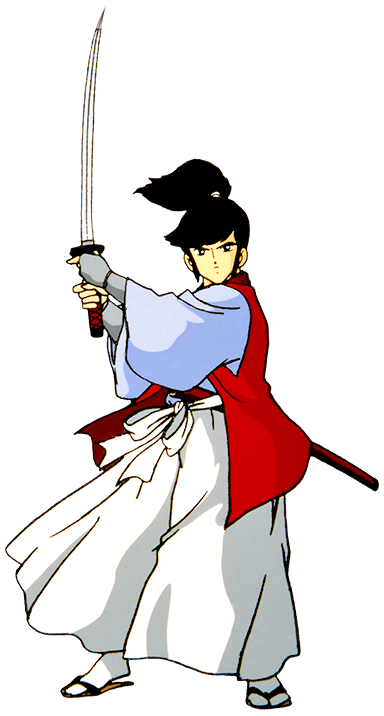
On the same broadcast where he settled Ayumi Tachibana’s fate, Sakurai turned to a samurai. ’I thought about having Takamaru as a player character for a second... but it was probably impossible due to a lack of popularity,’ he said – and so the apprentice swordsman of The Mysterious Murasame Castle entered Smash 4 as an Assist Trophy instead, hurling Windmill Swords that fly in an X or a plus, in choppy movement copied from his own 1986 game. The popularity problem was real, and geographic. Murasame Castle, released for the Famicom Disk System on April 14, 1986 and built on the engine of the original Legend of Zelda, stayed home for decades; Takamaru’s first Western sighting was a cameo of the physical disc inside Pikmin 2 in 2004, and the game itself did not reach international players until an untranslated 3DS eShop release in August 2014. He had been brushed off once before. Answering a reader on the original Smash 64 site who wanted a Murasame re-release, Sakurai raised the comparison himself – which was likelier, a new Murasame game or Takamaru in a new Smash? – and answered it. Both pretty low. That one was a joke. The 2015 statement was the verdict.
The indignities continue into the fine print: the English trophy text calls the samurai a ninja, and his Assist Trophy model carries a ninjato. His voice actor, Tomokazu Sugita, was asked about the ruling in 2025 and answered in character: ’I won’t give up.’
Chrom
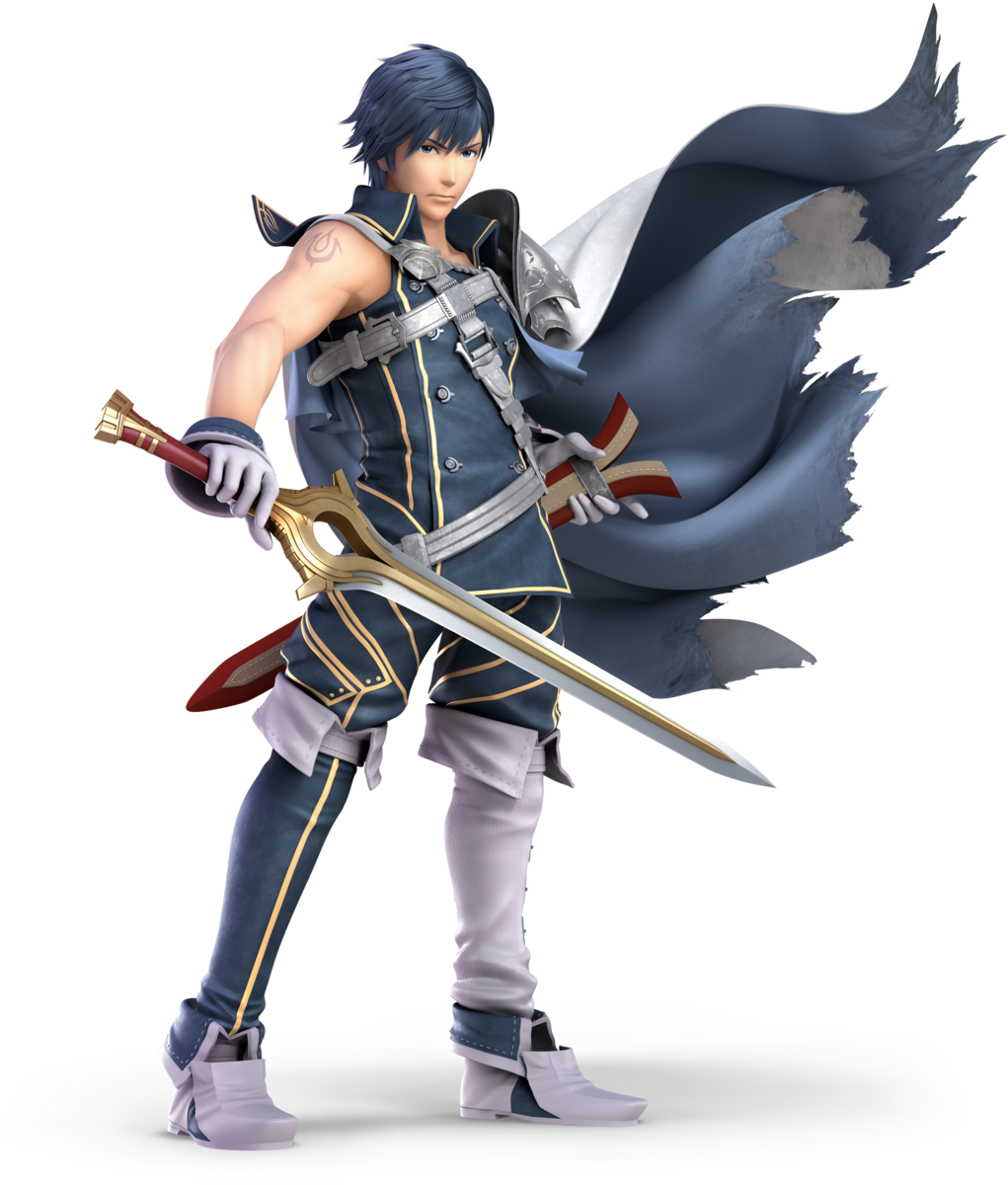
Twice, in print, a year apart, Sakurai explained exactly why Chrom didn’t make it. Famitsu column vol. 430: he had thought up a moveset for the Awakening hero, but Chrom ’just ended up as this mix between Ike and Marth, and he didn’t come together very well.’ Famitsu vol. 457, revisiting the call: Chrom would be ’another plain-old sword-wielder like Marth and Ike,’ short on unique characteristics, while Robin’s tome-and-blade moveset ’just fell into place.’
Then he put the rejection inside the game. Summon Palutena’s Guidance against Robin on the Wii U version and the goddess Viridi writes Chrom and Ike off as ’pretty much carbon copies,’ while Chrom – who does appear, striking with Falchion in Robin’s Final Smash for combined damage of up to 45% – protests that he is ’no idle layabout.’ Sakurai reported that Chrom ’took quite a beating’ in the reveal trailer, and that voice actor Tomokazu Sugita enjoyed recording the humiliations so much he threw in some fake crying, free of charge.
Ultimate ended the running joke on August 8, 2018, unveiling Chrom as an Echo Fighter of Roy in the same Direct as Simon, Richter, Dark Samus, and King K. Rool. He arrived unusually distinct for an echo: no blade sweetspot, an up special borrowed from Ike’s playbook rather than Roy’s, a Final Smash of his own. The plain-old sword-wielder came back with characteristics.
Heihachi Mishima
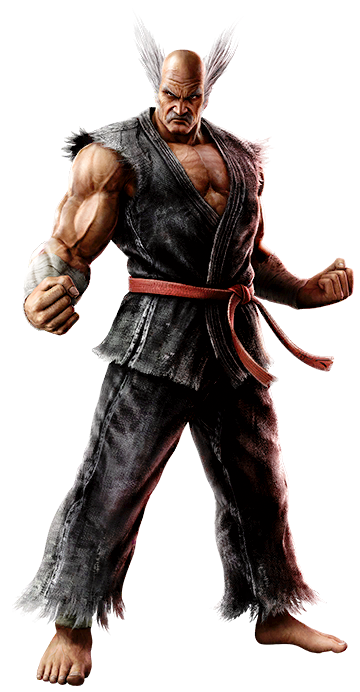
Of everyone here, only Heihachi Mishima was rejected for two different Smash games, by two different logics, seven years apart. Round one came in Famitsu vol. 456, in the Smash 4 era: among Bandai Namco characters ’there were a few in consideration, such as Heihachi from Tekken,’ but ’implementing Heihachi’s movement in Smash would be difficult.’ A two-decade fighting-game patriarch, defeated by his own walk cycle.
Round two arrived on camera. Presenting Kazuya in June 2021, Sakurai explained that the Devil Gene – the demonic transformation powering Kazuya’s Final Smash – was ’the main reason why we didn’t go with Heihachi as a fighter.’ He lost the slot to his own son, over the one piece of Mishima biology Sakurai singled out by name.
The consolations stacked up anyway. Smash 4 sold him as a Mii Brawler costume, first glimpsed at the end of Ryu’s reveal trailer, where Ryu and a Heihachi-costumed Mii land blows on each other at the same instant; it returned in Ultimate inside Min Min’s Challenger Pack on June 29, 2020, exactly one year before Kazuya arrived as Challenger Pack 10; a background post on the Mishima Dojo stage, arms folded while the walls come down. And one cameo with a wink in it: Heihachi turns up in pixel form in Pac-Man’s Namco Roulette taunt – one rejected Namco great, spinning inside the tribute of another.
Alucard
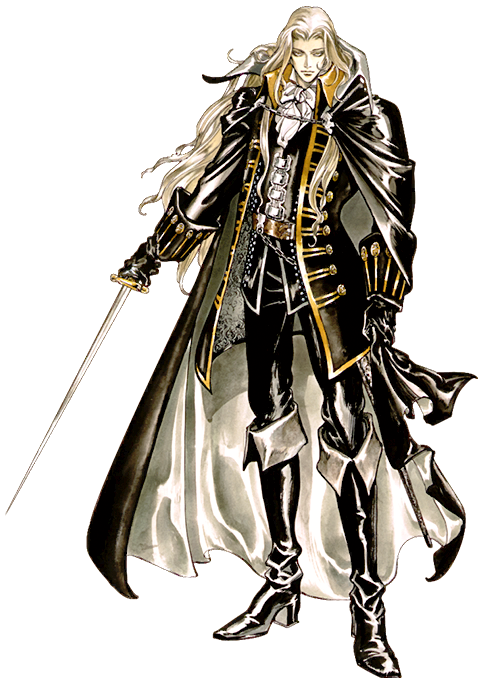
Dracula’s son entered Smash the way he enters everything: indirectly, and better dressed than the occasion requires. In a Famitsu interview published in mid-December 2018, Sakurai conceded that ’there are probably more people who are familiar with Alucard’ than with any single Belmont – and then chose the Belmonts anyway, judging that Castlevania fans ’would probably prefer’ the whip-carrying bloodline. Simon and Richter became fighters. Alucard – the man Sakurai guessed more people actually knew – became an Assist Trophy.
He is at least the most theatrical one in the building. Summoned, he swings Symphony of the Night’s Crissaegrim, scatters into mist, and turns into a bat – and he drops into Richter’s Palutena’s Guidance conversation mid-briefing to warn Pit that underestimating him would be his undoing, then concedes his own status as an item with audible dignity: he is merely there, he says, to assist Richter and anyone else who calls upon him. His Japanese lines were newly recorded by Ryotaro Okiayu rather than lifted from archives. And his name, famously, is Dracula spelled backwards – a trick borrowed from an old Universal horror picture whose mysterious Count Alucard turns out to be the man himself.
The nearest he comes to the roster is fabric. Richter’s seventh alternate costume in Ultimate is recolored to Alucard’s palette – the fighter chosen over him, wearing his colors on weekends.
Decidueye
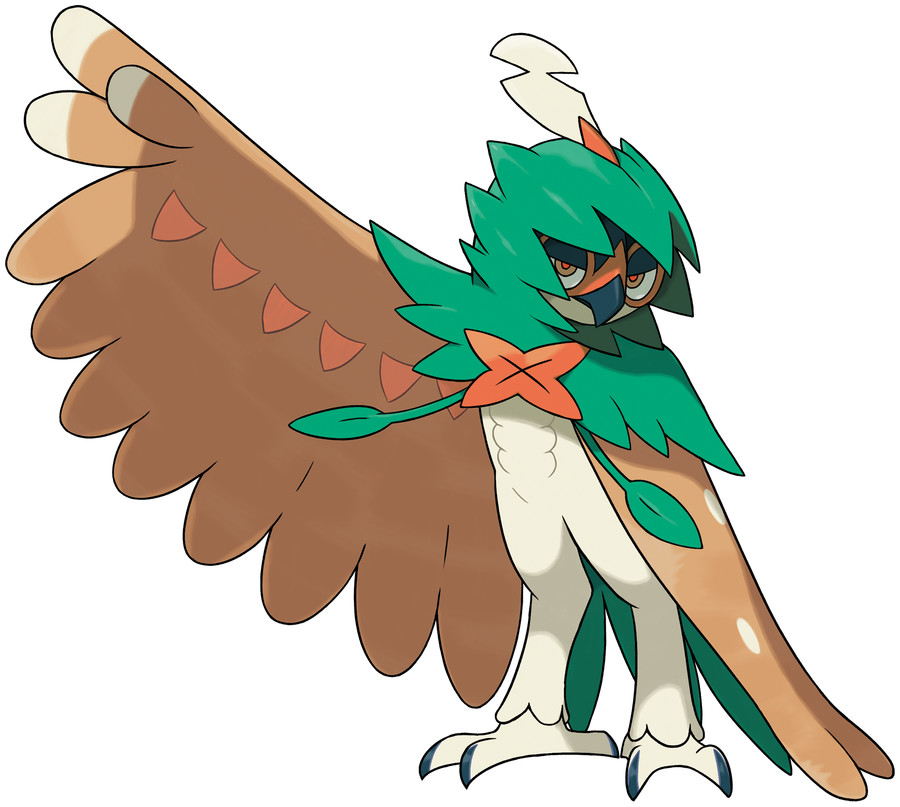
An archer lost to a wrestler on style points. Sakurai’s own words are preserved on Nintendo Dream’s website: ’the two that remained in the selection right to the end were Decidueye and Incineroar... the result was Incineroar.’ He was frank about the loser’s merits – Decidueye ’would have had its own appeal,’ he allowed, with real possibilities in those arrow-like feather quills – but Incineroar had the one thing he could not resist: ’that character quality of his.’
The tiebreaker was autobiographical. Sakurai told his interviewer he grew up on All Japan and New Japan Pro-Wrestling in their television heyday, and he curated his champion like a promoter – he personally rejected an early Incineroar design that shot fire from the title belt because it cluttered the wrestling silhouette. A Grass/Ghost owl that nocks feather quills and vanishes into its own leaf hood was never going to out-charisma a heel with a championship belt. Not in front of this judge.
Decidueye – the final form of Rowlet, Sun and Moon’s 2016 starter, evolving through Dartrix at level 34 – did land a fighting game, just not this one. It is playable in Pokken Tournament DX, a ring Incineroar has never entered in any Pokken game. Each ended up with the arena the other was denied. Sakurai, for his part, got his wrestler.
Ninjara
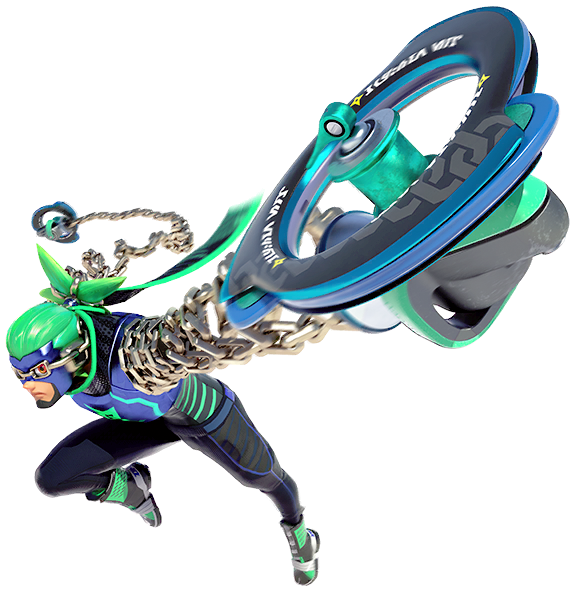
For once, Sakurai let somebody else break the tie. Choosing an ARMS fighter for Ultimate’s DLC, he was down to two candidates: ’I was actually thinking of Min Min too, but also Ninjara,’ he admitted in the Mr. Sakurai Presents broadcast of June 22, 2020. Then ARMS producer Kosuke Yabuki weighed in – ’I want Min Min’ – and that settled it. The ramen fighter took the slot; the ninja got a Mii Brawler costume, released a week later alongside Min Min herself, chakrams standing in for fists. Spring Man partisans should note their mascot was never in the running: he was already installed in Ultimate’s base game as an Assist Trophy, and the DLC choice, by Sakurai’s own account, was only ever between Min Min and Ninjara. The near-miss left Ninjara’s fingerprints all over the game regardless. He swipes the Smash invitation in Min Min’s reveal trailer before Master Mummy swats him out of the air, throws punches in her ARMS Rush Final Smash, and loiters in the background of Spring Stadium – present everywhere except the roster.
ARMS itself launched on June 16, 2017 with ten fighters and grew from there. The strangest footnote belongs to Sakurai’s own presentation, where he mentioned that image-searching Spring Man in Japan turns up what he would only call a certain enemy from a certain manga. He never said which one. Nobody needed him to.
Rex
’What? I thought I was going to be in Smash!’ Rex’s line in the Pyra and Mythra reveal trailer was written as a gag. It turned out to be documentary. Nobody here was told no in more ways than the salvager hero of Xenoblade Chronicles 2.
The first no was structural: Sakurai has explained that no Xenoblade Chronicles 2 character could make Ultimate’s base roster, because the fighter plan locked at the planning stage, before the game was even announced. The DLC era reopened the door, and Sakurai walked through it with Rex first – ’During development, we did consider having Rex fight alongside Pyra & Mythra,’ he said on camera on March 4, 2021, before conceding that even a simple two-character team ’was already pushing the boundaries’ of what the game could do. His Famitsu column later disclosed a third casualty: a solo Rex, Pokemon-Trainer-style, with the Aegis pair swapping in behind him, abandoned over the workload those designs demanded – the glowing beam tethering Rex to his Blades included. Pyra and Mythra shipped as the fighters. Rex shipped as a Mii Swordfighter costume, bundled free with Fighters Pass Vol. 1. The apology tier.
Xenoblade Chronicles 2, released December 1, 2017, has never stopped headlining him. Its Nintendo Switch 2 Edition arrived digitally on July 30, 2026, and Nintendo’s product description still leads with ’Join Rex and Pyra in their search for paradise.’ Smash could not make the duo work. The marketing department has never had any trouble.
Frequently Asked Questions
Was Sonic ever rejected for Super Smash Bros. Melee?
Not on Sakurai’s side of the record. The story belongs to Sega’s Yuji Naka, who said at a 2016 SXSW panel that he had asked Sakurai at E3 to ’put Sonic in it’ but ’at the time it was too late.’ Sakurai’s own Famitsu column on Sonic covers only Brawl, where he arrived last among the fighters built from scratch.
Was Ridley ever considered and rejected for Smash?
No consideration statement exists. Sakurai’s two on-record Ridley remarks, in Nintendo Power in 2008 and to IGN in 2014, both answer fan demand by explaining feasibility – ’if we made Ridley as a fighter, it wouldn’t be Ridley any longer.’ Ultimate settled the argument by making him playable anyway, revealed June 12, 2018.
Why isn’t Waluigi on this list?
Because no Sakurai statement about considering him exists, and this list admits nothing without one. Waluigi’s rejection lore is real fan demand surrounding an Assist Trophy role, never a documented candidacy. The same screen excluded Wolf for Smash 4 DLC, King K. Rool, Meowth, Shovel Knight, and Bomberman.
Do Brawl’s Forbidden 7 count as rejected characters?
They do not qualify. The Forbidden 7 are empty fighter files datamined from Brawl’s disc – pra_mai, mewtwo, roy, dr_mario, toon_zelda, toon_sheik and dixie – and nothing survives in them but those filenames. Mewtwo and Dixie Kong make this list anyway, on separate statements Sakurai actually made.
Were the Chorus Kids really planned for Smash?
No. Their entire case is a datamined Rhythm Heaven emblem entry in Super Smash Bros. for Wii U plus the pre-release Gematsu leak, and no Sakurai statement names them. SmashWiki’s own leak table grades them ’Potentially planned,’ reserving ’Planned’ for cases like Chrom, where a real statement exists.
How many rejected characters later joined Smash?
Eleven of the 29 characters here later debuted as playable fighters, from Bowser and Mewtwo in Melee through Chrom in Ultimate. A twelfth case runs differently: the Ice Climbers were already playable when Smash 4 cut them, and Ultimate put them back. The remaining seventeen have never been playable.
Is this list still growing?
This list is complete against the public record as of publication, and that record can still grow. Sakurai remains an active commentator – he was still unpacking Ultimate roster decisions in a piece published June 30, 2026 – and any future statement naming a new consideration would add an entry. Nothing here expires; the list only lengthens.
- Source Gaming – The Definitive Unused Fighters List (Sakurai statement archive)
- Nintendo – Super Smash Bros. (N64) official site: ’If There Was a Smash 2’ poll results
- Nintendo – Smash Bros. DX reader responses, Page 76 (Sakurai on Wario)
- Nintendo – Iwata Asks: Super Smash Bros. Brawl, Vol. 7 – Snake and Sonic
- Nintendo – Smash Bros. DOJO!!: Assist Trophy, Nintendog
- Nintendo – Super Smash Bros. Ultimate official site: Assist Trophies
- SmashWiki – Unused content in Super Smash Bros.
- Smash Wiki (JP) – Dixie Kong (Weekly Famitsu, Feb. 29, 2008 interview)