Every Assist Trophy in Super Smash Bros Ultimate
The item drops, somebody grabs it, and the match stops being fair. An Assist Trophy in Super Smash Bros. Ultimate can produce a Castlevania swordsman, a falling moon, a vintage Pong console, or a dog that blocks the camera and contributes nothing else – and, new in Ultimate, two summons can be loose on the same screen at once, a first for the series. Fighters get chosen. Assists happen to you.
No other corner of Smash digs deeper into Nintendo’s attic. The assist roster is where the series keeps its Japan-only heroes and discontinued mascots, its arcade lawmen and doodle-service hosts, alongside third-party royalty on loan and at least one licensed monster holding down a second job as a boss. Some entries were would-be fighters whose petitions never carried; others have never officially existed in English at all.
There was a time when even the bench had to be earned. Brawl introduced the item and locked a share of its assists behind play requirements, kin to every secret character unlock method in Smash history. The games since have dropped the gatekeeping: in Ultimate, every assist is available from your first match, nothing to earn. What follows is the complete set, in the alphabetical order the game itself uses, from an arcade master kept deliberately low-poly to a red swordsman who was nearly his franchise’s hero.
Super Smash Bros. Ultimate contains 59 Assist Trophies – 27 new to the game and 32 returning from earlier entries – all summoned at random from the Assist Trophy item. The count was revealed at Ultimate’s final pre-launch Direct in November 2018 and covers the complete base-game roster.
Akira
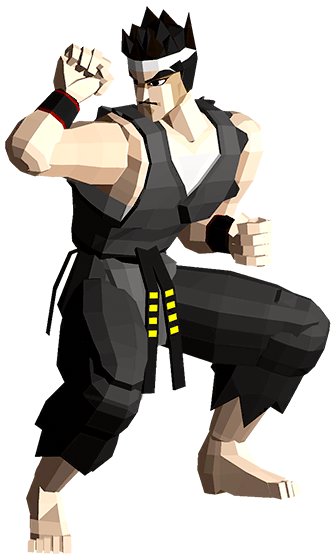
Akira Yuki arrives in Ultimate looking exactly as he did in October 1993: a sharp-cornered stack of untextured polygons, lifted from the original Virtua Fighter, the arcade game from Sega AM2 and director Yu Suzuki that is credited as the first polygon-based 3D fighting game. Nintendo had a quarter century of progressively handsomer Akiras to choose from and picked the one assembled from roughly the polygon budget of a modern doorknob. On Ultimate’s photorealistic battlefields the effect sits somewhere between time travel and vandalism.
He fights like the genuine article. Six named Virtua Fighter techniques, a proper blocking stance, and the Tetsuzanko, the shoulder-first body check that deals 21% damage when it lands cleanly. Nintendo’s own reveal text points out, with evident pride, that Bayonetta’s forward throw is based on the same move. His Japanese voice is Shin’ichiro Miki, recycled from Virtua Fighter 4 rather than newly recorded, which for a character deliberately frozen in 1993 feels entirely appropriate.
Knock him out – he can be KO’d for a point – and he departs on the series’ most famous line: ’It’s ten years too soon for you to challenge me!’ Sega evidently agrees that some clocks run slow. On December 31, 2025, the producer of the next Virtua Fighter named Akira among its confirmed characters, with a full unveiling promised for 2026.
Alucard
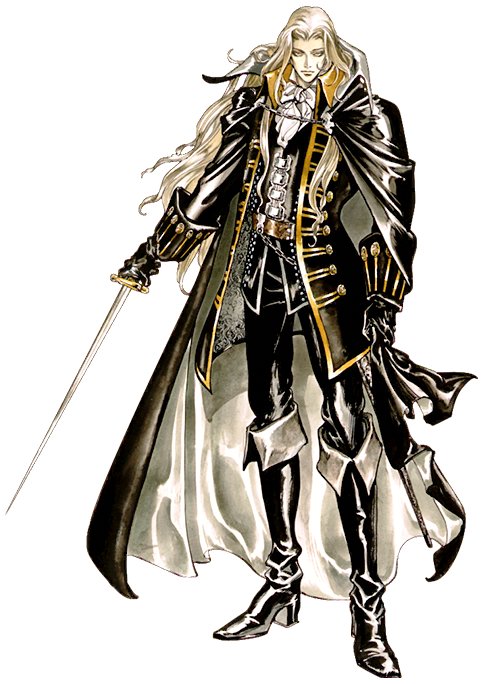
Eight years before Symphony of the Night made him a leading man, Alucard was a recruitable ally in Castlevania III: Dracula’s Curse on the NES in 1989. The 1997 PlayStation classic is the version Ultimate remembers: the long coat, the silver hair, the faint air of a man apologizing for his father. That the father is Dracula is the complication the entire series runs on.
Summoned, he works through his Symphony toolkit – the Crissaegrim sword chewing out rapid slashes that end in an 11% finisher, Power of Mist to slip through walls, and Soul of Bat, a 25% charging transformation he can use only every 4 seconds. He can be knocked out of the match, though at a base HP of 50 he does not make it easy. He arrived in the Castlevania wave that mattered: Simon and Richter Belmont were confirmed as fighters at the August 8, 2018 Direct, and Alucard followed on the Super Smash Blog on August 24. A Famitsu interview, at least as it survives in fan translation, has Sakurai saying he considered Alucard for the fighter slot before settling on the Belmonts.
In World of Light his spirit is the penultimate battle before Dracula himself. Nintendo’s reveal text, for its part, signs off with a puzzle: ’when you read “DRACULA” backwards, you get...?’ It trusts you to take it from there.
Andross
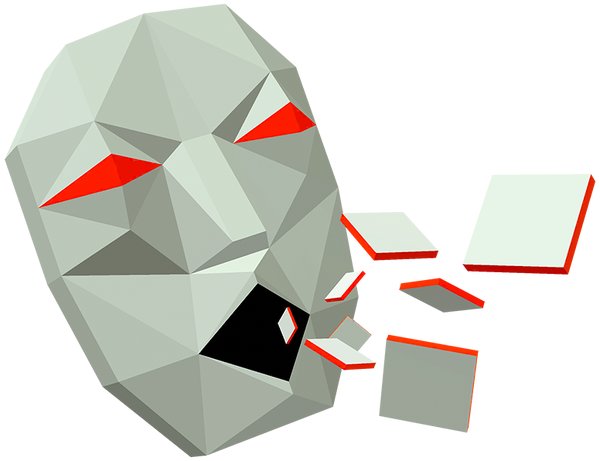
In 1993, Star Fox taught the Super Nintendo to draw polygons – Nintendo EAD and Argonaut Software managed it with a coprocessor called the Super FX chip riding inside the cartridge – and the game went on to sell more than 4 million copies. Its villain was a disembodied simian face built from flat shaded panels, and it is that face, specifically, that Smash has preserved. Melee kept two Andross trophies, one for the blocky SNES original and one for his fleshier Nintendo 64 redesign. When Brawl made him an Assist Trophy in 2008, it reached past the newer model and took the polygons.
Summoned in Ultimate, he drifts into the background, centers himself over the stage, and does what he has always done: inhales, then exhales a barrage of flat tiles across the battlefield. He has appeared in every Smash since Brawl without a gap, at a spawn chance of 30 in 2086, and the in-game description is a small masterpiece of economy: ’Moves into the background, then fires polygon panels at the stage. Can’t be KO’d.’
The Melee trophy text wondered whether this form was ’a metallic manifestation of Andross or just a hologram,’ concluding only that it was probably not his true form. Nintendo has moved on – the June 25, 2026 Star Fox remake restores him as the menace of the Lylat System – but Ultimate keeps the 1993 face, still exhaling tiles, still refusing to be KO’d.
Arcade Bunny
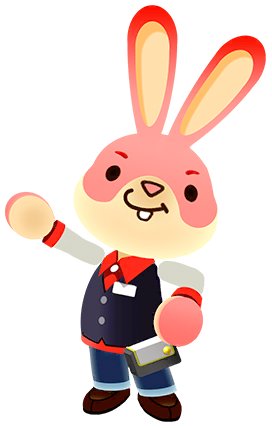
Between December 2014 and early April 2024, Nintendo employed a large pink rabbit to run a claw machine. Nintendo Badge Arcade was a free-to-start 3DS application in which players paid for crane-game attempts at badges that decorated the system’s home menu, and the Arcade Bunny was its tireless, faintly desperate host. The app launched in Japan first and went worldwide in November 2015; Nintendo’s support page records the whole operation shutting down in early April 2024 with the rest of the 3DS’s online services. Launch it today and you get an error screen.
His Assist Trophy is his old job with the safety settings removed. He wheels out a claw that grabs a fighter and hauls them up off the screen for a KO – shake hard enough and you escape – and he gets at most two or three plays per summon, a nod to the original app’s rationed free attempts. The costume details survived the move: in Badge Arcade his name tag read ’ABCDE’; Ultimate’s modelers quietly corrected it to ’A. Bunny.’
He also persists as spirit No. 1,277, a 1-star Support spirit granting Strong Throw, which reads like a performance review written by someone who liked him. The machine is gone and the badges no longer decorate anything. The claw in Ultimate is the only shift he still works.
Ashley
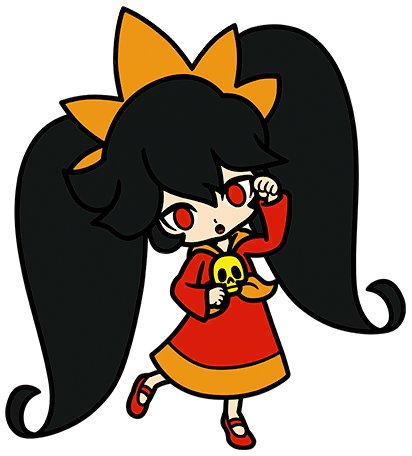
’Who’s the girl next door, living in the haunted mansion?’ That, plus an ellipsis, was how Masahiro Sakurai announced Ashley to Smash – a January 2014 Miiverse post introducing the WarioWare witch by quoting the opening lyric of her own theme song. The song had seniority. Brawl carried a fully lyriced English vocal version in 2008, credited to three named vocalists on the official DOJO!! site in October 2007, back when Ashley herself appeared in that game only as a sticker.
She debuted as an employee of WarioWare, Inc. in WarioWare: Touched!, the DS microgame collection released in Japan in December 2004 and in North America in February 2005. Her Assist Trophy career began in Smash 4, and Ultimate keeps the method intact: she conjures a churning zone of darkness that slows every fighter caught inside it and, in this version, shuts down dashing altogether. The training menu files her under ’Creates a cursed zone of darkness. Unable to be KO’d,’ which is about as close as Nintendo comes to a warning label.
A Mii Swordfighter costume of her arrived on February 3, 2016, in Smash 4’s final DLC wave. What has never arrived is her voice: across two games as an Assist Trophy, Ashley has not spoken a single word. Her summon pose, borrowed from a Game & Wario cutscene, shows her imagining ruling the world. The song, apparently, said everything else.
Black Knight
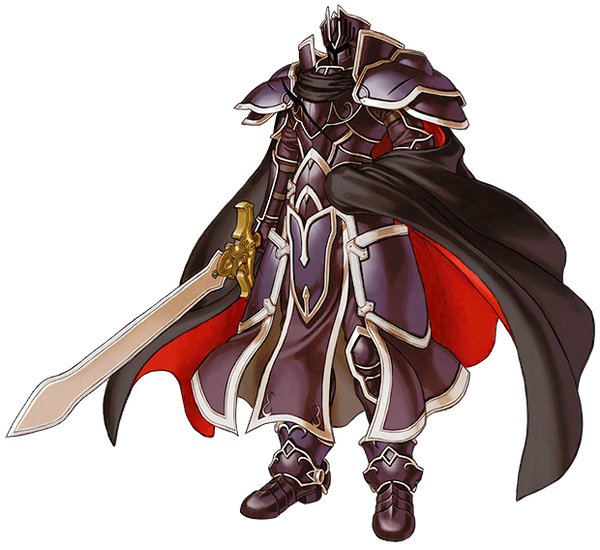
The Black Knight does not hurry. Summoned, he walks – a slow, deliberate, armored advance – and then produces a handful of sword swings that end matches: his single overhead slash alone deals 30% damage, and the in-game description settles for ’Slowly approaches, and then executes several extremely powerful slashing attacks.’ While he is mid-swing his super armor is unbreakable, so a counterattack accomplishes nothing except the noise.
He comes from Fire Emblem: Path of Radiance, the 2005 GameCube entry that was the series’ first with 3D graphics, full-motion cutscenes, and voice acting. Nintendo’s official character bio lays out the resume: black armor ’blessed by the goddess to make him impervious to any attack,’ the sword Alondite in hand, and, in his first duel of that game, the killing of Greil – father of Ike, Smash’s own resident mercenary. Everything between Ike and the Black Knight follows from that duel.
He has stalked the series as an Assist Trophy since Brawl in 2008, never missing a game, and in Ultimate he can technically be beaten: 70 base HP, no grabs allowed, flinching reserved for sufficiently strong hits. His voices – Robert Clotworthy in English, Junji Majima in Japanese – are recycled from Fire Emblem Heroes, including the departing ’Know your place!’ In Path of Radiance, nothing the player carries can dent that armor until Ike’s own blade Ragnell arrives. Ultimate honors the arrangement in spirit. Hit him mid-swing with whatever you like. He will finish the swing.
Bomberman
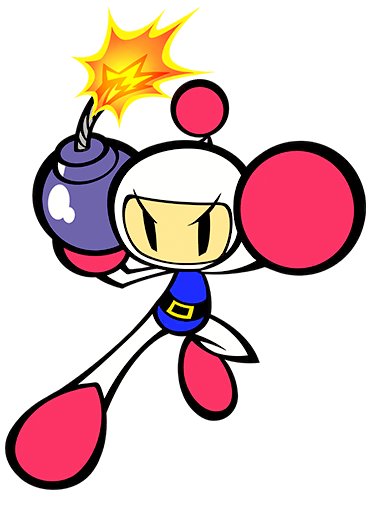
Hudson Soft had a problem with the word ’bomb’. When the company took its 1983 maze game abroad the following year, the international release was retitled ’Eric and the Floaters,’ a name with the rare distinction of being both safer and considerably more unsettling. The original had launched in Japan in July 1983, built for the Sharp X1 and ported to the PC-8801, and its bomb-laying hero has been detonating things more or less continuously ever since.
The corporate history matters in Smash. Konami took a 55 percent stake in Hudson in 2005, bought the rest on April 1, 2011, and dissolved the company into Konami Digital Entertainment on March 1, 2012 – which is how Bomberman entered Ultimate under the same publisher flag as the Belmonts. His reveal, posted to the Super Smash Blog in June 2018, made him an Assist Trophy who seeds the stage with bombs that detonate in the series’ unmistakable cross-shaped blast, stacking up to 17% damage. He can be knocked out, including – true to decades of tradition – by his own explosives, though he is usually careful. He is also summonable on every stage in a standard versus match.
Konami shadow-dropped a collection of his early catalogue – 1985 through 1997 – in February 2026, with a physical edition set to follow that August. The cross-shaped blast, four decades in, remains non-negotiable.
Burrowing Snagret
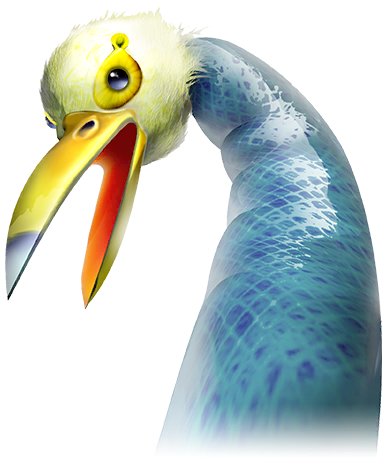
There is a bird in Pikmin that is mostly snake. The Burrowing Snagret – Hebi Garasu, ’Snake Crow,’ in Japanese – debuted in the original Pikmin on the GameCube in 2001, where it hunts by staying partially buried and striking at whatever wanders past. Most of a Snagret never leaves the ground. The head does the work.
Smash noticed it early but kept it behind glass: a collectible trophy in Brawl in 2008 wearing the original design, another trophy in Smash 4 wearing the Pikmin 3 redesign of 2013. Ultimate finally lets it hunt. Summoned, it erupts from the stage floor – dealing 10% to anyone standing on the spot – pecks out a sequence of 8%, 8%, and 18% hits, then dives back under and resurfaces beneath somebody else, platforms included. It cannot be grabbed, shrugs off most flinching, and carries a base HP of 80, tied with Chef Kawasaki for the third-highest of any Assist Trophy in the game, behind only Rathalos at 100 and Mother Brain at 120.
Its spirit battle is fought on the Garden of Hope against a giant Charizard while Pitfall items rain down – the spirits department taking the burrowing theme extremely literally. After a decade as a shelf ornament in this series, the bird finally gets to do the thing it was built for: ruining afternoons from directly below.
Chain Chomp
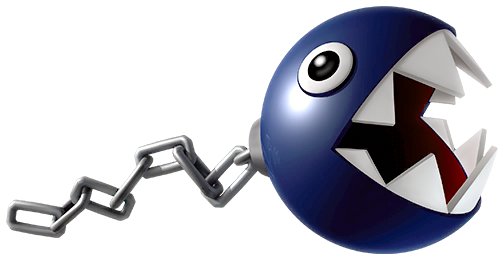
A neighbor’s dog once chased a young Shigeru Miyamoto, and the incident ended – as the Guardian’s Keith Stuart told it in 2010 – when the animal ’was yanked back by its chain.’ Miyamoto being Miyamoto, the trauma became content. Chain Chomp debuted in Super Mario Bros. 3 in 1988 as a snapping iron ball tethered to a wooden post, lunging at anyone who wandered close, and it has guarded Mario’s walkways in exactly that manner ever since.
Smash eased it in gradually: a background presence on Brawl’s Yoshi’s Island stage, then a full Assist Trophy from Smash 4 onward, first shown in the April 8, 2014 Direct. Ultimate’s version is chained to a metallic post borrowed from Super Mario Odyssey, painted dark blue, and described by the training menu with admirable brevity: ’Jumps at nearby opponents, biting at them fiercely.’ New in Ultimate: it can now be knocked out for a point, an option extended to anyone willing to pick a fight with a dog on a chain.
It moonlights all over the game. Chain Chomp turns up as a hostile summon in six different spirit battles, more than any other Assist Trophy, and it was still on duty as recently as June 5, 2025, patrolling a quicksand pit in Mario Kart World. Its Japanese name is Wanwan – bow-wow. Since Super Mario 64, it has actually barked.
Chef Kawasaki
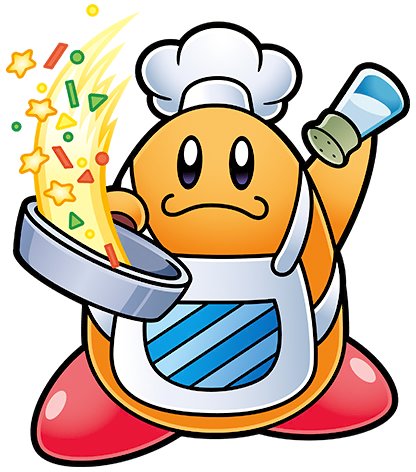
Kirby’s home series has always treated cooking as light combat, and Chef Kawasaki is the tradition’s founding professional. He debuted in Kirby Super Star on the SNES in 1996 as a mid-boss and the source of the Cook copy ability – beat him, borrow the apron. Brawl kept him pressed flat as a 2008 sticker; Ultimate finally issued him as a full Assist Trophy in 2018, and the official blog explained the service with complete sincerity: ’He grabs opponents using his long ladle and mixes them into a pot!’ The same post adds: ’You can then use his food to recover your health (just don’t think about the recipe)!’
That parenthetical is doing heavy work. In practice Kawasaki opens by winging plates at people – 1 to 3 of them – then extends the ladle, hooks a fighter from surprising range, and boils them. The pot holds three characters at once, and because the Ice Climbers legally count as two people, a maximally efficient summon can produce 12 items of food: nine cooked out of fighters, two out of a captured Assist Trophy, and one left behind as a parting gift.
The chef himself can be knocked out, though with 80 HP behind the apron he is sturdier than he looks. Nintendo evidently agrees he has range: on November 20, 2025, Chef Kawasaki graduated to playable, riding the Hop Star machine in Kirby Air Riders on Switch 2.
Color TV-Game 15
Nintendo sold Pong machines before it sold characters. The Color TV-Game 15 arrived in Japan on June 8, 1977 – one week after its cheaper sibling, the Color TV-Game 6 – and retailed for 15,000 yen against the 6’s 9,800. The relationship between the two was pure retail theater: both consoles contained the same 15 built-in tennis variants, but the 6 shipped with only 6 of them switched on. The premium bought you the rest of the dial.
In Smash, the console itself is the character. Summoned, it projects two paddles that begin an automated rally of Tennis B, one of its built-in games, and the ball is the hazard: a blocky white square dealing knockback severe enough that a cleanly reflected shot often KOs outright. The training menu keeps things clinical – ’Starts a rally with two paddles and will also reflect any projectiles that hit them’ – and each paddle carries just 15 HP, among the flimsiest objects in the game.
Sakurai flagged the point of all this himself in 2014, via Miiverse: TV-Game 15 is ’the oldest game to join the Smash Bros. series,’ released in Japan before Space Invaders existed. It is also the only Assist Trophy in Ultimate with no spirit to its name – fitting, for a machine older than the idea that a game needed a face.
Devil
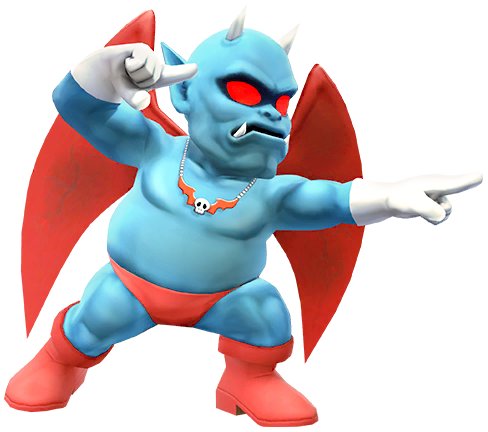
Devil World never came to America. Shigeru Miyamoto directed it – his first game built for a home console rather than arcades, made with Takashi Tezuka, whose Nintendo career it opened in 1984 – and Nintendo of America would not touch it: a maze game with the Devil for a villain and religious imagery throughout. As games historian Chris Kohler put it in his 2005 book Power-Up, it ’absolutely could not be released in America,’ where the imagery ’would be seen as unsettling or even blasphemous.’ Japan got it on October 5, 1984. Europe got it in 1987. America got nothing for nearly forty years.
The Assist Trophy preserves his day job. In Devil World the Devil hovers above the maze pointing directions while the walls slide to obey, squeezing the room available to the dragon Tamagon; in Smash – Brawl, Smash 4, and Ultimate alike – he floats up, points, and scrolls the entire stage that way, dragging the boundaries with it. The training menu is succinct: ’Moves the stage in whichever direction he points. Can’t be KO’d.’ He is also barred from more stages than any other Assist Trophy – 63 in the base game, 69 counting DLC.
America’s copy finally arrived through the Nintendo Classics library on October 31, 2023. Nintendo shipped the Devil on Halloween.
Dillon
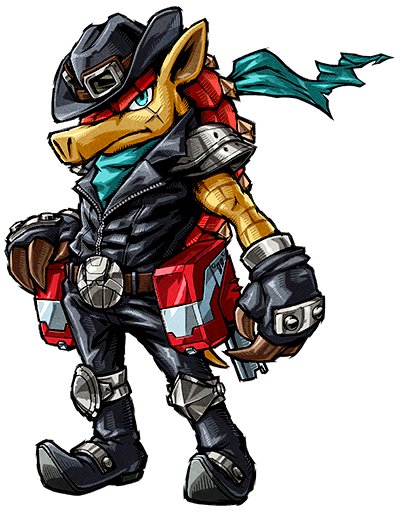
He tips his hat before he attacks. Dillon, the armadillo ranger of Dillon’s Rolling Western, keeps his manners even in someone else’s brawl, and the gesture is the entire personality of a hero who never speaks. His game arrived on February 22, 2012 as a downloadable 3DS exclusive from developer Vanpool – first shown at E3 2011 as simply The Rolling Western – and it was a strange, sturdy hybrid: daytime spent mining and building towers, dusk spent defending frontier villages from rock monsters called Grocks.
As an Assist Trophy he compresses the job into seconds: the hat tip, then a series of rolling charges, then a final spin that traps an opponent and launches them offscreen – occasionally carrying Dillon off with them, in which case he simply teleports back to the stage. Ultimate nudged his numbers upward from Smash 4, the final spin rising from 18% to 20% damage. He can be KO’d, and Ultimate also reissued his look, trading the original model for the sleeker design of 2018’s sequel, Dillon’s Dead-Heat Breakers.
There has been no new Dillon game since that sequel. His voice actor, Taro Kudo, holds one of the easier jobs in the industry: in his own series, Dillon is a silent protagonist. The hat does the talking.
Dr. Kawashima
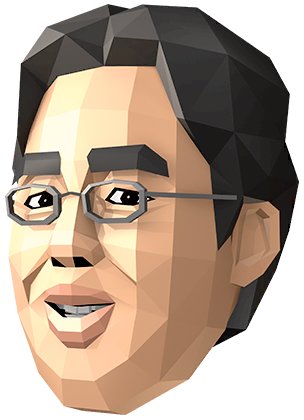
There is a real Dr. Kawashima, and he declined the money. Ryuta Kawashima, born in 1959, is a tenured neuroscience professor at Tohoku University whose research on reading aloud and quick arithmetic became Brain Age on the DS – May 2005 in Japan, April 2006 in America – with his own floating polygonal head as its host. The games moved 17 million units inside three years. He refused the royalties outright, telling AFP, ’Not a single yen has gone in my pocket,’ and kept living on his professor’s salary of roughly 11 million yen while the game money went to research.
Smash borrowed the head. As an Assist Trophy since Smash 4, Dr. Kawashima sends the numbers 1 through 9 drifting across the screen; when two collide with a sum of 10 or more they explode, and an exact 10 detonates something closer to a Smart Bomb. The attack effectively asks fighters to do arithmetic mid-brawl, under fire. In Ultimate his arrival also bleaches the backdrop into white graph paper, as though the stage itself had been enrolled in a worksheet. He cannot be KO’d. He is a professor, not a combatant.
The regimen never stopped: he remains at Tohoku, still tenured, still running his research center, and still – by his own long-standing arrangement – unpaid by his own franchise.
Dr. Wright
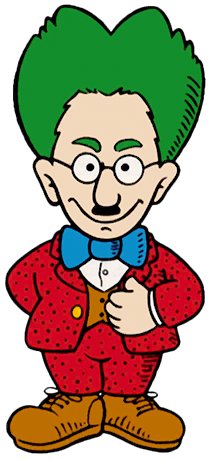
’What? You mean THAT Dr. Wright? The one from the SNES version of SimCity?’ Sakurai’s own website broke the news of this Assist Trophy in July 2007 in a tone of frank disbelief, and the disbelief was earned. Dr. Wright is the green-haired advisor from the 1991 SNES port of SimCity, Nintendo’s take on Will Wright’s city builder, and he was an obscurity even then. Wright himself told the story in a 2019 interview: back in the NES era, Miyamoto asked whether he would mind Nintendo naming ’the guy with the green hair’ after him. He did not mind. He called it an honor.
Summoned, the doctor practices urban planning as a form of violence, slamming buildings up out of the stage floor to launch anyone standing on the lot, with a 25% chance – up from 10% in earlier games – of raising a super skyscraper instead. Attack him and he retaliates with more construction. He has held the post through all three Assist Trophy eras, Brawl through Ultimate, and his spirit is priced accordingly: it unlocks only after you collect 777 others.
The SNES manual, for the record, lists him at three inches tall with an IQ of 1000, a former hair-dye chemist educated at Mario State University. Smash is the restrained portrayal.
Flies & Hand
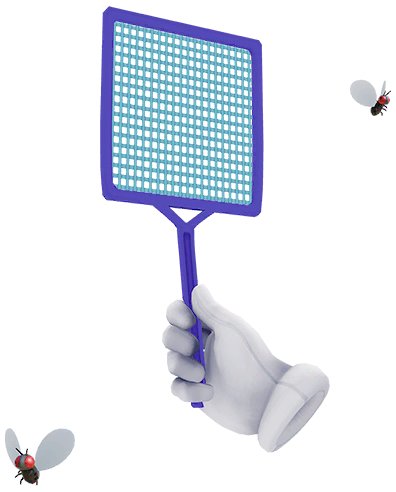
Mario Paint shipped for the SNES in 1992 with a mouse in the box, and Nintendo needed something to prove the peripheral could be fun. The answer was Gnat Attack: a minigame in which a gloved hand wielding a flyswatter must put down 100 flies across three levels, then defeat a boss fly named King Watinga. In Ultimate, that entire premise is an Assist Trophy. Flies materialize around the fighters, a giant hand drifts across the foreground, and anyone caught under a swat takes 25% damage – the official blog’s advice being to ’think like a fly and run away!’
The details are lovingly faithful. Swat the hand enough and it sprouts the same stricken eyes and mouth it shows when hurt in Gnat Attack, and knocking it out earns a point. While the assist runs, the camera locks in place and stays locked even through pausing – the swatter gets its fixed playfield whether the players like it or not.
Gnat Attack itself refuses to die. It resurfaced as ’Fly Swatter’ in WarioWare and again in Super Mario Maker, and on July 29, 2025 Mario Paint joined Switch Online with mouse control restored by way of the Switch 2’s Joy-Con. Nintendo’s trailer for the re-release explained the infestation with a tour of a neglected break-room garbage can: ’this is how you get flies.’
Ghirahim
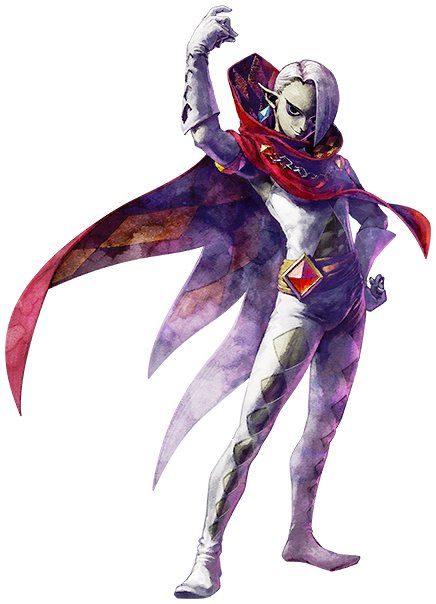
He introduces himself in Skyward Sword as a Demon Lord, though the truth is stranger: Ghirahim is a sword. He is the living spirit of the villain Demise’s blade – the dark mirror of Fi, the Master Sword’s own resident spirit – and he spends the 2011 Wii adventure chasing the reincarnated goddess Hylia’s essence with the manner of a man auditioning for a one-man show. Ultimate keeps the theatricality fully intact.
Summoned – a job he has held since Smash 4 – he fences with a rapier, flings kunai, reflects any projectile that touches him, and teleports incessantly, closing distance in the bursts the training text summarizes as ’closing in on opponents by dashing and warping.’ In Skyward Sword, Fi advises Link that Ghirahim ’may be vulnerable immediately after teleportation.’ In Smash, as it happens, his teleport carries a cooldown of 6 seconds. Some advice ages well.
Ultimate treats him better than Smash 4 did: his HP rose from 40 to 50, his reflector strengthened from 1.25x to 1.3x, and his warp lost its telltale lingering. Knock him offstage and he simply teleports back. His fate, though, is a loose thread the franchise has left hanging: Demise reclaimed the sword mid-battle at the end of Skyward Sword, and per the series record what became of the spirit inside remains unknown. Smash keeps him employed in the meantime.
Ghosts
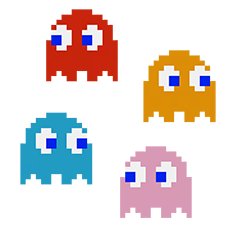
In 1980, Toru Iwatani built his villains to be likable. The designer has said he made Pac-Man’s ghosts cute and colorful – Casper the Friendly Ghost was an influence – specifically to draw women and couples into arcades then wall-to-wall with war games and Space Invaders clones. The result was the Ghost Gang: Blinky, Pinky, Inky, and Clyde. In the arcade original each runs different code: Blinky chases you directly, Pinky angles ahead to cut you off, Inky moves opposite Blinky, and Clyde does more or less whatever occurs to him.
The Assist Trophy, a Smash 4 addition that returns in Ultimate, imports all four temperaments intact, in flat 8-bit sprites that behave exactly as the old trophy text promised: ’The longer they chase you, the faster they move.’ They share one health pool, which produces a lovely quirk: whittling them down with punches is slow going, but a single well-placed projectile can erase the whole gang at once, at which point survivors turn blue and flee – the Power Pellet panic, faithfully recreated.
They are still working. A July 2025 anniversary game reimagined them as monstrous ’G-HOSTs,’ and a Namco voxel-stacking game due in Summer 2026 will render all four as stackable blocks. The friendliest villains in gaming were a business decision, and the decision keeps paying.
Gray Fox
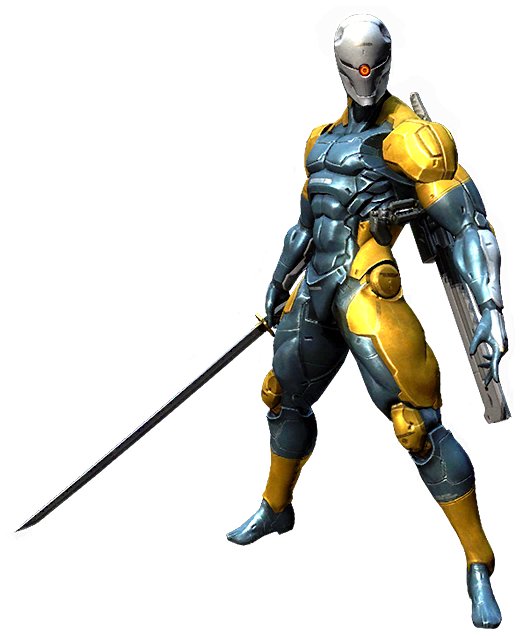
Snake’s arrival in Brawl opened a door, and Sakurai walked one more Metal Gear man through it. ’If Snake is going to be joining the brawl,’ the official DOJO!! site reasoned on November 7, 2007, ’then it should be fine to have someone else from the Metal Gear world join as an Assist Trophy, right? Frank Jaeger, the Gray Fox, appears!’ The pedigree ran deep: Gray Fox dates to the original Metal Gear on the MSX2 in 1987 – Hideo Kojima’s first game as director – and returned in 1998’s Metal Gear Solid as the Cyborg Ninja, the franchise’s great tragic monster.
His Smash routine is pure ninja theater: he blurs around the stage slashing, and deflects projectiles with sword swings modeled on the Twin Snakes cutscene where he cuts gunfire out of the air. Then he vanished along with the rest of Smash 4’s missing Metal Gear content, and his Ultimate return produced a small clerical comedy: the official site’s item gallery handed promotional screenshots to him, Isaac, and the 27 first-timers – and to none of the other 30 returning assists – presenting two Brawl veterans as debutants.
Ultimate also renegotiated his contract: 20 seconds of stage time, nearly double Brawl’s 11, in exchange for mortality – he can now be attacked and KO’d. His spirit artwork, one final indignity, is not even him. It is Raiden, wearing a Gray Fox costume.
Guile
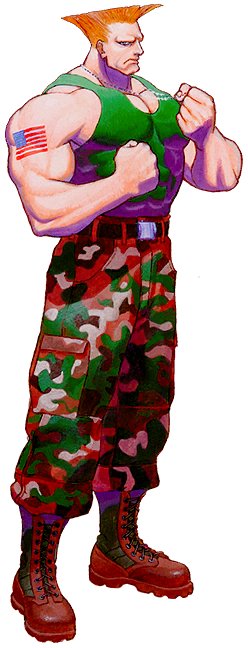
Patience is the entire act. Most Assist Trophies enter swinging; Guile crouches. One of the original eight World Warriors of 1991’s Street Fighter II, equipped with just 2 signature special moves, he spends his Smash cameo doing what charge characters have always done – blocking, waiting, punishing. Wander close and the Flash Kick arrives. Keep your distance and Sonic Booms start rolling in. The official blog grasped the essence: ’He crouches down and waits patiently...then delivers a Flash Kick to anybody who approaches! Don’t get too close.’
The details are lifted with a fan’s care. His voice comes from Street Fighter IV recordings, but the impact sounds when his attacks land are the original Street Fighter II hitsounds – an audio time capsule buried inside a Nintendo game. He works a 15-second shift with 60 HP, and he can be beaten, though beating a man whose whole strategy is defense takes commitment.
His theme music, meanwhile, became a phenomenon in its own right: a YouTube splice posted in April 2010 as ’Guile Theme goes with Everything’ drew – as Know Your Meme records it – over 40,000 views in its first months and settled the question permanently. Survive his full shift and he departs on a recorded line: ’That was nothing!’ He is not wrong.
Hammer Bro
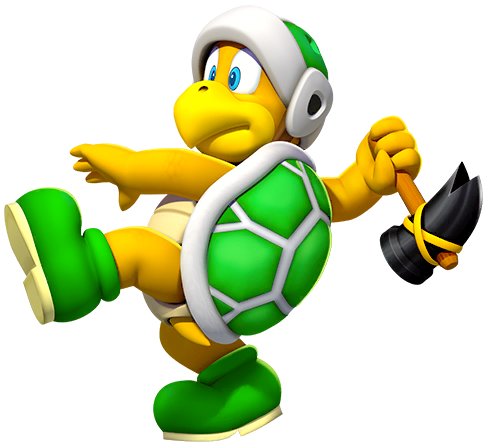
When Nintendo needed to explain what an Assist Trophy even was, it reached for a Hammer Bro. Sakurai’s DOJO!! site introduced the entire item category on July 2, 2007 with him as the demonstration model: ’Take the capsule and hold it high! A Hammer Bro appears! As you can see, he throws his famed hammers!’ A sensible spokesman – the Hammer Bro had been throwing those hammers since Super Mario Bros. in 1985, which makes him one of the oldest working enemies in Nintendo’s stable.
The job has not evolved, because it did not need to. Ultimate’s training text is the finest piece of technical writing in the game: ’Throws hammers. Lots and lots of hammers.’ The current model throws up to 5 per volley, up from 3 in Smash 4, across a 15-second appearance nearly double the old 8, and he can be swatted down for a point by anyone who tires of the arithmetic.
He has worked every game the item has existed in – Brawl, Smash 4, Ultimate – and in Brawl he moonlighted as a Subspace Emissary enemy, a deployment Sakurai’s own site confirmed in February 2008. His one modern eccentricity is scarcity: at 24 chances in 2086, SmashWiki’s tables make him and Starfy the rarest summons in the game. Seniority, it turns out, buys rarity.
Isaac
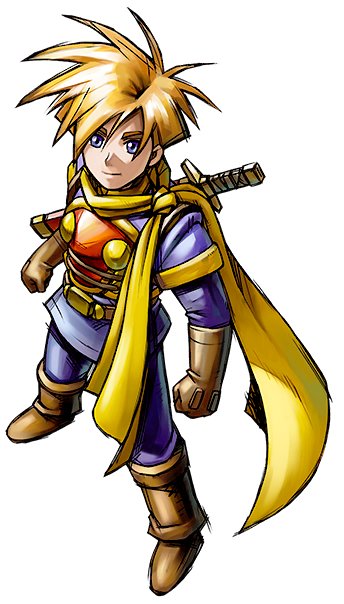
The bad news arrived a day early. On October 31, 2018, with the final Ultimate Direct less than 24 hours away, EventHubs relayed leaker Vergeben’s word that Isaac of Golden Sun would be getting ’the Waluigi treatment’ – an Assist Trophy, not the playable slot his fans wanted. The claim directly contradicted the sunnier ’Grinch leak’ then in circulation, and it proved exactly right, earning its place among Smash reveals that leaked before the official announcement. Isaac duly appeared in the November 1 Direct as a summon.
It was at least a homecoming. Isaac, the earth-moving Venus Adept hero of 2001’s Golden Sun on the Game Boy Advance, had been a Brawl Assist Trophy in 2008 – Sakurai’s site described his Psynergy as ’a massive hand that pushes away anything in its path’ – and then vanished from Smash 4 altogether. Of Ultimate’s 59 Assist Trophies, he and Gray Fox are the only two who ever left and came back. Brawl’s Isaac performed Move exactly 3 times, shoving fighters offstage without a point of damage; Ultimate upgraded him to a proper kit – Pound now hits for 10% – and made him mortal, with 50 HP for anyone who objects.
As of this summer, Golden Sun has had no new entry since 2010, and Isaac still sits near the top of the most-requested lists. He waits the way his fans do: politely, and so far in vain.
Jeff
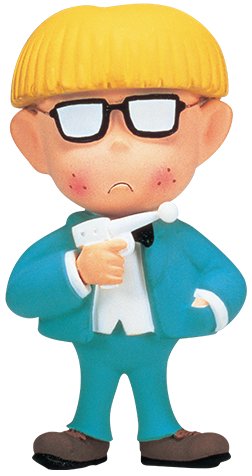
Sakurai’s writeup of this Assist Trophy ended in a one-word review. ’In our game, he uses the Multi-Bottle Rocket 5,’ the Brawl DOJO!! site explained in February 2008. ’He can launch four mini-rockets and one mega-rocket. Guided missiles... Lovely.’ Jeff Andonuts has been lovely in precisely this way through Brawl, Smash 4, and Ultimate without missing a game: summoned, he sets up and fires a volley of five bottle rockets that chase their targets down.
The loadout is faithful to a fault. In 1994’s EarthBound, bottle rockets are Jeff’s weapon and his alone – no other party member can use them – because Jeff is the party’s odd man out: the one companion with no psychic powers at all, a scientist’s son who compensates with guns and inventions. Smash made the fireworks his signature accordingly. The numbers have only grown since; his big rocket hit for 12% in Brawl and hits for 25% now.
Ultimate’s training text files him under ’Fires a volley of five bottle rockets. Can’t be KO’d’ – membership in the untouchable class of assists, which is probably for the best. Per SmashWiki, he visibly sweats the entire time he is on stage. The rockets are guided. The boy launching them would rather be back in the lab.
Kapp’n
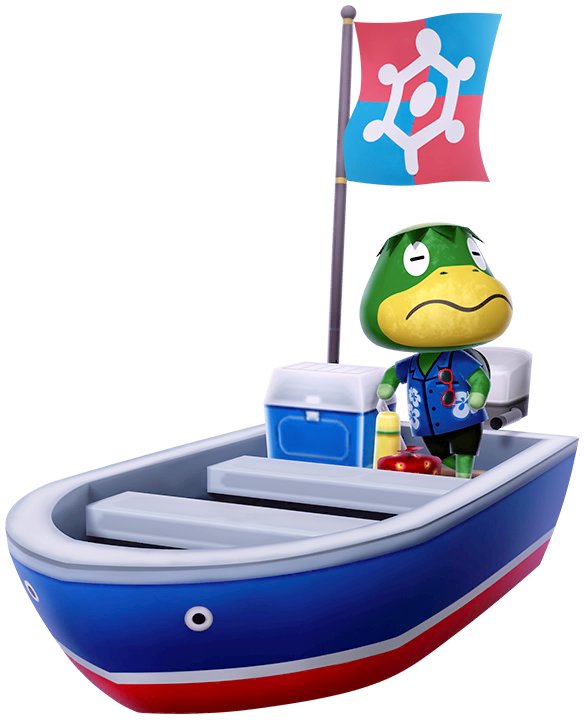
A city bus is not a standard weapon, but Ultimate has never been principled about these things. Kapp’n – the seafaring kappa who has been ferrying Animal Crossing players since the series’ Japan-only GameCube debut in 2001 – makes his first appearance as an Assist Trophy in Ultimate, and he arrives in his City Folk incarnation, from the 2008 game where he traded the rowboat for a bus route. Summoned, he drives laps around the stage. The blog’s warning was direct: ’When he hits a fighter, he’ll carry them off of the stage in his bus!!’
That is the whole mechanism, and it is ruthless. The bus deals 9.5% on contact, scoops its victim aboard and, given time, drives them clean past the blast line – a KO by public transit. The training text adds the decisive footnote: ’Can’t be KO’d.’ Like the Thwomp, the vehicle is indestructible. Complaints may be addressed to the driver, who is busy.
In his home series Kapp’n sings sea shanties as he ferries you between islands; Smash grants him no repertoire, just the route. The franchise, meanwhile, promoted the family: New Horizons’ Version 3.0 update, rolled out late in 2025, opened a Resort Hotel by the dock run by his wife, Leilani. Kapp’n, naturally, is still driving.
Klaptrap
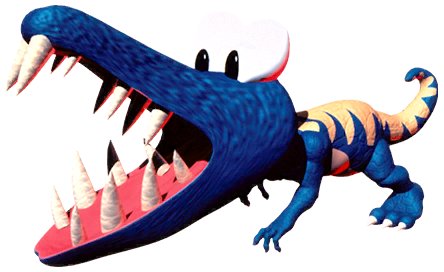
In 1994, Rare stocked Donkey Kong Country with crocodiles, and the smallest one proved the most annoying. The Klaptrap – claptrap with the Kremling Krew’s regulation K – is a small quadruped that does nothing but snap, and its Smash career is a long apprenticeship: a stage hazard in Melee, Brawl, and Smash 4 before Ultimate finally promoted it, in 2018, to summonable Assist Trophy. Melee players remember the hazard years vividly; on Jungle Japes, a blue Klaptrap could spike a fighter into the river for a one-hit KO.
The reveal blog announced the promotion with a straight face: ’Moving back and forth on the stage, Klaptrap jumps at the nearest fighter and repeatedly bites down. It may be small, but attacks from its strong jaws are dangerous!’ The numbers bear it out – a latched Klaptrap chews through a string of 1% bites to a 12% finisher – and unlike the bus or the falling moon, it can be KO’d, being, after all, a very small crocodile with 40 HP.
Its Melee trophy spelled the name ’Klap Trap,’ two words, an orthographic era the franchise has quietly abandoned. The species is thriving: Donkey Kong Bananza, released in July 2025 on Switch 2, brought Klaptraps back as enemies, swapped in for the Munchoid enemy type at the planet’s core. Some jaws are irreplaceable.
Knuckle Joe
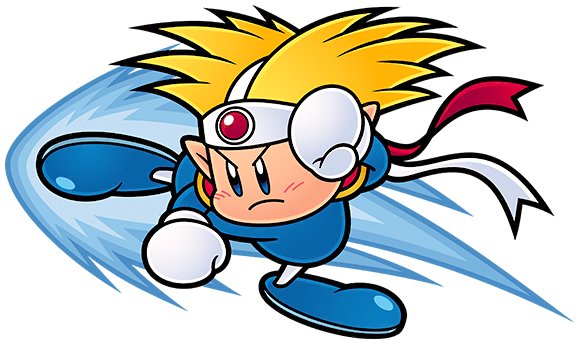
He arrives yelling the names of his own moves. ’Vulcan Jab! A storm of Vulcan Jabs rain down,’ ran Sakurai’s DOJO writeup in July 2007, ’and then Knuckle Joe can finish his foes off with one of the following two special moves! Smash Punch! Rising Break!’ That is the complete kit, unchanged across a career – Brawl, Smash 4, Ultimate – in which he has never missed a game. He is also far more dangerous than his size suggests: in Brawl, a fighter trapped in the full jab barrage could be carried from zero to death, and a jab string into Rising Break was a one-hit KO.
Joe comes from Kirby Super Star, the 1996 HAL Laboratory anthology, where inhaling him grants Kirby the Fighter ability – the series’ resident martial-arts instructor, sized like a large grapefruit. His Japanese voice, Minami Takayama, reprises the exact role she performed in the Kirby anime, where Joe began as a minor antagonist and came around.
Ultimate sharpened his jabs to 2.2% per hit and stretched his shift to 15 seconds, at the cost of a fragile 25 HP. The franchise, meanwhile, keeps promoting him: Kirby Air Riders launched in November 2025 with Joe as a playable rider, and by February 2026 he had his own line in the patch notes. Careers have been built on less.
Knuckles
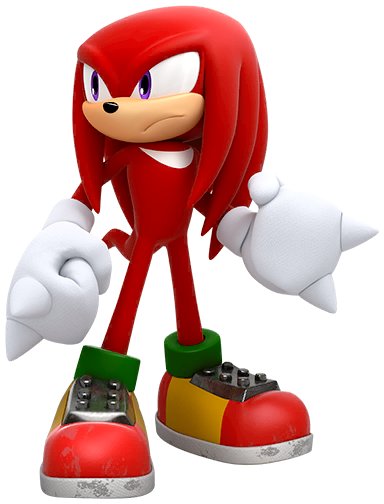
Sonic broke Smash’s third-party seal only second. Solid Snake got there first – SmashWiki states it flatly: ’Solid Snake became the first playable third-party character in the Super Smash Bros. series’ – and Sonic’s own DOJO page followed on October 10, 2007, nearly three weeks after Snake’s, confirming Brawl’s second outside hire. That pipeline has since grown into every third-party character ever added to Smash, and it is the pipeline Knuckles rode into Ultimate – ten years behind his rival, and only as a summon.
Knuckles the Echidna debuted in Sonic the Hedgehog 3 in February 1994 as the guardian of Angel Island, laying traps for Sonic and Tails while protecting the Master Emerald. Nintendo announced his Assist Trophy on July 2, 2018 in the same daily blog update as ’Today’s Fighter #38: Sonic the Hedgehog’ – the fighter slot and the consolation prize, posted together. Summoned, he punches through a combo ending in a 12% uppercut, burrows and surfaces fist-first, and borrows his rival’s Homing Attack for 18%. His voice is recycled from 2011’s Sonic Generations. He cannot appear on Green Hill Zone for the sensible reason that he is already there, jogging through the background as he has since Brawl.
His Brawl trophy once credited him with wall-climbing and gliding. The Assist Trophy does neither. Knuckles has been managing expectations since 1994.
Krystal
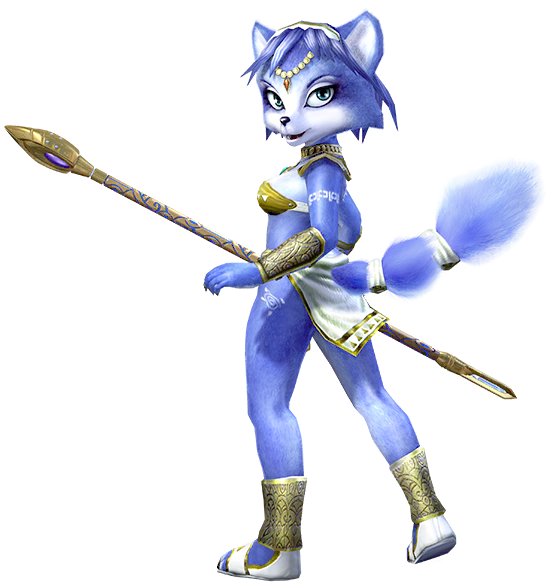
There was nearly no Krystal at all. She began as the protagonist of Dinosaur Planet, an original Rare adventure built for the Nintendo 64 from 1997 with no Star Fox in it whatsoever; when Nintendo folded the project into its space-fox franchise and moved it to GameCube as 2002’s Star Fox Adventures, her place was in doubt. Designer Takaya Imamura kept her in it – ’I thought it’d be a waste to scrap her, so when I visited Rare, I drew a ton of pictures,’ he recalled in an interview translated by shmuplations – and by his own telling the redesign drew on Vampirella, the American comic-book vampire, ’that kind of image,’ sketched into a Nintendo fox.
Her Assist Trophy, new in Ultimate after two games of trophies and stickers, fights with the staff from Adventures and an Ice Blast that freezes fighters – ’Don’t underestimate her!’ warned the July 5, 2018 blog reveal. She announces herself with ’Try me’ and departs, if you fail to get through her 50 HP, on ’You’re not ready yet!’ The voice is not new: her clips are pulled from 2005’s Star Fox: Assault.
She was considered for the Brawl roster and passed over for Wolf. The 2026 Star Fox revival – a remake of a 1997 game – predates her by design. Her Brawl trophy left her where the story then stood: 2006’s Star Fox Command, on terms with Fox the trophy itself calls ’very rocky.’
Lyn
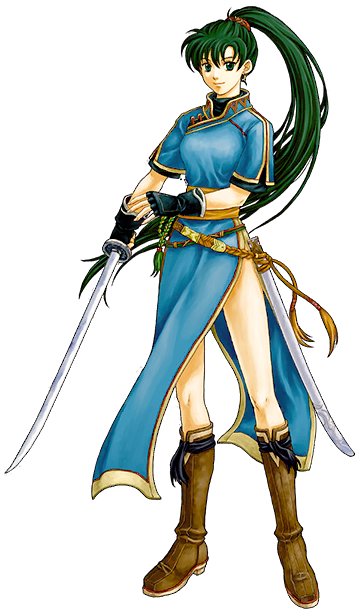
The screen goes dark, and somewhere a blade is being drawn. Lyn’s Assist Trophy is a single sword stroke with theatrical staging: summoned, she charges for a beat – 1 to 3 seconds while the light drains from the stage – then teleports beside her target and cuts once. In Brawl the slash dealt 30% and could KO heavyweights holding as little as 35%. Ultimate’s training text is appropriately terse: ’Prepares and then executes a devastating slash. If she’s struck, she’ll counterattack.’
Lyndis of Fire Emblem: The Blazing Blade owes her Western existence to Smash itself. Marth and Roy’s Melee cameos generated the demand that got her 2003 Game Boy Advance game localized – the first Fire Emblem released outside Japan – and Smash repaid the favor by making her an assist from Brawl onward, present in every game since. Her sword here is the Mani Katti, not her stronger Sol Katti – most of Smash’s Fire Emblem cast carry their fabled weapons, and Lyn leaves hers at home.
The bookkeeping has its comedies. Ultimate credits Wendee Lee, her Fire Emblem Heroes voice, as her English actor – while actually reusing Lani Minella’s Brawl-era clips. And her HP now sits at 23, down from 50, which hardly matters. No stage in Ultimate excludes her – she can appear anywhere – and the whole point of Lyn is that you never touch her.
Metroid
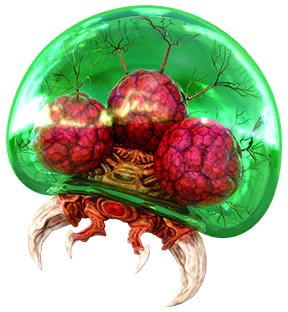
Not every Assist Trophy is a character. This one is an organism – the energy-draining parasite its whole series is named for, genderless, nameless, and interested in fighters only as a food source. The species debuted with the series itself in August 1986 on the Famicom Disk System, in the Gunpei Yokoi-produced adventure that pioneered the Metroidvania genre and hid one of gaming’s first female protagonists inside the armor. In the fiction, ’Metroid’ is Chozo for ’ultimate warrior.’ In reality it is a portmanteau of ’metro’ and ’android,’ which is somehow the more alien explanation of the two.
Summoned, it does the one thing Metroids do: drifts, latches onto a fighter’s head, and drains. It can be shaken off with rapid movement or an air dodge; it cannot be reasoned with. Ultimate rebuilt the creature around its most famous weakness – by default it cannot be damaged at all. It must first be frozen, after 8% of freezing damage, at which point it hangs helpless for four seconds and can be shattered. The training text compresses forty years of series canon into six words: ’It can be killed if frozen.’
The species has appeared in every mainline Metroid game except two, and the franchise remains in motion – Metroid Prime 4: Beyond arrived with a December 2025 release date. The parasite, as ever, endures.
Midna
Something is missing from Midna’s Smash appearance, and it is the wolf. In Twilight Princess she spends most of the 2006 adventure riding on Wolf Link’s back, an imp-and-beast double act; in Smash – an Assist Trophy role held since Smash 4, after a Brawl era spent as trophies, stickers, and a song title – she works strictly alone. What she kept is the hair. Midna’s ponytail transforms into a grabbing hand, an ability that in her own game physically seizes an enemy exactly once, in the final battle against Ganon, per SmashWiki. In Smash it is her entire offense.
The mechanics make her quietly nasty: her attacks count as grabs, so shields are useless against them – a hit from the hair deals 6%, the throw 14% – and Ultimate’s training text reads like a police bulletin: ’Warps around the stage, grabbing and throwing opponents with a powerful swing.’ New in Ultimate, she can finally be KO’d, at 50 HP.
Her home game earned its keep. Twilight Princess sold 8.85 million copies by 2015 and stood as the best-selling Zelda until Breath of the Wild came along. And Ultimate does reunite the double act after all – as collectible spirits, Nos. 222 and 223, filed one shelf apart. In the actual fighting, Midna handles things herself.
Moon
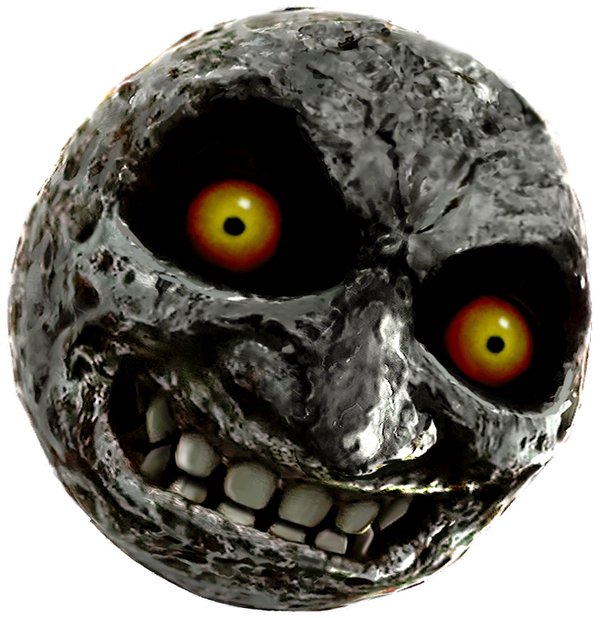
For 72 hours of game time, Termina lives under a falling moon. Majora’s Mask gave Link three in-game days to stop it, and the countdown proved memorable enough that the scariest item in Ultimate is a piece of scenery. The Assist Trophy, announced in September 2018, does exactly what the blog promised: it ’will appear in the sky and slowly approach the center of the stage. When it hits, it deals a lot of damage to opponents nearby!’
The approach is the weapon. It takes a minimum of roughly 6 seconds to arrive, growing visibly more fiery as it comes, and the waiting is most of the damage done. Impact delivers nine rapid hits and a final 10% blow, in a flash scored with the same sound effect Majora’s Mask used when the Four Giants caught the falling moon. It cannot be KO’d, and if a cinematic Final Smash is playing when it lands, the Final Smash is simply cancelled. The Moon does not queue.
Smash had used it before – in Melee it loomed over the Great Bay stage until the Four Giants pushed it back into the sky – and Melee’s trophy text recorded the franchise’s strangest secret: ’inside the moon is a beautiful, pristine plain broken by a single tree.’ Nintendo’s most frightening object is, on the inside, its most serene.
Mother Brain
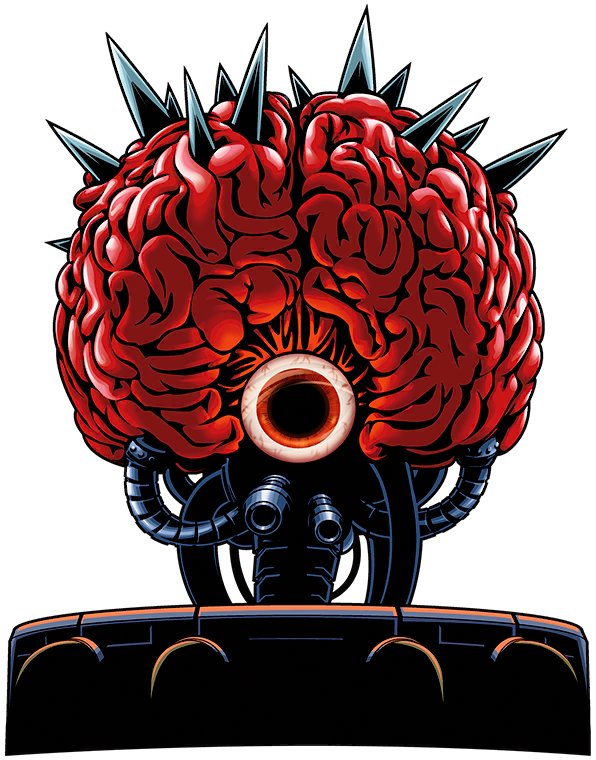
The final boss of the very first Metroid was a brain in a jar, and Smash has never let her forget it. Mother Brain ruled the planet Zebes from a life-support tank in the 1986 original, and her Assist Trophy – on the roster since Smash 4 – recreates the arrangement faithfully: the tank, the staring eye, the orbiting Rinka rings running interference. The training text is a model of understatement: ’Shoots a powerful beam from her eye. Rinkas help her out.’
The beam is the Laser Brain Attack, the weapon of her monstrous bipedal form from Super Metroid in 1994, and that form has one of gaming’s stranger origin stories: designer Toru Osawa conceived her as ’an old lady living in an apartment complex,’ and artist Tomomi Yamane worked the concept into the towering horror players actually fought. Somewhere inside the monster, in other words, is a pensioner.
In Ultimate she soaks punishment on a 120 HP frame, up from 90 in Smash 4, and can be brought down by a sufficiently committed room. Her Smash 4 trophy noted the novelty with a straight face: ’It’s actually possible to defeat her, and for once doing so won’t start a self-destruct sequence.’ Nothing explodes. No countdown, no collapsing planet, no escape run. For Mother Brain, this amounts to a quiet retirement posting.
Nightmare
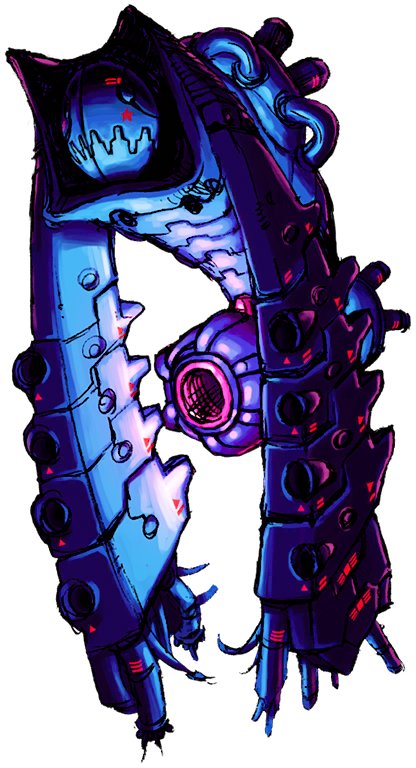
Everything goes black. That is the entire trick: summon Nightmare and the stage plunges into darkness while everyone keeps fighting, blind, until it lifts. The training text delivers it with a shrug: ’Covers the stage in a deep darkness. Can’t be KO’d.’ Ultimate even tightened the screws – in Smash 4 your shield stayed visible in the murk; now nothing does.
Nightmare is the final boss of 1993’s Kirby’s Adventure, the entity King Dedede tried to stop by shattering the Star Rod and cutting Dream Land off from its own dreams – the rare Kirby plot in which the apparent villain was performing a public service. His Smash look arrives by way of the anime, where he ran the operation as an executive: head of Nightmare Enterprises, a firm that manufactures monsters and ships them to paying customers.
Here is the odd part: the blackout has never been something Nightmare does in a Kirby game – per SmashWiki, Smash invented the move for him in 2014. His own franchise eventually re-hired him anyway: Kirby Air Riders, launched November 20, 2025, cast Nightmare as one of the four bosses of its stadium mode, alongside Marx, Robo Dedede, and Zero Two. The trick stays Smash’s. The villain, it turns out, books work either way.
Nikki
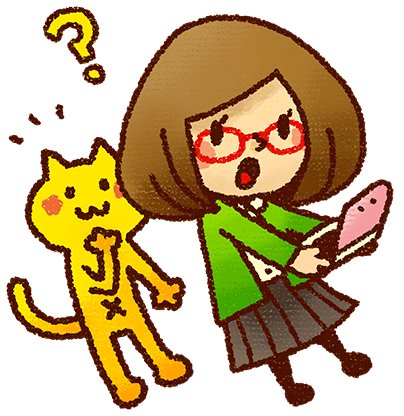
Once upon a time, Nintendo ran a doodle-messaging service, and the service had a host. Nikki fronted Swapnote, the 3DS application launched in 2011 that let owners trade handwritten notes and sketches, and she performed the job with relentless cheer right up until Nintendo pulled the plug on its online half on October 31, 2013 – abruptly, after the service was found being misused to share explicit images. Nikki delivered the goodbye letter to users herself.
Smash gave her a second career. The October 26, 2018 blog announced her with the essential warning: ’Her drawings all look very cute – but they still do serious damage, so be careful!’ Summoned, she sketches three pictures, no repeats, from a pool of six – a charging Bullet Bill, a fire-breathing monster, a paralyzing ghost, a flock of birds, a pinwheel – plus the jackpot: on her final drawing there is a fixed 10% chance she produces a Smash Ball, a real one, breakable for a Final Smash even in matches where Smash Balls are switched off. She is a lottery ticket drawn in marker.
The 3DS era ended and took her with it; Nintendo’s Switch news feed now employs a suspiciously similar mascot named Amelia N. Nikki’s spirit, though, remains filed in Ultimate under Swapnote – or Nintendo Letter Box, for PAL players.
Nintendog
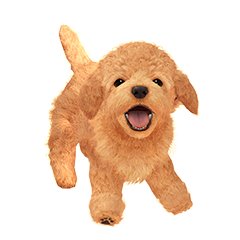
The cruelest Assist Trophy loves you very much. Summon a nintendog – lowercase, per the official site’s own markup, matching the franchise’s house style – and a puppy bounds up to the camera and blocks the entire view of the fight: staring, pawing at the glass, tilting its head while somewhere behind it a match is being lost. In its home game, Nintendo’s 2005 DS phenomenon, nothing can hurt a nintendog, though a neglected one may briefly run away or take up eating trash. The visit always ends the same way: two barks from the corner of the screen, and gone.
The dog was nearly a fighter. Development notes from the Brawl era, translated by Source Gaming, record that Sakurai felt the dogs ’wouldn’t be well suited for battle, and work better as an item’ – and so one became a founding Assist Trophy instead, introduced on the DOJO site in February 2008 with total conviction: ’This Nintendog is a Labrador retriever. Labradors are really popular all over the world.’
The casting changes every generation. Brawl’s Labrador gave way to a French Bulldog in Smash 4 and a Toy Poodle in Ultimate, each drawn from the Nintendogs roster of its day, and each preserved as its own separate spirit. The interference is timeless. The dog is always new.
Phosphora
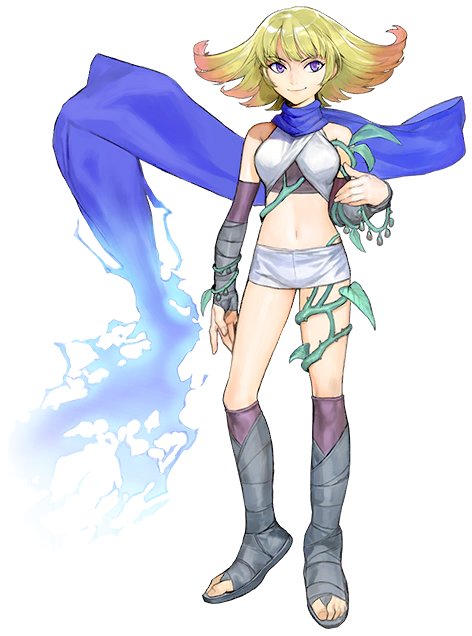
Lightning, in the Kid Icarus cosmology, has a commander. Phosphora leads part of Viridi’s Forces of Nature in Kid Icarus: Uprising – the 2012 3DS game Sakurai himself directed – and she makes her entrance there by taking down a Thanatos in glowing dragon form before turning her attention to Pit. In Smash she has freelanced since Smash 4, doing what the training text promises: ’Moves around at lightning speed, shooting three types of electric attacks.’
The three types have escalated. Ultimate’s Phosphora fires her blue bolts faster than before – one every 36 frames, down from 39 – and her big homing sphere accelerates harder and tops out quicker, so the safest place to stand is nowhere in particular. Smash 4’s version could be struck but never beaten; she would flinch and carry on. Ultimate finally made her mortal, though barely: 25 HP, one of the flimsier constitutions in the roster.
Her English voice changed on the way over – Kari Wahlgren originated the role in Uprising, and Smash recast it to Stephanie Komure over scheduling conflicts – but the character survived the move intact. Her own Smash 4 trophy, after listing her talents, closes with what may be the pettiest sentence Nintendo has published: ’Well, I did hear she isn’t a great singer...’ In a standard versus match, no stage keeps her out. Lightning goes where it pleases.
Rathalos
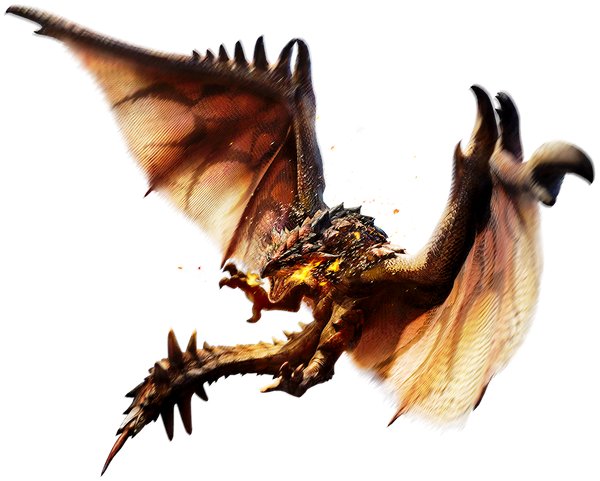
Capcom’s wyvern arrived in Ultimate wearing three hats. Rathalos – a Flying Wyvern from the original Monster Hunter, released in Japan in March 2004 – is simultaneously an Assist Trophy, a Classic Mode boss, and a World of Light boss, and the game treats every role with hunting-manual seriousness. The blog reveal of August 2018 set the terms: ’This giant beast will appear when summoned, spreading its wings to create a powerful attack. Rathalos has fire breath and a roar that stuns opponents.’
As a summon he is a siege event: 100 HP, a 27-second stay, flinch-proof, ungrabbable, and gone under his own power if nobody brings him down first. As a boss he imports his own ecosystem. The fight seeds the arena with Bob-ombs, Deku Nuts, and Pitfalls – stand-ins for the Flash Bombs and Pitfall Traps hunters carry in his home series – and attacking his tail can shake a bomb loose, a nod to Monster Hunter’s cherished tradition of severing it for parts. Seven fighters, Yoshi through Sephiroth, draw him in Classic Mode.
When his boss health empties he collapses, flails, and lies still: the Monster Hunter death animation, reproduced beat for beat. His home series keeps him working too – March 2026’s Monster Hunter Stories 3 built its whole plot around a Rathalos believed extinct. Some monsters are simply not allowed to retire.
Riki
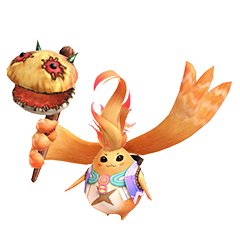
’Leave it to Heropon!’ The battle cry belongs to Riki, the spherical furball of Xenoblade Chronicles, and it carries more baggage than it sounds. In his 2010 origin game – which reached North America two years late, in April 2012, as a GameStop exclusive – Riki appears to be the party’s comic-relief mascot and is in fact a 40-year-old married father of 11. The Heropon title is likewise not the honor it appears: the village elder assigns it annually, and Riki got the nod, by his own admission, so the wages could pay down the food debts his children had run up.
His Assist Trophy fights the way support characters do, by inconveniencing everyone at once. He cycles through six Arts lifted straight from Xenoblade – Happy Happy, Freezinate, Yoink!, Bedtime, You Can Do It, Roly-Poly – buffing his summoner, freezing bystanders, putting somebody to sleep, and announcing every move by name as he goes. The training text waves at the chaos: ’Applies various effects to fighters. Can’t be KO’d.’
His series has rarely been healthier. On June 9, 2026, Nintendo announced Switch 2 editions of the entire Xenoblade trilogy, Riki’s own game re-released that very day. Somewhere back home, presumably, the debts are finally paid. ’All go to plan!’
Rodin
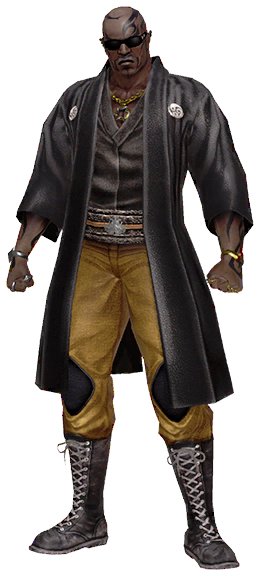
Bar owner, weaponsmith, fallen angel: Rodin holds three jobs, and Ultimate hired all of them. The blog reveal of August 3, 2018 led with credentials – ’Rodin gave Bayonetta her name’ – before the practical matter: ’He summons a giant arm and unleashes a powerful blow, and sometimes he’ll even give you a powerful weapon as he leaves.’ Both clauses undersell it. The giant arm is a Wicked Weave, Bayonetta’s own signature conjuration, and his uppercut version lands for 22%.
By series lore he was once a high-ranking angel called The Infinite One before his fall from Paradiso – a title Ultimate quietly restores, since his spirit’s level-99 enhanced form is filed as ’Rodin, the Infinite One.’ His Smash career began humbly: in Smash 4 he existed only as a trophy that unlocked automatically when you bought Bayonetta’s DLC. Ultimate promoted him to working staff – 55 HP, 20-second shifts, and he can be KO’d, if you feel lucky about punching out a demon blacksmith.
The bartending never stops. He exits on a recorded ’Huh! Drink’s on the house!’ and frequently means it, tossing out a parting weapon as he goes – a Ray Gun, a Steel Diver, a Beam Sword, occasionally an Ore Club – guaranteed if you are standing close enough to the bar. The tip arrives as ordnance.
Sablé Prince
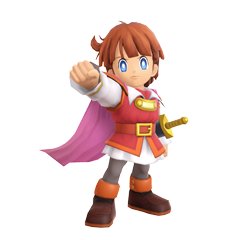
Nobody outside Japan was ever supposed to meet this man. The Prince of Sablé – Nintendo’s own gallery orders the name that way – is the hero of Kaeru no Tame ni Kane wa Naru, ’The Frog For Whom the Bell Tolls,’ a Game Boy adventure released only in Japan on September 14, 1992. The title puns on Hemingway, who was himself borrowing from John Donne, which makes this obscure frog comedy possibly the best-read game in Smash. It was built by the R&D1 crew fresh off Metroid, written by Yoshio Sakamoto, and its engine grew into the one that powered Link’s Awakening.
The plot runs on an inconvenient curse: the witch Mandola tricks the Prince into drinking a potion that turns him into a frog on contact with cold water. Smash honors it to the letter. Summoned, he shifts among human, frog, and snake forms, trapping fighters in cartoon dust-cloud brawls drawn from his game’s automatic battles – and if he touches water, he becomes a frog whether he meant to or not. He can be KO’d, but only in human form; the animals are untouchable.
When Sakurai first revealed him for Smash 4, he admitted he did not know the character’s name. Nobody does – in the game, you name him yourself. More than three decades on, his adventure has never been officially localized. The Prince appears in every region of Ultimate anyway, speaking Japanese wherever he goes.
Samurai Goroh
Somewhere in Red Canyon there is a bandit gang, and its leader moonlights in Smash. Samurai Goroh has been Captain Falcon’s rival since the original F-Zero in 1990, one of the four racers on that first SNES grid, and the in-universe gossip holds that even his machine, the Fire Stingray, is stolen property. He entered Smash lore early and slightly misspelled: his Brawl reveal was the DOJO site’s first F-Zero update, and per SmashWiki it initially rendered him ’Samurai Goro,’ corrected the following day.
Summoned, he does exactly one thing – the training text: ’charges around the stage, swinging a dangerous katana’ – and Ultimate retuned the performance. Every katana hit now lands a flat 15%, up from 11% grounded in Smash 4, over a 15-second rampage, in exchange for his HP being halved from 50 to 25. He has served in all three of the Assist Trophy’s host games, Brawl through Ultimate, after a Melee career spent as a collectible figurine.
The remarkable thing is that he still has a day job. F-Zero has gone without a new console entry since 2003’s GX, yet F-Zero 99 – the 2023 battle-royale revival – keeps Goroh employed: a 2024 update added computer-controlled Star Rivals racers with Goroh among the named four, and Nintendo was still patching the game as recently as August 13, 2026. The franchise sleeps. The bandit does not.
Shadow
Time stops for the Ultimate Lifeform. Shadow the Hedgehog – created, in the lore of 2001’s Sonic Adventure 2, by Dr. Eggman’s grandfather aboard the Space Colony ARK – does a single thing when summoned, and it is among the most dramatic in the game: Chaos Control, the space-time technique of his home series. He raises a green Chaos Emerald, lightning cracks around him, and every other fighter slows to a crawl while the summoner moves free.
Ultimate upgraded the physics. In Brawl and Smash 4 the slowdown simply ran its course; now five seconds of slow motion tip into two further seconds of total freeze, opponents locked solid mid-gesture. SmashWiki flags him, for good measure, as the lone Assist Trophy to appear in a Smash intro movie, courtesy of a cameo in the Wii U game’s opening.
His resume explains the noise that follows him: an antagonist-turned-antihero who fronted his own game in 2005, and the subject of persistent campaigns for a promotion – a Change.org petition asking Nintendo to make him a playable fighter, filed November 1, 2018, the day of the final Ultimate Direct, remains open with 827 signatures as of this summer. The freeze lasts two seconds. The campaign has lasted since 2018.
Sheriff
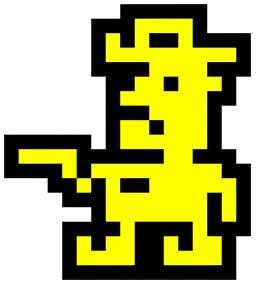
Two years before Donkey Kong, Nintendo made a western. Sheriff, a 1979 arcade shooter designed by Genyo Takeda with artwork by a young Shigeru Miyamoto, put players in the boots of a lawman the cabinet art called Mr. Jack, defending his ground from sixteen bandits and rescuing a captured woman named Betty – per Wikipedia, Nintendo’s first damsel-in-distress setup, two years ahead of the famous one. It ranked among Japan’s top-ten grossing arcade games that year. In America, distributor Exidy stripped the Nintendo branding, retitled the game Bandido, and rechristened the leads ’Our Hero’ and ’Pretty Priscilla.’
The Assist Trophy is a working museum piece. The pixel lawman jerks around the stage in period-accurate bursts, firing in eight directions for 14% a shot, all of it scored with sound effects lifted from the 1979 boards. The controls were the original marvel: the arcade machine paired a joystick with a rotary dial – ’a gas knob from a cooker’, as Nintendo Life put it – so a player could walk one way while shooting another, at a time when consoles could do neither.
The strangest chapter is physical. To test North America, Nintendo and Sega together hand-built a few prototype cabinets from converted Space Fever units; the lone surviving cocktail cabinet is thought to have logged about 6,000 plays. Its sheriff, meanwhile, works every night in Ultimate.
Shovel Knight
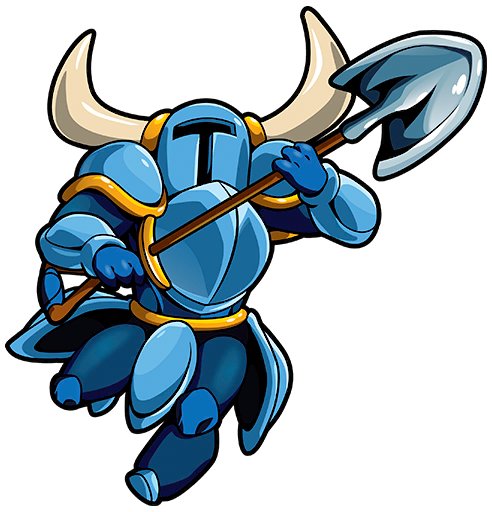
A knight funded by the internet fights alongside Nintendo’s royalty. Shovel Knight began as a March 2013 announcement from Yacht Club Games – a studio founded two years earlier by Sean Velasco – and a Kickstarter that closed at four times its funding goal; the finished game arrived June 26, 2014. Four years later Nintendo put him in Ultimate, introduced on the blog with evident delight: ’Blue armor, horns, and a shovel...that’s right, it’s Shovel Knight!’
The summon itself is a faithful excavation. He digs, flinging rocks at fixed angles; he plants a pitfall where he stands; and roughly one dig in five turns up something to eat – usually food, occasionally a Maxim Tomato, and at 1-in-54 odds a full Heart Container, presumably to the summoner’s disbelief. His bouncing Shovel Drop, SmashWiki notes, descends from Link’s downward thrust in Zelda II. He can be knocked out through his 45 HP, armor notwithstanding.
He was a crossover pioneer before he ever reached the roster: the Shovel Knight amiibo of November 2015 was, as GameSpot reported at the time, the first amiibo made for a third-party game rather than for a third-party character filed under Nintendo’s own series. Yacht Club’s story stays dramatic – its long-awaited follow-up, Mina the Hollower, was dated May 29, 2026, carrying what Velasco himself called ’make-or-break’ stakes. One shovel dug an entire studio.
Skull Kid
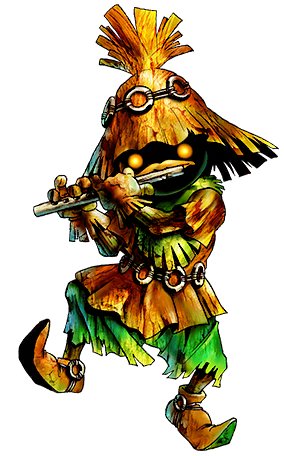
Before he was a demon’s puppet, he was a lonely kid in the woods. Skull Kids debuted in Ocarina of Time in 1998 as skittish forest children; befriend one by playing Saria’s Song and he hands over a piece of heart. Two years later, Majora’s Mask opened with that friendliness curdled: a Skull Kid in a strange mask ambushes Link, curses him into a Deku Scrub, and steals both his horse and the Ocarina – and only afterward does the Happy Mask Salesman explain that the mask ’contains a powerful evil that can bring about the end of the world.’
The Assist Trophy channels the mischief rather than the apocalypse. The training text reads like an incident report: ’Does disruptive things like turning the stage upside down or making fighters invisible. Can’t be KO’d.’ Instead of damage, Ultimate deals the pranks out at clean odds – a coin-flip 50% chance of invisibility, 25% for a horizontal mirror of the camera, 25% for a full upside-down flip, each lasting ten seconds – and SmashWiki traces the screen-flipping to Stone Tower Temple, the Majora’s Mask dungeon players must physically turn upside down to finish.
The apocalypse portfolio stayed with the mask; Skull Kid got the subtler weapons. Majora’s Mask turned 25 in October 2025, and the retrospectives had a quarter century of nightmares to draw on. In Ocarina, remember, all it ever took to befriend him was a song.
Spring Man
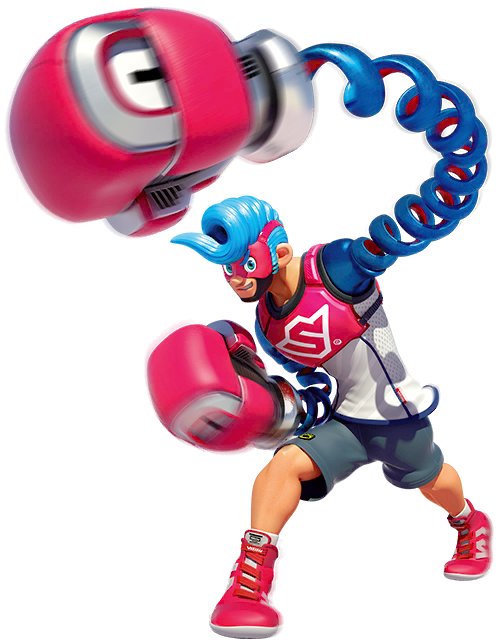
Being the face of a franchise carries no tenure. Spring Man fronted ARMS from its June 2017 debut – the cover, the marketing, the first fighters revealed – and when Smash came calling he got in on launch day, as an Assist Trophy who ’jumps and dashes around the stage while using his stretchy arms to punch, punch, punch,’ per his own blog spotlight, item #200, posted November 6, 2018. The kit is faithful: extendable Toaster punches for 12%, an air dodge, a blockable guard, and a desperation Rush flurry once he has taken enough of a beating.
Then came the twist. When Ultimate added an ARMS fighter as paid DLC, it was not him. Sakurai explained on the June 22, 2020 broadcast that ARMS producer Kosuke Yabuki had asked for Min Min by name – ’I want Min Min’ – and dismissed the protagonist question entirely: ’Mr. Yabuki said, “Everyone’s the protagonist!” Also, when you search for “Spring Man,” the image results show a certain enemy from a certain manga.’ Min Min duly shipped on June 29, 2020 as Challenger Pack 6, joining every paid DLC fighter added to Smash. Spring Man stayed behind the glass – and, in Min Min’s own reveal trailer, is shown grabbing the Smash invitation before being knocked out cold.
Her arrival did recolor his menu icon from gray to ARMS yellow. The game still files him among the universes without a fighter. Some paperwork never catches up.
Squid Sisters
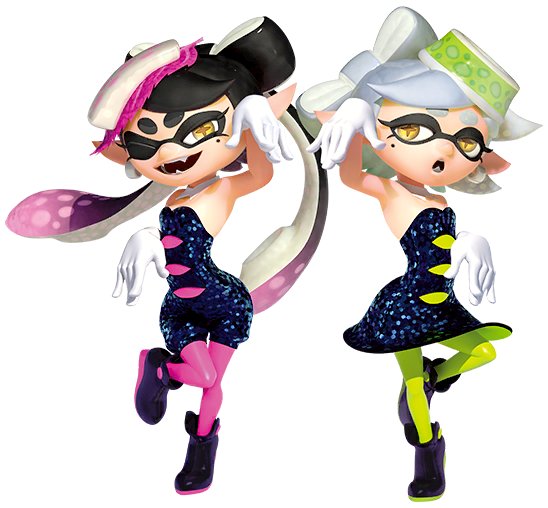
Pop stars are a hazard now. Summon the Squid Sisters and Callie and Marie – cousins, in fact, whatever the stage name says – materialize mid-stage and simply put on a concert: one of two songs, Calamari Inkantation or Ink Me Up, each with its own choreography, delivered in untranslatable Inkling and closed with a chirped ’Stay fresh!’ The damage is done by the production values. As the official text warns: ’Cameras get closer and closer to their live performance, limiting the space you have to battle. Don’t get too lost in the music!’
That camera is the weapon. Over eleven seconds the view tightens on the performance and the blast lines close in with it – the same claustrophobia as Sudden Death – so fighters who were comfortably mid-stage find themselves performing next to an edge that was not there before. The Splatoon idols made the mechanics of fame literal: their presence shrinks the room for everybody else.
The pair carried real resumes in from home – Inkopolis newscasters, Splatfest hosts, and secretly Agents 1 and 2 of the New Squidbeak Splatoon – and their Mii Fighter costumes arrived with the Min Min wave on June 29, 2020, Callie as a Brawler and Marie as a Gunner, matching their in-game weapon tastes. On stage in Ultimate they cannot be attacked, much less KO’d. You are not at a fight. You are at their show.
Starfy
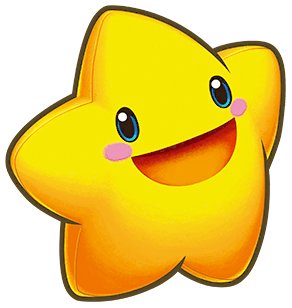
Japan kept him to itself for seven years. Densetsu no Starfy – the legend of Starfy, literally – launched on the Game Boy Advance on September 6, 2002, a Tose-developed underwater platformer starring the pratfalling star-prince of the Pufftop Kingdom, and no entry left Japan until the DS installment of June 8, 2009. Smash did not wait. Brawl drafted him a full year before his own franchise crossed the ocean, under his untranslated name: Stafy.
He may be the gentlest summon in the game. His Star Spin – taught to him, canonically, by a character named Herman – hits for 1% a touch, and he can be smacked around by the very fighters he is annoying; absorb enough abuse and he briefly turns the tables with a paralyzing counter. Ultimate nudged his HP from 30 to 35 and taught him to jump back onstage when swatted off. His entrance music is the boss theme from his own games, which for a creature this harmless is pure bravado.
The Brawl trophy text preserved the essentials: he ’sometimes dons a pig suit and throws pork cutlets,’ and once helped Wario hunt sunken treasure. For two decades, cameos like that were all the West got. Then, on July 12, 2024, the three GBA originals arrived worldwide on Switch Online – twenty-two years late, and finally under his own name.
Starman
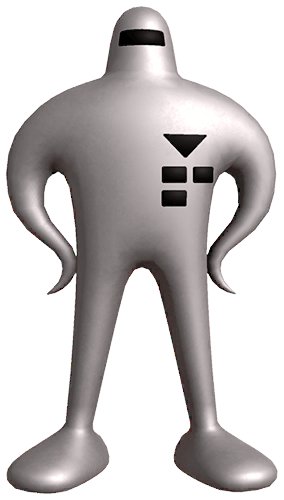
Giygas’s army sent one of its foot soldiers to Smash. The Starman – blank-faced, vaguely elegant, permanently mid-shrug – debuted as an enemy in 1989’s Mother, the Japan-only Famicom RPG the West later met as EarthBound Beginnings, and returned in force in EarthBound in 1994. Its combat manners come straight from those games: it teleports, because that is how Starmen travel the overworld, and it fires PK Beam – specifically the gamma and omega grades, which in the source material were, respectively, a one-hit kill against non-mechanical enemies and an everyone-at-once barrage.
Smash sensibly detuned the ordnance. As an Assist Trophy – a Smash 4 recruit that returns in Ultimate – it warps around the stage firing the focused gamma beam for 18% three-quarters of the time, and the all-directions omega spray for 16% the rest. Both can be reflected or absorbed, which EarthBound veterans will recognize as house rules: in Beginnings, the Franklin Badge’s beam reflection was the canonical way to make a Starman regret itself. The training text keeps it clinical: ’Warps around the stage, firing shots created from PSI.’
The best joke is saved for its defeat. Knock one out – worth a point – and the screen erupts in EarthBound’s own critical-hit graphic: ’SMAAAASH!!’ The game awards you a superlative for beating up a henchman. Somewhere, Giygas files another incident report.
Sukapon
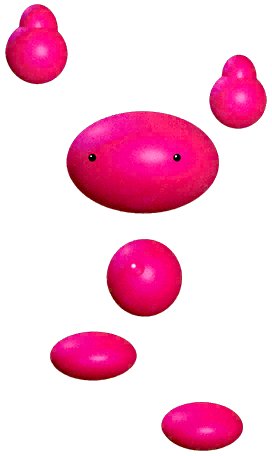
Somewhere between Street Fighter II’s arcade boom and the Famicom’s twilight, Nintendo built a comedy robot. Joy Mech Fight, released in Japan on May 21, 1993, was the company’s first crack at a fighting game since Urban Champion, and its star, Sukapon, is an owarai robot – a stand-up comedian by trade, trained in the Kansai region, hastily remodeled for combat when a rogue scientist steals his creator’s other machines. The game never left Japan until September 6, 2023, when Nintendo Classics finally carried it abroad, thirty years late.
Sakurai had history with him long before Ultimate. On the old Smash 64 site’s reader column he revealed Sukapon had nearly been a rideable item in Melee, cut over what he termed ’adult matters’ – his standing euphemism for legal complications. Brawl demoted the robot to a sticker. Ultimate finally gave him the full summon: he tumbles across the stage throwing his own head (the Tondeker), tossing fighters at close range, and rolling through them, all moves from his game, with the training text noting he goes ’occasionally chucking its own head.’ He exits, naturally, on his Joy Mech Fight victory dance.
The paper trail keeps growing: in September 2025 a preservationist published the game’s 1992 prototype, built under the title Battle Battle League before its creators had even joined Nintendo.
Takamaru
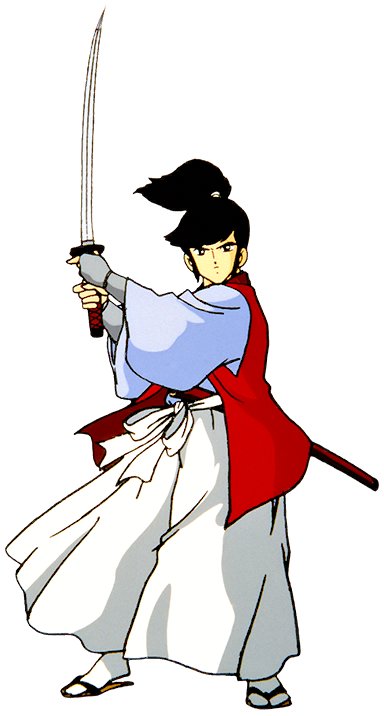
The rejection letter arrived decades before the job. In the Smash 64 era, on the official site’s reader column, a fan asked Sakurai which was likelier – a new Mysterious Murasame Castle game, or its hero Takamaru joining the next Smash. Sakurai answered himself, in print: ’Ah, well both are pretty low (Dang).’ Years later he went further, admitting on a 2015 Nico Nico broadcast that he had considered Takamaru for Smash 4’s roster ’for a second’ and passed ’due to lack of popularity’ – candor that files Takamaru among the characters Sakurai publicly considered but rejected. The apprentice samurai got the assist job instead.
He earned the consideration honestly. The Mysterious Murasame Castle, a 1986 Famicom Disk System adventure built on the original Zelda’s engine, hands Takamaru a katana, throwing knives, fireballs, and sandals that walk on water; it stayed in Japan until a 2014 3DS release finally exported it, untranslated. His Assist Trophy – Smash 4 onward – preserves the period flavor: choppy 1986 movement, spinning Windmill Swords, and a nine-hit katana flurry ending in a 12% send-off.
His Japanese voice is Tomokazu Sugita, who also plays Chrom – and who told Sakurai, on that same 2015 broadcast, that he was simply happy to have gotten to play Takamaru at all. Somebody wanted the job. That counts for something.
Thwomp
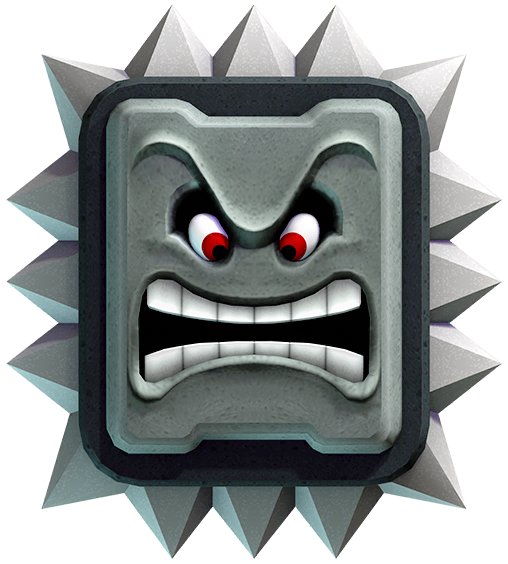
Gravity has an employee. The Thwomp – a scowling block of enchanted stone that has been dropping on Mario since 1988’s Super Mario Bros. 3 – not Super Mario World, whatever memory insists – waited three decades for an active Smash role. Melee and Smash 4 kept it as a trophy; Kirby borrowed its likeness for his Stone transformation. Only Ultimate, in the November 1, 2018 Direct, finally hired the genuine article.
The job description is short: hang in the air, wait, drop. Anyone caught underneath takes 32% – among the hardest single hits an assist can deliver – and even brushing the thing at rest costs 7%. It teleports to loom over fresh victims, refuses to squash its own summoner, and if nobody obliges it for four seconds it relocates and resumes waiting. The training text is appropriately granite: ’Squishes opponents caught beneath it. Can’t be KO’d.’
Its reveal trailer told the whole joke in one beat: Kirby, disguised as a stone Thwomp via his transformation, is flattened by a real one. Impersonating a rock has consequences. And per SmashWiki there is one more Thwomp eccentricity: the species has had a voice clip since Super Mario 64, yet Ultimate’s Thwomp does its work entirely mute – the modern portrayal, silent as the masonry it resembles.
Tiki
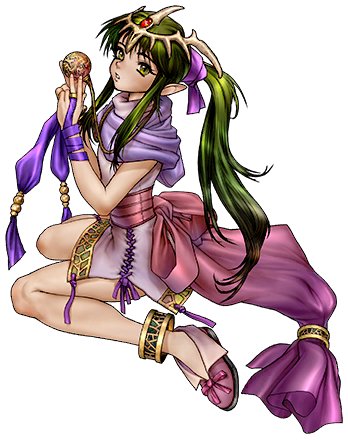
Nintendo cannot decide how old she is. Tiki’s Smash 4 trophy put her at 3,000 years old; Ultimate’s own reveal text retreats to ’actually over 1,000 years old.’ Either way the arithmetic is remarkable, because Tiki has been at this since the very first Fire Emblem – Shadow Dragon and the Blade of Light, Famicom, April 20, 1990 – where she appeared as a child of the divine dragon line, sealed into sleep by her own mother for everyone’s safety.
The Assist Trophy skips the child. Ultimate summons her adult self from Fire Emblem Awakening, who announces ’This might get unpleasant!’ – accurate – and transforms, by Dragonstone, into a fire-breathing dragon as the screen darkens. The breath hits for up to 28% and cannot be reflected or absorbed, unlike the flames of Bowser or Charizard, and where it washes over the ground it leaves patches of fire that linger after she has moved on. She can be KO’d through her 50 HP, in the sense that a passing fighter can technically fell a dragon; her habit of circling high above the stage means few manage it.
The reveal text explains the mechanism plainly – ’Tiki is a Manakete, a race of dragonkin’ – and the franchise keeps finding her work: her newest form arrived in Fire Emblem Heroes in February 2026. The dragon, as ever, outlasts the hardware.
Vince
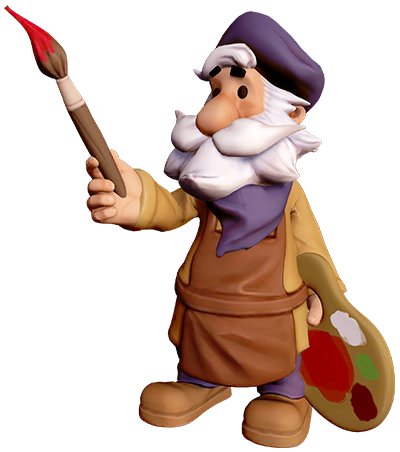
An art teacher sets up an easel mid-battle. Vince – by his own trophy’s admission, ’His real name is Vincent, but he prefers the shortened version’ – comes from Art Academy, Nintendo’s sincere series of painting tutorials, which he entered with its first DSiWare installment on September 14, 2009. His face is modeled on Leonardo da Vinci; his name nods to van Gogh, whom he cites in-fiction as an inspiration for his style. One elderly tutor carrying two art-history giants, and zero combat experience.
Smash fixed the last part. Summoned, Vince surveys the battlefield, selects two or three fighters as subjects, and paints them – literally over them, canvas by canvas, each portrait blotting its subject from view while dealing a steady drizzle of damage. His studies include statues, tomatoes, cats, and kingfishers, rendered while the sitter attempts to dodge. The sting is in the varnish: a fighter marked by a painting takes triple damage from whatever hits them next, unless they shield through the brushwork.
Art Academy itself contains no fighting whatsoever; it teaches perspective and shading to patient beginners. Smash looked at its instructor and saw a targeting system. Vince, to his credit, never breaks composure. He paints through the riot, finishes the canvas, and leaves – and in Ultimate he moonlights again as a Mii Swordfighter costume, trading the sword for a paintbrush.
Waluigi
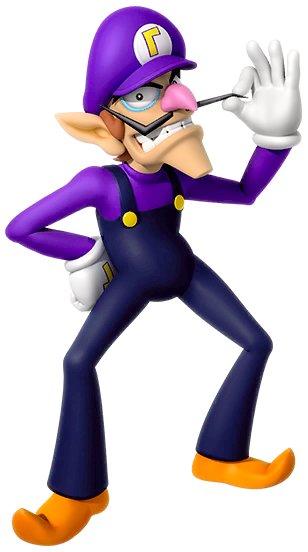
No character has gotten more mileage out of not being invited. Waluigi was assembled in 2000 by Camelot designer Fumihide Aoki as Wario’s doubles partner for Mario Tennis on the N64, and per the record – Wikipedia, citing the A.V. Club – he has never starred in a game of his own nor appeared in a mainline Mario title. Aoki, decades later, offered a stranger footnote on Instagram: ’When I first designed Waluigi, I intended him to be Wario’s brother, but...’ The trailing ellipsis is doing real franchise-history work.
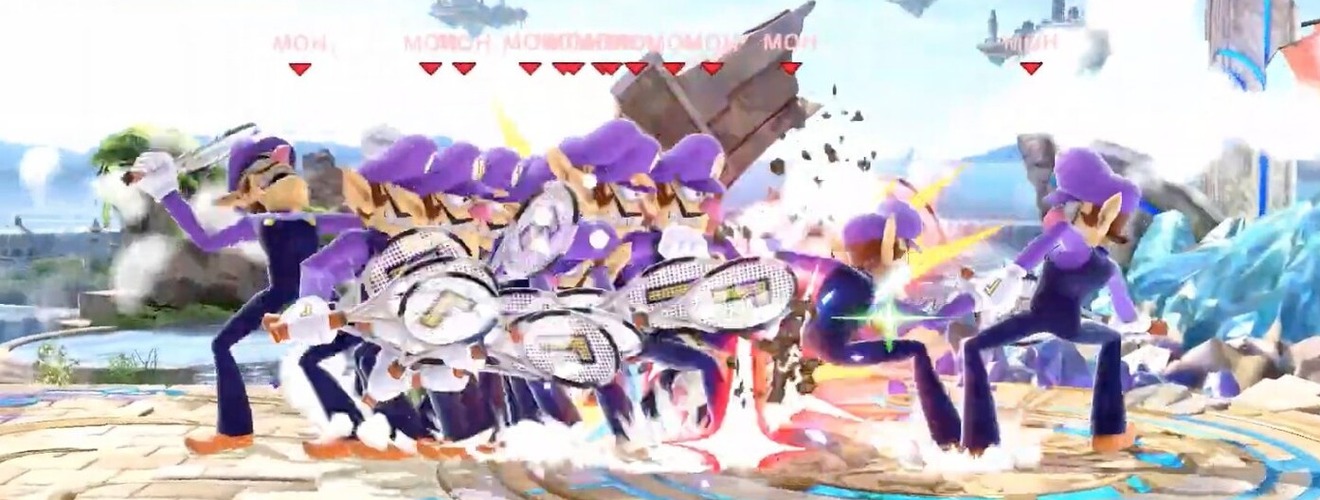
In Smash he is the eternal adjunct. An Assist Trophy since Brawl – where he arrived with his tennis racket and, connoisseurs note, brown shoes instead of his usual orange – he sprints at a victim, stomps them into the turf, and finishes with a racket blast at 15% or a meteor kick at 16%. Sakurai has even used him as the format’s spokesmodel: a Waluigi plush explained Assist Trophies in the April 2014 Direct, and Ultimate’s marketing used him to demonstrate that assists can be knocked out. When fans erupted over his non-promotion in 2018, Nintendo’s Reggie Fils-Aime told Vice the playable-Waluigi decision rests with Sakurai alone.
The franchise twists the knife with a smile. February 2026’s Mario Tennis Fever added a playable Baby Waluigi. The baby made the roster. The man remains a summon. Waluigi endures.
Wily Capsule
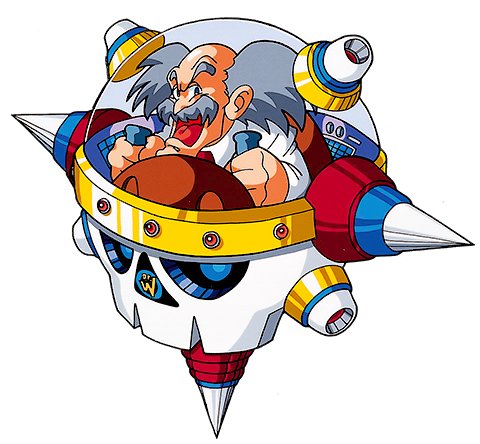
The classic Mega Man endgame is a ritual: a saucer, a scientist, and a beating. The Wily Capsule is Dr. Wily’s personal escape-and-attack pod, first flown in 1991’s Mega Man 4 and redesigned for the finale of every mainline classic entry since, Mega Man 11 excepted. Smash chose the 1995 vintage – the Mega Man 7 model, from the series’ SNES chapter – and handed the doctor an Ultimate Assist Trophy slot with the machine intact.
He fights like a final boss on loan. The capsule teleports around the stage flinging tracking orbs in three elemental flavors – fire, electricity, ice – and drops a lightning strike that detonates into crawling ground orbs; its spinning ram, taken at full speed, is among the heaviest single hits an assist can land. Twenty seconds of endgame boss patterns, deposited uninvited into the middle of somebody’s ordinary Tuesday match.
The best detail is the exit. Wily can be defeated – the capsule battered until it fails – and when it happens he does not simply vanish. He tumbles to the ground and begs for forgiveness – the pose lifted from his own classic-series defeats, the doctor pleading with the robot all of it was built to destroy. Build the machine, lose the fight, beg, escape, rebuild. Smash preserved the entire liturgy. The apology, as always, is not sincere.
Yuri Kozukata
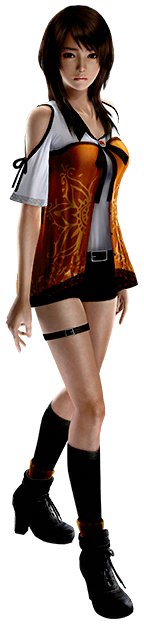
Her weapon is a camera. Yuri Kozukata, protagonist of Fatal Frame: Maiden of Black Water, hunts ghosts with the series’ Camera Obscura – photography as exorcism – and Smash imported the full procedure. Summoned, she halves the stage’s music, raises the camera, and waits for the viewfinder to lock; the shutter deals 14%, a stun, and a lingering poison that ticks on long after the flash, unless the subject shields at the decisive moment. The blog’s phrasing was gentle: ’If she gets you with her Camera Obscura you’ll be paralyzed for a short time, so watch out!’
She is among the roster’s most defensible deep cuts. Her game shipped in Japan in September 2014 on the Wii U and took a year to reach the West, in October 2015; a multiplatform remaster followed on October 28, 2021. No other Fatal Frame character has ever appeared in Smash at all – the series’ single foothold in Nintendo’s crossover machine is this one quiet photographer.
Her presence is all restraint. She says ’Nani?’ – ’What?’ – on arrival, the line reused from her own game along with the camera’s distinctive flash, does her work, and goes. The lights come down, one photograph is taken, somebody walks away poisoned. As hauntings go, it is impeccably professional.
Zero
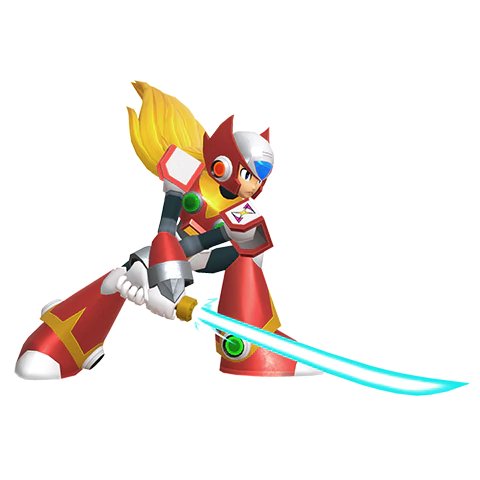
Alphabetically last, and nearly the franchise lead. When Capcom built Mega Man X for the SNES in 1993, designer Keiji Inafune wanted a clean break – ’I didn’t want to use the same old Mega Man’ – and intended his new red swordsman, Zero, as the game’s protagonist, before concerns about fan recognition moved him to a supporting role and handed the hero’s job to X. Smash’s alphabet makes him the caboose of the Assist Trophy roster; his history makes him the summon that came closest to being a leading man.
His kit is a lover’s anthology of Mega Man X4: the triple Z-Saber combo, the rising flame of Ryuenjin, the airborne Kuuenzan, and – rarely, terribly – Genmu Zero, the beam his awakened self fires in X5, which here can KO fighters holding as little as 70%. His availability is total – any stage in the game, 50 HP of courteously apocalyptic swordsmanship. Even the voice has provenance: Ryotaro Okiayu, surprised to hear himself in Ultimate, suggested on Twitter in 2018 that his old recordings had been carried over rather than newly made.
Knock him out and he does not simply fall. He bursts into orange orbs – his series’ own death animation, reproduced faithfully. The final entry on this list exits quoting the source material. Even his defeat is a citation.
Frequently Asked Questions
Which Assist Trophies became playable fighters?
Three fighters began as Assist Trophies: Little Mac, an assist in Brawl before joining Smash 4’s roster, and Isabelle and Dark Samus, both assists in Smash 4 before becoming fighters in Ultimate. None of the three kept the old job – their assist duties ended with the promotion.
Is Rathalos a boss or an Assist Trophy in Smash Ultimate?
Both. Rathalos serves as a boss in Classic Mode and World of Light while also appearing as a summonable Assist Trophy. Crossing Ultimate’s boss lineup against the full Assist Trophy roster turns up no other character holding both jobs, which makes the Monster Hunter wyvern a one-of-one in the game.
Are Poke Ball Pokemon Assist Trophies?
No. The two items behave alike but are formally separate classes – as SmashWiki puts it, ’Assist Trophies function very similarly to Poke Balls. However, no Pokemon come out of them.’ Every Pokemon summon belongs to the Poke Ball and Master Ball items instead, which is why none appears on this list.
Can Assist Trophies be KO’d in Smash Ultimate?
Many can. Attack a defeatable Assist Trophy until its hidden HP empties and it is knocked out, with SmashWiki recording the reward two ways: a KO grants ’one point as if they took an opponent’s stock,’ with its Ultimate section tying those points to Time battles. Untouchable assists simply run their course.
How many Assist Trophies were in Brawl and Smash 4?
Brawl launched the item type with 27 Assist Trophies, 6 of them unlockable. Smash 4 grew the pool to 39, adding 21 newcomers while cutting nine veterans and requiring no unlocks. Ultimate’s roster is the largest the series has run, and it carried the everything-available-immediately policy forward.
- Super Smash Bros. Ultimate official site – Assist Trophies gallery
- Nintendo Support – Nintendo Badge Arcade service discontinuation
- Fumihide Aoki on Instagram – Waluigi’s original design intent
- SmashWiki – Assist Trophy
- Serebii – Super Smash Bros. Ultimate Assist Trophies
- Wikipedia – Sheriff (video game)
- The Guardian – Keith Stuart on Miyamoto’s Mario facts
- shmuplations – Star Fox Adventures developer interview
- Source Gaming – Smash 64 reader response, Page 25
- IGN – Kawashima accepts no royalties
- EventHubs – Vergeben’s Isaac call before the final Direct
- Vice – Reggie Fils-Aime on Waluigi
- The A.V. Club – Get to know Waluigi
- GameSpot – Shovel Knight amiibo unveiled
- Nintendo Life – Before they were enemies: the Nintendo-Sega Sheriff cabinets
- Siliconera – Sakurai on TV-Game 15, the oldest game in Smash
- Know Your Meme – Guile’s Theme Goes with Everything
- Engadget – Mina the Hollower and Yacht Club’s stakes
- Wikipedia – Devil World
- Chris Kohler, Power-Up: How Japanese Video Games Gave the World an Extra Life (2005), quoted in Wikipedia’s Devil World entry
- Wikipedia – Waluigi
- Famitsu, via fan translation (@allsourcegaming) – Sakurai on Alucard