Every National Toy Hall of Fame Toy in the Toy Story Movies
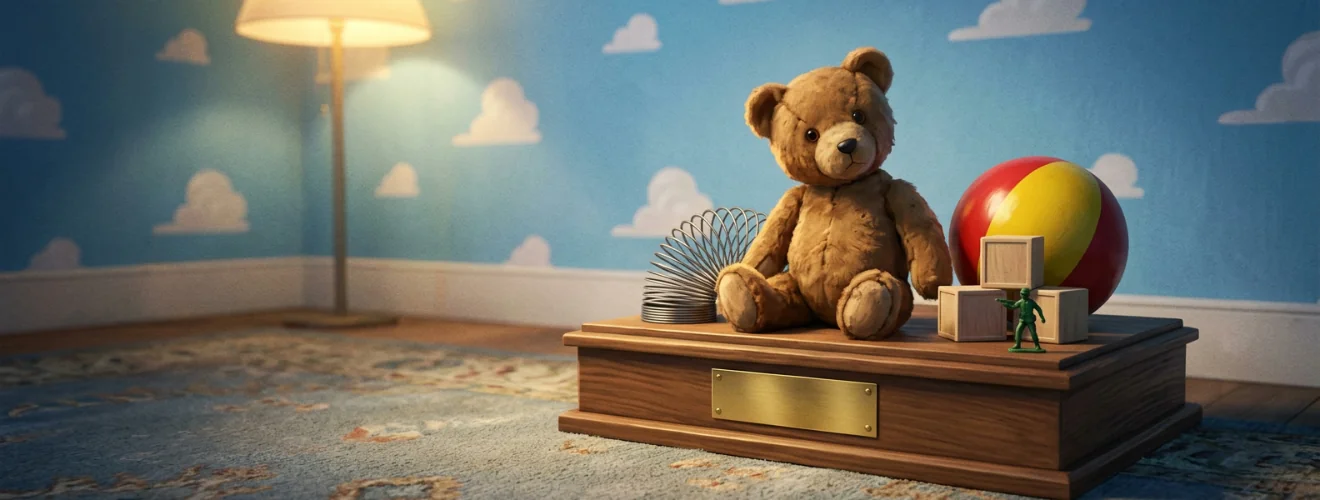
America’s National Toy Hall of Fame announced its first class in 1998, and it had 11 toys in it. That was generous by the standards of these things; baseball’s first Hall of Fame class, unveiled on February 2, 1936, had five players. Mr. Potato Head was not among the eleven. Neither was Ken. Their omission drew a protest, an unusual reception for a museum of toys, and Mr. Potato Head was not inducted until 2000. By then he had starred in two Toy Story films.
Toy Story was the first feature film animated entirely by computer, and it borrowed part of its cast from a real toy box, though the toy companies were not at all sure they wanted the parts. Mattel refused to license Barbie, so Joss Whedon’s idea of having her rescue Woody and Buzz from Sid’s house in the final act went to Bo Peep instead. Hasbro and Mattel both passed on making the film’s merchandise as well, reckoning that 11 months was not enough time, and the job went to a small Canadian company, Thinkway Toys.
Six of the hall’s eleven charter toys turn up somewhere in the five films all the same, alongside brands like Hot Wheels and categories like the ball and the swing, which the hall inducts as ideas rather than products. What counts here is any inductee with a part to play in one of the features, either as a character or as a prop the camera plainly wants you to notice. Toy Story 5 brought in enough new plastic to need every toy in Toy Story 5 counted on a page of its own, but the hall’s share of that film is mostly old friends. A Candy Land box sitting on Andy’s shelf does not qualify. A Battleship game that Hamm actually plays does.
Thirty-six National Toy Hall of Fame inductees, through the 2025 class, appear in at least one of the five Toy Story feature films, from Toy Story (1995) through Toy Story 5 (2026). Each one counts as a toy character or a clearly featured prop; background set dressing, the shorts and specials, and knockoffs such as Combat Carl do not.
Erector Set
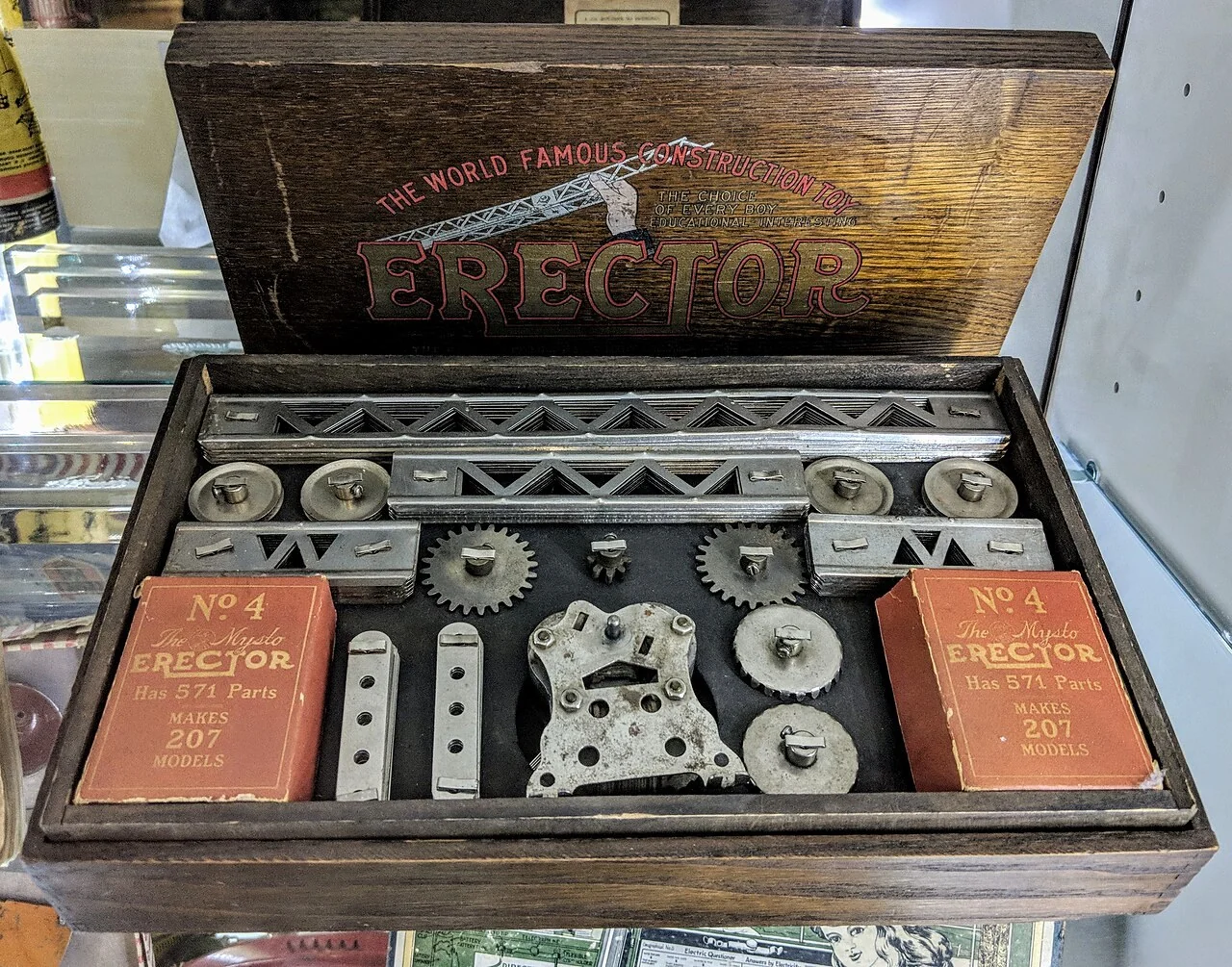
The National Toy Hall of Fame began in 1998 at A.C. Gilbert’s Discovery Village, a children’s museum in Salem, Oregon, so the first home of the hall that inducted the Erector Set was a building named after the man who invented it. The hall moved to The Strong in Rochester, New York, in 2002. The Erector Set was in the charter class. Leaving it out would have been awkward.
Gilbert conceived the toy in 1911 after watching steel girders go up to carry power lines, and launched it in 1913 with what The Strong calls the first national advertising campaign ever run for a toy, in the Saturday Evening Post and Popular Mechanics. The slogan was ‘Hello, Boys! Make Lots of Toys!’ The girders were an inch square and fastened with just two bolts, and the sets were sturdy enough that Yale researchers used one in 1949 to build the precursor of the modern artificial heart.
Toy Story puts one to less wholesome use. Babyface, the leader of Sid’s mutant toys, is a one-eyed baby doll’s head on a crab-like body of Erector set pieces, with six aluminum legs and a pair of pincers. No brand mark appears on screen; the identification is by design. When the Disney Store sold a remote-controlled Babyface in 2010, the description called it ‘a one-eyed doll’s head atop a spider made from an erector set,’ which is as close as a product listing has come to a warning.
Etch A Sketch
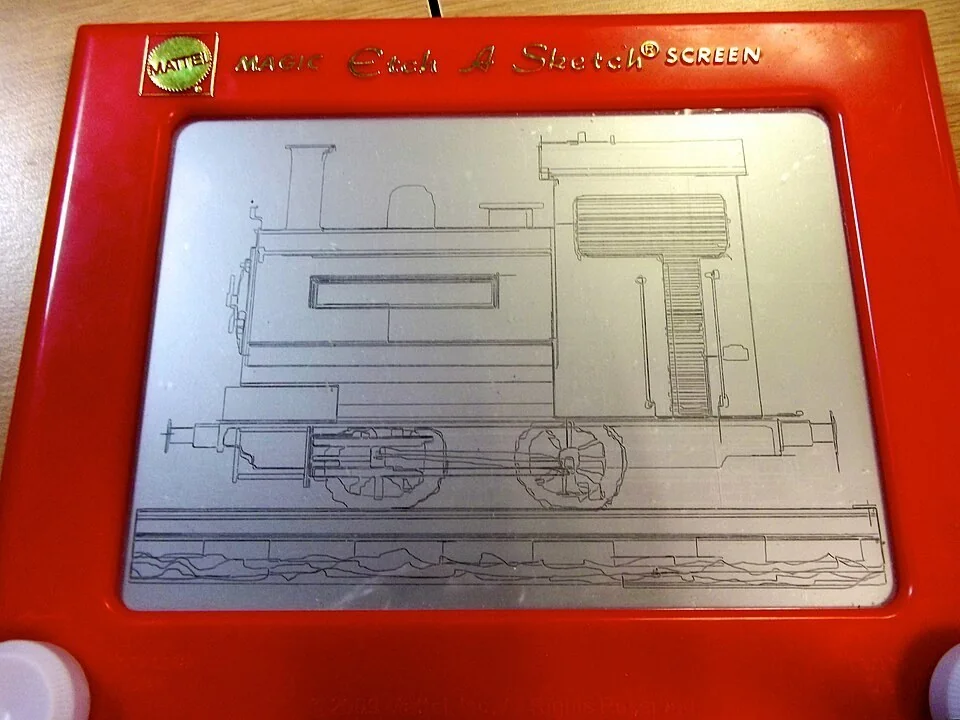
Ohio Art paid $25,000 for the rights to a French drawing toy called L’Ecran Magique, more than the company had ever paid for a license, and renamed it Etch A Sketch. Its inventor, the electrical technician Andre Cassagnes, had shown it at the 1959 International Toy Fair in Nuremberg. It went on sale on July 12, 1960, priced at $2.99, sold 600,000 units that year, and kept Ohio Art’s factory working until noon on Christmas Eve.
In Toy Story the toy becomes Etch, a red Etch A Sketch who cannot talk and says everything by drawing it. His first scene is a quick-draw duel with Woody, which Etch wins by drawing a gun, and Woody concedes that he has the ‘fastest knobs in the west.’ Later, when the toys turn on Woody for knocking Buzz out of the window, Mr. Potato Head has Etch draw a hangman’s noose.
Toy Story 2 gives him detective work. Buzz orders ‘Etch, draw that man in a chicken suit,’ and the sketch that comes back identifies Al McWhiggin as the kidnapper; Etch then draws a map to Al’s Toy Barn and, at the end, a ‘Welcome home, Andy’ message. The end credits read ‘Etch A Sketch (R) (c) The Ohio Art Company.’ By Toy Story 3 he survives only in Andy’s old home videos and in Woody’s list of friends lost along the way, which is a hard end for a character whose every sentence could be erased with a shake.
Teddy Bear
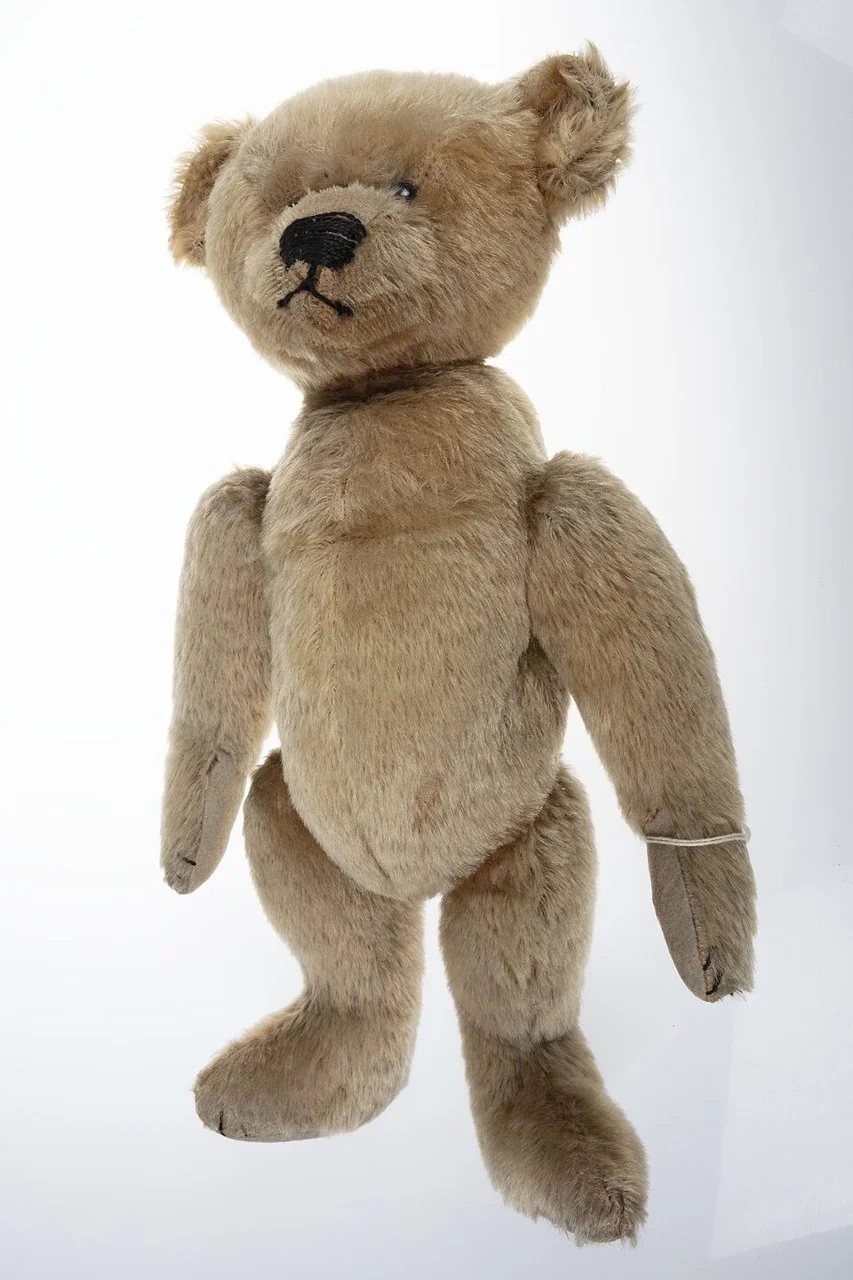
Theodore Roosevelt refused to shoot a black bear that his hunting party had tied to a willow tree near Onward, Mississippi, on November 14, 1902, and Clifford Berryman’s cartoon of the episode ran in the Washington Post on November 16. In Brooklyn, Morris Michtom put a stuffed bear in his shop window, got the President’s permission to call it ‘Teddy’s Bear,’ and went on to found the Ideal Toy Company. In Germany, Steiff showed its own bear at the Leipzig Toy Fair in March 1903, where a buyer for George Borgfeldt and Company ordered 3,000 of them for America.
The hall inducted the teddy bear in 1998 as a category, so any bear will do, and Toy Story supplies two. The first is Fur Bear, a pink teddy on Andy’s desk who stretches and waves at Woody during the staff meeting.
The second is Lots-o’-Huggin’ Bear, the villain of Toy Story 3: large, pink, strawberry-scented, Southern in accent, voiced by Ned Beatty, and leaning on a wooden toy mallet as a cane. Lotso had belonged to a girl named Daisy until he was left behind at a rest stop, and when he finally made it home her parents had bought a replacement Lots-o’-Huggin’ Bear. He took it badly and took over Sunnyside Daycare. He ends the film tied to the front of a garbage truck by a man named Jerome, who had owned a Lots-o’-Huggin’ Bear as a child, and seems to have missed him.
Tinkertoy
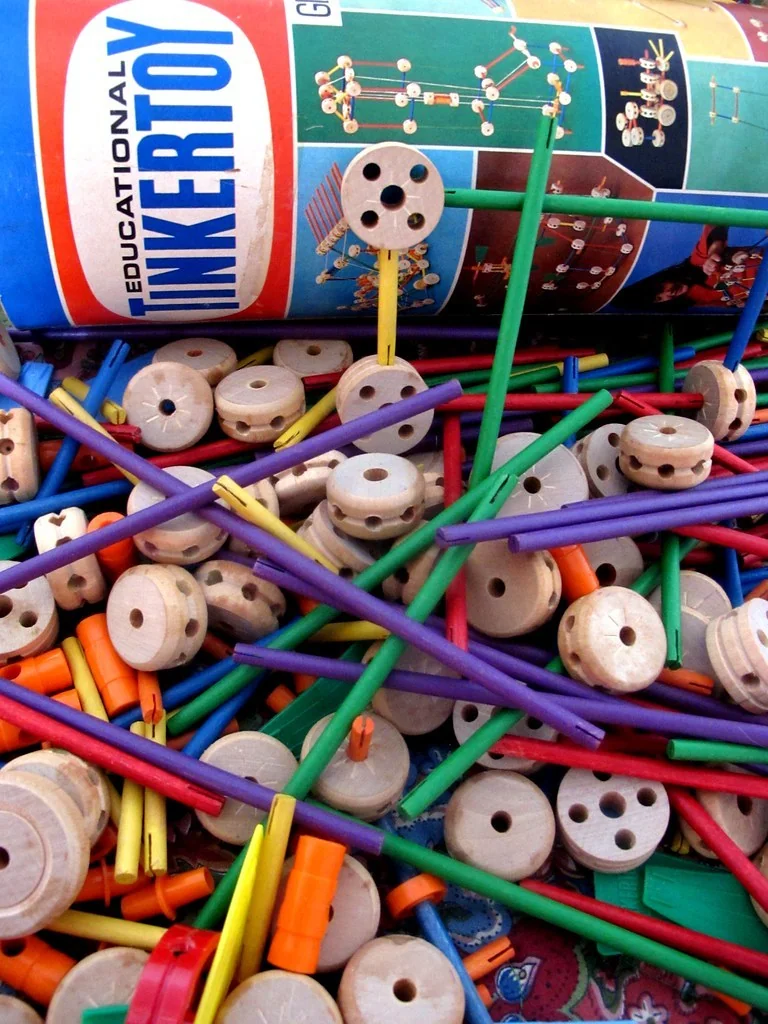
Woody’s podium at the staff meeting in Toy Story is a Playskool Tinkertoy canister. Woody calls Robot and Snake for podium duty, which lends the meeting some ceremony; The Henry Ford’s article on the real toys of the film notes that Woody used the classic Tinkertoy box as a lectern. Playskool had acquired Tinkertoy in 1985, and the canister carries its name accordingly.
The toy was dreamed up by Charles Pajeau, a stonemason, after he watched children building with sticks and empty spools of thread, and The Strong records that it was first sold as the ‘Thousand Wonder Toy.’ The mailing-tube packaging was chosen to cut shipping costs, an electric motor came after 1919, and color arrived in the 1950s. In the mid-1970s a group of MIT students built a tic-tac-toe-playing computer entirely out of Tinkertoy dowels and spools, the sort of project that tends to happen when engineering students are handed a toy and a deadline.
The canister is not the only Tinkertoy in the film. During the ‘Strange Things’ montage, Rocky, Snake, Troll and Rex lift Tinkertoys as weights while Buzz trains the room, and Mr. Potato Head topples backward with his arms still attached to a Tinkertoy barbell. Toy Story 4’s end credits list Tinkertoy among the Hasbro trademarks used with permission, though no scene with one has turned up. It shares that credit line, and the vanishing act, with Battleship and Candy Land.
Jump Rope
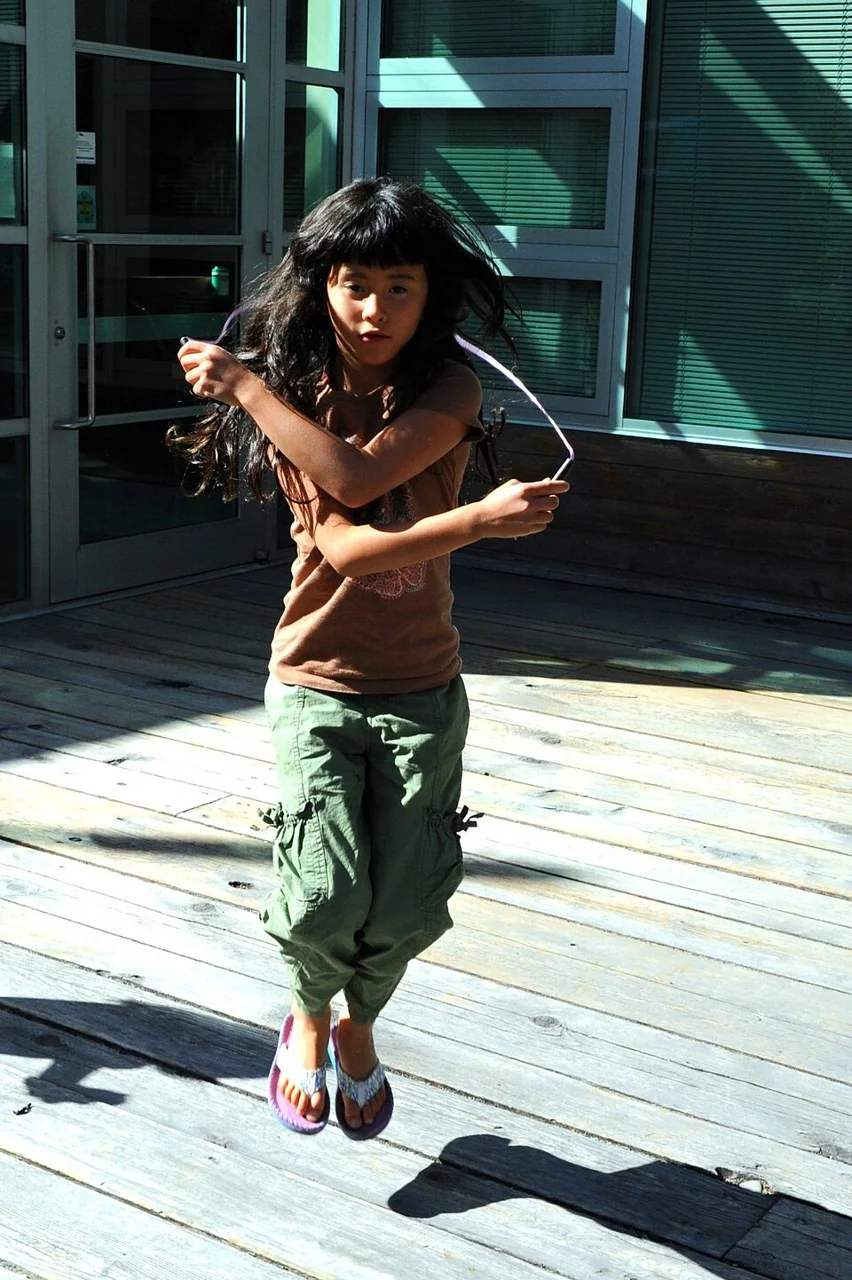
Jump rope reached America as a game for boys. The Strong says 17th-century Dutch settlers brought the jumping ropes over, that the game was then considered exclusively a boys’ pastime, and that girls took hold of the handles in the 1800s, although most advice books warned them against too much exertion. They ignored the books and made the game theirs, with rhymes; one The Strong records, ‘Teddy bear, teddy bear, turn around,’ was built to test acrobatic skill, and brings another of this list’s inductees onto the playground.
Toy Story gives the rope a military career. On Andy’s birthday Sarge declares Recon Plan Charlie, and his green army men carry a baby monitor and a jump rope out into the upstairs hall. The rope is dropped from the second floor and the soldiers rappel down it to the first, with the monitor lowered alongside them so the troops can report on the presents as they are opened. It is a full commando operation conducted with a skipping rope, and the plastic men carry it off without a hint of irony.
The opening titles of the same film have Andy lasso his cardboard cattle with a red-handled rope that the screenplay calls a jump rope, though only the recon mission is documented beyond the script. The Strong inducted the jump rope in 2000. The later films find no further work for it, which seems a waste of a rope that had already proved it could take a squad of infantry.
Mr. Potato Head
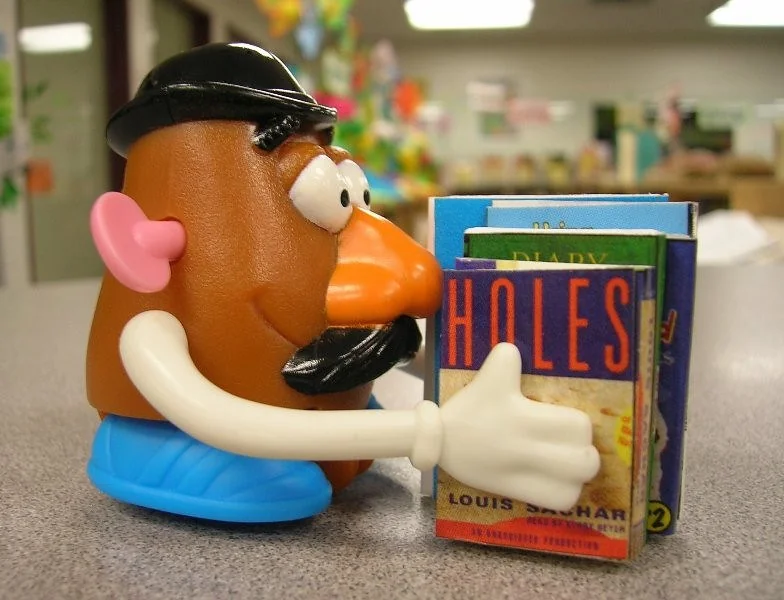
On April 30, 1952, Mr. Potato Head became the first toy ever advertised on television, and The Strong says the commercial helped Hasbro to more than $4 million in sales in the first few months. George Lerner had come up with the face parts; Hassenfeld Brothers, the company that became Hasbro, sold them in a package of 28 plastic features meant to be pushed into a real potato. A plastic potato body arrived in 1964, after parents complained about spoiled food, and the pipe went in 1987, when Mr. Potato Head handed it to Surgeon General C. Everett Koop for the Great American Smokeout.
He spends most of the series complaining. In the first he leads the mutiny against Woody and loses his face to RC in the moving-van ambush. Toy Story 2 introduces Mrs. Potato Head, voiced by Estelle Harris, and has him throw his hat to jam the lobby doors of Al’s apartment building before he saves three Aliens, whom Mrs. Potato Head adopts. In Toy Story 3 he rebuilds himself as Mr. Tortilla Head.
Don Rickles died in April 2017 before recording anything for Toy Story 4, so Pixar went through 25 years of his archival recordings, including unused lines from the first three films, to give the potato his voice one last time. The end credits read ‘In Memory of Don Rickles 1926 – 2017.’ Jeff Bergman took over the part for Toy Story 5.
Slinky
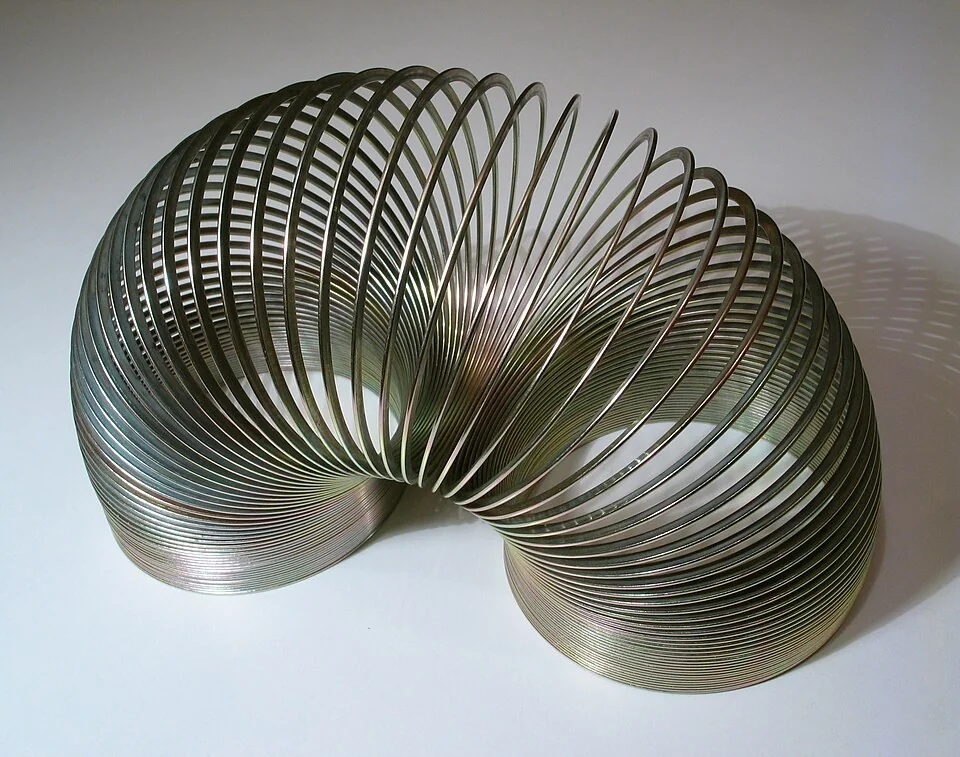
When Pixar cast Slinky Dog in Toy Story, James Industries was no longer making him. The company had advance notice and started on a version that matched the film’s design, but the plastic molds were not finished in time for the Christmas 1995 run, and the new Slinky Dog reached stores the following February, in time for the video. Betty James, who ran the company, told The New York Times that ‘The earlier Slinky Dog wasn’t nearly as cute as this one,’ which is generous of her, since she was talking about her own product.
Richard James invented the Slinky in 1943, and The Strong says the first 400 sold within minutes at Gimbels in Philadelphia for Christmas 1945. The dog came later, in 1952, after a woman named Helen Malsed mailed the company a letter and some drawings suggesting it. She was paid royalties of $60,000 to $70,000 a year for 17 years, a good return on a stamp.
Jim Varney voiced him in the first two and Blake Clark from Toy Story 3 onward, through Toy Story 5. He stretches out of a moving van until RC’s batteries run down and he is pulled to his limit in the first film, serves as a bungee cord in the second, and makes himself a bridge across a dumpster in the third. Read in order, his credit lines are a chain of title: James Industries, then Poof-Slinky, then Just Play.
Alphabet Blocks
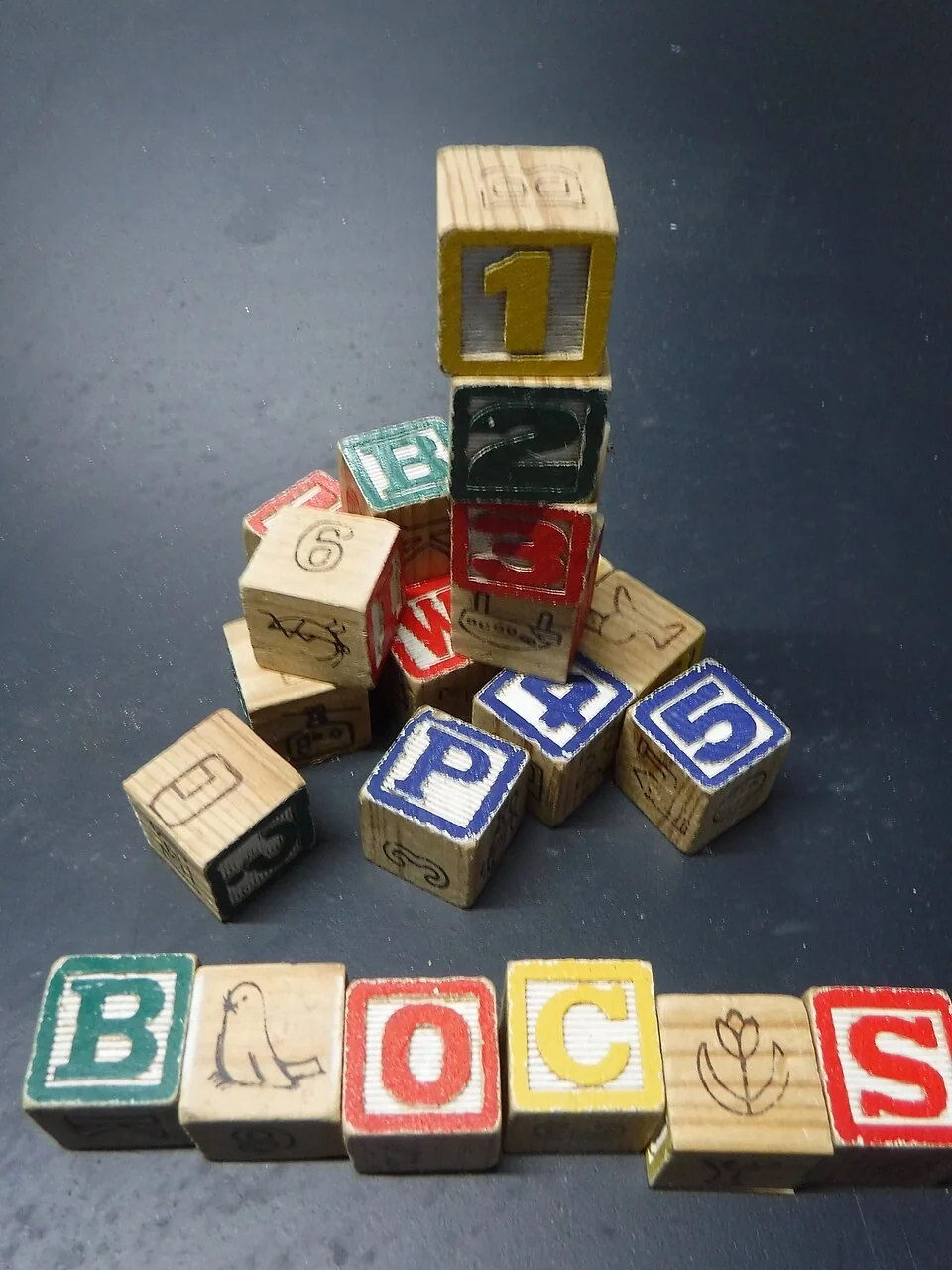
In 1693 John Locke proposed ‘dice and play-things, with the letters on them, to teach children the alphabet by playing,’ and added that in this way children might be ‘cozened into a knowledge of the letters’ without noticing they were being taught. The Strong dates alphabet blocks to that passage. Another account finds lettered blocks mentioned a century earlier, in Hugh Plat’s 1594 Jewel House of Art and Nature, so Locke may only have been the first to make them sound like a trick.
Friedrich Froebel’s kindergarten, founded in 1837, and his wooden ‘gifts’ pushed blocks into the classroom, and The Strong says alphabet blocks found their way into most American schools in the 19th century as a way to teach children letter shapes before they could read. The hall inducted the category in 2003, so any lettered block on screen qualifies.
Toy Story has them from the first reel. Robot carries a letter block over to Woody’s podium for the staff meeting, and during ‘Strange Things’ Slinky and Robot prop Buzz’s cardboard spaceship on ABC blocks so he can work on the repairs. In Toy Story 2 the blocks spell out WHEEZY during the penguin’s version of ‘You’ve Got a Friend in Me,’ and the shooting script for Toy Story 3 puts Lotso on a podium of ABC blocks to lay down the law. According to Pixar Wiki, some international prints of Toy Story 2 replace the letters with stars, presumably on the grounds that WHEEZY does not translate.
Checkers
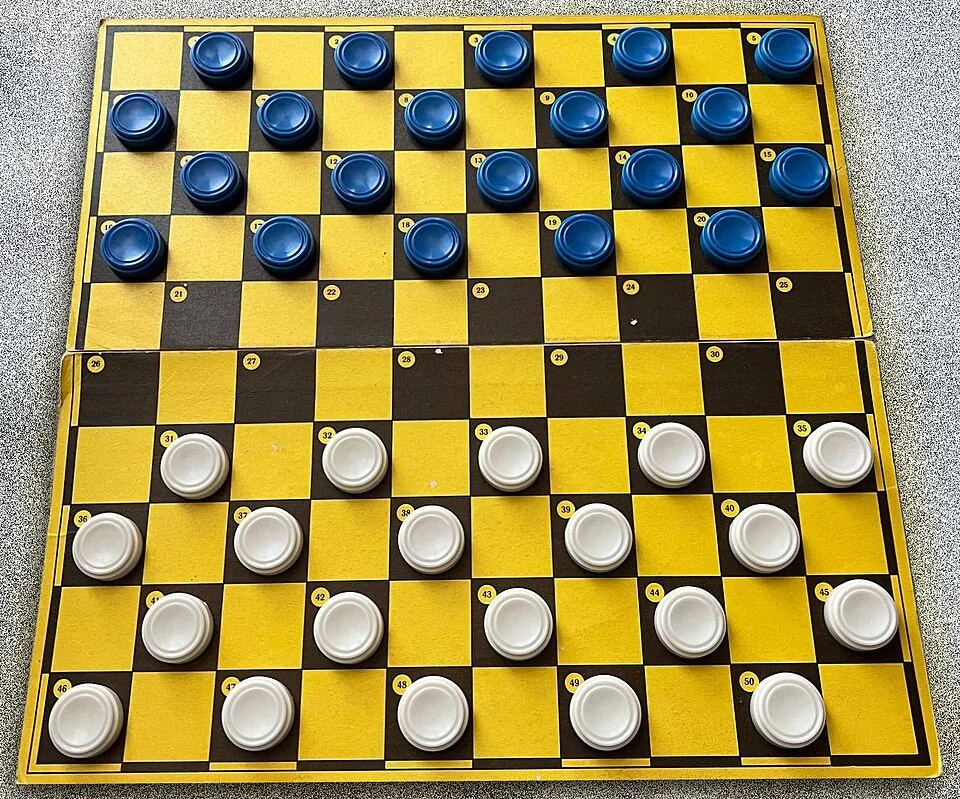
Checkers is a solved game. In 2007 Jonathan Schaeffer’s team at the University of Alberta announced in Science that perfect play by both sides ends in a draw, after computers had worked through the problem almost continuously since 1989; the game has roughly 500 billion billion possible positions, written by the paper as 5 x 10^20. The result applies to American checkers, played on an eight-by-eight board, and it was a weak solution: the computers know how the game ends from the start without having filed every position.
Humans had been managing without that knowledge for centuries. The Strong says players were buying the first checkers strategy books by the 1600s, and Pressman Toys estimates it has sold more than 25 million checker sets since its founding in 1922. Edgar Allan Poe preferred the game to chess, and wrote that the reflective intellect was more usefully taxed by ‘the unostentatious game of draughts than by all the elaborate frivolity of chess.’
In Toy Story it is Woody and Slinky’s game. Slinky slides out from under Andy’s bed pushing a checkerboard and announces ‘I’m red this time,’ but Woody has bad news and a staff meeting to call. Later, in the ‘Strange Things’ montage, Woody goes looking for Slinky to play, finds him helping Buzz instead, and kicks the board. One checker ricochets off the dresser and boomerangs straight back into his mouth. Perfect play, the computers say, ends in a draw. Woody’s ends in a mouthful.
Scrabble
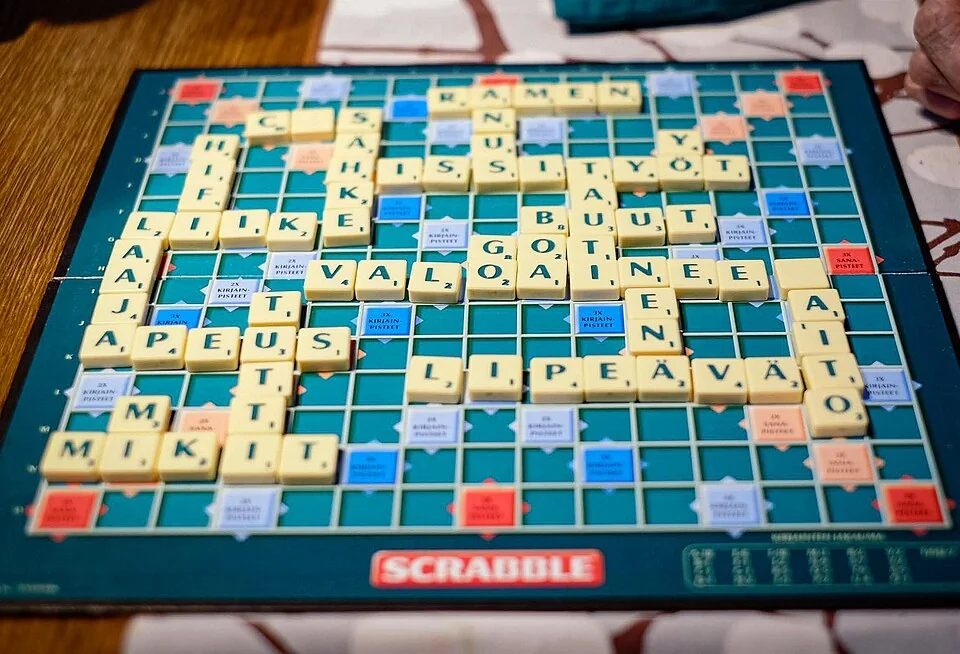
Alfred Butts worked out how many of each letter his word game needed by counting letters on the front page of The New York Times, and he allowed only four S tiles so that making plurals would not make the game too easy. He called it Lexiko, then Criss-Crosswords, and in 1948 James Brunot took it over, refined the rules and renamed it Scrabble, a real word that means to scratch frantically. The Brunots made 2,400 sets in 1949 in a converted schoolhouse in Dodgingtown, Connecticut, and lost money on them. By 1954, with Selchow and Righter running production, The Strong says sales had topped 4.5 million.
An English-language set has 100 tiles, 98 of them carrying a letter and a point value between 1 and 10, and two blanks. Q and Z are worth 10. That detail is how Scrabble gets into Toy Story without a credit or a logo.
In Sid’s room, Woody briefs the mutant toys on his plan to rescue Buzz using a map-diagram of the house and yard laid out on the floor in Scrabble tiles and dominoes. AMC Filmsite names the tiles outright, and a frame of the finished film shows cream squares with point values in the corner: Q with a 10, W with a 4. Nobody in the scene plays a word. The tiles are there to mark where everyone will stand. It is humble work for a Q.
Cardboard Box
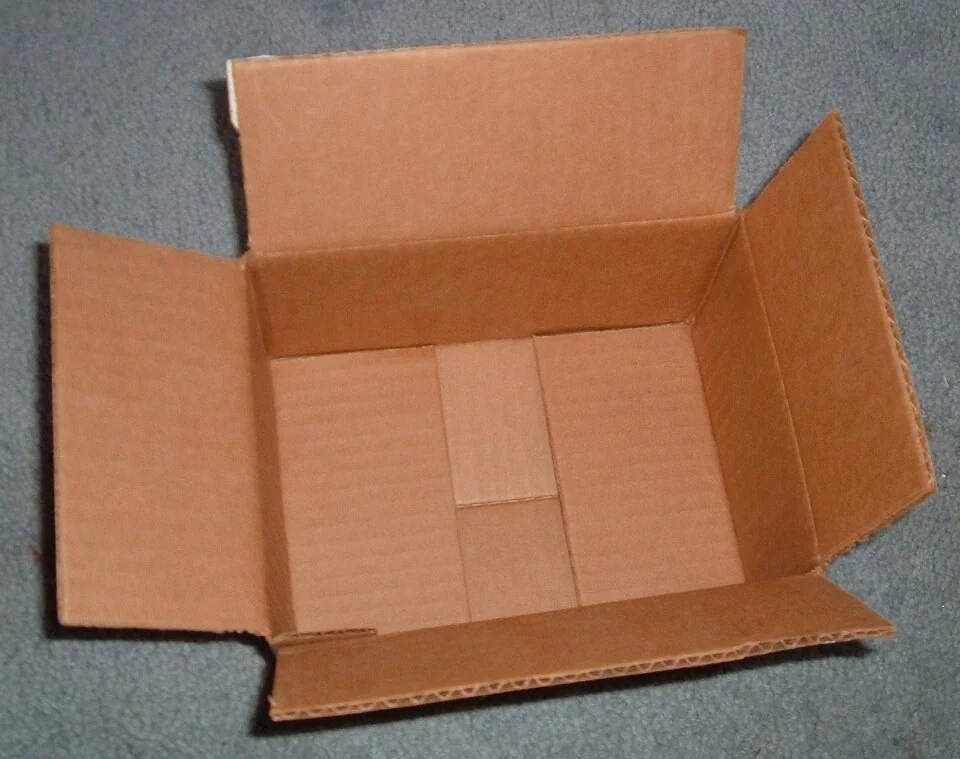
‘I think every adult has had that disillusioning experience of picking what they think is a wonderful toy for a child, and then finding the kid playing with the box,’ The Strong’s curator Christopher Bensch told the Associated Press in November 2005, when the cardboard box was inducted alongside the jack-in-the-box and Candy Land. The museum’s reasoning was that a box from a washer, a stove or a refrigerator can become ‘forts or houses, spaceships or submarines, castles or caves,’ and that nobody has to spend much to get one.
The box itself has a contested history. The Strong says the English made the first commercial cardboard box in 1817 and that Robert Gair produced the first really efficient one in 1879; another account dates Gair’s pre-cut paperboard box to 1890 and says it came out of an accident.
Toy Story opens with the idea at full stretch. Andy’s cardboard boxes stand in for a Western town, a saloon, a hotel, a ‘skool,’ a bank and a general store, and he turns some of them around to reveal cattle drawn on the back. Buzz, meanwhile, takes his own ripped packaging for a crashed spaceship. In Toy Story 3 the toys ride a donation box to Sunnyside, and the film ends with Andy handing Bonnie a box with Woody at the bottom. Toy Story 4 begins with Bo Peep packed into one and given away. The box keeps doing the heavy lifting. Boxes are good at that.
Jack-in-the-Box
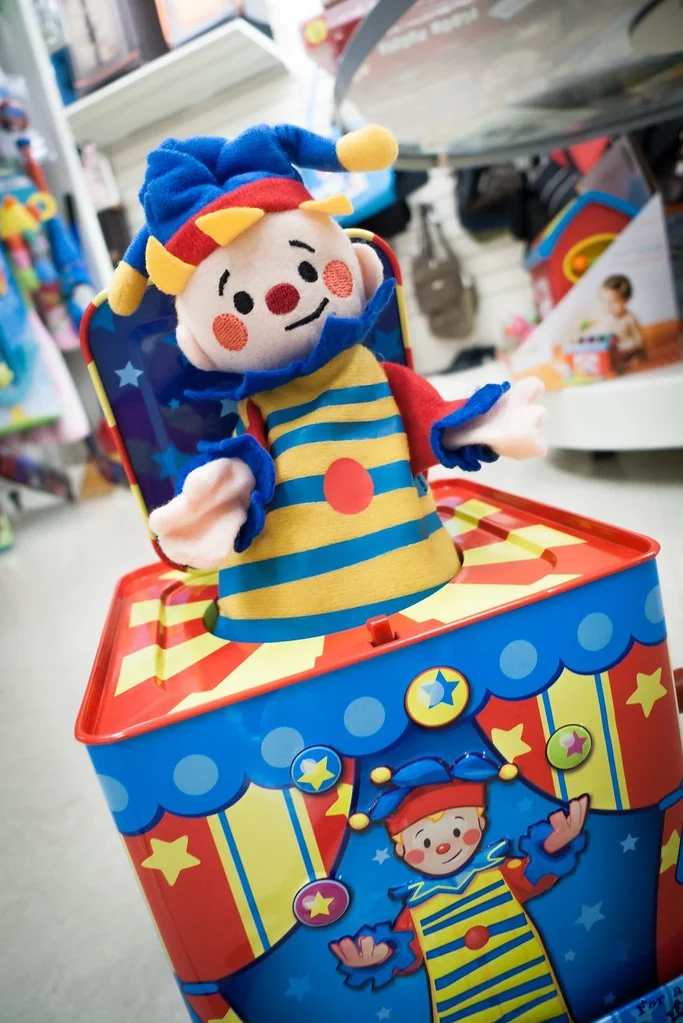
Before it was the name of a toy, ‘jack in the box’ was an insult. Phrasefinder traces the first known print use to John Foxe’s Actes and Monuments of 1563, which reports Bishop Nicholas Ridley complaining that critics were ‘terming it Iack of the boxe,’ and by another account the phrase was used from the 1560s for a swindler who passed off empty boxes as full ones. The name had reached the plaything by 1702. The Strong, which inducted the generic toy in 2005, says the figure that popped out has been a Punch without his Judy, an admiral on a stick, and in more recent times Winnie the Pooh and the Cat in the Hat.
Toy Story offers a less cuddly version. Sid’s mutants include Hand-in-the-box, a green monster hand on the spring of a musical jack-in-the-box that plays ‘Pop Goes the Weasel.’ It first startles Woody by popping out like an ordinary jack-in-the-box, and in the escape it reaches the bedroom doorknob and throws open Sid’s door so the Frog can lead the dog away.
Toy Story 3 has a conventional one at Sunnyside Daycare, who pops up as Andy’s toys tumble out of the donation box and cheers ‘New toys!’ CinemaBlend reports that the director, Lee Unkrich, voices that one line himself. It is a cameo of exactly one sentence. Nobody asks more of a jack-in-the-box.
Baby Doll
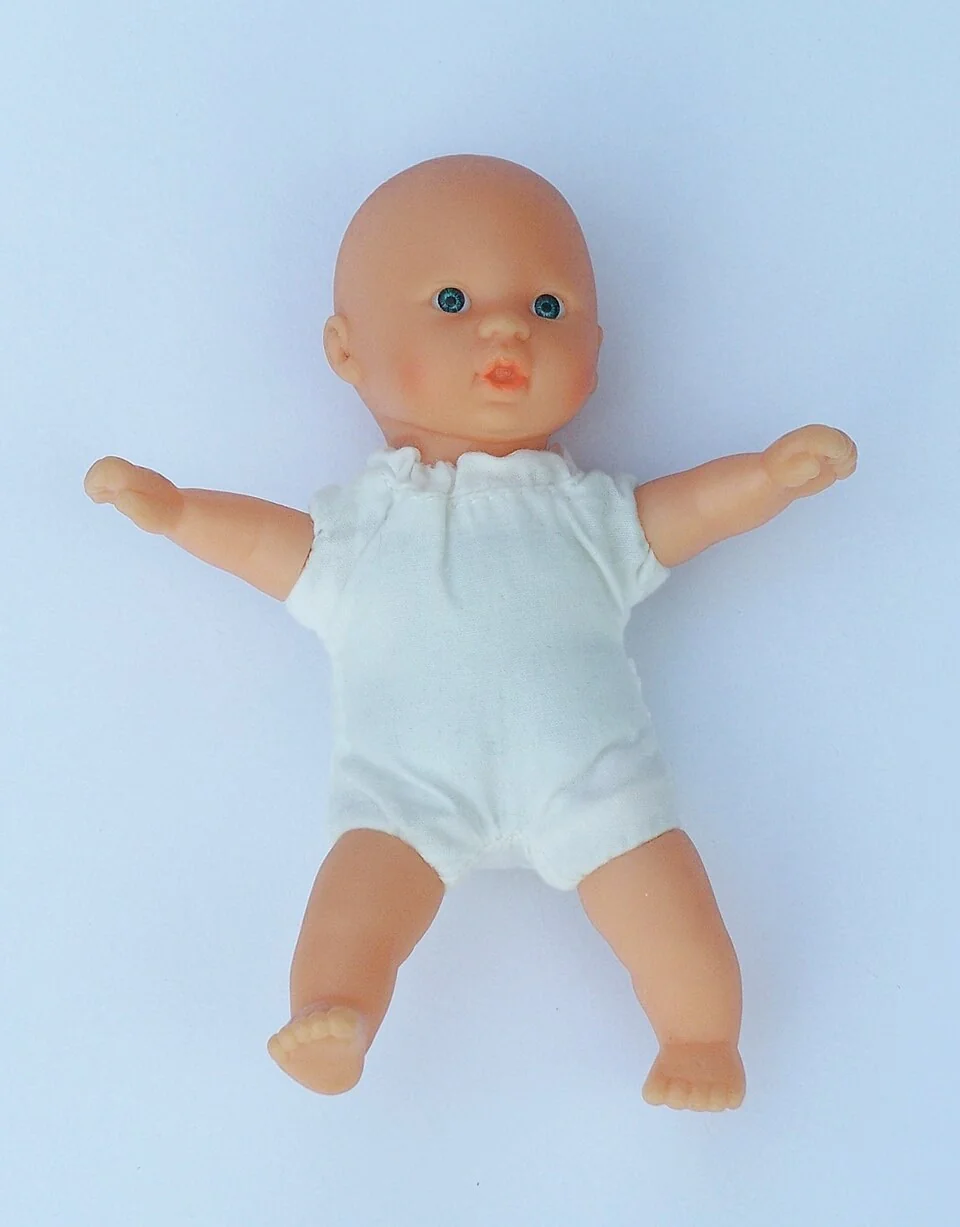
Woody’s flashlight catches only the left side of the face at first, and it looks like a perfectly ordinary baby doll. Then it rises up on six metal legs. This is Babyface, who runs the gang of mutants under Sid’s bed. The head came from a doll belonging to Sid’s sister Hannah, minus the right eye, and the rest of the film proves that appearances in that house are not to be trusted. Babyface taps out Morse code on the metal bedpost to summon the others, and in the finale the fishing-rod mutant Legs lowers it from the clothesline onto Sid’s head.
The hall inducted the baby doll in 2008 as a category. The Strong says that before baby dolls appeared in the mid-1800s, girls had companion dolls or elaborate fashion dolls, neither of which was much good for cradling, and that the Bye-Lo baby of 1922 was modeled to look like a three-day-old newborn.
Toy Story 3 supplies a whole one. Big Baby is a lazy-eyed doll, once one of three toys owned by Daisy along with Lotso and Chuckles, who serves as Lotso’s enforcer at Sunnyside Daycare. His voice was provided by an actual baby, credited as Woody Smith. When Lotso smashes the pendant that still carries Daisy’s name, Big Baby grabs him from behind, throws him into the dumpster and closes the lid. It is the film’s most decisive act of justice, and it is carried out in a diaper.
Skateboard
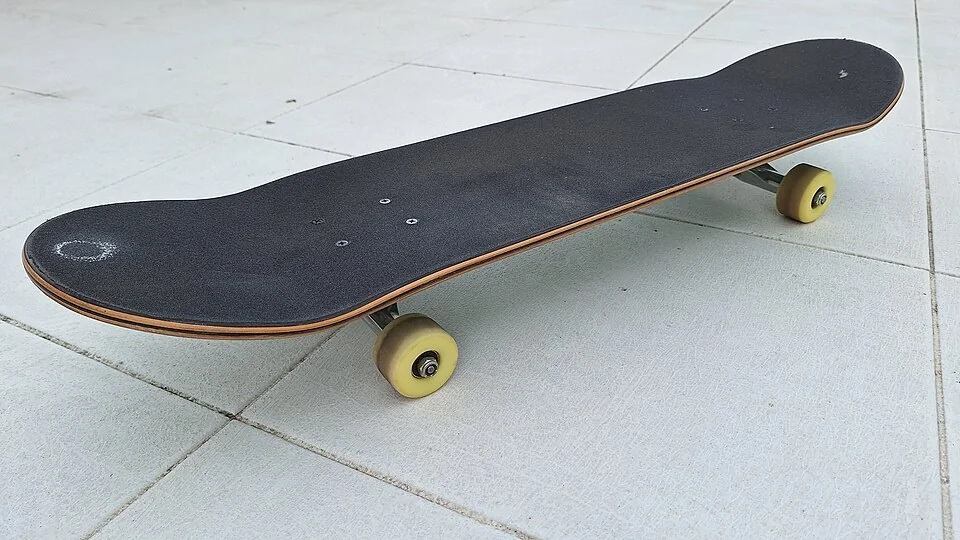
Tony Hawk donated his personal skateboard to The Strong when the hall inducted the skateboard in 2008, a gift most inductees cannot match, since they tend to arrive without their most famous user attached. Some historians, The Strong says, trace the first skateboards to surfers who fitted wheels to boards when the surf was flat. Sidewalk surfing, as it was called, had companies manufacturing boards by 1959.
Toy Story belongs to Sid, a skate punk in a black T-shirt printed with a skull, who rides his skateboard home from Pizza Planet with Woody and Buzz in his backpack. The skull is nearly identical to the Small Skull graphic of Zero Skateboards, a brand that started in 1996, a year after the film; the accounts that note the likeness disagree about whether it was copied or a coincidence. The board also gets a part of its own. RollerBob, one of Sid’s mutants, is the top half of a jet-pilot action figure fixed to a skateboard where his legs used to be, and in the escape he ferries Woody and the other mutants out of the house.
Toy Story 2 makes the skateboard an accomplice. At Andy’s mom’s yard sale, Al McWhiggin kicks a skateboard into a stack of boxes, and while she runs to see what fell, he steals Woody. As crimes go it is low on technique, and it works perfectly.
Ball
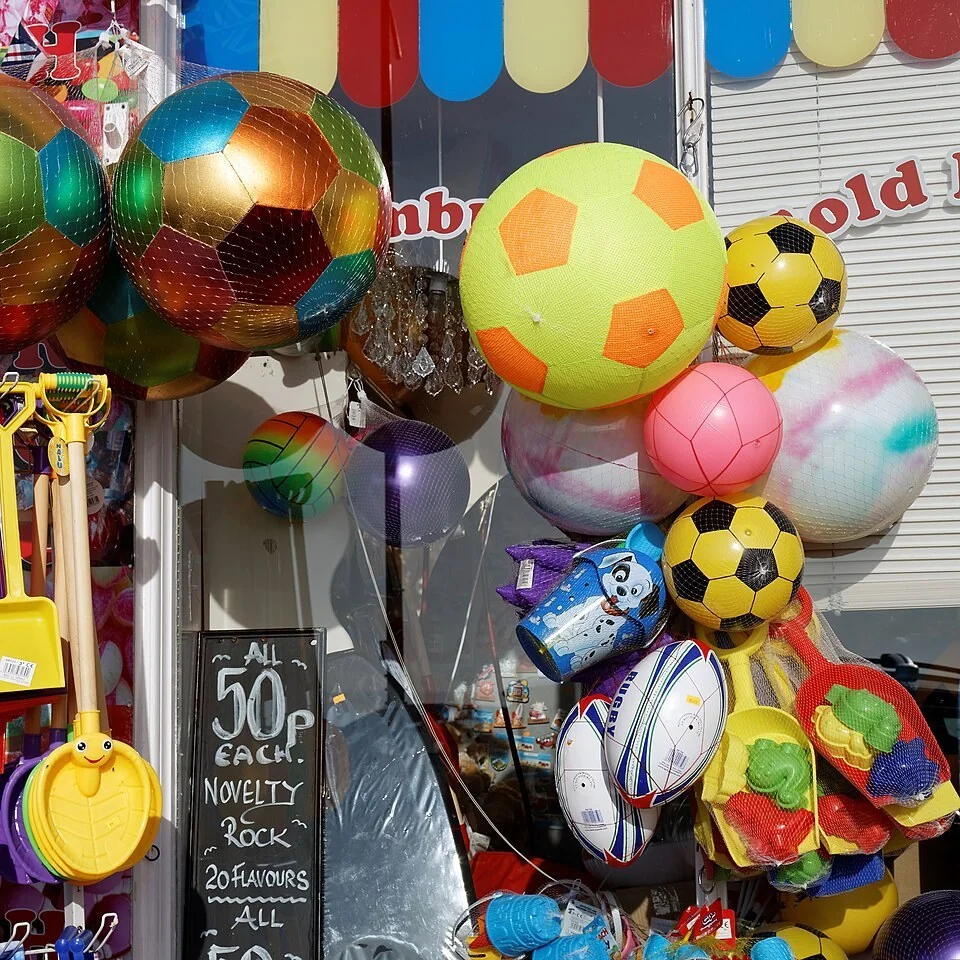
Buzz Lightyear’s proof that he can fly begins with a ball. In Toy Story he leaps off Andy’s bed, bounces off a yellow ball with a blue stripe and a red star, and lands on a toy car that carries him around the room, and Mental Floss notes that the ball he bounces from is the Luxo Ball, the prop Pixar first used in its short Luxo Jr. Earlier in the same film the ball rolls down Andy’s hallway during the army men’s recon, scattering the patrol into a potted plant.
The hall inducted the ball in 2009 as a category, which saves it from having to choose among candidates going back at least 3,000 years. Rubber balls were unknown outside the Americas until after Columbus, and the Spanish were the first Europeans to see the bouncing balls of the Mesoamerican ballgame. The Romans, without rubber, made do with an inflated leather ball and a three-person passing game called trigon.
Toy Story 2 turns balls into a traffic hazard. At Al’s Toy Barn the toys’ car plows into a bouncy-ball dispenser, and the spilled balls send their car spinning in circles; Pixar Wiki notes that the container by the door is labeled ‘Fresh Farm Balls.’ Toy Story 3 is crueler. Barbie ties Ken to a paddle-ball paddle by its own string in his wardrobe room to make him talk, which is not what anyone at a paddle-ball factory had in mind.
Hot Wheels
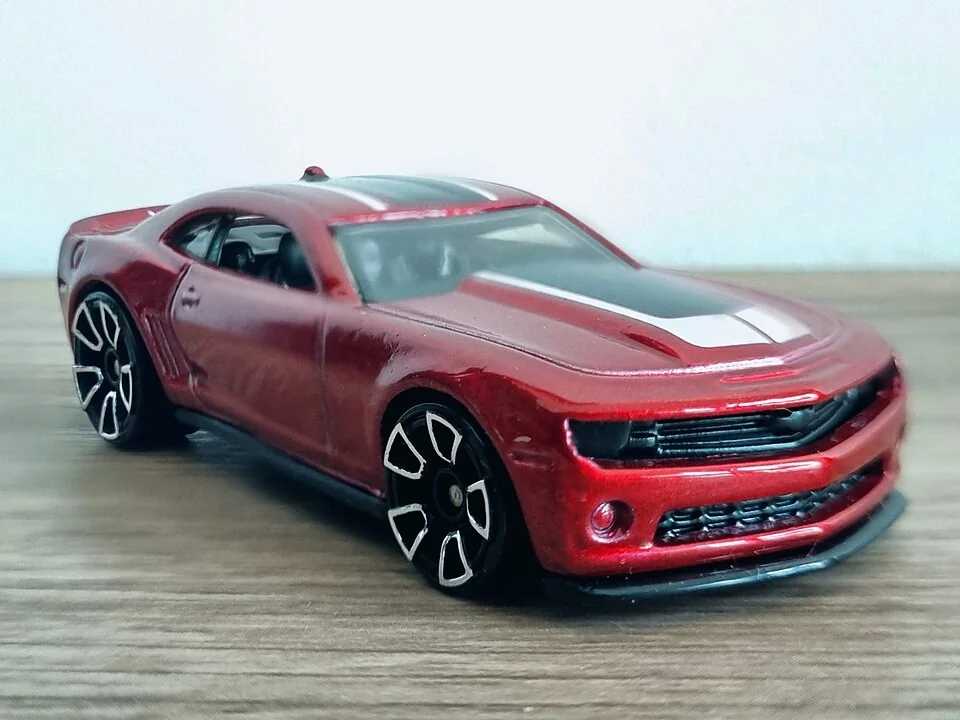
In 2009 Mattel sold a Toy Story track set whose product page promised ‘Hot Wheels Red Baron 1:64 scale die-cast vehicle – just like in the movie,’ which is about as close as a toy company comes to signing a sworn statement. The Red Baron is the car Buzz lands on when he jumps off Andy’s bed in Toy Story; it carries him down the orange track and through the loop, and Buzz takes the applause for flying. He uses the same car as a makeshift roller skate in Toy Story 2 to catch up with Woody.
Elliot Handler, a cofounder of Mattel, wanted a die-cast car line that would outdo England’s Matchbox and dominate the boys’ aisle the way Barbie had the girls’. Harry Bradley, a Chevrolet designer, led the design team, and Mattel introduced Hot Wheels on May 18, 1968. The Strong says the first year’s sales topped 16 million.
Toy Story 2 gives the brand a guided tour. As Tour Guide Barbie drives the toys through Al’s Toy Barn she announces, ‘To our right is the Hot Wheels aisle. Developed in 1967, the original series had 16 cars, including the corvette.’ The 1968 launch date and her 1967 can both stand, since the Original Sweet 16 were manufactured in 1967 and went on sale the year after. She is a tour guide who has done her reading.
Dominoes
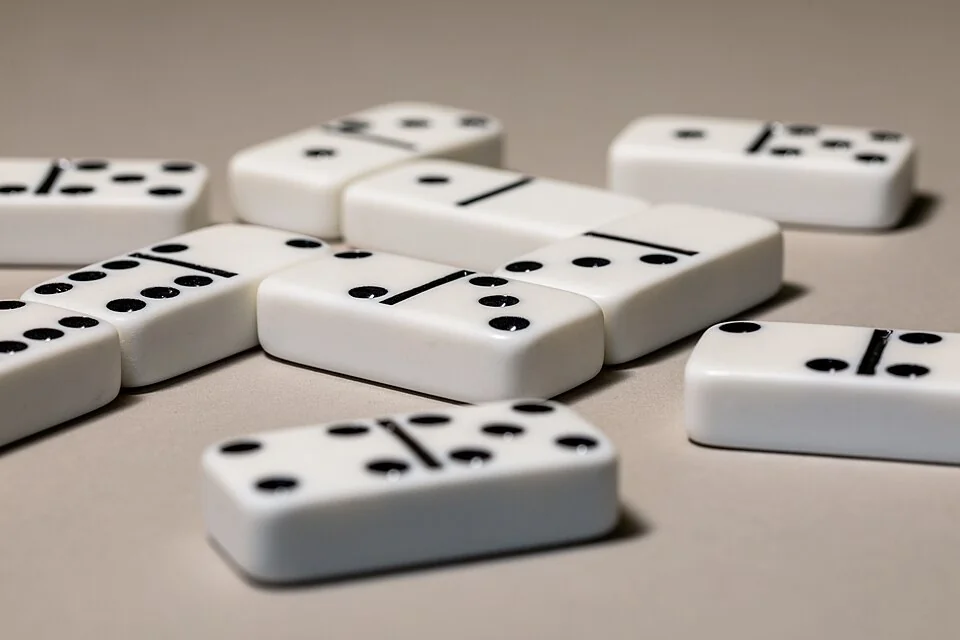
Nobody knows who first set up a row of dominoes and gave it a push, The Strong notes, but the Netherlands made an annual spectacle of it: the Domino Day exhibition ended in 2009 with a team toppling 4,491,863 dominoes. The tiles themselves are older and more serious. The Strong says dominoes originated in China in the 1300s, though by another account the earliest mention is in Former Events in Wulin by the Song dynasty writer Zhou Mi, who lived from 1232 to 1298. The pips stood for the results of throwing two dice, and European sets added blanks to make the familiar 28 tiles.
The name is contested. The Strong ties it to a priest’s black-and-white winter hood; a second account says it probably comes from a hooded robe and mask worn at the Venetian Carnival. Either way, the game is named after something to wear. Few games can say the same.
In Toy Story the dominoes do the drafting. When Woody lays out his plan to rescue Buzz for Sid’s mutant toys, the house and yard are mapped on the floor in black dominoes and lettered tiles, and AMC Filmsite’s account of the scene names both. In the finished film Woody points out positions on the plan with a pencil. For a game built on falling over, the dominoes stand remarkably still.
Rubber Duck
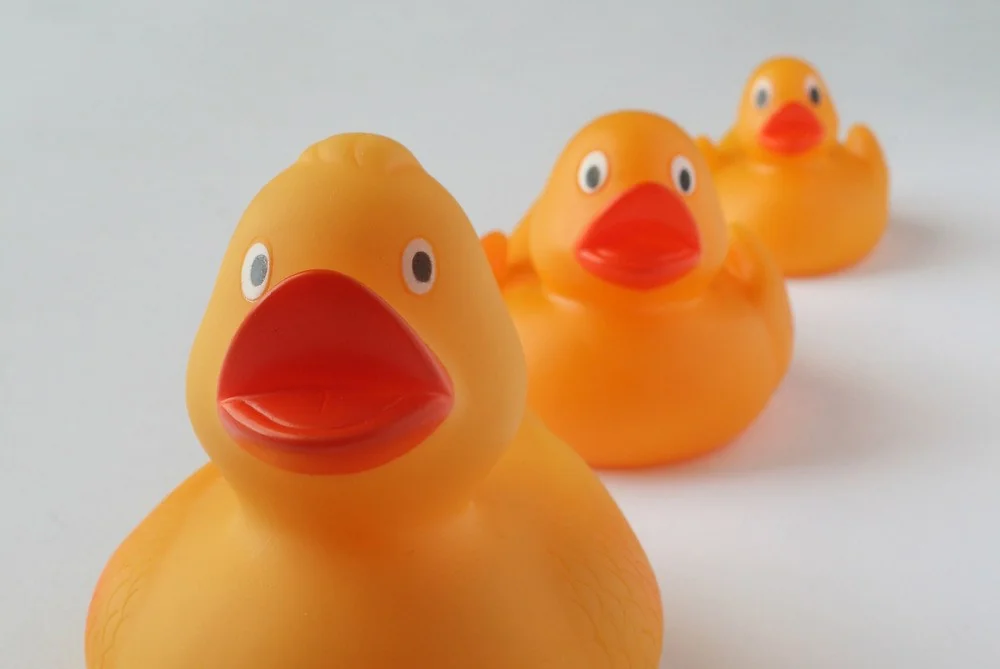
For their first stretch of history, rubber ducks sank. The Strong says they were cast solid from Charles Goodyear’s vulcanized rubber and meant as chew toys, and that only by the 1940s had the duck become the floating yellow figure with an orange bill that everyone pictures. For decades most have been made of vinyl. They are called rubber ducks all the same. Sculptor Peter Ganine filed a design patent for a toy duck on December 29, 1947, and Ernie of Sesame Street settled the matter of its place in the bathroom in 1970, when he first sang ‘Rubber Duckie,’ which The Strong says rose to number 16 on Billboard’s chart.
The hall inducted the rubber duck in 2013, the same year as chess. Its Toy Story career is short. During Woody’s staff meeting in the first film, the camera cuts to the audience on Andy’s desk, and a small yellow rubber duck sits there between a pink teddy bear and a blonde doll, nodding along. Pixar Wiki, which lists it as a character, says the nod signals that it can hear Woody; AMC Filmsite files it among the toys ‘briefly viewed in the background,’ which undersells the nod.
It does not return. Pixar Wiki notes that the duck is missing from Toy Story 2, where it turns up only in an outtake, packed by Mrs. Potato Head into her husband’s luggage. A nod in a crowd scene is a small part. The duck delivered it.
Little Green Army Men
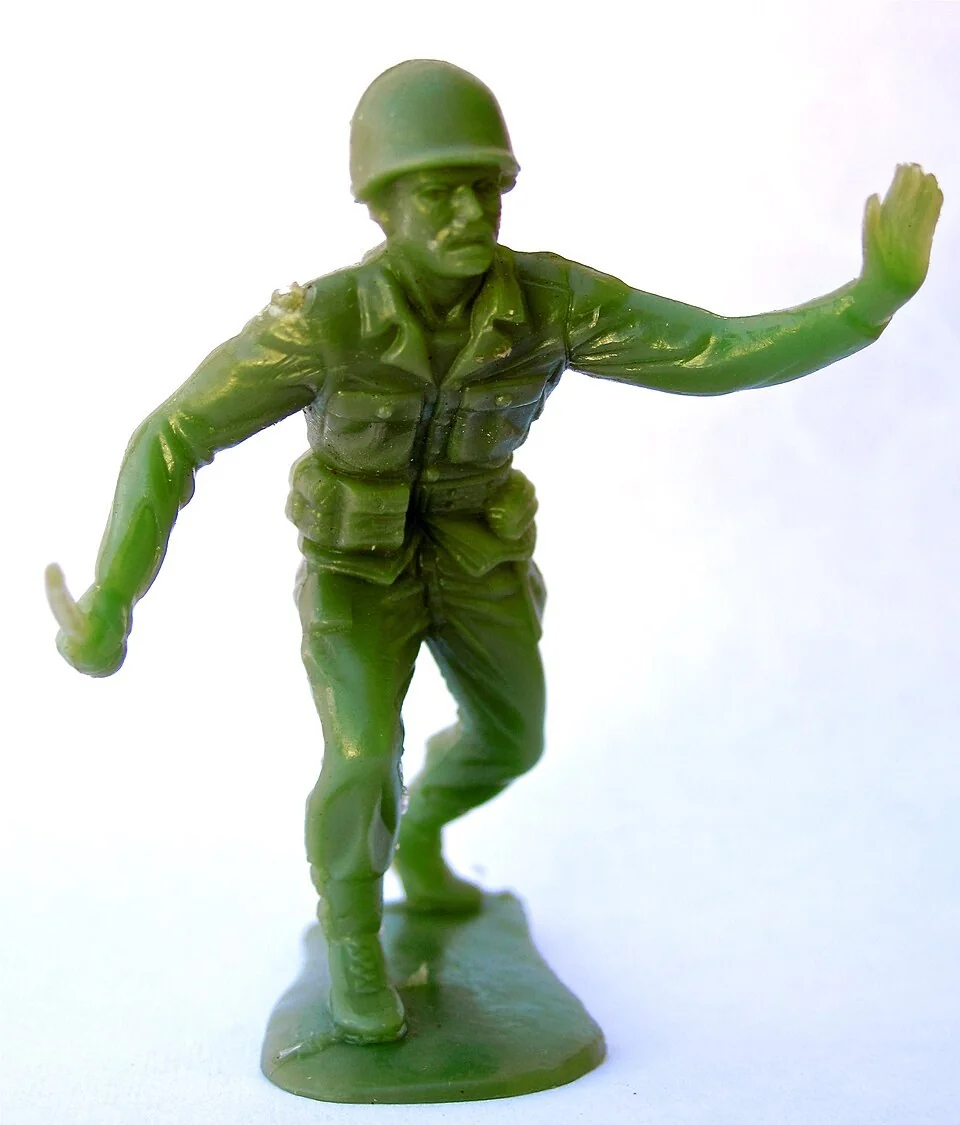
Plastic soldiers were cheap enough by the mid-1960s that Marx, Tim-Mee Toys and MPC sold them in big bags for as little as a penny apiece. The Strong says they cost ‘a pittance’ to make. That was the whole secret. The first American plastic toy soldiers came from the Bergen Toy and Novelty Company in 1938, and they caught on in earnest in the 1950s, when parents began to worry about children playing with soldiers made of lead.
Toy Story enlists a whole bucket. Sarge, voiced by R. Lee Ermey, commands the green troops in Andy’s room, and when Buzz goes out of the window he orders his men to ‘frag’ Woody, which they attempt with real enthusiasm before Andy walks in. In Toy Story 2 the soldiers dig through the toy chest for Woody’s lost hat and hold the bedroom door against Buster, who comes through it anyway, and at Al’s Toy Barn Mr. Potato Head plows a toy car into stacked buckets of them.
By Toy Story 3 only Sarge and two paratroopers are left. They run Operation Playtime, conclude that Andy has grown up and that it is time to go, and leave through the window, later landing at Sunnyside Daycare. Ermey, who died on April 15, 2018, never voiced Sarge again. In 2019 BMC Toys announced plastic army women, after a six-year-old girl wrote the company a letter. Few military reforms have had a younger correspondent.
Magic 8 Ball
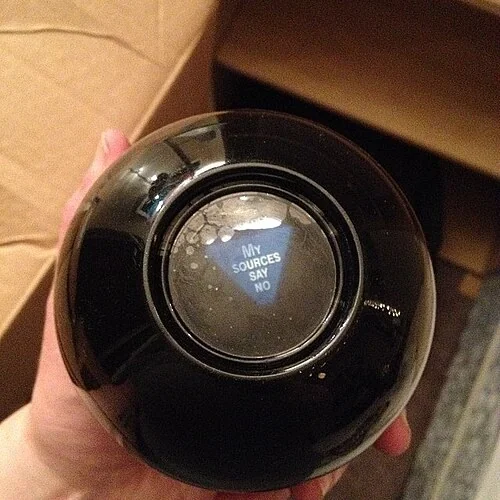
Before it told fortunes, the Magic 8 Ball held down paper. The Strong says Abe Bookman of the Alabe Crafts Company in Cincinnati introduced it in 1946 and only later noticed how much children liked it; another account credits Bookman together with Albert C. Carter, and points out that Alabe is simply Albert and Abe run together. Inside the black ball a 20-sided polyhedron floats in liquid, and whichever face drifts up to the window shows one of 20 answers to a yes-or-no question. Bookman sold the company to Ideal in 1971, Tyco bought the rights in 1987, and Mattel acquired Tyco in 1997, so the ball on Andy’s desk in 1995 was a Tyco product.
Toy Story gives it the job of starting the plot. Woody, already worried about Buzz, asks the 8 Ball whether Andy will take him to Pizza Planet, and it answers ‘Don’t count on it.’ He throws it away; it rolls behind the chest of drawers, and Woody, now thoroughly rattled, sets in motion the scheme that knocks Buzz out of the window.
The ball turns up once more in Toy Story 3, when Molly carries a box of toys out for Sunnyside Daycare and the 8 Ball tumbles out; Andy puts it back. Nobody consults it this time. It had caused enough trouble on its first outing.
Battleship
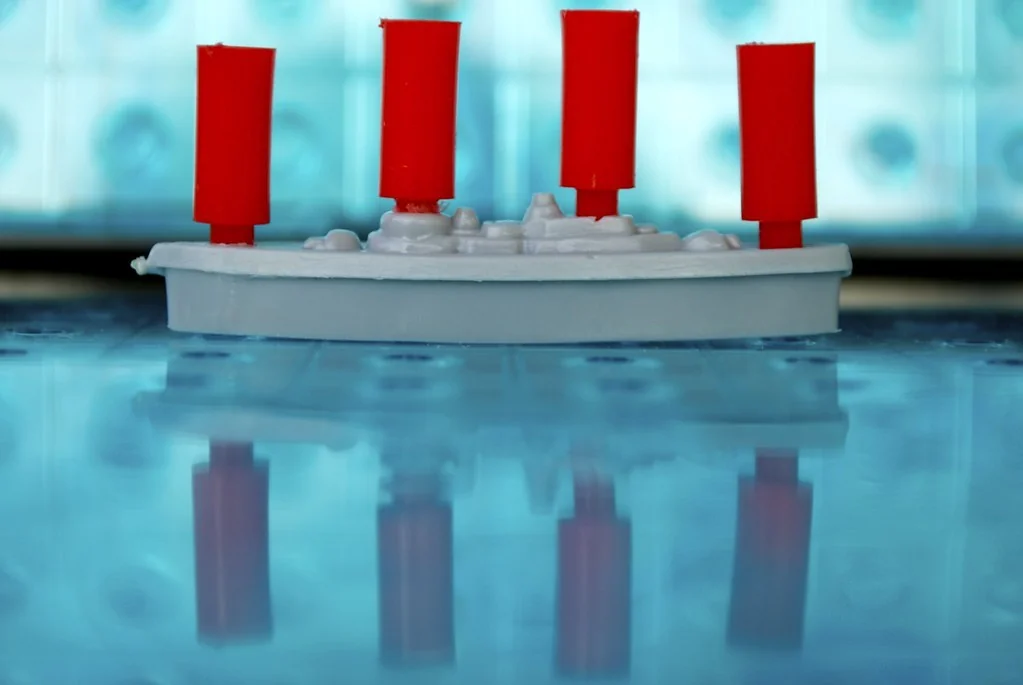
Milton Bradley sold a pencil-and-paper naval game called Broadsides: The Game of Naval Strategy in 1943, long before it published plastic Battleship in 1967. The idea was older still. The Starex Novelty Company had published a commercial version, Salvo, in 1931, with printed grids for plotting ships, and The Strong says Russian officers reportedly played something similar on hand-drawn grids around the time of the First World War. The plastic version added pegs, plastic ships and a fold-up lid that hides your fleet and doubles as the board for marking shots. The Strong puts sales at more than 100 million copies.
The original 1967 box showed a father and son at the game while a mother and daughter washed the dishes in the background, which The Strong describes, with some restraint, as reflective of stereotypical gender roles.
In Toy Story, Battleship is the last birthday present Sarge reports over the baby monitor, and the toys cheer, because a board game is not a space ranger. Later Hamm and Mr. Potato Head are in the middle of a game in Andy’s room when Woody calls to them from Sid’s window. Its name also turns up in the Hasbro trademark line at the end of Toy Story 4, a film in which nobody has spotted it. The game has fared worse elsewhere on screen; The Strong notes that the 2012 Universal Pictures movie called Battleship was based on it only very loosely.
Barbie
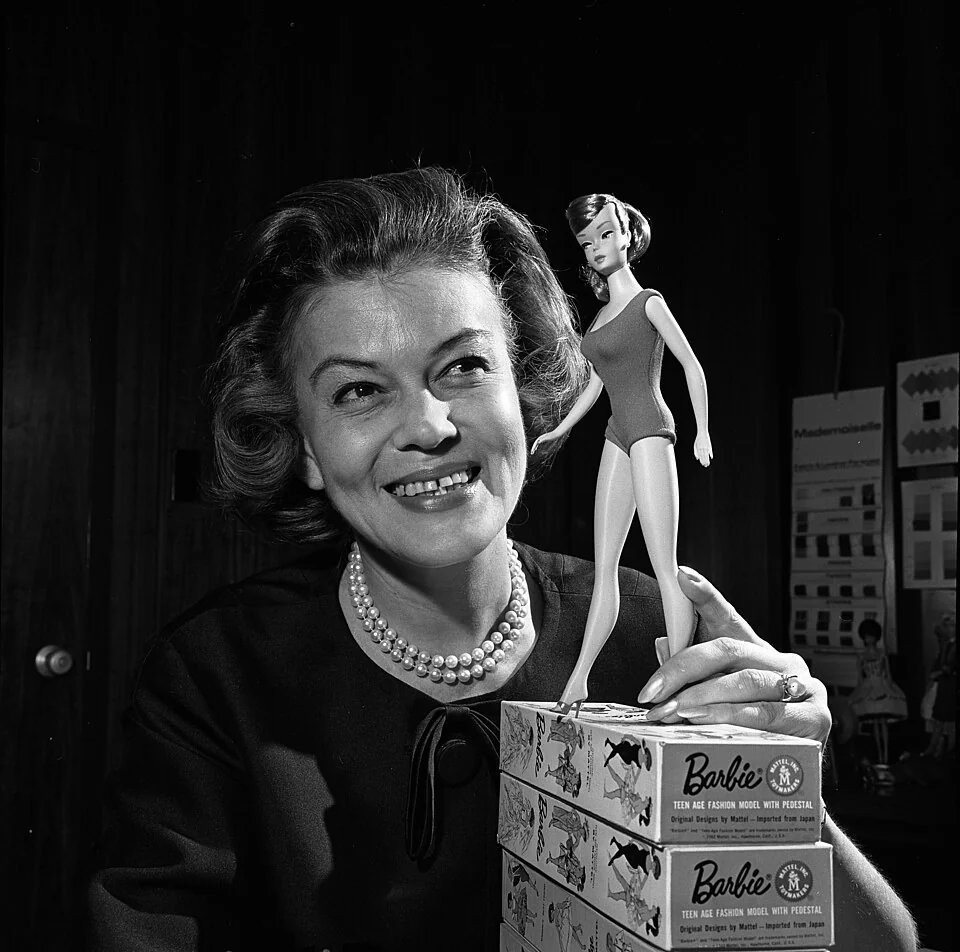
Ruth Handler, a co-founder of Mattel, watched her daughter Barbara play with paper dolls and decided that girls wanted a grown-up doll with a wardrobe. Barbie made her debut at the American International Toy Fair in New York on March 9, 1959. Within a year, The Strong says, she was the biggest-selling fashion doll of all time. The Strong counts more than 75 jobs in her career, among them dentist, paleontologist, Air Force fighter pilot and presidential candidate.
Having kept her out of the first Toy Story, Mattel changed its mind once the film was a hit, and Animation Magazine says the company was ‘all too happy to give Barbie her close-up’ in the sequel. In Toy Story 2 she is Tour Guide Barbie, voiced by Jodi Benson, who hops into the toys’ car at Al’s Toy Barn and drives them to Al’s office with a running commentary, including ‘Please keep your hands, arms and accessories inside the car, and no flash photography.’ Three of Molly’s Barbies sing backup for Wheezy at the end.
Toy Story 3 sends Molly’s Barbie to Sunnyside in the donation box, where she meets Ken, and the end credits carry the line ‘Barbie and Ken are registered trademarks of Mattel, Inc.’ Toy Story 4 gives her a silent cameo, launching Jessie off a catapult with two other Barbies in the rainy prologue. For a doll who was refused a part in the first film, she turned out to be easy to cast.
Lincoln Logs
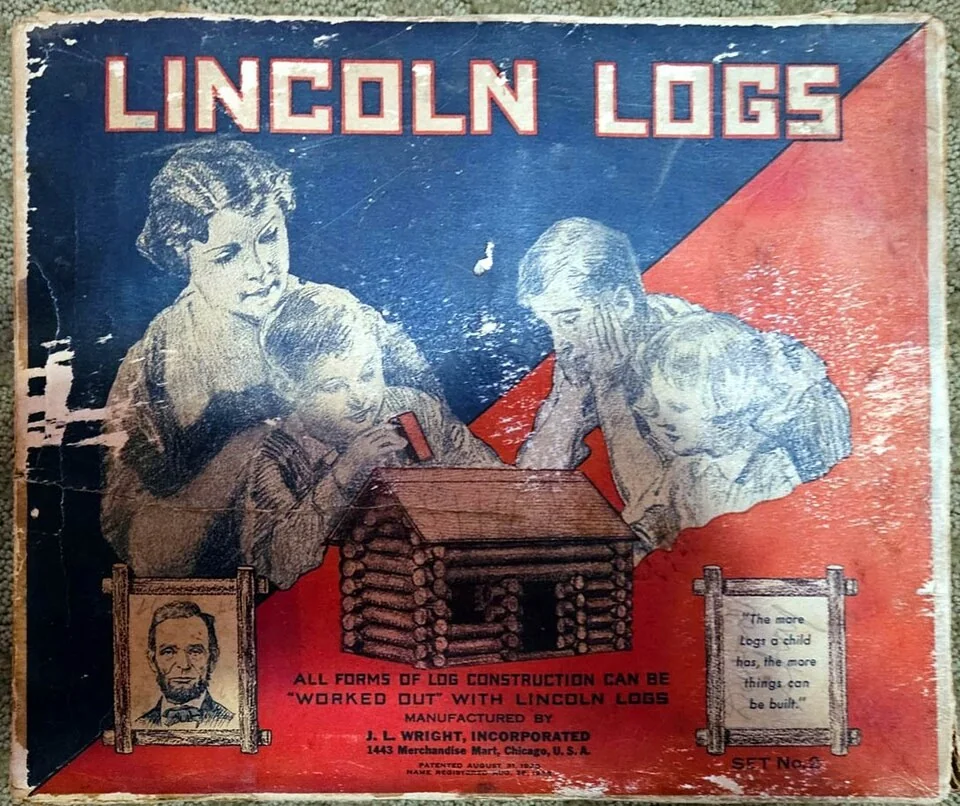
John Lloyd Wright got the idea for Lincoln Logs while watching workers put up one of his father Frank Lloyd Wright’s buildings, the earthquake-proof Imperial Hotel in Tokyo, which stood through the Great Kanto earthquake of 1923. The son named his toy after Abraham Lincoln’s log-cabin boyhood and, against the advice of advertisers, put almost nothing on the box but a drawing of a cabin, a small portrait of Lincoln and the slogan ‘Interesting playthings typifying the spirit of America.’ The Strong says the toy appeared in 1924; another account has the younger Wright inventing it around 1916 and receiving a patent on August 31, 1920. Either way, the hall inducted the toy in 1999.
The logs are notched at both ends so a child can build something that survives being played with, and The Strong says television advertising on shows like Davy Crockett gave sales an enormous lift in the early 1950s.
Toy Story 2 puts one of those cabins to the test. In Andy’s room a log cabin of notched round logs, with a green roof and a red chimney, stands with Mr. and Mrs. Potato Head inside it, frozen mid-embrace, when Buster charges through and knocks it flat. Plugged In’s review of the film calls it a Lincoln Log house and notes that the Potato Heads look surprised to be caught. No brand name appears on screen, but nobody who has built one would mistake it.
Jigsaw Puzzle
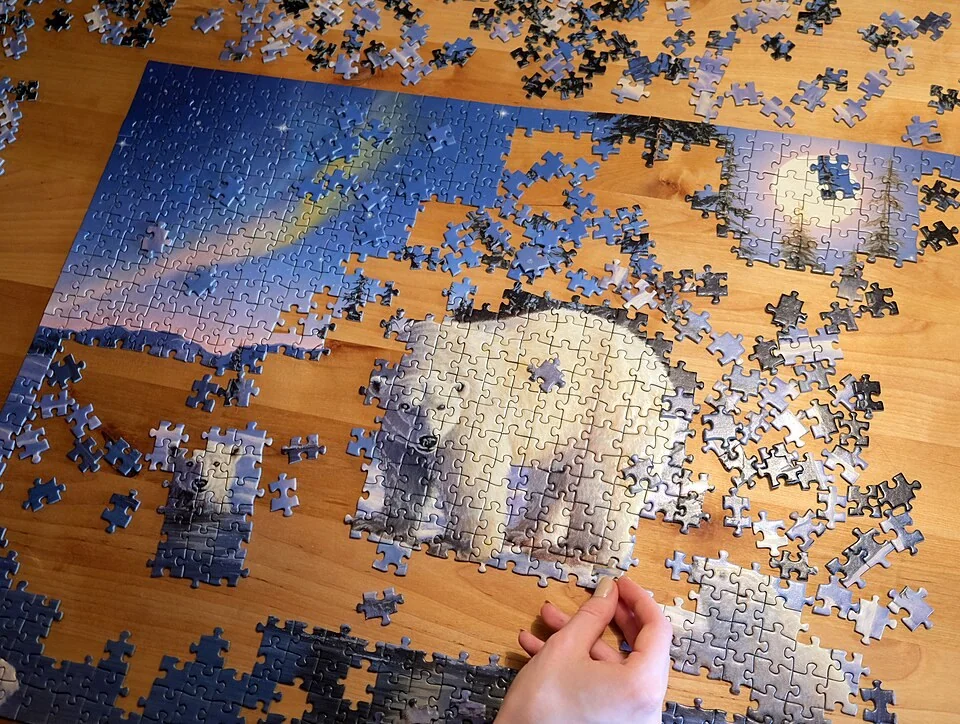
Around 1760 an English mapmaker named John Spilsbury pasted one of his maps to a board and cut around the borders of the countries, and The Strong counts the result as the first jigsaw puzzle. It was not called that. Spilsbury used a marquetry saw, and the word ‘jigsaw’ came later, from the tools that eventually did the cutting. The early puzzles were lessons more than games: British makers turned out puzzles to teach geography, history and Scripture, and Lady Charlotte Finch used dissected maps to teach the children of King George III.
The first American puzzles appeared around 1850, also maps cut from wood. Parker Brothers introduced Pastime Puzzles in 1908, with pieces cut as animals, letters and shapes, and the real boom came in the 1930s, when cheap die-cut cardboard puzzles were something families could afford even in the Depression. The Strong notes that in the 1920s a worker who cut 1,400 pieces a day for a week earned $16.
The puzzle’s Toy Story appearance is brief and does not involve anyone solving it. In the yard-sale sequence of Toy Story 2, Andy’s mom sweeps the room for things to sell, lifts Rex off a boxed puzzle he has been standing on, and drops the puzzle into the sale box; Pixar Wiki lists it as a jigsaw. Whether it is a jigsaw or a simpler child’s puzzle is hard to judge from the screen. The puzzle, in keeping with its nature, is not giving much away.
Playing Cards
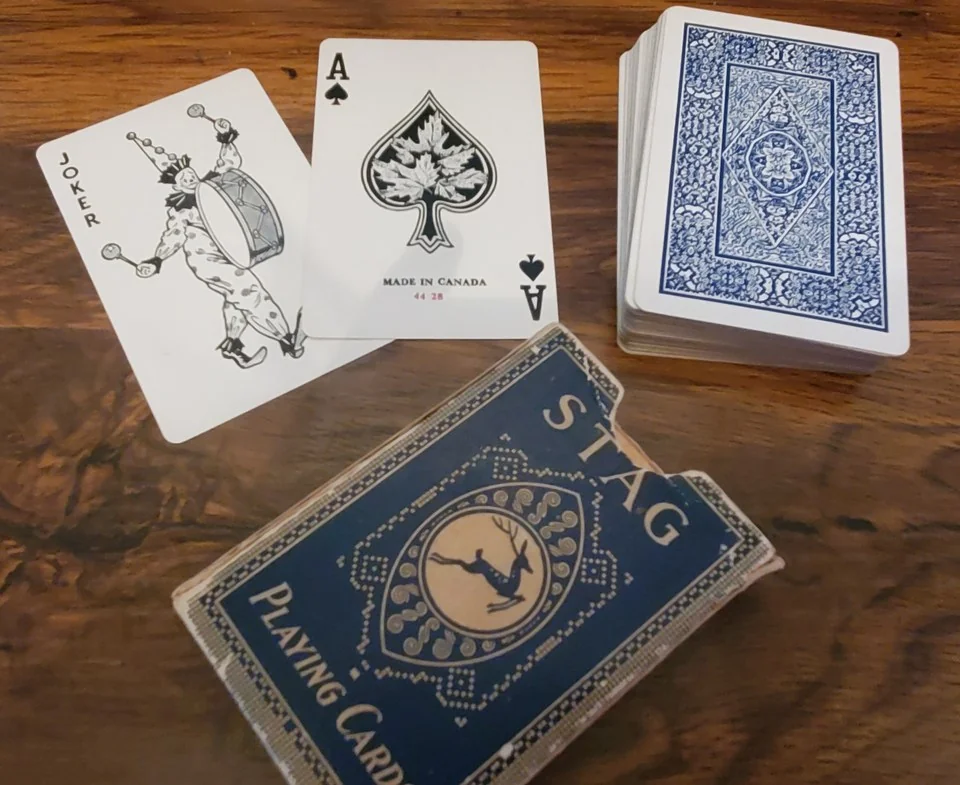
From 1712 every pack of playing cards sold in England had to carry a tax stamp, and the officials who ran the duty chose the ace of spades to bear the mark. From 1765 the Stamp Office printed the ace itself, complete with the royal coat of arms, and the duty was not abolished until August 1960. The most elaborate card in the pack was, in effect, a tax receipt. Cards themselves most likely began in Tang dynasty China around the 9th century, and The Strong argues that they allow for more games than any other single gaming device.
Toy Story 2 opens its account of cards with a game on the floor of Andy’s room, which breaks up when Woody announces that Andy is back early from cowboy camp. In Woody’s nightmare, Andy drops him onto a deck of cards and he falls through it into the dark and lands in a trash can, and Pixar Wiki notes that the cards are all aces of spades.
Toy Story 4 brings the deck back as a quieter joke. Stashed in Bonnie’s closet, Woody passes the time playing solitaire with a stray deck, and Pixar Wiki reads the deck as a nod to the nightmare in the second film. In Toy Story 2 the cards are a bottomless pit. In Toy Story 4 they are something to do while nobody is playing with you, which is arguably worse.
Bubbles
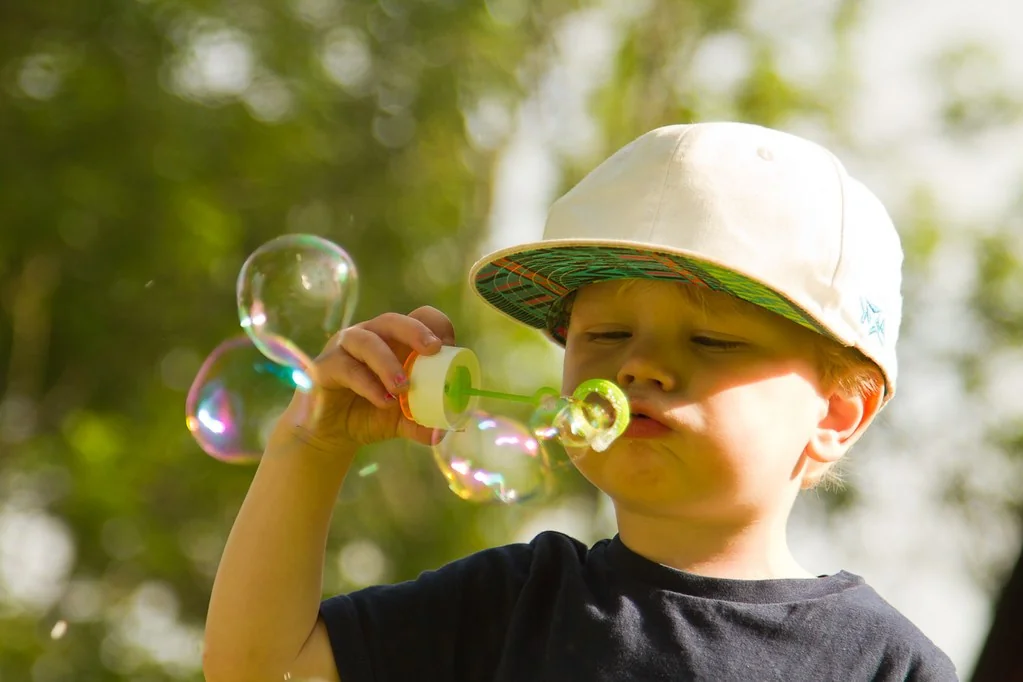
A. and F. Pears of London built a famous 19th-century soap campaign on a painting by John Everett Millais of a child blowing bubbles. The picture, painted in 1886 and first titled A Child’s World, was bought by the firm’s managing director, Thomas J. Barratt, for 2,200 pounds. The model was Millais’s five-year-old grandson, William Milbourne James, who grew up to be an admiral in the Royal Navy and was known as ‘Bubbles’ for the rest of his life. It is a heavy thing for an admiral to carry.
The Strong inducted bubbles in 2014, and its entry lists bubble machines among the modern ways of making them, along with bubble guns and bubble rockets. Retailers, it says, sell about 200 million bottles of bubble solution a year, despite the fact that dish soap and water do much the same job.
In Toy Story 2 the bubbles come out of Woody’s own face. In Al’s apartment Woody discovers the Woody’s Roundup merchandise made in his likeness, including, as Pixar Wiki describes it, a bubble-blower with his face and a push-down hat. He pushes the hat, bubbles fill the room, Jessie and the Prospector laugh, and Bullseye snaps at them. The machine is fictional Roundup merchandise rather than a real brand, but the bubbles are as real as animated bubbles get. Woody, for his part, seems pleased.
Puppet
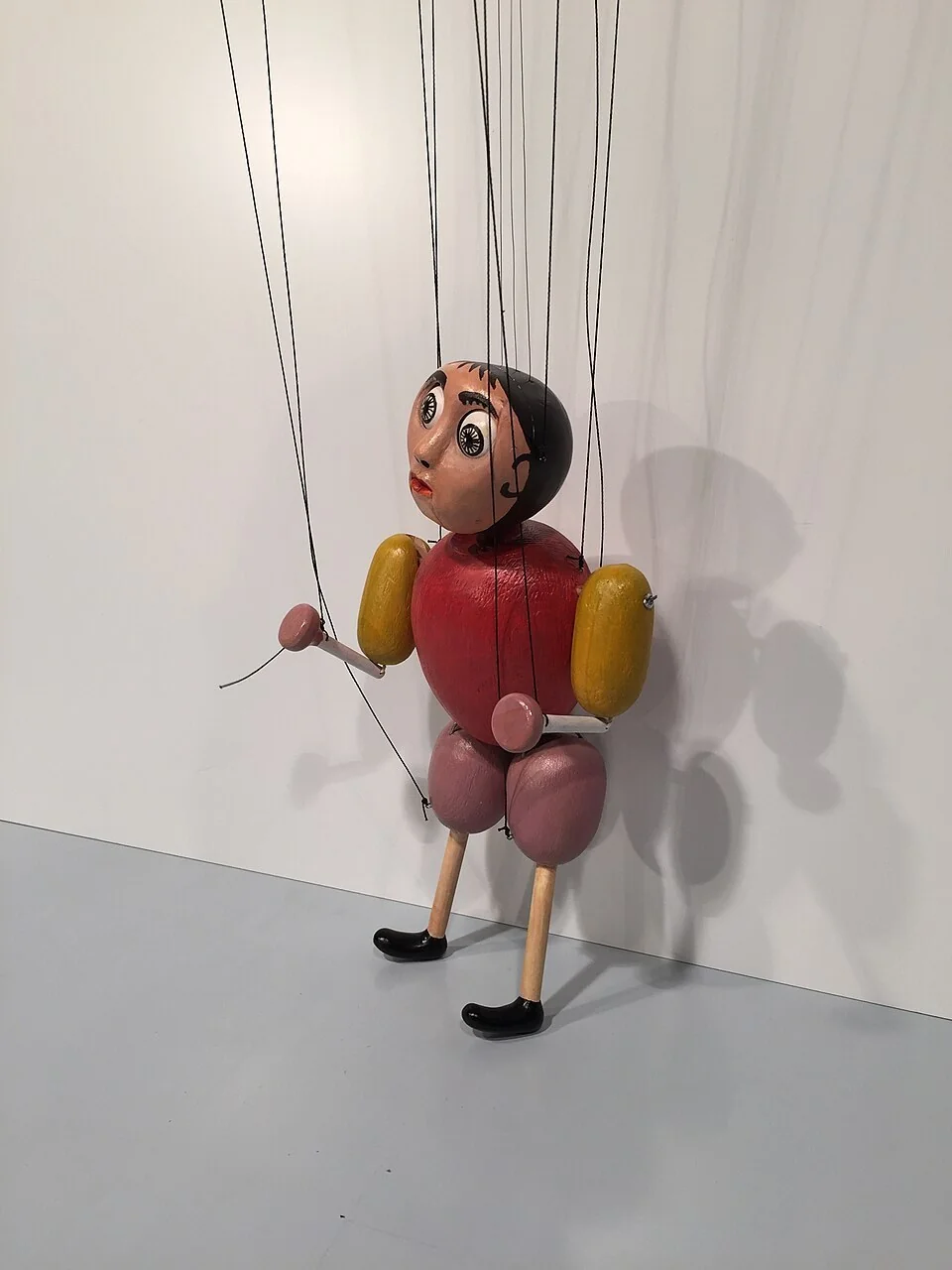
Woody started out as a ventriloquist’s dummy. In early drafts of Toy Story he was an evil dummy and the film’s main villain, bullying the other toys, and by one account the dummy features were deleted because the character looked ‘sneaky and mean.’ The Guardian, describing a sculpture of the early ‘evil Woody’ in Pixar’s archive, noted that he kept a puppet-style chin from that first incarnation. The rest of him became a cowboy.
Puppets get their revenge in the sequel. Pixar’s own page for Toy Story 2 says the team ‘envisioned Woody’s Roundup in the primitive marionette format of the day,’ and the black-and-white clips Woody watches in Al’s apartment show himself, Jessie, Stinky Pete and Bullseye as marionettes in a 1950s children’s western. Its supporting characters drew on real cowboy and puppet shows such as Howdy Doody, which ran on NBC from December 27, 1947 to September 24, 1960. The Strong’s own entry on puppets runs from Charlie McCarthy to Lamb Chop, so ventriloquist figures count.
Toy Story 4 brings the dummies back as a menace. The Bensons are Gabby Gabby’s silent henchmen at Second Chance Antiques, and Disney’s press kit describes their leader, Benson, as ‘a classic, antique ventriloquist dummy’ whose silent squad patrols the store ‘with a looming quietness that is inherently unsettling.’ The credits list Benson as played by Steve Purcell. The Bensons spend much of the film trying to take Woody’s voice box. Given where he started, Woody might have seen it coming.
Swing
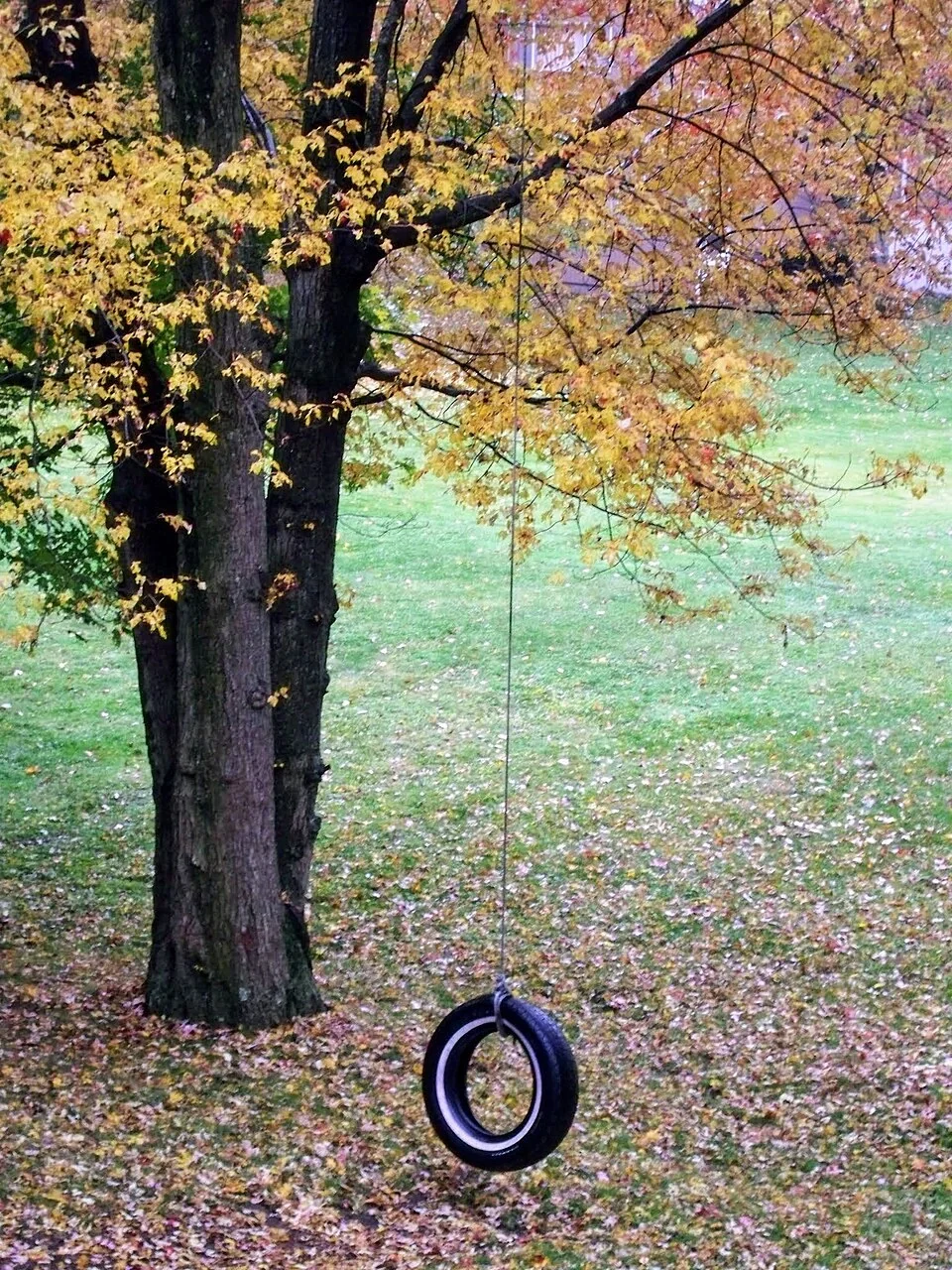
Jason Katz, a story supervisor at Pixar, has explained where Emily’s tire swing came from. A Bug’s Life and Toy Story 2 were in production at the same time, and when the Toy Story 2 team decided on a flashback to Jessie’s first owner, ‘someone suggested we use the ant colony’s tree, but add a tire swing for the characters to play on.’ The tree in ‘When She Loved Me,’ where Emily spins Jessie on the tire, came straight from Ant Island.
Nobody knows who invented the swing, by The Strong’s account. Swinging appears on an Attic red-figure amphora of about 525 BC, and Fragonard painted French nobility at it in 1767. The hall inducted the swing in 2016.
The films keep coming back to it. In Toy Story 3, Big Baby sits rocking slowly on a playground swing at Sunnyside, gazing at the night sky, while Woody and the Aliens try to sneak past. And Toy Story 5 returns to the tire-swing tree itself, now at Emily’s old ranch, where Jessie finds ‘Jessie was here’ carved in the trunk and digs up a lunchbox of keepsakes, including a photo of the grown-up Emily with a daughter of her own named Jessie. Katz described the place as the spot where Jessie and Emily played together. ‘It was also the place where Jessie had to watch Emily drive away forever.’
Marbles
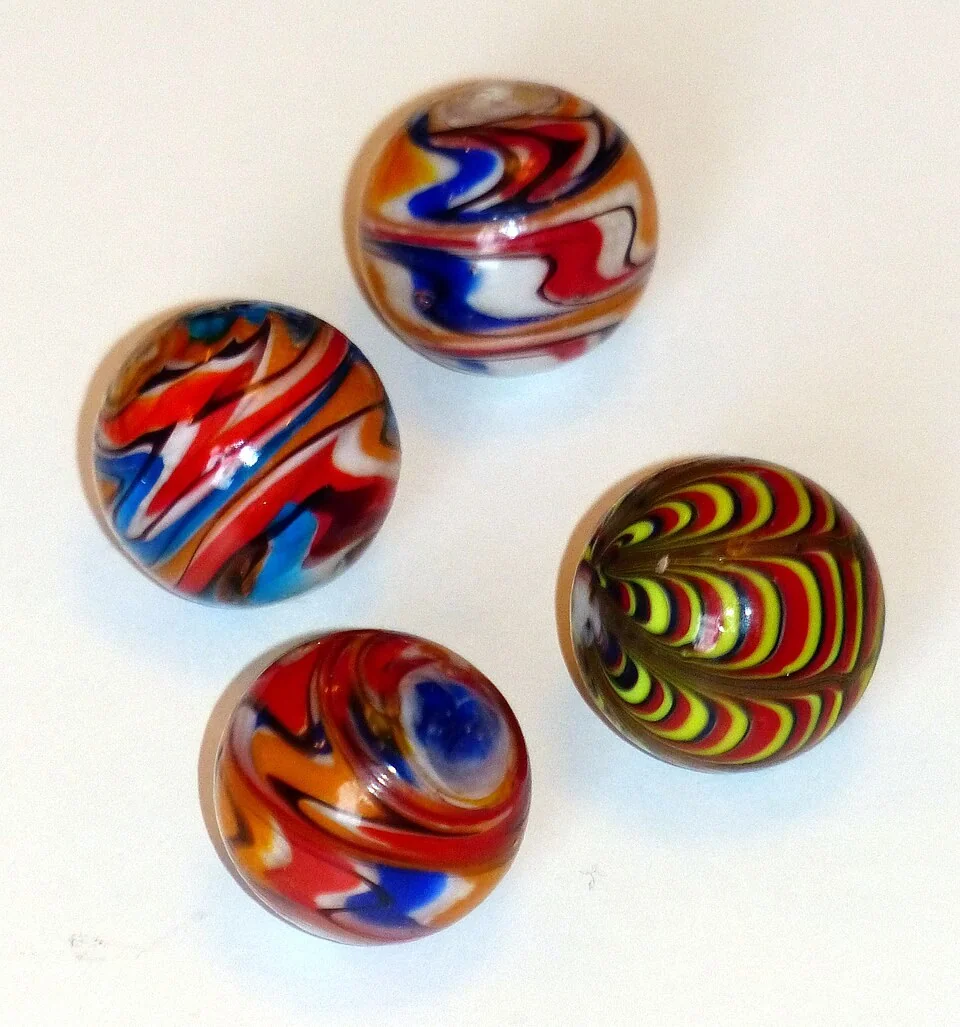
Children who lost at marbles, The Strong notes, lost their marbles, and parents frowned on the games of chance that made the phrase. The toy is ancient. Small stone balls found near Mohenjo-daro in the Indus Valley, from about 2500 BCE, have been identified as marbles, and the Egyptians, Greeks and Romans played with marbles of stone or polished nuts. For centuries the cheap ones were clay ‘commoneys’ and the good shooters were alabaster ‘alley taws.’
Glass marbles were a luxury until 1846, when a German glassblower invented a pair of scissors for cutting molten glass, which made them affordable for the first time. In 1903 Martin Christensen of Akron, Ohio, made the first machine-made glass marbles. The hall inducted marbles in its charter class of 1998.
Their one part in the Toy Story films is a practical one. During a night scene in a Sunnyside playroom in Toy Story 3, Woody grabs a mesh bag of glass marbles, takes hold of a clothesline and jumps, using the bag’s weight to lower himself to the floor. He drops the bag, grabs Slinky, and is hoisted back up toward the ceiling. The finished film shows the bag clearly, and the shooting script describes the same move. Nobody plays a game with them. In their only appearance in the series, the marbles are ballast, and they are let go the moment the job is done.
Kite
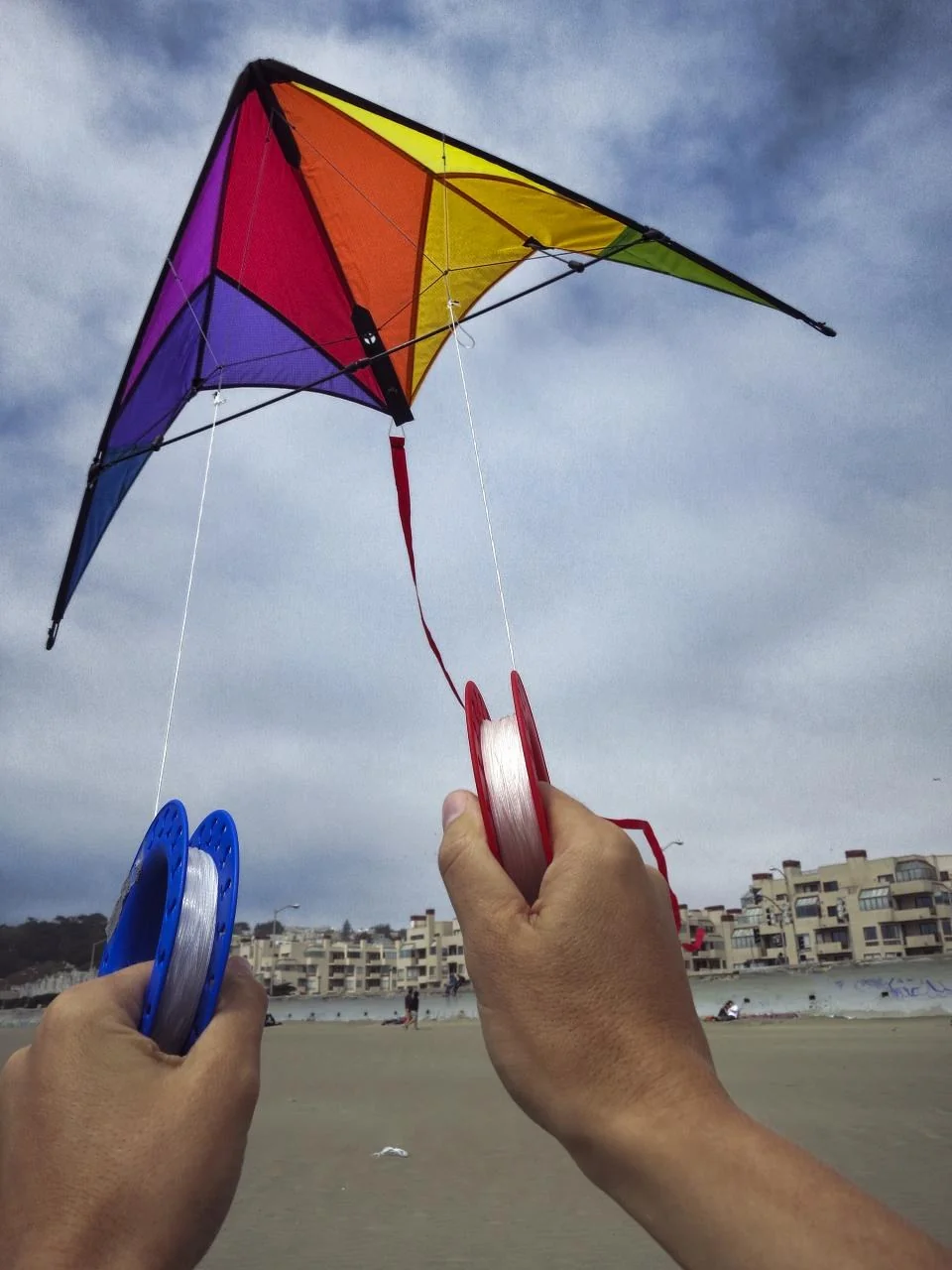
Toy Story 5 opens with a peanut taped to a kite. The peanut is Dr. Nutcase, a tiny plastic luchador who is terrified of modern technology, and D23 describes how Woody, Bo Peep and the toy-rescue squad discover him ‘taped to an abandoned kite stuck in a tree.’ A squirrel is closing in. Woody catches him on a count of three, and the film’s argument about toys versus screens is under way before the title.
Kites took their name from the kite, a hovering bird of prey, and The Strong says that, according to tradition, kites of silk and bamboo first appeared in China some 3,000 years ago. The earliest written account the museum cites, from about 200 BC, has a Chinese general flying a kite to work out how far his troops needed to tunnel under a city’s walls. Benjamin Franklin published his own kite experiment, the one with the lightning, in 1752. The hall inducted the kite in 2007.
The series had already used one. In Toy Story 3 Woody escapes from Sunnyside by the roof: his hat blows off and lands beside a kite, which he uses to glide over the playground and the wall. Then an updraft yanks him into the sky, the kite’s bar snaps, and he crashes into a tree, where Bonnie finds him. Both kites in the series end up in trees. That is where real kites end up too, so on this point at least the films are rigorously accurate.
Dollhouse
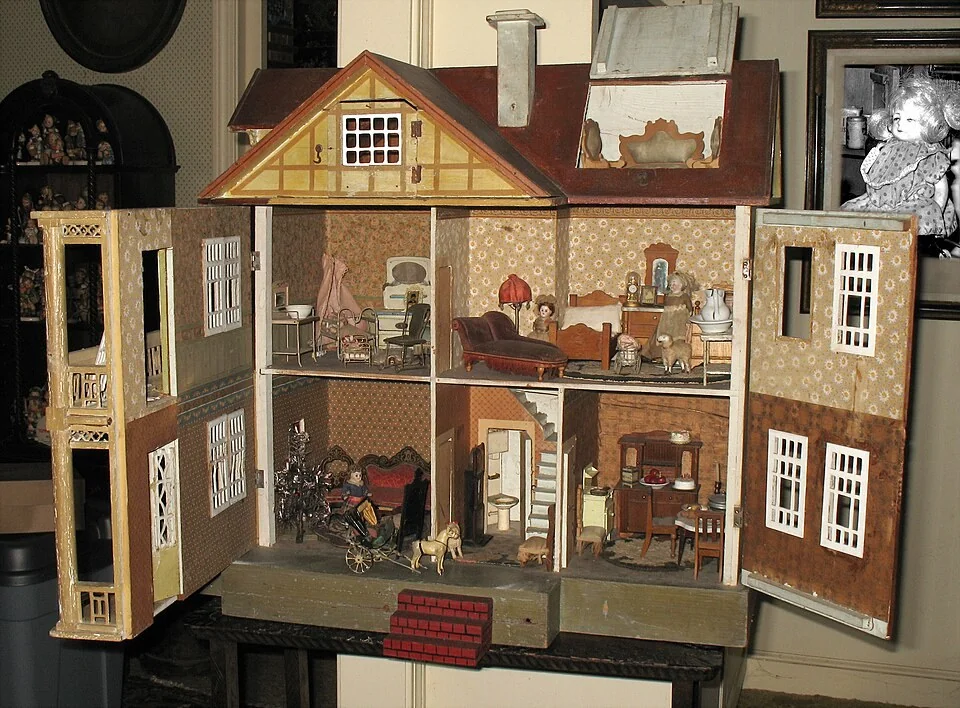
Ken lives at Sunnyside Daycare in his Dream House, a yellow dollhouse three stories tall with an elevator and a large wardrobe room. He rides the elevator down to greet Andy’s toys when they arrive in Toy Story 3, and when he shows Barbie around he lists the attractions himself: ‘It has a disco, it’s got a dune buggy, and a whole room just for trying on clothes.’ Barbie tells him he has everything. ‘Everything… except someone to share it with,’ says Ken.
The hall inducted the dollhouse in 2011 as a category. Its ancestor was the baby house, and the earliest one on record was commissioned in 1557 and 1558 by Albrecht V, Duke of Bavaria; The Strong says such houses began as display cabinets for wealthy Europeans and only later became playthings for children.
Ken’s house is the setting for some of the most involved scenes in the film. It hosts his fashion show for Barbie, set to Chic’s ‘Le Freak,’ and it is where she turns the tables and interrogates him about Lotso. By the end credits she appears to have moved in, and she rides the elevator down to join him at the Sunnyside disco. Nothing on screen marks it as a Mattel product: the house carries a ‘K’ monogram over the porch, and the film’s credits name Barbie and Ken as Mattel trademarks but not the house. It is, plainly, Ken’s. He would want that made clear.
Fisher-Price Little People
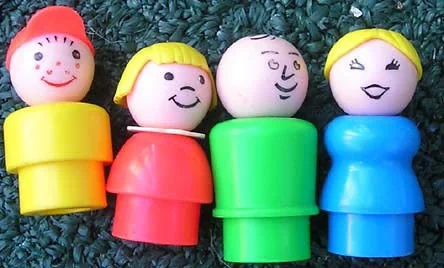
Zurg arrives at Sunnyside Daycare in a donation box during the end credits of Toy Story 3, and he does not travel alone. Pixar Wiki lists his fellow passengers as a dinosaur, a giraffe plush and two Fisher-Price Little People, and a frame of the shot shows the pair on the rim of the box, one in a red cap and one in a cowboy hat, before Stretch helps Zurg down to the floor. No logo is legible on the little figures, but the shape is unmistakable, and the film’s credits cite Mattel’s permission for ‘Fisher-Price and Mattel toys.’
Fisher-Price first offered Little People in 1959 with the Safety School Bus, a pull toy with six independent peg figures made of wood and lithographed paper. The Strong reports that more than two billion have since been sold in 60 countries. In 1991 the company introduced bigger, chunkier figures after concerns that the small ones were a choking hazard, and in 1993 Fisher-Price became part of Mattel in a deal worth $1 billion. The hall inducted the Little People in 2016.
In Toy Story 4 the name turns up only in the credits, among Mattel’s registered trademarks. That leaves the Toy Story 3 cameo, which suits them. The Strong calls Little People ‘a fixture – albeit a small one – in many American playrooms for more than 50 years.’ A cameo in a box is about the right scale.
Sand
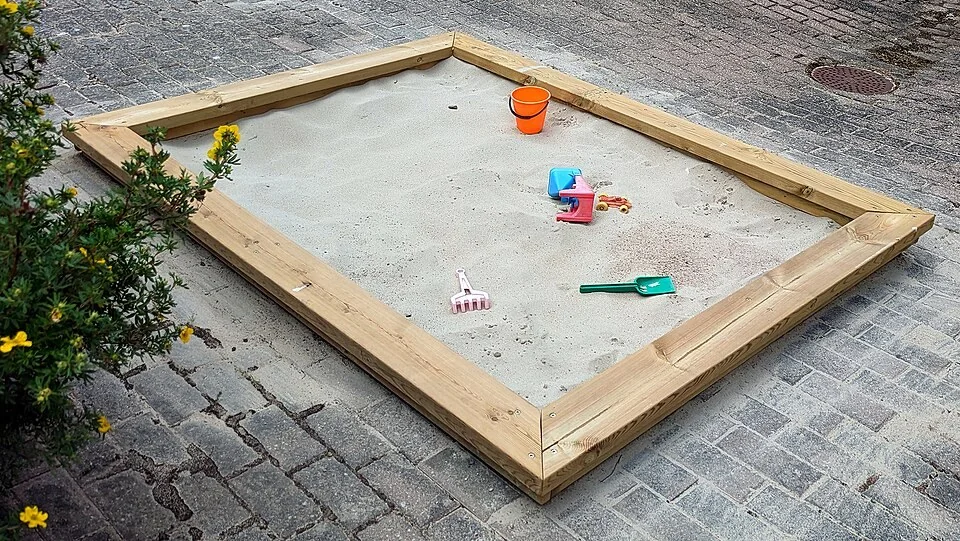
According to The Strong, ‘Sand may be the most universal toy in the world,’ and in 2021 the hall inducted it, from a field of finalists that included Cabbage Patch Kids, the Fisher-Price Corn Popper and Battleship. That year the hall received 55,000 nominations for 940 different toys, a record. Sand had a head start: in 1885 a charitable group in Boston piled sand in a chapel yard for children to dig in, and The Strong credits these sand gardens with launching the playground movement in America.
At Sunnyside Daycare in Toy Story 3, the sandbox is a prison. Lotso’s regime calls it ‘the box,’ and a night in it is the punishment for breaking his rules. Big Baby carries Mr. Potato Head out to the playground and tosses him in, and in the morning he comes back covered in sand. ‘It was cold and dark,’ he reports. ‘Nothing but sand and a couple of Lincoln Logs.’ Hamm, more experienced in these matters, replies: ‘I don’t think those were Lincoln Logs.’ Later, Mr. Potato Head goes back in the box a second time as part of the escape plan.
Once Lotso is gone, the end credits turn the same box into a beach, with toys sunbathing, playing volleyball and building sandcastles; Big Baby’s collapses, and he wails until Barbie offers him his bottle. The box serves the film as both a jail and a holiday resort. Sand, it turns out, is good at both.
Fisher-Price Corn Popper
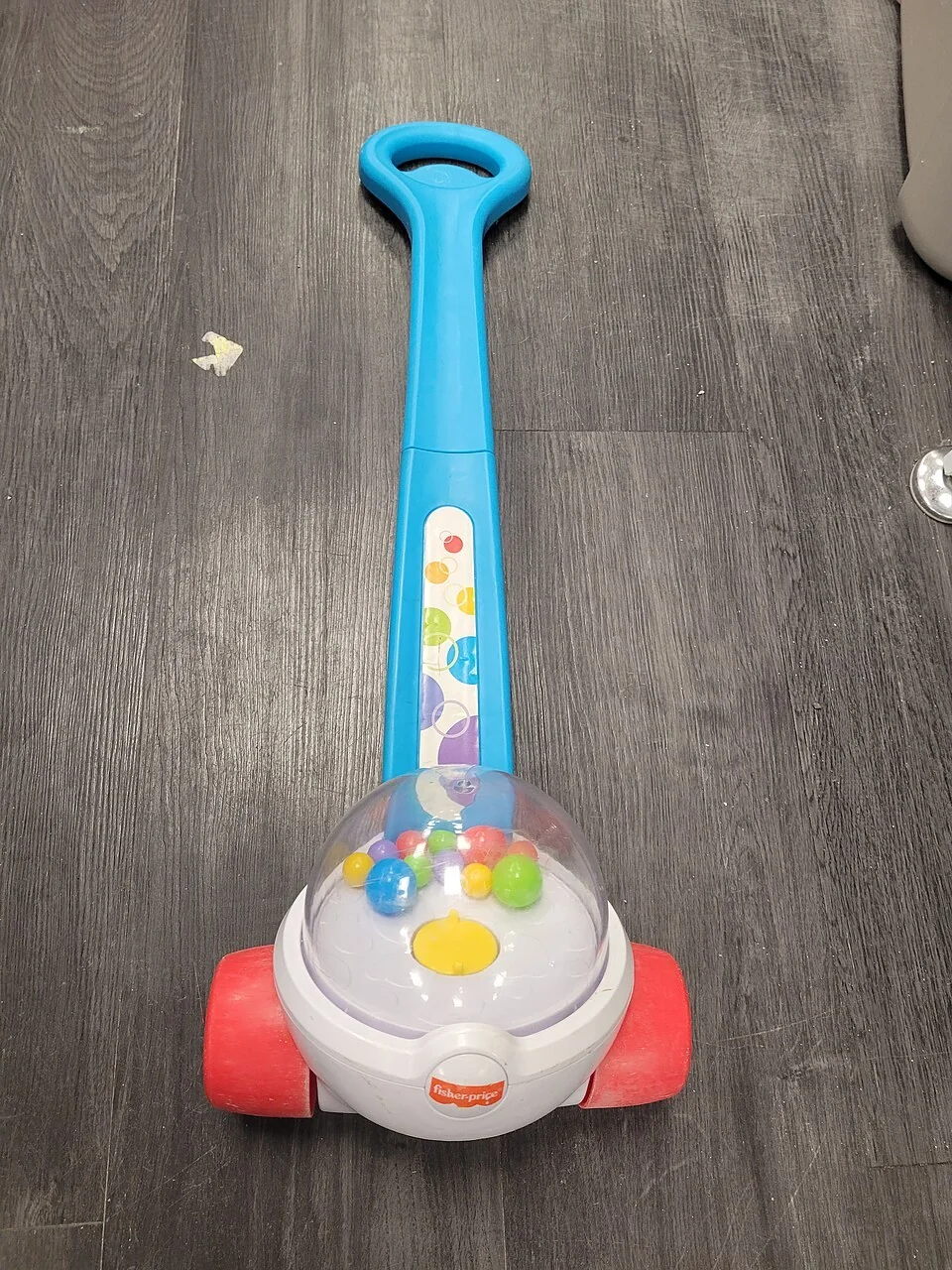
Arthur Holt sold the design for the Corn Popper to Fisher-Price in 1957 for $50. The push toy, with its plastic dome full of balls that pop and clatter as a toddler walks it along, made Time’s list of the greatest toys, though Time concedes that it is also one of the most irritating. Holt had other inventions to his name; when he died, NPR credited him with the method all VCRs used to store information on tape.
The Corn Popper was a finalist in 2021 and lost, to sand among others. Two years later, for the hall’s 25th anniversary, the public was given a vote among five long-time finalists, and the Corn Popper won the special fourth place in the class of 2023.
In Toy Story 3 it gets two scenes at Sunnyside. During the toddlers’ playtime in the Caterpillar Room, Bullseye is dragged along on a Corn Popper, gets caught in a wheel and is thrown off. That night, when Andy’s toys plot their escape, they gather around the same popper, and in that shot the Fisher-Price name is legible on the toy; the screenplay has them use it to launch Buzz. Few toys throw a horse by day and host an escape meeting by night. Holt, by then, had been paid his $50.
Star Wars Action Figures
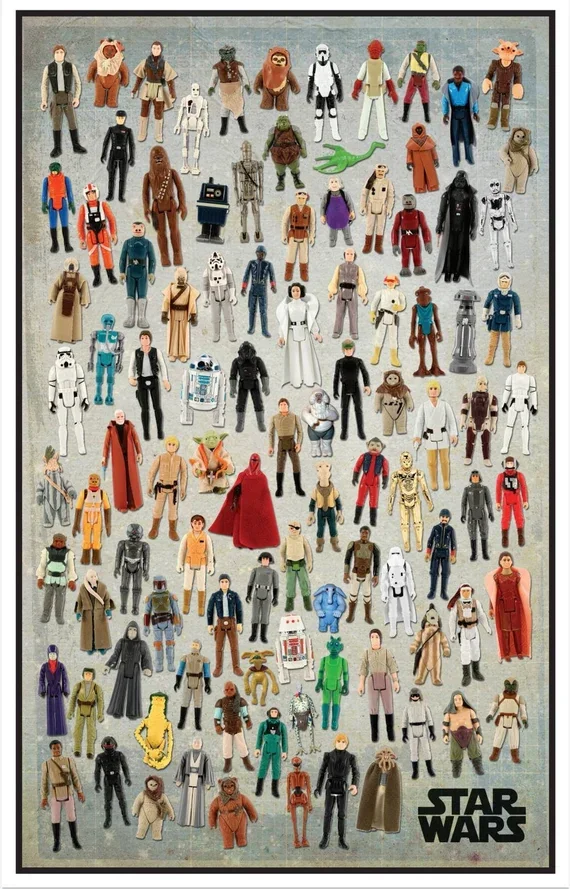
Disney’s own guide to the Easter eggs in Toy Story 4 tells viewers to ‘keep an eye out for two retro Kenner Star Wars action figures in the background.’ The figures are Obi-Wan Kenobi and Ponda Baba, the latter ‘then known as Walrus Man,’ as Disney helpfully adds, which is the name Kenner put on him in 1978. They stand inside the Tiki Party pinball machine at Second Chance Antiques, where Woody and Bo Peep pass them on the way to the lost toys’ nightclub, and they are posed reenacting the moment in the cantina when Obi-Wan cuts off Ponda Baba’s arm. Pixar Wiki notes that the Wilhelm scream plays as the arm comes off.
The Strong inducted Kenner’s figures in 2012. Its entry says the 1970s oil shortage prompted Kenner to make them smaller than competing toys such as G.I. Joe, which is how the 3.75-inch scale came about. Mego, the leading action-figure maker of the day, had turned the license down in 1976, and Kenner, unable to meet demand for Christmas 1977, sold an Early Bird Certificate Package instead: a promise of four figures by mail.
Kenner went on to release 96 figures between 1978 and 1985 and sold more than 300 million. In Toy Story 4, two of them get a few seconds and a famous scream. Disney’s guide is right to say they are in the background. It is, however, the most carefully staged background in the antique store.
Pinball
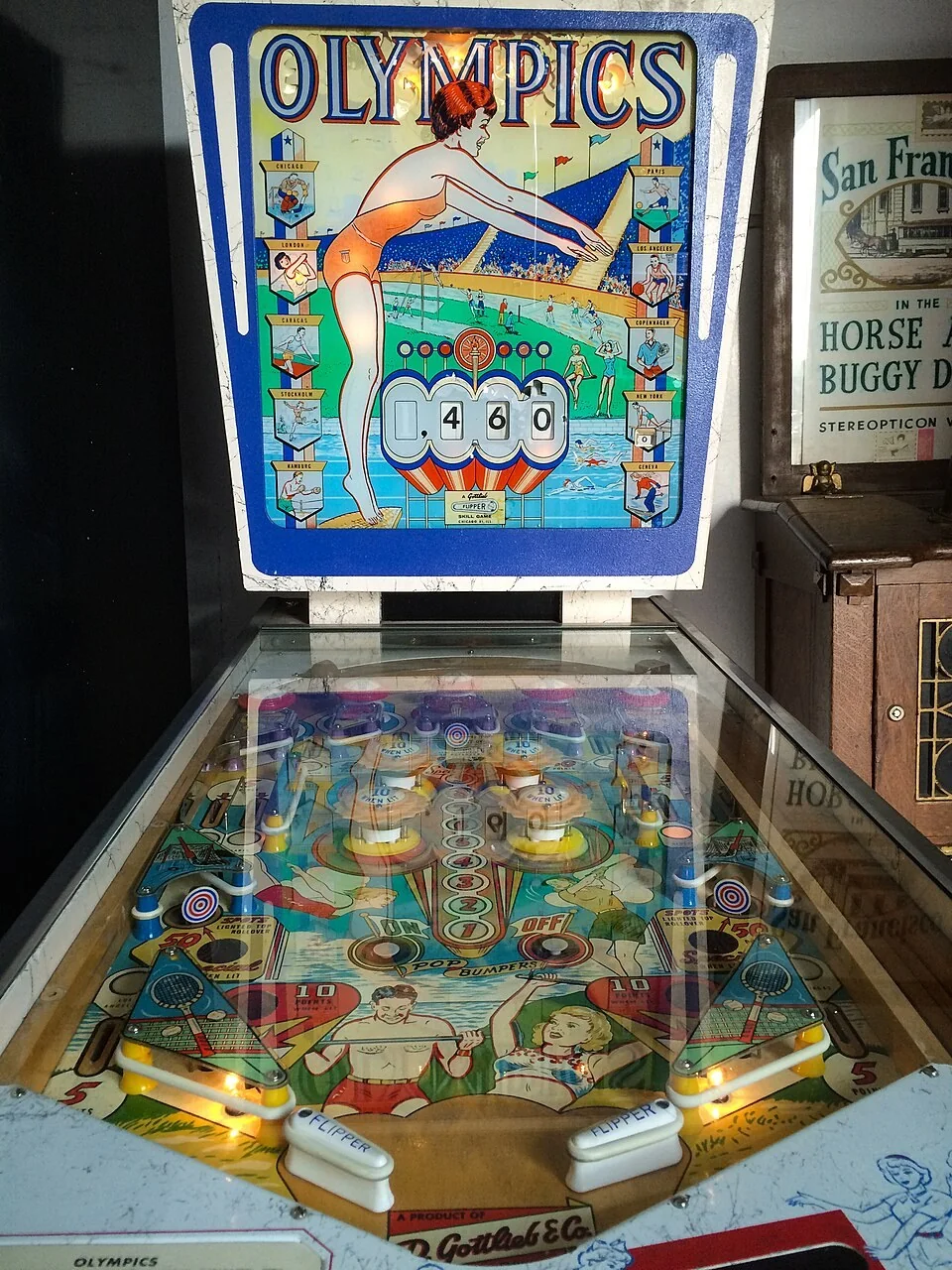
Fiorello La Guardia thought pinball robbed schoolchildren of their nickels and dimes, and on January 21, 1942, the New York City Council approved his ban. Police confiscated some 2,000 machines, and the mayor and his officers smashed them with sledgehammers before barges dumped them in the rivers. The ban held until April 2, 1976, when Roger Sharpe stood in the Council chambers, called his shot, and sent the ball exactly where he said it would go. The Council voted unanimously to lift the ban. The game had changed since the ban began; Gottlieb’s Humpty Dumpty had added flippers in 1947, turning a game of chance into one of skill.
Nintendo, for its part, put a Pinball cartridge among the games that launched the NES in its New York test market on October 18, 1985. The hall inducted pinball in 2018.
Toy Story 4 makes a pinball machine into a hideout. At Second Chance Antiques, Bo Peep leads Woody to a vintage machine whose coin door is opened by Tinny, the one-man-band toy, acting as bouncer, and inside, IndieWire reports, is ‘a secret nightclub inside a pinball machine,’ where the two recruit the Canadian daredevil Duke Caboom. Disney calls it the Tiki Party pinball machine hideout. It is a lost toys’ club housed in a machine New York once threw in the river, and for those inside it the arrangement seems to work.
Frequently Asked Questions
Which National Toy Hall of Fame toys appear in all five Toy Story movies?
Mr. Potato Head and the Slinky, as Slinky Dog, are the only inductees that appear in all five Toy Story films, from the original in 1995 to Toy Story 5 in 2026. Five more appear in three films each: the ball, the cardboard box, the little green army men, Barbie and the swing.
Why isn’t G.I. Joe in Toy Story?
Hasbro refused to license G.I. Joe for the first Toy Story largely because Sid was going to blow one up, so Pixar invented a stand-in called Combat Carl, though Hasbro did agree to Mr. Potato Head. Combat Carl stuck: three Combat Carl Jr. figures appear in Toy Story 4, and Ernie Hudson voices him in Toy Story 5.
Which Toy Story movie has the most Hall of Fame toys?
The original Toy Story (1995) has the most, with 21 of the inductees on this list in roles that count. Toy Story 3 is next with 17, then Toy Story 2 with 15, Toy Story 4 with eight and Toy Story 5 with four: Mr. Potato Head, Slinky Dog, the tire swing and a kite.
Are Woody and Buzz Lightyear in the National Toy Hall of Fame?
No. Through the class of 2025, neither Woody nor Buzz Lightyear had been inducted, nor had any other toy created for the films. Ken, a star of Toy Story 3, came close: he was one of 12 finalists in 2023, the year of the Barbie movie, and was not chosen.
Which famous Hall of Fame toys don’t count?
Several come close. Ken’s gang bets with Monopoly-style play money in Toy Story 3, the Cleaner opens a drawer of chess pieces in Toy Story 2, and Twister and Clue are credited in Toy Story 4 without a scene anyone has found. The crayons in the films are never identifiably Crayola, and Woody’s yo-yo is Roundup merchandise, not a Duncan.
What is the most recently inducted toy in the Toy Story movies?
Battleship, inducted in 2025 alongside Slime and Trivial Pursuit, is the most recent inductee on this list as of the class of 2025. It was in the movies long before the hall noticed it: Hamm and Mr. Potato Head play it in Toy Story in 1995, 30 years before its induction.
Sources
- The Strong National Museum of Play: National Toy Hall of Fame FAQs
- The Strong National Museum of Play: 2025 Toy Hall of Fame Inductees Revealed
- National Park Service: The Story of the Teddy Bear
- Disney News: Four Fun Facts From Toy Story 4
- D23: Meet the Characters of Disney and Pixar’s Toy Story 5
- AMC Filmsite: Toy Story (1995)
- NPR: Inventor of the Corn Popper and VCR tape method
- Pixar Wiki: Sunnyside Daycare