
Every Species and Scientific Name Taken From Pokemon
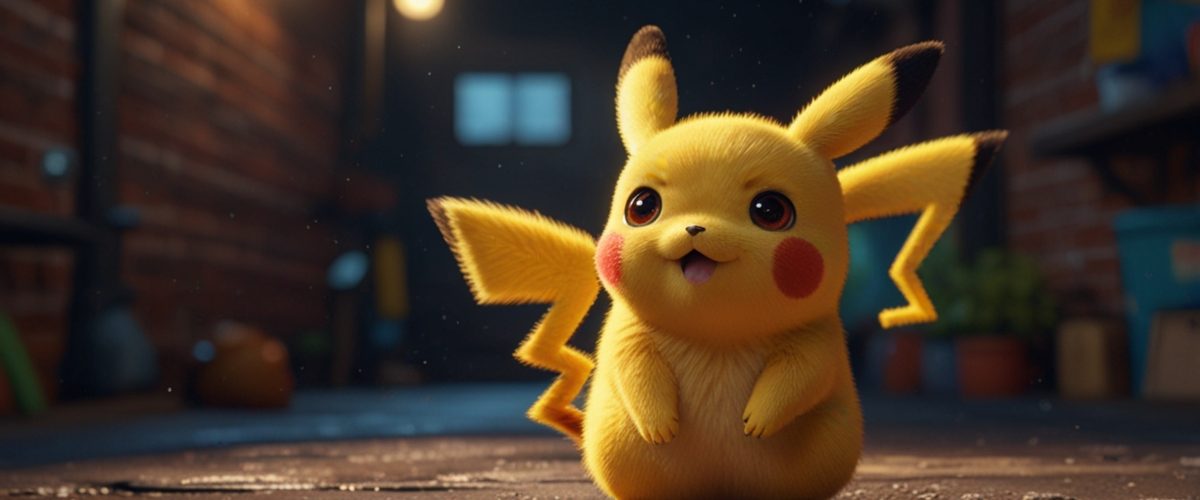
In 1994 two Belgian arachnologists named a spider Pachygnatha zappa, after the musician. Pokemon did not yet exist; it would arrive two years later. Naming animals after people you admire is an old habit and a respectable one – Bryan Lessard named a golden-haired horse fly Scaptia beyonceae in 2011 and told a reporter it gave him the chance to demonstrate the fun side of taxonomy. Nobody official has ever tried to stop any of it.
What has changed is the pace. Ten of these names were published in 2021 alone, and 2021 and 2023 between them supplied more than half of every Pokemon-derived name ever coined. Twenty-four separate Pokemon are represented, spread over roughly twenty-one papers, five of which handed out more than one name at a time. Game Freak has been considerably stricter with its own roster: the Pokemon designs cut before Red and Blue shipped never received a Pokedex number at all, while a springtail in Brazil did.
What follows is the whole record, arranged in the order the names entered the literature. It includes a genus simply called Pokemon, a pterosaur that was named and then quietly unnamed, two bacteria that live inside amoebae much as something else lives inside a ball, and four wasps described in a single paper by two Brazilians who evidently could not stop themselves. Where a naming paper’s own etymology can be quoted, it is quoted. Where it cannot, that is said plainly.
Thirty-one published scientific names derive from Pokemon, spanning the two decades between a cancer gene renamed in 2005 and a nudibranch described in April 2026. The roster holds one gene, one protein, two bacteria, one virus and twenty-six animals, among them beetles, spiders, wasps, cave crickets, a bee and a pterosaur.
The Pokemon Gene

Anime News Network ran the headline "Pokemon Causes Cancer" on 26 January 2005, six days after the paper appeared and eleven months before anybody’s lawyers got involved. The gene was real and so was the problem. Pier Paolo Pandolfi’s group at Memorial Sloan-Kettering had found a transcriptional repressor that silences the ARF tumour suppressor, releasing the brakes a cell normally applies the moment an oncogene switches on, and published it in Nature on 20 January under the name Pokemon – a backronym for POK Erythroid Myeloid Ontogenic factor.
Nobody blinked for most of a year. In December, Pokemon USA, the company then minding the brand in America, threatened legal action over the association, and Memorial Sloan-Kettering complied. The gene became Zbtb7, and is now formally ZBTB7A, filed on chromosome 19.
The surrender was less total than it looks. Pokemon survives as an official alias symbol in the human gene database, the word still turns up in paper titles, and two decades later you can order an antibody catalogued as ZBTB7A/Pokemon from a supplier who plainly never got the memo. The biology outlasted the argument as well. A review in December 2024 proposed the gene as a therapeutic target across liver, breast, prostate and lung cancers, and in March 2026 a paper reported it driving ovarian tumour growth through the activation of a gene called CRLF1. The lawyers won the name. They did not win the gene.
Pikachurin

Knock this protein out of a mouse and the retina still works, just badly. Signals that ought to sprint from photoreceptor to bipolar cell arrive late and out of order, which is what happens when the scaffolding holding those two cells in conversation goes missing. Shigeru Sato, Takahisa Furukawa and sixteen colleagues at the Osaka Bioscience Institute found that scaffolding and named it in Nature Neuroscience on 20 July 2008, for Pikachu’s associations with light, electricity and extremely rapid movement.
The dependency runs both ways, which is the elegant part. In retinas lacking pikachurin, the dystroglycan signal appears at 15.5 per cent of ribbon synapses instead of 95.7. In retinas lacking dystroglycan, pikachurin collapses from 97.7 per cent to 7.5. Neither can assemble without the other, and since faulty dystroglycan glycosylation is the mechanism behind several congenital muscular dystrophies, the pairing matters well beyond the eye.
This name was never challenged. The Naked Scientists observed in 2016 that it "seems to have slipped through the net," and the drift since has run the other way entirely: UniProt’s recommended name for the molecule is simply Pikachurin, while the human gene behind it is stuck with EGFLAM. Crystal and cryo-EM structures were deposited in 2022 and released in 2023, and in April 2026 undergraduates in Florida were still building AlphaFold models of how it binds. The franchise lost its gene. Pikachu kept the protein.
Stentorceps weedlei
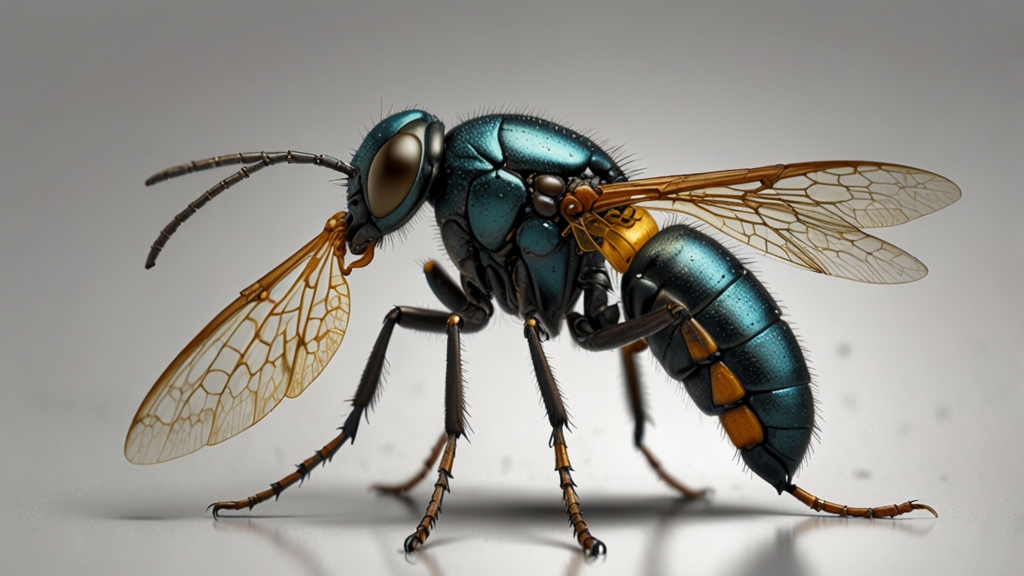
A Malaise trap left beside a broken bridge in high-altitude Madagascan rainforest, at 1,100 metres in Ranomafana National Park, caught a single female wasp between 16 October and 8 November 2001. She remains the only one anybody has ever seen. A decade later Nielsen and Buffington described her as Stentorceps weedlei, "Named in honour of the creature Weedle, a hymenopteran larva from the Pokemon video game series," on the grounds that both carry a spine in the middle of the head.
That spine is the whole point of the genus. These wasps have a head structure called a corniculum which a 2010 conference poster called "entirely unique among Hymenoptera" before adding, with commendable honesty, that "the purpose of the bizarre head morphology remains a mystery."
Weedle was not the only reference in the paper, and this is where it becomes clear what sort of week the authors were having. Stentorceps had been a genus of exactly one Kenyan species for 27 years. The 2011 revision added five at once. There is a Stentorceps vuvuzela, for the plastic trumpet that dominated the 2010 World Cup. There is a Stentorceps heimdalli, for the Norse god who guards the bridge to Asgard and announces himself with a horn. There is a Stentorceps abbotti, for the author of Flatland, because its corniculum ends in a flat circle.
Aerodactylus
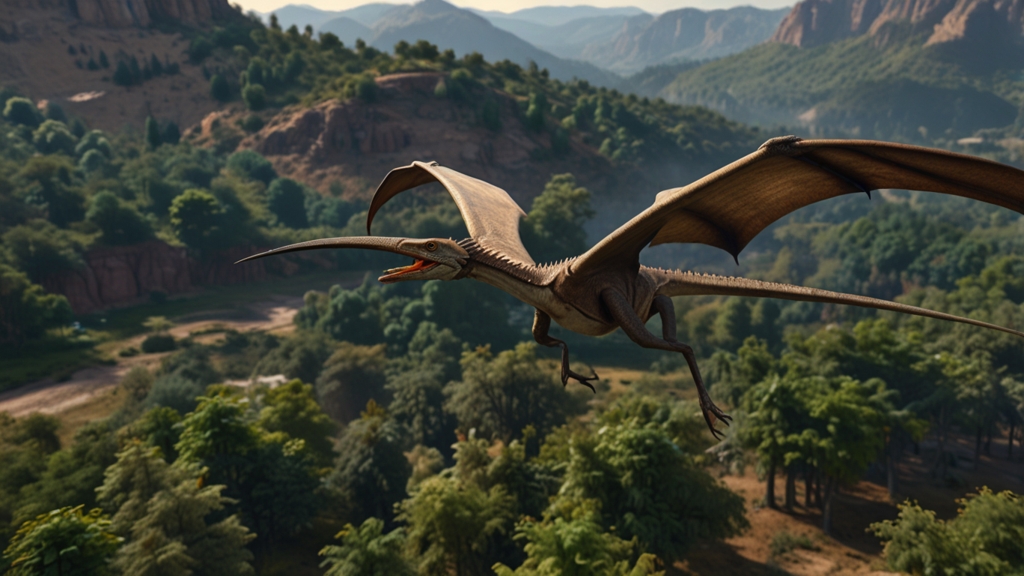
Aerodactyl was drawn as a pterosaur assembled from spare parts, which is what makes Steven Vidovic and David Martill’s 2014 decision so peculiar: they named a real pterosaur after it. Their PLOS ONE etymology says so without embarrassment, recording that the name "derives from the Nintendo Pokemon Aerodactyl, a fantasy creature made up of a combination of different pterosaurian features." Aerodactyl belongs to a small club of designs reverse-engineered from real palaeontology, and among the Fossil Pokemon built from real prehistoric animals, it is the only one the science ever borrowed back.
The animal is a songbird-sized juvenile from the Solnhofen Limestone of Bavaria, wingspan around half a metre, holotype BSP AS V 29 a/b in Munich. Its naming history runs 164 years and has never once settled. Hermann von Meyer described the specimen in 1850, renamed it in 1860, and it was sunk by Zittel in 1883, revived by Broili in 1938, and sunk again by Wellnhofer in 1970.
Then came the modern reversal. Christopher Bennett concluded in 2018 that the species is a junior synonym of Pterodactylus antiquus; Smyth and Unwin agreed in 2024, reading the referred material as juvenile P. antiquus. No published defence has surfaced. GBIF now flags the genus DOUBTFUL while the Paleobiology Database still lists it as accepted and records zero fossil occurrences against it. Being named after a Pokemon was, by a distance, the least of this specimen’s indignities.
Chilicola charizard
Spencer Monckton chose Charmander the first time he played Pokemon, which matters, because in 2016 he named a Chilean bee after what Charmander eventually becomes. His ZooKeys etymology is brisk to the point of curtness – "The specific epithet is in homage to the fictional monster which this species resembles" – though he later explained that preserved specimens sometimes develop orange-tinted yellow markings, which "cemented the comparison."
The bee is 6.1 millimetres long. Its male holotype was collected on 15 October 2013 at 642 metres in Region III, and it is diagnosed chiefly by having the longest malar space in the subgenus, the stretch of face between eye and jaw running about 2.7 times the width it usually manages. Charizard, it should be said, also has a long face.
Monckton described eight new species in that revision, every one endemic to Chile, every one a solitary bee that nests inside hollow plant stems. They belong to the Colletidae, known as polyester bees for the cellophane-like secretion females brush over their brood cells, and the eight between them span the Atacama Desert to monkey-puzzle forest and sea level to over 3,200 metres. Charizard’s bee got a week in EurekAlert, ScienceDaily and Phys.org in June 2016, which is a week more attention than a millimetre-scale Andean bee can usually expect in a century.
Dicranocentrus pikachu
There is no longer a Dicranocentrus pikachu to examine. Its type material burned on 2 September 2018 when fire took the National Museum of Rio de Janeiro, along with roughly five million insect specimens, ten of the entomology department’s eleven laboratories and more than three thousand primary types. A peer-reviewed survey of the losses published in 2020 names this species outright.
It had been described the previous year by Tatiana Xisto and Maria Cleide de Mendonca, both of whom worked in that building. Their paper covered four new springtails from southeastern Brazil and logged the genus for Sao Paulo State for the first time. Springtails are the small hexapods that live in soil and leaf litter nearly everywhere on Earth, generally between one and ten millimetres long, most of them equipped with a forked appendage that flings them into the air when alarmed. Whether they count as insects at all depends on whose classification you follow, which is the sort of question that makes springtail specialists put their heads in their hands.
The paper sits behind a hard paywall with no open copy anywhere, and the likeliest place a self-archived version might have survived was the department that burned. So the animal endures as a line in a database, accepted by GBIF and since shuffled into a different family, and as a description on page 16 of a paper almost nobody can read.
Parapharyngodon politoedi
On 27 December 2019 the Journal of Helminthology, a parasitology journal established in 1923, made what appears to be the only joke in its recorded history. "Do #Pokemon get parasites? Maybe? Well, there certainly are parasites named after Pokemons," it posted, and linked to two of its own papers. Neither paper mentions Pokemon anywhere in its text.
The earlier of the two, published in 2018, describes a pinworm taken from the large intestine of a treefrog in the Caxiuana National Forest in Para, Brazil. Politoed is the frog one, a Water-type that evolves from Poliwhirl only if you trade it while it happens to be holding an item called the King’s Rock – a great deal of ceremony for a creature whose namesake gets about by being swallowed. Parapharyngodon requires no intermediate host at all. Eggs leave in the faeces, the next frog eats them, and the entire life cycle plays out inside a digestive tract.
The host deserves a moment of its own. Osteocephalus taurinus is an arboreal, nocturnal treefrog ranging across nine South American countries, whose females reach 101 millimetres and lay some two thousand black eggs in a film across temporary ponds, and whose tadpoles are recorded in the literature as voracious predators of the eggs of their own species. On the evidence, the worm is not the most alarming thing in that pond.
Hedruris dratini
The etymology in the second of those two papers, published in 2020, is a small masterpiece of the straight face. "The specific name is an arbitrary combination of two words (dra = dragon; tini = tiny)," it explains, and stops there. Dratini is a blue serpentine Dragon-type that evolves at level 30 and again at level 55. The authors knew precisely what they were doing.
Their worm lives in the stomachs of Argentine snake-necked turtles, having arrived inside an amphipod the turtle ate. Males average 5.97 millimetres and gravid females 9.1, and the eggs are 36 micrometres long, sealed at both ends with a fully coiled larva already inside. Forty specimens went into the description. The holotype rests in the Museo de La Plata.
What happened next is better than the name. A 2021 survey of 160 turtles and 800 amphipods found egg-carrying females making up around 73 per cent of the worm population in cold months against roughly 12 per cent in warm ones, which is the exact inverse of how a seasonal parasite is meant to behave. The explanation is that turtles in winter torpor carry on eating, only slowly, so the route in never really closes. Winter prevalence still ran at 43 per cent. A parasite named for a tiny dragon turns out to do its finest work while everything around it is asleep.
Epicratinus pikachu
Anakin, dookan, ehonda, mauru, omegarugal, pegasus, pikachu, stitch, vader, zelda, zangief. Those are the eleven new species Rafael Goncalves and Antonio Brescovit added to the Brazilian spider genus Epicratinus in one 2020 paper, and every one is named after somebody fictional. Pikachu earned it anatomically. The etymology records that "the female epigynum resembles the face of Pikachu," the epigynum being the external genital plate, which is not where most people would go looking for a resemblance but is where arachnologists spend their days.
The spider is small and dark. The male holotype runs 5 millimetres and the female 6, and both carry nine pale spots down the abdomen in a 2-2-2-2-1 arrangement. The holotype came out of the Reserva Ecologica Inhamum in Caxias, Maranhao, on 25 January 2008; the female had been sitting in a collection since September 2005.
The company it keeps is instructive. Epicratinus vader was named because the male’s black carapace recalls the helmet. Epicratinus ehonda was named because its epigynum "resembles two sumo wrestlers in fighting position." Zodariidae are the ant spiders, a family of 1,325 species in which several genera eat almost nothing else. Goncalves and Brescovit returned in 2024 with nine more names, among them baraka, leia, luke, smeagol and yoda, taking the genus to twenty-five species with no sign of running out of source material.
Binburrum articuno
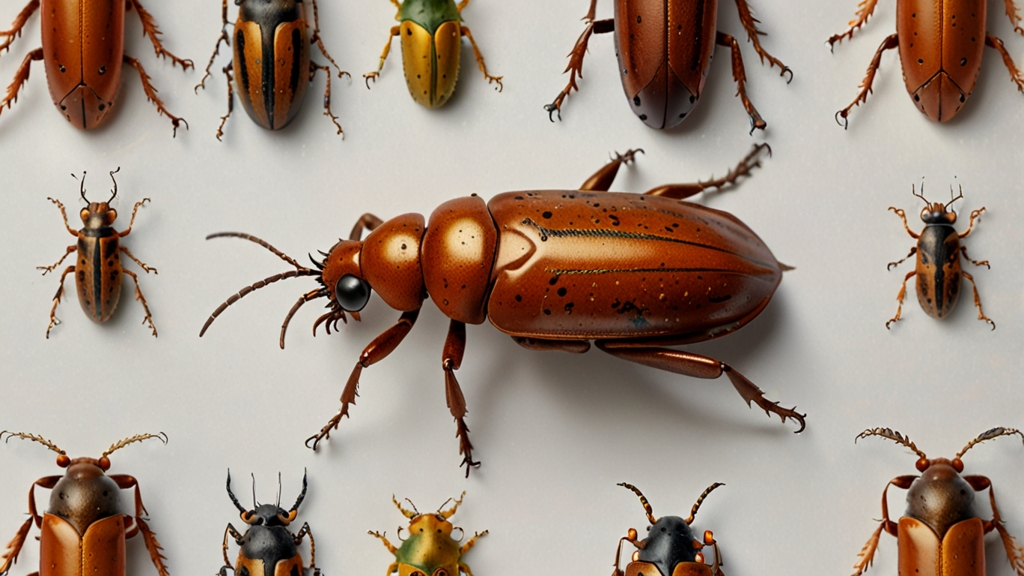
A CSIRO report filed in 1997 lists, among the notable beetles pulled from a year-long invertebrate survey in South Australia, "a new genus and species of Pyrochroidae: Pilipalpinae." Nobody named it. The specimen sat in the Australian National Insect Collection for twenty-three years until Yun Hsiao and Darren Pollock reached it and called it Binburrum articuno, the epithet "referring to the presumed rareness of this species that has only five known specimens."
Articuno is one of three near-mythical birds hidden in Kanto, a region a player crosses by working through all eight Kanto Gym Leaders, and rarity is exactly the joke being made. Five specimens is all there has ever been. They came from a flight-intercept trough trap – a vertical screen standing over a gutter of preservative, built for clumsy fliers – at a dune-crest site called Stoney Pinch on Calperum Station, between 10 October and 7 November 1995. The Commonwealth had bought the station’s pastoral leases two years earlier with help from the Chicago Zoological Society.
The beetle is 5.05 millimetres long at most and, in the paper’s own words, "unicoloured, entirely dark brown." Nothing about it is icy, or blue, or in any way suggestive of a bird of myth. A Wikipedia mirror currently describes it as "less than a foot long" and covered in hundreds of black spots, which overstates the animal by a factor of about sixty and invents the spots outright.
Binburrum zapdos
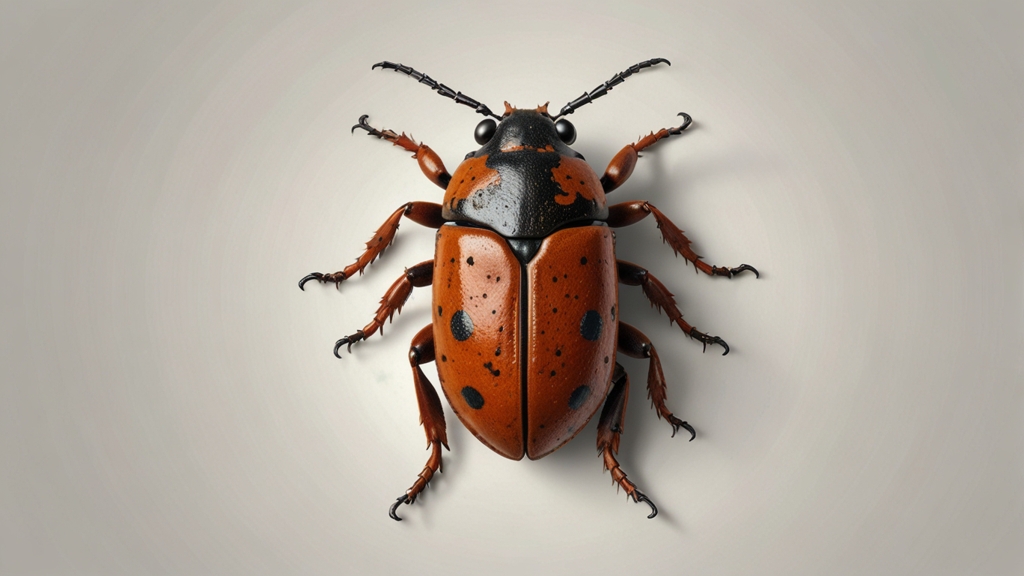
One specimen. That is the entire known population of Binburrum zapdos – a single male, 4.0 millimetres long, taken in a Malaise trap at 1,150 metres on Mount Haig in Queensland during August 1995. Its etymology makes the same point its siblings make, pinning the name to rarity on the strength of that one solitary individual, and three decades on nothing has turned up to contradict it.
Yun Hsiao announced the work himself on 2 January 2021, noting that the three new species took their names from Kanto’s bird trio, "referring to the rareness of these species that have only few specimens." Pollock, who had met him around 2015, later put the reasoning to his university’s press office in terms most taxonomists would sign. "The choice of a name for a new species is not trivial," he said. "One of the ways to ensure this is to make a name that nobody would ever have come up with before."
This is the one where the beetle actually matches. It has a black head and black wing cases, an orange clypeus and a yellow-orange pronotum: black and yellow, which is precisely the electric bird’s scheme. The paper never mentions the coincidence. Hsiao has since finished a doctorate on cycad-pollinating weevils and is now an assistant professor of entomology in Taichung.
Binburrum moltres
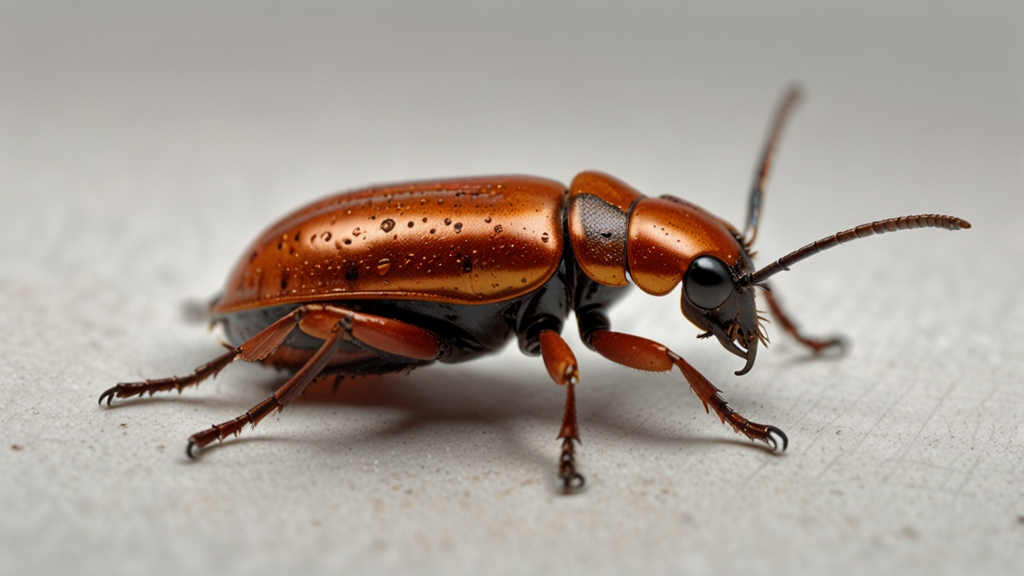
Wikipedia will tell you this beetle is native to southeastern South Australia and has a distinct golden top half. It is neither. The naming paper puts Binburrum moltres in northeastern Queensland, and the holotype label reads Longlands Gap, 1,150 metres, from a Malaise trap left running between 30 November 1995 and 7 January 1996 – which means the record preserves the five-week window the trap was open rather than the day the beetle flew into it.
The animal is light orange with a blackish band across the rear half of the wing cases, 4.0 millimetres long and 1.0 millimetre wide, the narrowest of the three. That band is the entire reason it exists as a species. Its nearest relative, described in 1926, carries the same marking across the middle of the elytra instead of the back, and the difference was enough.
Naming it for the fire bird completed the set and took the genus from five species to eight. Pollock suggested in 2021 that more were already queued: "We already have plans to describe more new species of this genus that have turned up since we finished the paper, with perhaps more Pokemon names." None has appeared since. What the larvae do remains largely unknown; the best account in the literature comes from a 1997 survey of a different reserve, which found related grubs under the bark of mallee eucalypts, eating the tissue beneath.
Candidatus Pokemonas abra
This name is a joke with a mechanism inside it. Kenneth Dumack’s group at the University of Cologne found bacteria living inside round amoebae and called the genus Pokemonas, "a portmanteau of Pokemon, a japanese video game franchise in which monsters can be caught in balls and carried in the pocket, and Gr. monas, single unit. This refers to the intracellular occurrence of the bacteria." Having committed that far, they named the two species abra and kadabra, as an allusion, the register notes, to a magic incantation.
Abra’s host is the odd one out. In every other infected amoeba strain the bacteria scatter loose through the cell body; in this one they sit packed inside a single large vacuole, which is as close to a Poke Ball as microbiology is likely to manage without meaning to. The host did not come from a field trip either. It was pulled from a culture collection in Oban on the west coast of Scotland, which keeps around three thousand strains of algae and protists, some of them growing continuously for more than a hundred years.
The family these bacteria belong to also contains the organism behind Q fever, and the order above it contains the one behind Legionnaires’ disease. They pass from parent amoeba to daughter by cell division and have never once been grown on their own.
Candidatus Pokemonas kadabra
Kadabra comes first, which is the wrong way round in every sense. In the games it is what an Abra becomes. In the paper it is introduced ahead of its own predecessor, and its 16S sequence went into GenBank one accession number earlier as well. Its hosts are three strains of two amoeba species taken from leaf litter in Cologne in December 2018, so unlike abra’s borrowed Scottish culture, these were collected outdoors.
Neither name is official. Candidatus is the placeholder the prokaryote code applies to an organism that has been sequenced and described but never grown by itself in a laboratory, which leaves Pokemonas on the record without being validly published; a check of the SeqCode registry’s 48,386 names in August 2026 finds no trace of it there either. The claim circulating online that a third species called alakazam exists is simply wrong. There are two, confirmed independently by the nomenclature register and by NCBI’s taxonomy.
That 2021 paper named four new Candidatus taxa altogether, and the other two show what restraint looks like. Fiscibacter pecunius alludes to bacteria sitting inside cells like coins in a purse. Megaira telluris borrows from a Greek Fury. Only one of the four got a name a nine-year-old would recognise instantly, and it went to the organisms that live inside spheres.
Alistra pikachu
At 1.55 millimetres this is among the smallest animals ever to carry a Pokemon name, small enough that the entire type series – seven spiders – would sit comfortably across a fingernail. They were collected on 5 January 2019 in Jile Cave in Yangshan County, Guangdong, by Zhigang Chen and Zhe Zhao, and named for their colour: "The species is named after Pikachu, a fictional character from Pokemon Yellow, as the habitus color of this new species is yellow."
Alistra belongs to the Hahniidae, the dwarf sheet spiders, which build webs so fine they are effectively invisible unless dew settles on them. The genus itself is scattered to an almost comic degree, with species in New Zealand, Vietnam, Sri Lanka, Samoa, the Solomon Islands, Tasmania, Lord Howe Island and Reunion – an arc of islands and coastlines that had never once reached inland into a Chinese cave.
The paper that named it introduced twenty-three new species at once, and pikachu was not the only borrowing in the batch. There is an Episinus bonjovi, after the musician, and a Sinopesa gollum, after Tolkien. The senior author, Shuqiang Li, has described more than two thousand species across his career, and offers an uncomplicated account of why he keeps going. "Spiders are lovely animals," he says.
Rathalos treecko
The spider sat in a collection for twelve years before anybody gave it a name. It had been taken at Dongsizhan in Bawangling, Hainan, on 23 April 2009, and was published as Anyphaena treecko on 24 April 2021, named because it lives in forest, as does Treecko, the grass starter a player picks before meeting every Gym Leader in Hoenn. Then on 28 July 2022 it was moved into a brand-new genus and became Rathalos treecko.
The transfer itself was routine. "The cymbial apophysis, the triangular epigyne and the straight copulatory duct indicate that this species belongs to Rathalos," the authors wrote, and moved it. The animal was unaffected: a male of 5.26 millimetres and two females of 6.82, pale yellow throughout, with conspicuously hairy legs, three specimens now in Beijing.
The destination is the strange part. Rathalos is a flying wyvern from Monster Hunter, according to the gaming press at least, since the paper’s own genus etymology sits behind a paywall and cannot be checked. Yejie Lin has previous – in 2024 he named a blind cave spider Otacilia khezu after another Monster Hunter creature – and the same 2022 revision erected a second genus called Funny. So this species was named for a Pokemon and then rehoused inside a genus named for a rival franchise, which is a fate nothing else on this list has managed.
Anyphaena grovyle
Two hundred and sixty-six spiders went into the description of Anyphaena grovyle – one male holotype, 115 male paratypes and 150 female paratypes – and every one of them was taken on a single day, 9 April 2009, by Guo Tang on Wuzhi Mountain in Hainan. New spider species are usually described from a handful of individuals. Somebody had walked into an extremely good afternoon.
The animal is 5.12 millimetres as a male and 6.72 as a female, washed-out and faintly yellow, its legs carrying a remarkable quantity of hair. Anyphaenidae are the ghost spiders, named for exactly that pallor, and they build no capture webs at all. They wander, hunt, and retreat into silk sacs spun under bark or among leaves; roughly 654 species are known worldwide.
The etymology follows the house formula, honouring Grovyle, "a fictional character from Pokemon Emerald that lives in the forest, as does the new species." The paper around it is not remotely single-minded, though. Alongside the Pokemon it produced an Anyphaena shenzhen and an Anyphaena tibet, named for nothing more imaginative than where they turned up. Grovyle’s own account arrives on page 94, and its 266 paratypes are filed at the Institute of Zoology in two non-contiguous blocks of catalogue numbers, as though whoever was logging them ran out of room and started again further down the drawer.
Anyphaena sceptile
Bawangling, in western Hainan, is the last place on Earth where the Hainan gibbon lives. Its population fell from more than two thousand animals in the 1950s to thirteen, in two family groups, by a survey in 2003, and patient conservation work has since brought it back to forty-two across seven groups. On 23 April 2009 a collector went to Dongsizhan, inside that reserve, and came away with the spiders now called Anyphaena sceptile.
He came away with something else from the same site on the same day, which is how the description published twelve years later ended up covering a complete three-stage Pokemon evolution – the starter, the middle form and the fully grown one. The paper carrying all of it is titled, with admirable flatness, "Twenty-three new spider species (Arachnida: Araneae) from Asia." Only four of the twenty-three carry Pokemon names at all; the rest are named for places, for a musician, and for Gollum.
Sceptile is a male of 5.22 millimetres and two females of 7.12, separated from its nearest relatives by a median apophysis the authors call long and sword-shaped where the others are an irregular polygon. It has never been moved, renamed or absorbed since – a distinction it shares with the middle stage of the line but not, oddly enough, with the starter.
Hiperantha pikachu
This beetle keeps office hours. Its type series was taken flying and settling on shrubs about a metre and a half off the ground, within a window running from roughly nine to half past ten in the morning, on 31 October 2019, at a stretch of coastal sand scrub in Bahia. A. H. B. Rosa caught five of them in an aerial net.
The etymology is unusually specific about what it is claiming. The name pays homage to Pikachu, whom the beetle is said to resemble "in its yellow elytra with a black apical band (like the ears of Pikachu)." At 26 millimetres the holotype comfortably outmeasures the Chinese cave spider sharing its epithet, by something close to seventeenfold.
Buprestidae are the jewel beetles, roughly 15,500 species of them, and their colour is not pigment. The shine comes from structural colouring – microscopic texturing in the exoskeleton that reflects particular wavelengths back at you, the same physics that makes a compact disc throw rainbows across a ceiling. Its habitat is restinga, the sandy, acidic, nutrient-poor scrub forest that runs along Brazil’s Atlantic coast across some 7,900 square kilometres. The paper’s figure caption for the type locality is charmingly literal: "19, Drone view. 20-22, Ground level view."
Kratiovirus gengar
Two undergraduates at Del Mar College in Corpus Christi pulled a soil sample out of dense Texan clay from a depth of three feet ten inches in 2013. Michael Hetzel and Kelsy Mascorro found a virus in it, and because they had found it, they got to name it. PhagesDB preserves their reasoning in full: "Named after the Pokemon Gengar."
This happens constantly. The SEA-PHAGES programme, launched by the Howard Hughes Medical Institute in 2008 and now running at more than a hundred institutions, has undergraduates isolate a phage in one semester and annotate its genome in the next, and PhagesDB holds 31,397 of them. Twenty-two carry Pokemon or Pokemon-adjacent names. Naming your own virus after Snorlax is, in that world, entirely ordinary.
What separates this one is what happened afterwards. An isolate name is only a label a student chooses, requiring nobody’s approval. In 2021 the International Committee on Taxonomy of Viruses, which governs virus naming worldwide, formally voted this particular genome into the global classification as Kratiovirus gengar. Snorlax, Eevee, Mewtwo, Bulbasaur, Charizard, Pikachu and Umbreon return nothing whatsoever in the same taxonomy database. The genome runs to 61,626 base pairs and 95 genes, which is almost exactly the average for its subcluster. It got in on paperwork rather than merit.
Phrynarachne dreepy
Spiders in this genus spend their lives pretending to be bird droppings. They spin a disc of white silk onto a leaf, settle in the middle of it, and let their mottled brown-and-white colouring finish the argument; one relative goes further still and produces a smell to match, which repels predators and draws in flies at the same time. It is one of the more committed impersonations in the animal kingdom.
Phrynarachne dreepy was named in 2022 for a resemblance of a different sort. The etymology observes that the Pokemon "has a triangular head that is reminiscent of the opisthosoma of the new species," the opisthosoma being the abdomen, and the female’s is indeed a blunt triangle carrying thirteen tubercles down each side.
The sexes hardly seem like the same animal. The male holotype is 2.26 millimetres. The female is 8.45. She is pale yellow and green with those triangular bumps; he is yellow-brown and dark, wearing about eighteen club-shaped bristles per side instead. Six specimens make up the type series, gathered across three separate collecting trips to the Menglun Nature Reserve in Xishuangbanna between August 2011 and August 2019, which is eight years of visits to assemble a single description. The paper it appeared in was no showcase for the new name either, but a housekeeping revision of every Phrynarachne in China.
Thyreoxenus alakazam
A worker termite walks up to the beetle and vomits into its mouth. That is the actual arrangement, photographed and captioned by the laboratory that described Thyreoxenus alakazam in 2022: stomodeal trophallaxis, semi-digested food and saliva passed mouth to mouth, from one insect to a completely different insect that has talked its way inside the colony.
The talking is chemical and structural. Corotocini are rove beetles, more than 270 species of them, every one living inside termite nests, and they undergo something called physogastry. They emerge from the pupa looking like ordinary beetles, and then during adult life the soft parts of the abdomen swell and reorganise into a shape that reads, to a termite, as another termite. Work on a related Brazilian species found that the beetles’ chemical scent profiles matched the particular colony they lived in more closely than they matched their own species elsewhere. They do not merely resemble the family. They smell like this specific family.
Alakazam is the only Pokemon name among the twelve species in its genus; the others are called things meaning small-headed, hooded and pretty. The holotype is female, from highland humid forest in northeastern Brazil, and the scale bar on its portrait reads 0.35 millimetres. The paper sits behind a paywall, so why a psychic illusionist has to be inferred from the beetle.
Nothepyris beedrill
For fifty years no male had ever been described. Howard Evans erected the wasp genus Nothepyris in 1973 on female specimens, and females were all anyone had until Wesley Colombo and Celso Azevedo published a revision in 2023 that finally worked male genitalia into the picture. In the same paper they added four new species and named every one of them after an insect Pokemon.
Beedrill is the least subtle of the four: the Poison Bee Pokemon, which emerges from a cocoon at level 10 as something upright with a stinger on each arm. Bethylidae, the family the real wasp belongs to, are known as flat wasps and are parasitoids of beetle and moth larvae. A female stings her host repeatedly – first the nerves controlling legs and mandibles, then the nerves controlling internal organs – and lays as many as 150 eggs on the paralysed result. Beedrill’s design, on the evidence, rather undersells the family.
No host has ever been recorded for Nothepyris itself. Related genera in the same subfamily are put to work commercially against wood-borers in Chinese forestry. The wasp’s own particulars – where it was found, how large it is, who caught it – sit behind a publisher’s paywall that no repository anywhere has mirrored, and the global occurrence database holds not a single record of it. Officially, it exists as a name and a diagnosis almost nobody can read.
Nothepyris combee
Not everything in that revision was alive. Nothepyris pretiosus, one of its six species, has been dead for at least 34 million years – an inclusion in Baltic amber, described by the same two authors in 2019 alongside a new fossil genus, in Eocene resin where insects account for more than 98 per cent of every animal ever found trapped inside. So a routine tidying-up of a small Brazilian wasp genus quietly reaches from a living insect back to one entombed long before anything resembling a primate was worth mentioning.
Combee is the living one, named for the Tiny Bee Pokemon whose body is three honeycomb cells stacked in a triangle. The choice conceals a joke the authors never spell out. In the games, female Combee are scarce and only they can evolve, at level 21, into Vespiquen – and Vespiquen is the fourth of the four new species described in this very paper. The wasp named for the drone and the wasp named for the queen were published side by side, which is more attention to a video game’s life cycle than taxonomy usually pays.
Real bee colonies run the other way round, with females doing everything and the males a minority nobody consults. Nobody seems to have minded the discrepancy, least of all the two Brazilians who wrote a video game’s caste system into the permanent record of an insect family.
Nothepyris durant
Flat wasps earn their keep. A related genus in the same subfamily is described by these very authors as the coffee berry borer’s ectoparasitoid, which is the formal way of saying it is turned loose on one of the most destructive pests in world agriculture. Nothepyris durant has no recorded host whatsoever, and the revision that named it was paid for by Brazil’s national research council, which evidently took the Pokemon on trust.
The name is well judged even so. Durant is the Iron Ant Pokemon, introduced in Black and White in 2011, and ants and the wasps that hunt them are close relatives within the Hymenoptera, so an ant-named wasp is a shorter leap than it appears. The Pokedex has Durant covering itself in steel armour, attacking in groups, laying eggs deep inside communal nests and defending them collectively. Nothing in the real genus is remotely social.
The 2023 revision that produced durant was partly an act of demolition, taking the genus’s other established living name, sulcatus, and sinking it as a junior synonym of the type species. Adult flat wasps run two to five millimetres, the males always winged and the females frequently not. Three papers have cited the revision since, none of them proposing any change to the name. You could hold the entire described genus in a thimble.
Nothepyris vespiquen
Wesley Colombo’s public record lists more than fifty papers on a single wasp family between 2020 and 2026, five of them in 2025 alone, among them world revisions of two genera and a treatment of twenty-seven new species from Fiji and the Solomon Islands. Months after naming these wasps, he and his co-author brought out a revision of an entirely different genus in the same journal. Bethylid taxonomy in the 2020s runs largely out of one department at one Brazilian university, and this is what that looks like from outside.
Vespiquen closes their Pokemon quartet. In the games it is the Beehive Pokemon, a Bug and Flying type from Diamond and Pearl, and it governs its swarm chemically rather than by instruction. "It releases various pheromones to make the grubs in its body do its bidding while fighting foes," reads one entry, with the biggest swarms belonging to whoever emits most. It is female-only, and the designers gave it a queen with no drones at all, which is not how a hive works anywhere on this planet.
The real wasp is less imperial and, in places, oddly maternal: females in some bethylid species guard and clean their own brood, which is uncommon among parasitoids. The family’s own shape is still being redrawn, too. A 2024 phylogenomic analysis from the same group carved two entirely new subfamilies out of it.
Nocticola pheromosa
"Both my collaborator and I are Pokemon fans, so we thought why not name it after a Pokemon inspired by a cockroach." That is Foo Maosheng of the Lee Kong Chian Natural History Museum, explaining a small Singaporean insect. Pheromosa is an Ultra Beast from Sun and Moon, whose setting, Alola, is the one region a player can finish without entering a single gym, thanks to the eleven Trial Captains and Island Kahunas who replaced Alola’s Gym Leaders. The paper argues its pale, spindly design came from an American cockroach that has just moulted.
Nearly everything else written about this animal is slightly wrong. It is not blind and it does not live in caves. The paper’s own abstract calls it epigean, meaning surface-dwelling, and the reason it made the title at all is that it is macropterous – fully winged, unusual in a genus where seventeen known species live underground. It came out of a Malaise trap in old secondary forest in the Bukit Timah Nature Reserve, runs up to 5 millimetres, and is known from one male in a museum drawer.
Telling it apart from a nearly identical Bornean species required dissecting that male. Foo would like to find a female. "In future, we hope to look for the female counterpart of this species," he said, which as scientific ambitions go is modest and completely reasonable.
Pokemon oculiapertion
The genus is called Pokemon. Not the species – the genus. Pokemon Vrsanska, Hinkelman and Vrsansky, 2023, accepted as valid by GBIF, by Catalogue of Life and by the Cockroach Species File, containing exactly one species. The etymology, rendered in the authors’ own second-language English, reads: "After pokemon (Japanese kult merchantise)." The species epithet is more orthodox, built from oculus and apertia, meaning opened eye.
The animal is a cockroach preserved in Burmese amber, one of eight new species in a paper on the sand cockroaches, a family the authors found accounted for 18 per cent of all cockroaches recorded in Late Cretaceous burmite. Its holotype is an unsexed adult in the Slovak National Museum in Bratislava.
The amber is the complication. On 21 April 2020 the Society of Vertebrate Paleontology called for a moratorium on publishing fossils purchased from Myanmar after June 2017, the point at which the military took control of the mines. Two days later Acta Palaeontologica Polonica adopted the policy in its own words, and the Journal of Systematic Palaeontology went further and refused Burmese amber outright, historic collections included. This paper appeared in a journal that did neither. Its acknowledgements thank two private German collectors for supplying some of the samples and say nothing about when. No one has publicly objected, and the paper is paywalled, so no one can easily check.
Micropathus ditto
Scientists studied this cricket for sixty years without noticing it existed. It was sampled for phylogenetics, for feeding habits and for chromosome counts, and every one of those studies filed it under another species’ name. Perry Beasley-Hall and Stefan Eberhard finally pulled it out in 2025 and called it Micropathus ditto, on the grounds that the animal had been "effectively hiding in plain sight".
The error goes back to the source. Aola Richards, who described nearly all of Tasmania’s cave crickets in the 1960s, illustrated the female terminalia of her new species using a specimen of this one, so the picture in the founding description of Micropathus tasmaniensis was, from the beginning, a picture of something else. Her male illustration was correct. She seems to have assumed her southern females were immature and reached south for others instead.
The animal itself is 14 to 16 millimetres long with a hind tibia longer than its entire body, and it is the only member of its genus whose hind femora carry no spines at all. It lives in the lit and half-lit entrance zones of caves across southern Tasmania in colonies of hundreds, it is the main prey of the Tasmanian cave spider, and its eggs feed blind beetles at Ida Bay. The paper calls it a likely keystone species, which is quite a promotion for something that spent six decades being somebody else.
Micropathus zubat
Every known specimen came out of one cave on one day. On 15 February 2012 two Eberhards collected a male and two females at 360 metres in Forest Hills, in Tasmania’s remote southwest, and those animals – a holotype, two paratypes and one further sample kept for its DNA – remain the entire species. It was the first cave-dwelling invertebrate ever recorded from that karst, which is a stream disappearing into a hole at the bottom of a rainforest depression, some 20 kilometres from the nearest comparable system, itself never surveyed.
The name arrived thirteen years afterwards, out of the female’s anatomy. "The two spiked lobes on the female subgenital plate are reminiscent of the pair of long fangs on Zubat’s upper jaw," the etymology explains, before noting, reasonably enough, that Zubat is also found in caves and forests.
One thing the description could not report at all. Whether the sexes differ in leg length or leg armament is unknown, because the hind legs had snapped off the specimens before anybody examined them. The paper files the species as an ultra-short-range endemic with a range under 100 square kilometres, and records that of the seven species in the genus exactly one carries legal protection under Australian law. It is not this one, the one known from a single hole in the ground.
Thecacera pikachu
Taxonomic papers do not generally cite the internet as grounds for a name, which makes the last entry here the most candid of the lot. "This species is named after ’Pikachu’," the etymology begins, going on at some length about the character’s fame before arriving at the real reason: "In addition, it is already very well known on the internet with this name."
There is a complication buried in that sentence. Divers have been calling a different sea slug the Pikachu nudibranch for years – Thecacera pacifica, described in 1884, which carries "Pikachu Longhorn Dorid" as a registered common name in the world marine register. The 2026 paper describes a genuinely separate animal, pale orange with two converging lines of black spots and star-shaped spicules visible through the mantle, and hands it the name outright.
Two specimens exist. Both were collected on a single dive on 5 August 2023 at 17 to 18 metres in Tasi Tolu Bay off Dili, and both now sit in Lisbon. The holotype measures 20 millimetres; the species reaches 40. Its six authors include a systematist in Madrid, a curator in New York and, listed as an institutional affiliation on a peer-reviewed paper, a dive shop in Timor-Leste. Published on 15 April 2026, it is the newest name in this entire tradition. It will not hold that position for long.
Frequently Asked Questions
Can scientists really name a new species after a video game character?
Yes, and nothing in the rules prevents it. Article 25.1 of the International Code of Zoological Nomenclature governs only how a name is grammatically formed, not what it may refer to. Recommendation 25C asks merely that names be appropriate, compact, euphonious, memorable and inoffensive – and a recommendation carries no enforcement at all.
Which Pokemon has the most species named after it?
Pikachu, with five. The global biodiversity database returns exactly five accepted species carrying the epithet pikachu: a Brazilian springtail, two spiders, a jewel beetle and an East Timorese sea slug. Every other Pokemon that has lent its name to an organism appears precisely once.
Is Bulbasaurus named after Bulbasaur?
No. Bulbasaurus phylloxyron, a Permian dicynodont described in 2017, takes its name from Latin bulbus, for its large bulbous nasal bosses, and Greek for leaf razor, describing its plant-slicing beak. Its describer did remark publicly that the similarities to certain squat, tusked quadrupeds might not be entirely coincidental.
Has Nintendo ever stopped an organism being named after Pokemon?
No organism has ever been challenged. The single documented objection concerns a gene rather than a living thing, and it ended in a quiet rename. A much-repeated story about trap-jaw ants being blocked has no source at any tier, not even a weak one, and should be treated as invention.
What was the first organism named after a Pokemon?
Stentorceps weedlei, a Madagascan wasp described in 2011 – the first living thing to carry a Pokemon-derived name. The human gene called Pokemon came six years earlier, in January 2005, but a gene is not an organism, which is why the wasp rather than the gene holds the record.
Have species been named after other pop culture?
Routinely. A spider genus erected in 2022 for David Bowie’s seventy-fifth birthday holds over a hundred species. Eriovixia gryffindori was named in 2016 for its resemblance to the Sorting Hat, and the slime-mould beetle Agathidium vaderi arrived in 2005 alongside beetles named for three American politicians.
- GBIF Backbone Taxonomy – name status and validity for every roster entry
- Hsiao & Pollock 2021, Binburrum revision naming articuno, zapdos and moltres, The Canadian Entomologist
- Vidovic & Martill 2014, the paper that erected Aerodactylus, PLOS ONE
- Maeda et al. 2005, the Pokemon proto-oncogene paper, Nature
- Sato et al. 2008, the paper that named pikachurin, Nature Neuroscience
- Solbach, Bonkowski & Dumack 2021, describing Candidatus Pokemonas, Frontiers in Cellular and Infection Microbiology
- Beasley-Hall & Eberhard 2025, the Micropathus revision naming ditto and zubat, European Journal of Taxonomy
- Pola et al. 2026, describing Thecacera pikachu, Zootaxa
- Monckton 2016, the Chilicola revision naming charizard, ZooKeys
- Lin et al. 2022, describing Phrynarachne dreepy, ZooKeys
- Goncalves & Brescovit 2020, the Epicratinus review naming pikachu, Zootaxa
- Colombo & Azevedo 2023, the Nothepyris revision naming four Pokemon wasps, Austral Entomology
- Vrsansky et al. 2023, erecting the cockroach genus Pokemon, Biologia
- Nielsen & Buffington 2011, the Stentorceps revision naming weedlei, African Entomology
- Palumbo et al. 2020, describing Hedruris dratini, Journal of Helminthology
- Santos et al. 2019, describing Parapharyngodon politoedi, Journal of Helminthology
- Pires-Silva, Zilberman & Eloi 2022, describing Thyreoxenus alakazam, The Science of Nature
- Lucanas & Foo 2023, describing Nocticola pheromosa, Journal of Asia-Pacific Entomology
- Xisto & de Mendonca 2017, describing Dicranocentrus pikachu, Insect Systematics and Evolution
- Pineda & Barros 2021, describing Hiperantha pikachu, Zootaxa
- LPSN – the nomenclatural record for the genus Pokemonas and its two Candidatus species
- World Spider Catalog – current placement of the Pokemon-named spiders
- PhagesDB – the record for Mycobacterium phage Gengar
- ICTV taxonomy – the ratified virus species Kratiovirus gengar
- WoRMS – the accepted record for Thecacera pikachu
- Catalogue of Life – independent confirmation of the cockroach genus Pokemon
- Lin & Li 2021, Zoological Systematics – the paper naming Alistra pikachu, treecko, grovyle and sceptile
- Lin, Zhao, Koh & Li 2022, Zoological Systematics – the revision that moved treecko into Rathalos
- Paleobiology Database – the Aerodactylus taxon record, still listing the genus as accepted
- HGNC gene symbol report for ZBTB7A, which still lists pokemon as an alias
- Museu Nacional, Department of Entomology – official announcement of the 2018 fire losses
- International Code of Zoological Nomenclature, Article 25 on the formation of names
- International Code of Zoological Nomenclature, Appendix A – the Code of Ethics