Every Woodstock Act in the Rock and Roll Hall of Fame
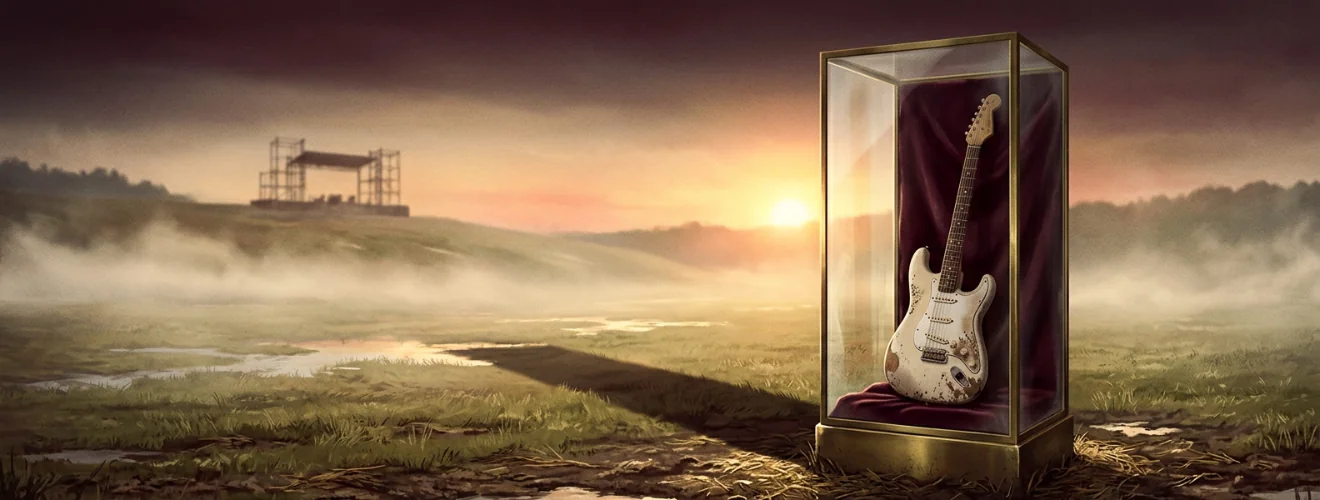
On June 7, 1993, Pete Townshend went to Cleveland to help break ground for the Rock Hall’s new home, in the company of Chuck Berry, Billy Joel, Sam Phillips and Ruth Brown, and summed up the occasion with admirable restraint: ‘We’re breaking ground, it’s fun, I’m happy about it.’ The city had pledged $65 million of the $92 million the building would cost. The Who were inductees by then, which put Townshend in the unusual position of helping to dig the foundations of a building he was already in.
Woodstock itself was a festival of things not happening where they were supposed to. It was meant to take place in the town of Woodstock, New York, and kept the name after the venue changed four times and landed on Max Yasgur’s dairy farm in Bethel, about 60 miles away. Three-day tickets cost $18 in advance and $24 at the gate, right up until the organizers failed to get the fences and ticket booths finished and the whole thing became, by default, a free concert for somewhere between 400,000 and 500,000 people. Two of its biggest names, Jimi Hendrix and Janis Joplin, were dead by October 1970, years before the Hall existed to receive them.
Of every act that played Woodstock, seventeen have not been inducted, among them Richie Havens, who opened the festival because the scheduled opener, Sweetwater, was stuck in traffic with all its instruments. The rest are here in the order they took the stage, from a pregnant folk singer in the small hours of Saturday to Hendrix on Monday morning. Getting to Bethel in 1969 was hard. Getting into Cleveland took some of them decades.
Fourteen of the 31 acts that played the Woodstock festival in Bethel, New York, on August 15-18, 1969, are in the Rock and Roll Hall of Fame. A solo performer counts if inducted with any act, and a group if it, or all its members, got in. The Who went in first, in 1990; Joe Cocker’s 2025 induction made fourteen.
Joan Baez
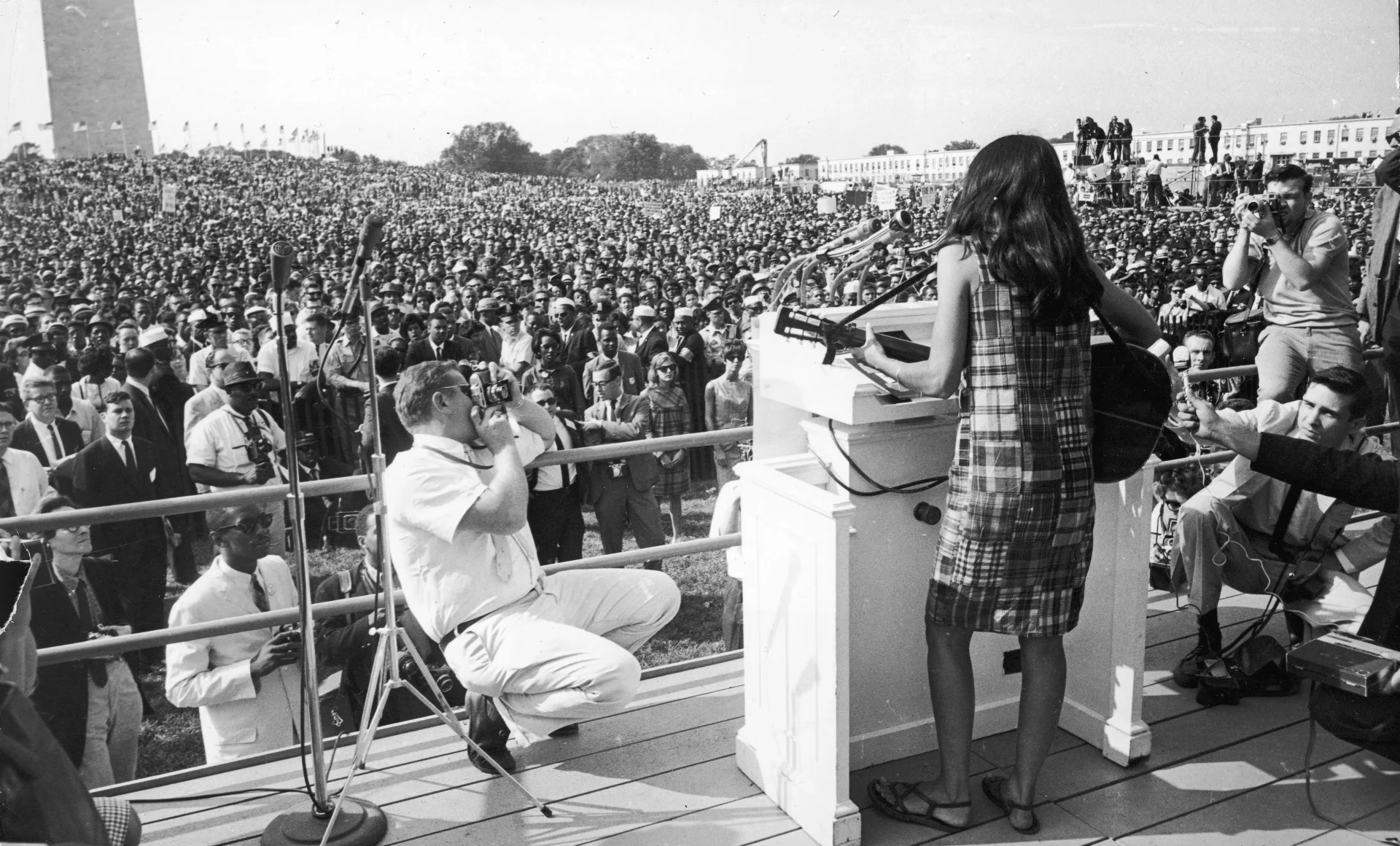
‘I ended up with my mother, my manager, Janis Joplin and I don’t know who else in that helicopter,’ Joan Baez said of getting to Woodstock, which is as good a one-line summary of 1969 as anyone has produced. She was about six months pregnant. Her husband, David Harris, was in a Texas prison for refusing to fight in Vietnam, and she told the crowd he already had a hunger strike going ‘with 42 federal prisoners, none of who were draft people.’
Baez closed Friday’s bill, taking the stage a little before 1 a.m. after Ravi Shankar, Melanie and Arlo Guthrie. She played 14 songs, the end of the set in a torrential downpour, and finished with ‘Swing Low, Sweet Chariot’ and ‘We Shall Overcome.’ ‘This is an organizing song,’ she said before ‘Joe Hill,’ which made the film. Her debut album had come out on Vanguard in October 1960, so she was a veteran among the newcomers.
The Hall took until 2017. Jackson Browne inducted her at the Barclays Center in Brooklyn on April 7, recalling that the first record he ever bought with his own money was her second album. Baez thanked the Hall ‘for this somewhat unlikely induction’ and reported that her granddaughter had no clue who she was until a trip backstage at a Taylor Swift concert produced a selfie, an autograph, a T-shirt ‘and newfound respect for her grandmother.’ Rock and roll has rarely been put in its place so politely.
Santana
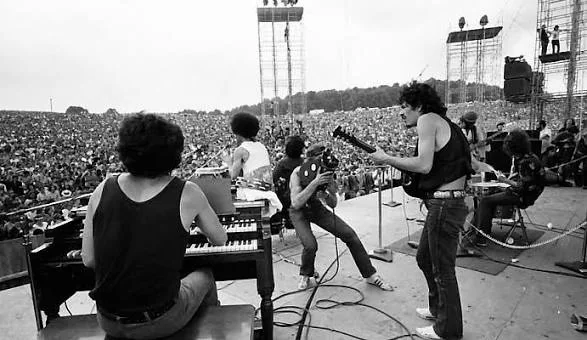
Bill Graham agreed to promote Woodstock on one condition: that the organizers add Santana to the bill. It was a large favor for a band with nothing in the shops. ‘We didn’t even have a record out,’ said the drummer, Michael Shrieve. The debut album, recorded in May 1969, was released on August 30, after the festival was over, so the 45-minute slot on the afternoon of Saturday, August 16, served as the strangest record launch of the year. ‘After Woodstock,’ Graham warned Carlos Santana, ‘your head is going to be so big you’re going to need a shoehorn to walk into a room.’
Santana was not, that afternoon, in a position to worry about the size of his head. ‘It was mescaline,’ he said in 2019 of what Jerry Garcia had offered him, and he spent the set wrestling his guitar, which felt to him like holding an ‘electric snake.’ ‘It was like being inside a kaleidoscope,’ he said. Shrieve was 20, and his solo in ‘Soul Sacrifice’ became one of the defining passages of the film when it opened on March 26, 1970.
The Hall inducted six members in New York on January 12, 1998, with John Popper presenting and comparing improvisation to taking on ‘a discipline like a samurai.’ The album that was not out in time peaked at No. 4. Graham, it turned out, had undersold the shoehorn.
John Sebastian
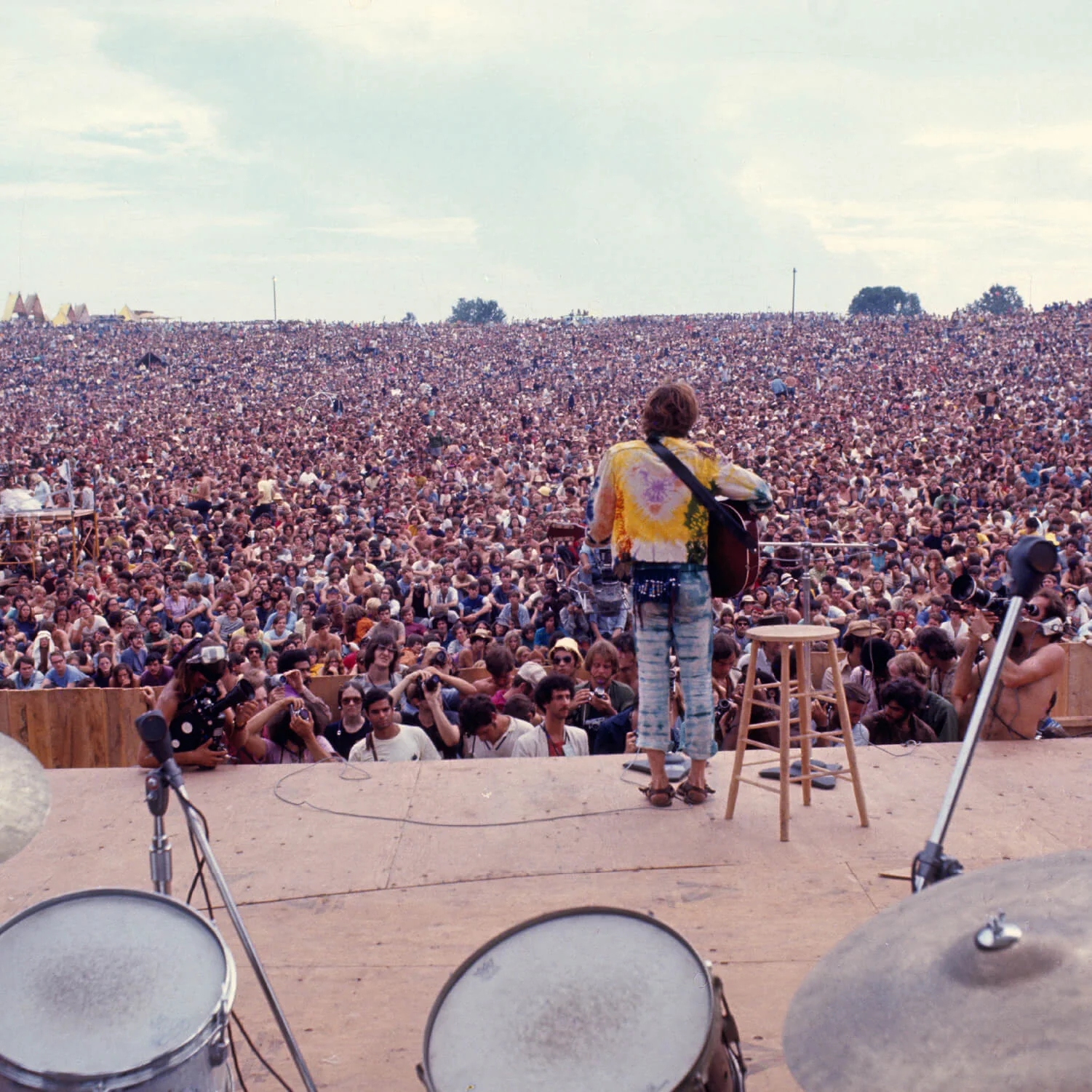
John Sebastian was not on the program. ‘I wasn’t scheduled to perform, but I was there from the beginning,’ he said, and his first night he slept in an eight-by-eight-foot space with the Incredible String Band, all their instruments and lots of other people. When the crew needed time to sweep the stage before an amp could go on it, he was asked to hold it with an acoustic guitar. He went on in a tie-dyed Levi’s jacket and jeans, and the jeans were later stolen out of a New York laundromat. ‘I’ve spent 20 years living down the outfit I was wearing,’ he said.
He had left the Lovin’ Spoonful, the band of ‘Do You Believe in Magic,’ in 1968, and played a short solo set that included ‘Darling Be Home Soon’ and ‘Younger Generation,’ which he dedicated to a newborn baby at the festival and which made the film. His own review was unsparing: ‘one of my lousiest performances, because by the time I was asked to play I was as stoned as everybody else.’
The Spoonful went into the Hall at the Waldorf-Astoria on March 6, 2000, inducted by John Mellencamp, and it was the last time the four original members played together; Zal Yanovsky died in December 2002. Sebastian’s tie-dyed denim jacket has since been displayed by the Hall itself, which is a considerable honor for an outfit its owner spent two decades apologizing for.
Grateful Dead
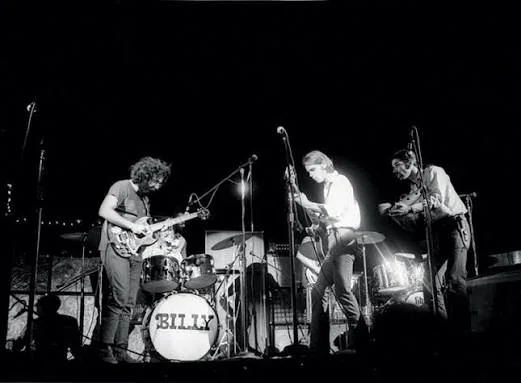
‘It was raining toads when we played,’ Bob Weir said of the Grateful Dead’s Woodstock set, and the toads were the least of it. The rain had flooded the stage, the band’s heavy equipment had squashed it, and the electricity was, in Weir’s phrase, coming through him: ‘I was conducting!’ He remembered a blue spark ‘about the size of a baseball’ lifting him off his feet and sending him back to his amplifier. Phil Lesh’s bass monitor, meanwhile, was picking up the radio of a helicopter.
The set ran from about 10:30 p.m. on Saturday to around midnight and ended with a ‘Turn On Your Lovelight’ that lasts 38:42 on the surviving tape, cut off only when the stage amps overloaded. The band hated it. ‘It was so bad that we didn’t allow it to be in the movie,’ said the drummer Bill Kreutzmann, and the film carries the Dead as nothing more than a sound bite of Jerry Garcia.
Bruce Hornsby inducted them in New York in January 1994, and Garcia, having said that tuxedo-clad events were not his scene, stayed away. The band brought a cardboard cutout of him instead, which put the Dead among the acts that refused or skipped their own Rock Hall induction, and Lesh accepted with a line from ‘Truckin’’: ‘It has been long, it has been strange, and it has definitely been a trip.’ The cutout, unlike the man, showed up.
Creedence Clearwater Revival
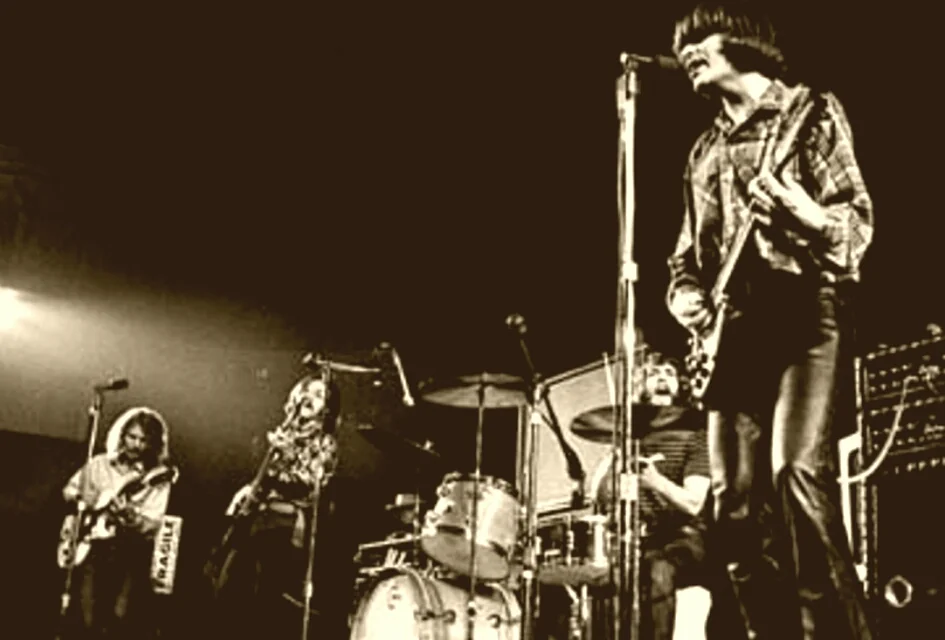
In April 1969, Creedence Clearwater Revival reportedly became the first act to sign a contract for Woodstock, for about $10,000, and the signature did what the promoters hoped. ‘Once Creedence signed, everyone else jumped in line,’ the drummer Doug Clifford said. The band had been promised prime time on Saturday night. ‘What they didn’t tell me,’ John Fogerty said, ‘is, You’re gonna follow the Grateful Dead.’
So the band Fogerty called ‘the hottest thing on Earth at the moment’ went on at about 12:30 a.m. on Sunday, in front of a field that looked to him like ‘one of those pictures of the souls coming up out of Hell’ and was, he noticed, asleep. Then, about a quarter of a mile away, a lighter flicked and a voice called out: ‘Don’t worry about it, John! We’re with ya!’ Fogerty played the rest of the show for that one man, and afterward kept Creedence out of both the film and the soundtrack. The complete 11-song set was released in August 2019 as Live at Woodstock.
Bruce Springsteen inducted the four members at the Century Plaza Hotel in Los Angeles on January 12, 1993, and Fogerty refused to play with Stu Cook and Clifford, performing instead with an all-star band. Tom Fogerty, who died in 1990, was present after a fashion: his widow brought his ashes in an urn. Cook and Clifford called the snub hurtful and insulting. The Hall’s Jann Wenner replied, ‘It’s not our job to reconcile groups.’
Janis Joplin
Bessie Smith’s grave in Mount Lawn Cemetery, Sharon Hill, Pennsylvania, had been unmarked for 33 years when a headstone finally went up in August 1970. It read ‘The Greatest Blues Singer in the World Will Never Stop Singing,’ and Janis Joplin had paid for it, with Juanita Green. Smith, Joplin said, ‘showed me the air and taught me how to fill it,’ and in 1989 Smith joined the Rock Hall’s early influence inductees.
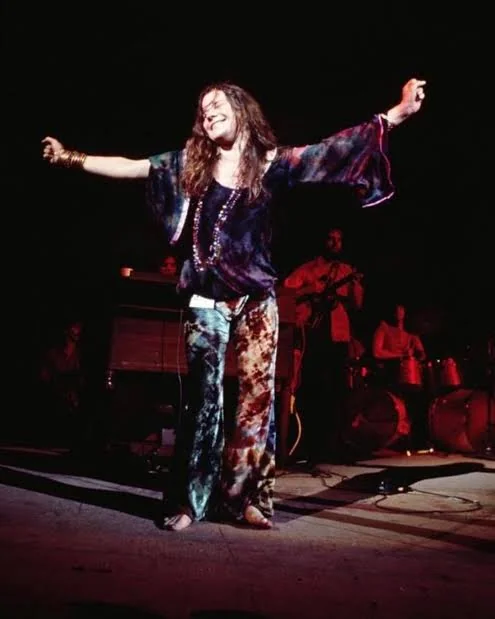
Joplin’s Woodstock was not one of her great nights. Delayed sets, bad weather and technical trouble kept her off the stage until more than 10 hours past her scheduled time, and she went on at about 2 a.m. on Sunday, August 17, with the Kozmic Blues Band, whose album came out that September. Pete Townshend, watching, thought she was not at her best, ‘due, probably, to the long delay, and probably, too, to the amount of booze and heroin she’d consumed while she waited.’ She still checked on the crowd: ‘You’re staying stoned and you got enough water and you got a place to sleep and everything?’ At her own insistence, her singing was left out of the 1970 film and the soundtrack.
She died on October 4, 1970, at 27. On January 12, 1995, Melissa Etheridge inducted her, and her family accepted. The Hall, for once, had the order exactly right: the teacher first, then the pupil.
Sly and the Family Stone
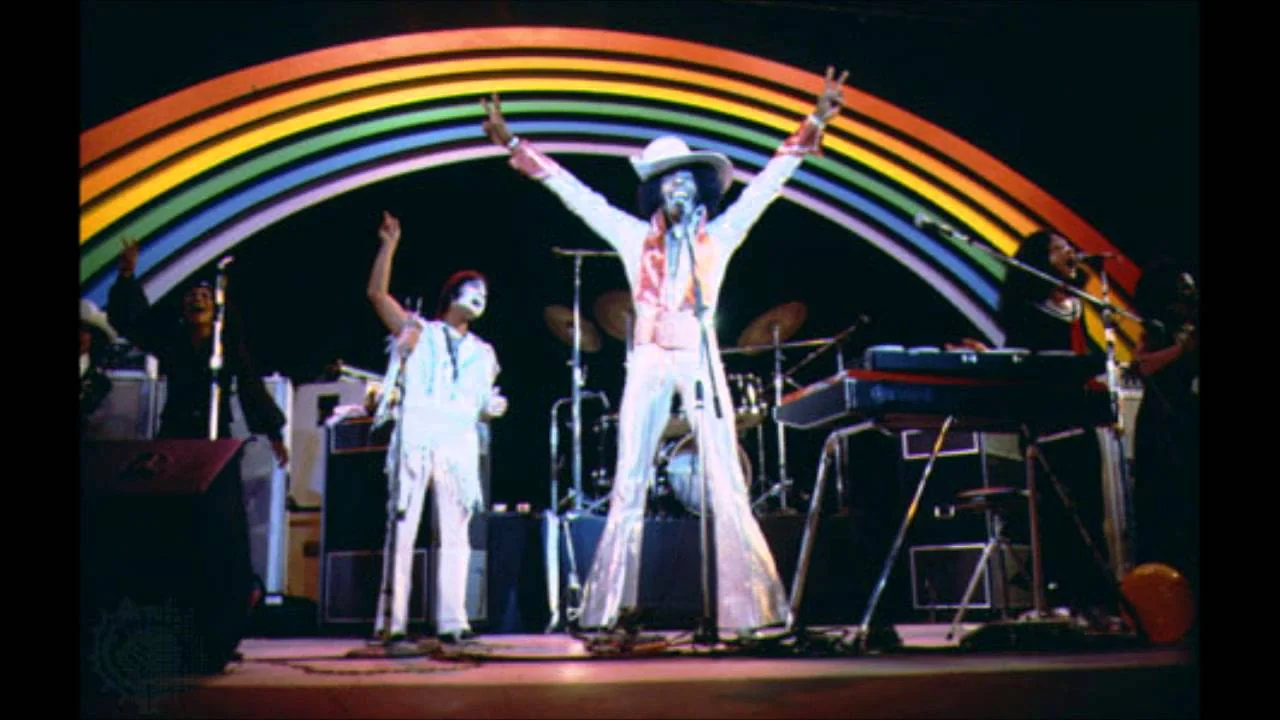
At about 3:30 on a Sunday morning, with most of a sodden field trying to sleep, Sly Stone had the Woodstock crowd shouting ‘higher!’ back at him, which is more than anyone else managed with that audience at that hour. Sly and the Family Stone played until about 4:20 a.m. on August 17, and the drummer, Greg Errico, said that by the third or fourth song there was ‘unbelievable energy being transferred between the stage and the audience.’
They arrived as a band with a No. 1 single, ‘Everyday People,’ which had spent four weeks at the top of the Billboard Hot 100 that winter, and an album, Stand!, released in May 1969. The festival’s own history describes a band of ‘black and white members, men and women, which wasn’t that usual at that time,’ and Rolling Stone called them the only deep-R&B act on the bill. On June 29, 1969, they had played the Harlem Cultural Festival with Black Panther Party members handling security, which made a muddy farm in Bethel look restful. The 1970 film caught the ‘Higher’ chant in full cry.
George Clinton inducted all seven members on January 12, 1993, at the first induction ceremony ever held on the West Coast. Sly appeared, visibly uneasy, thanked everyone, and signed off with ‘see you soon.’ He died on June 9, 2025, at 82, and that November the Hall opened its 2025 ceremony with a tribute to him, Jennifer Hudson singing ‘Higher.’ The crowd, this time, was awake.
The Who
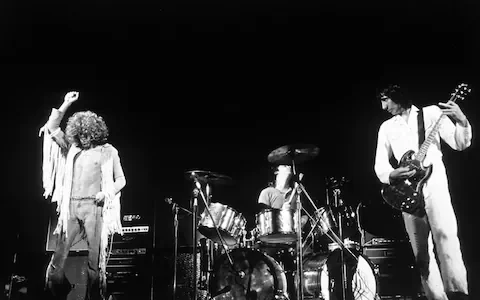
Abbie Hoffman picked the wrong band to interrupt. Partway through the Who’s Woodstock set, the activist seized a microphone to declare, ‘I think this is a pile of shit while John Sinclair rots in prison!’ Pete Townshend’s reply was short and unprintable, and by his own account he then ‘knocked Abbie aside using the headstock of my guitar.’ Guitar World reports that the audience cheered.
The band had gone on at about 5 a.m. on the Sunday, after reportedly insisting on being paid first, a sum variously given as $11,200, $12,500 or $13,000. ‘We had to get paid, or we couldn’t get back home,’ Roger Daltrey explained. They played most of Tommy, released that May. The timing was providential. As soon as the words ‘See me’ left his mouth, Daltrey said, ‘this huge, red August sun popped its head out of the horizon, over the crowd.’ John Entwistle put it more economically: ‘God was our lighting man.’ At the end Townshend bashed his guitar on the stage and threw it into the crowd.
U2 inducted the Who in New York on January 17, 1990. Bono’s verdict, on the Hall’s own page: ‘More than any other group that ever was, The Who were our role models.’ The same page notes that the Who once held a Guinness World Record as one of the loudest bands in the world. Hoffman, in fairness, had chosen a difficult room in which to make himself heard.
Jefferson Airplane
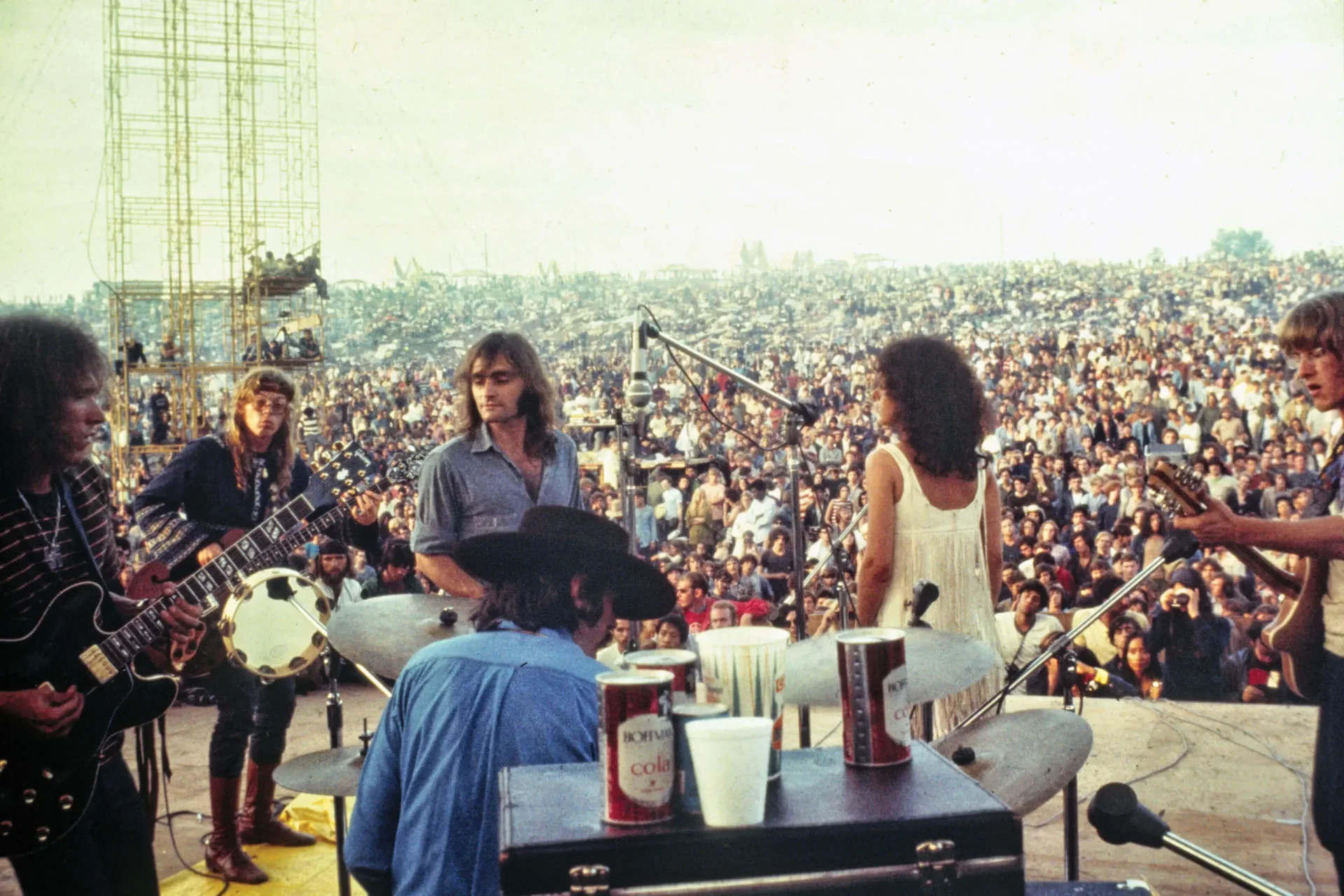
‘Alright, friends, you have seen the heavy groups,’ Grace Slick told the field. ‘Now you will see morning maniac music.’ It was about 8 a.m. on the Sunday, and Jefferson Airplane, billed as Saturday’s headliner, had finally made it on. ‘We were supposed to go on at midnight,’ said the drummer, Spencer Dryden. ‘We finally went on at dawn. And by that time, most of the audience was asleep.’ Jack Casady remembered everyone being ‘dog tired, out of tune’ and awake for about 24 hours.
Nicky Hopkins, who had played on the Volunteers sessions, came along on piano for what he was told would be an open-air concert of ‘about three days.’ The light show fared worse. ‘The Airplane comes on and the sun comes up,’ said Glenn McKay, who ran it, and no light show could compete with that. Slick’s complaint was more practical: she had ‘a bladder about the size of a dime’ and there was no getting off the stage to find a bathroom. According to their manager, Bill Thompson, Paul Kantner thought the performance was bad and killed the band’s appearance in the film, although ‘Volunteers’ made the soundtrack album.
Mickey Hart and Phil Lesh of the Grateful Dead inducted all six members at the Waldorf Astoria on January 17, 1996. Slick was absent, claiming, as Rolling Stone put it, a mysterious foot ailment. Of the six, she had the best claim to a lie-in.
Joe Cocker
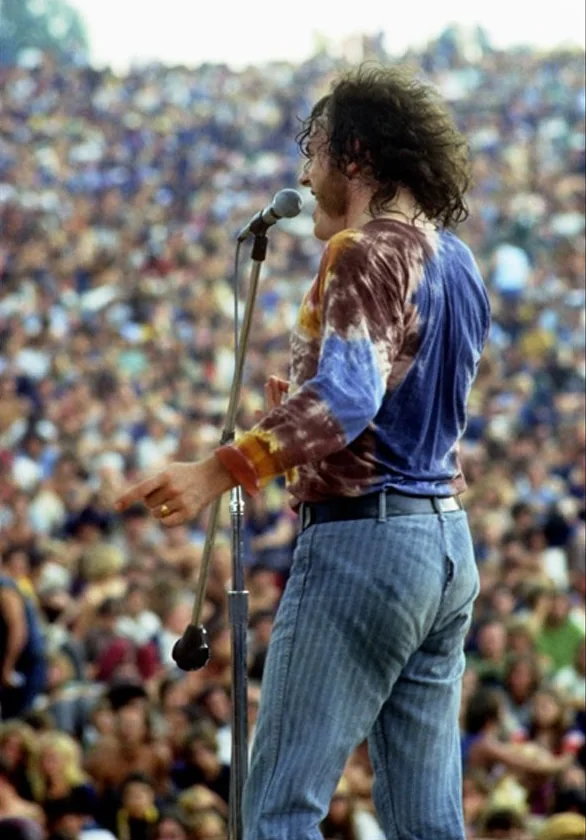
The first officially scheduled act on Sunday was a singer who, as the festival’s own history puts it, had been in the music business for quite a while and was hardly known. Joe Cocker and the Grease Band had to be flown in by helicopter, went on at about 2 p.m. on August 17, and needed, by Cocker’s reckoning, ‘about half the set just to get through to everybody.’ Then came ‘With a Little Help from My Friends.’ It had already been a UK No. 1 in November 1968, and it became one of the film’s defining scenes.
Cocker played no instrument on stage. ‘I would just do these motions like Ray Charles… or air guitar,’ he explained, and the AP remembered the arms flailing, the hips stretching and the face contorting. Shortly after his set a heavy thunderstorm washed over the festival and brought everything to a stop for several hours, which as exits go is difficult to top. One tally puts his fee at $1,375.
He died of lung cancer on December 22, 2014, aged 70, and the Hall reached him in 2025, his first time as a nominee. Bryan Adams, who co-wrote and played guitar on Cocker’s 1989 hit ‘When the Night Comes,’ inducted him at the Peacock Theater in Los Angeles: ‘It’s one thing to cover a song, but it’s another to make it your own. And that’s what Joe could do.’ The night closed, inevitably, with ‘With a Little Help From My Friends.’
The Band
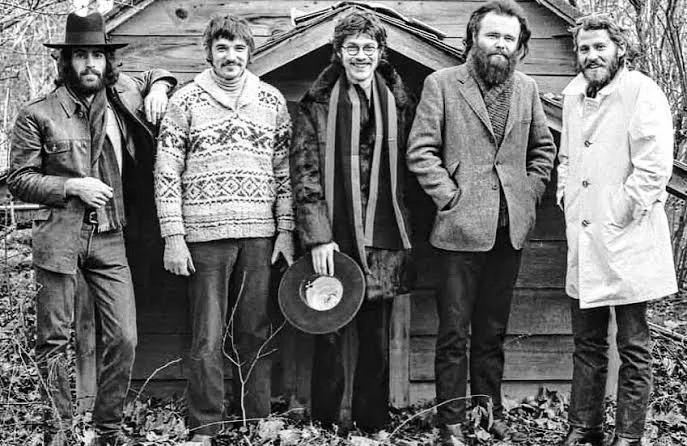
Woodstock’s promoters had originally imagined a concert featuring the kind of artists known to frequent the area, ‘such as Bob Dylan and the Band,’ and of those two only the Band showed up. They at least lived near the place the festival was named after. ‘We lived up there, near Woodstock,’ Robbie Robertson said, ‘and it seemed kind of appropriate from our point of view.’ Their debut, Music from Big Pink, was named for a house on Stoll Road in Saugerties.
They went on at about 10 p.m. on Sunday, after a thunderstorm had held up the show for more than three hours, and played what Robertson called ‘a slow, haunting set of mountain music,’ opening with ‘Chest Fever’ and including ‘The Weight.’ Garth Hudson’s organ introduction was an improvisation on Bach’s Toccata and Fugue in D minor. Backstage, Levon Helm recalled, ‘There weren’t any dressing rooms because they’d been turned into emergency clinics.’ The set stayed out of the film. Offered half their fee for the movie rights, their manager, Albert Grossman, ‘naturally said no.’
Eric Clapton did the inducting, at the January 1994 ceremony that also took in the Grateful Dead. Helm stayed away, still at odds with Robertson over songwriting credits, and Robertson, Rick Danko and Hudson played ‘The Weight’ with Clapton at the closing jam. Richard Manuel had died in 1986, Danko followed in 1999, Helm in 2012 and Robertson in 2023. Hudson, the last of the five, died on January 21, 2025, at 87.
Crosby, Stills, Nash & Young
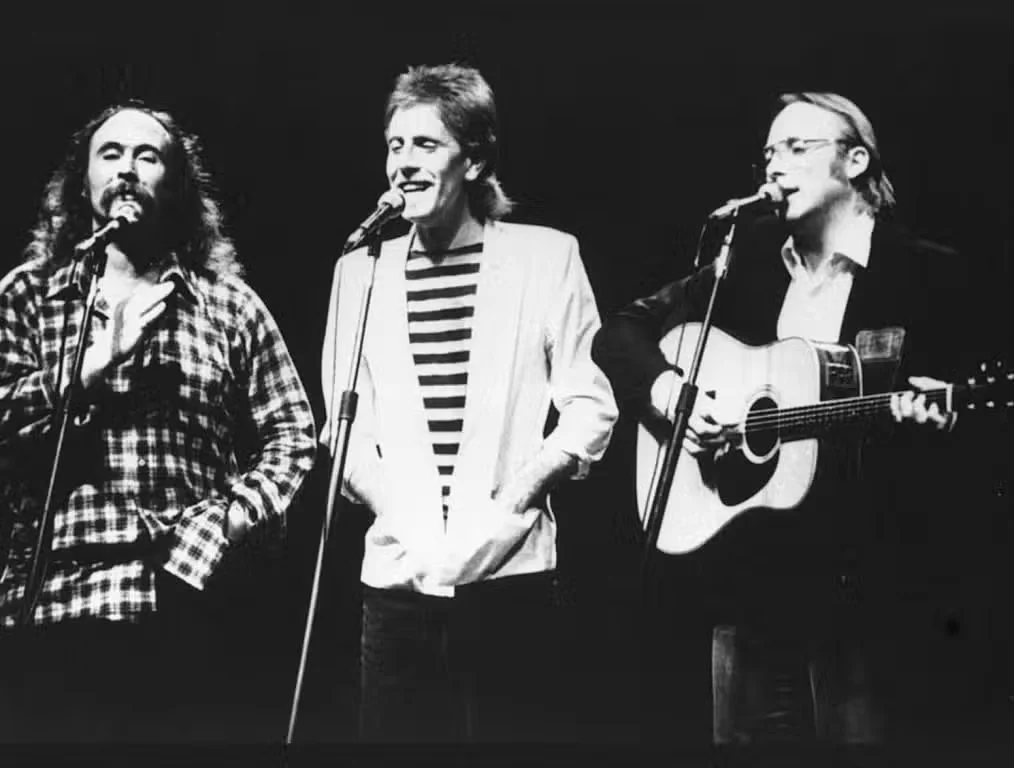
‘We’re scared shitless,’ Stephen Stills told the Woodstock crowd, explaining that this was only the second time the band had played in front of people. Graham Nash later insisted the audience was not the problem: ‘We were more concerned with our peers.’ The quartet went on at about 3 a.m. on Monday, August 18, opened with ‘Suite: Judy Blue Eyes,’ played an acoustic set and then an electric one, and closed with ‘Find the Cost of Freedom’ and ‘49 Bye-Byes.’ ‘I thought we did a lousy set,’ Nash said.
Neil Young sat out most of the acoustic half. He also wanted nothing to do with the film crew: ‘I didn’t like the fucking cameras,’ he said, with feeling. His name was duly left off the film, though the soundtrack album credits two tracks to all four. One of them, ‘Sea of Madness,’ was in fact recorded at a Fillmore East concert a month after the festival, so the album’s only Neil Young song does not come from Woodstock.
The quartet has no entry of its own in the Hall, though all four men are inductees. Eddie Vedder inducted Young as a solo artist in 1995, and James Taylor inducted Crosby, Stills and Nash in Cleveland in 1997. Young skipped that ceremony, having chastised the Hall for its $1,500 tickets and for allowing the event to be televised. ‘Well,’ said Stills, ‘he quit again.’
Paul Butterfield Blues Band
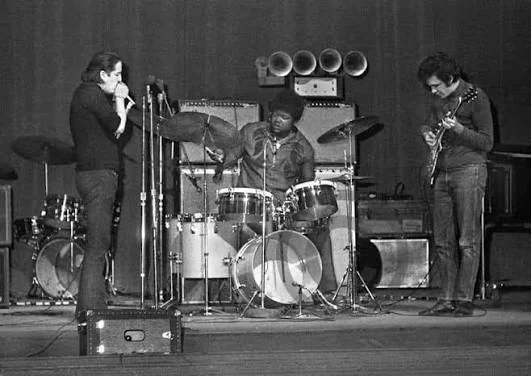
Seven members of the Paul Butterfield Blues Band are inductees, and exactly one of them played Woodstock. The Hall chose the band’s first great lineup – Michael Bloomfield, Elvin Bishop, Jerome Arnold, Mark Naftalin, Sam Lay, Billy Davenport and Butterfield himself – the integrated Chicago group the Hall credits with rocketing the blues ‘straight into the stratosphere.’ Bloomfield had left in February 1967. By August 1969 Butterfield was fronting a horn band, with David Sanborn on alto saxophone.
That band went on at about 6 a.m. on the Monday and played seven songs, among them ‘Born Under a Bad Sign’ and ‘Love March,’ which made the 1970 soundtrack album but not the film. The older lineup had already been present at a louder piece of history. On July 25, 1965, Bloomfield, Arnold and Lay backed Bob Dylan when he went electric at the Newport Folk Festival, a performance Butterfield himself sat out. That same weekend, remarks Alan Lomax made about the Butterfield band provoked a backstage fistfight with Albert Grossman, who managed it.
Butterfield died on May 4, 1987, aged 44, and Peter Wolf inducted the band at Cleveland’s Public Hall on April 18, 2015. Bishop recalled that in Cleveland the group had not been allowed to stay in a white hotel because it was integrated. His verdict on the honor: ‘I think the Butterfield Band probably sold fewer records than anybody in the damn Hall, you know?’ Nobody at the induction asked to see the receipts.
Jimi Hendrix
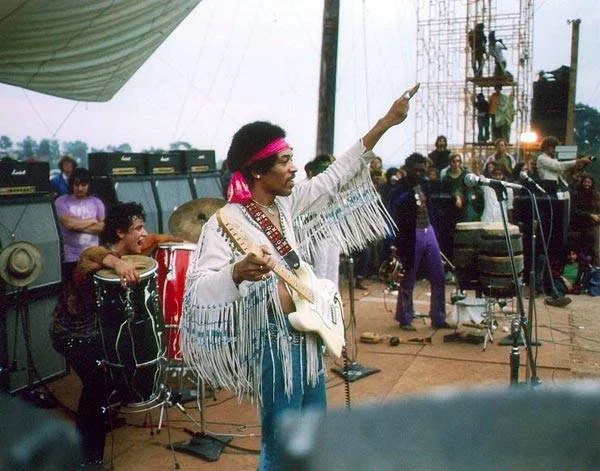
By the time Jimi Hendrix walked on at about 9 on the Monday morning, the crowd had dwindled to somewhere between 30,000 and 40,000. He had insisted on closing the festival. The schedule had slipped by some ten hours, so the best-paid act of the weekend, at a reported $18,000, played to the stragglers. He introduced the band as Gypsy Sun and Rainbows, not the Experience: Billy Cox on bass, Larry Lee on second guitar, two percussionists and, from the Experience, only Mitch Mitchell on drums.
Partway through came ‘The Star-Spangled Banner.’ According to Jerry Morrison, Hendrix’s manager, Mike Jeffrey, had said no to it, since ‘It had caused a riot in Dallas.’ Hendrix played it anyway. He wore a white fringed and beaded leather top and a red scarf around his head, and the journalist Al Aronowitz called the anthem ‘probably the single greatest moment of the sixties.’
From late 1964 to mid-1965 Hendrix had played guitar in the touring band of Little Richard, who went into the Rock Hall’s inaugural class in 1986. Richard’s brother Robert Penniman, who fired him, said Hendrix was a damn good guitar player ‘but the guy was never on time.’ The Experience followed in 1992, inducted by Neil Young, who said Jimi showed him that on guitar ‘you can play – or you can transcend.’ At Woodstock it was Hendrix who was kept waiting.
Frequently Asked Questions
Which Woodstock musicians are in the Rock Hall through a different act?
Two Woodstock sidemen got in another way, and one band member twice. Nicky Hopkins, Jefferson Airplane’s pianist that weekend, was inducted for Musical Excellence in 2025. Tommy Shannon, who played bass for Johnny Winter, went in with Stevie Ray Vaughan and Double Trouble in 2015. Gregg Rolie, Santana’s organist, was inducted again with Journey in 2017.
Are all four members of Crosby, Stills, Nash and Young in the Hall twice?
Yes. David Crosby was also inducted with the Byrds in 1991, Neil Young solo in 1995 and with Buffalo Springfield in 1997, and Graham Nash with the Hollies in 2010. Stephen Stills went in with Crosby, Stills and Nash and with Buffalo Springfield on the same night, May 6, 1997, the first artist ever inducted twice in one evening.
Which famous acts turned down Woodstock?
Several future Hall of Famers said no. Led Zeppelin’s manager, Peter Grant, reasoned that ‘at Woodstock we’d have just been another band on the bill.’ A member of the Doors later admitted, ‘We never played at Woodstock because we were stupid and turned it down.’ Bob Dylan skipped it and played the Isle of Wight on August 31, 1969, instead.
Was Joni Mitchell at Woodstock?
No. Her manager, Elliot Roberts, decided she should stay away because she was booked on The Dick Cavett Show, and she wrote the song ‘Woodstock’ from a distance, saying the deprivation of not going gave her ‘an intense angle on Woodstock.’ She also skipped her own Rock Hall induction in 1997; Graham Nash accepted on her behalf.
Why isn’t Blood, Sweat & Tears on the list?
Blood, Sweat & Tears played Woodstock but is not an inductee. Its founder, Al Kooper, did enter the Hall, for Musical Excellence in 2023, but he had left the band in 1968 over creative differences, so he was not on the Woodstock stage with it. Under this list’s rule, his induction does not carry the band in.
- Rock and Roll Hall of Fame: The Who
- Rock and Roll Hall of Fame: Class of 2025 Inductees
- Woodstock: The 1969 Lineup
- Bethel Woods Center for the Arts: Woodstock History
- Rolling Stone: A History of Rock and Roll Hall of Fame No-Shows
- Guitar World: Woodstock 1969, High Times
- The Philadelphia Inquirer (AP): Joe Cocker, 70, British Singer With Frenzied Style
- Ultimate Classic Rock: Woodstock History