Every Wizarding Sport and Game in Harry Potter
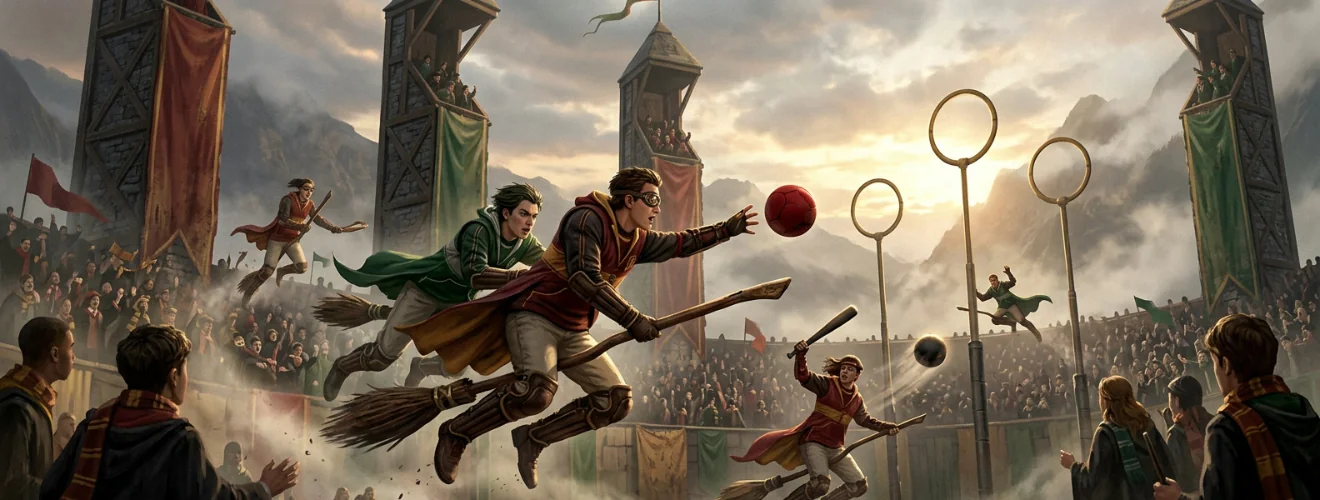
Quidditch began, by its inventor’s own account, in a temper. In the margin of a first edition of Philosopher’s Stone, annotated for a charity auction and printed by The Guardian on 18 May 2013, J.K. Rowling wrote that the game “was invented in a small hotel in Manchester after a row with my then boyfriend.” She had been thinking about what holds a society together, and knew her wizards needed a sport. She also noted, with some relish, that the result “infuriates men, in my experience (why is the Snitch so valuable etc.)”
The row produced one game. Most of the others turned up in 2001, in a slim volume that sits beside every Harry Potter book in print under somebody else’s name. Quidditch Through the Ages, credited to the fictional Kennilworthy Whisp, sold for 2.50 pounds in aid of Comic Relief, and its second chapter does something the novels never bother to do: it catalogues the broom games wizards played before Quidditch, most of which sound less like sport than an insurance claim. Reuters, reporting the launch, quoted Rowling saying she always writes more than she needs, and that bits of these books “were just written for my own fun.” It shows.
What follows is every competitive sport, game and formal contest the canon actually names – the seven novels, Whisp’s book and Rowling’s own Wizarding World writing – arranged from the sky downwards: the games played on brooms, the games played by ghosts who have misplaced their heads, the games played across a table, and the two contests where the losers could end up in the hospital wing or worse. The Muggle games the Dursleys play are not here, and neither are the joke-shop novelties. An alarming number of the survivors were played with an animal’s bladder.
The Harry Potter canon names 16 competitive wizarding sports and games: nine broom games led by Quidditch, two Headless Hunt games (Head Polo and Head Hockey), three table games (Gobstones, wizard chess and Exploding Snap), and two formal contests, duelling and the Triwizard Tournament. The canon is the seven novels, Quidditch Through the Ages and Rowling’s Wizarding World writing.
Quidditch
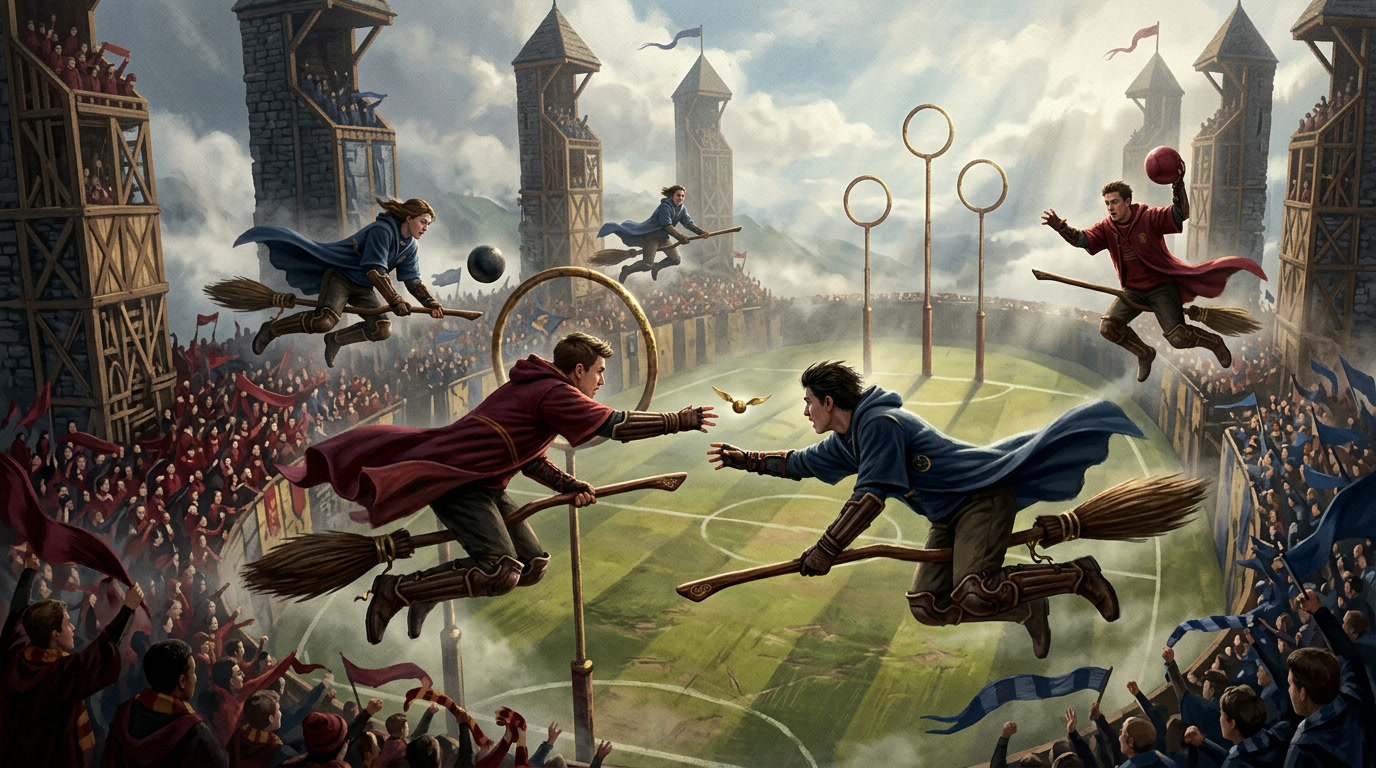
There are seven hundred ways to commit a foul in Quidditch, and Philosopher’s Stone records that every one of them was committed in a single World Cup match in 1473. That is the game in a sentence. Seven players a side chase four balls of three kinds, a Quaffle goal is worth ten points, the Golden Snitch is worth 150, and the World Cup’s rulebook, according to Rowling’s own history of the tournament, is “alleged to stretch to nineteen volumes.”
Oliver Wood explains it all to Harry in chapter 10, and the detail he dwells on is the ending. A match, in Wood’s account, stops only when the Snitch is caught, which can take a while: “I think the record is three months,” he says, and substitutes had to be brought on so the players could get some sleep. The World Cup, Rowling writes, is less patient, capping group games at four hours. The 150 points are also less decisive than they look. At the 1994 final Viktor Krum caught the Snitch for Bulgaria and lost anyway, 170 to 160, to Ireland. Teams are usually mixed, and the Holyhead Harpies, one of the professional clubs of the British and Irish Quidditch League, are the famous all-female exception.
Somewhere in those nineteen volumes sits a rule that no dragon is to be introduced into the stadium “for any purpose including, but not limited to, team mascot, coach or cup warmer.” Nobody writes a rule like that in advance.
Quodpot
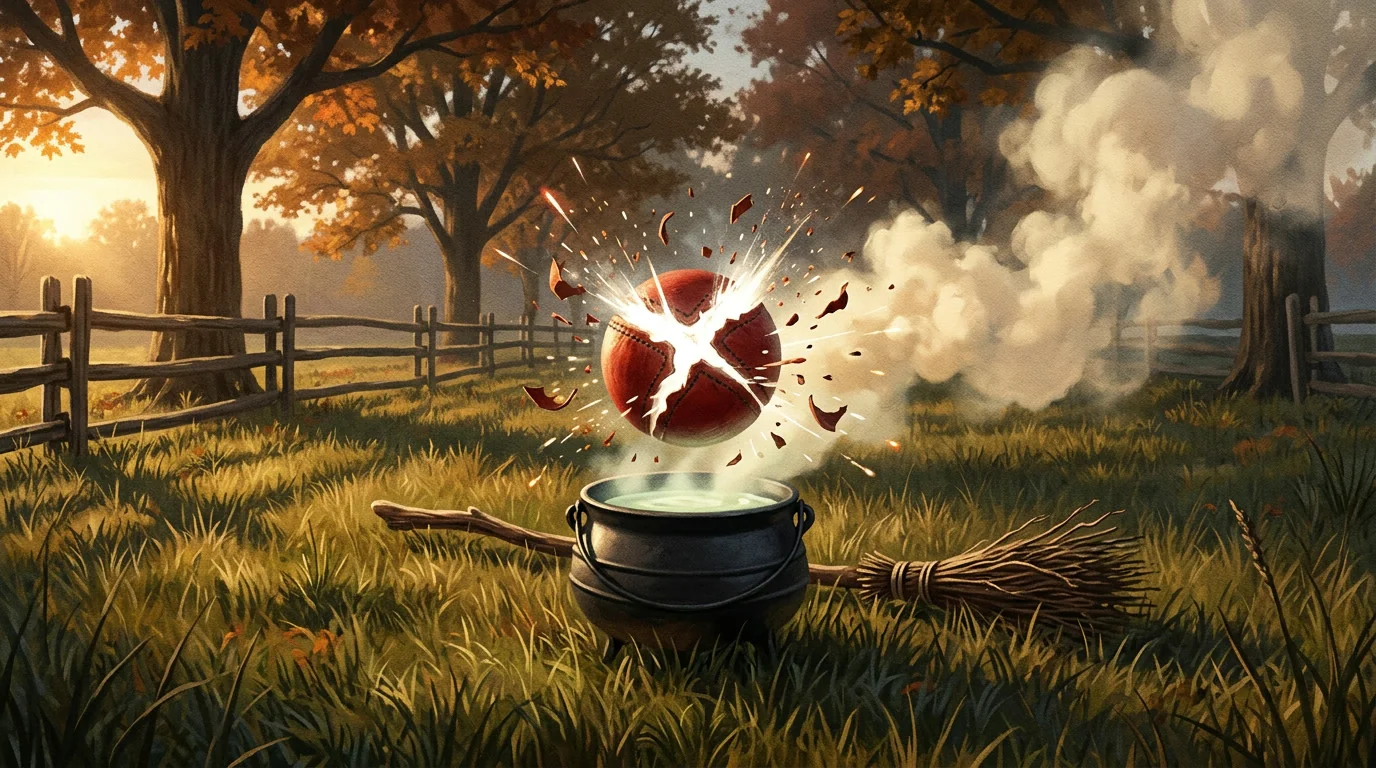
Writing as the Daily Prophet’s Quidditch correspondent Ginny Potter at the 2014 World Cup, Rowling observed that the US “has historically put up a poor show in international Quidditch, being the only country to have embraced the (frankly odd) game of Quodpot.” The odd part is the ball.
Quodpot is the American variant, and in Quidditch Through the Ages it begins with an accident. Abraham Peasegood emigrated to America intending to start a Quidditch team – in the eighteenth century, by the Harry Potter Lexicon’s dating – and his Quaffle exploded. Rather than replace it, he built a sport around the explosion. The Quod is a modified Quaffle that blows up if it stays in play too long. Eleven players a side pass it toward the “pot”, a small cauldron of solution that stops it going off, and each safe delivery scores a single point before a fresh Quod comes on. Anyone holding the ball when it explodes must leave the pitch, which is presumably the least of their problems.
None of this seems to have dampened American spirits. At the 2014 tournament the USA beat Liechtenstein 450 to 290 in the quarter-final, and American fans marked the occasion by kidnapping the Liechtenstein mascot, an Augurey named Hans. Getting him home took an exchange of owls between Samuel G. Quahog, President of MACUSA, and Otto Obermeier, Liechtenstein’s Minister for Magic. Quodpot, for once, had nothing to do with it.
Broom Racing
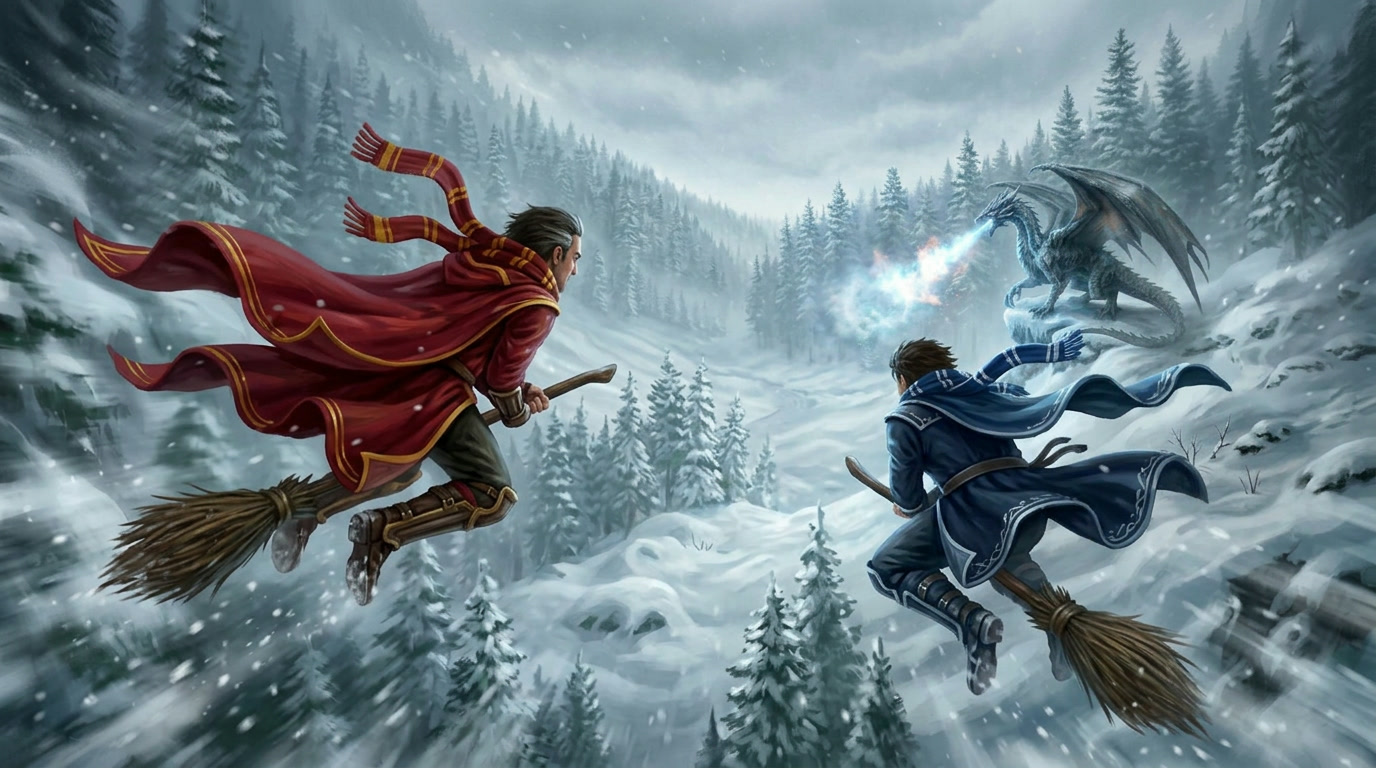
The course goes through a dragon reserve. The official site, harrypotter.com, describes the race from Kopparberg to Arjeplog in Sweden as a 300-mile affair “with the added excitement that the course passes through a dragon reserve (which has been known to burn out more than a few competitors over the years).” The spectators, Quidditch Through the Ages explains, sensibly Apparate from the start to the finish. The racers have to fly past the dragons.
Racing is the plainest idea in wizarding sport, a straight trial of speed, and harrypotter.com says it is as popular with wizards as it is with Muggles. The Swedish race is its showpiece. The Lexicon, working from Whisp’s second chapter, has it first run in the tenth century and held every year since, with the Swedish Short-Snout Dragon Reservation on the route. A Short-Snout, its official fact file says, breathes a brilliant blue flame hot enough to reduce wood and bone to ashes in seconds. Broomsticks are made of wood. Racers contain a fair amount of bone.
The geography is more ambitious than the arithmetic. The Lexicon points out that the two towns sit about 435 miles apart rather than 300, and that neither existed when the race supposedly began; the town of Kopparberg was founded as late as 1635. “Neither did Sweden,” the Lexicon adds, “at least not as a country.” Nobody seems to have consulted the dragons.
Creaothceann
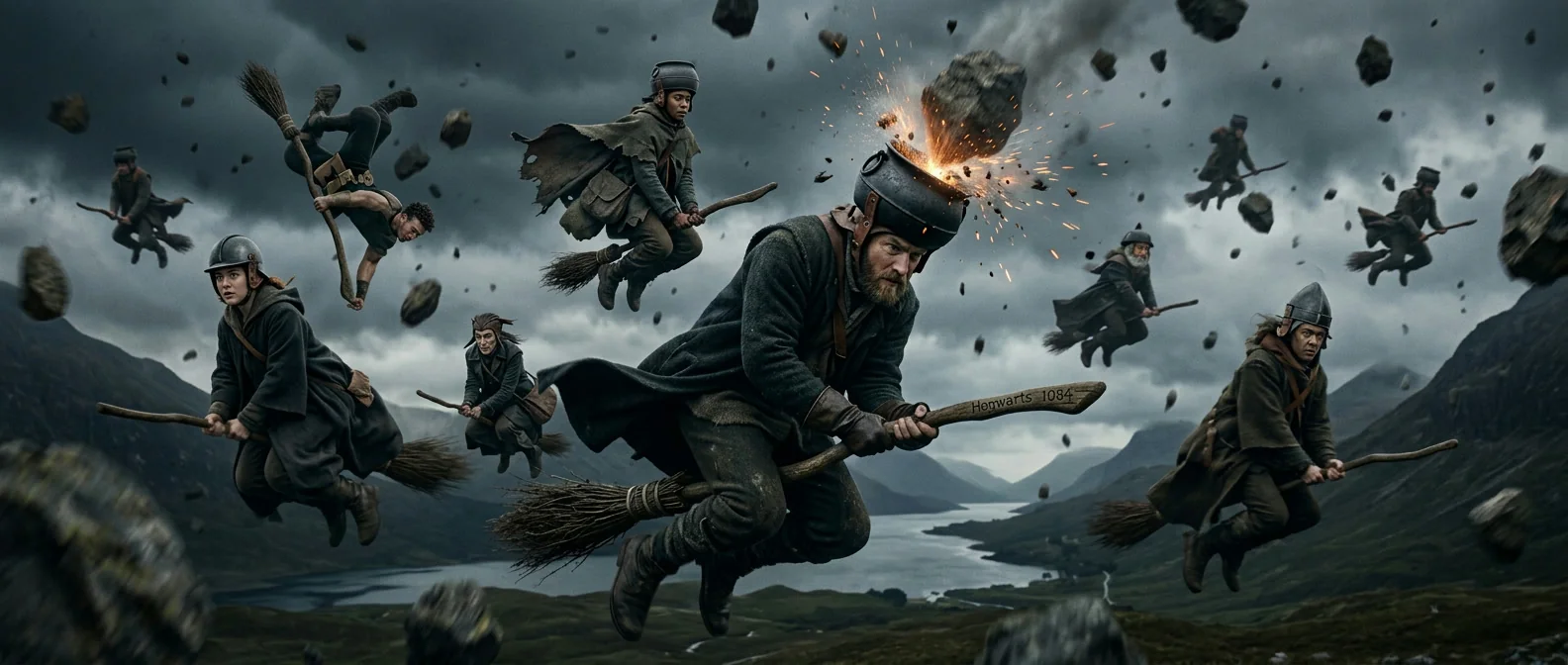
When Rowling once rattled off a list of wizarding sports, only Creaothceann came with a criminal record attached. “Quidditch, Quodpot, Creaothceann – officially banned but still played illegally – broom-racing, Gobstones and so forth,” she wrote, in a harrypotter.com piece about wizards and Scottish rugby, and the aside is fully earned.
The game is Scottish and medieval, and the Lexicon, summarising Quidditch Through the Ages, rates it probably the most dangerous of all broom games. Players flew with cauldrons strapped to their heads (harrypotter.com says helmets) and tried to catch falling rocks and boulders in them. A Gaelic poem of the eleventh century, preserved in Whisp’s chapter on ancient broom games, describes twelve men setting out to play, of whom “ten of their number were fated to die.” The book dates the ban to 1762, which suggests a remarkable degree of patience on someone’s part. Whisp even wonders whether the flying rocks drifted south into the early game at Queerditch Marsh, by way of a Scottish visitor, which would make Creaothceann an ancestor of the Bludger.
The ban was not universally welcomed. In the 1960s Magnus “Dent-Head” Macdonald led a campaign to bring the game back, and the Ministry of Magic declined to lift it. The nickname was probably the most persuasive evidence the Ministry had.
Aingingein
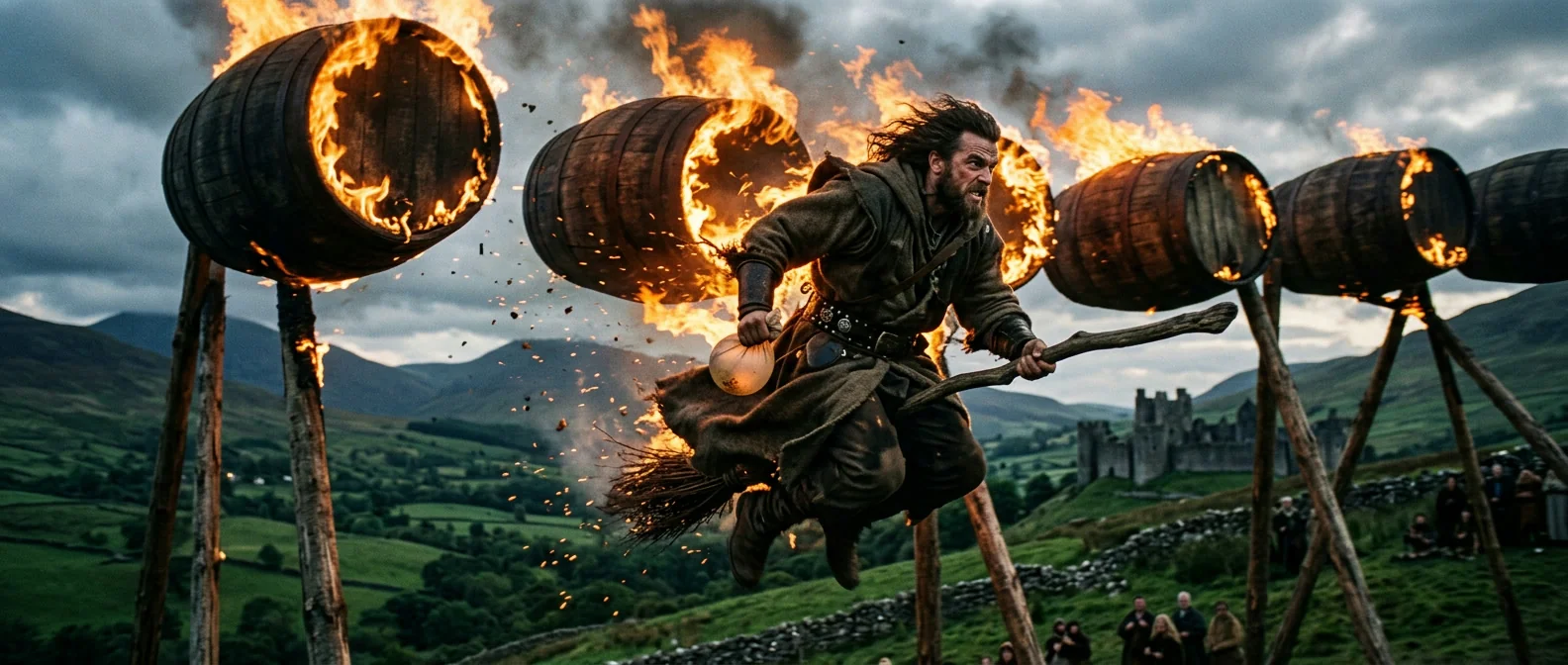
The ball, by the only account there is, was a goat’s gallbladder. In Aingingein, an Irish broom game described in Quidditch Through the Ages, players took the Dom – the gallbladder in question – one at a time and flew it through a series of burning barrels raised high in the air on stilts. Winning, as the Harry Potter Lexicon summarises the rules, meant getting the Dom through the flames against the clock without setting yourself on fire, a condition most sports leave unspoken.
Aingingein has something most of the old games lack, a celebrity. Fingal the Fearless, a wizard of Irish legend, is said to have been a champion, and the game turns up in Irish ballads. The name may be built from real Irish, too: the Lexicon traces it partly to aingeal, Irish for “fire, lighted coal”, and adds that domlas is the Irish word for the gall bladder. Whether the Dom was itself enchanted, the Lexicon notes, the book leaves open.
For all that, it is one of the quieter entries here. Whisp’s chapter gives it no date and no rulebook beyond that single run through the barrels, and harrypotter.com’s own tour of the old wizarding games names Shuntbumps, Swivenhodge, Stichstock and Creaothceann while leaving Aingingein out entirely. Everything known about it comes from a few lines in one charity book. For a sport conducted through flaming barrels, it has kept a remarkably low profile.
Shuntbumps
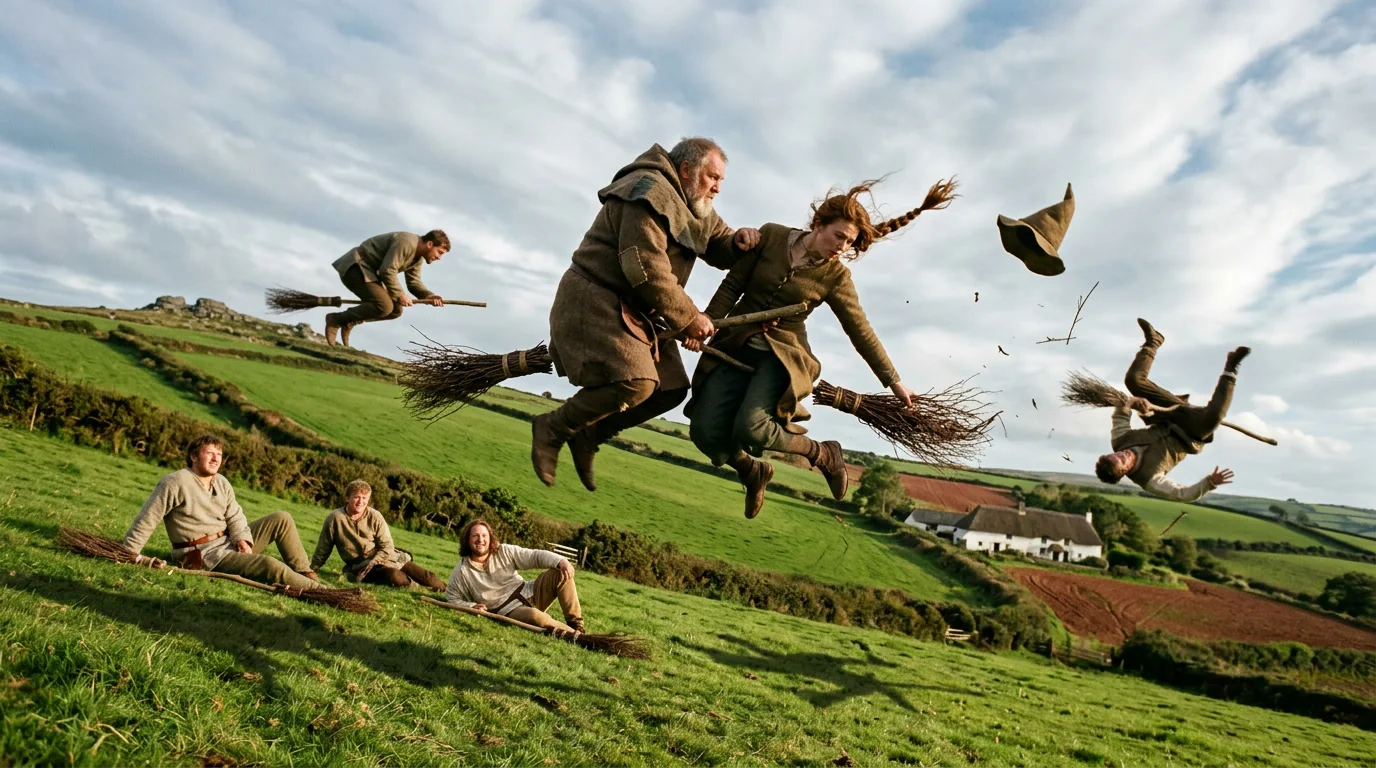
Devon’s contribution to wizarding sport is jousting without the horse. The official harrypotter.com feature calls Shuntbumps “the popular Devon pastime” and describes it as “akin to the medieval Muggle practice of jousting, although played on flying broomsticks instead of horses.” The object, according to Quidditch Through the Ages, is to knock all the other fliers off their brooms. That is the whole game.
The Lexicon’s entry names no champion, no date and no trophy, and its commentary files Shuntbumps with Swivenhodge as the two English entries in Whisp’s ancient-games chapter that do not seem extremely dangerous. That is a low bar in a chapter that also contains a game played by catching boulders in a cauldron, but Shuntbumps clears it. A flier knocked off a broom has, after all, only the ground to worry about.
The Muggle original was rougher. France gave up jousting after King Henry II died in an accident in the lists in 1559, a lesson the broomstick version seems to have absorbed by simply getting smaller. Whisp reports that Shuntbumps is now played only by children, the usual retirement plan for an old pastime. Devon went on to grander things: in 1994 the Quidditch World Cup final was played on Dartmoor.
Swivenhodge
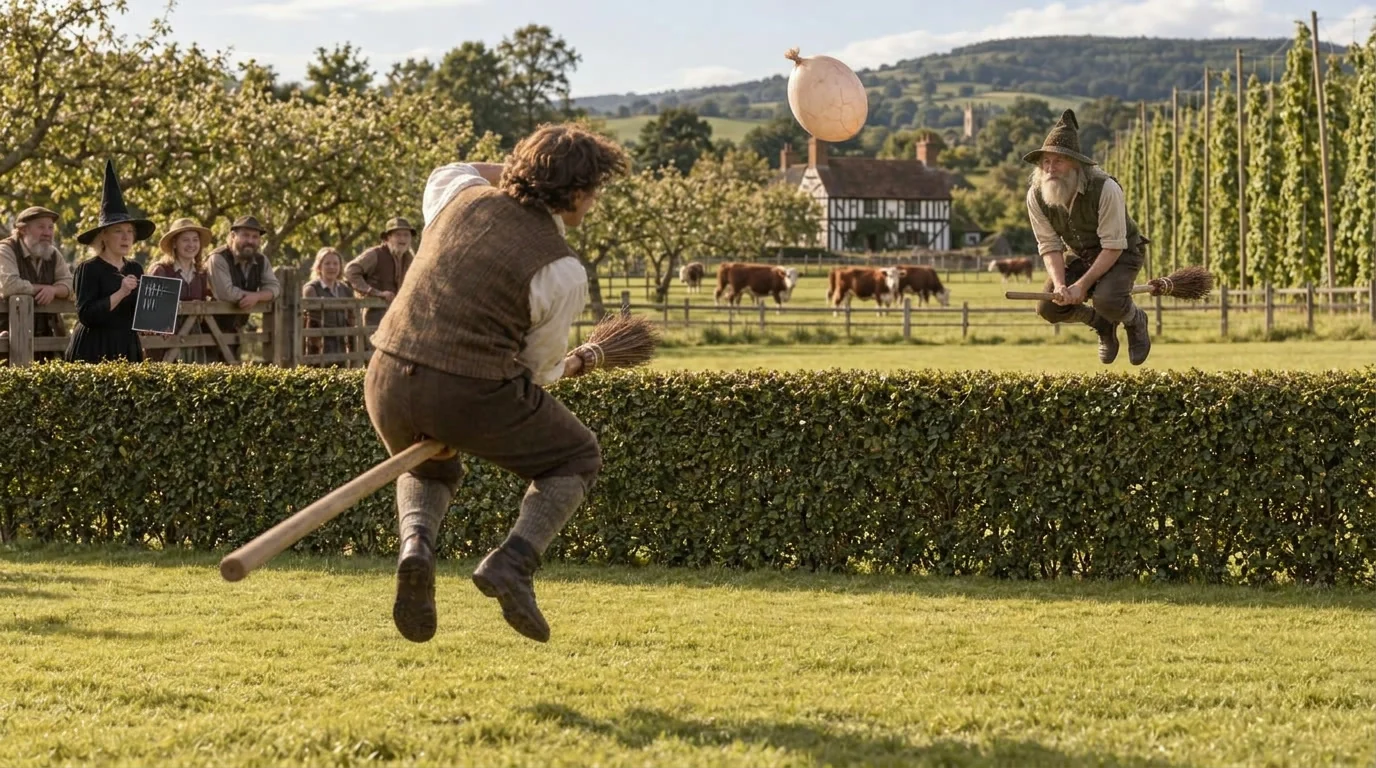
In Herefordshire, by Whisp’s account, witches and wizards once sat backwards on their brooms and used the brush end to bat a pig’s bladder back and forth across a hedge. This was Swivenhodge, and a point went to one side every time the other side missed. The Harry Potter Lexicon’s summary of Quidditch Through the Ages records no winning score, which may explain why nobody ever seems to have finished a game.
The official site calls it “the archaic sport of Swivenhodge (similar to Muggle tennis)” and describes its players “batting a poor pig’s bladder back and forth over a hedge.” The same feature points out that “both Muggles and magic folk have historically shown an unaccountable keenness to explore the recreational potential of animal bladders”, and it is not exaggerating. Medieval Muggle football, it adds, was played with a pig’s bladder too. The German game of Stichstock used a dragon’s, and Ireland’s Aingingein a goat’s gallbladder, so on this evidence Swivenhodge represents the cautious end of the market.
It has also lasted. Whisp, by the Lexicon’s account, says the game was never extremely popular but is still played by witches and wizards in England, which makes it one of the few ancient broom games in his book still in play. Stichstock died out. Creaothceann was outlawed. Hedges, it turns out, are much harder to ban than boulders.
Stichstock
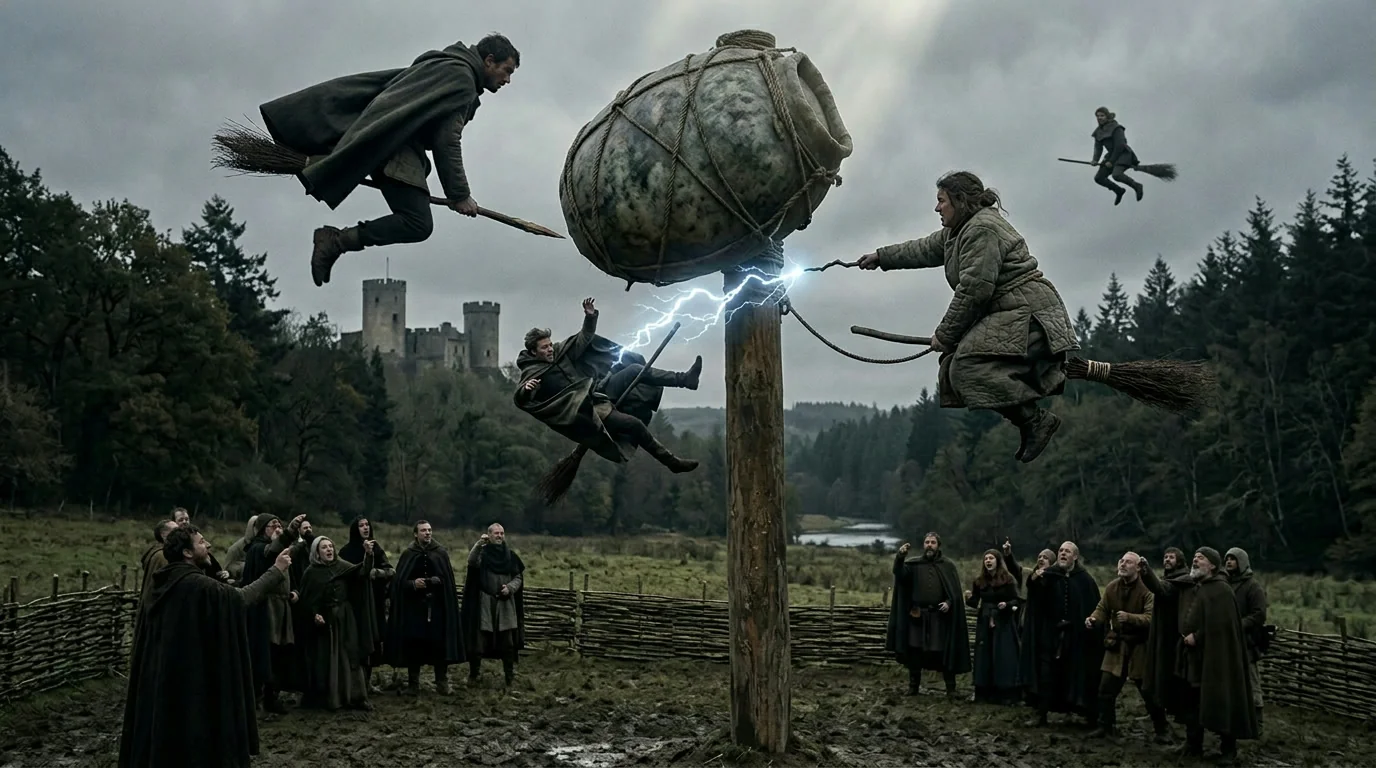
In 1105, someone painted a picture called Gunther the Violent Is the Winner, and it is the first record of Stichstock. The date comes from the Harry Potter Lexicon’s calendar for Quidditch Through the Ages; harrypotter.com settles for calling the game “the bizarre 12th-century German pastime of Stichstock”, which is accurate and rather kinder to Gunther.
The game itself was simple and slightly mad. An inflated dragon’s bladder was fixed on top of a 20-foot pole, and players on broomsticks took turns trying to puncture it with pointed brooms – harrypotter.com calls it “competing to lance an inflated dragon’s bladder atop a 20-foot high pole”. Defending it was a bladder-guardian, tied to the pole and allowed to use wand magic to keep the attackers off. A match ended when the bladder was pierced, when the guardian had jinxed every opponent out of the game, or when exhaustion set in, the Lexicon’s two accounts disagreeing over whether everyone collapsed or only the guardian.
The Lexicon’s own verdict is that it would make a thrilling spectator sport. It did not get the chance to become one. After that painting, the Lexicon’s calendar for the game has exactly one more entry, in the fourteenth century: Stichstock dies out. Whether Gunther was the man on the pole or the man with the pointed broom, the painting does not say. The title suggests he did not much mind.
Snidget-hunting
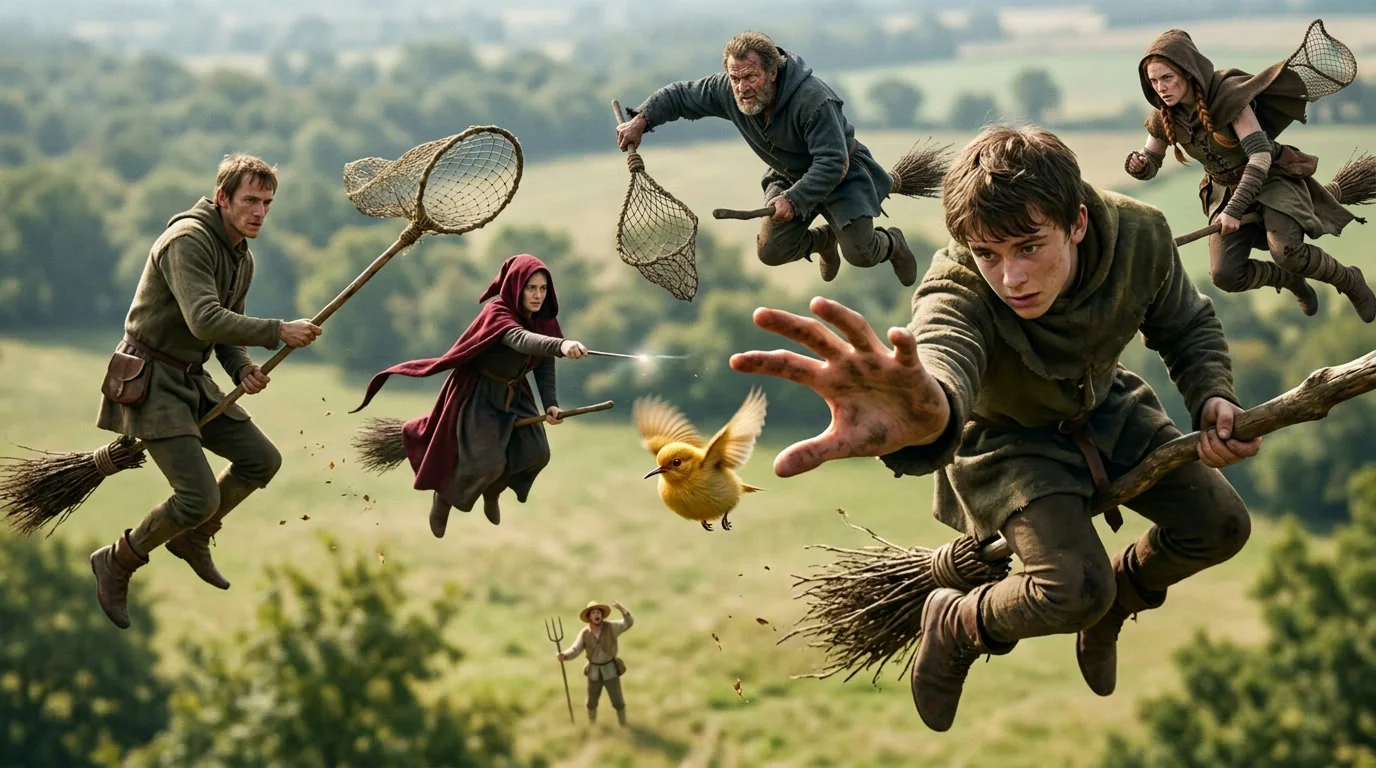
Modesty Rabnott was fined ten Galleons, by her own account, for disrupting a game to save a bird. The bird was a Golden Snidget, and the occasion, as Quidditch Through the Ages tells it, was a match in 1269 at which Barberus Bragge, head of the Wizards’ Council, let one loose and offered 150 Galleons to whoever caught it. Rabnott Summoned the Snidget to herself to save it. Her letter to her sister, quoted in the book, explains the cost: “Of course I’ve never had ten Galleons in my life, so that’s the old home gone.”
The stunt grew out of an older pastime. The Lexicon’s reading of Whisp has Snidget-hunting popular among wizards from the early 1100s, with a twelfth-century tapestry in the Museum of Quidditch showing hunters chasing the tiny, perfectly round bird with nets, wands and even bare hands; the hunt, by the same account, ended with the bird dead. Bragge’s bird changed the game it was released into. A single player, then known as the Hunter, was nominated to do the catching, and harrypotter.com notes that those 150 Galleons became the 150 points the Snitch is worth.
By the middle of the following century Snidget numbers had collapsed. Elfrida Clagg, by then head of the Council, made the Golden Snidget a protected species, Bowman Wright built a metal Snitch to replace it, and Clagg named a Snidget reservation in Somerset after Modesty Rabnott. The fine, so far as anyone knows, was never refunded.
Head Polo
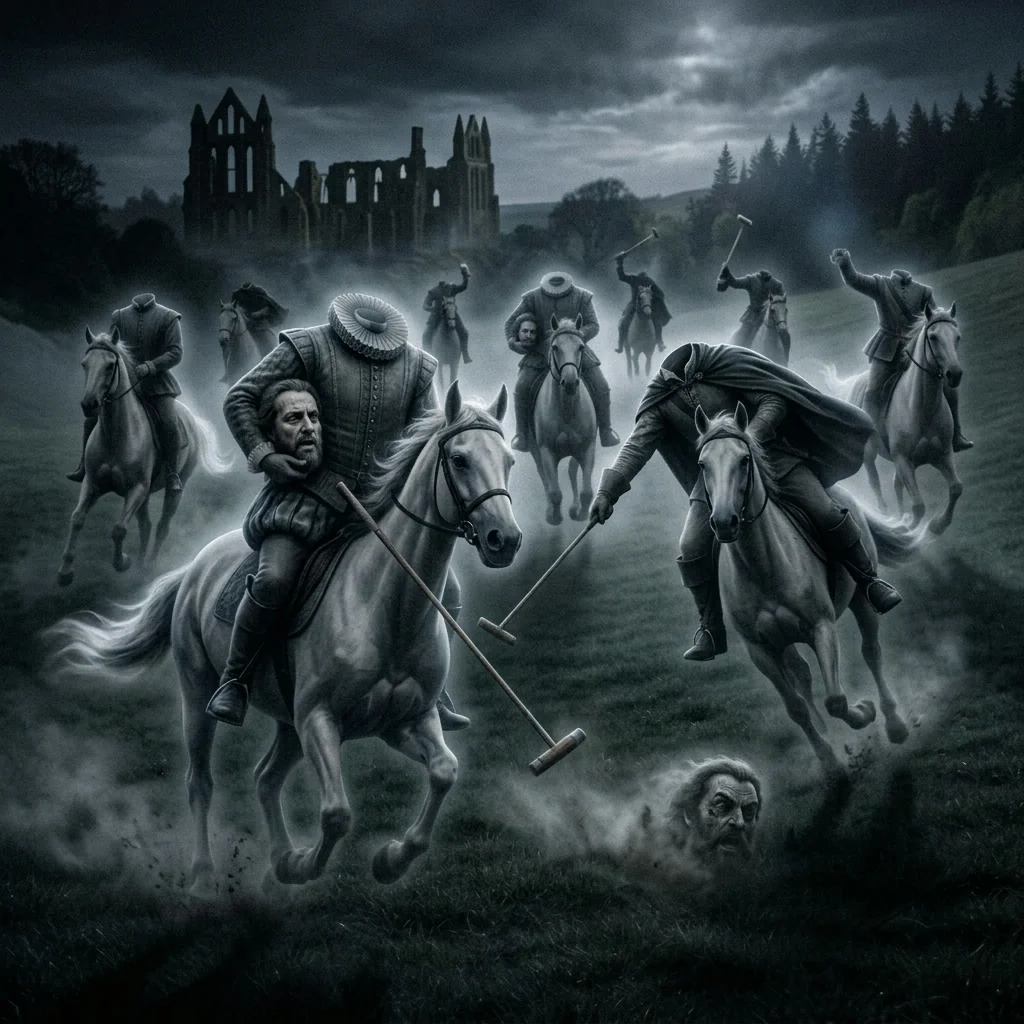
“We can only accept huntsmen whose heads have parted company with their bodies.” So runs the letter Sir Patrick Delaney-Podmore sends Nearly Headless Nick in chapter 8 of Chamber of Secrets, and it goes on to explain the difficulty: “You will appreciate that it would be impossible otherwise for members to participate in hunt activities such as Horseback Head-Juggling and Head Polo.” The Lexicon indexes no other mention of Head Polo in the novels. Its rules, teams and scoring are never described.
The application came from Nick, Gryffindor’s house ghost and one of the ghosts who haunt Hogwarts, and the problem was his neck. His execution, harrypotter.com records, took 45 hacks of a dull axe and still failed to finish the job, leaving his head hanging by a single flap of skin. Nick takes the rejection personally, asking in the same chapter whether “getting hit forty-five times in the neck with a blunt axe would qualify you to join the Headless Hunt?” Apparently not. The Hunt is about a dozen fully beheaded ghosts who ride ghost horses under Sir Patrick, whom Nick calls Sir Properly Decapitated-Podmore, and its membership rules make no allowance for effort.
So Head Polo sits on this list as a game known only by name and by its entry requirement, which is unusually strict even by the standards of sport. Rowling’s own harrypotter.com writing on the Hogwarts ghosts supplies the epilogue: “He retains a feeling of inadequacy with regard to truly headless ghosts.”
Head Hockey
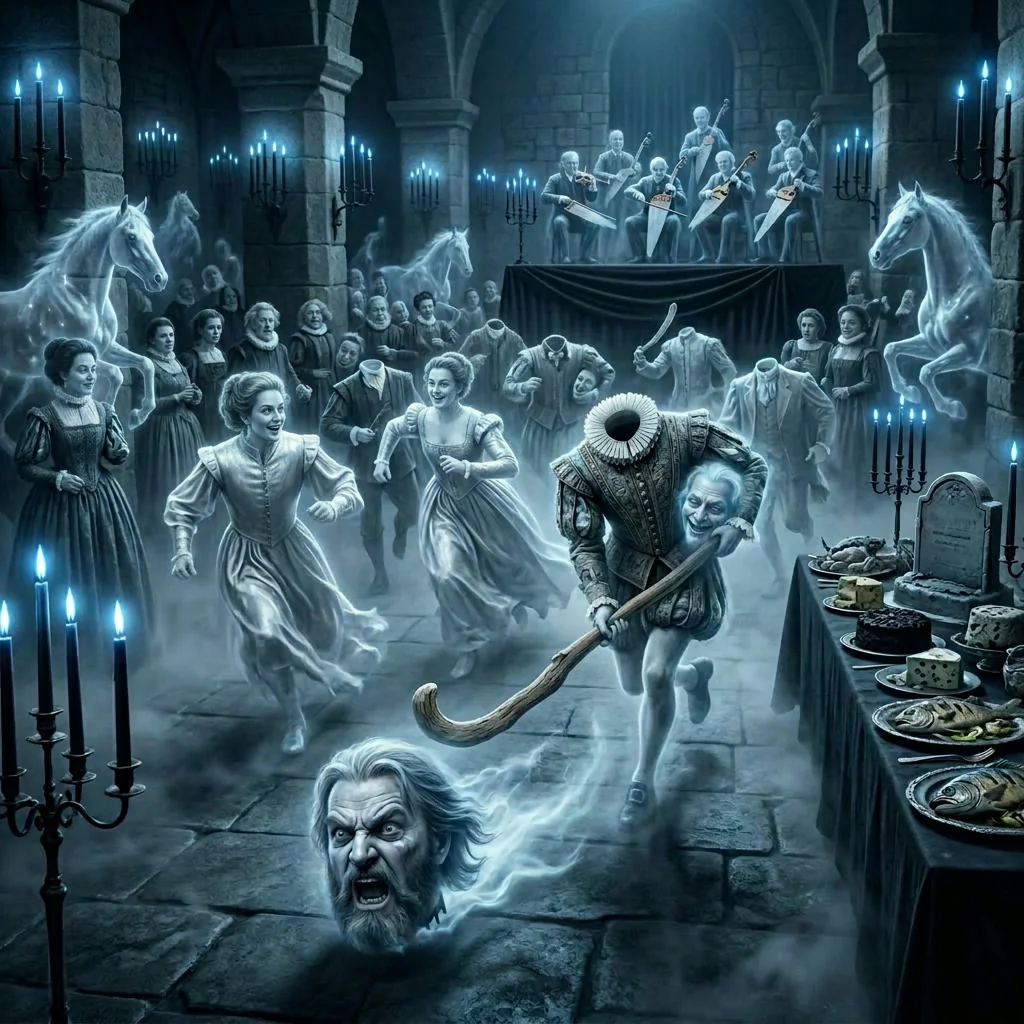
Nearly Headless Nick had prepared a speech. The occasion was his five hundredth Deathday Party, held on Hallowe’en in one of the roomier Hogwarts dungeons. Harry, Ron and Hermione were the only living guests, under a chandelier of black candles, with a ghost orchestra playing musical saws. Nick had, unwisely, invited the Headless Hunt. harrypotter.com puts it gently: he “did get himself in a flap by inviting members of the Headless Hunt, a society he so longed to be a member of.”
The Hunt arrived through the dungeon wall on ghost horses, Sir Patrick Delaney-Podmore at its head with his own head tucked under his arm, blowing a horn. Then, while Nick was trying to address his guests, they began a game of Head Hockey. That is the whole of what the novel offers: the game is named and played in Chamber of Secrets chapter 8, and no source explains its rules, who scored or how. It is not even in the Hunt’s official fact file, which lists other headless games instead, though harrypotter.com’s own games quiz gives Head Hockey as the Hunt’s pastime of choice. Sir Patrick had already, to Nick’s dismay, refused to believe Harry when he said he found Nick frightening.
harrypotter.com later drew the obvious lesson in a set of Hallowe’en party tips built on Nick’s example: “If you’re planning a speech, make sure you give it nice and early.” The Headless Hunt, it adds, “will definitely try and disrupt it.”
Gobstones
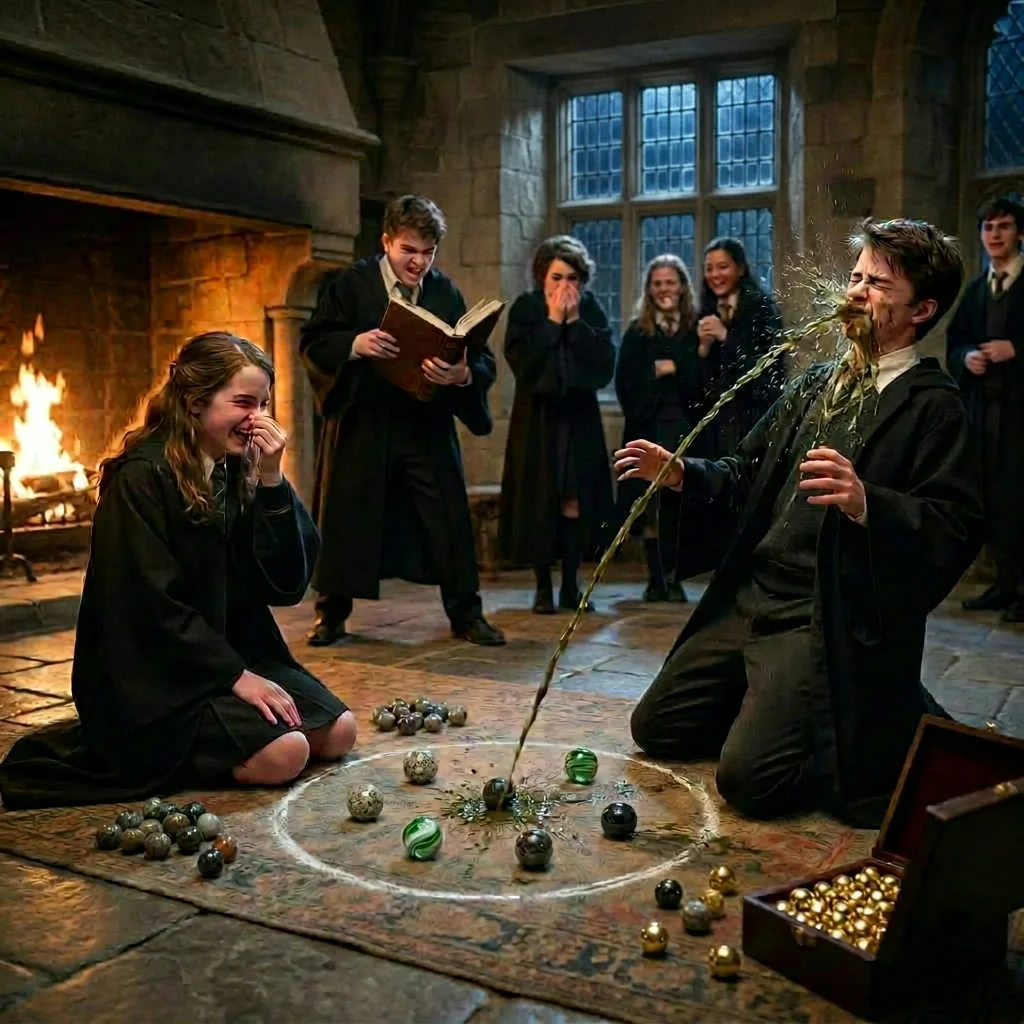
Each player starts with fifteen stones and has to capture all of the other player’s. That much, by Rowling’s own account on harrypotter.com, makes Gobstones sound like marbles, which it resembles in nearly every respect but one: every time a point is conceded, the winning stone squirts a foul-smelling liquid into the loser’s face. Sets come in thirties, usually made of stone, though Diagon Alley in Prisoner of Azkaban has a solid gold set for sale.
The game has its institutions. The Ministry of Magic houses an Official Gobstones Club on Level Seven, Hogwarts has a club of its own that second-years fear Umbridge will shut down in Order of the Phoenix, and Rowling notes that Snape’s mother, Eileen Prince, was President of the Hogwarts Gobstone Club in her time at school. None of this has made it fashionable. Rowling writes that it remains a minority sport without a very “cool” reputation, ranking at Hogwarts “way behind Quidditch and even Wizarding Chess”, and that young players generally “grow out” of it. The National Gobstone Association once tried a recruitment campaign called Give Gobstones A Second Glance, illustrated, in a choice Rowling calls “perhaps ill-chosen”, with a picture of the World Champion, Kevin Hopwood, being squirted in the eye.
The most damning review came from inside the family. Signing off her 2014 World Cup coverage as Ginny Potter, Rowling wrote: “Next week, the National Gobstones League comes to Birmingham! But in all honesty… don’t bother.”
Wizard Chess
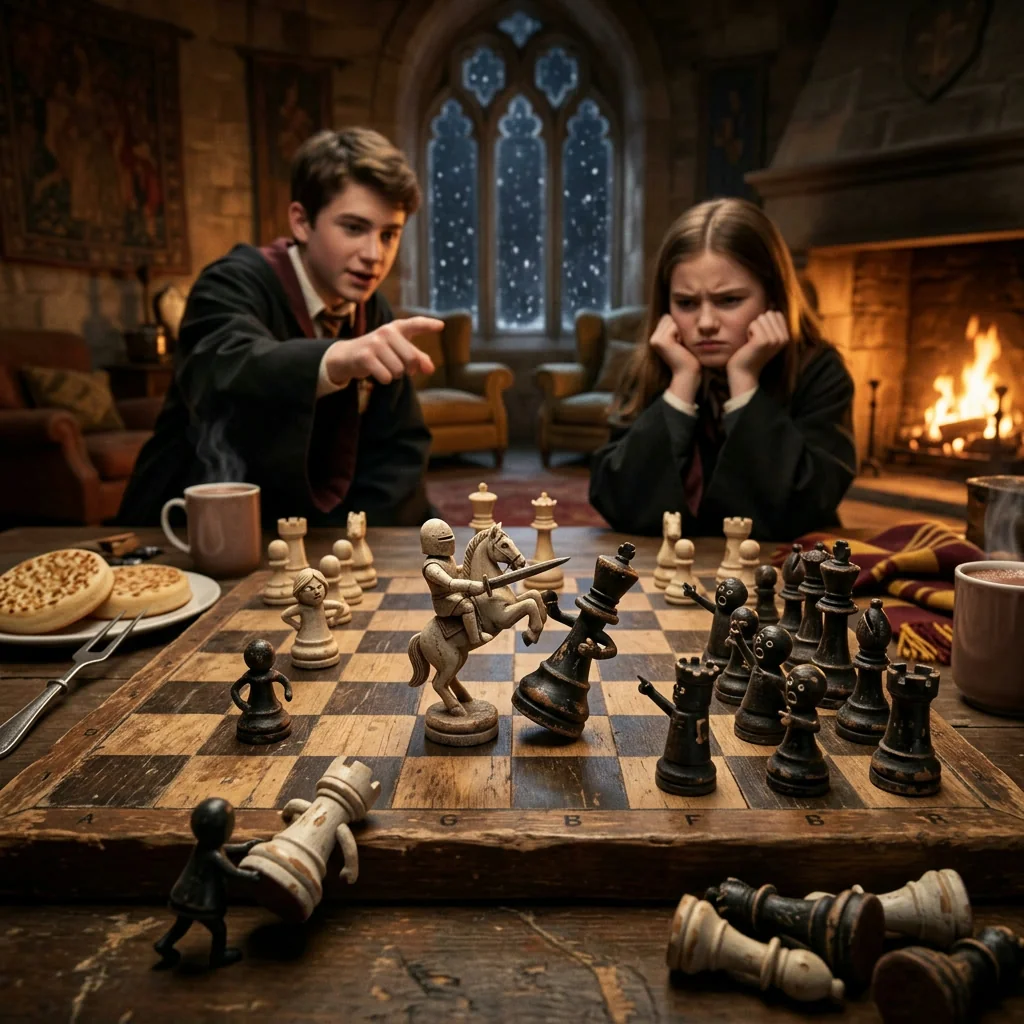
Wizard chess has exactly the same rules as Muggle chess. The difference is that the pieces are alive, and have opinions. They are commanded like troops on a battlefield, attack one another “with sometimes quite surprising violence”, according to harrypotter.com’s fact file, and are not always compliant with a new player, arguing back over an unwise move. When Harry borrows Seamus Finnigan’s set in Philosopher’s Stone, the chessmen do not trust his judgement and keep offering advice. Ron’s battered set, by the Lexicon’s account an inheritance from his grandfather, trusts Ron completely.
Ron’s skill pays off in chapter 16. Among the defences guarding the Philosopher’s Stone is Professor McGonagall’s huge enchanted chessboard, and the only way across is to play. Ron directs the game as a black knight, puts Harry on a bishop’s square and Hermione on a castle’s, and then walks into the white queen, which knocks him out cold, so that Harry can checkmate the white king. Ron wins it by letting himself be taken, a sacrifice most chess players make only with wooden pieces.
Dumbledore notices. At the end-of-year feast he gives Ron 50 points for “the best-played game of chess Hogwarts has seen in many years.” Gryffindor finished on 482 points to Slytherin’s 472, and Ron’s chess accounted for fifty of them.
Exploding Snap
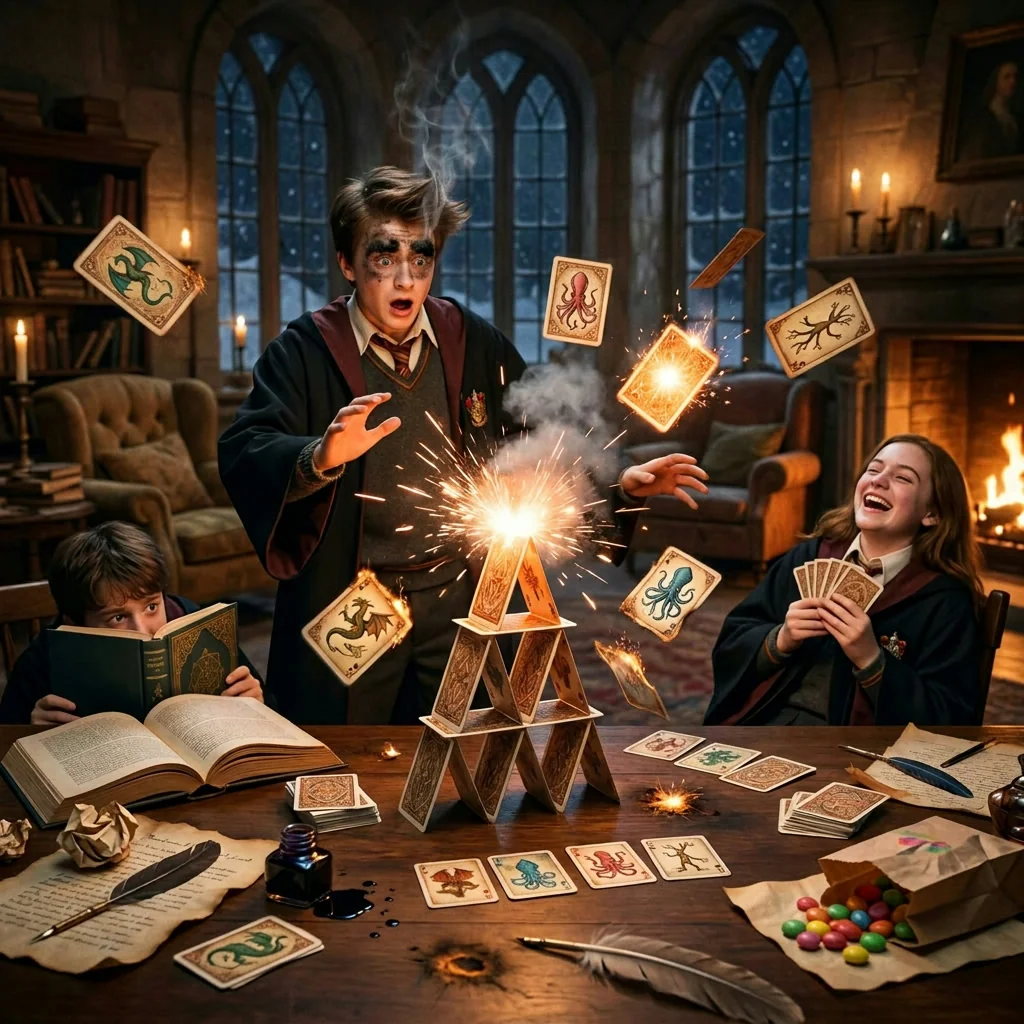
Lee Jordan’s finest hour in Order of the Phoenix involves a card game. When Umbridge bans teachers from telling students anything outside their subject, then tells Fred and George off for playing it in class, he points out the flaw: “Exploding Snap’s got nothing to do with Defence Against the Dark Arts, Professor! That’s not information relating to your subject!” The game itself is Snap, except the cards explode.
Neither the Lexicon nor harrypotter.com records any rules for it, but the novels keep it close to hand. Students who stay at Hogwarts over Christmas in Chamber of Secrets can play it as loudly as they like in an almost empty Gryffindor Tower, and later Fred and George challenge Harry and Ron to a game on the very night the two boys mean to follow the spiders. It passes the time on the Hogwarts Express going home. harrypotter.com counts the twins among the mavericks best remembered for playing at Hogwarts. In Goblet of Fire Ron builds a card castle out of his pack, which the book calls “a much more interesting pastime than with Muggle cards, because of the chance that the whole thing would blow up at any second.”
The game had a rougher time in translation. Early German editions rendered it Snape explodiert, which means “Snape explodes”, before later ones changed the name. It is hard to say which version the Slytherins would have preferred.
Duelling
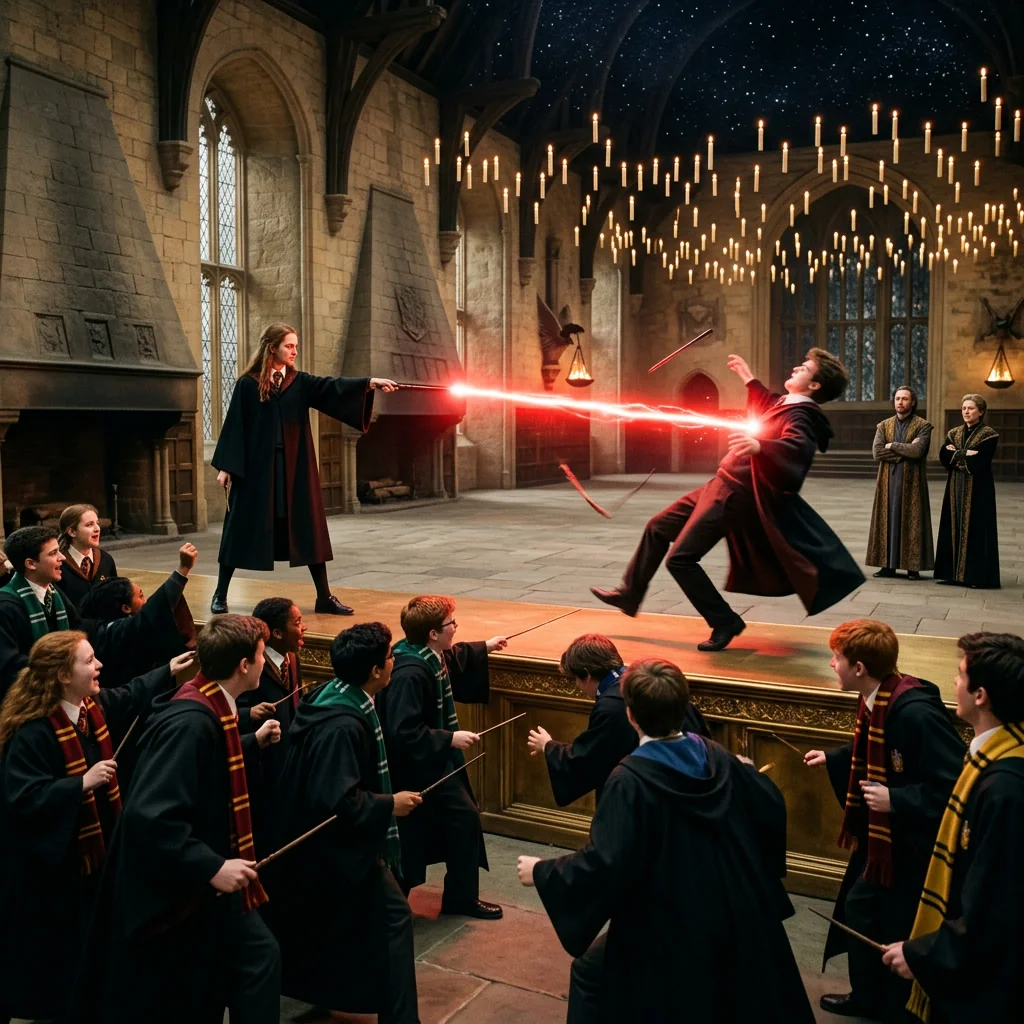
The first wizard’s duel in the series never takes place. In Philosopher’s Stone Draco Malfoy challenges Harry to a midnight duel and then tells Filch instead of turning up, but not before Ron has explained the arrangements with a first-year’s idea of reassurance: “a second’s there to take over if you die.”
The real thing, per harrypotter.com’s fact file, is formal combat between witches or wizards using magic alone. Opponents bow to show mutual respect, then wait for a count of three. Some duels end in death, but duelling also exists as a competitive sport with rigorous rules about which curses, hexes and charms are allowed, and Rowling’s wand-lore writing records an infamous eighteenth-century duelling club, the Silver Spears, that was reputed to admit only owners of aspen wands. Students get their taste in Chamber of Secrets, when Gilderoy Lockhart starts a Duelling Club run by two of the professors on the Hogwarts staff, himself and Severus Snape. The demonstration lasts as long as it takes Snape to disarm Lockhart with Expelliarmus. Then Draco conjures a snake, it turns on Justin Finch-Fletchley, and Harry tells it to stop in Parseltongue, which does nothing for his popularity. Hermione, meanwhile, had heard that Flitwick “was a duelling champion when he was young”, a rumour the books never confirm.
harrypotter.com spotted the irony years later: “it was the Potions professor that first showed Harry the spell that saved his life countless times.” Harry used it on Voldemort in their final duel.
Triwizard Tournament
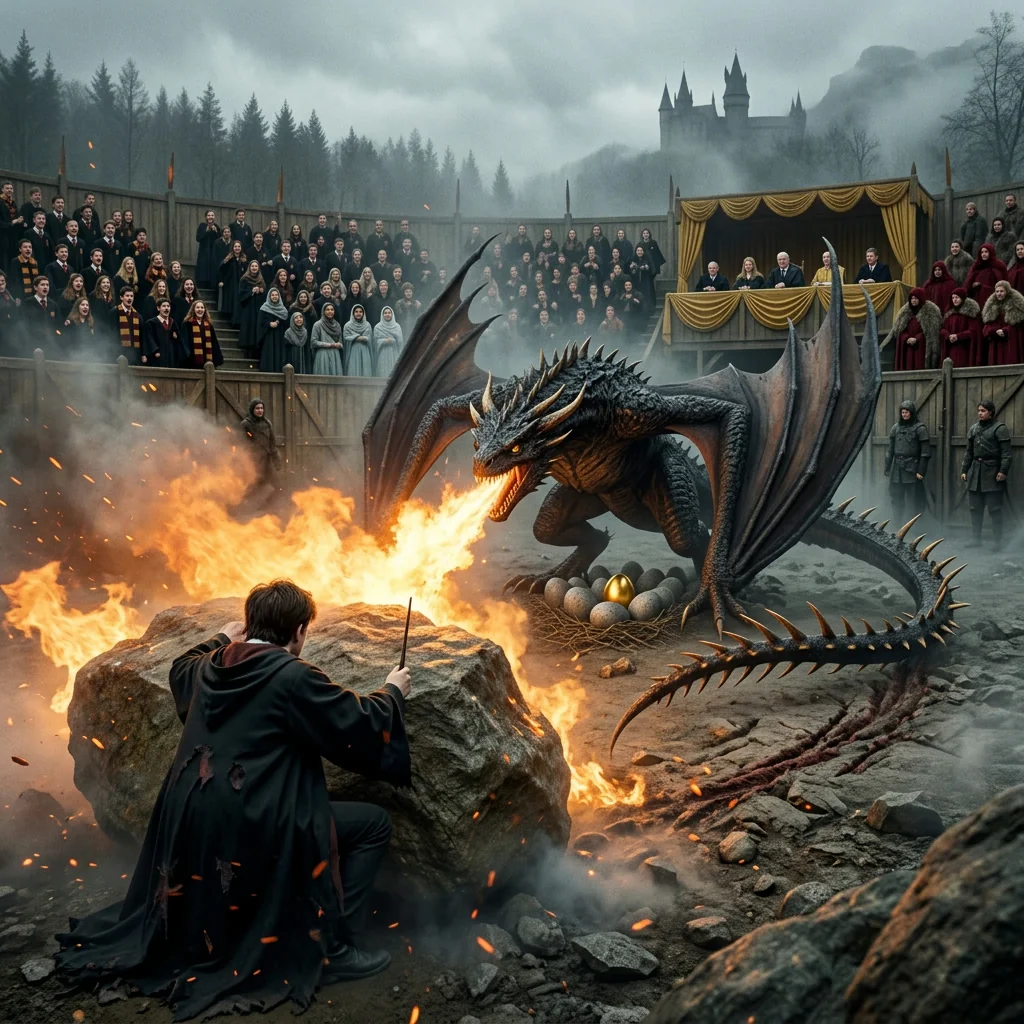
Every Triwizard Tournament had three champions, harrypotter.com says, until the Goblet of Fire produced a fourth. The Goblet names Cedric Diggory for Hogwarts, Fleur Delacour for Beauxbatons, Viktor Krum for Durmstrang and, impossibly, Harry Potter, because Barty Crouch Jr., disguised as Mad-Eye Moody, had used a Confundus Charm to trick the Goblet into accepting a name from a fourth school.
The three tasks amount to a tour of the magical creatures named in the seven novels. On 24 November each champion had to take a golden egg from a nesting dragon: a Swedish Short-Snout for Cedric, a Welsh Green for Fleur, a Chinese Fireball for Krum and, for Harry, the Hungarian Horntail. On 24 February the merpeople of the Hogwarts lake took from each champion something “you’ll sorely miss”, and Fleur was driven back by Grindylows. On 24 June came a hedge maze holding a Blast-Ended Skrewt, a giant spider, a Sphinx with a riddle and a Boggart. At its centre the Cup turned out to be a Portkey, carrying Harry and Cedric to the graveyard where Cedric was killed.
The prize was the Cup, eternal glory and a thousand Galleons, and Harry gave his winnings to Fred and George to start a joke shop. Rowling later credits Beauxbatons with sixty-two Tournament wins to Hogwarts’ sixty-three, and when Harry and Krum embrace at the 2014 World Cup, Rita Skeeter’s column asks: “What really happened in that maze? Speculation is unlikely to be quelled by the warmth of their greeting.”
Frequently Asked Questions
Which wizarding games come from Quidditch Through the Ages rather than the novels?
Aingingein, Creaothceann, Shuntbumps, Swivenhodge, Stichstock and the Swedish broom race all come from chapter 2 of Quidditch Through the Ages, “Ancient Broom Games.” Snidget-hunting comes from its chapter 4 and Quodpot from chapter 8. None of these games is played in the seven novels, though Rowling’s later harrypotter.com writing names Quodpot and Creaothceann again.
Why was the Triwizard Tournament stopped?
It was stopped because too many people died. Dumbledore says it began some seven hundred years earlier and ran every five years, “until, that is, the death toll mounted so high that the tournament was discontinued.” Hermione adds that a cockatrice injured all three school Heads in 1792. The 1994 revival barred students under 17, at least on paper.
What is Horseback Head-Juggling?
Horseback Head-Juggling is a pastime of the Headless Hunt, the club of fully beheaded ghosts that turned down Nearly Headless Nick. It is named next to Head Polo in Sir Patrick Delaney-Podmore’s rejection letter in Chamber of Secrets. Polo implies two sides; juggling, even with heads, has no opponent or winner, so it is not counted here.
What is the Annual International Wizard Gardening Competition?
It is a contest from the Daily Prophet newsletters Rowling wrote for Bloomsbury’s short-lived fan club. The first issue, dated 31 July 1998, reports (per the Harry Potter Lexicon) that crop circles were really entries in its Contorting Cereals class. No source gives it rules or scoring, let alone a winner, so it stays off the list.
Do Muggle games count as wizarding games?
No. Muggle games turn up in the novels mostly at the Dursleys’, as in the game of Musical Statues during which Aunt Marge whacked Harry around the shins with her walking stick to stop him beating Dudley. Video games are out too: harrypotter.com notes they are essentially unknown to wizards, because magic plays havoc with electricity.
Is real-life quidditch part of the Harry Potter canon?
No. The real-world sport is a Muggle adaptation and sits outside the canon used here. In July 2022 US Quidditch and Major League Quidditch renamed it quadball, citing a wish to distance the sport from Rowling and the fact that Warner Bros. owns the quidditch trademark.
Sources
- Harry Potter Lexicon – Sports category
- Harry Potter Lexicon – Quidditch Through the Ages, chapter 2: Ancient Broom Games
- harrypotter.com – Beyond Quidditch: games and pastimes in the wizarding world
- J.K. Rowling – Quidditch Through the Ages
- The Guardian – J.K. Rowling’s annotations to Harry Potter and the Philosopher’s Stone
- Reuters via CESNUR – Rowling pens special Harry Potter books for charity
- Sports Illustrated – Quidditch changes its name to quadball
- NPR – J.K. Rowling tells Harry Potter backstories