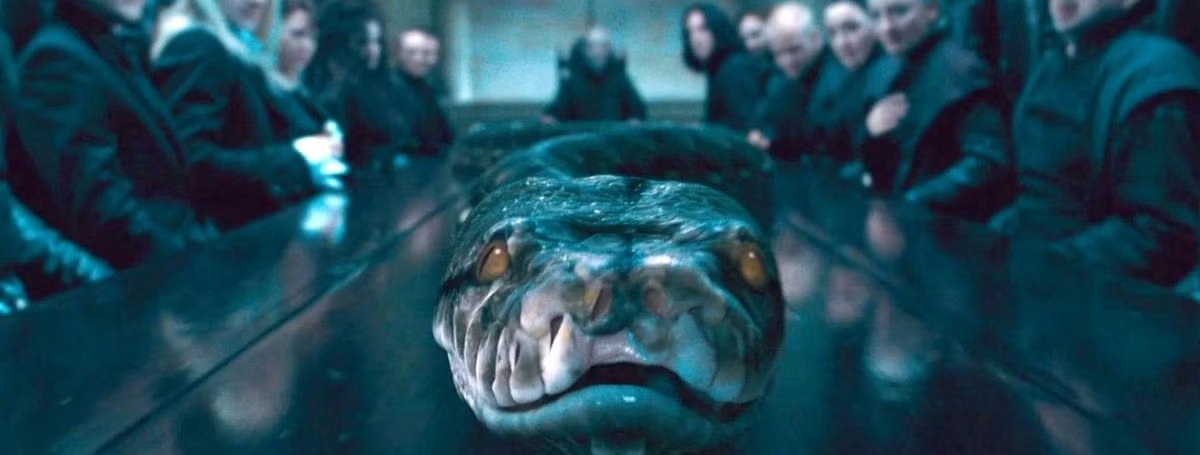
Every Hogwarts Professor in Harry Potter
The explanation for a large part of this list is delivered in Dumbledore’s office in Harry’s sixth year, straight after a Pensieve memory in which Tom Riddle, by then Voldemort, asks him for a teaching job and is turned down. “You see,” Dumbledore tells Harry, “we have never been able to keep a Defence Against the Dark Arts teacher for longer than a year since I refused the post to Voldemort.” It is the closest the novels come to stating a personnel policy, and it is why a single subject takes up so much of the roster below.
The staff room the books actually describe is an odder place than the one most readers carry around from the films. Rowling has written that every first-year takes seven subjects, plus compulsory flying lessons, and the people who teach them include a ghost who may not have noticed he died, a centaur, a gamekeeper promoted to the faculty, a werewolf, a Death Eater wearing another man’s face, and a Ministry official who used the Great Hall to teach teenagers how to vanish. Several of them are never given a first name anywhere in the seven books.
What follows is every one of them: each professor or instructor the seven novels name as teaching at Hogwarts, with the epilogue counted as part of the seventh book, which is how the last name on the list belongs to someone who was a student for most of the series. The cursed post comes first, in the order the books hand it from one holder to the next, then the other subjects, then the instructors who taught without ever being called Professor. The heads the novels never attach to a subject, the examiners who set the O.W.L.s, and the teachers who exist only in Rowling’s notes and commentaries are dealt with in the questions at the end.
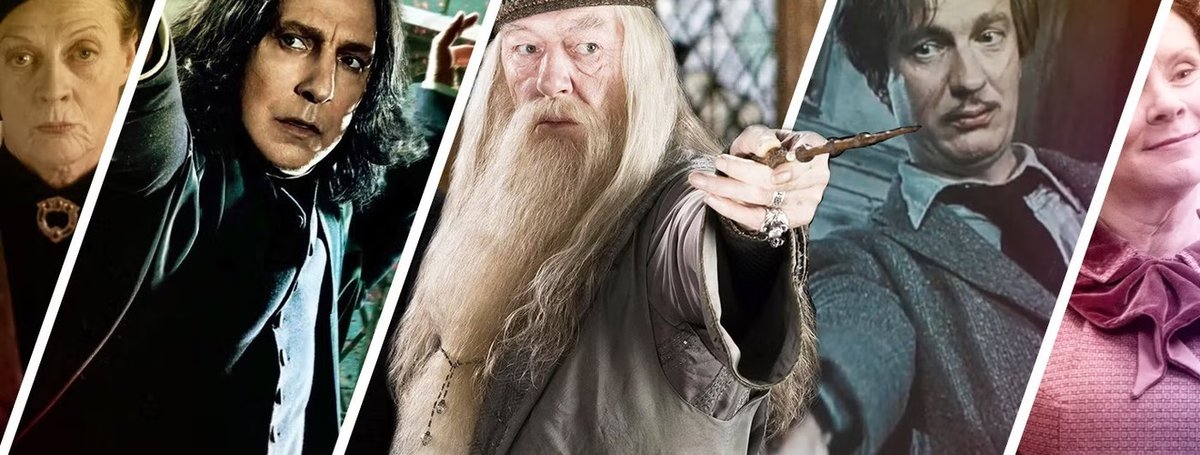
Twenty-six teaching staff are named in the seven Harry Potter novels, the epilogue included: every subject professor and instructor the books show or name teaching at Hogwarts. Headmasters with no subject to their name, examiners, the caretaker, the matron and the librarian are not counted, and neither is anyone who exists only in Rowling’s writing outside the books.
Professor Merrythought
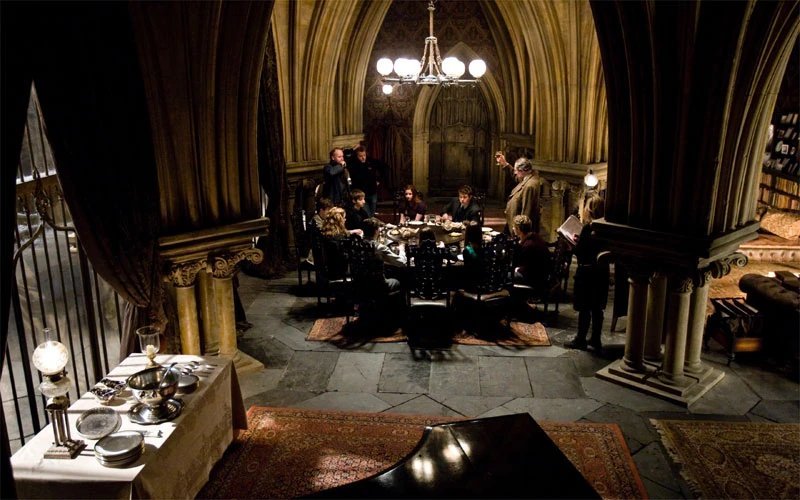
Nearly fifty years is a long time to hold any job, and it is an extraordinary time to hold this one. Professor Merrythought taught Defence Against the Dark Arts at Hogwarts for that long, and the novels record the fact only because of what her leaving set in motion: a newly graduated Tom Riddle, hearing that she was retiring, asked Headmaster Armando Dippet for her post. He did not get it.
Everything the books say about her is said in one chapter of Half-Blood Prince, alongside the memories Dumbledore shows Harry in the Pensieve. Riddle asks once, as a school-leaver, and Dippet refuses him. He comes back years later, as Voldemort, to ask Dumbledore, who refuses him too, and Dumbledore admits to Harry that this second refusal is where the trouble began. From then on, by his account, every holder of the post left suddenly, in disgrace or, in one case, dead.
Merrythought herself never appears. The books give her a surname, a subject and a retirement, all of it mentioned in passing by a headmaster explaining a curse, and nothing else. It is a modest legacy for nearly half a century in the classroom. Everyone who followed her got a year.
Professor Quirrell
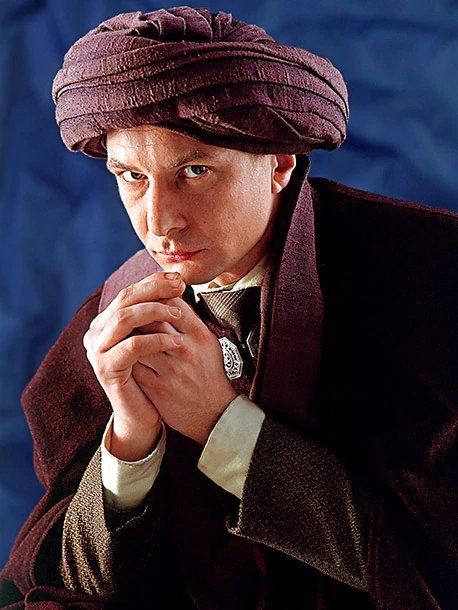
Hagrid’s verdict on Harry’s first teacher of Defence Against the Dark Arts is delivered at the Leaky Cauldron, where Harry has just met the man: “Poor bloke. Brilliant mind. He was fine while he was studyin’ out of books but then he took a year off ter get some first hand experience...” The trailing dots are Hagrid’s. What the year off produced was a stutter and a turban that stayed on all year, and the class everyone had been looking forward to “turned out to be a bit of a joke.”
The joke was on the school. The stutter was faked, a cover for Voldemort living on the back of Quirrell’s head, and the mask slips exactly once, in the final chapter, when he mocks “p-p-poor, st-stuttering P-Professor Quirrell” to Harry’s face. Dumbledore had suspected him all year and asked Snape to keep an eye on him, which Harry learns only in the last book.
His creed, delivered in the same chapter, is the one line of his anyone remembers: “There is no good and evil, there is only power, and those too weak to seek it.” Rowling has written that she saw him as a gifted but delicate boy and that his first name is a nod to a Roman god of war, and has said that he taught Muggle Studies before Defence. He is where the chain of one-year holders begins in Harry’s time, and the one who did not survive the year.
Gilderoy Lockhart
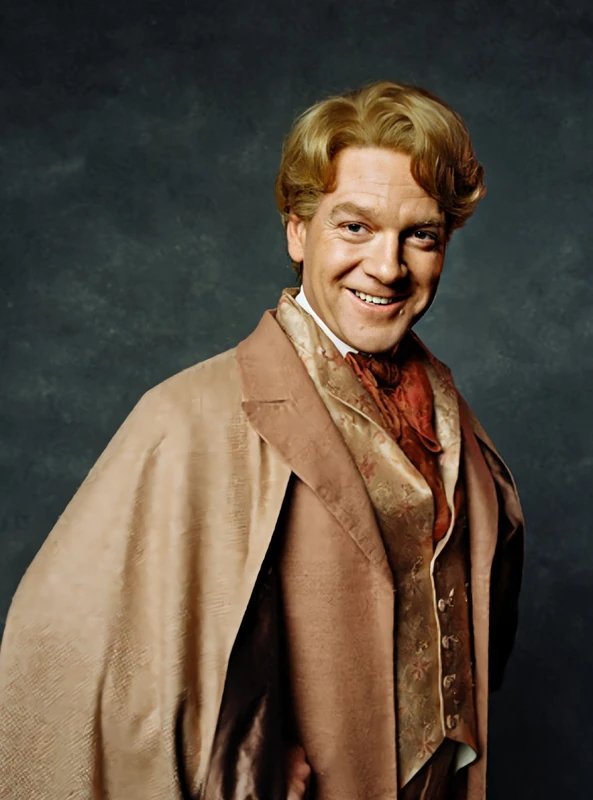
Hogwarts hired a fraud in Harry’s second year because nobody else applied. Hagrid says so: “He was the on’y man for the job...an’ I mean the on’y one. Gettin’ very difficult ter find anyone fer the Dark Arts job. People aren’t too keen ter take it on, see. They’re startin’ ter think it’s jinxed.” Rowling has written that the choice baffled the staff but that Dumbledore’s plans “ran deep”: he had known two of the wizards whose work Lockhart had stolen with Memory Charms, and reckoned a classroom would expose him.
It did. He opened his first lesson by declaring it his job to arm the class “against the foulest creatures known to wizardkind!” and followed it with Cornish pixies. The year ended in the Chamber of Secrets, where he tried a Memory Charm on Harry and Ron with Ron’s broken wand, which has an entry among the named wands of the series. It backfired, blocked the tunnel and took his memory.
Dumbledore told the leaving feast that Lockhart needed to go away and get his memory back, and quite a few teachers joined in the cheering. Harry meets him once more, in the Janus Thickey Ward at St Mungo’s, still signing autographs with a battered peacock-feather quill and proud of his new joined-up writing. When McGonagall asked what students could learn from him, Rowling has written, Dumbledore replied that there is plenty to be learned even from a bad teacher: what not to do, how not to be.
Remus Lupin
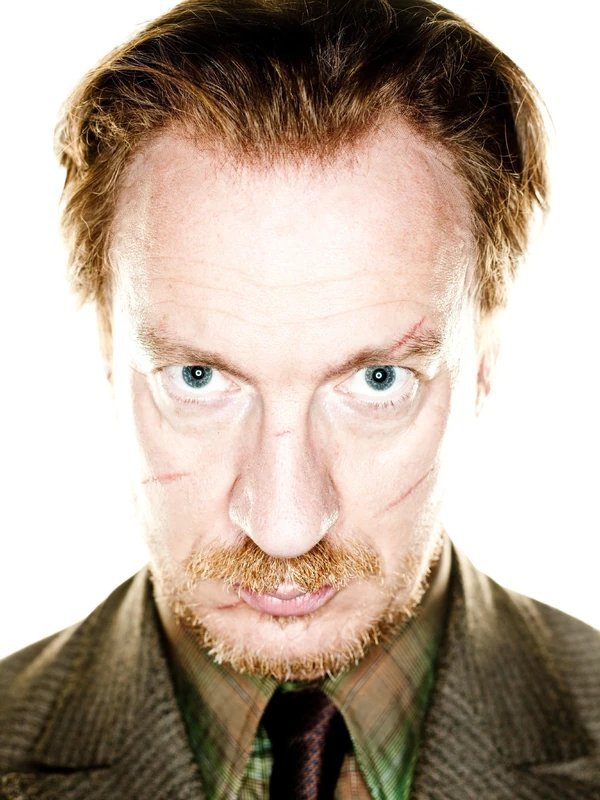
The first thing Lupin taught was how to laugh at what frightens you. His opening lesson put the third-years in front of a wardrobe with a Boggart inside and had them turn it into something ridiculous. When Harry admitted that his would take the shape of a Dementor, Lupin drew the conclusion for him: “That suggests that what you fear most of all is – fear. Very wise, Harry.”
Rowling has written that he turned out to be “a gifted teacher, with a rare flair for his own subject,” and the reason he could take the post at all was in the dungeons. Snape brewed him the Wolfsbane Potion, and Lupin said so: “I am very lucky to be working alongside Professor Snape; there aren’t many wizards who are up to making it.” It let him spend the full moon curled up in his office as a harmless wolf. He also gave Harry private lessons in the Patronus Charm.
James Potter had called his condition his “furry little problem” in company; many people, Lupin says, thought he owned a badly behaved rabbit. The end came when Snape let slip what Lupin was, and he resigned, reasoning that the precautions protecting people from him had been shown not to work. He died at the Battle of Hogwarts; Harry passes his body, beside Tonks and Fred Weasley, on the way to the headmaster’s office. For one year he had been the teacher the job was cursed to lose.
Barty Crouch Jr.
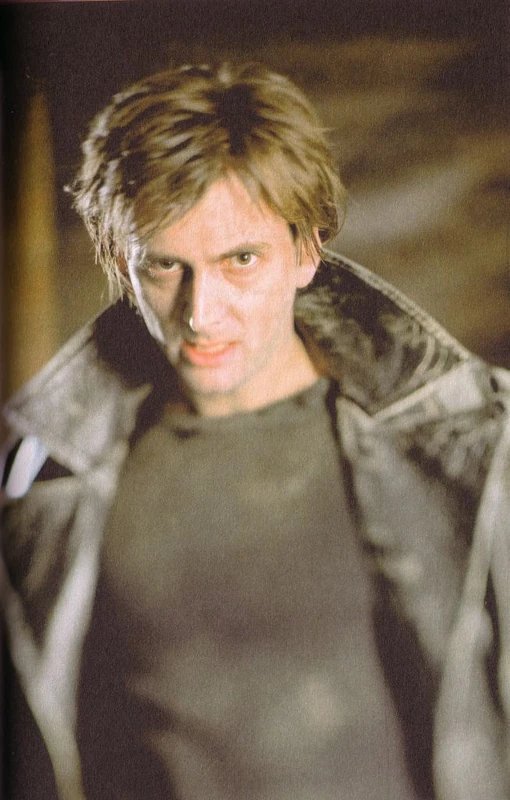
The man teaching Defence Against the Dark Arts in Harry’s fourth year was not the man everyone thought he was. Alastor Moody was introduced at the start-of-term feast as the new teacher and then spent the whole school year locked in his own trunk, while Barty Crouch Jr., a Death Eater who had been sent to Azkaban for torturing Frank and Alice Longbottom, wore his face and took his classes. The entry here is therefore Crouch’s. Moody never taught a lesson.
The classes were not what fourth-years usually got. He told them they were “behind – very behind – on dealing with curses” and that he was there “to bring you up to scratch on what wizards can do to each other,” then took them through the Unforgivable Curses and informed the room that using any one of them on a fellow human being “is enough to earn a life sentence in Azkaban.” He would know.
The disguise held until June. Once it was off, Cornelius Fudge, the Minister for Magic, allowed a Dementor to administer the Kiss to Crouch on the spot, over Dumbledore’s objections, while refusing to accept that Voldemort had returned. Fudge’s record sits among every Minister for Magic the wizarding world has had. The Kiss removed the one witness who could have told the Ministry what it had just declined to hear.
Dolores Umbridge
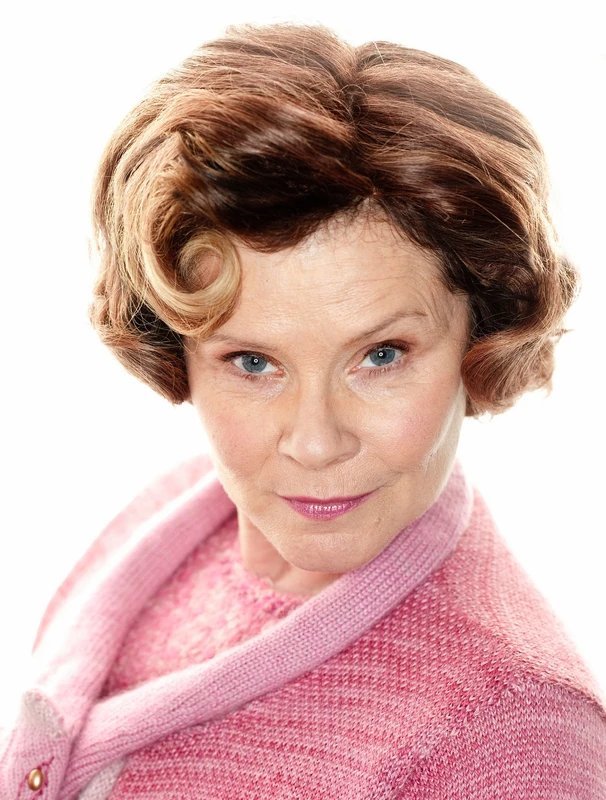
Her first act at Hogwarts was a speech, and the speech, read closely, was a warning. Fresh from the Ministry, where she had been Senior Undersecretary, Umbridge announced to the start-of-term feast a “new era of openness, effectiveness and accountability, intent on preserving what ought to be preserved, perfecting what needs to be perfected, and pruning wherever we find practices that ought to be prohibited.” The pruning began at once.
Her lessons used “a Ministry-approved method that does not include inviting students to give their opinions on matters about which they understand very little,” and her detentions used a quill with no ink, which cut the lines into the back of the hand and wrote in the blood. Harry spent his writing “I must not tell lies.” Before term began she had sent two Dementors after him. Within the year she was High Inquisitor, inspecting her colleagues, and once Dumbledore’s Army was caught she took Dumbledore’s office.
She went out as she had come in, announcing her titles. Cornered by centaurs in the Forbidden Forest, she told them she was “Senior Undersecretary to the Minister for Magic and Headmistress and High Inquisitor of Hogwarts!” and was carried off anyway. She recovered. By the last novel she runs the Muggle-born Registration Commission for Voldemort’s Ministry, and Rowling has written that she was eventually tried and convicted of the torture, imprisonment and deaths of several people. Her name, Rowling adds, was carefully chosen: Dolores for sorrow, Umbridge for umbrage.
Severus Snape
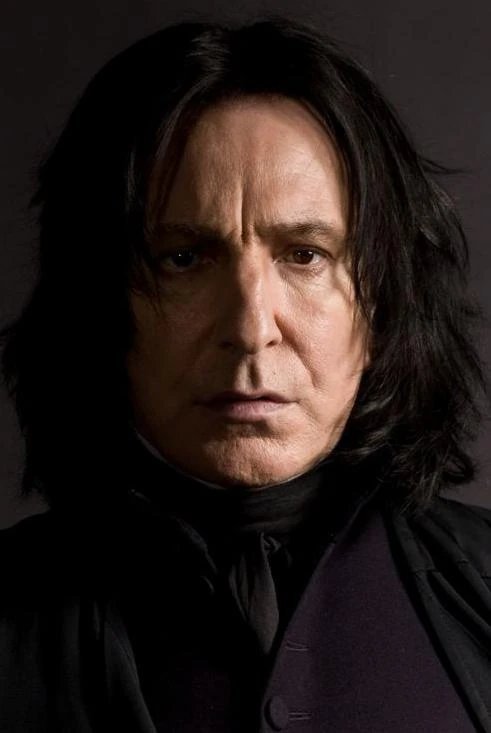
“I can teach you how to bottle fame, brew glory, even stopper death -- if you aren’t as big a bunch of dunderheads as I usually have to teach.” That is Snape introducing Potions to Harry’s first-years, and as close as the novels come to letting him enjoy his subject.
He taught Potions through Harry’s fifth year and got the job he wanted in the sixth, when Dumbledore announced that Slughorn would take Potions and Snape would move to Defence. Harry noticed the difference in the first lesson: “It was surely one thing to respect the Dark Arts as a dangerous enemy, another to speak of them, as Snape was doing, with a loving caress in his voice?” That year Harry found a secondhand Potions book annotated by a “Half-Blood Prince” and used one of its scribbled curses, Sectumsempra, on Draco Malfoy. Snape’s response – “Who taught you that spell?” – came from the man who had invented it as a schoolboy and written it in the margin of his own textbook, which is why it sits among the spells invented by named characters.
He became Headmaster of a Hogwarts under Voldemort’s control in Harry’s seventh year, and died in the Shrieking Shack on Voldemort’s order, killed by the snake Nagini, having handed Harry his memories and asked, with his last words, “Look...at...me.” Inside those memories Dumbledore tells him that feeding Voldemort valuable-seeming information is “a job I would entrust to nobody but you.” Snape took it.
Amycus Carrow
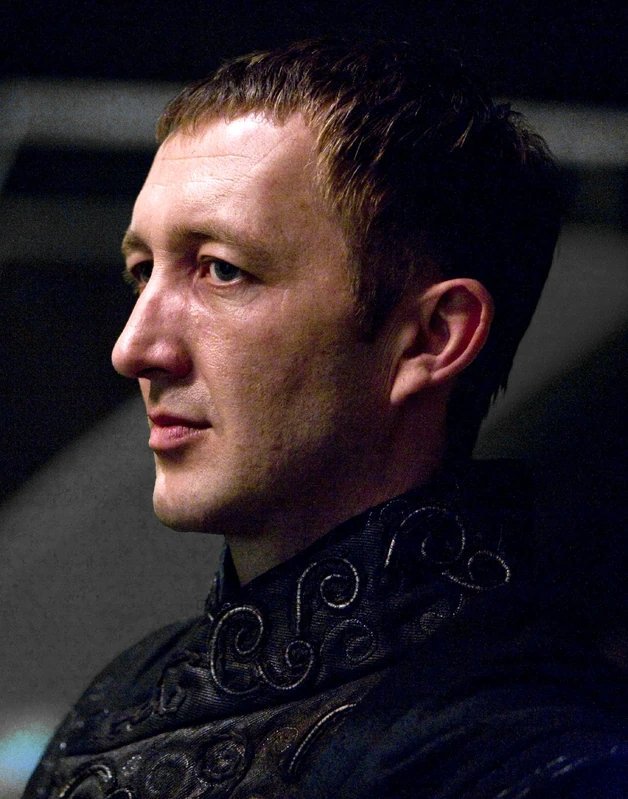
By the seventh book the subject no longer needed defending against. Amycus Carrow took over the post in the year Voldemort controlled the school and taught it, by Neville’s account, as plain Dark Arts, with discipline enforced by the Cruciatus Curse. The post was cursed too, and he took it anyway, which says something about how much Voldemort valued him.
He and his sister Alecto had first turned up the year before, with the Death Eaters who got into the castle on the night Dumbledore died, where Amycus egged Draco on to kill him and tried to curse Ginny Weasley. Snape had implied that neither Carrow had ever seen the inside of Azkaban, and the pair appear, as they should, among the Death Eaters the novels name.
His last act as a teacher was to spit in McGonagall’s face in the Ravenclaw common room, at which point Harry stopped watching and attacked him. McGonagall’s own lines had landed harder. “You are not going to pass off your many ineptitudes on the students of Hogwarts,” she told him, and then: “Only the difference between truth and lies, courage and cowardice,” said Professor McGonagall, who had turned pale, “a difference, in short, which you and your sister seem unable to appreciate.” She tied both Carrows up and announced that she was prepared to fight to keep Voldemort out of the castle. It was the last lesson given in that room that year, and the only one worth learning.
Horace Slughorn
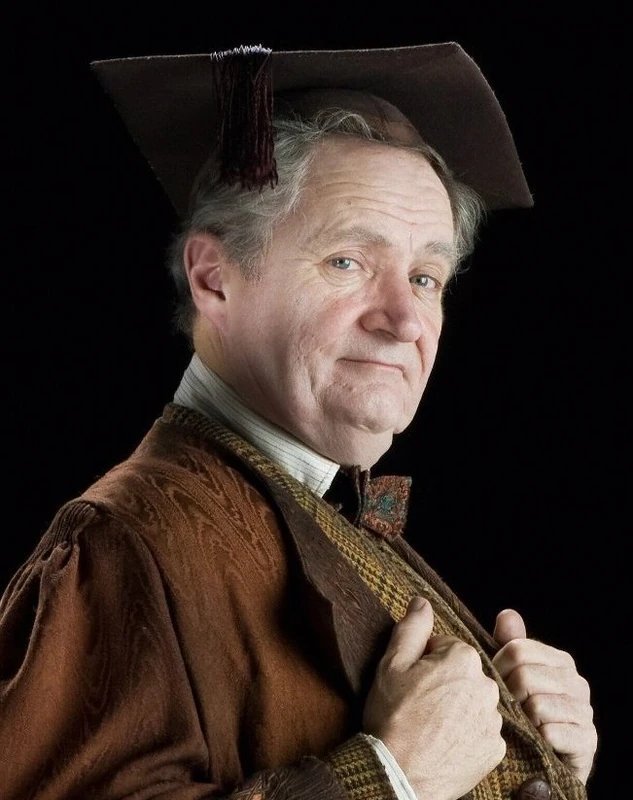
When Dumbledore and Harry finally tracked him down, in Budleigh Babberton, where he had just faked his own death, Horace Slughorn was disguised as an armchair, and “seemed remarkably unabashed for a man who had just been discovered pretending to be an armchair.” Dumbledore wanted him back at Hogwarts. It was Harry, left alone with him while Dumbledore was out of the room, who talked him into it.
Slughorn is the collector of the staff room, a teacher who gathers the famous and the promising into the Slug Club over dinner and keeps track of where they end up. He is also, in Dumbledore’s telling, the man who told a teenage Tom Riddle what a Horcrux was, after Riddle had already opened the Chamber of Secrets, and who then tampered with his own memory of the conversation before handing it over. Among the potions named in the novels, the one he speaks of from experience is Felix Felicis: he told his class he had taken it twice in his life, at twenty-four and at fifty-seven.
His return was announced at the same feast that sent Snape to Defence, and by the last book he was Head of Slytherin again. He turned up for the Battle of Hogwarts in emerald-green silk pyjamas and, wearing them, duelled Voldemort. He had spent the Riddle years editing his memories and the Voldemort years hiding; in the end he stood, in his nightclothes, and fought.
Albus Dumbledore
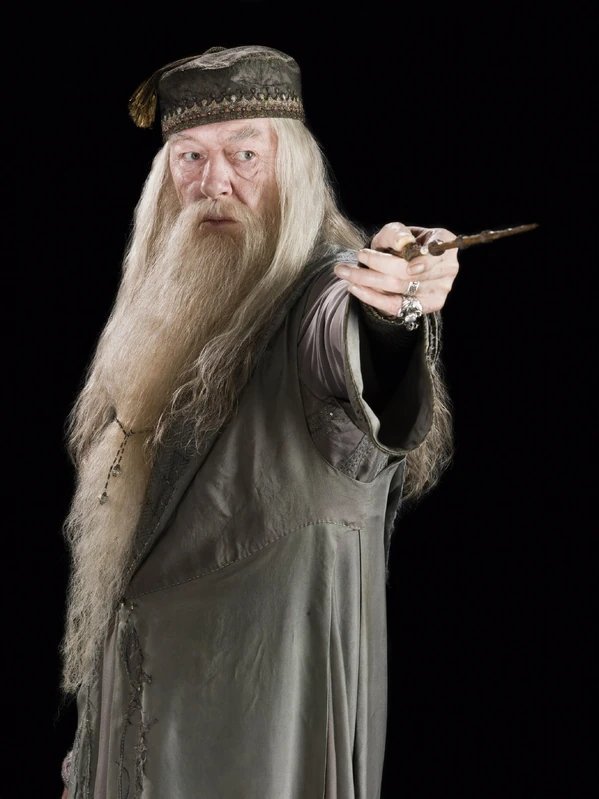
A Chocolate Frog card is where Harry first reads about him, on the train in the first book: the defeat of the dark wizard Grindelwald in 1945, the discovery of the twelve uses of dragon’s blood, and his work on alchemy with his partner, Nicolas Flamel. Nothing on the card mentions a classroom. He had one. In Tom Riddle’s day he was the school’s Transfiguration professor, and when the newly graduated Riddle asked Headmaster Dippet for a job, it was a suspicious Dumbledore, still a professor then, who talked Dippet out of it.
By Harry’s time he is Headmaster, mostly a man handing out sweets and withholding information. Among his first words to McGonagall, in the opening chapter of the series, is an offer: “Would you care for a sherbet lemon?” They are, he explains, a kind of Muggle sweet he is rather fond of.
The wound that was killing him began with a ring. In Harry’s sixth year his hand is blackened and shrivelled, as though the flesh had been burned away, and Snape’s memories later show why: he had put on Marvolo Gaunt’s ring, one of the Horcruxes Voldemort made, which carried a deadly curse, before destroying it with the sword of Gryffindor. He died that year on the Astronomy Tower, disarmed by Draco Malfoy, who could not bring himself to finish it, and killed by Snape, who could. His last recorded lesson was for Draco: “It is my mercy, and not yours, that matters now.”
Minerva McGonagall
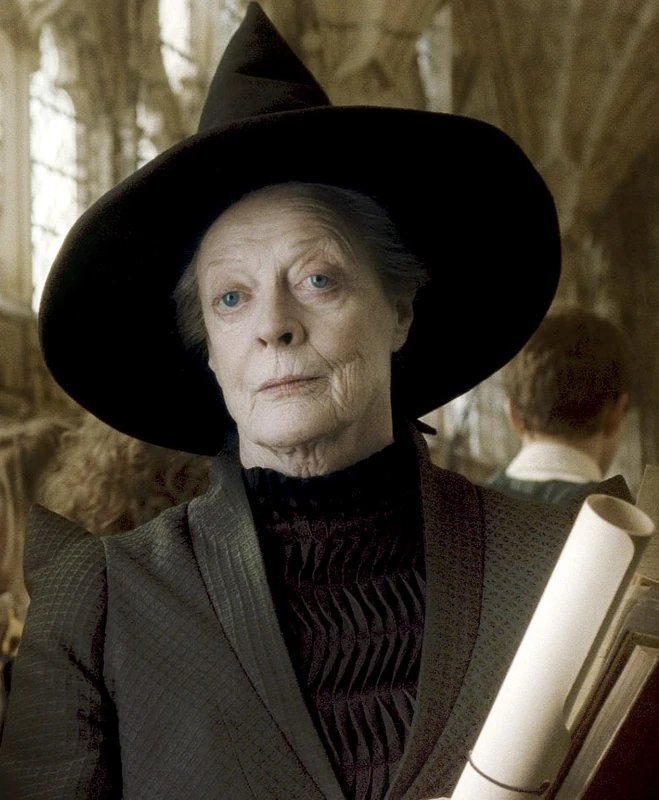
In Harry’s third year she turned into a cat in front of the class and back with a faint pop. “Really, what has got into you all today?” she said. “Not that it matters, but that’s the first time my transformation’s not got applause from a class.” She teaches Transfiguration, runs Gryffindor, serves as Deputy Headmistress, and is one of the Animagi of the series, the one who expects applause for it.
Asked by Umbridge, inspecting her lesson in Harry’s fifth year, how long she had been teaching at Hogwarts, she answered “Thirty-nine years this December” and snapped her bag shut. It is the nearest the novels come to her length of service, and it arrives as a rebuke.
Later that year, when Umbridge attacked Hagrid during the Astronomy O.W.L., she took four Stunning Spells to the chest, survived, and walked with a stick for a time. After Dumbledore’s death she is found in his old office, asking Harry where he had been and getting no answer, while the heads of house arrive to discuss whether the school can stay open. In the last book she duels Snape until he flees, with Flitwick and Slughorn at her side, leads the school’s defence on Harry’s instructions, and, as the battle ends, duels Voldemort herself. Rowling has written that she got the Transfiguration job by owl, applying to Hogwarts and receiving an offer within hours, under the head of department, one Albus Dumbledore. The seven novels never see her leave.
Filius Flitwick
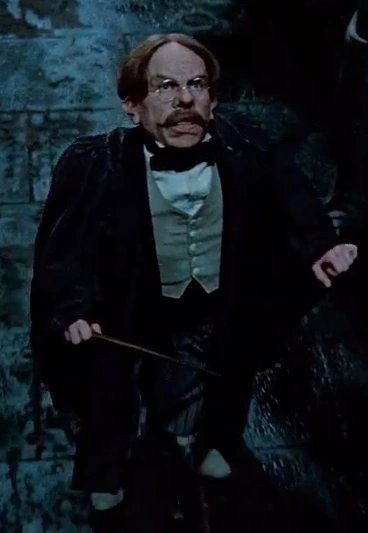
He needed a pile of books to see over his desk. That is how the Charms teacher is introduced in the first book, a tiny wizard perched on his stack, and it is where he was, “perched on top of his pile of books as usual,” when he gave the lesson everyone remembers: “Swish and flick, remember, swish and flick. And saying the magic words properly is very important, too.”
In Harry’s second year the school heard, by rumour, that he had been a duelling champion in his youth, and the seventh book bears it out. When McGonagall confronted Snape, Flitwick was at her side, and it was Flitwick who shouted the line of the night: “You’ll do no more murder at Hogwarts!” He then built the castle’s magical defences, took groups of fighters up to the three highest towers to work spells from above, and at the height of the battle fought Yaxley. He is Head of Ravenclaw, with an office on the seventh floor near the base of the West Tower.
He also cried. When Ginny Weasley was taken into the Chamber of Secrets, Flitwick burst into tears. And when Umbridge came to inspect his class, Fred Weasley reported, she “just lurked in the corner making notes on a clipboard. You know what Flitwick’s like, he treated her like a guest, didn’t seem to bother him at all.” A duelling champion who treats an inspector like a guest has already decided how the duel goes.
Pomona Sprout
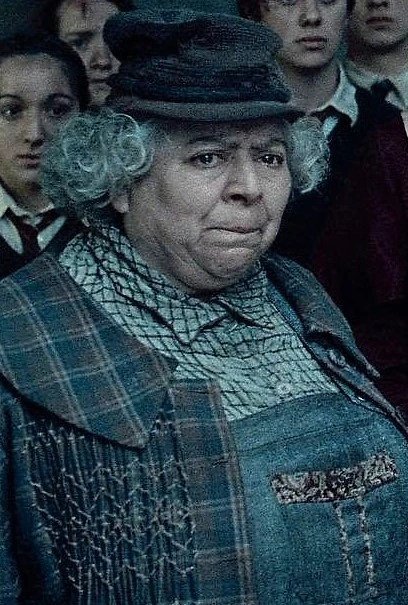
Gilderoy Lockhart, not a man given to conceding things, conceded one to her. “But I don’t want you running away with the idea that I am better at Herbology than she is!” he told her second-years, which from Lockhart was as close to a testimonial as anyone got.
That was the Mandrake lesson, twenty pairs of earmuffs that shut out sound completely, and the Mandrakes were the ones she raised to restore the students the Basilisk had Petrified. Her plants turn up wherever the plot needs something with teeth. A Devil’s Snare of hers guarded the Philosopher’s Stone; the official Harry Potter site has her growing everything from Venomous Tentacula to Devil’s Snare in the greenhouses; and at the Battle of Hogwarts she led Neville and other students against the Death Eaters with the most vicious and threatening plants she had. Her preferred fertiliser was dragon dung.
She is Head of Hufflepuff, and it was she who encouraged Neville’s Herbology, the boy who was anxious to show her his Mimbulus mimbletonia and who would one day teach the subject himself. After Dumbledore’s death, when the heads of house met to discuss closing the school, it was Sprout who spoke for keeping it open: “I feel that if a single pupil wants to come, then the school ought to remain open for that pupil.” It did.
Professor Binns
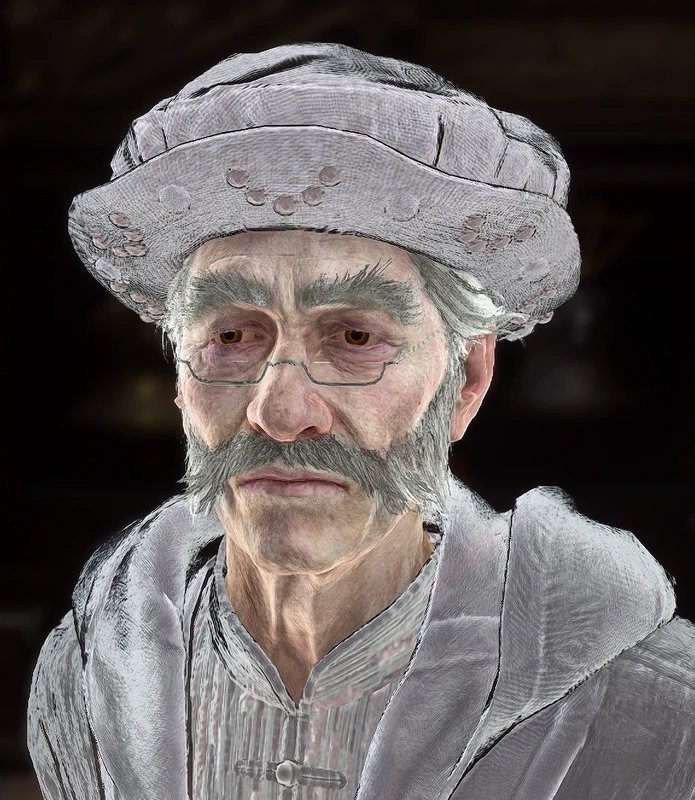
Professor Binns died at work and kept working. Rowling has written that “the most productive ghost at Hogwarts is, of course, Professor Binns, the old History of Magic teacher who fell asleep in front of the staffroom fire one day and simply got up to give his next class, leaving his body behind.” He appears among the named ghosts of Hogwarts as well as here.
His lessons are a drone the second book compares to an old vacuum cleaner, under which nearly everyone was soon in a deep stupor, and when a student interrupted he looked at her “as though he had never seen a student properly before.” The student was Hermione, asking about the Chamber of Secrets, and his answer is his method entire: “My subject is History of Magic,” he said in his dry, wheezy voice. “I deal with facts, Miss Granger, not myths and legends.” He told the story anyway, then took it back: “There is not a shred of evidence that Slytherin ever built so much as a secret broom cupboard! I regret telling you such a foolish story!”
Rowling has written that she based him on a professor at her own university who lectured with his eyes closed, rocking on his toes, brilliant and disconnected from his students. She has also written that there is some debate as to whether Binns realises he is dead. His students are not always certain they are awake.
Professor Sinistra
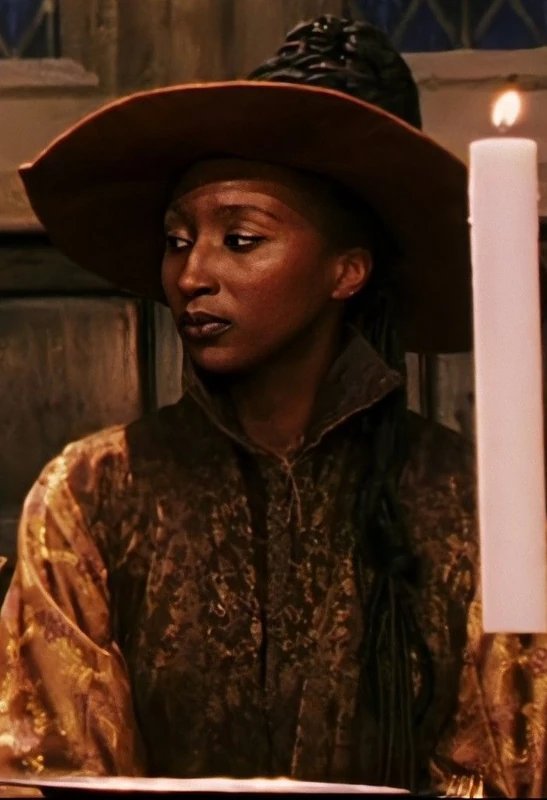
The Astronomy class meets at midnight at the top of the Astronomy Tower, which is not a timetable that generates many scenes. Sinistra is first named in the second book, helps carry Justin Finch-Fletchley’s Petrified body up to the hospital wing after the Duelling Club, and is otherwise glimpsed doing what the rest of the staff do: piling homework onto the fifth-years as the O.W.L.s approached, so that Harry and Ron spent an evening on an essay about the moons of Jupiter.
Her students observed the night sky through telescopes and noted down the stars they could see and the movement of the planets, which is Astronomy much as the Muggles do it, in pointed hats. The subject is compulsory for the first five years. The books never state her gender; when Order of the Phoenix was being translated into Portuguese, the question went to Rowling’s representatives, who confirmed that Sinistra is a woman.
The one moment the novels give her that is entirely her own is at the Yule Ball in Harry’s fourth year, where she danced a two-step with Mad-Eye Moody. Given who was inside Moody that year, she two-stepped with Barty Crouch Jr. and did not know it. Nobody did.
Professor Vector
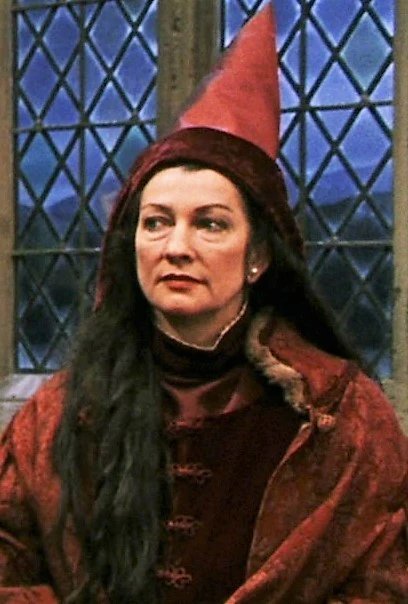
“Arithmancy looks terrible,” said Harry, picking up a very complicated-looking number chart. “Oh no, it’s wonderful!” said Hermione earnestly. “It’s my favorite subject!” That exchange takes place before Hermione has sat through a single class of it, and nothing in the books that follow changes her mind. The teacher responsible is Professor Vector, who is on this roster because the books name her as the Arithmancy professor from Harry’s third year, and who is otherwise seen mostly through her homework.
What the novels record is the homework. Vector had a reputation as a strict teacher who set a lot of complicated work; her students were expected to write essays and to read complicated number charts; and Hermione loved the class while others were a good deal less enthusiastic about taking it from her. The official Harry Potter site adds that the subject involved predicting the future with numbers and was required of anyone who wanted to be a curse-breaker at Gringotts.
Hermione appears to have been the only Gryffindor in her year to attempt an O.W.L. in it, which tells you something about Vector’s homework and something about Hermione. Somebody had to teach Hermione’s favourite subject. Vector did, strictly, and with a great deal of homework.
Charity Burbage
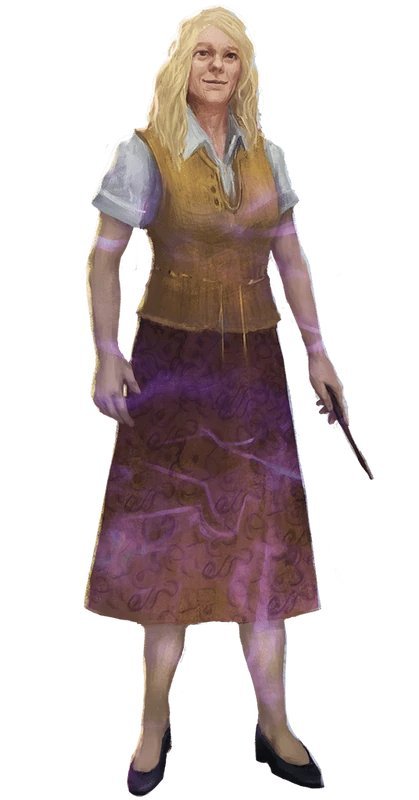
Voldemort read her newspaper article aloud to a room full of Death Eaters at Malfoy Manor, with her in it. “Not content with corrupting and polluting the minds of wizarding children, last week Professor Burbage wrote an impassioned defence of Mudbloods in the Daily Prophet. Wizards, she says, must accept these thieves of their knowledge and magic.” That is the opening chapter of the last book, and it is the first time the reader meets the Muggle Studies teacher of Hogwarts.
She had taught Muggle Studies, the practices and traditions of the non-magical community, a subject Hermione took despite being Muggle-born herself, and in the summer before Harry’s seventh year she wrote a piece for the Daily Prophet arguing, in Voldemort’s mocking paraphrase, that the dwindling of the pure-bloods was a most desirable circumstance. She appealed to Snape – “Severus! Help me!” – and then Voldemort killed her and fed her body to the snake with two words: “Dinner, Nagini.”
The Daily Prophet reported none of it. It ran a story, shortly after Harry got back to Privet Drive that summer, saying that Professor Burbage had resigned. That is the version the wizarding world was given. Arthur Weasley, for one, did not buy it: “I, for one, don’t believe the Muggle Studies professor at Hogwarts resigned.” Her post went to a Death Eater, whose version of the subject is next.
Alecto Carrow
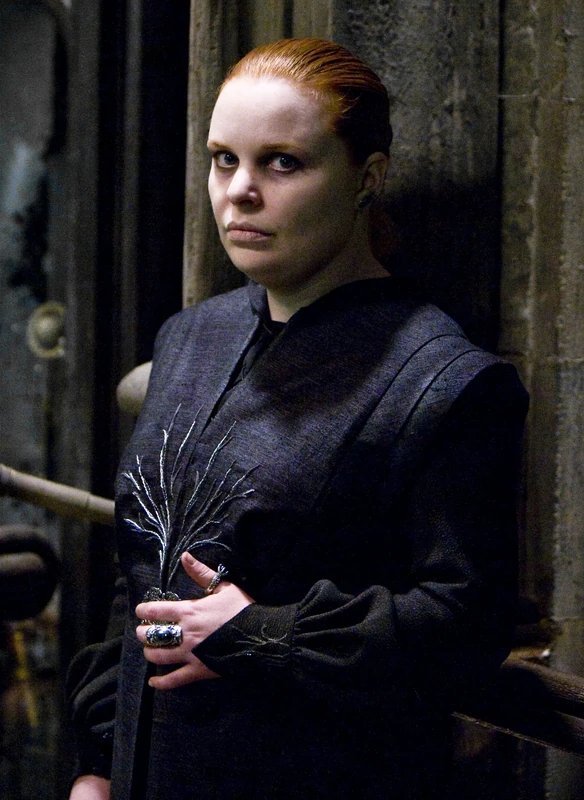
Muggle Studies became compulsory in the year a Death Eater taught it. Neville’s report to Harry, delivered in the seventh book after months under the Carrows, is the whole syllabus: “Alecto, Amycus’ sister, teaches Muggle Studies, which is compulsory for everyone. We’ve all got to listen to her explain how Muggles are like animals, stupid and dirty, and how they drove wizards into hiding by being vicious toward them, and how the natural order is being reestablished.” The subject she took over had, a year earlier, been taught by a woman who wrote to the Daily Prophet in defence of Muggle-borns.
Alecto came to the job the same way her brother did, in the party of Death Eaters that broke into Hogwarts on the night Dumbledore was killed, and she took it when Voldemort took the school and Snape took the headmaster’s office. The official Harry Potter site calls her odious, and says that under her, students’ heads were filled with lies about the Muggle world.
Her year ended in the Ravenclaw common room, on the night of the battle, where she summoned Voldemort and was Stunned before he arrived, then bound and left hanging in mid-air. The syllabus, such as it was, ended there.
Sybill Trelawney
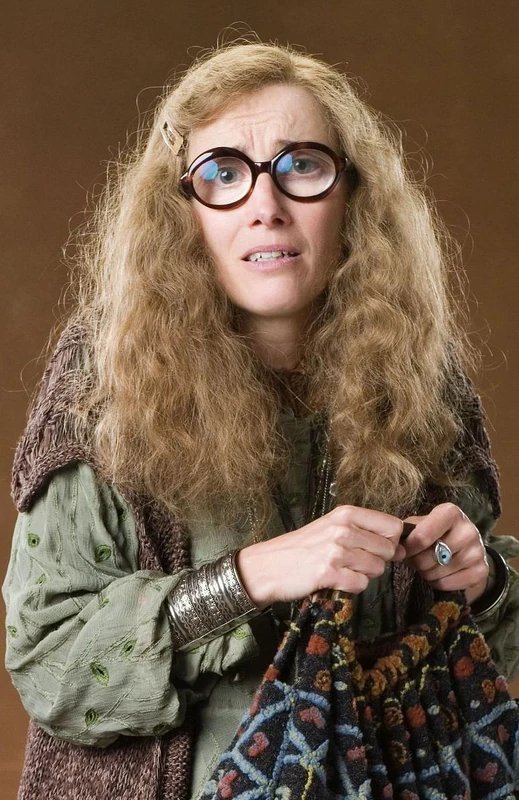
“Sybill Trelawney has predicted the death of one student a year since she arrived at this school,” McGonagall tells Harry after his first lesson. “None of them has died yet. Seeing death omens is her favorite way of greeting a new class.” The omen in question was the Grim, read in Harry’s tea leaves: “it is an omen -- the worst omen -- of death!”
The joke of Trelawney is that the fraud is also, twice, the real thing. Rowling has written that Dumbledore hired her because, at her interview, she revealed herself to be the unconscious possessor of important knowledge: the prophecy about the one with the power to vanquish the Dark Lord, born as the seventh month dies, delivered at that interview without her knowing it. She is Cassandra Trelawney’s great-great-granddaughter, and during Harry’s third year a second trance had her correctly foretell that Voldemort’s servant would break free that night.
None of it helped with Umbridge, who sacked her in Harry’s fifth year. “You c-can’t sack me! I’ve b-been here sixteen years! H-Hogwarts is m-my h-home!” Dumbledore kept her in the castle, and on her reinstatement the following year she found herself sharing the post with a centaur, whom she called, with an angry, drunken titter, Dobbin. Her empty sherry bottles went into the Room of Requirement. During the Battle of Hogwarts she dropped crystal balls from the balcony above the entrance hall and flattened Fenrir Greyback. It was more than they had ever managed in class.
Firenze
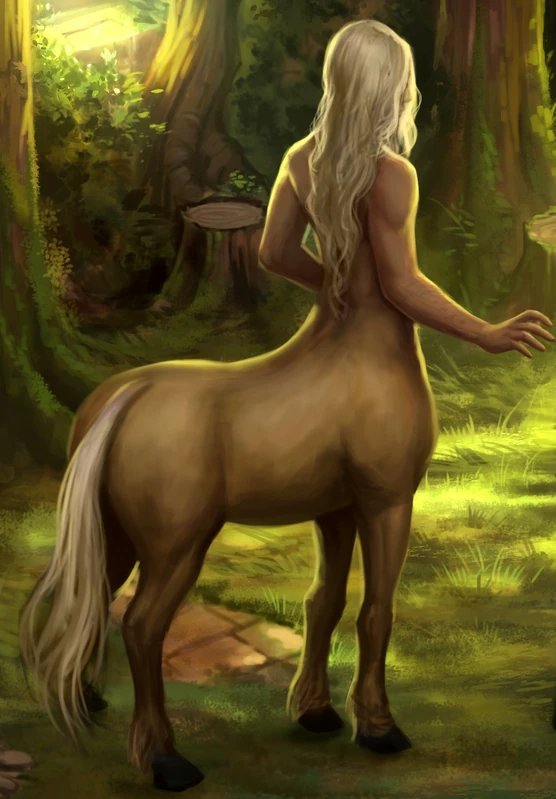
The centaur who rescued Harry from Quirrell in the Forbidden Forest, and told him what unicorn blood costs – “you will have a half-life, a cursed life, from the moment the blood touches your lips” – turns up in Harry’s fifth year as a member of staff. Dumbledore had already hired him when Umbridge sacked Trelawney, and told her so: “I have already found us a new Divination teacher, and he will prefer lodgings on the ground floor.”
Firenze’s first lesson drew a line under his colleague’s whole career: “Sybill Trelawney may have Seen, I do not know.... but she wastes her time, in the main, on the self-flattering nonsense humans call fortune-telling. I, however, am here to explain the wisdom of centaurs, which is impersonal and impartial.” The lessons cost him his herd. Agreeing to teach humans made him a traitor to the other centaurs, who banished him, and Hagrid had to stop them killing him. The official Harry Potter site frames it as a rescue: the post was given to him in order to save him from the rest of the colony.
When Trelawney was reinstated he stayed, and the two shared Divination, to her displeasure; even Lavender Brown and Parvati Patil, Trelawney loyalists, could not hide their disappointment at getting their old teacher back for sixth year. He fought at the Battle of Hogwarts and was wounded, and Rowling said, in 2007, that he survived and eventually went back to the herd. The forest took him back.
Professor Kettleburn
Sixty-two periods of probation is the number Rowling attaches to him, and she calls it “a record that still stands.” Professor Kettleburn taught Care of Magical Creatures at Hogwarts before Hagrid did, and the novels dispose of him in a single sentence of Dumbledore’s start-of-term speech in Harry’s third year: he “retired at the end of last year in order to enjoy more time with his remaining limbs.” The official site counts his mentions in the books at two, and that is enough to put him on this list, since the first of them names him as teaching staff.
Everything else comes from Rowling’s writing outside the novels. She has written that he was an enthusiastic and occasionally reckless man whose great love of the often dangerous creatures he studied led to serious injuries to himself and, occasionally, others; that he once caused the Great Hall to catch fire after enchanting an Ashwinder to play the Worm in a school production of The Fountain of Fair Fortune; and that on his retirement Dumbledore presented him with a full set of enchanted wooden limbs, which needed constant replacing because he kept visiting dragon sanctuaries and setting them alight.
He was living in Hogsmeade, retired and unable to fight, when the Battle of Hogwarts came. Rowling has written that he clambered into his attic and threw his entire stock of Flobberworms out of the skylight at passing Death Eaters, which was generally felt to show the right spirit.
Rubeus Hagrid
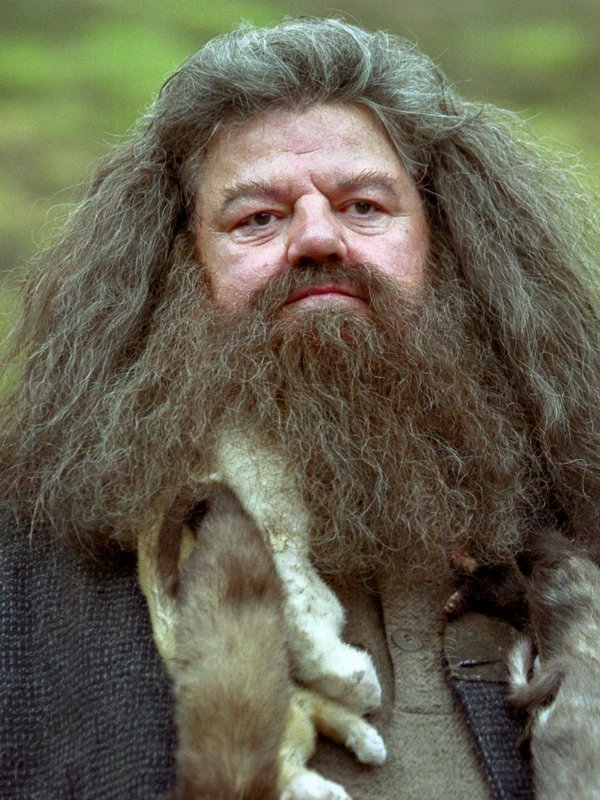
“Easily offended, Hippogriffs are. Don’t never insult one, ’cause it might be the last thing yeh do.” That was the safety briefing at Hagrid’s first lesson as Care of Magical Creatures teacher, on the first day of term in Harry’s third year, and Draco Malfoy ended the class injured. Dumbledore had announced the appointment at the feast the night before: Kettleburn’s place “will be filled by none other than Rubeus Hagrid, who has agreed to take on this teaching job in addition to his gamekeeping duties.”
Hagrid’s teaching philosophy was that interesting meant dangerous, and the fourth-years were set to raising Blast-Ended Skrewts, which drew from Malfoy a question with some merit: “I mean, what do they do? ... What is the point of them?” The Skrewts have their own entry among the magical creatures of the novels. The point of them was never established.
It went wrong the way things go wrong for Hagrid. In his second year of teaching, Rita Skeeter’s Daily Prophet article, which reminded readers that he had been expelled from Hogwarts in his third year, drove him from his classes. In Harry’s fifth year Umbridge sat in on his Thestrals lesson as part of her inspections and, before the year was out, sacked him. He also introduced Harry, Ron and Hermione to his giant half-brother Grawp that year. That is the Hagrid method in one sentence: the creature is dangerous, and he loves it, and he would like you to meet it.
Professor Grubbly-Plank
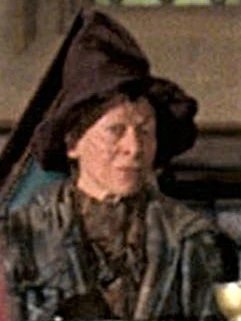
Umbridge inspected her, and she answered like a professional: “Not much left to do – they’ve studied unicorns and Nifflers, I thought we’d cover Porlocks and Kneazles, make sure they can recognise Crups and Knarls, you know...” Professor Grubbly-Plank was the substitute, the teacher who took Care of Magical Creatures whenever Hagrid could not, and the official site’s verdict, that her style was more traditional and included a lesson on unicorns, is about as pointed as an official site gets.
She first stepped in after the Christmas of Harry’s fourth year, when Rita Skeeter’s article had put Hagrid out of action, and she taught the class unicorns. She was back at the start of the fifth year, while Hagrid was away negotiating with the giants, and took on his other duties as well: she took the first-years across the lake and nursed Harry’s owl Hedwig back to health after she was attacked delivering the mail. She smokes a pipe and wears a monocle. The books address her as Professor throughout; there is no Madam Grubbly-Plank in them.
Her first name never appears in the novels either, though the official site supplies one. She is, in short, the competent one: the teacher who covered for the celebrity, twice, and knew exactly where the fifth-years were in their syllabus. She is the substitute every school has and no novel is about.
Madam Hooch
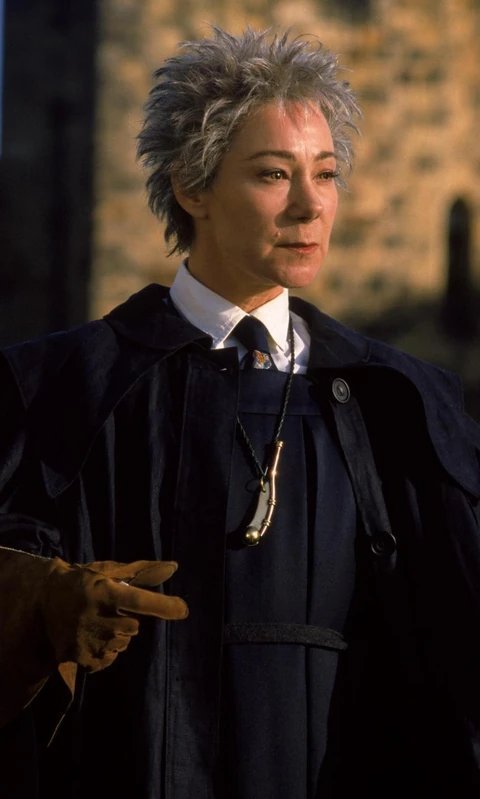
Her Hogwarts title appears in the books exactly once. In the second novel she is “Madam Hooch, the Quidditch teacher,” and the scene that names her is a match that goes on, under her whistle, while a rogue Bludger keeps going for Harry. Rowling has written that flying lessons are compulsory for first-years, and Hooch’s version of the first one, in the first book, ended with Neville breaking his wrist and hobbling off to the hospital wing with her arm around him.
Before Gryffindor’s first match against Slytherin she wanted “a nice fair game, all of you,” and the official site’s summary of her – no time for messing about, always fair and fast to blow her whistle – reads like a reference written by someone who had watched her work.
The books give her one hint of an age. Admiring Harry’s Firebolt in his third year, she mentioned that she had first learned to fly on a Silver Arrow, a broomstick that predates mass production. Oliver Wood, wanting the broom back for practice, had to ask her: “Er – Madam Hooch? Is it OK if Harry has the Firebolt back?” She refereed, coached and taught across most of the seven books, and the books call her Madam, not Professor, and it did not stop her teaching.
Wilkie Twycross
Twelve Galleons bought twelve weeks of lessons, and the sign-up sheet went on the common-room wall. The lessons began on the first Saturday in February in the Great Hall, led by a Ministry Apparition Instructor called Wilkie Twycross, who is described as colourless, with transparent eyelashes, wispy hair and an insubstantial air, as though a single gust of wind might blow him away. He did not work for Hogwarts at all. He was Ministry staff, hired in to teach sixth-years to disappear.
His method was the Three D’s – Destination, Determination, Deliberation – and it involved each student picturing themselves inside a wooden hoop, then mostly spinning on the spot and feeling dizzy. By the third lesson the students had nicknames for him, “the politest of which were Dogbreath and Dunghead.” Susan Bones was the first to manage it, and left a leg behind, which the heads of house put back. Snape docked Ron points and called him “the boy so solid he cannot Apparate half an inch across a room.”
The test was taken in Hogsmeade. Hermione passed first time; Ron left half an eyebrow behind and failed. The official site, explaining why Apparition is among the hardest spells in the wizarding world, points to Twycross’s Three D’s and adds that the cost of getting it wrong is what Ron “gruesomely demonstrated in Deathly Hallows.” Twycross had told them. Destination, Determination, Deliberation. They did not listen. Most of his lessons went that way.
Neville Longbottom
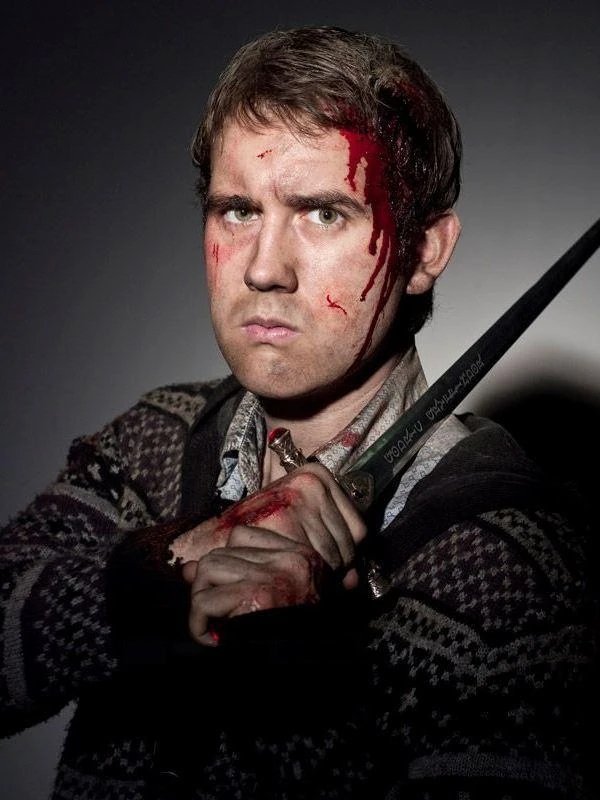
“Outside, yeah, but at school he’s Professor Longbottom, isn’t he? I can’t walk into Herbology and give him love...” That is James Potter in the epilogue, refusing to pass on his mother’s regards to the Herbology teacher, and it is the sentence that puts Neville on this list. It sits inside the seventh book but after its last numbered chapter, so he closes the roster.
The subject was his from the start. In his fifth year he brought a rare plant to school to show Professor Sprout, a Mimbulus mimbletonia, which burst and drenched his train compartment in Stinksap just before Cho Chang walked in; his O.W.L. results included an Outstanding in Herbology; and the official site traces the talent from strong first-year marks to Sprout holding him up as a shining example to his classmates. In between he broke his nose fighting Death Eaters in the Department of Mysteries, led the resistance from the Room of Requirement under the Carrows, told Voldemort “I’ll join you when hell freezes over,” and pulled the sword of Gryffindor out of a burning hat to kill Nagini.
Rowling has said that after the battle he worked at the Ministry for Kingsley Shacklebolt before taking the Herbology post, and that he married Hannah Abbott, who became landlady of the Leaky Cauldron. She has also said he kept his coin from Dumbledore’s Army. It seems the right thing for the last teacher on the list to have in his pocket.
Frequently Asked Questions
Why isn’t Mad-Eye Moody on this list of Hogwarts professors?
Because the real Alastor Moody never taught a class. He spent the whole of Harry’s fourth year imprisoned in his own trunk, and Dumbledore had to open its seventh lock to find him in a pit underneath. The Defence Against the Dark Arts lessons that year were given by Barty Crouch Jr. in Moody’s shape, so the entry is his.
Why are Armando Dippet and Phineas Nigellus Black not listed?
Both were headmasters, and no source attaches a subject to either of them, so neither meets the test of being named as teaching staff. Phineas Nigellus, from his portrait, does say what he thought of the classroom: “this is precisely why I loathed being a teacher! Young people are so infernally convinced that they are absolutely right about everything.”
Where do first names like Cuthbert Binns and Septima Vector come from?
Not from the novels. Cuthbert, Septima and Aurora (or Aurelia) appear on a list Rowling drew up while planning Prisoner of Azkaban, a working document that changed before the book was published. Quirinus, Silvanus and Wilhelmina come from the official Harry Potter site, and Rolanda Hooch from the Trading Card Game. Galatea Merrythought has no stated source at all.
Which Hogwarts staff never taught a class?
Argus Filch, the caretaker; Madam Pomfrey, the matron; and Madam Pince, the librarian, are staff but not teachers, so none of them is listed. Griselda Marchbanks and Professor Tofty, who examined the O.W.L.s in Harry’s fifth year, belong to the Wizarding Examinations Authority rather than to the school, and are not listed either.
Why isn’t Bathsheda Babbling, the Ancient Runes teacher, on the list?
Because no novel names her. The name comes from Rowling’s planning notes, and the official site says as much: “We never met Bathsheda but J.K. Rowling confirmed that she was the Ancient Runes teacher.” Herbert Beery, an earlier Herbology teacher, is out for the same reason: he exists only in Dumbledore’s commentary on The Tales of Beedle the Bard.
Does Professor McGonagall become Headmistress in the books?
Not in the seven novels. Through the books she is the Transfiguration teacher and Deputy Headmistress. Her headship is stated only in Harry Potter and the Cursed Child, the stage play, and on the official site with no book attached, which is why this list, which counts the seven novels and their epilogue, does not record it.
Who taught Defence Against the Dark Arts in each Harry Potter book?
Quirrell in Philosopher’s Stone, Lockhart in Chamber of Secrets, Lupin in Prisoner of Azkaban, Barty Crouch Jr. disguised as Moody in Goblet of Fire, Umbridge in Order of the Phoenix, Snape in Half-Blood Prince, and Amycus Carrow in Deathly Hallows, who renamed the subject Dark Arts. Merrythought held the post for nearly fifty years before any of them.
- Harry Potter, books 1-7 (Bloomsbury, 1997-2007), chapters as cited in the evidence record
- The Harry Potter Lexicon: Hogwarts staff – chapter-citation index consulted for every entry
- The Harry Potter Lexicon: Hogwarts staff, character index
- Harry Potter 101: The Hogwarts Teachers, harrypotter.com
- The Tales of Beedle the Bard (Bloomsbury, 2008), Dumbledore’s commentary on The Fountain of Fair Fortune
- Scholastic discussion guide, Harry Potter and the Half-Blood Prince