Every Magical Creature in Harry Potter

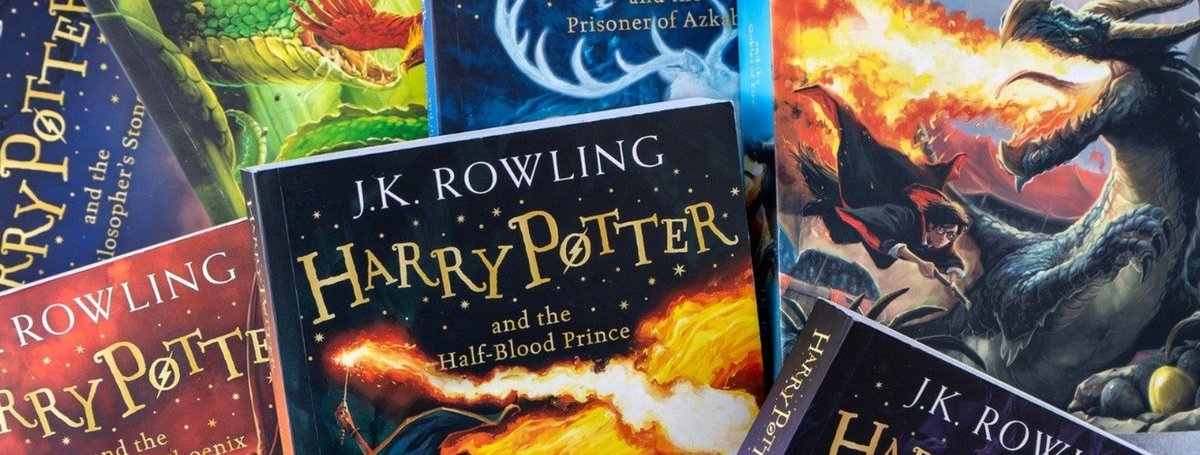
Professor Kettleburn, Dumbledore told the school, had ‘retired at the end of last year in order to enjoy more time with his remaining limbs’, and Care of Magical Creatures passed to the gamekeeper. Hagrid’s first lesson opened on Hippogriffs, with a safety briefing: ‘Easily offended, Hippogriffs are. Don’t never insult one, cause it might be the last thing yeh do.’ Of every subject the Hogwarts professors teach, it is the one subject taught entirely out of this list, and Hagrid was not always there to teach it: Professor Grubbly-Plank stood in for him at least twice, once with a unicorn. HBO’s television series, due in 2027, has given the job to Nick Frost.
The wizarding world took centuries to decide what a creature was. In the fourteenth century Burdock Muldoon, Chief of the Wizards’ Council, proposed that anything walking on two legs was a Being, and the goblins answered by bringing trolls, hags, fairies, pixies, Diricawls and Fwoopers to the meeting, all of which qualified. Bathilda Bagshot’s A History of Magic records how one such summit ended: ‘The Council Chief stood up to open the meeting, slipped on a pile of Porlock dung and ran cursing from the hall.’ Muldoon’s successor, Elfrida Clagg, tried ‘those who could speak the human tongue’, which admitted goblin-trained trolls and shut out the merpeople, who cannot talk above water. The settlement came in 1811 from Grogan Stump, who is remembered among every Minister for Magic for steering through, as Rowling has written, ‘legislation on magical beasts and beings that had long been a source of contention’: a Beast Division and a Being Division, and, after the ghosts objected, a Spirit Division. The Ministry also grades danger, from X, the least dangerous, for a Flobberworm, to XXXXX for a Chinese Fireball, and wherever those ratings appear on this page they are the Ministry’s opinion, not this list’s.
Those ratings, and the classifications here, come from Fantastic Beasts and Where to Find Them, with the official site’s fact files filling the gaps. The textbook is the one Rowling published as Newt Scamander in March 2001 in aid of Comic Relief; with its companion Quidditch Through the Ages it has since raised nearly 20 million pounds for the charity. The textbook sits among every Harry Potter book Rowling has published as a school book rather than a novel, and that distinction decides this list: the textbook supplies the ratings, and the novels supply the names. What follows runs from the Acromantula to the Yeti, alphabetically, because any other order would have required a Wizards’ Council to agree on it.
Sixty magical creatures are named as creatures in the seven Harry Potter novels, and every one is on this list. A species qualifies only when a novel itself names it; anything that appears solely in the Fantastic Beasts textbook, the films or a figure of speech is left out, though the textbook supplies the Ministry’s ratings.
Acromantula
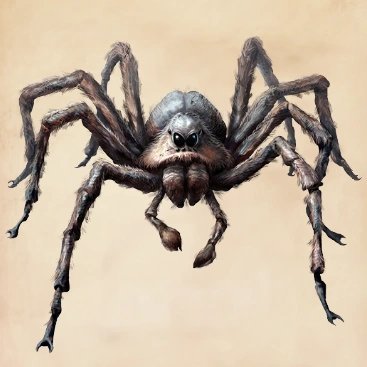
Horace Slughorn went to a spider’s funeral with an empty bottle. Aragog, the Acromantula Hagrid called a friend, died in the spring of 1997, and before the body went into the ground near Hagrid’s hut Professor Slughorn drew off a vial of venom. He was not being ghoulish, or not merely. Acromantula venom is useful in potion-making, and the Ministry files the species at XXXXX, as high as its rating scale goes.
Fantastic Beasts puts the creature’s origins in the jungles of Borneo, gives it eight eyes and thick black hair, and allows its legs a span of up to fifteen feet. The textbook also records the suspicion that the species was wizard-bred, the kind of project that later got the Ban on Experimental Breeding passed. Borneo is the third-largest island on Earth. A colony would need most of it.
Hagrid’s belief that Aragog was harmless held only for Hagrid. When Harry and Ron were carried into the colony in their second year, the old spider talked, then declined to stop his children from eating them; they left in Mr Weasley’s flying Ford Anglia, which had better timing than it had any right to. An Acromantula guarded the Triwizard Cup at the centre of the maze, and in the last book Acromantulas fought at Hogwarts on Voldemort’s side. Slughorn got his venom, then got drunk with Hagrid. Everyone came away with something.
Banshee
So far as the novels are concerned, the Banshee is a creature you hear about rather than meet. Seamus Finnigan is afraid of them, so when his turn comes at the Boggart in Lupin’s wardrobe it becomes one, and the best he can do with Riddikulus is take away its voice. A year later the shriek from the golden egg in the Triwizard Tournament puts him in mind of one again. That is about as close as anybody at Hogwarts gets.
The other Banshee of the series belongs to Gilderoy Lockhart, whose Break with a Banshee describes his triumph over the Bandon Banshee. Under some pressure at the end of Chamber of Secrets he admits that the Bandon Banshee was in fact seen off by a witch with a hairy chin, and that the book is not, strictly, a memoir.
The creature itself comes straight out of Irish folklore, where the bean sidhe, the woman of fairyland, wails at night outside a house in which someone is about to die. Merriam-Webster still defines her as a female spirit whose appearance or wailing warns a family that one of them will soon die, and Britannica notes that she was traditionally believed to keen only for families of pure Irish descent. Most of Hogwarts would have been safe on a technicality.
Fantastic Beasts has no entry for the Banshee and the official site has no page, which leaves her better documented by Irish grandmothers than by the Ministry of Magic.
Basilisk
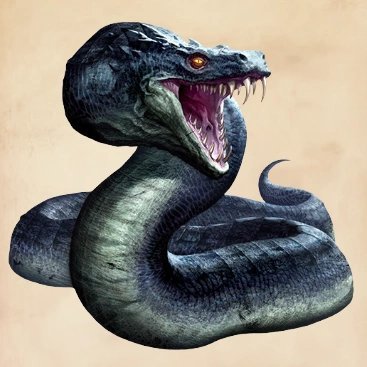
‘Spiders flee before the Basilisk, for it is their mortal enemy, and the Basilisk flees only from the crowing of the rooster, which is fatal to it.’ The library book Hermione consults puts it plainly, and that one sentence explains a good deal of the second novel.
Everything else about the creature is out of proportion. The official fact file has it brilliant green and up to fifty feet long, hatched from a chicken egg incubated under a toad, rated XXXXX by the Ministry, and living for something like nine hundred years. Breeding one has been outlawed since medieval times under the Ban on Experimental Breeding. Rowling has written that only a Parselmouth can control one; the Basilisk beneath Hogwarts therefore answered to Slytherin’s descendants and, in the end, to Tom Riddle.
The venom outlives the animal. When Harry killed the Chamber’s Basilisk with the Sword of Gryffindor the blade came away infused with it – that is what lets the sword destroy a Horcrux – and Harry finished Riddle’s diary on the spot by driving a fang through it. Years later Ron and Hermione took another fang from the same skeleton to Hufflepuff’s cup. Anyone keeping count of every Horcrux Voldemort created will find the dead snake’s name against more than one.
Britannica records that the cockatrice of legend, long conflated with the basilisk, hatched from a cock’s egg brooded by a serpent, and died at a cock’s crow. Rowling kept the crow and swapped in a toad.
Bicorn
Powdered horn of a Bicorn is on the ingredient list Hermione copies out of Moste Potente Potions in Moaning Myrtle’s bathroom, alongside lacewing flies, leeches, knotgrass, fluxweed and boomslang skin. That is the recipe for Polyjuice, which turns the drinker into somebody else, and if you can recite the recipe for any of the potions named in Harry Potter, it is probably this one.
The horn and the boomslang skin are the two ingredients that have to come out of Snape’s office, so Hermione steals them during a double Potions lesson while Harry supplies a distraction with one of Fred’s Filibuster fireworks. It is a theft, plainly, and she is twelve.
Rowling has since explained the shopping list. In a note on the potion published on the official Wizarding World site she says each ingredient was chosen for what it stood for, and that the horn of a Bicorn was there for ‘the idea of duality’. The word comes from the Latin bicornis, two-horned, and the potion does turn one person into another. She adds that many adult witches and wizards would not dare attempt Polyjuice at all, and that a twelve-year-old brewing it competently is testimony to outstanding magical ability. It is warm praise for a burglar.
What a Bicorn looks like on the hoof, the novels never say, and neither the textbook nor the official site fills the gap. It has two horns. Beyond that, the reader is on their own.
Blast-Ended Skrewt
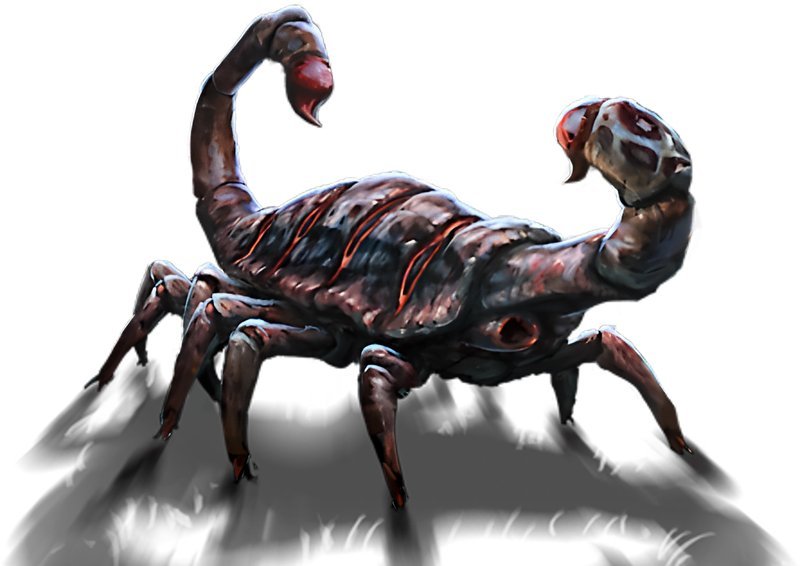
Six inches at hatching and roughly ten feet by June: the Blast-Ended Skrewt is a creature whose growth a reader can plot from the novels alone. Hagrid bred them himself by crossing Manticores with Fire Crabs, and what came out of the eggs was pale, slimy, headless and shell-less, smelled strongly of rotten fish, and had no discoverable diet. Nobody, Hagrid included, ever worked out what they ate. Lavender Brown’s review, on first sight, was ‘Eurgh!’
The fourth-years learned more about them than they wished to. Hagrid suspected, without being sure, that the ones with stings were males and the ones with blood-sucking suckers on their bellies were females. Before long they had started killing one another when kept together and had to be separated into crates. By winter they held their stings arched over their backs, and Hagrid, wondering whether they might hibernate, gave them teddy bears. Scamander’s textbook never got round to them and the Ministry never rated them. That is what happens when you invent an animal in a back garden.
One of them made it to the Triwizard maze. It was about ten feet long by then, and its armour turned spells aside; its underside, fleshy and shell-less, did not, and that is where Harry’s luckily aimed Impediment Curse landed. Ten feet of monster, undone from below.
Blood-Sucking Bugbear
Something was killing Hagrid’s roosters in Harry’s second year, and Hagrid had a theory. ‘It’s either foxes or a Blood-Suckin Bugbear,’ he told Harry, Ron and Hermione, ‘an’ I need the Headmaster’s permission ter put a charm around the hen coop.’ That line is the creature’s whole appearance in the seven novels, and it qualifies for this list on the strength of it: a dangerous magical creature sometimes found in the vicinity of Hogwarts, named once, described never.
The Bugbear was innocent. The roosters were being killed by Ginny Weasley, acting under the control of the spirit in Tom Riddle’s diary, because a rooster’s crow is fatal to a Basilisk and Riddle needed the one in the Chamber of Secrets alive. The blood went onto a corridor wall as a warning to Muggle-borns. Hagrid, who had guessed foxes, was at least wrong in a plausible direction.
The word came first. Etymonline dates ‘bugbear’ to the 1580s, when it meant a demon in the shape of a bear that ate small children, built on an obsolete ‘bug’ meaning goblin or scarecrow – the same root that produced ‘boggart’, so two entries on this list are cousins. Merriam-Webster’s modern sense has softened to ‘an object or source of dread’. To Hagrid’s hens, that is roughly what it was.
No textbook entry, no fact file: whether Hagrid’s Bugbear exists at all is a question the series leaves open. The roosters, at any rate, were not its doing.
Boggart
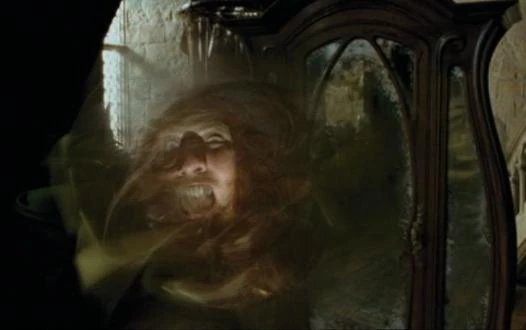
‘Nothing to worry about,’ Remus Lupin told his third-year class, standing them in front of a wardrobe. ‘There’s a Boggart in there.’ A Boggart becomes whatever the person facing it fears most, and the counter is Riddikulus, which forces it into a comical shape. Laughter, not force, is what finishes it.
The results were instructive. Neville’s Boggart became Snape, who was promptly dressed in Neville’s grandmother’s clothes. Parvati’s became a mummy that tripped over its own bandages and lost its head; Dean’s, a severed hand that got caught in a mousetrap; Ron’s, a spider that simply lost its legs. Hermione’s, at the end-of-year exam, was Professor McGonagall telling her she had failed everything. Two years on, a Boggart living in a writing desk at Grimmauld Place showed Molly Weasley Harry’s dead body, and it took Lupin to banish it – into a silvery orb, his own full moon.
Rowling has written that Boggarts are not truly alive, that like poltergeists and Dementors they seem to be generated and sustained by human emotion, and that banishing one only means another will eventually arise in its place. Scamander’s textbook does not list them; the official fact file classifies the Boggart, with a shrug you can almost hear, as a ‘Non-being’.
The word is Tudor English. Etymonline dates ‘boggart’ to the 1560s, meaning a spectre, goblin or sprite, especially one supposed to haunt a particular spot. Rowling did not so much invent the Boggart as give it a wardrobe.
Bowtruckle
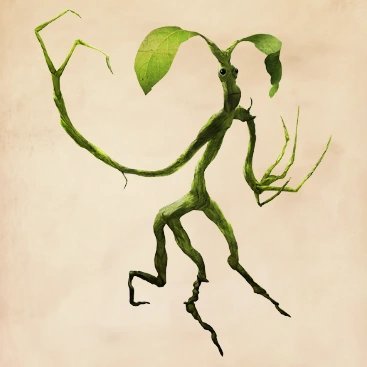
Eight inches at most, made of bark and twigs, and prepared to take your eyes out over a tree. The Bowtruckle is a tree-guardian, and Fantastic Beasts is specific about its methods: if its tree is threatened, ‘it has been known to leap down upon the woodcutter or tree-surgeon attempting to harm its home and gouge at their eyes with its long, sharp fingers.’
The textbook gives the creature brown eyes and a flat-faced, stick-like body and places it in the wild in western England, southern Germany and Scandinavia, none of which is somewhere people expect to lose an eye to a shrub. Its advice for anyone who needs wood or leaves from a Bowtruckle’s tree is bribery: a handful of woodlice or a few fairy eggs will keep the occupant busy while you work.
Its main appearance in the novels is a drawing lesson. In Harry’s fifth year, with Hagrid still unaccountably missing, Professor Grubbly-Plank set the Care of Magical Creatures class to sketching a Bowtruckle, an exercise a good deal safer than the textbook implies, provided nobody in the class has brought a saw. Hagrid, when he finally came back, had other plans for the syllabus, most of them larger.
Fantastic Beasts recommends woodlice. It does not say what to do if you have already picked up the saw.
Centaur
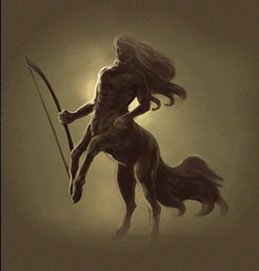
‘Mars is bright tonight.’ It is what the centaurs Ronan and Bane say to Hagrid’s party in the Forbidden Forest, more than once, and it turns out to be their answer to most other things as well. Centaurs read the sky, and questions about anything closer to hand get steered back up to it.
Fantastic Beasts records that the Ministry of Magic offered the centaurs the status of Beings, with a voice in wizarding government, and that they declined, preferring to be classified as Beasts and to have nothing whatever to do with governing. It is a rare species that reads the Ministry’s terms and asks to be filed with the animals. Firenze, the one centaur who carries Harry out of danger, later put the herd’s view of prophecy to a Hogwarts classroom: centaur wisdom is ‘impersonal and impartial’. ‘We watch the skies for the great tides of evil or change that are sometimes marked there. It may take ten years to be sure of what we are seeing.’ No human fortune-teller in the series would admit to a ten-year lead time.
The human view is Hermione’s, on the prospect of visiting Grawp: ‘Always assuming, of course, we can get past the herd of murderous centaurs on the way in and out!’ Greek mythology, Britannica notes, had two sorts of centaur, a lawless majority and the rare wise exception, Chiron. Rowling’s herd contrives to be both at once, which is more than the Greeks managed.
Chimaera
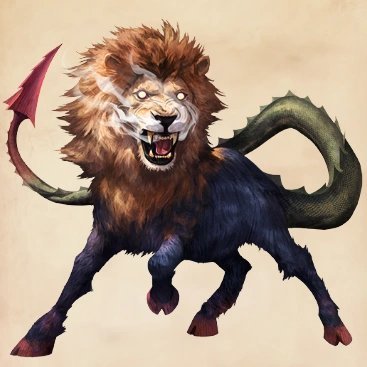
Hagrid wanted a Chimaera egg. This was during Dolores Umbridge’s inspections of his teaching, when a prudent man would have been showing the class Flobberworms, and Hermione tried to talk him out of it. ‘Nobody in their right mind would rather study knarls than chimaeras,’ he protested, which was true and beside the point.
Fantastic Beasts describes the animal as a vicious, bloodthirsty native of Greece with a lion’s head, a goat’s body and a dragon’s tail, and it classifies Chimaera eggs as Class A Non-Tradable Goods. Harry’s note in the margin of his own copy reads ‘Hagrid’ll be getting some any time now.’ The textbook also records the only known slaying of a Chimaera: the wizard who managed it was so badly hurt and exhausted that he fell from his winged horse to his death. It does not name him.
Britannica has the Greek original as a fire-breathing monster, lion in front, goat in the middle, dragon behind, slain by Bellerophon; legend has him doing it from the back of the winged horse Pegasus; the textbook’s anonymous hero has a classical precedent, minus the fatal dismount. Elsewhere in the novels the Chimaera is rumour and shape: Elphias Doge narrowly escaped some touring Greece, and the Fiendfyre at the Battle of Hogwarts took the form of flaming chimaeras. Quidditch Through the Ages adds a casualty, Dai ‘Dangerous Dai’ Llewellyn of the Caerphilly Catapults, killed by one on holiday in Greece. He had evidently not read the textbook.
Cockatrice
In 1792 a cockatrice got loose at the Triwizard Tournament and injured all three school heads, which is why, Hermione explains, the heads of the three schools have sat on the judging panel ever since. ‘It’s all in Hogwarts, A History,’ she adds. ‘Though, of course, that book’s not entirely reliable.’
That is the whole of the cockatrice in the seven novels: an accident from two centuries earlier, reported second-hand, from a book the reporter does not trust. The champions were supposed to be catching it. It caught them instead, or at least their headmasters, and the Tournament’s judging panel has carried the scar ever since.
Rowling did not invent the animal. The cockatrice of legend is a cousin of the basilisk, and in some tellings its twin: Britannica records a small serpent of Hellenistic and Roman legend, known as a basilikos or kinglet, ‘credited with powers of destroying all animal and vegetable life by its mere look or breath’. Later tellings made it part rooster, part serpent or dragon, and allowed one animal immunity to its stare: the weasel, which, Britannica notes, ‘secreted a venom deadly to the cockatrice’. Every other creature on earth was advised to look away.
The basilisk under Hogwarts borrowed the murderous stare from this legend; the cockatrice kept the rooster. The textbook does not list it at all, so the Ministry has never had to say how dangerous it is, and the judges of 1792 were presumably not asked.
Crup
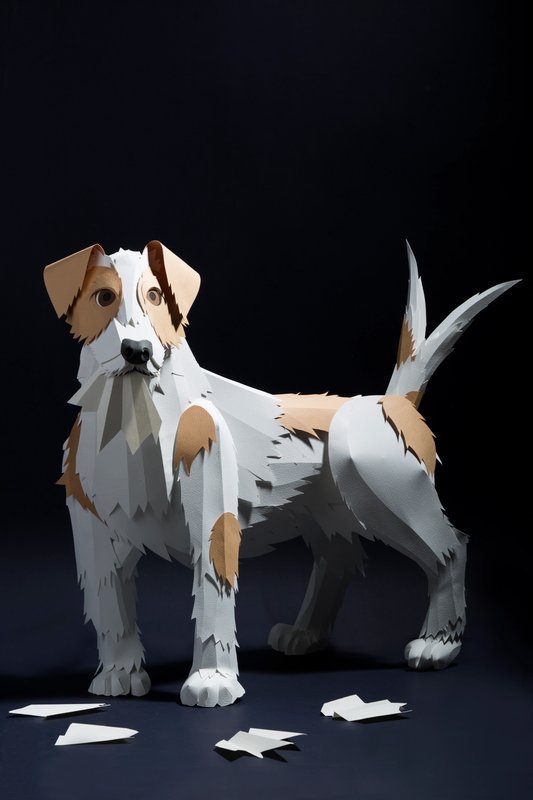
A Crup looks very much like a Jack Russell terrier, and that is the problem. Fantastic Beasts gives it away in one detail, a forked tail, and the wizarding world’s response has been legislation. By law a Crup’s tail must be removed with a painless Severing Charm at six to eight weeks old, so that Muggles notice nothing, and owning one requires a licence from the Department for the Regulation and Control of Magical Creatures plus a test proving you can control it around Muggles. The test matters. The Crup is incredibly loyal to wizards, ferocious toward Muggles, and will eat almost anything.
The Jack Russell itself, Britannica notes, was developed in England in the nineteenth century for hunting foxes both above and below ground, and named for the Reverend John Russell. A real dog for hunting real animals; the Crup improved on the design by hunting a category of people.
At Hogwarts the Crup turns up on the syllabus twice in a single year. Professor Grubbly-Plank puts it on her O.W.L. revision list as a creature the fifth-years ought to be able to recognise, and when Hagrid returns to teaching he covers it again. Given the tail, recognising it is the entire examination.
Rowling has written that MACUSA’s President Thornton Harkaway kept a pack of Crups he could not control; they wounded several No-Majs in Williamsburg, Virginia, who barked like dogs for forty-eight hours, and he resigned over the breach. That is roughly what the licence test is for.
Dementor
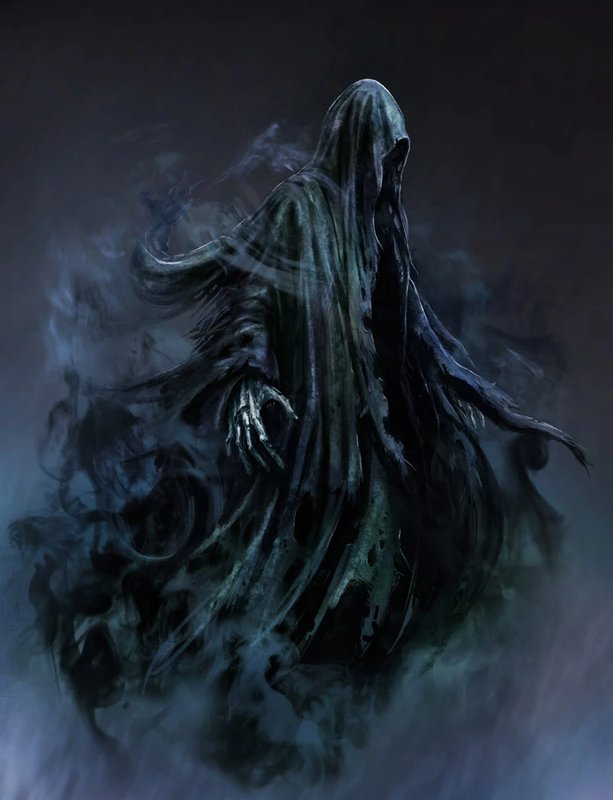
Fred Weasley had the diagnosis the morning after the Hogwarts Express went cold and a Dementor came aboard: ‘They sort of freeze your insides, don’t they?’ Lupin’s account is more thorough: ‘Dementors are among the foulest creatures that walk this earth. They infest the darkest, filthiest places, they glory in decay and despair, they drain peace, hope and happiness out of the air around them.’ The worst they can do is the Kiss, which takes the soul: ‘You’ll just – exist. As an empty shell. And your soul is gone for ever.’
The wizarding world’s response was to give them a job. Dementors guarded Azkaban, and the Ministry also used them in its courtrooms. Arabella Figg, a Squib who could not see them, testified to what they felt like: ‘Everything went cold...and I felt...as though all happiness had gone from the world’. Rowling has written that Azkaban began as the fortress of an insane Dark wizard called Ekrizdis, who lured Muggle sailors there to kill them, and that when the Ministry found the place it was already infested with Dementors. In the end they deserted the prison to join Voldemort, and a depressing mist settled over the country.
Rowling has said the Dementors were a personification of the depression she once experienced, ‘that absence of being able to envisage that you will ever be cheerful again’. Chocolate helps. She calls it the perfect antidote and, in the same breath, a short-term remedy.
Demiguise
Xenophilius Lovegood put the Demiguise on this list without meaning to. Explaining the Deathly Hallows to Harry, Ron and Hermione, he dismisses every ordinary Invisibility Cloak in a clause – a travelling cloak with a Disillusionment Charm, or a Bedazzling Hex, ‘or else woven from Demiguise hair, which will hide one initially but fade with the years until it turns opaque’ – to say what the true Cloak is not. That clause is the creature’s one appearance in the novels, and it leaves the Demiguise famous for a product that wears out.
Fantastic Beasts fills in the animal. It is native to the Far East, resembles an ape, and has large black eyes and long, silky, silvery hair, which is what the cloaks are woven from; the official fact file splits the difference and calls it a cross between a sloth and an ape. Nobody in the novels meets one, and given the hair, nobody would expect to.
The cloak Harry inherited, passed down from Ignotus Peverell through the Potters, is the other kind. It ‘renders the wearer completely invisible, and endures eternally... no matter what spells are cast at it’, and Dumbledore adds that it can shield others as well as its owner. Harry had worn it since his first year before anyone explained why it had never faded.
Most invisibility in the wizarding world, in other words, comes with an expiry date. The Demiguise supplies the kind that does.
Doxy
The curtains at Number Twelve, Grimmauld Place were infested, and the household went at them with Doxycide. ‘Harry looked round. Fred was holding a struggling Doxy between his forefinger and thumb.’ Fred and George pocketed a couple of the paralysed ones afterwards, to see what the venom might do in a Skiving Snackbox. That tells you most of what you need to know about the twins and a fair amount about the Doxy.
Fantastic Beasts describes a small creature covered in black hair, native to northern Europe and America, that gets into houses and sets up in the draperies, and that has to be cleared out with Doxycide. It has sharp, venomous teeth, and the advice for anyone attempting a de-infestation is to keep an antidote within reach. The textbook also lists the animal under a second name, Biting Fairy: accurate on both counts, flattering on neither. The Doxy is a fairy in the sense that a wasp is a bee.
The word is older than the creature and considerably ruder. English dictionaries record ‘doxy’ as a term for a promiscuous woman or a mistress from the early sixteenth century – Merriam-Webster dates it to about 1515, Dictionary.com to 1520-30 – of obscure origin, possibly from an obsolete Dutch word for a doll. Rowling attached it to a pest that lives in curtains and bites. Nobody at Grimmauld Place seems to have looked it up. Probably for the best.
Dragon
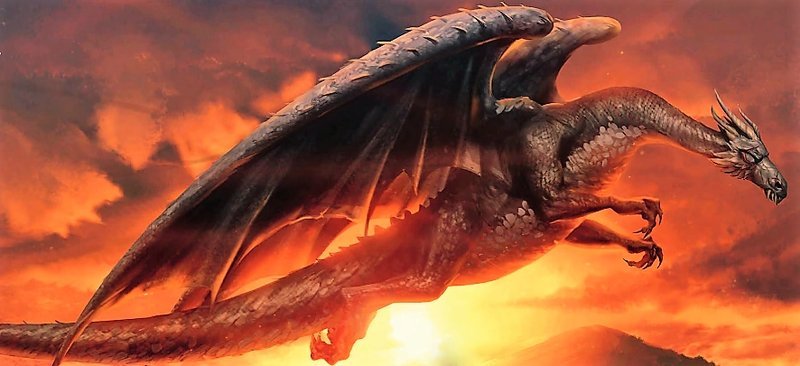
‘Dragon breeding was outlawed by the Warlocks’ Convention of 1709, everyone knows that,’ Ron tells Hagrid, who is warming an egg in his fireplace. Hagrid won it at cards from a stranger in the village; his feeding plan is a bucket of brandy mixed with chicken blood every half hour. The result is Norbert, a Norwegian Ridgeback, whom Charlie Weasley later reports to be female and renames Norberta.
Fantastic Beasts lists ten breeds: the Antipodean Opaleye, Chinese Fireball, Common Welsh Green, Hebridean Black, Hungarian Horntail, Norwegian Ridgeback, Peruvian Vipertooth, Romanian Longhorn, Swedish Short-Snout and Ukrainian Ironbelly. Four of them appear in the Triwizard Tournament’s first task – a Welsh Green for Fleur, a Short-Snout for Cedric, a Fireball for Krum and the Horntail for Harry – and a dragon-keeper’s warning covers the risk assessment: ‘They can shoot fire at a range of twenty feet, you know! I’ve seen this Horntail do forty!’ The Ridgeback is told apart from the Horntail by the black ridges down its back. The Hebridean Black rounds out the ten; the Lexicon’s index ties it to the novels only through a page-level citation of Philosopher’s Stone.
The dragon Harry, Ron and Hermione ride out of Gringotts is never given a breed; the official site concedes it was never formally identified. Dumbledore’s Chocolate Frog card credits him with discovering the twelve uses of dragon’s blood. Percy once found dragon dung in his in-tray, ‘a sample of fertiliser from Norway’, and wants it known it was nothing personal.
Dwarf
Gilderoy Lockhart hired them. On Valentine’s Day 1993 he announced his ‘friendly, card-carrying cupids’, surly-looking dwarfs in golden wings, carrying harps, sent round the school to deliver valentines. One of them chased Harry through a crowded corridor, kicked students in the shins, tore his bag open and sang a secret admirer’s message at him in public. The dwarf is on this list because of that day, and Harry did not enjoy it.
The novels give dwarfs almost nothing else. A party of ‘raucous dwarfs’ is staying at the Leaky Cauldron when Harry arrives there in his third year; Snape’s logic puzzle in the first book uses ‘dwarf’ and ‘giant’ as a joke about bottle sizes; and Hermione, explaining why she never read Beedle the Bard as a child, mentions Snow White and the Seven Dwarfs as what Muggle children get instead. That is the whole file. Fantastic Beasts has no entry.
Rowling’s dwarfs share a name with the dwarfs of Teutonic and Scandinavian folklore and nothing else. Britannica describes those as a species of fairy living inside mountains and mines, from about eighteen inches tall to the height of a two-year-old, famous for metalwork and the forging of magical swords and rings. Rowling’s forge nothing and kick shins.
She has written that a Minister for Magic, Faris Spavin, was nearly kicked to death by a centaur offended by his joke about a centaur, a ghost and a dwarf walking into a bar. The dwarf, for once, was blameless.
Erumpent
There is a horn on Xenophilius Lovegood’s wall, and he is proud of it. He believes it belonged to a Crumple-Horned Snorkack. Hermione, who has read the textbook, believes it is an Erumpent horn and says so, and she is right: when the Death Eaters come to the house the horn explodes and takes part of the building with it, and Harry, Ron and Hermione Disapparate out of the wreckage. That is the Erumpent’s appearance in the novels: not the animal, just the horn, and a demonstration of what it does.
Fantastic Beasts describes an enormous African beast that resembles a rhinoceros, and the official fact file adds that it weighs up to a tonne, that its hide repels spells, that its horn can pierce metal, and that the Ministry rates it XXXX. The horn is the point. It contains a fluid that causes whatever it strikes to explode – a problem for the species as much as for anyone else, since males frequently blow each other up during the mating season and the Erumpent is, as a result, ‘somewhat endangered’. Its horns, tails and Exploding Fluid are Class B Tradeable Materials, dangerous and subject to strict control, a category Xenophilius never consulted.
Britannica counts five or six species of real rhinoceros, among the largest land mammals alive, none of which detonates. Rowling kept the shape and the horn, added a fuse, and hung it in the sitting room of a man who thinks it belongs to something imaginary.
Fairy
Fairies at Hogwarts are decoration. Professor Flitwick decorates his Charms classroom with live ones at Christmas, and for the Yule Ball the grounds outside the castle were turned into a grotto with real live fairies in the rose bushes. Nobody asks the fairies. Fantastic Beasts describes tiny, perfectly formed humans with insect wings, extremely vain and quarrelsome, who like nothing better than to be used as ornaments. This is convenient for the people doing the decorating.
The textbook is not kind about their minds. Fairies are held to have very limited intelligence, and no language a human can follow; they possess a weak magic of their own, used mostly to avoid being eaten by predators such as the Augurey, which eats them. Their eggs are the standard bribe for a Bowtruckle. Between the ornaments, the predators and the bribery, it is a species that exists in the wizarding world chiefly to be useful to something else.
That is a long way down from folklore. Britannica defines the fairy of legend as ‘a mythical being of folklore and romance usually having magic powers and dwelling on earth in close relationship with humans’. The word itself descends from the fourteenth-century Old French fae, from the Latin fata, the goddess of fate. Rowling kept the wings and the vanity and threw out the fate. What was once a power over human lives now decorates a Charms classroom.
Fire Crab
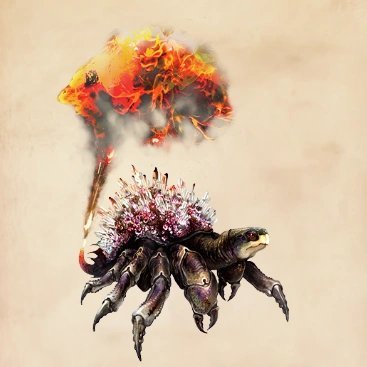
‘Feed and clean out a Fire Crab without sustaining serious burns.’ That is one task in the practical examination for the Care of Magical Creatures O.W.L. in Harry’s fifth year, and it is a fair summary of the animal. Fantastic Beasts describes a creature that looks like a tortoise with a jewelled shell and shoots fire out of its rear end. The cleaning-out is the interesting part of the exam.
The jewels are the trouble. Unscrupulous wizards hunt the Fire Crab for its shell, prized as a cauldron, and the species has a coastal reserve set aside for its protection in Fiji, where the textbook places it. Hagrid, characteristically, saw a different opportunity: the Fire Crab is one half of the recipe for the Blast-Ended Skrewt, the other half being a Manticore, and it is fair to say that the tortoise contributed the less alarming half.
Fiji has a real crab worth mentioning alongside. Britannica describes the coconut crab, also called the robber crab, as a large nocturnal land crab of the southwest Pacific and Indian oceans, about a metre from leg tip to leg tip, weighing around 4.5 kilograms, with a pincer force that reaches 3,300 newtons – enough to open a coconut. It does not breathe fire. It does not need to.
The exam stands as the novels’ own measure of its danger: burns, and whether they were serious.
Flobberworm
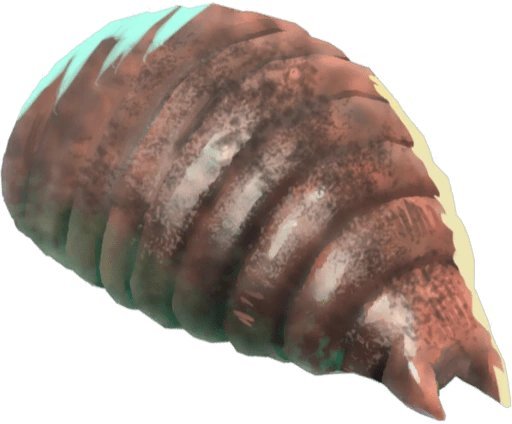
A Flobberworm is ten inches of toothless brown worm that eats vegetation, prefers lettuce, and would rather be left alone in a ditch. Fantastic Beasts adds that its mucus is sometimes used to thicken potions. That is the whole of its usefulness and very nearly the whole of its biography.
Its place in the novels is as a punishment. After Malfoy’s injury in the first lesson Hagrid lost his nerve, and his third-years spent a term raising Flobberworms, an exercise in which nothing happens by design. ‘How are the flobberworms?’ Ron asks him later, in the tone of a man asking after a relative nobody likes. When Rita Skeeter’s article quoted Draco Malfoy on a bad bite from a Flobberworm in Hagrid’s lessons, Ron’s reaction was the definitive review: ‘They haven’t even got teeth!’
Rowling has written that the retired Care of Magical Creatures professor Silvanus Kettleburn kept Flobberworms at his home in Hogsmeade, and that during the Battle of Hogwarts, unable to fight, he threw them at passing Death Eaters through his attic skylight. It cannot have been a decisive contribution, but it was a contribution.
Britannica’s earthworm, by comparison, is ‘any one of more than 1,800 species of terrestrial worms’, a whole class of animals doing quiet, valuable work in the soil. The wizarding world got one species, and gave it to the third-years as a way of passing the time.
Ghost
About twenty ghosts came through the back wall of the Great Hall at Harry’s first Welcoming Feast, pearly white and glowing. The one who introduced himself as the ‘Resident ghost of Gryffindor Tower’ was Nearly Headless Nick, and a year later he invited Harry, Ron and Hermione to his Deathday Party in the dungeons, his five-hundredth, on Hallowe’en 1992, with hundreds of the dead attending. Moaning Myrtle was among them, sulking.
Myrtle is the ghost this list owes a debt to. She haunts the bathroom she died in, and the last thing she remembers seeing is ‘a pair of great big yellow eyes’, which is how Harry and Ron work out that a Basilisk killed her. The Hogwarts dead have their own politics: Nick once described a ghosts’ council at which ‘the Bloody Baron put his foot down’ against ‘the Fat Friar’. The full roll call of the named ghosts of Hogwarts has the Grey Lady on it under her real name, Helena Ravenclaw.
The Ministry’s Beast, Being and Spirit Divisions, the textbook records, were created after the ghosts objected to being called ‘beings’ when they were, as they put it, ‘has-beens’. Britannica’s ghost is the soul or spectre of a dead person, capable of returning to the world of the living; Nick’s account is close: ‘wizards can leave an imprint of themselves upon the earth’, he tells Harry, ‘but very few wizards choose that path’. He chose it because he was afraid of death.
Ghoul
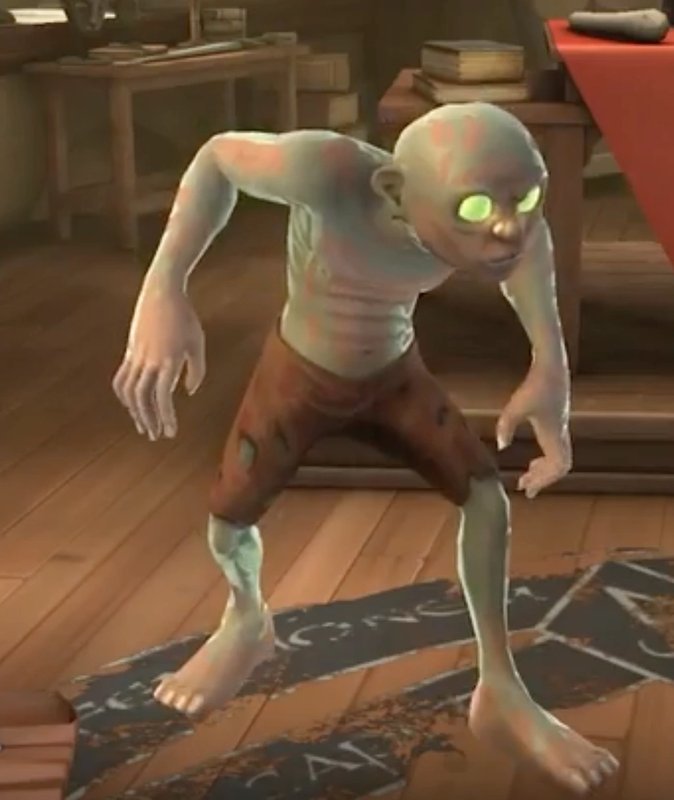
Ron Weasley grew up under a ghoul. ‘I’m right underneath the ghoul in the attic,’ he tells Harry on his first visit to the Burrow; ‘he’s always banging on the pipes and groaning.’ The ghoul is still there in the last book, when the family needs a stand-in for Ron. Fred, George and Mr Weasley transform it into a passable Ron dying of spattergroit, so that nobody comes looking for the real one, and the chapter is called ‘The Ghoul in Pyjamas’. Ron thought the ghoul was pleased with the arrangement. ‘It’s hard to tell,’ he allowed, ‘because all he can do is moan and drool – but he nods a lot when you mention it.’
Fantastic Beasts describes a slimy, buck-toothed, ugly, dim-witted creature that lives in attics or barns, feeds on spiders and moths, and is relatively harmless, which is about the most affectionate verdict the textbook passes on anything. There was one in the upstairs toilet at Grimmauld Place as well. Ghouls that settle in Muggle houses are dealt with by the Ministry’s Ghoul Task Force, a body whose existence tells you how often it happens.
The name is a long way from home. ‘Ghoul’ comes from the Arabic ghul, a demon of Arabic folklore that haunted burial grounds and robbed graves. Rowling’s version haunts a plumbing system and robs nobody, and in the end it took Ron’s place in bed and did the family a favour.
Giant
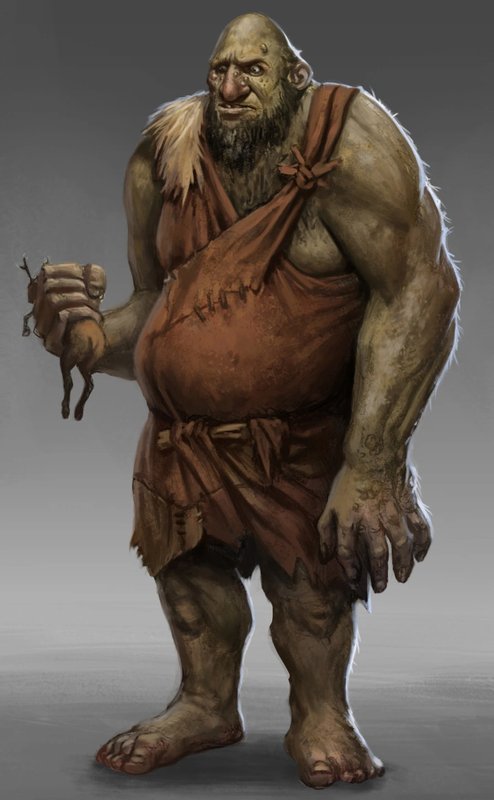
Dumbledore sent two envoys to the giants and lost. Hagrid and Olympe Maxime, both half-giants, went to the mountains northeast of Minsk to find the eighty or so giants living there and win them for the Order; two Death Eaters, Walden Macnair among them, went with a better offer, and by the time Hagrid’s account of the trip reaches Harry, Golgomath has killed the old Gurg, Karkus, and taken the tribe over to Voldemort. Macnair has his own entry among the Death Eaters the novels confirm; the giants were not his only errand.
The size is Hermione’s. Working out Hagrid’s ancestry, she reasons that he ‘couldn’t be pure giant, because they’re about twenty feet tall’. When the news of his mother got out, Rita Skeeter’s Daily Prophet article called for Hagrid to be sacked and Dumbledore to resign, and Hagrid went into hiding for a while. A giant’s part in an attack in the West Country, meanwhile, was passed off to Muggles as a hurricane.
Hagrid brought one home. His half-brother, sixteen feet tall and hidden in the Forbidden Forest, is called Grawp because, Hagrid explains, ‘tha’s what it sounds like when he says his name’. Giants fought for Voldemort at the Battle of Hogwarts, and were fought off by Grawp, Buckbeak and the Thestrals, which is to say by the things Hagrid had loved and nobody else had wanted.
Gnome
On the Weasleys’ Christmas tree in Harry’s sixth year there was an angel, and the angel was a gnome: Stupefied, painted gold, stuffed into a miniature tutu, small wings glued to its back, glowering down from the top of the tree. Harry thought it ‘the ugliest angel’ he had ever seen, ‘with a large bald head like a potato and rather hairy feet’. Fred had caught it in the garden.
The Burrow’s gnomes are pests, and de-gnoming the garden is a chore. The method is to grasp the gnome by the ankles, swing it round a few times to disorient it, and throw it out of the garden, while it squeals ‘gerroff me!’ Fantastic Beasts and the official fact file agree on the animal: about a foot tall, hard bony feet, a head like a potato; the fact file adds a Ministry rating of XX. Crookshanks liked chasing them, and the gnomes appeared to enjoy it about as much as he did.
Xenophilius Lovegood took a more scholarly view. He gave Ron the species’ scientific name, Gernumbli gardensi, and Ron told him in return that the Weasley gnomes know ‘a lot of excellent swear words’, which he suspected Fred and George had taught them.
The gnome of European tradition is grander. Britannica credits Paracelsus, the sixteenth-century Swiss alchemist, with popularising gnomes as earth spirits ‘capable of moving through solid earth as fish move through water’, guardians of buried treasure. Rowling’s guard nothing, swear, and end up on the tree.
Goblin
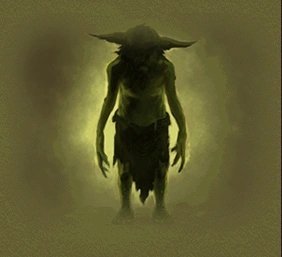
‘Never mess with goblins, Harry.’ Hagrid’s advice on the way to Gringotts is the first thing anyone tells Harry about the species, and six books later Bill Weasley explains why. ‘To a goblin, the rightful and true master of any object is the maker, not the purchaser. All goblin-made objects are, in goblin eyes, rightfully theirs.’ A wizard who buys a goblin-made sword has, from the goblin’s side of the counter, merely borrowed it. Goblin notions of ownership, payment and repayment, Bill warns, are not the same as human ones, and Griphook’s bargain with Harry over the goblin-made Sword of Gryffindor is exactly the case he has in mind.
The novels give goblins long fingers and feet, some with pointed beards and dark, slanted eyes, and a history of rebellions concentrated in the 1600s and 1700s; the one of 1612 used the site of a future Hogsmeade inn as its headquarters, and Ron notes that the rebels’ names ‘tend to run along the lines of Bodrod the Bearded and Urg the Unclean’. Sirius Black’s family dined off ‘finest fifteenth-century goblin-wrought silver’. Goblins also mint the Galleons, Sickles and Knuts, each coin stamped with a serial number identifying the goblin who cast it, which is a level of accountability the Ministry has never matched.
The word reached English from the Old French gobelin, a devil said to haunt the Normandy countryside; Britannica traces it further back to the Greek kobalos, a rogue. Bill would say the Greeks had it right.
Grindylow
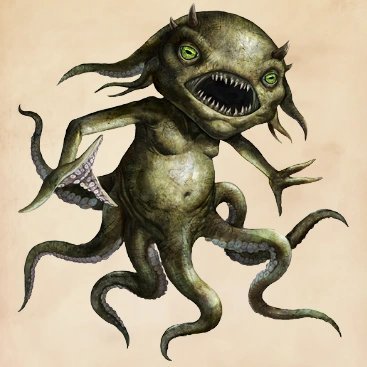
Snape thought first-years should be able to handle a Grindylow. Covering a lesson for Lupin, he sneered at the class: ‘You are easily satisfied. Lupin is hardly over-taxing you – I would expect first-years to be able to deal with Red Caps and Grindylows.’ Lupin kept one in a tank in his office as the subject of the next lesson, and put another in a pond for the end-of-year exam, which the class had to wade across.
The official fact file describes a pale green water demon with sharp horns and long, brittle fingers, living in the lakes of Britain and Ireland, the Hogwarts lake included, rated XX by the Ministry. The lake’s Grindylows earned their keep in the Triwizard Tournament’s second task, when the champions had to get past them; Fleur Delacour was attacked and could not finish.
Rowling took the name from the north of England. The folklorist Elizabeth Wright, writing in 1913, grouped ‘Grindylow, Jenny Greenteeth, and Nelly Long-arms’ as regional names for a water-demon ‘said to lurk at the bottom of deep pits, ponds, and wells’, the sort of creature invented to keep children away from the water. John Clark, curator emeritus of the Museum of London, has argued that the grindylow was originally a single Lancashire water-nymph overshadowed by Jenny Greenteeth, and that using the word for water demons in general is a habit the novels created. One Lancashire bogey got the job for the whole lake.
Hag
At the Leaky Cauldron, in the summer before his third year, Harry watched a hag ordering a plate of raw liver. It is a brief sighting, and the series treats hags the way it treats most things in the Leaky Cauldron, as part of the furniture. Quirrell, the story went, had ‘a nasty bit of business’ with a hag during his year off, and Gilderoy Lockhart claimed a whole book’s worth of them in Holidays with Hags, a title that deserves more suspicion than it usually gets.
What a hag is, the novels never quite pause to say. Rowling has written, in an excerpt from the Hogwarts textbook The Dark Forces: A Guide to Self-Protection, that a hag is ‘a child-eating creature of human appearance, though likely to have more warts than the average witch’, and she has recorded the case of a Professor Regulus Moonshine, who claimed to have brewed a potion that reduces a hag’s craving for human flesh and lost several pieces of his face and neck in the research. The textbook, which finds room for the Flobberworm, has no entry for the hag at all.
Britannica’s hag is ‘an ugly and malicious old woman who practices witchcraft, with or without supernatural powers’, often aligned with the devil or the dead. The novels’ hag orders liver. It is a modest career, but a long one.
Hinkypunk
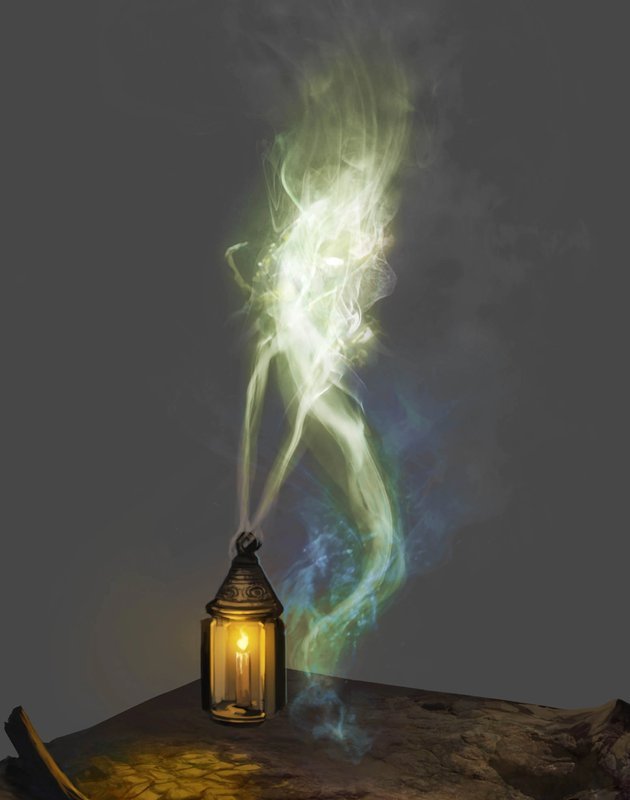
Ron Weasley failed the Hinkypunk. For the third-years’ final exam in Defence Against the Dark Arts, Lupin laid out an obstacle course, and one of its stations was a marshy patch with a Hinkypunk in it, the test being whether a student could ignore the creature’s directions and cross the bog on their own judgment. Ron could not, and ended up waist-deep. The class had been due to start on Hinkypunks earlier in the year, on the day Snape covered for Lupin and taught werewolves instead. That is roughly what Snape thought of the syllabus.
Lupin’s lesson presents a little one-legged creature that appears to be made of smoke and carries a light, with which it lures travellers into bogs. That is the will-o’-the-wisp with a leg added. Merriam-Webster gives the phenomenon its Latin name, ignis fatuus, ‘foolish fire’, and notes that ‘foolish travelers were said to try to follow the light and were then led astray into the marsh’. Dictionary.com dates the English name to 1600-10, from ‘Will (i.e., William) with the wisp’, and attributes the light itself to the spontaneous combustion of methane over marshy ground at night.
Rowling gave the gas a body and a motive. Her Hinkypunk is a creature that means it, and the exam was designed to find out which students would follow a light because it was there. Ron followed. The marsh, at least, was only waist-high, and the real thing has led astray better travellers than him.
Hippogriff
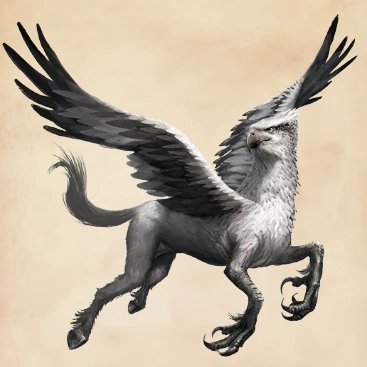
Hagrid’s first lesson as a teacher began with a bow. He told the third-years: ‘Yeh always wait fer the Hippogriff ter make the firs’ move. It’s polite, see? Yeh walk towards him, and yeh bow, an’ yeh wait. If he bows back, yeh’re allowed ter touch him. If he doesn’ bow, then get away from him sharpish, ’cause those talons hurt.’ Harry bowed, Buckbeak bowed back, and Harry flew. Draco Malfoy called the animal an ‘ugly great brute’ and was swiftly rewarded with a bloody gash on his arm.
Fantastic Beasts gives the Hippogriff the head, wings and forelegs of a giant eagle and the body, hind legs and tail of a horse, orange eyes, and coats in the colours horses come in: black, bronze, chestnut, grey, roan. The Ministry rates it XXX and requires anyone keeping one to put it under a Disillusionment Charm so that Muggles do not notice. Fancy Hippogriffs are bred in the wizarding world; the official site notes that Newt Scamander’s mother bred them. The Hogwarts herd lives in the Forbidden Forest.
The animal predates Rowling by nearly five centuries. Ludovico Ariosto’s Orlando Furioso of 1516 has a hippogriff that flies around the world and helps the hero Ruggiero rescue the princess Angelica, and Merriam-Webster still defines the word as an animal of legend with the foreparts of a griffin and the body of a horse. Hagrid’s contribution to the tradition was the etiquette.
House-Elf
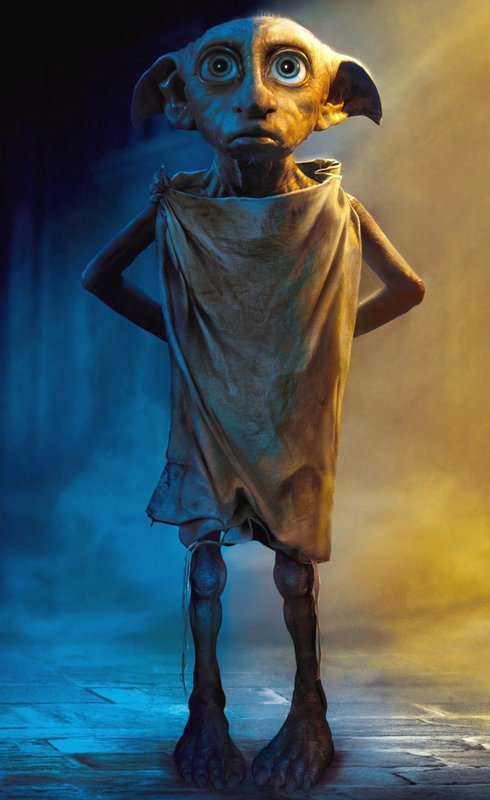
‘And Professor Dumbledore says he will pay Dobby, sir, if Dobby wants paying! And so Dobby is a free elf, sir, and Dobby gets a Galleon a week and one day off a month!’ Dobby is delighted. The other house-elves in the Hogwarts kitchens are appalled, and Winky, sacked by the Crouch family after she was found holding a wand at the Quidditch World Cup, puts the majority view: ‘Winky is a disgraced elf, but Winky is not yet getting paid!’
A house-elf, Dobby explains in the second book, cannot free itself: ‘A house-elf must be set free, sir. And the family will never set Dobby free.’ The mechanism is clothing. An elf given a garment by its owner is released; that is how Harry tricks Lucius Malfoy into freeing Dobby with an old sock. The elves are short, with large bat-like ears and enormous eyes, and they carry a magic of their own that needs neither wand nor words: Dobby uses it to enchant a Bludger, seal the barrier to Platform Nine and Three-Quarters and intercept Harry’s post. The Ministry classes them as Beings.
The clothes rule is older than Rowling. Britannica describes the brownie, the household spirit of Scottish and English folklore, who had one known weakness: ‘If one made him a suit of clothes, he would put it on and then vanish, never to return.’ Rowling kept the rule and gave the brownie something the folklore never had: an opinion about it.
Kappa
Snape marked Harry’s Kappa essay in the margin, and the margin is where the Kappa lives in the novels. ‘Very poorly explained,’ he wrote. ‘That is incorrect, the kappa is more commonly found in Mongolia.... Professor Lupin gave this eight out of ten? I wouldn’t have given it three....’ The trouble is that the Care of Magical Creatures textbook says the Kappa is a Japanese creature, and Britannica, which has no stake in the marking, puts the kappa firmly in Japanese folklore. Whether Snape was wrong or merely spiteful, the novels do not say.
The class had studied the animal under Lupin: a water-dweller that will grab and strangle anyone wading in its pond. Fantastic Beasts describes a scaly monkey with webbed hands that lives in shallow ponds and rivers and feeds on human blood, and it gives two ways of dealing with one. Trick it into bowing, so that the water in the hollow of its head spills out and its strength goes with it, or carve your name on a cucumber and hand it over.
Nearly every one of those details is in the Japanese original. Britannica’s kappa is the size of a ten-year-old child, yellow-green, monkey-like, scaled or shelled, with a water-filled hollow in its head; spill the water and its powers go, throw a cucumber into its pond and it is placated, and a kappa tricked into bowing is bound to keep whatever promise it makes. Rowling changed almost nothing. Snape changed the country.
Kelpie
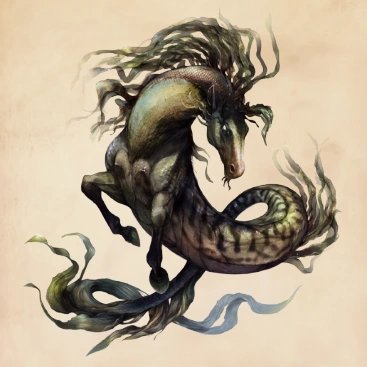
The Loch Ness Monster is a Kelpie. The official Wizarding World site says so plainly: the largest Kelpie takes the form of a great sea serpent living in Loch Ness, and turns itself into an otter whenever Muggles come near. That accounts for the photographs. It is one of the few places where the wizarding world offers a Muggle mystery a tidy answer.
The Kelpie’s appearance in the novels is Hagrid’s temper. In Harry’s second year Gilderoy Lockhart offers him advice on getting kelpies out of a well, and Hagrid, moving a half-plucked rooster off his table to set down the teapot, is not grateful: ‘Like I don’t know.’ Fantastic Beasts describes a carnivorous, shape-shifting water creature that most often takes the form of a horse, and it gives the approved method for overcoming one, a bridle placed over its head with a Placement Charm. Muggle-repelling charms are no use, since the Kelpie is drawn to humans; that is the point of it.
Merriam-Webster defines the folklore kelpie as ‘a water sprite of Scottish folklore that delights in or brings about the drowning of wayfarers’, and Rowling kept the Scottish address and the appetite. She has also written that Ollivander once received a request for a wand with a core taken from the mane of a kelpie a witch had met on holiday in Scotland, a core he regarded as substandard. The witch, presumably, was lucky to have come home with the hair and not the other way round.
Knarl
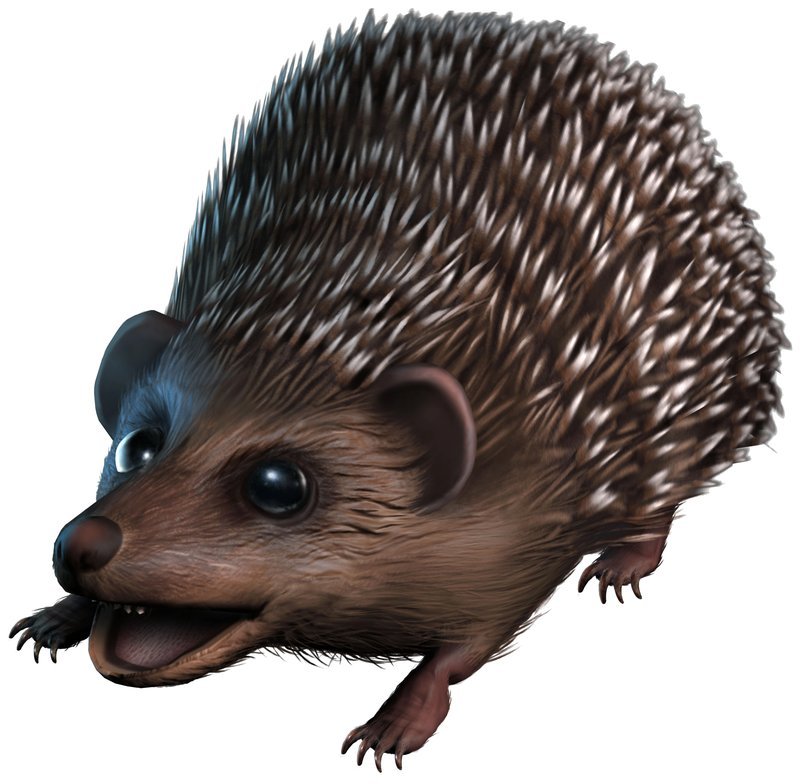
Six Sickles for a bag of Knarl quills was, by George Weasley’s account, the best joke Mundungus Fletcher had yet tried on him and Fred, which is to say a price. The Knarl was an early line in the Weasleys’ Wizard Wheezes accounts. The animal itself is a hedgehog, or looks like one. Fantastic Beasts says the two are very similar, the official site says a Knarl looks basically the same as the spiky mammal, and the fifth-year O.W.L. practical included telling them apart, a fair exam question only because the difference is not visible.
The difference is manners. A hedgehog left food by a Muggle eats it. A Knarl takes offence, concluding that the food is a trick, and revenges itself on the garden, wrecking plants and ornaments. The official site’s summary is that ‘the main difference between a Knarl and a hedgehog seems to be general decorum’, and that if a Muggle leaves food out for a Knarl ‘it’ll mercilessly wreck your garden in gratitude’. It is never shown rolling into a ball; the garden is the ball.
Merriam-Webster defines the real hedgehog as a Eurasian and African nocturnal insectivore with both hair and spines, presented outwardly by rolling up when threatened. It also lists ‘knarl’ as an archaic variant of ‘gnarl’, a knot or twist in wood, so Rowling’s creature shares its name with something small, hard and twisted. That is about right. The quills, at any rate, were quoted at six Sickles.
Kneazle
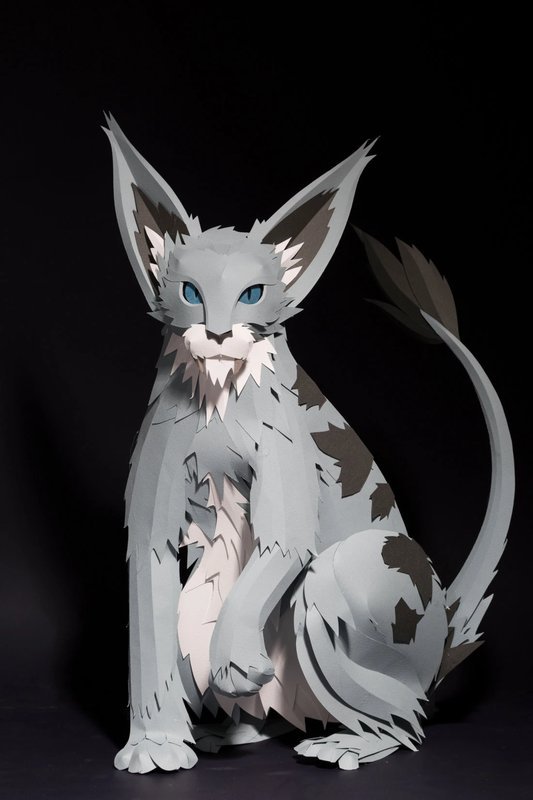
One word, in one lesson plan, puts the Kneazle on this list. Professor Grubbly-Plank, planning the fifth-years’ O.W.L. revision, tells Umbridge: ‘Not much left to do – they’ve studied unicorns and Nifflers, I thought we’d cover Porlocks and Kneazles, make sure they can recognise Crups and Knarls, you know...’ That is the species’ entire presence in the books, and it is enough, because this list rests on what the novels name rather than what they show.
Fantastic Beasts fills in what Grubbly-Plank did not: ‘a small catlike creature with flecked, speckled, or spotted fur, outsize ears, and a tail like a lion’s’, intelligent, independent and occasionally aggressive, an excellent pet if it takes to you, with ‘an uncanny ability to detect unsavory or suspicious characters’ and a talent for guiding its owner home. The official site has the species originating in Britain and now found worldwide, and rates it XXX.
Readers who think they have met one are probably thinking of Crookshanks. Rowling has said that Hermione’s cat is part Kneazle, which the official site rounds up to half, and which would explain his intelligence, his instant dislike of Scabbers, and the night he threw himself across Sirius Black’s chest to shield a man Harry was trying to kill. None of that ancestry is in the novels. Rowling has also written that Mrs Figg, the cat-loving neighbour on Wisteria Walk, deals in Kneazle-and-cat crosses. There is a magical creature business two streets from the Dursleys.
Leprechaun
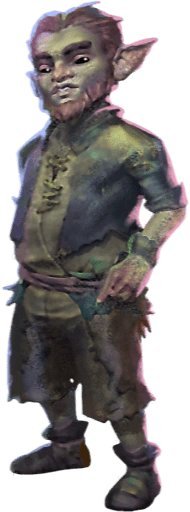
At the Quidditch World Cup final the Irish mascots came in over the stadium and rained gold on the crowd, and Ron, who had been embarrassed about the Omnioculars Harry bought him, was delighted to be able to pay him back on the spot. The gold vanished. Leprechaun gold always does.
That is the Leprechaun’s role in the novels: a mascot and a small financial lesson. Fantastic Beasts adds a tiny green vegetarian humanoid and a piece of classification trivia. Leprechauns, alone among the little people, can speak human language, and they have never asked to be reclassified as Beings. They remain Beasts by their own indifference, while the centaurs and merpeople declined the honour on principle.
The Irish original is a shoemaker. Britannica describes a fairy in the form of a tiny old man, often with a cocked hat and leather apron, who lives in remote places and makes shoes and brogues, his hammering betraying his presence, and who possesses a hidden crock of gold. Merriam-Webster adds that he reveals the hiding place if caught, and dates the word’s first English use to 1604. Rowling’s leprechauns give the gold away unasked, from the air, to a stadium. It is the same trick with the direction reversed, and it is a great deal funnier.
Manticore
In 1296 a manticore savaged someone and got off, and Hermione found the case while hunting for anything that might save Buckbeak. ‘They let the manticore off,’ she read out to Hagrid, and then, reading on, ‘oh – no, that was only because everyone was too scared to go near it.’ The law books yielded one other precedent, a Hippogriff convicted in 1722. That was the defence.
Fantastic Beasts explains the fear. The manticore is a native of Greece whose skin repels virtually all known charms and whose sting carries a venom that kills instantly. It can speak, and is sentient, and the Ministry still declines to classify it as a Being on account of its violent tendencies, a tactful way of saying nobody can get close enough to ask. Hagrid got close enough to breed one with a Fire Crab, producing the Blast-Ended Skrewt.
The animal is one of the oldest in this list. Britannica describes a creature of legend with the head of a man, often horned, the body of a lion and the tail of a dragon or scorpion, and notes that scholars take the earliest Greek report of it for a greatly distorted description of the Caspian tiger. The name comes, by way of Greek, probably from an Iranian compound meaning ‘man-eater’; the creature itself was first mentioned by the Greek writer Ctesias. Behind the wizarding world’s most unapproachable beast there is a real tiger, misdescribed by a Greek who had never seen one.
Merpeople

Nobody put the merpeople in the fountain. The Fountain of Magical Brethren in the Ministry’s atrium found room for a centaur, and the merpeople, who have exactly the centaur’s claim to brethren status, are absent. Like the centaurs, the merpeople were offered the status of Beings and preferred to be Beasts, a choice the official fact file records alongside their Ministry rating of XXXX.
Harry meets them properly in the second task of the Triwizard Tournament. Their village sits at the centre of the Hogwarts lake, and in its square the hostages hang ‘bound tightly to the tail of the stone merperson’, asleep and blowing streams of bubbles. The merpeople, led by a Merchieftainess called Murcus, some of whom keep a pet Grindylow tied to a stake outside their homes, speak Mermish, a language that sounds like screeching above the water and something croaky and comprehensible beneath it. When Harry finally rises through the lake with his hostages, the merpeople rise with him, their ‘yellowish eyes’ on his wand.
Fantastic Beasts adds that they sometimes use Lobalugs as weapons, and that in 1949 a group off the coast of Scotland caught and domesticated a Hippocampus, a sentence the textbook produces without comment. Britannica’s Siren, of Greek myth, is half bird and half woman, luring sailors to destruction by the sweetness of her song. Rowling’s version keeps its voice underwater, where it is a great deal safer for shipping.
Moke
Rufus Scrimgeour brought Dumbledore’s will to the Burrow in a mokeskin bag, and one of the things inside it was another one. Dumbledore had left Harry a mokeskin pouch, and the Minister for Magic handed it over with the rest. So the Moke reaches the novels as leather: not the animal, but its skin, in the hands of a dead headmaster and a living Minister at once.
Fantastic Beasts explains why the skin is worth having. The Moke is a small magical lizard of Britain and Ireland that grows up to ten inches long and has never been noticed by Muggles, because it shrinks itself at will whenever anyone comes near. The skin keeps the habit. A purse or money bag made of mokeskin contracts on the outside when strangers approach, while the space inside stays exactly as it was, which makes it the wizarding world’s answer to a safe, and a considerably more discreet one. Hermione’s beaded bag and the wizarding tents at the World Cup do similar tricks with space, but neither is ever described as mokeskin.
The word has a life of its own outside the books. Merriam-Webster records ‘moke’ as British slang for a donkey, first recorded around 1839, of unknown origin, and as Australian slang for a nag, a worn-out horse. Rowling took a word for a tired animal and gave it to a lizard no Muggle has ever managed to see. It is not clear the donkey has noticed.
Murtlap
After the first detentions with Umbridge, Hermione went to work on Harry’s hand. The black quill had cut the same words into the back of it night after night, and her remedy was a bowl of strained, pickled Murtlap tentacles for him to soak it in. The tip travelled. When Lee Jordan turned up with the back of his own hand bleeding badly from a detention of his own, Harry recommended essence of Murtlap, and Lee passed it on to Fred and George, who used a couple of drops to sort out the boils their prototype Fever Fudge had been raising. Fifth year at Hogwarts, in short, ran on Murtlap.
Fantastic Beasts describes a rat-like creature with a growth on its back resembling a sea anemone, which, pickled, promotes resistance to curses. The animal attacks anyone who steps on it, though it usually eats crustaceans rather than feet, and the official site adds a warning the novels do not: an overdose of pickled Murtlap may produce ‘some fairly unsightly purple ear hair’, so witches and wizards are advised to limit themselves. Harry, with his hand in a bowl of the stuff, was presumably close to the line.
Britannica’s sea anemone, the model for the growth, is a soft-bodied marine invertebrate that anchors itself to a rock and waits for prey to blunder into its tentacles. Rowling put it on a rat’s back, pickled it, and made it the only thing at Hogwarts that year with any interest in healing.
Niffler
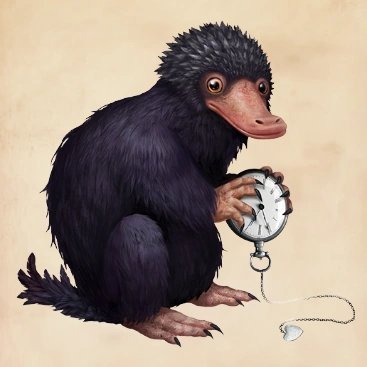
‘It’s me who’s been putting the Nifflers in her office. Fred and George left me a couple; I’ve been levitating them in through her window.’ Lee Jordan’s confession explains the strangest running problem of Dolores Umbridge’s year as Hogwarts High Inquisitor, which was that Nifflers kept appearing in her office, and a Niffler tried to take a chunk out of her leg. Umbridge was in the habit of wearing rings, and Nifflers are prone to biting jewellery off people. Lee had chosen his weapon well.
The animal is black, fluffy and long-snouted, and it burrows through dirt as though the dirt were water. Nifflers are drawn to anything that shines, and goblins keep them for finding treasure, which is why Hagrid dug up his vegetable patch to give a lesson on them and why Ron, watching them work, wished he owned one. As pets they are gentle and hard to control, the two qualities not being related. The official fact file has the species native to Britain and rated XXX.
The name is a piece of dialect. ‘Niffer’, Merriam-Webster confirms, is a chiefly Scottish word meaning to exchange or trade, and a niffler, on that reading, is a creature that takes your gold and gives you nothing in particular back. Umbridge, who took Hogwarts and gave it decrees, might have recognised a colleague.
Nogtail
Cormac McLaggen mentions, in Half-Blood Prince, that he has been Nogtail-hunting, in the way he mentions everything. That boast is about all the novels give the Nogtail, and it tells you what the wizarding world thinks of the animal.
Fantastic Beasts classes the Nogtail as a demon, which is a strong word for something shaped like a stunted piglet with narrow black eyes, a thick stubby tail and unusually long legs. The method is the point. A Nogtail slips into a pigsty and suckles from an ordinary sow, and the longer it goes unnoticed the longer the curse that settles on the farm. It is fast and hard to catch, but a Nogtail chased off a farm by a pure white dog never returns, and the Ministry’s Pest Sub-Division keeps twelve albino bloodhounds for exactly this purpose. Nogtails are found in rural areas across Europe, Russia and America, wherever there are pigs to be borrowed.
Merriam-Webster’s first definition of ‘demon’ is ‘an evil spirit’. The Nogtail is an evil spirit that looks like a piglet and is defeated by a white dog, and somewhere in the Ministry a kennel of albino bloodhounds sits on the public payroll against the day a farmer calls. McLaggen went hunting them instead, and made sure people knew.
Phoenix
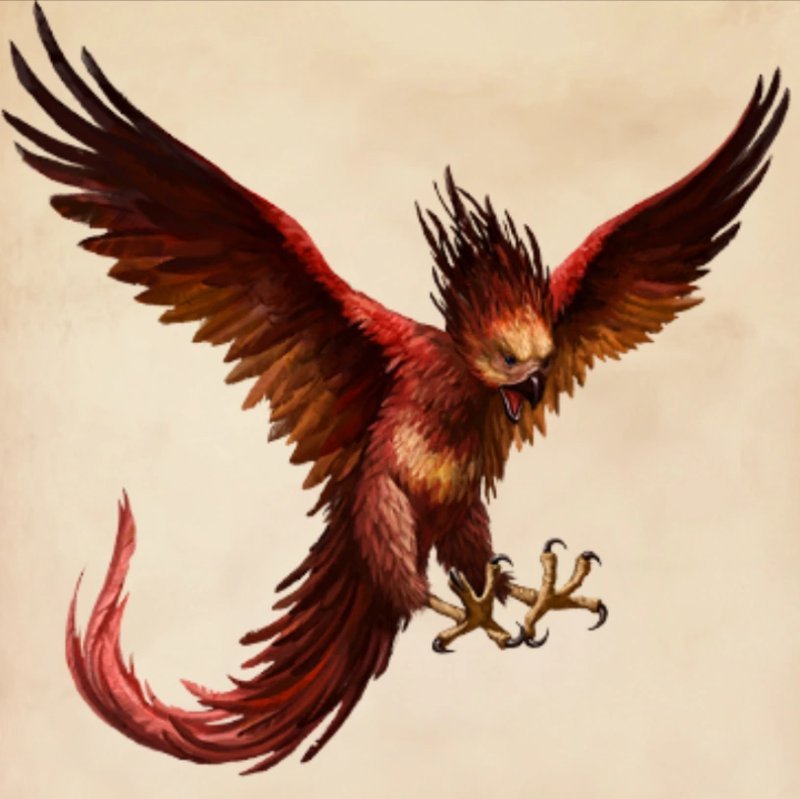
‘Harry’s wand and Voldemort’s wand share cores. Each of them contains a feather from the tail of the same phoenix. This phoenix, in fact....’ Dumbledore is talking about Fawkes, and the sentence explains what happened in the graveyard: when the two wands met, the connection produced ‘an unearthly and beautiful sound’, which Harry had heard only once before in his life, phoenix song. Fawkes supplied the cores of the two most consequential of the named wands in Harry Potter, Harry’s holly and eleven inches and Riddle’s yew.
Dumbledore had given Harry the species summary years earlier, on Fawkes’s Burning Day: ‘Fascinating creatures, phoenixes. They can carry immensely heavy loads, their tears have healing powers and they make highly faithful pets.’ Fawkes’s tears close the Basilisk wound in the Chamber of Secrets and the Acromantula wound from the Triwizard maze, and Hermione later says they are the only known antidote to Basilisk venom. The Ministry rates the phoenix XXXX, and Fantastic Beasts is careful to say why: not because it is fierce, but because so few attempts to domesticate one have succeeded. Quidditch Through the Ages notes that a New Zealand team, the Moutohora Macaws, keeps one as a mascot, named Sparky.
Britannica describes the phoenix of myth as a bird that dies at long intervals and is reborn from its own ashes, and that is the one part of the tradition Rowling left exactly as she found it. Everything else, the tears, the loads and the loyalty, is hers.
Pixie
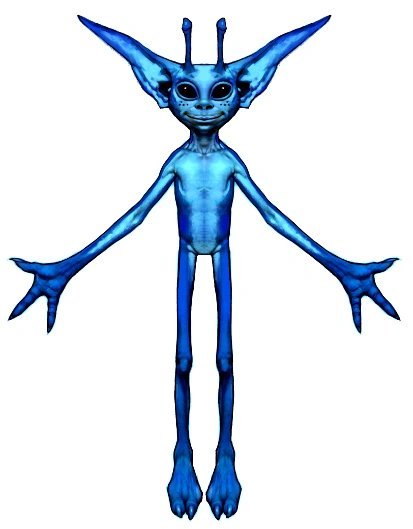
Gilderoy Lockhart opened the cage. It was his first Defence Against the Dark Arts lesson, the cage held Cornish pixies, and within moments two of them had ‘seized Neville by the ears and lifted him into the air’ while another seized Lockhart’s wand and ‘threw it out of the window’. Lockhart’s response was to point at the chaos and cry ‘Peskipiksi Pesternomi!’, a charm of his own invention, which did nothing at all. Hermione’s freezing charm worked. It was the beginning of the school’s education in Lockhart.
The pixie is native to Cornwall and a bright electric blue, and the official fact file puts it at up to eight inches tall with a Ministry rating of XXX, which seems high for something that fits in a cage until you have seen what a cageful can do to a classroom. Fantastic Beasts adds a point of taxonomy for the careful: pixies can fly and imps cannot, though the two are often confused on account of their similar height and sense of humour. The novels say ‘Cornish pixie’ and ‘pixie’ for the same animal, and this list treats them as one.
The word is older than any of them. Etymonline finds ‘pixie’, or ‘pixy’, in English from about 1630, describing a small rural English fairy, of obscure origin. The countryside had them long before Hogwarts did. What Rowling added was the blue, and a teacher foolish enough to let them out.
Plimpy
The novels name two kinds of Plimpy, and the books never say whether they are one animal. Luna Lovegood recommends a Gurdyroot for warding off Gulping Plimpies, and her father Xenophilius makes soup from Freshwater Plimpies, caught in the stream near Bottom Bridge behind the house. Whether a Gulping Plimpy and a Freshwater Plimpy are the same species, differently frightened of, is a question the Lovegoods do not address and this list declines to settle for them. There are two names. There may be one fish.
Fantastic Beasts describes the animal, whichever it is, as a fish shaped like a ball with two long rubbery legs and webbed feet, which eats snails, and it records the merpeople’s opinion of it: a pest. A merperson who finds a Plimpy in the way ties its legs in a knot and lets it drift off, so that a Plimpy floating past with its legs knotted is, the textbook notes, a sign that merpeople are somewhere near. Other Plimpy species keep to the bottom of deep lakes rather than streams, which supports the Lovegoods’ distinction without confirming it.
A fish that walks exists outside Rowling. Britannica’s mudskipper is a real fish, noted for its ability to climb, walk and skip about out of water on its pectoral fins, at home in the swamps and mud flats of the Indo-Pacific. The Lovegoods, presumably, would make soup from it.
Poltergeist
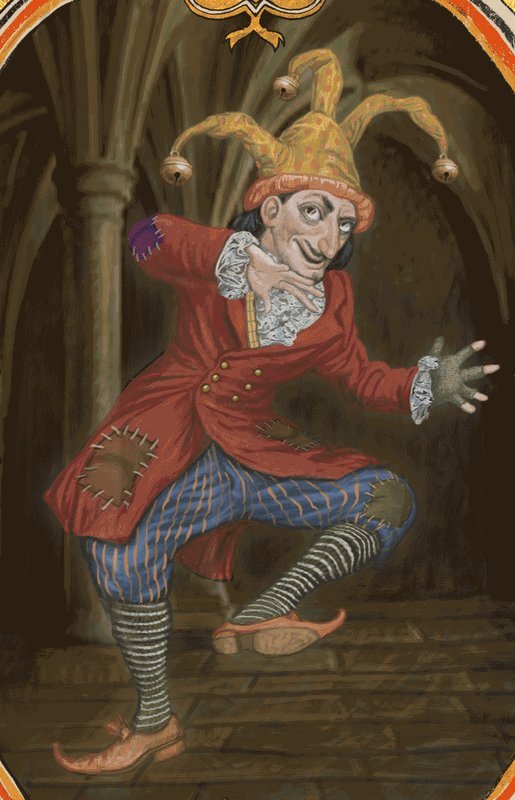
Peeves is not a ghost. One of the Hogwarts ghosts says so himself. At Harry’s first feast Nearly Headless Nick says of him: ‘haven’t we given Peeves all the chances he deserves? He gives us all a bad name and you know, he’s not really even a ghost.’ Percy Weasley adds the practical point that Peeves ‘won’t even listen to us Prefects’ and can be controlled only by the Bloody Baron. That is why Final Wonder’s own roll call of Hogwarts ghosts ends with Peeves as an exception, and why he is here, on his own.
Rowling has written that the word is German and means roughly ‘noisy ghost’, ‘although it is not, strictly speaking, a ghost at all’: a poltergeist moves objects, slams doors and makes audible, kinetic disturbances, and has a strong association with places where the young, especially adolescents, are living. A castle full of teenagers was always going to produce one. Britannica’s poltergeist, a spirit or force whose activity concentrates on one member of a family, often an adolescent, reaches the same conclusion from the other direction.
Rowling has also written that in 1876 a caretaker named Rancorous Carpe tried to trap Peeves under a giant enchanted bell jar, baited with weapons; Peeves got out armed with several cutlasses, crossbows, a blunderbuss and a miniature cannon, and the castle had to be evacuated. He was still there at the Battle of Hogwarts, singing ‘We did it, we bashed them, wee Potter’s the one’.
Porlock
About two feet tall, cloven-hoofed, four-fingered, and so distrustful of humans that it is seldom seen: the Porlock, according to Fantastic Beasts, exists to guard horses. It shelters with the herd or curls up in the straw of a stable, eats grass, and is found in Dorset and in the south of Ireland, horse country in both the Muggle and the wizarding sense.
The novels mention it as coursework. The Porlock is on the Care of Magical Creatures syllabus at O.W.L. level, one of the creatures Professor Grubbly-Plank meant to get through with the fifth-years before their exams. No Porlock appears on the page. Given the textbook’s description, that is exactly what a Porlock would want. It is hard to think of another creature on this list whose habits the novels respect so completely.
It is not clear where the name comes from. There is a real Porlock, a village in Somerset that Britannica lists among the tourist centres of Exmoor National Park, a landscape known for its grazing grounds for Exmoor ponies. Nothing on record says Rowling had the village in mind, and this list makes no such claim. It merely notes that if you wanted to hide a two-foot horse-guardian in England, a moor full of ponies would be the place, and that the name was already on the map.
Puffskein
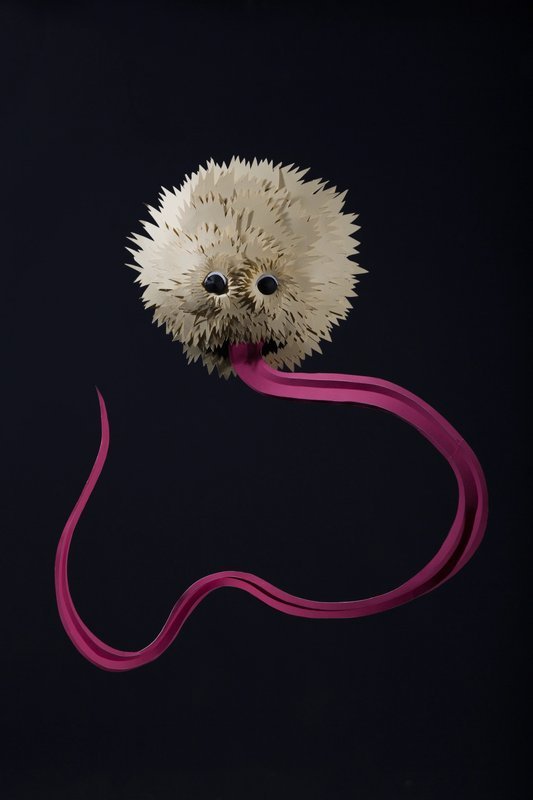
Ginny Weasley bought a purple one and called it Arnold. It was a Pygmy Puff, the miniature, multicoloured breed of Puffskein that Fred and George were selling at Weasleys’ Wizard Wheezes, and the official site calls Pygmy Puffs ‘something of a craze in the wizarding world’, which is the sort of thing that happens when the twins put their minds to a product. The full-sized animal had been in the books for years: the ‘humming furballs’ Harry noticed for sale at the Magical Menagerie in Diagon Alley before his third year were Puffskeins, and the nest of dead ones found under the drawing-room sofa at Grimmauld Place was the same species, named outright and in worse circumstances.
Fantastic Beasts describes a round, custard-coloured furball with a long, thin, pink tongue that snakes through the house in search of food, which, the official fact file confirms, ‘includes leftovers, spiders and especially bogies’. The Ministry rates it XX, which is about as low as a creature can go while still eating things out of your nose. Ron once owned one, the textbook records, until Fred used it for Bludger practice. Rowling has written that a group of them is called a poffle.
Britannica’s chameleon has ‘a long, slender projectile tongue’ for catching prey, and is the nearest thing in nature to the Puffskein’s feeding method. The chameleon, at least, stays out of your nose.
Red Cap
Muggles are in more danger from a Red Cap than wizards are, and the textbook explains why. Fantastic Beasts describes a small, goblin-like creature that loves bloodshed and will try to beat to death any Muggle lost in a dungeon or on a battlefield on a dark night. It can be repelled easily by charms and hexes, so a wizard in the wrong dungeon is an inconvenience to it and a Muggle is a victim. That imbalance is unusual on this list.
The novels give the Red Cap a place on Lupin’s syllabus. It is one of the creatures the third-years study with him, and, as with several of the smaller creatures here, the species exists in the books chiefly as a thing to be examined on.
The name is older than Rowling and comes from the Scottish Border. Etymonline has ‘redcap’ in English by the 1540s, for anyone in a red hat, and separately records the sense ‘a long-toothed spectre in Scottish castles’; Nancy Arrowsmith’s A Field Guide to the Little People, published in 1977, describes the Border Red Cap as a short, sturdy old elf with long grey hair and red eyes, who throws boulders down on travellers from his tower and dyes his cap in the blood. Britannica files that sort of figure among the goblins, ‘usually mischievous but often malicious’. Rowling’s version dropped the mischief and kept the blood.
Salamander
Fred Weasley wanted to know what would happen if you fed a Filibuster Firework to a salamander. He found out in Harry’s second year, having ‘rescued’ the animal, a brilliant orange, fire-dwelling lizard, from a Care of Magical Creatures class, and the result was what you would expect from a lizard that lives in fire and a Weasley firework. The species came back a year later in a form Hagrid could control, a bonfire full of them, for a winter lesson.
Fantastic Beasts sets out the animal’s peculiar economy. A salamander is born in a fire and lives as long as the fire does; it can survive up to six hours away from the flames it spawned in, provided it is fed pepper, and it dies when the fire goes out. Its colour reflects the heat of its fire, and its blood has healing properties. The official site adds that the salamander’s fiery nature lends itself well to a protective Patronus, a kinder use for the animal than Fred found.
The idea is ancient. Merriam-Webster’s oldest sense of ‘salamander’ is ‘a mythical animal having the power to endure fire without harm’, from a Middle English word for a reptile believed to live in fire, and the dictionary records that Paracelsus, the alchemist, made the salamander the elemental being of fire itself. Rowling’s is smaller and needs pepper. It is otherwise the creature Europe believed in for centuries, and a Weasley put a firework in it.
Sphinx
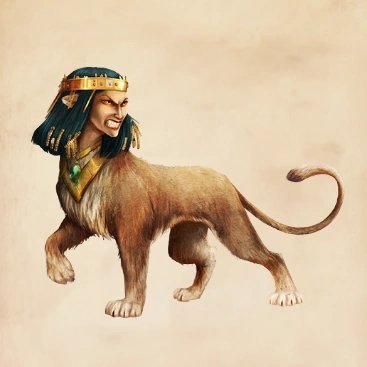
Three imported dragons and one sphinx: that is what Cornelius Fudge had to explain to the Muggle Prime Minister the year Hogwarts hosted the Triwizard Tournament. The sphinx was for the maze. She sat across the closest approach to the centre and offered Harry a riddle – ‘First think of the person who lives in disguise, Who deals in secrets and tells naught but lies’ – whose answer, spider, let him pass and told him what was waiting further in.
Fantastic Beasts gives the sphinx the head of a human and the body of a lion, the power of speech, and ‘an innate love of puzzles and riddles’, and it records that wizards have used sphinxes for centuries to guard treasure, the animal being noted for violence when what it guards is threatened. It is intelligent enough to talk and is still classed as a beast, ‘due to its violent tendencies’, the ruling the Ministry applies to the manticore on the same grounds. The official fact file’s assessment is admirably precise: ‘Only dangerous if an attempt is made on what it is guarding.’
The species originated in Egypt, and so did the idea. Britannica’s sphinx is a creature with a lion’s body and a human head whose earliest and most famous example in art is the Great Sphinx at Giza, from the reign of Khafre, roughly 2575 to 2465 BCE. Rowling’s is the same animal, more than four millennia on, still guarding something and still asking questions.
Thestral
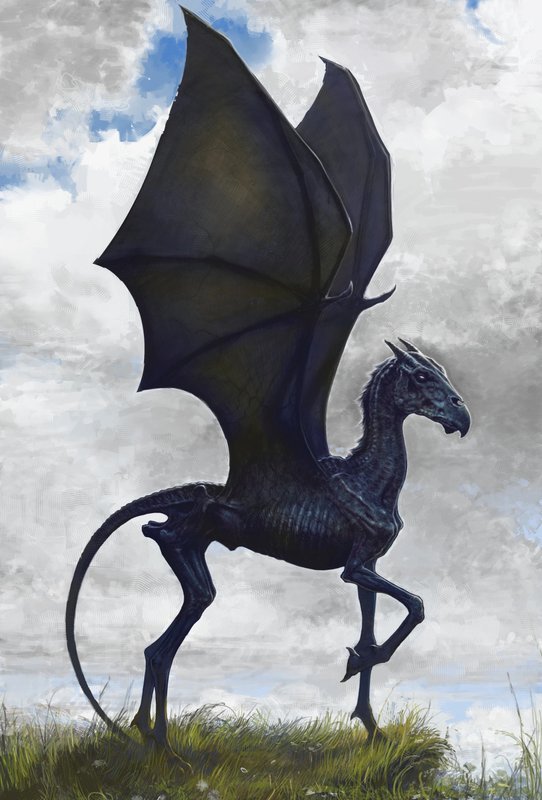
‘The coaches were no longer horseless. There were creatures standing between the carriage shafts.’ Harry has ridden the school carriages before, and it is only at the start of his fifth year, after he has watched Cedric Diggory die, that he can see what has been pulling them. Thestrals are visible only to those who have witnessed death.
Hagrid, who keeps the herd, defends them to his class: ‘No, no, no, tha’s just superstition, that is, they aren’ unlucky, they’re dead clever and useful!’ Rowling has written that in centuries past the sight of them was regarded as unlucky but that Thestrals are not marks of ill omen and not threatening to humans. Her essay describes black, skeletal, bat-winged horses native to the British Isles and Ireland. Hagrid tells his class that the Hogwarts herd began with a male and five females, and that the first foal born there, Tenebrus, is his favourite. The textbook gives them no entry of their own and files the Thestral under its winged horses. Harry rode one to London on the night Sirius died: ‘the Thestral streaked over the castle, its wide wings hardly beating.’ Nineteen years later, on the platform, James Potter frightens his brother with them, and Harry has to explain again that they are gentle.
Britannica has a word for a conductor of souls to the afterlife: psychopomp. Rowling’s version carries the living toward death and back, then pulls the school carriages, which is a humbler posting, and a kinder one.
Troll
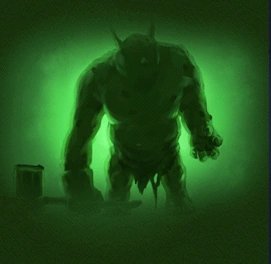
Twelve feet of mountain troll walked into the girls’ bathroom one Hallowe’en, and the friendship at the centre of the series began with its club. ‘The club flew suddenly out of the troll’s hand, rose high, high up into the air, turned slowly over – and dropped, with a sickening crack, onto its owner’s head.’ That was Ron’s doing, and the official fact file confirms the scale: trolls can grow up to twelve feet tall.
Fantastic Beasts recognises three types, mountain, forest and river, and the official site fills in the colours: the mountain troll pale grey and bald and the largest of the three, the forest troll pale green with straggly hair, the river troll purplish, short-horned and hairy. Fred Weasley’s view was that anyone can speak Troll, since all you have to do is point and grunt; the official site allows that some skilled magical linguists can communicate with them. The Black family kept an umbrella stand that looked as though it had been made from a troll’s leg, and Dumbledore hired security trolls to guard the Fat Lady’s portrait after Sirius Black slashed it, a squad considerably more intelligent than the mountain variety, and one that spent its shifts comparing the sizes of its clubs.
Britannica’s Scandinavian troll was hostile to men, lived in castles, and burst or turned to stone in sunlight. Hogwarts had a gentler measure of the species. The lowest grade on the O.W.L. scale, below D, is T, for Troll.
Unicorn
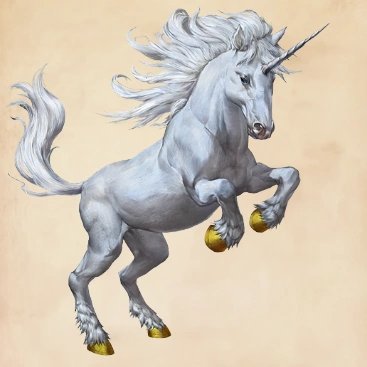
Horace Slughorn, drunk, proposed a toast: ‘To friendship! To generosity! To ten Galleons a hair!’ Hagrid had just given him unicorn tail hair, and Slughorn knew the market: the Apothecary in Diagon Alley sells silver unicorn horns at twenty-one Galleons each, and Ollivander uses the hair in wands. A unicorn is walking inventory.
The novels open with the opposite view. Something in the Forbidden Forest has been killing unicorns, and Firenze explains the price: ‘The blood of a unicorn will keep you alive, even if you are an inch from death, but at a terrible price. You have slain something pure and defenseless to save yourself, and you will have a half-life, a cursed life, from the moment the blood touches your lips.’ Voldemort was drinking it, and the potion that gave him a body is said to have included it. Foals are born pure gold, turn silver at about two, grow the horn at about four and turn white at about seven, and Grubbly-Plank warns her class that they prefer a woman’s touch: ‘Boys keep back!’
Britannica traces the animal to Ctesias, writing around 400 BCE of an Indian wild ass with a white body, purple head and blue eyes, and to medieval writers who held that only a virgin could catch one. Rowling has written, in Ollivander’s voice, that unicorn hair makes the most faithful wands but is prone to melancholy if seriously mishandled, so that the hair may die and need replacing. Even the wand grieves.
Vampire
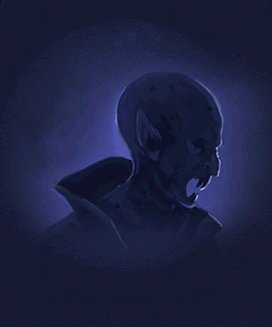
Rowling kept vampires out on purpose. ‘The vampire myth is so rich, and has been exploited so many times in literature and on film, that I felt there was little I could add to the tradition,’ she has written; besides which, vampires belong to Eastern Europe, and she tried, in general, to draw her adversaries from British folklore. The species therefore spends most of the series as a rumour: blood-flavoured lollipops that Hermione assumes are for vampires, a textbook called Voyages with Vampires, and Percy Weasley’s outrage at Rita Skeeter’s call for ‘stamping out vampires’, when the matter is ‘specifically stated in paragraph twelve of the Guidelines for the Treatment of Non-Wizard Part-Humans’.
Then, at Slughorn’s Christmas party, Harry meets one. ‘Harry, I’d like you to meet Eldred Worple, an old student of mine, author of Blood Brothers: My Life Amongst the Vampires – and, of course, his friend Sanguini.’ Sanguini is tall and emaciated, with dark shadows under his eyes, and merely nods, looking bored. Worple spends the party keeping an eye on Sanguini to make sure he attacks nobody, and that is the nearest the novels come to vampire action. Rowling has confirmed that Sanguini is the only vampire Harry meets in the books, and that the appearance was meant to be faintly comic.
Britannica’s vampire is ‘a creature, often fanged, that preys upon humans, generally by consuming their blood’. Rowling’s is a bored man at a party with a chaperone, protected under paragraph twelve.
Veela
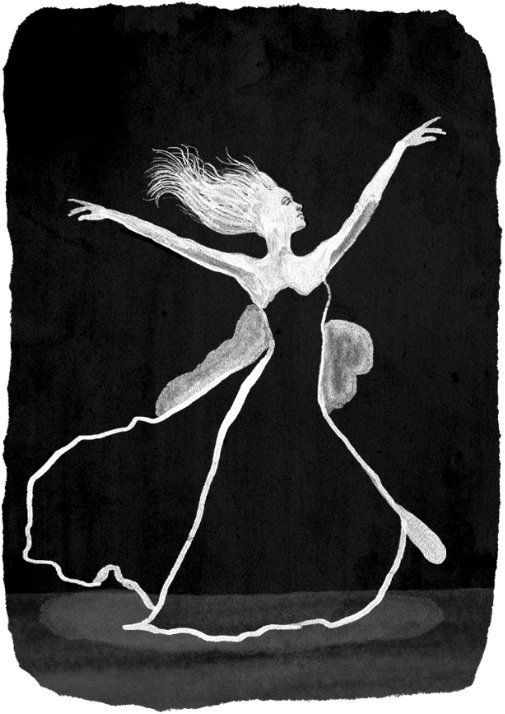
Mr Weasley identified them in one word: Veela! The Bulgarian mascots at the World Cup are veela, ethereal and blindingly beautiful, and their magic works harder on the men in the crowd than on the women, until even the referee is susceptible. When the mood in the stadium turns, the veela turn with it, and the women become creatures with elongated, sharp bird faces and long scaly wings, throwing handfuls of fire. ‘And that, boys,’ Mr Weasley yells, ‘is why you should never go for looks alone!’
The novels’ other veela connection is Fleur Delacour’s grandmother. After Ron, who had already guessed as much, asked Fleur to the Yule Ball and was looked at like a sea slug, Harry confirmed it. ‘She’s part Veela,’ he said. ‘You were right – her grandmother was one.’ Fleur had already told the wandmaker’s audience as much. ‘An ’air from ze ’ead of a Veela,’ she said. ‘One of my grandmuzzer’s.’ Rowling has said there are no male veela. The textbook does not list them, and they carry no Ministry rating, an oversight for a creature that throws fire.
The veela is Slavic. Britannica describes the vila of the Danube as beautiful, charming girls in robes of mist, singing bewitching songs to passers-by, and their far-northern cousin the rusalka as a water spirit that lures men in order to torture them. Rowling took the two halves of the tradition, the seduction and the menace, and put them in one creature and one chapter.
Werewolf
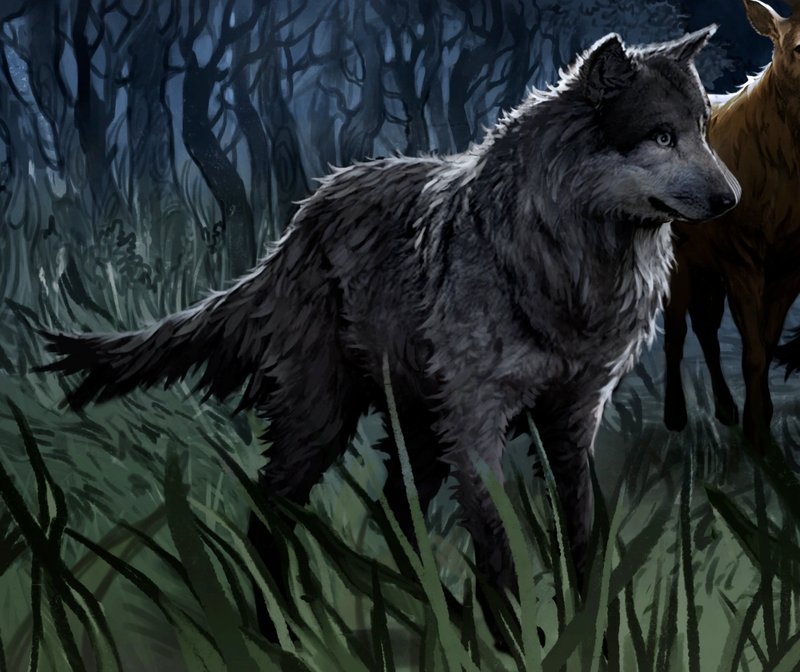
Three years it took James Potter, Sirius Black and Peter Pettigrew to become Animagi at school, so that Remus Lupin would not spend the full moon alone. That makes the werewolf a matter of friendship rather than horror, and it is why this item points at every Animagus in the series, three of whom exist because of a fourth boy.
Lupin’s account is plain. ‘It was Greyback who bit me,’ he tells Harry. ‘My father had offended him.’ Rowling has written that the attack came shortly before Lupin’s fifth birthday, after his father had called werewolves, in Fenrir Greyback’s hearing, ‘soulless, evil, deserving nothing but death’. The novels also record the 1637 Werewolf Code of Conduct and the Wolfsbane Potion, invented by Damocles Belby, which Snape brews for Lupin in a smoking goblet that apparently tastes terrible. With it, Lupin says, ‘I am able to curl up in my office, a harmless wolf, and wait for the moon to wane again.’ Without it he is what a patient at St Mungo’s had become when Mr Weasley tried reassurance: ‘Said he’d give me another bite if I didn’t shut up.’
Rowling’s essay on the species notes that a transformed werewolf differs from a wolf in its smaller pupils, shorter snout and tufted tail, and settles a Hogwarts rumour: the Forbidden Forest’s wolves descend from a single litter born to two mated werewolves, released there with Dumbledore’s permission. Britannica’s werewolf shape-shifts into a wolf. Rowling’s is a schoolteacher with a goblet.
Winged Horse
‘Will you please inform zis ’Agrid zat ze ’orses drink only single-malt whisky?’ Madame Maxime’s request to Dumbledore, on the evening the Beauxbatons carriage lands at Hogwarts, is the winged horse’s grand entrance in the novels. The horses in question pull the carriage; they are, Maxime warns, very strong and require ‘forceful ’andling’. Hagrid, who was also managing the Blast-Ended Skrewts that year, got the job.
Those horses are Abraxans, a breed Fantastic Beasts describes as a gigantic, extremely powerful Palomino. The official site confirms the essential fact about the breed: it is suitably majestic-looking and drinks whisky. The species name itself, Winged Horse, is what the novels use when Hagrid tells the story of his summer, and the textbook treats winged horses as a family rather than a single animal, which is why the Thestral is filed under the same heading and why this list gives the Thestral a room of its own.
The winged horse of the Greeks is Pegasus, who, Britannica records, sprang from the blood of the Gorgon Medusa as Perseus beheaded her. The wizarding world’s version pulls a school carriage to Hogwarts and expects a drink at the end of it. Between Pegasus and the Abraxan there is roughly the distance between a hero’s mount and a horse with opinions about its bar, and it is not obvious which is the more demanding animal to keep.
Wood Nymph
Fleur Delacour, at the Yule Ball, told her table how it was done at Beauxbatons. The Christmas decorations there, she said, included wood nymphs, who sing to the students as they eat. One remark at dinner is all the novels give the wood nymph, and one remark is the entry fee: the species is named.
Nothing else about the creature is on record here. The novels do not describe it, so the reader is left with Fleur’s word and the name. The name is doing a great deal of work. In Greek mythology, Britannica explains, nymphs were ‘a large class of inferior female divinities’, and the dryads and hamadryads among them ‘presided over forests and trees’. Etymonline traces the English word ‘nymph’ back through Old French and Latin to the Greek nymphe, a bride or young wife, later a beautiful young woman, later still a semi-divine being in that form, and lists the wood-nymph among the word’s relations alongside naiads of the fresh water, nereids of the sea and oreads of the mountains.
A wood nymph, then, is a tree spirit, and Beauxbatons keeps them for the singing. Hogwarts decorates with fairies; Beauxbatons decorates with singers. For a creature that appears in one sentence, it says something about two schools.
Yeti
‘What is Gilderoy Lockhart’s favourite colour?’ It is the first question on the quiz Lockhart sets his second-years, and the answer, lilac, is in his book Year with the Yeti, one of the Lockhart titles on that year’s reading list. The Yeti is named in the novels because of that book, and because the class went on to discuss the animal, so the creature owes its place here to Lockhart’s vanity.
Fantastic Beasts takes the animal seriously. Yetis grow up to fifteen feet tall, will attempt to attack and eat any human, or just about anything else, and are consequently difficult to study up close; they are afraid of fire, which probably keeps them away from settlements. Tibet, the textbook records, is one of the most persistent offenders against Clause 73 of the International Statute of Wizarding Secrecy on account of Yeti sightings by Muggles, and a permanent International Task Force is stationed there to keep the situation under control.
The real legend is smaller and newer than it sounds. Etymonline records ‘yeti’ entering English in 1937, from a Sherpa word meaning ‘small manlike animal’, and ‘Abominable Snowman’ in 1921, a translation of a Tibetan name. Britannica’s children’s encyclopedia has the Himalayan version at six to fifteen feet tall, hairy, apelike and walking on two legs, so Newt Scamander’s maximum sits at the top of the Muggle range. In Tibet a task force chases a mystery; at Hogwarts, the second-years were graded on their teacher’s wardrobe.
Frequently Asked Questions
Are Nargles and Crumple-Horned Snorkacks real magical creatures?
No. None of the creatures Luna Lovegood and her father talk about, from Nargles and Wrackspurts to Heliopaths, Blibbering Humdingers, Aquavirius Maggots, Umgubular Slashkilters and the Crumple-Horned Snorkack, is confirmed to exist anywhere in the novels. Hermione tells Neville that Heliopaths ‘don’t exist’, and the Aquavirius Maggots Luna spotted in the Department of Mysteries turned out to be brains.
Is the Mandrake a magical creature?
No, it is a plant, and Hogwarts teaches it in Herbology. Second-years repot the screaming seedlings under Professor Sprout, who later tells Filch they will soon be ‘cutting them up and stewing them’ into the draught that revives the Petrified. A full-grown Mandrake’s cry can kill, and Neville planned to ‘lob them over the walls’ at the Battle of Hogwarts.
Are Inferi the same as zombies?
Not by name. Inferi are corpses a Dark wizard has reanimated to do his bidding, and Rowling has written that she avoided the word ‘zombie’ for folklore reasons, joking that to her ‘a zombie will always mean Michael Jackson in a bright red bomber jacket’. Reanimated dead are not a species, so none appear here.
Why aren’t Fluffy and the Giant Squid on this list?
Neither is a named species. Fluffy is a single three-headed dog Hagrid bought ‘off a Greek chappie I met in the pub’, and the novels never name his kind beyond that. The Giant Squid lets the Weasley twins tickle its tentacles, rescues Dennis Creevey and eats toast, and has no Fantastic Beasts entry and no Ministry rating.
Are house-elves and goblins magical creatures?
Yes, on this list. The official fact files give both the goblin and the house-elf a Ministry classification of Being, and Grogan Stump’s Being Division houses the Goblin Liaison Office and the Office of House-Elf Relocation. The novels name both as creatures, and that is the only test applied here.
Why are the Zouwu, the Mooncalf and other Fantastic Beasts creatures not on this list?
Because no novel names them. The Leucrotta, the Matagot, the Swooping Evil and the Zouwu exist only in the Fantastic Beasts films; the Bundimun, Fwooper, Imp, Mooncalf, Re’em and Streeler have entries in the textbook but never appear in the novels, as with the Dugbog below. Nor is any other textbook-only creature listed here.
Is there a griffin in the Harry Potter books?
Only in stone. A griffin statue stands near the girls’ bathroom where the troll cornered Harry, Ron and Hermione, and the knocker on the Headmaster’s door is shaped like one, but no living griffin appears. The Grim is a similar false lead: Professor Trelawney’s ‘giant, spectral dog that haunts churchyards’ is a death omen from Divination, not an animal.
Is the Dugbog in the Harry Potter books?
Only as a spelling mistake. Ron’s Spell-Check quill, one of Fred and George’s, was losing its charm when he wrote his essay; Hermione pointed out that ‘we were asked how we’d deal with dementors, not Dugbogs’, and that he had signed himself Roonil Wazlib. The Dugbog, a marsh-dweller resembling dead wood that eats Mandrakes, exists only in the textbook.
- J.K. Rowling, the seven Harry Potter novels and the 2001 companion volumes Fantastic Beasts and Where to Find Them and Quidditch Through the Ages (Bloomsbury; Scholastic)
- The Harry Potter Lexicon – Magical Creatures index (chapter-coded citations for every entry)
- Wizarding World (harrypotter.com) – A guide to the magical creatures not to be confused with Muggle ones
- Encyclopaedia Britannica – kappa (Japanese mythology)
- Merriam-Webster – moke
- Etymonline – nymph
- Dictionary.com – will-o’-the-wisp
- John Clark (London Museum), Fantastic Beasts and Where to Find Them: The Grindylow is in the Post