Every NBA Player Drafted Straight From High School, 1975-2005
The Naismith Memorial Basketball Hall of Fame describes Moses Malone as “The first modern player to go straight from high school to professional basketball,” and the hardest-working word in that sentence is “modern.” Malone went to the ABA in 1974. Detroit had drafted Reggie Harding out of a city high school in 1962, and thought well enough of the idea to draft him again the following year. The professional game had been tempted by teenagers for a long time. It simply kept talking itself out of them.
After Darryl Dawkins and Bill Willoughby went from high school to the NBA draft in 1975, nobody else followed for 20 years, unless you count Shawn Kemp, who in 1989 had already enrolled at two colleges without playing a game for either. Then Minnesota took Kevin Garnett in 1995, and the door he reopened was, within a decade, being rushed by entire classes of high school seniors, from franchise players to boys who would never play a minute in the league.
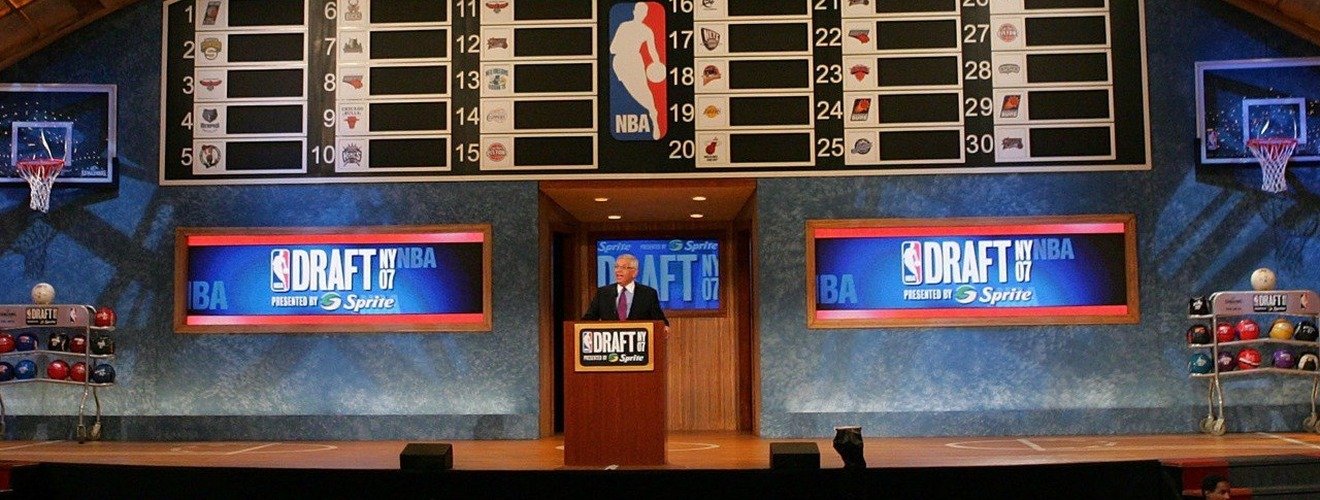
It ended by agreement. In June 2005 the league and the players’ union settled on an age minimum, and the AP reported that the draft a week later “will mark the final time, barring future changes, that high school players will be draft eligible.” The players who made the jump appear below in the order teams chose them, from a backboard-breaker in Philadelphia to a 56th pick in Detroit, with Hall of Famers, journeymen and a few cautionary tales in between.
Between 1975 and 2005, NBA teams drafted 42 players straight out of US high schools: players who attended an American high school, played no college basketball and went to the draft directly from a high school or prep team. Shawn Kemp enrolled at two colleges but never played. An age minimum agreed in 2005 closed the route from 2006.
Darryl Dawkins
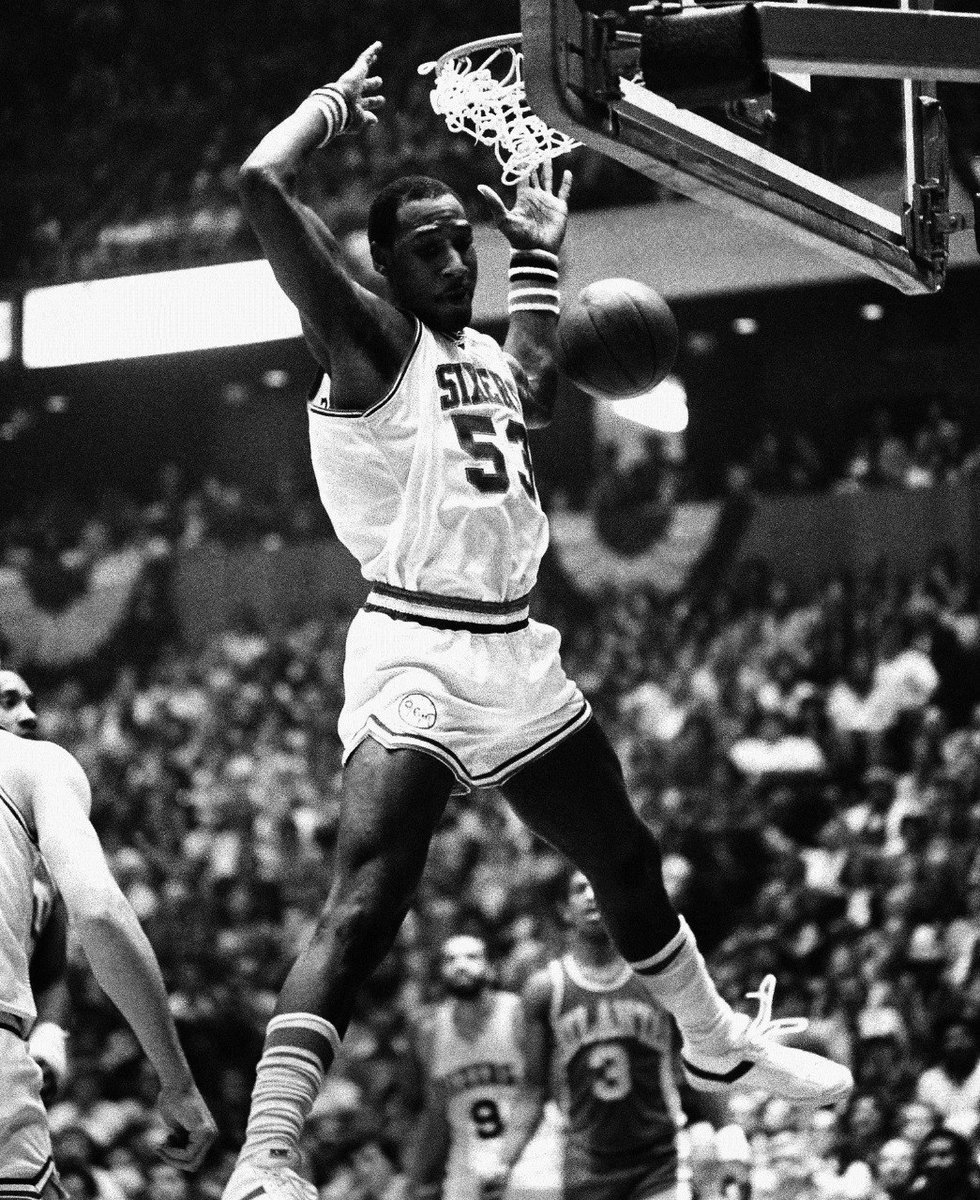
Thirty-eight seconds into the third period on Nov. 13, 1979, in Kansas City’s Municipal Auditorium, Darryl Dawkins dunked with Kings forward Bill Robinzine underneath him, and the backboard came down in a shower of glass. Replacing the basket took one hour and eight minutes, because the dunk had also bent the support pole. Twenty-two days later he did it again at the Spectrum, against San Antonio, and this time the whole rim came out of the backboard.
Philadelphia had taken him fifth overall on May 29, 1975, out of Maynard Evans High School in Orlando, at 18. He named his dunks the way other people name boats – the Rim-Wrecker, the Go-Rilla, the In-Your-Face Disgrace – and the Kansas City one got a title of its own, which Sports Illustrated printed as the “Chocolate-Thunder-Flying, Robinzine-Crying, Teeth-Shaking, Glass-Breaking, Rump-Roasting, Bun-Toasting, Wham-Bam, Glass-Breaker-I-Am Jam.” The nickname itself, by Dawkins’s own account, came from Stevie Wonder.
He played 14 seasons, reached the Finals three times with the 76ers and lost all three, and in 1983-84 set the NBA single-season record for personal fouls, 386 of them, for New Jersey. He also claimed to come from the planet Lovetron. The Philadelphia Inquirer credits his glass-breaking with the arrival of breakaway rims, which makes him, in a roundabout way, the reason rims now bend.
Bill Willoughby
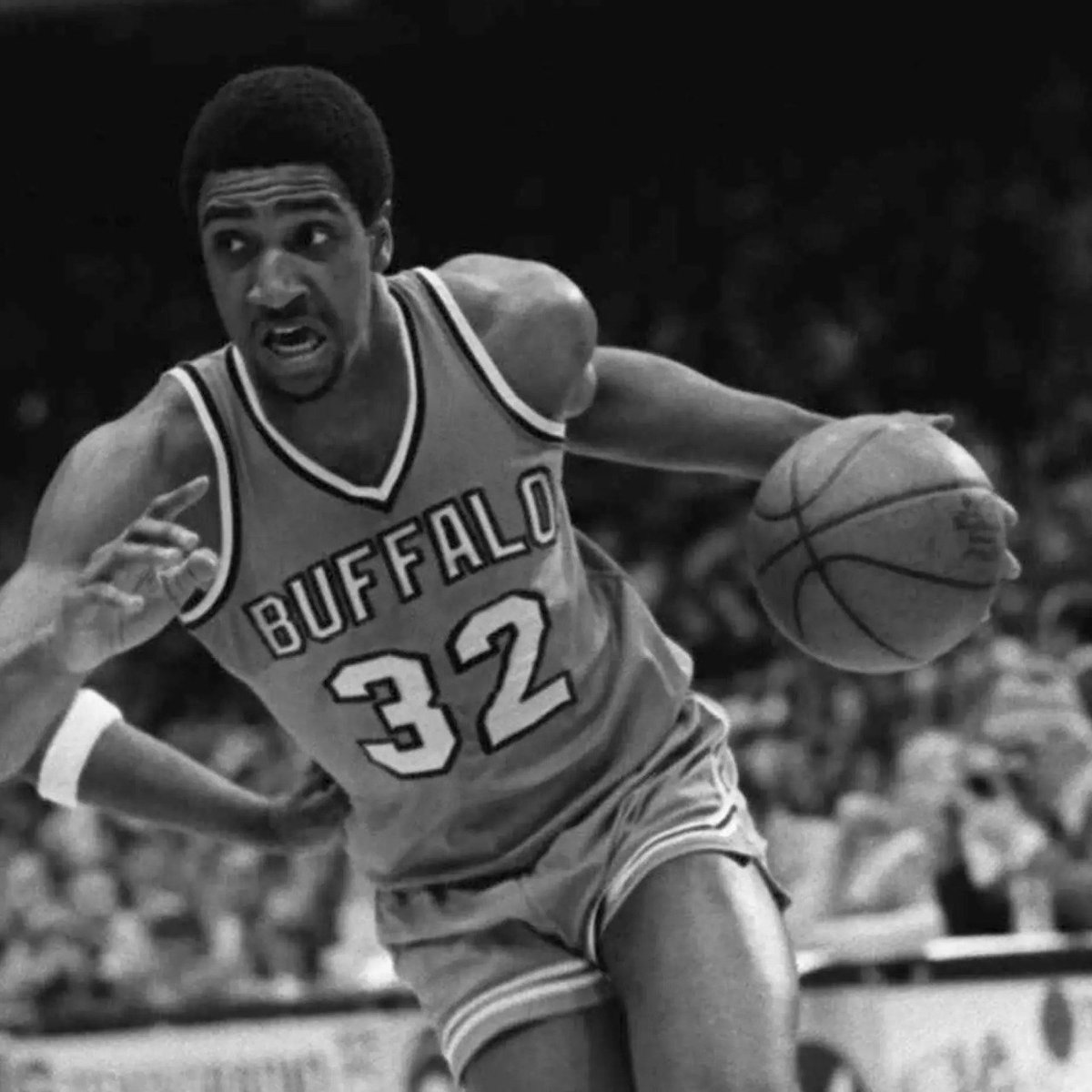
“Nobody told me anything,” Bill Willoughby said in 2021, looking back on the night in 1975 when he was drafted, nine days after his 18th birthday. Atlanta took him with the first pick of the second round, 19th overall, on May 29, 1975, the same night Philadelphia took Darryl Dawkins, out of Dwight Morrow High School in Englewood, New Jersey.
The Associated Press later reported that he had never held a job, could not drive a car and had no idea how to manage money. The Hawks dangled a $650,000 check as the first installment on a contract worth more than $1 million. “It wasn’t that hard a choice,” he said. In an early game he dribbled between his legs, rolled the ball around the small of his back and missed the shot, and coach Cotton Fitzsimmons pulled him with a brisk review: “This isn’t the playground.”
He lasted eight seasons with six teams – the Hawks, Braves, Cavaliers, Rockets, Spurs and Nets – and averaged 6.0 points. He called the 1981 Finals with Houston, a six-game loss to Boston, the highlight of his career. “I was the guinea pig,” he told the Seattle Times in 2001. That spring he graduated from Fairleigh Dickinson University with a communications degree, and his fellow graduates gave him a standing ovation. He had made it to college in the end, by way of six NBA teams.
Shawn Kemp
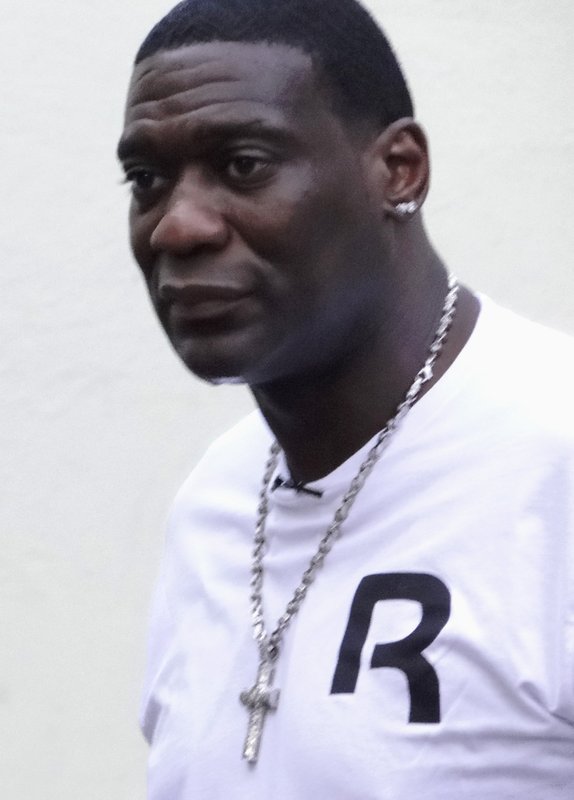
Shawn Kemp went to college twice and never played a game for either one. He signed with Kentucky early in his senior year at Concord High School in Elkhart, Indiana, then came up short of the academic standard under Proposition 48 and left. He moved on to Trinity Valley Community College in Athens, Texas, enrolled too late to be eligible, and worked out with a team he could not play for. “Shawn didn’t want to sit out two years,” a Sonics executive explained, and so Kemp applied for the draft instead.
Seattle took Dana Barros 16th and Kemp 17th on June 27, 1989, to what UPI described as “mostly jeers from a crowd of about 400 fans.” He was 19. When he debuted that November, the Seattle Times noted he was the youngest player in the league. By December 1990 he was a starter, and soon the Sonics broadcaster Kevin Calabro, having spotted the phrase on a poster, was calling him the Reign Man.
He made six consecutive All-Star teams from 1993 through 1998. In 1995-96 he averaged 19.6 points and 11.4 rebounds for a Seattle team that won a franchise-record 64 games, then averaged 23.3 points in a six-game Finals loss to Chicago. Over 14 seasons he scored 15,347 points. Kentucky, he told Sports Illustrated in his rookie autumn, “just wasn’t right for me.”
Kevin Garnett
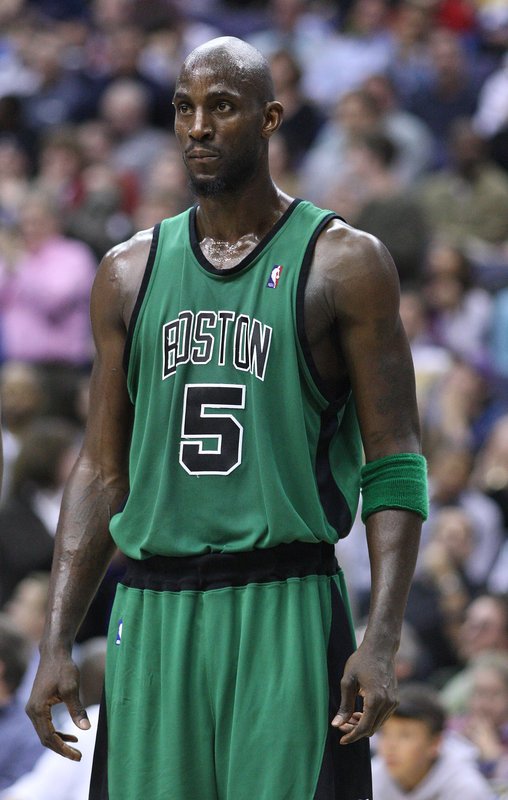
Minnesota agreed in October 1997 to pay Kevin Garnett $126 million over six years, every dollar guaranteed, a contract that passed Shaquille O’Neal’s seven-year, $120 million deal. The final season alone paid $28 million. Two summers earlier he had been finishing high school in Chicago.
He had grown up in Mauldin, South Carolina, and moved to Chicago for his senior year at Farragut Academy, where he averaged 25.2 points, 17.9 rebounds and 6.5 blocks and was named Illinois Mr. Basketball. At the 1995 draft, held before 21,268 people in Toronto’s SkyDome, the Washington Bullets held the fourth pick and passed. “John, that’s OK, I would prefer it if we didn’t draft somebody right out of high school,” owner Abe Pollin told his general manager, and the Bullets took Rasheed Wallace. Minnesota took Garnett fifth.
He won the 2004 MVP with 120 of 123 first-place votes, averaging 24.2 points and a league-leading 13.9 rebounds, and in 2008, after a trade to Boston, won Defensive Player of the Year and the championship. Across 21 seasons he made 15 All-Star teams, and his career earnings, by Basketball-Reference’s tally, came to $343,872,398. The morning after the draft, the Baltimore Sun wrote that Minnesota had taken “what may be the biggest risk of the draft.”
Kobe Bryant
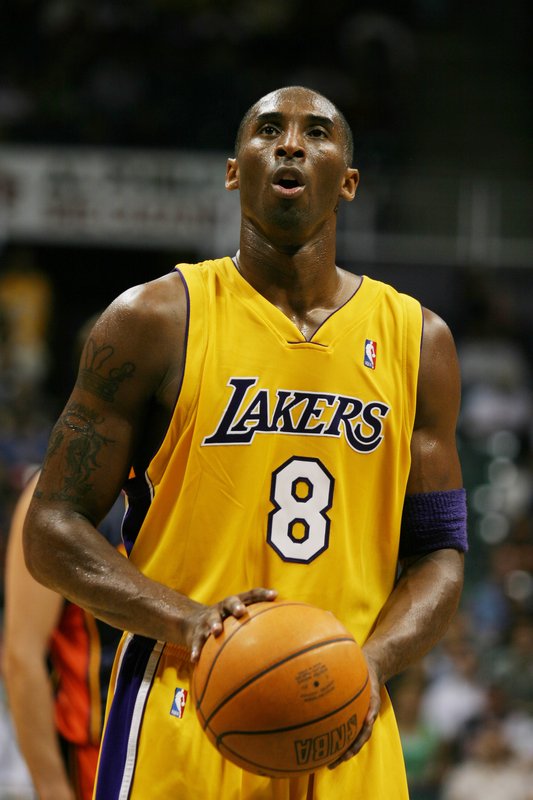
In May 1996 a 17-year-old from Lower Merion High School took the singer Brandy to his senior prom at the Bellevue Hotel in Philadelphia. They arrived in a white stretch limousine more than two hours after the dance began, accompanied by a publicist, bodyguards, a makeup artist and Brandy’s mother. A month later Kobe Bryant was drafted, though not, in any meaningful sense, by the team that drafted him.
Charlotte took him 13th on June 26, 1996, having already agreed to send his rights to the Lakers for the center Vlade Divac, who threatened to retire rather than move and relented on June 30. The trade was completed on July 11. Divac came back to Los Angeles as a free agent in 2004, which is how the man traded for Bryant ended up as one of Kobe Bryant’s Hall of Fame teammates anyway.
Bryant played 20 seasons, all for the Lakers, and won five championships, the 2008 MVP and two Finals MVPs, made 18 All-Star teams and scored 81 points against Toronto on Jan. 22, 2006. His Hall of Fame election came in 2020, the year he died, at 41. In his first autumn as a professional he already had a shoe deal, a Screen Actors Guild card and roles on two television shows. Charlotte, he said years later, “never wanted me.” Charlotte, in fairness, never really had him.
Jermaine O’Neal
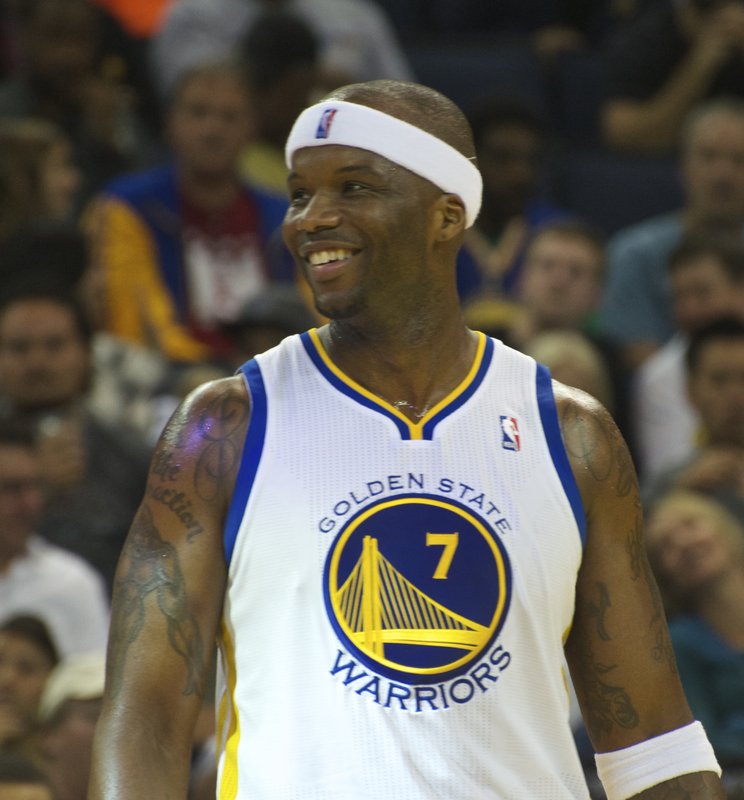
For four seasons in Portland, Jermaine O’Neal was mostly a promise kept on the bench: 211 games, 11.5 minutes a night, 3.9 points. The Blazers had taken him 17th on June 26, 1996, out of Eau Claire High School in Columbia, South Carolina, four picks after Kobe Bryant. When he debuted on Dec. 5, 1996, at 18 years and 53 days, he became the youngest player ever to appear in an NBA game, a distinction NBA.com says he held for almost a decade.
Indiana traded the veteran Dale Davis for him on Aug. 31, 2000, a deal the Indianapolis Star called controversial. It stopped looking controversial quickly. In his first Pacers season O’Neal started 80 games and averaged 12.9 points and 9.8 rebounds, and in 2001-02 he averaged 19.0 points and 10.5 rebounds and won Most Improved Player with 52 of 126 votes. He made six straight All-Star teams from 2002 through 2007 and finished third in the 2003-04 MVP voting.
He lasted 18 seasons with seven teams. In April 2005, as the commissioner, David Stern, pushed for a minimum draft age of 20, O’Neal called the idea “unconstitutional” and asked what college actually teaches. He supplied the answer himself. “College teaches you about college.”
Tracy McGrady
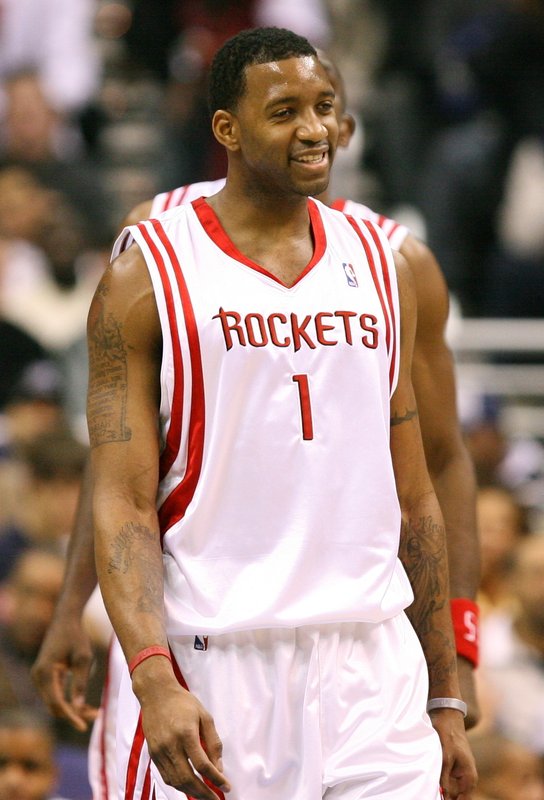
Houston trailed San Antonio 76-68 with 44.2 seconds left on Dec. 9, 2004, when Tracy McGrady scored 13 points in a span the Hall of Fame puts at the final 35 seconds: four three-pointers, one of them a four-point play with Tim Duncan’s foul attached. The Rockets won 81-80. It is the kind of thing people remember a career by, and in McGrady’s case they often have to.
Toronto took him ninth in 1997 out of Mount Zion Christian Academy in Durham, North Carolina, after Raptors officials had been certain they would take Olivier Saint-Jean of San Jose State, until McGrady was, to Isiah Thomas’s surprise, still on the board. In Toronto he was joined by Vince Carter, listed as his cousin, though Sports Illustrated traced the relation to a step-great-grandfather and concluded the two were not really kin. A teammate suggested Siamese twins.
McGrady won scoring titles with Orlando in 2002-03 and 2003-04, made seven All-Star teams and was enshrined in the Hall of Fame in 2017, presented by Thomas, who had drafted him. He reached the playoffs eight times before 2013 and lost in the first round all eight. His only series wins came as a Spurs reserve in 2013, when he scored no points all postseason, and Sports Illustrated wrote that he came within 5.2 seconds of a championship ring. He had not played a minute of that game.
Al Harrington
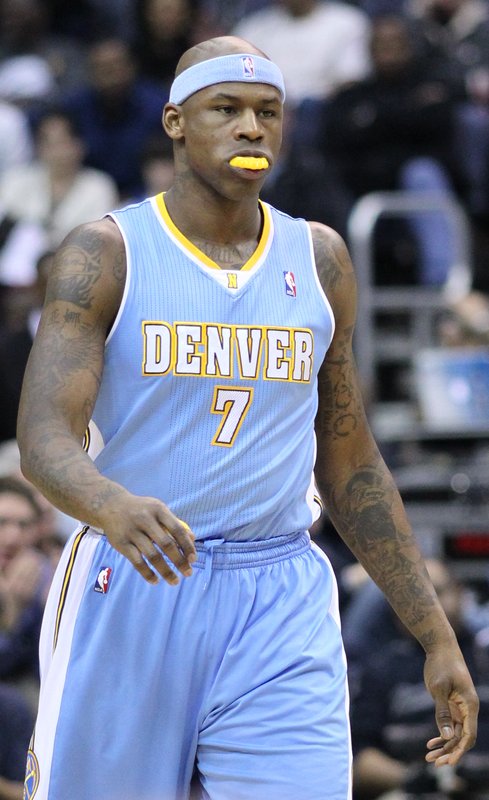
Al Harrington scored 28 points at Madison Square Garden in January 1998 for St. Patrick High School of Elizabeth, New Jersey, and still lost 63-59 to a Hargrave Military Academy team led by Korleone Young. Five months later both were drafted on the same night, Harrington 25th by Indiana and Young 40th by Detroit. The Deseret News, grading the picks the next morning, gave the Pacers a C and a question: “Went for prep star. Has kid ever heard of Larry Bird?”
Harrington lasted 16 seasons and 981 games with seven franchises – Indiana, Golden State, Atlanta, New York, Denver, Washington and Orlando – and averaged 13.5 points, with 445 starts that make him something more than the bench scorer he is sometimes remembered as. He finished second in the Sixth Man voting in 2003-04 and averaged 20.1 points in 2008-09. He never made an All-Star team.
He also founded Viola, a cannabis company named for his grandmother, and Rolling Stone dates its founding to 2011, while he was still playing. A cheaper line was later named Reefa, her word for marijuana. His last NBA game, on May 15, 2014, came for Washington against the Pacers, the team that had drafted him 16 years earlier. He played eight minutes and did not score, which is a gentle way to say goodbye.
Rashard Lewis
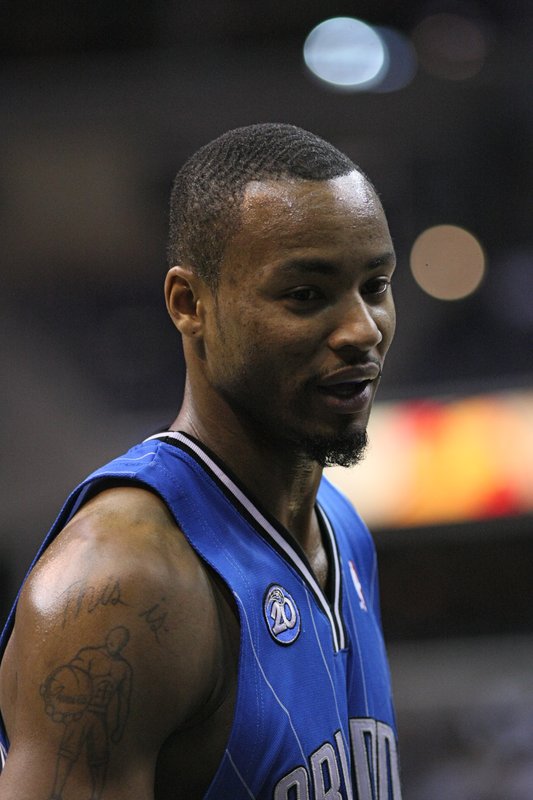
“Probably one of the worst days of my entire life,” Rashard Lewis said of the 1998 draft, and it is hard to argue. Projected as a lottery pick out of Alief Elsik High School in Houston, he sat in the green room in Vancouver with his mother and his agent, wearing an expensive suit, and watched 31 players go ahead of him. At one point he left to cry in a restroom. His hometown Rockets, who he believed had made him promises, used three picks on other people.
Seattle finally took him 32nd, in the second round, and gave him 20 games and 145 minutes as a rookie in the lockout-shortened season. He had never worked out for the Sonics before the draft.
He made two All-Star teams, in 2005 with Seattle and in 2009 with Orlando, averaged 22.4 points in 2006-07 and moved to the Magic in July 2007 in a sign-and-trade for about $118 million over six years. In his 15th season he won a championship with Miami, playing three games in the Finals. “I’m not LeBron James, I’m not Kevin Garnett, I’m not Kobe Bryant,” he said in 2005. “I was drafted in the second round. I wasn’t a lottery pick, so how much can you expect out of me?” About $118 million, Orlando decided.
Korleone Young
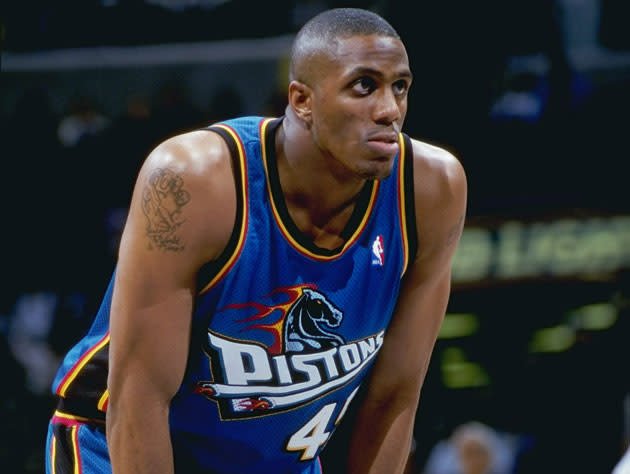
His mother had read The Godfather shortly before he was born, and so her only child became Suntino Korleone Young, named, Grantland reported in 2013, for Santino Corleone, the book’s fiery eldest son. It was a name with expectations attached, and for a while the basketball seemed to meet them.
He started at Wichita East High School in Kansas, then moved in August 1997 to Hargrave Military Academy in Virginia, where, by Grantland’s account, he had no phone or television, woke at 6 a.m. and went to bed at 10. On draft night in 1998 he threw a party in Wichita expecting to go in the first round. Detroit took him 40th, 11 picks into the second, and its general manager, Rick Sund, called him a gamble he would never have taken in round one.
The gamble did not pay. Young played three NBA games for the Pistons in 1998-99 and scored 13 points, on a salary of $287,500, and after that came the Rockford Lightning of the CBA, a summer-league invitation from the Lakers and stops in Australia, Russia, China and Israel. A Pistons assistant, John Hammond, later joked that “No one defended Grant Hill in this league as well as Korleone Young,” which was true in practice, every day. The coach, Alvin Gentry, called him “the poster boy for what they do now, making them go to college for one year.”
Jonathan Bender
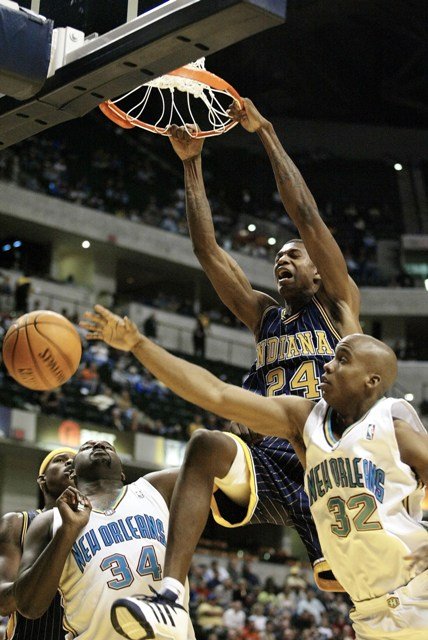
The McDonald’s All-American Game scoring record that Jonathan Bender broke on March 25, 1999, belonged to Michael Jordan. Jordan had scored 30. Bender, a 6-foot-11 senior from Picayune Memorial High School in Mississippi weighing what the AP called “a scant 200 pounds,” scored 31, and the performance, the AP added, “really caught the attention of scouts.” He had signed with Mississippi State. He never went.
Toronto took him fifth on June 30, 1999, and that August sent his rights to Indiana for Antonio Davis. At 19 he appeared in two games of the 2000 Finals against the Lakers. Then his knees began to fail him, and the box scores thinned to nothing: three straight seasons, from 2006-07 through 2008-09, are listed by Basketball-Reference as “Did not play – injured (knee).” He averaged 5.5 points across eight seasons.
After retiring, Bender sat in a Houston park and imagined a machine that would work like an external hamstring. He built the prototype from duct tape, ankle weights, thick rubber bands and binder clips bought at a drugstore, put a little more than $80,000 into it, and used it himself for three years. In December 2009 the Knicks signed him, and he played 25 more games. Their doctors, the Indianapolis Business Journal reported, judged his legs the strongest on the team. He had built them with binder clips and duct tape.
Leon Smith
On draft night in 1999, Leon Smith went home to Sullivan House, the group home on Chicago’s South Side where he had lived for much of his teens, and the other boys there chanted his nickname, “Lee-bo!” He was 18, 6-foot-10 and the owner of a 90-inch wingspan, and San Antonio had just taken him 29th, the last pick of the first round, out of Martin Luther King High School. As a senior he had averaged 25 points, 14.5 rebounds and eight blocked shots.
The Spurs traded his rights to Dallas the same night, though the Mavericks’ coach, Don Nelson, had never seen him play in person. At his first rookie camp, when an assistant ordered extra wind sprints, Smith answered “Why don’t YOU run it?” and left for the locker room. He was hospitalized that November, and Dallas waived him without his playing a game.
He kept at it. With the Gary Steelheads of the CBA he led the league at 15.5 rebounds a game, and a coach watching him at a tryout said simply, “That is an NBA player.” He got 14 games with Atlanta in 2001-02 and one with Seattle in 2003-04, 15 in all, for 33 points. The last of them came on April 7, 2004, in San Antonio, against the Spurs who drafted him. He played four minutes and scored two points.
Darius Miles
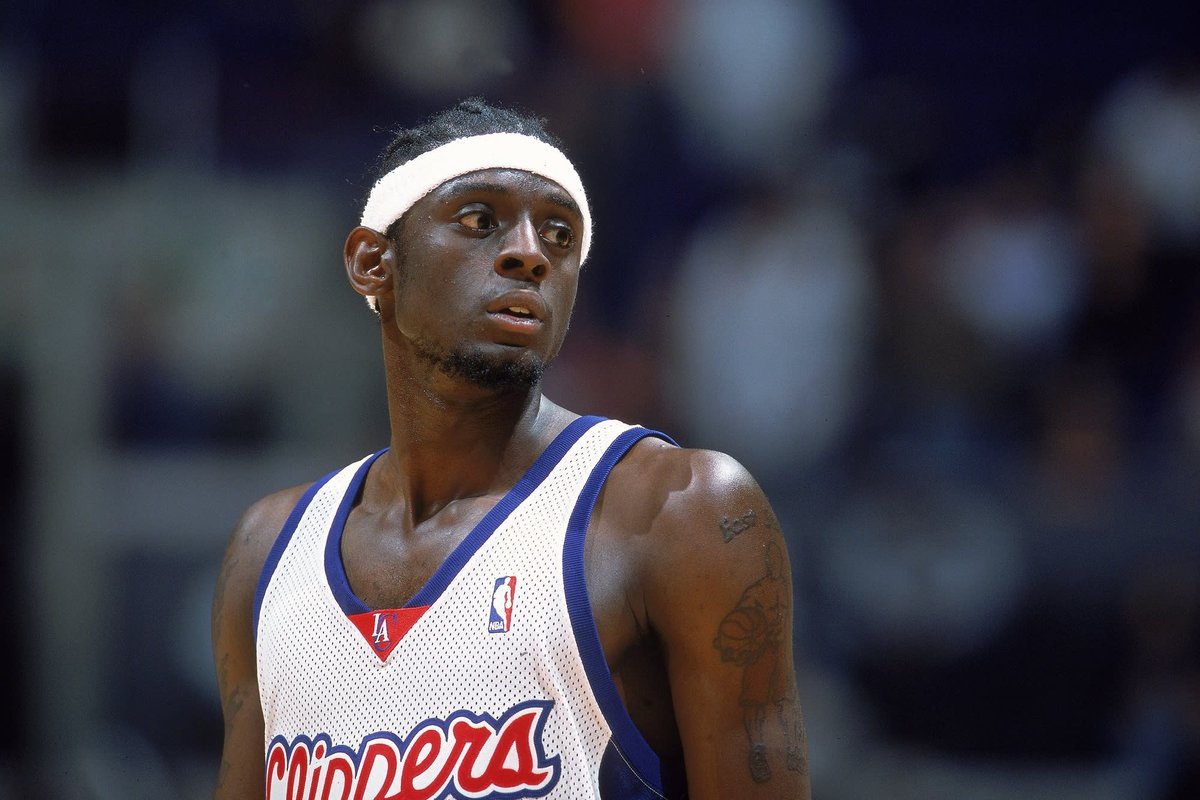
No player drafted out of high school had gone higher than fifth until the Los Angeles Clippers took Darius Miles third in 2000. Miles, from East St. Louis, hugged the commissioner, David Stern, and patted him on the back of the head. The record lasted exactly one draft.
He was very good very quickly. As a 19-year-old rookie he averaged 9.4 points and 5.9 rebounds, made the All-Rookie team and finished fourth for Rookie of the Year. By his own telling in a 2018 essay, he was once pulled over on the 405 by an unmarked truck with a police light on its hood, and the voice at his window booming “WHERE YOU G’WAN, BOY?” belonged to Shaquille O’Neal, who offered to pay the fine and drove off.
Then came the knee. After microfracture surgery in November 2006, an independent examiner appointed by the league and the union ruled the injury career-ending, Portland released him in April 2008, and his salary came off the Blazers’ books, to return if he ever played ten games on a new contract. When he tried a comeback in January 2009, the Blazers’ president emailed every other team warning that a signing meant to damage Portland’s cap risked litigation, the union filed a collusion grievance, and Memphis signed him anyway. He played 34 games for the Grizzlies. In 2018 he published an essay titled “What the Hell Happened to Darius Miles?” It is a fair question, and he answered it at length.
DeShawn Stevenson
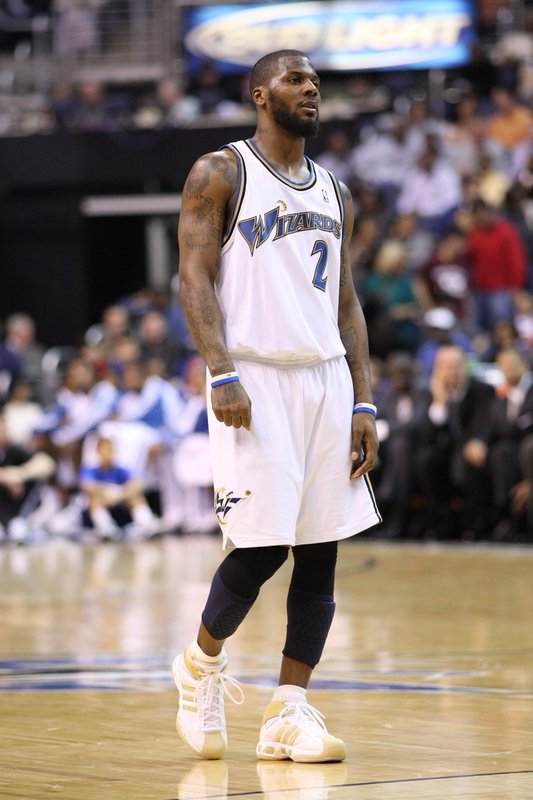
“He’s overrated. And you can say I said that.” DeShawn Stevenson said it about LeBron James on March 13, 2008, and James declined to reply directly, likening the exchange to Jay-Z answering Soulja Boy. At Game 3 of their playoff series in Washington, Soulja Boy himself turned up courtside behind a basket, and the following night a disc jockey at a D.C. club debuted a Jay-Z track aimed squarely at Stevenson. Cleveland won the series in six.
Utah had drafted Stevenson 23rd in 2000, out of Washington Union High School near Fresno, where he averaged 30.4 points as a senior. He had signed with Kansas. The AP called the Jazz “normally one of the most conservative teams in the NBA,” and their general manager, Kevin O’Connor, called the pick “a move into reality.”
He played 13 seasons for six franchises and averaged 7.2 points, never an All-Star. His revenge on James came in the 2011 Finals, when he started for a Dallas team that beat Miami 4-2 and called James and Dwyane Wade “great, great actors” along the way. Stevenson also has a portrait of Abraham Lincoln tattooed on his neck. He had wanted Martin Luther King Jr., but Gilbert Arenas got King first, and because nobody could tell from a distance who the bearded man was, Stevenson added a five-dollar bill “so everybody would stop asking me.”
Kwame Brown
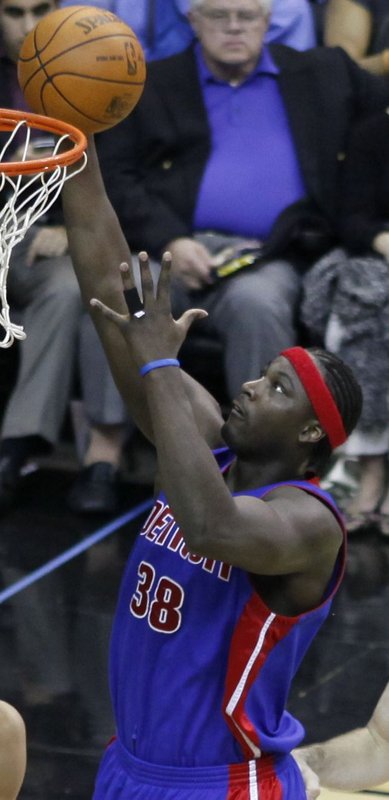
At the June 27, 2001 draft Kwame Brown became the first high school player ever taken first overall, and the man who chose him was Michael Jordan, then the Washington Wizards’ president of basketball operations. Brown had averaged 20.1 points and 13.3 rebounds at Glynn Academy in Brunswick, Georgia, and had planned to attend Florida. “I’m now the representative of all high school seniors,” he said, “and I have to show it wasn’t a mistake.”
That September, Jordan announced he would come out of retirement and play for Washington, sharing the court, as the AP put it, with “high school sensation Kwame Brown.” It was a long way from Scottie Pippen and Dennis Rodman, two of the Hall of Famers Michael Jordan played with in Chicago, to a 19-year-old who averaged 4.5 points as a rookie. By Brown’s own later account, neither Jordan nor the coach, Doug Collins, believed in playing young players.
He lasted 12 seasons with seven teams and averaged 6.6 points, with a best year of 10.9 in 2003-04. In 2005 the Wizards suspended him for the rest of the playoffs. “I’m 40 years old,” Brown said years later, “but the tag bust is still there.” Yet in 2008 the Lakers traded him to Memphis in the deal that brought them Pau Gasol, which made the first pick of 2001 part of the price for the third.
Tyson Chandler
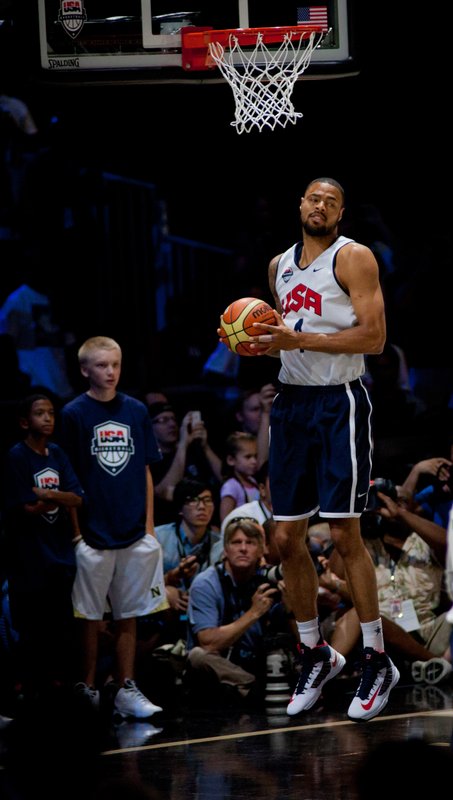
The crowd at Madison Square Garden let out what the AP called “an astonished howl.” The Clippers had taken Tyson Chandler second in the 2001 draft, and by the end of the night Chicago’s general manager, Jerry Krause, had sent Elton Brand to Los Angeles for his rights. “I sat back and said, ‘Are you sure?’” Chandler recalled.
He had been famous for years already, profiled on 60 Minutes as an eighth-grader, and at Dominguez High School in Compton the AP had him averaging 26 points, 15 rebounds and eight blocks. That December, Dominguez beat Eddy Curry’s Thornwood 54-50 in a tournament, and six months later the Bulls owned both of them. “Hopefully we can start a new dynasty,” Chandler said.
They did not, at least not in Chicago. Chandler’s career went on for 19 seasons and eight franchises, and its best stretch came elsewhere: the 2011 championship with Dallas, Defensive Player of the Year with the Knicks in 2012, an Olympic gold medal that summer and an All-Star selection the next season. In February 2009 Oklahoma City traded for him and then voided the deal after he failed the team’s physical, reportedly over his left big toe. Had it gone through, he said in 2025, he would have lined up beside Kevin Durant, Russell Westbrook, James Harden and Serge Ibaka, and he thought they would have won two championships at minimum. “That’s a different dynasty.”
Eddy Curry
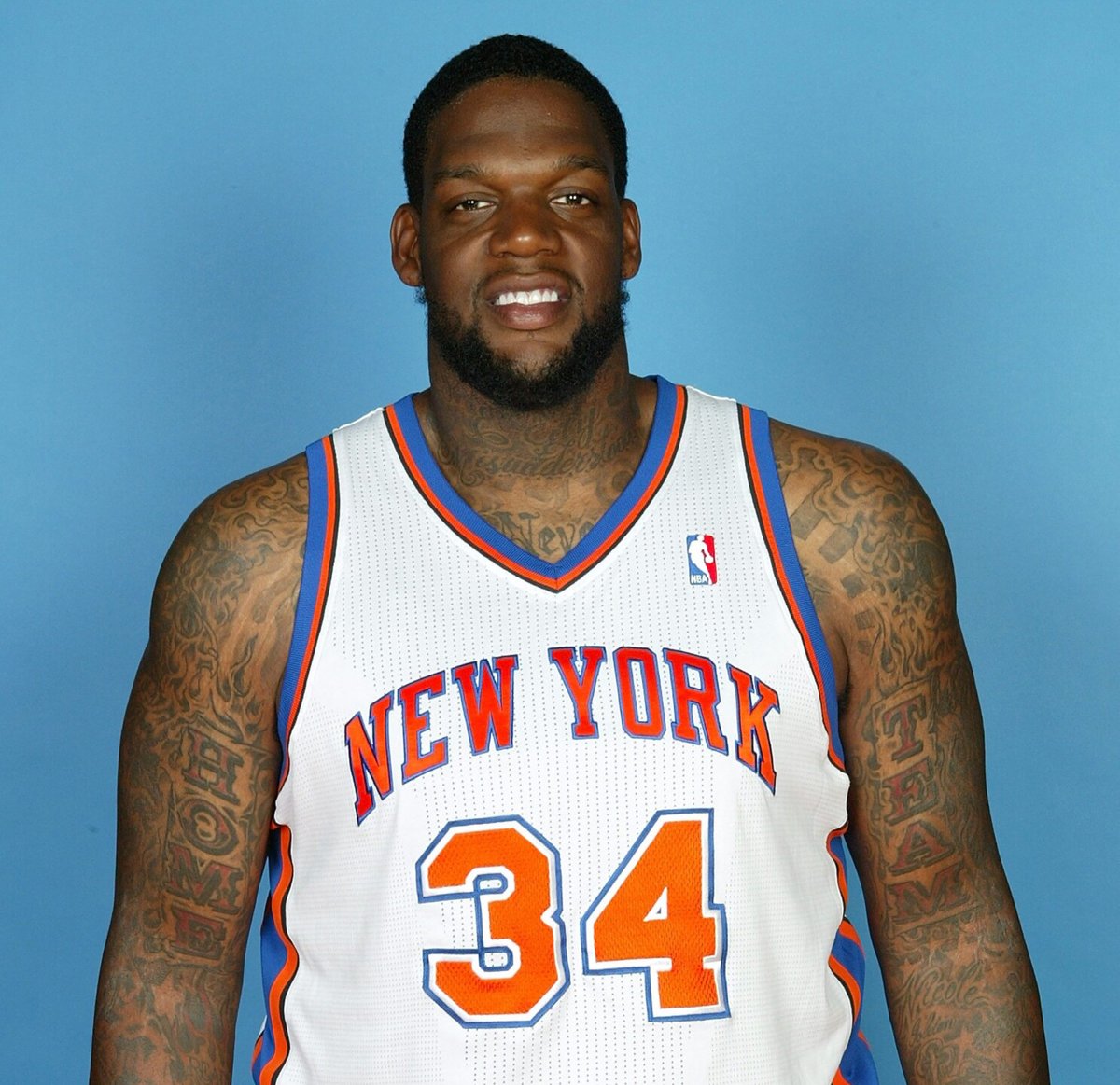
At 20, Eddy Curry made a higher share of his shots than any other qualifying shooter in the NBA, Shaquille O’Neal included. He led the league in field-goal percentage in 2002-03 at .585, with O’Neal second at .574, a fitting result for a player whose Basketball-Reference nickname is Baby Shaq.
Chicago had taken him fourth in 2001 out of Thornwood High School in South Holland, Illinois, in a draft whose first four picks included three high schoolers. “I’ll be surrounded by my family and that’s what I needed at this time,” he said. He averaged a then career-best 16.1 points in his fourth season before an irregular heartbeat ended it. Several cardiologists cleared him. The Bulls wanted a DNA test for hypertrophic cardiomyopathy, and offered, by their general manager’s account, $400,000 a year for 50 years if he failed it. Curry, as the AP reported, balked, citing his privacy, and in October 2005 Chicago traded him to the Knicks.
In New York he averaged 19.5 points in 2006-07 and once scored 43 against Milwaukee, then faded fast. He played 11 seasons in all, without an All-Star selection. In 2012 Miami gave him a championship ring, after he had played 14 regular-season games and, by Sports Illustrated’s count, been active for just one playoff game. Basketball-Reference lists him with no playoff minutes at all. It is a real ring all the same.
DeSagana Diop
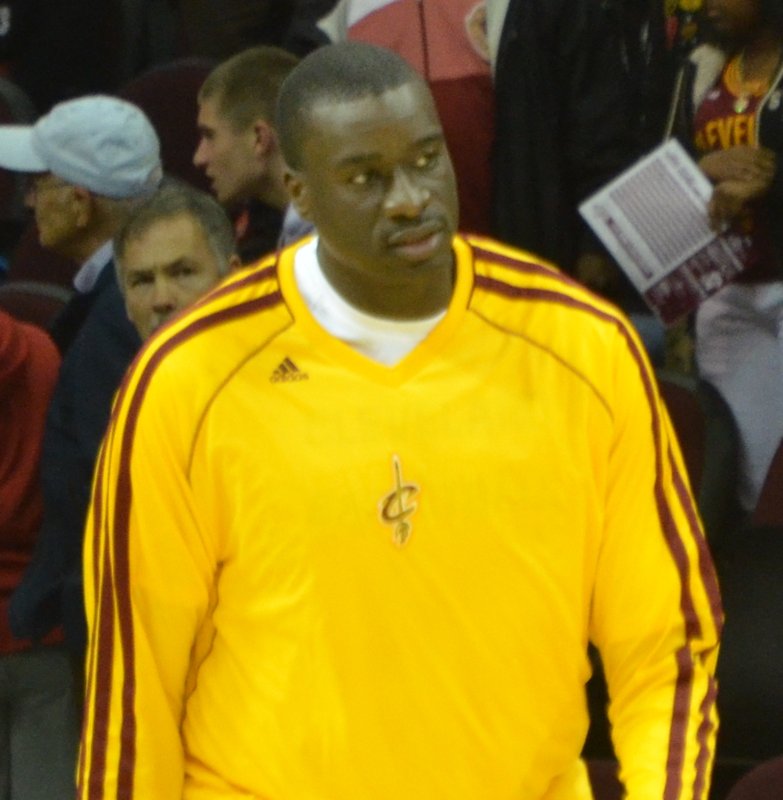
More than 40 NBA scouts went to St. Louis in December 2000 to watch Eddy Curry play Tyson Chandler, and, according to ESPN’s Jeff Goodman, most of them came away impressed with somebody else. That was DeSagana Diop, a 7-footer from Senegal at Oak Hill Academy in Virginia who had not been a starter until midway through his junior season. “When he came over here,” his coach, Steve Smith, said, “it was a dream and he had no clue how good he could be.”
As a senior he averaged 14.6 points, 13.2 rebounds and 8.1 blocked shots. Cleveland took him eighth on June 27, 2001, the fourth high schooler chosen that night. “This is a great opportunity to help my family and my country,” he had said when he declared, “and to make them proud.”
The NBA turned out to want him for one thing only. Over 12 seasons and 601 games with Cleveland, Dallas, New Jersey and Charlotte he scored 1,185 points, an average of 2.0, and blocked shots for a living. He played in the 2006 Finals for Dallas, and in February 2008 was part of the package, along with Devin Harris and the semi-retired Keith Van Horn, that Dallas sent to New Jersey for Jason Kidd. Afterward he coached, first in the G League and then for Senegal’s national team. He had promised to make his country proud. In the end he did it from the bench, as its coach.
Ousmane Cisse
A secret side deal with Joe Smith is the reason Ousmane Cisse’s draft number needs a footnote. On Oct. 25, 2000, the NBA took away Minnesota’s first-round picks for five drafts and fined the Timberwolves $3.5 million over the arrangement, and the AP noted that no team had ever been caught at it before. “I was reading across the page and the draft picks just kept going,” said the Knicks’ general manager, Scott Layden. As a result Basketball-Reference’s 2001 table has only 28 first-round picks, and Cisse, chosen by Denver in the second round, is listed 47th while being the 46th player actually taken.
He was born in Bamako, Mali, came to the United States in 1998 after years of playing soccer in Mali, and sat out a transfer year before his senior season at St. Jude in Montgomery, Alabama, where he averaged 29 points, 16 rebounds and 12 blocked shots. Louisville, Kentucky, Duke and North Carolina were among the schools interested. He went to the draft at 18 instead.
What followed was real basketball in less famous places: 48 games for the Fayetteville Patriots of the NBA’s minor league in 2004-05, then Israel, where in 2005-06 he led the league in both rebounds and blocks. He never played an NBA game. His Basketball-Reference page lists exactly two NBA transactions, and one of them, the trade that sent Denver his pick, happened before he was drafted.
Amar’e Stoudemire
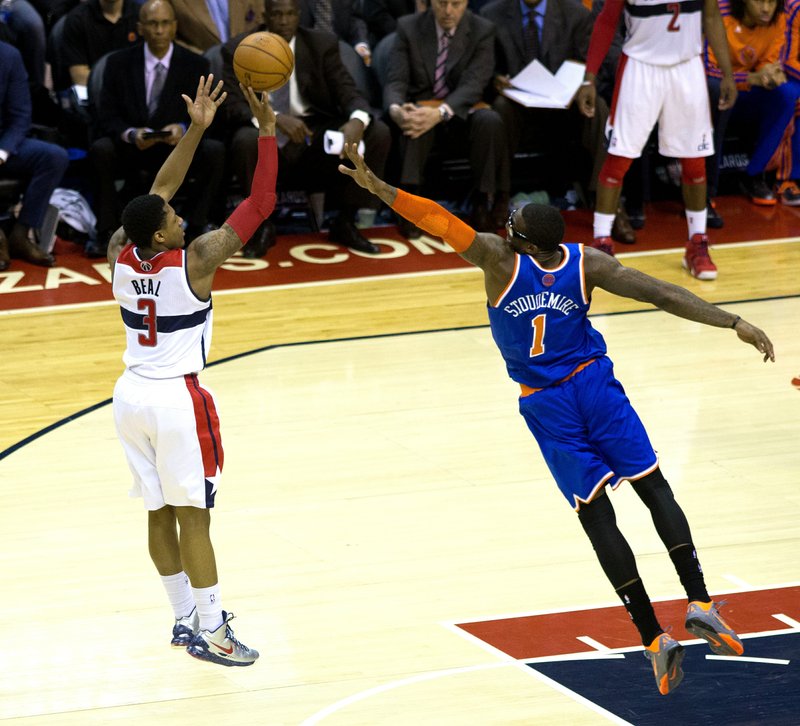
Five high schools appear on Amar’e Stoudemire’s Basketball-Reference page: Lake Wales, Mt. Zion Christian Academy, Emmanuel Christian Academy, West Orange and Cypress Creek. His freshman season at Lake Wales ended in academic ineligibility, Emmanuel Christian folded before its team played a game, and he sat out a year at West Orange. That left one senior season, at Cypress Creek in Orlando, in which he averaged 29.1 points, 15 rebounds and 6.1 blocks and was named Florida’s Mr. Basketball.
Phoenix took him ninth in 2002, the only high school player chosen that year, with a pick it had traded to Orlando in the Anfernee Hardaway deal of 1999 and then won back in November 2001. He repaid the effort at once, averaging 13.5 points and 8.8 rebounds in 2002-03 to become the first prep-to-pro draftee named Rookie of the Year. He made six All-Star teams and averaged 26.0 points in 2004-05, and in 2010 signed a five-year, $100 million contract with a Knicks team that had won 29 games. “Amar’e is not afraid of anything,” said his old coach Mike D’Antoni, “and he wasn’t afraid of New York.”
Afterward he played professionally in Israel and, in 2020, joined the Brooklyn Nets’ coaching staff. The Hall of Fame enshrined him in 2026, and of all the institutions that ever admitted him, it is the only one that never has to let him go.
LeBron James
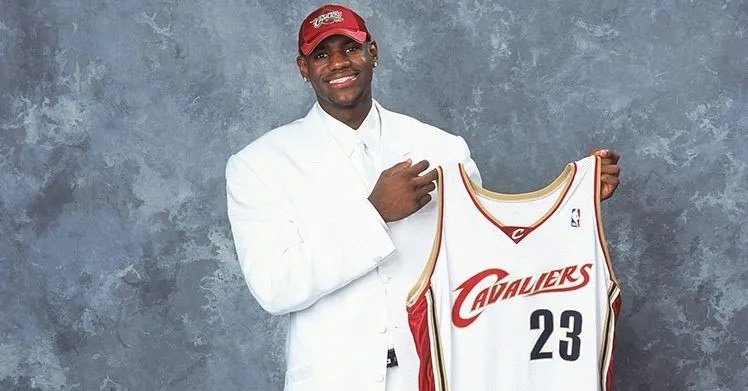
The Hummer H2 cost $50,000 before extras, came from California and had three televisions in it, and in January 2003 it was the subject of a two-week investigation by the Ohio High School Athletic Association. It had been an 18th-birthday present. His mother, Gloria, produced the paperwork for a bank loan in Columbus, and on Jan. 27 the commissioner cleared him. Four days later the same commissioner ruled LeBron James ineligible for accepting two retro jerseys, Gale Sayers and Wes Unseld replicas worth $845 together, and a judge had to put him back on the court.
None of this was a surprise to anyone who had seen Sports Illustrated on Feb. 18, 2002, when James, a 17-year-old junior at St. Vincent-St. Mary in Akron, appeared on the cover under the words “The Chosen One.” The writer of the story, Grant Wahl, later admitted he worried “that we were going to ruin the kid’s life by putting him on the cover.”
Cleveland took him first in 2003, and he was Rookie of the Year at 19. Through the 2025-26 season he had won four MVP awards and four championships with three different franchises, made 22 All-Star teams and passed Kareem Abdul-Jabbar as the NBA’s leading career scorer on Feb. 7, 2023. By the end of 2025-26 he had 43,440 regular-season points, more than anyone in NBA history. The kid’s life, on the whole, survived.
Travis Outlaw
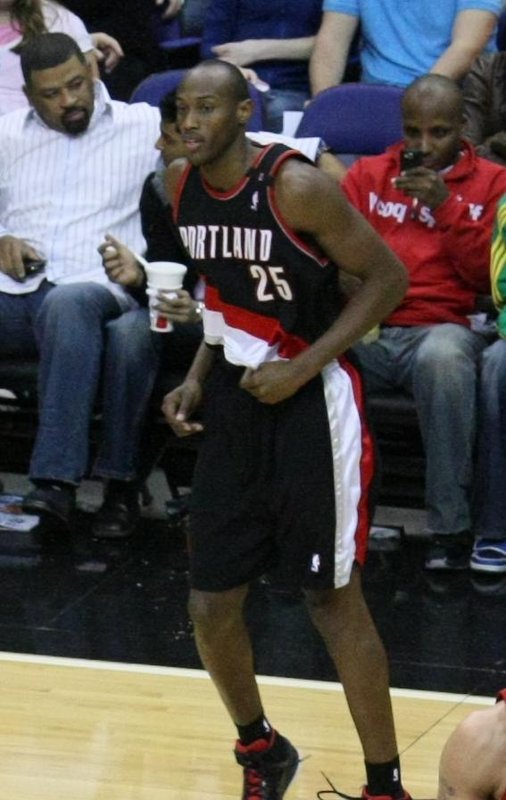
Portland called him Mr. Fourth Quarter, and Basketball-Reference lists the name, along with the shorter Trout. Travis Outlaw earned the first one by making late shots and blocking late shots, as on Dec. 3, 2007, when he scored 21 points in a one-point win at Memphis. The origin of the second is anyone’s guess.
He had come from Starkville High School in Mississippi, where as a senior he averaged 22 points, 12 rebounds and 6 assists and lost the state title game to Vicksburg 61-54 in overtime. His NBA.com draft profile described an extraordinary leaper best known for coming out of nowhere to block shots. He had committed to Mississippi State. Portland took him 23rd in 2003 instead.
He grew into the role slowly – eight games as a rookie – and then became one of the better bench scorers in the league, finishing fifth for Sixth Man of the Year in 2008-09. On April 18, 2007, against Golden State, he scored 36 points and made all 16 of his free throws, and Portland still lost 120-98. Over 11 seasons with Portland, the Clippers, New Jersey and Sacramento he averaged 8.5 points in 622 games. In August 2014 Sacramento sent him to New York, in October New York sent him on to Philadelphia, and the 76ers waived him the same day. He played for neither team, which is a quiet exit for a man named for the fourth quarter.
Ndudi Ebi
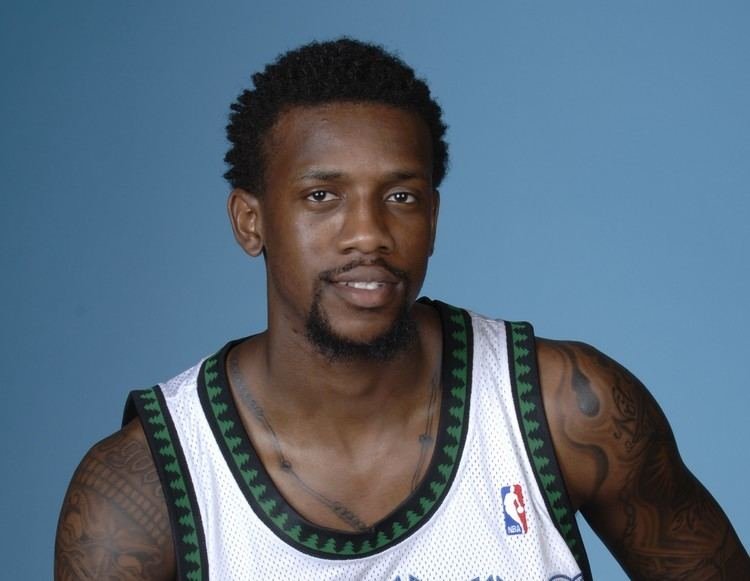
Born in London and raised in Enugu, Nigeria, until his family moved to Houston, Ndudi Ebi carried a given name that, according to his NBA.com draft profile, means life. His parents, the Houston Chronicle reported, hardly understood basketball and never pushed him into it. He won three Texas titles at Westbury Christian School anyway, set a USA Olympic Festival record with 139 points, and committed to Arizona.
In the 2003 Jordan Capital Classic his Silver team beat a Black team led by LeBron James 107-102, and that June Minnesota took him 26th with a pick it had nearly lost. The league had stripped the Timberwolves of their first-rounders as punishment over Joe Smith’s contract, then restored the 2003 selection after Kevin McHale and the owner, Glen Taylor, agreed to leaves of absence. Ebi was the reward.
He played 17 games as a rookie and scored 13 points. Then, on April 20, 2005, in the season finale against San Antonio and only his second game of the year, he scored 18 points with eight rebounds in a 95-73 win. “We were all cheering for him,” said Wally Szczerbiak. It was his last NBA game. Months later, waived at 21, he told reporters he might go into “poetry, manual labor and live life like a regular guy.” Instead he played on abroad, including 125 games in Italy and France, the last of them in 2017-18.
Kendrick Perkins
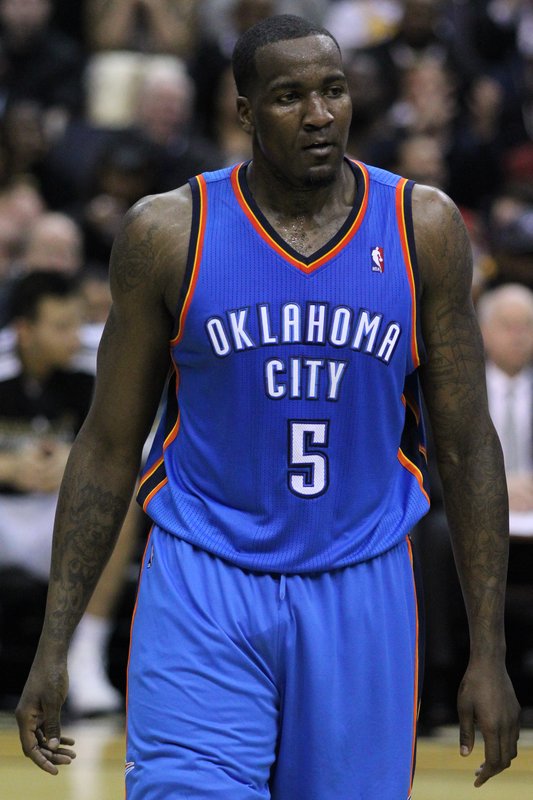
The 27th pick of the 2003 draft had belonged to three teams before anyone used it. Sacramento traded it to Orlando in 1999, Orlando traded it to Memphis in February 2003, and on draft night Memphis took Kendrick Perkins with it and sent him to Boston within hours, along with Marcus Banks, for Troy Bell and Dahntay Jones. “We wanted to address injury concerns in the backcourt,” explained Memphis’s president, Jerry West.
Perkins came from Clifton J. Ozen High School in Beaumont, Texas, where his teams went 96-3 over his last three seasons and he averaged 27.5 points, 16.4 rebounds and 7.8 blocks as a senior. In Boston he started slowly, ten games at 19, and by 2007-08 was starting every game for a team that beat the Lakers for the championship. He reached the Finals four times in all, with Boston twice, Oklahoma City and Cleveland, and won once.
Over 14 seasons with Boston, Oklahoma City, New Orleans and Cleveland he averaged 5.4 points, which was never the point of him. Basketball-Reference lists his nicknames as Perk and Swamp Thang. In 2019 he went into television, signing an exclusive contract with ESPN, and told Boston.com, “Who would have thought that an ol’ country boy from football country would end up doing this.” He was soon joking about chasing Adrian Wojnarowski’s news-breaking beat. “I started calling myself Poj.”
James Lang
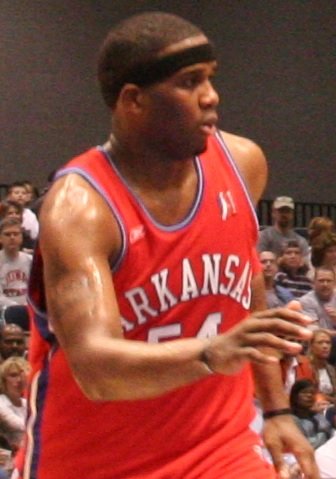
Eleven games, 11 points and 11 rebounds: that is the complete NBA record of James Lang, all of it compiled for the Washington Wizards in 2006-07, long after New Orleans drafted him. The Hornets took him 48th in 2003, at 19, straight out of Central Park Christian in Birmingham, Alabama. They waived him on Dec. 29, 2003, without his playing a game.
Size was always part of the story. Basketball-Reference lists him at 6-foot-10 and 285 pounds, and the Deseret News later reported that his weight had ranged from 390 pounds in high school down to 280. In March 2006 he signed 10-day contracts with Atlanta and then Toronto and played for neither. “He never did play for any of those three teams,” the Deseret News noted of the Hornets, Hawks and Raptors, which is a hard sentence to earn.
Washington signed him in September 2006 and gave him his chance: he debuted on Nov. 28, 2006, and was waived on Feb. 28, 2007, with a best night of 7 points, 4 rebounds and 3 blocks in under 20 minutes. Afterward he played 81 games for the Utah Flash in the D-League, and the team’s owner later wrote that Lang had spent a summer “really working on his weight and it showed.” Of the 42 players on this list, only three appeared in fewer NBA games.
Dwight Howard
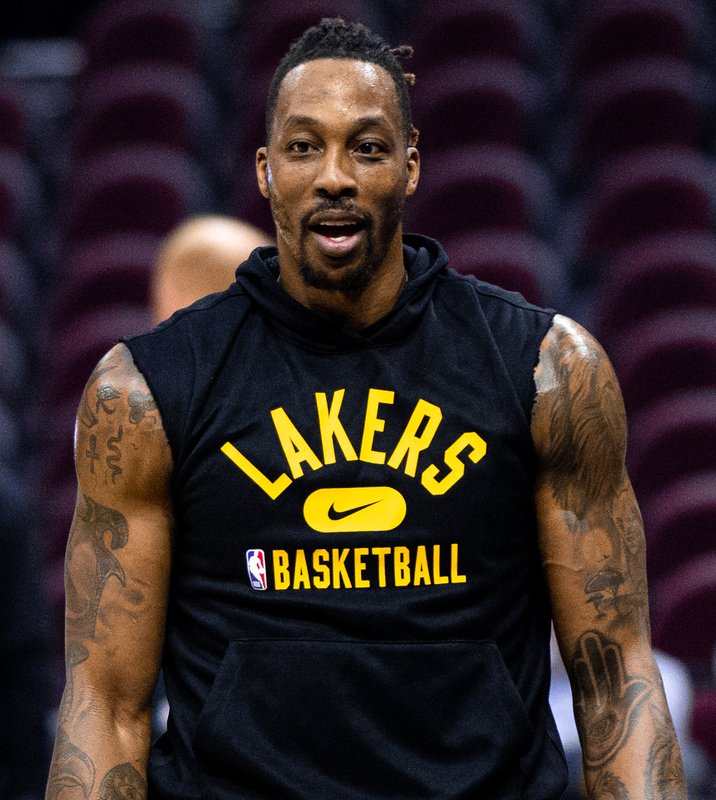
At the 2008 Slam Dunk Contest in New Orleans, Dwight Howard pulled off his blue Orlando jersey to reveal a red Superman cape, launched from just inside the free-throw line and drew perfect scores on his first two dunks. He won with 78 percent of the fan vote. “Everybody always says, big men can’t jump and big men don’t look good dunking,” he said afterward.
Orlando had taken him first in 2004, at 18, out of Southwest Atlanta Christian Academy, passing on Connecticut’s Emeka Okafor in a choice Sports Illustrated later recalled as “a terrifying risk.” He was the third high school player in four years to go first overall. The risk paid off at once and then for a long time. Howard was named the league’s best defender in 2009, 2010 and 2011, and through the 2025-26 season no one else had won the award three times in a row. In 2009 he took Orlando to the Finals.
The rest of the career moved around: a gloomy 2012-13 with Kobe Bryant’s Lakers that ended in a playoff sweep, which Howard said was “like a nightmare,” and a championship with the Lakers in 2020, at 34. He played 18 NBA seasons for seven teams. When no NBA club called in 2022, he signed with the Taoyuan Leopards in Taiwan and, in his first game there, scored 38 points with 25 rebounds. In 2025 he was inducted into the Hall of Fame. The cape had always fit.
Shaun Livingston
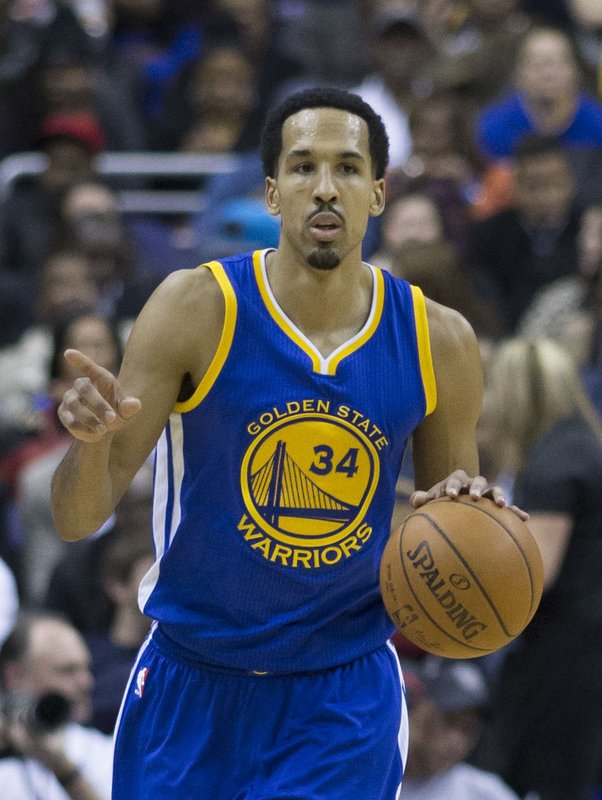
About four minutes into a game against Charlotte on Feb. 26, 2007, Shaun Livingston went up for what he called “a routine layup,” and his left leg “caved in.” He dislocated his kneecap and tore the anterior and posterior cruciate ligaments and the lateral meniscus. “I actually heard the word ‘amputation’ in the hospital,” he said later, because a damaged artery could have cut off the blood supply to his lower leg. He was 21.
The Clippers had drafted him fourth in 2004, a 6-foot-7 point guard out of Peoria Central High School in Illinois, and he had been the kind of teenager scouts build franchises around. After the injury he missed the entire 2007-08 season, was cleared to play in June 2008 and then worked his way back on minimum deals, 10-day contracts and a stint in the minor league, playing for nine NBA teams in all. One of those teams was Charlotte, the opponent on the night his knee gave way.
In July 2014 Golden State signed him, and the long road ended somewhere unexpectedly grand: championships in 2015, 2017 and 2018, playing midrange basketball for one of the best teams the league has seen. Over 14 seasons he played 833 games. He retired on Sept. 13, 2019, and his announcement included a line that nobody who saw the replay of 2007 would argue with. “I wasn’t supposed to be here.”
Robert Swift
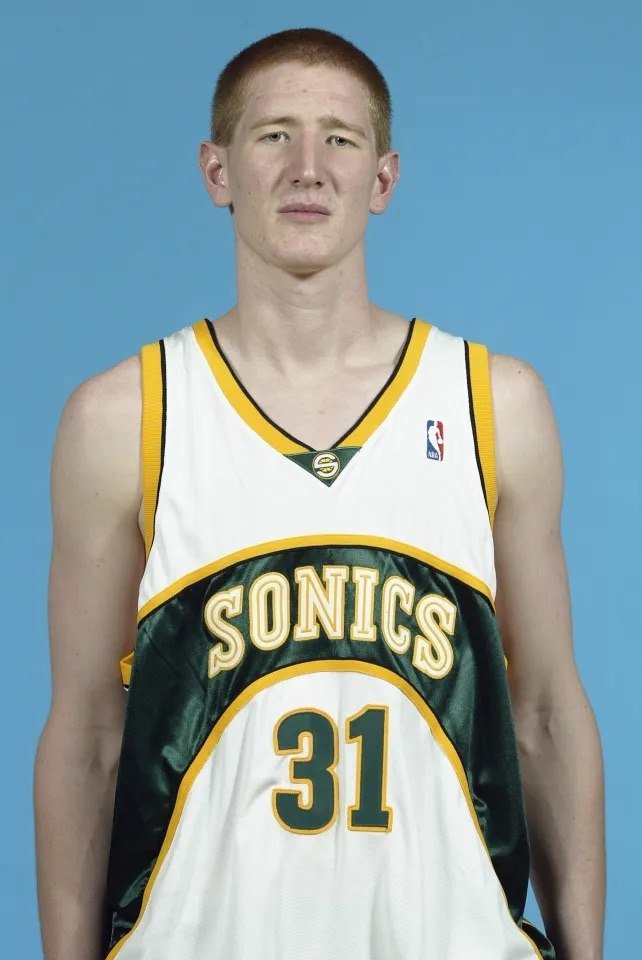
At 5:39 p.m. on June 24, 2004, the Seattle SuperSonics took Robert Swift with the 12th pick, and the 7-footer from Bakersfield High School stood up, put on his suit jacket and, as the Seattle Times reported, “walked outside before his highlights had finished playing on ESPN.” His new coach, Nate McMillan, phoned with a line that said a good deal about the process: “I’m looking forward to actually seeing you play.”
He had committed to USC after averaging 18.8 points, 15.9 rebounds and 6.2 blocks as a senior. The Sonics said they had found their center for the future, and then, as the Times pointed out, chose a center with their first-round pick in each of the following two drafts anyway. In Seattle the quiet, red-haired rookie became Napoleon Dynamite to his teammates. By his third autumn he had shoulder-length hair, a goatee and 15 tattoos, one of them reading “Anything Is Possible.”
A torn ACL in the last exhibition game before 2006-07 cost him the season, and the knee never quite returned. He played 97 games in all, averaged 4.3 points and never once attempted a three-pointer. His last NBA game came at 23. He finished with the Tokyo Apache, until the March 2011 earthquake ended their season, and with it, the Times wrote, his career. His father is half Japanese. Had he gone to USC, the Times wrote, he might have majored in Japanese studies.
Sebastian Telfair
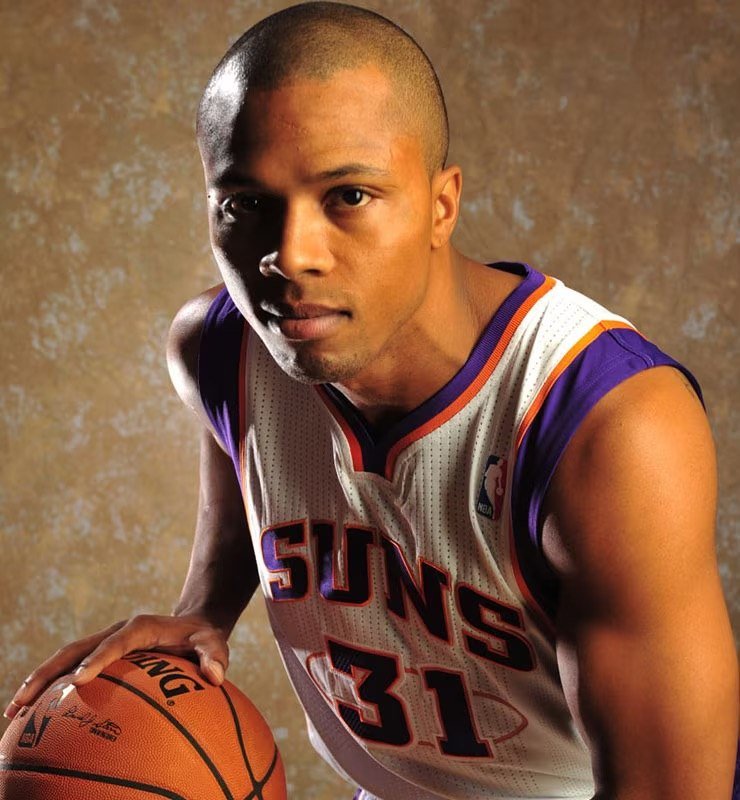
Adidas signed a point guard from Lincoln High School in Coney Island in May 2004, before any NBA team had drafted him, to a deal reported at $15 million. Sebastian Telfair later put it at about $10 million over five years and said he would take it back if he could. He had been, Adidas noted, the first incoming ninth-grader ever to attend one of its camps.
By then he was already famous. His cousin Stephon Marbury had grown up in the apartment one floor above his, and by SI’s tally Telfair left Lincoln as New York’s all-time leading high school scorer, with 2,785 points. He had committed to Louisville and Rick Pitino. He turned pro instead, and Portland took him 13th. A documentary about his senior year, Through the Fire, ends on draft day, though it did not premiere until the 2005 Tribeca Film Festival, by which time its subject had already played his first NBA game.
The career that followed was a journeyman’s: ten seasons with eight teams, 7.4 points and 3.5 assists a game, and a trip to Minnesota as one of the players Boston sent away to get Kevin Garnett. As SI later put it, he had been the subject of a documentary, a book and a cover story while he was still in high school. Ten NBA seasons is more than most documentaries get to show.
Al Jefferson
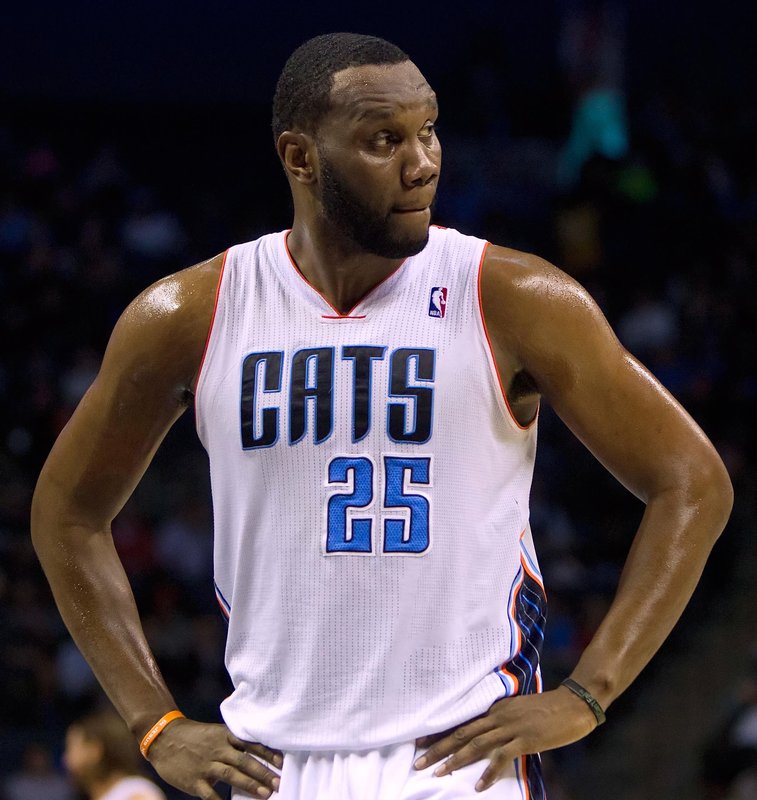
At Prentiss High School in Mississippi, Al Jefferson averaged 42.6 points, 18 rebounds and seven blocks as a senior, according to the AP, and Boston took him 15th in 2004. He had signed with Arkansas but never hired an agent, which kept the door open until he decided not to use it. As a rookie he gave his No. 8 to the returning Antoine Walker free of charge, asking only, “Take me under your wing.” His high school number, 25, hung in Boston’s rafters for K.C. Jones, so he switched to 7, because, as he explained, “two plus five equals seven.”
On July 31, 2007, Boston sent Jefferson, Ryan Gomes, Gerald Green, Theo Ratliff, Sebastian Telfair and two 2009 first-round picks to Minnesota for Kevin Garnett, and Jefferson was the first name on the list. That October he signed a five-year, $65 million extension and declined to push for more. “I would’ve been a fool to go up there and ask for max,” he said, “having not really proved myself for that.”
He lasted 14 seasons with five franchises and averaged 15.7 points, nearly all of them close to the basket; he made 8 of his 66 career three-point attempts. His best year came with Charlotte in 2013-14: 21.8 points, All-NBA Third Team and eighth in the MVP voting. No All-Star selection ever came, which that season makes look like an oversight.
Josh Smith
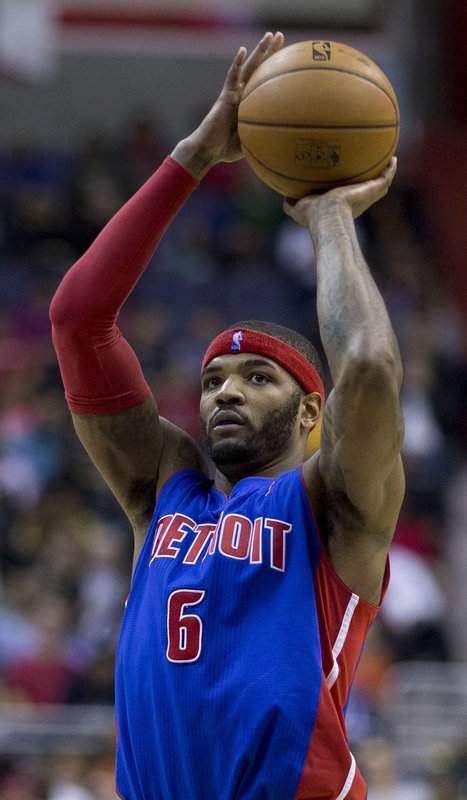
Dominique Wilkins handed over his own Hawks jersey moments before the final round of the 2005 Slam Dunk Contest in Denver, and the 19-year-old rookie wearing it on Feb. 19, 2005, threw down a windmill that earned a perfect 50 and left the rim shaking. “He shocked me with that one,” said Wilkins. Josh Smith had already windmilled over Denver’s Kenyon Martin, seated in a chair, in the first round. He beat Amar’e Stoudemire for the title.
Smith had come from Oak Hill Academy in Virginia, which went 38-0 and finished ranked first in the country, and held a commitment to Indiana. Atlanta took him 17th in 2004 with a pick that had passed through Milwaukee, Denver and Detroit first, the last leg in the trade that sent Rasheed Wallace to the Pistons. As a rookie he joined a Hawks team that won 13 games.
He turned out to be far more than a dunker. He finished second in the league in total blocks three seasons running, with 208, 207 and 227, and late in 2007 clinched a win at Miami by blocking Dwyane Wade in the final seconds. Over 13 seasons with Atlanta, Detroit, Houston, the Clippers and New Orleans he blocked 1,713 shots and averaged 14.5 points. Of the reputation that night in Denver gave him, he told Sports Illustrated in 2007, “It is a curse, but it’s also a blessing to be able to do that at a young age.”
J.R. Smith
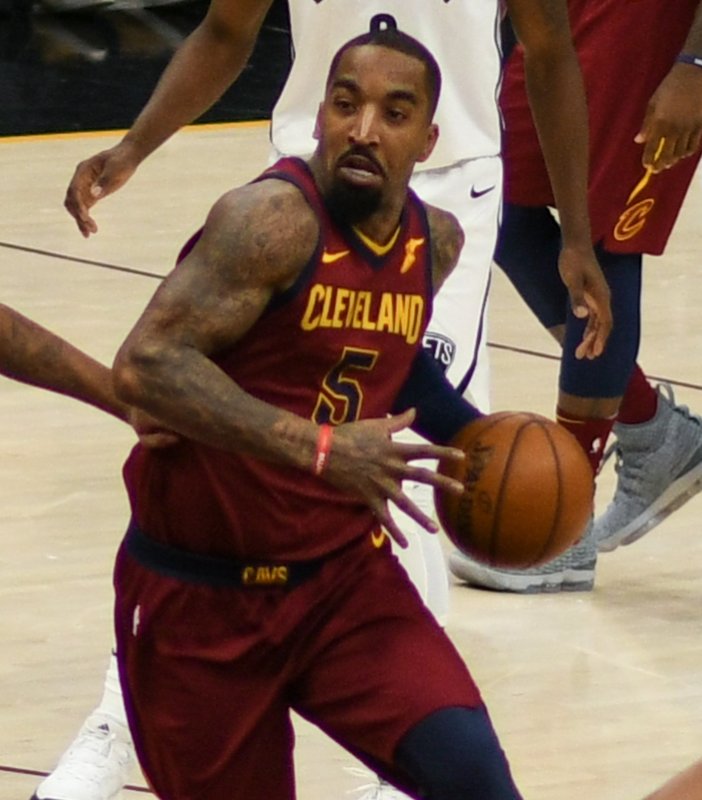
With the score tied 107-107 and 4.7 seconds left in Game 1 of the 2018 Finals, J.R. Smith rebounded George Hill’s missed free throw and dribbled out toward the three-point line, away from the basket. By the time he passed back to Hill, the moment was gone, and Golden State won in overtime. “He thought it was over. He thought we were up 1,” said his coach, Tyronn Lue. Smith said he knew the score. Two days later he conceded, in Bleacher Report’s headline, that he “Can’t Say I Was Sure of Anything.”
He had been drafted 18th in 2004 by New Orleans, out of St. Benedict’s Prep in Newark, after committing to North Carolina, and he never played a college game. In July 2006 the Hornets traded him to Chicago for Tyson Chandler, and Chicago sent him to Denver before he could play for the Bulls. He went on to 16 seasons, the 2012-13 Sixth Man award with the Knicks, and championships with Cleveland in 2016 and the Lakers in 2020.
Then, on Aug. 11, 2021, at 35, he enrolled at North Carolina A&T, and because he had never used his NCAA eligibility, he still had four years of it. He walked on to the golf team, was named the school’s Academic Athlete of the Year with a 4.0 grade-point average and graduated in May 2026. The college career he skipped in 2004 he took up at 35, in a different sport.
Dorell Wright
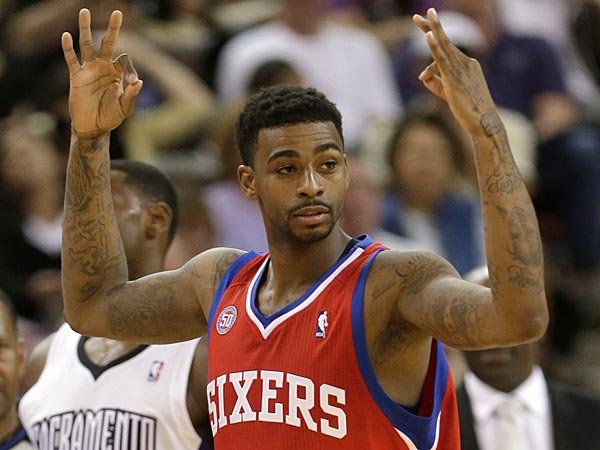
A championship ring came to Dorell Wright in his second NBA season, and he did not play a minute of the playoffs that won it. Miami’s 2006 title, taken after the Heat lost the first two games of the Finals to Dallas, arrived when Wright was 20 and had appeared in 20 regular-season games at 6.6 minutes apiece.
The Heat had drafted him 19th in 2004 out of South Kent School, a prep school in Connecticut, and Sports Illustrated had gone so far as to name “No. 19 Dorell Wright” among the future All-Stars of that draft, as the magazine itself recalled in 2009. He never made one. What he did make, after six seasons in Miami, was a lot of three-pointers: in 2010-11 with Golden State he started all 82 games, averaged 16.4 points and led the NBA with 194 threes, ahead of Jason Richardson’s 189. He had made 61 the season before.
His NBA career covered 11 seasons with Miami, Golden State, Philadelphia and Portland, and when it seemed to be over he went to China, where he averaged 24.3 points in the 2015-16 season, then played in the EuroLeague for Bamberg. His brother, Delon, also reached the NBA. Dorell’s last NBA games came in the 2016 playoffs, with Miami, the team that had given him a ring he never played for. This time he got onto the floor.
Martell Webster
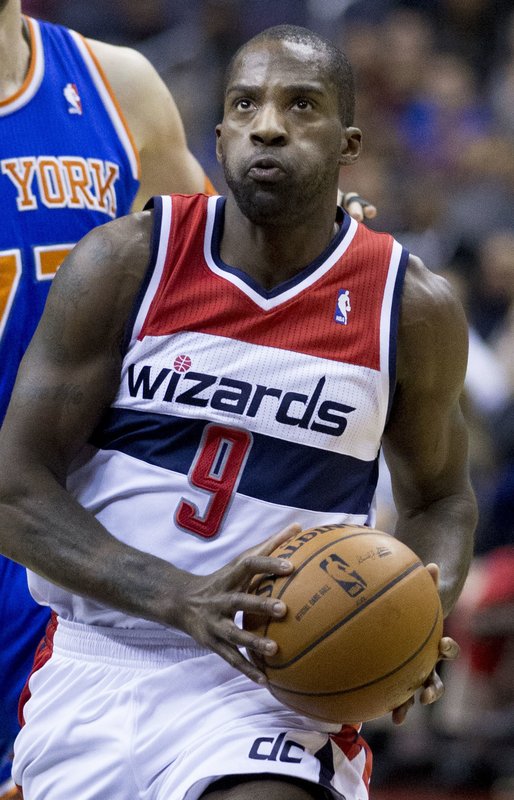
Portland held the third pick in 2005 and traded it on draft night to Utah, which used it on Deron Williams. In return the Blazers got the sixth pick, the 27th and a future first, and with the sixth they took Martell Webster of Seattle Preparatory School, at 18 the first high school player chosen in the last draft that allowed them. Chris Paul went fourth, to New Orleans, and the fan site Blazer’s Edge later wrote that for many, Webster’s “only enduring legacy would be as the player that Portland drafted instead of Chris Paul.”
It was not quite fair to him. On Jan. 5, 2008, he scored 24 points in a single quarter against Utah, the Williams team, which by Blazer’s Edge’s count was second only to Terry Porter in franchise history. He became a reliable shooter, shooting .382 from three over his career and .422 for Washington in 2012-13, when he averaged 11.4 points.
His back was less reliable. He had three back surgeries in four years, and a torn labrum in October 2015 ended his NBA career; Washington waived him that November. At 27 he had already told the Washington Post he would probably walk away at 30 to stay healthy. “I’ve always wanted to retire young,” he said. He announced his retirement on Sept. 30, 2017, at 30. It was the rare plan in his career that went exactly as intended.
Andrew Bynum
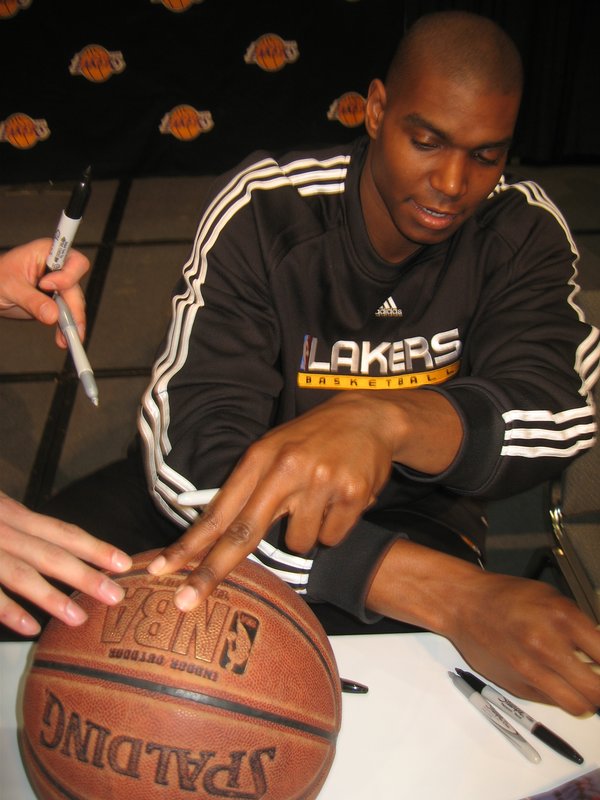
No one has played in an NBA game at a younger age than the center the Lakers took 10th in 2005. Andrew Bynum, out of St. Joseph High School in Metuchen, New Jersey, was 17 years and 244 days old on draft night and 18 years and 6 days old when he debuted against Denver on Nov. 2, 2005, breaking the record Jermaine O’Neal had held since 1996. Of the ten youngest players on NBA.com’s list, six were drafted straight from high school and appear on this page.
He came along slowly – 7.3 minutes a game as a rookie – and then won championships with the Lakers in 2009 and 2010. In 2011-12 he averaged 18.7 points and 11.8 rebounds, started the All-Star Game and made All-NBA Second Team. That August the Lakers sent him to Philadelphia in the four-team trade that brought them Dwight Howard.
He never played a game for the 76ers. His knees kept him out all season, and in November 2012 he admitted that one setback had come while bowling. “I didn’t twist it, didn’t fall – nothing,” he said, and later, “In hindsight, I guess you shouldn’t go bowling.” He played 24 games for Cleveland the next season and two for Indiana, the last on March 15, 2014, at 26. The youngest player the league had ever seen was, by 26, a former one.
Gerald Green
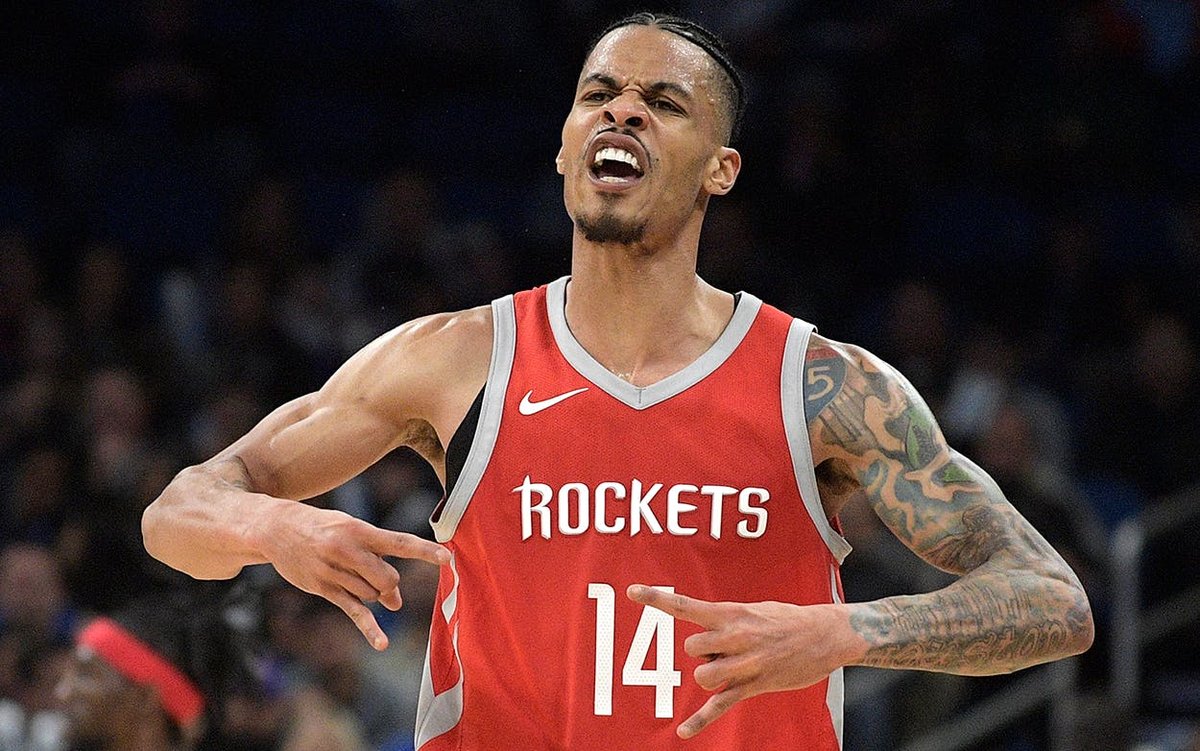
Two years out of Gulf Shores Academy in Houston, Gerald Green won the 2007 Slam Dunk Contest in Las Vegas by leaping over a 3-foot table bearing the All-Star logo and finishing with a windmill, for a perfect 50 from a panel of judges that included Michael Jordan, Julius Erving and Kobe Bryant. Earlier in the night he had jumped over the 5-foot-9 Nate Robinson while wearing Dee Brown’s old Celtics jersey and covering his eyes, in tribute to Brown’s no-look dunk of 1991.
Boston had taken him 18th in 2005, and two years later sent him to Minnesota in the Kevin Garnett trade. He defended his title in 2008 by blowing out the candle on a cupcake placed on the back of the rim and then dunking, and lost to a man in a cape. Between 2009 and 2011 he disappeared from the NBA altogether, to Russia and then China, and came back with the Nets in February 2012.
The second act was better than the first. In 2013-14 with Phoenix he averaged 15.8 points and made 204 three-pointers, fourth in the league. Over 12 seasons with eight teams he averaged 9.7 points. He did all of it while missing part of his right ring finger, lost in a childhood accident when the class ring he had borrowed from his mother caught on a nail. In 2015 the Suns sold $12 foam hands in his honor, inscribed “four fingered assassin.”
C.J. Miles
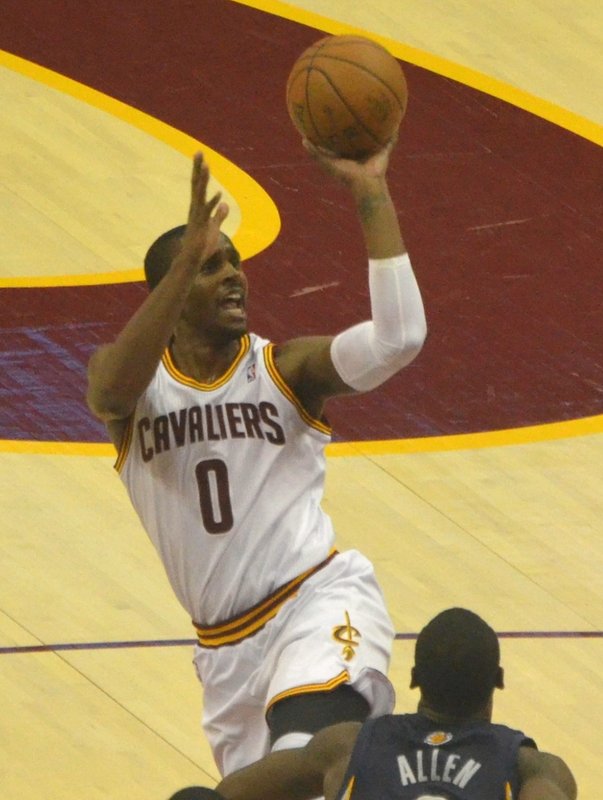
Of the 30 players taken in the first round of the 2005 draft, 29 played fewer NBA seasons than C.J. Miles, whom Utah took in the second. Only Chris Paul lasted longer. Miles went 34th, at 18, out of Skyline High School in Dallas, where he had averaged 23.5 points as a senior, ignoring the doubters who thought he should go to Texas first.
Utah’s coach, Jerry Sloan, was not always convinced either. “We can’t put diapers on him one night and a jockstrap the next,” he said after one game in Miles’s second season. In February 2010, after a 1-for-10 night against Charlotte, Miles tweeted an apology to Jazz fans, then averaged 17 points over the opening pair of playoff games against Denver.
He played 16 seasons and 849 games for seven franchises, from Utah and Indiana to Cleveland, Toronto, Memphis, Washington and, for one game during the 2021-22 season, Boston, averaging 9.6 points and making 1,250 three-pointers. There was no All-Star selection and no title, though he came closer to the second than most. On Feb. 7, 2019, Toronto sent him to Memphis as part of the price for Marc Gasol, and that June the Raptors won the first championship in their history. They did not give Miles a ring. Their general manager, Bobby Webster, called that “standard.”
Ricky Sanchez
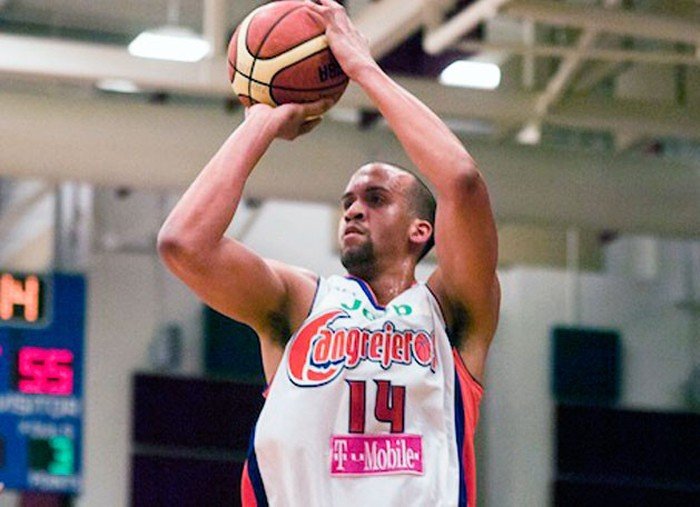
Five NBA teams owned the rights to Ricky Sanchez, and none of them ever put him in a game. Portland drafted him 35th on June 28, 2005, and before the night was out sent him and Linas Kleiza, its 27th pick, to Denver for Jarrett Jack. Denver traded his rights to Philadelphia in September 2007, Philadelphia to Memphis for Sam Young in March 2012, and Memphis to Miami in February 2013, eight years after the draft, as part of a deal for Dexter Pittman.
Sanchez was born in Guayama, Puerto Rico, and is 6-foot-11 by Basketball-Reference’s measure, 7 feet by FIBA’s more generous one. While his rights moved around, he played: 75 games for the Idaho Stampede of the D-League, seasons in Puerto Rico’s own league and in Argentina, where in March 2012 he was averaging 13.0 points for a club in Bahia Blanca, and a season with Manresa in Spain’s top division.
His most visible basketball came in a Puerto Rico uniform. He played at the 2010 World Championship and the 2014 World Cup, and was still playing for his country in qualifying games in 2019. In the NBA’s own record he exists only as a name in transaction logs, passed from team to team like a coupon nobody got around to using.
Monta Ellis
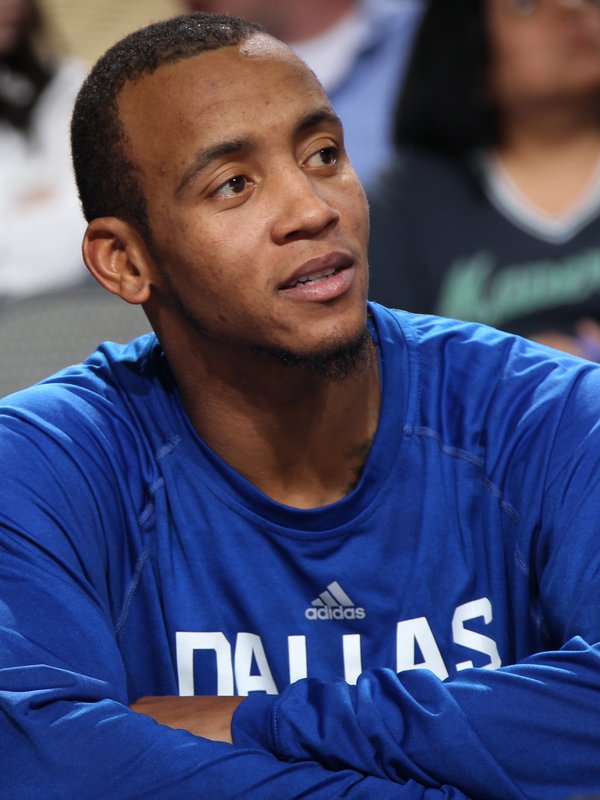
In late August 2008, a few weeks after signing a six-year, $66 million contract, Monta Ellis badly sprained his ankle in a low-speed moped crash and told the Warriors’ Chris Mullin he had hurt it playing pickup basketball in Mississippi. He came clean days later. In October the Warriors suspended him for 30 games without pay, about $3 million, citing a clause in the standard player contract.
He had come from Lanier High School in Jackson, Mississippi, where he averaged 38.4 points as a senior and was named Mississippi’s Mr. Basketball. Mississippi State had his commitment. Instead Golden State, which began life as the Philadelphia Warriors, one of the league’s original franchises, spent the 40th pick of 2005 on him. By his second season he was the league’s Most Improved Player, jumping from 6.8 points a game to 16.5, though in the Warriors’ famous upset of a 67-win Dallas team in the 2007 playoffs he averaged only 8.2.
He became one of the purest scorers of his time: 25.5 points a game in 2009-10, 24.1 the next season and 17.8 across 12 seasons with Golden State, Milwaukee, Dallas and Indiana. An All-Star selection never came. In March 2012 the Warriors traded him to Milwaukee, along with Kwame Brown, for Andrew Bogut. By Basketball-Reference’s tally his career earnings came to $105,540,581, for a player taken with the 40th pick, which makes the moped look like a minor line item.
Lou Williams
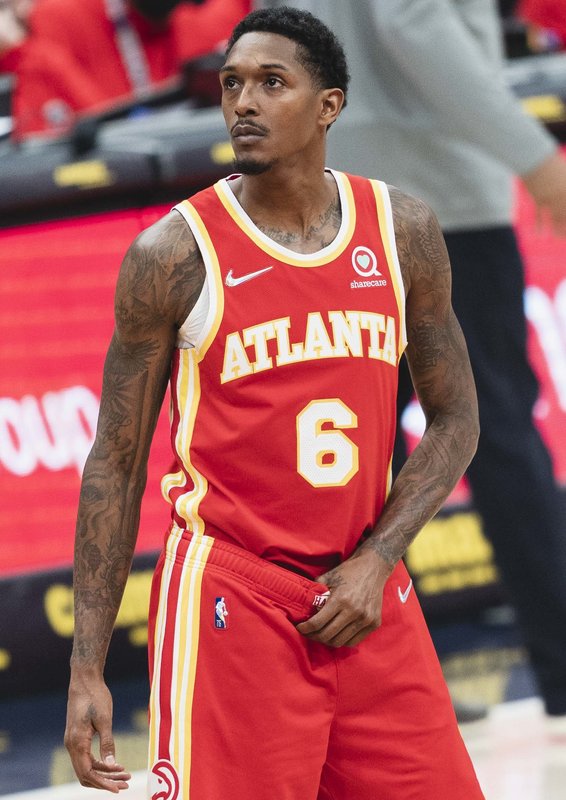
Allowed out of the NBA’s quarantine bubble in Florida in July 2020 to attend a funeral, Lou Williams was photographed at Atlanta’s Magic City club and explained that he had stopped for the lemon pepper wings. The league sent him into a 10-day quarantine instead of the usual four, and he missed two games. He later trademarked “Lemon Pepper Lou,” and the club named a wing after him.
Philadelphia had taken him 45th in 2005 out of South Gwinnett High School in Snellville, Georgia, where he scored 3,390 career points and had committed to Georgia; he was the Sixers’ only pick that night. He grew into a scorer slowly, and in 2018 dropped 50 points on Golden State. He won Sixth Man of the Year three times, in 2015 with Toronto and in 2018 and 2019 with the Clippers, which through the 2025-26 season left him tied with Jamal Crawford for the most.
He played 17 seasons for six franchises and retired in June 2023 with a video built around a letter from his daughter. He came off the bench in 1,001 of his 1,123 games, and his 13,396 points as a reserve were the most in NBA history when he retired. Of the 60 players taken in the 2005 draft, only Chris Paul scored more in all than his 15,593, a lot of points for a man who spent most evenings waiting to be called.
Andray Blatche
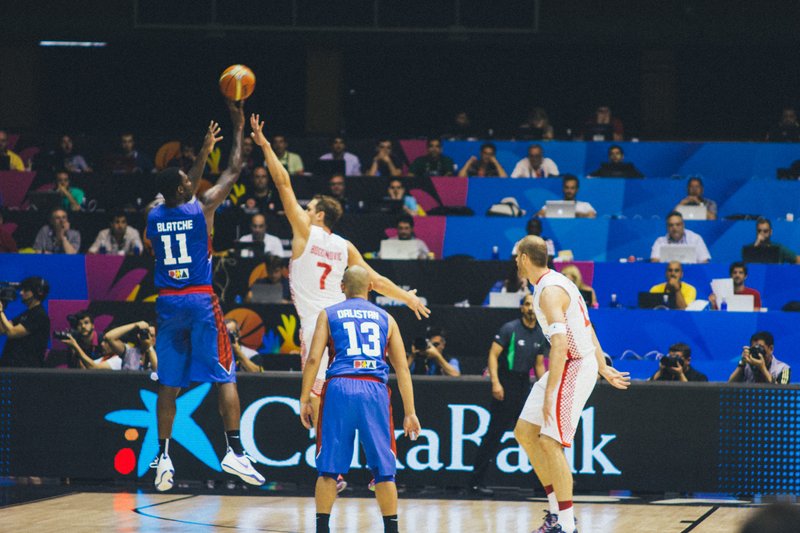
Republic Act No. 10636, approved by President Benigno Aquino III on June 11, 2014, did one thing: it made Andray Blatche a citizen of the Philippines. FIBA allows each national team one naturalized player, and the Philippines, at the World Cup for the first time in 35 years, chose him. In five games in Spain that summer Blatche averaged 21.2 points and 13.8 rebounds for a team that went 1-4.
He had grown up in Syracuse, New York, played four years at Henninger High School and then a postgraduate year at South Kent School in Connecticut, where he averaged 27.5 points. On draft night in 2005, expecting the first round, he left his own party to drive the streets and take deep breaths. The Wizards took him 49th.
His best season, 2009-10, produced 14.1 points and 6.3 rebounds a game, and in July 2012 Washington used the amnesty provision to release him with $23 million left on his contract. He signed with Brooklyn for the veteran’s minimum and, four months later, with the Wizards 0-12, asked reporters, “Anybody seen how the Wizards are doing?” He lasted nine NBA seasons, then moved on to China and averaged 31.1 points in 2014-15. The Grantland writer Rafe Bartholomew watched him in Spain and concluded he “seemed to exhibit more leadership, toughness, and passion in five games with Gilas than in nine years in the NBA.”
Amir Johnson
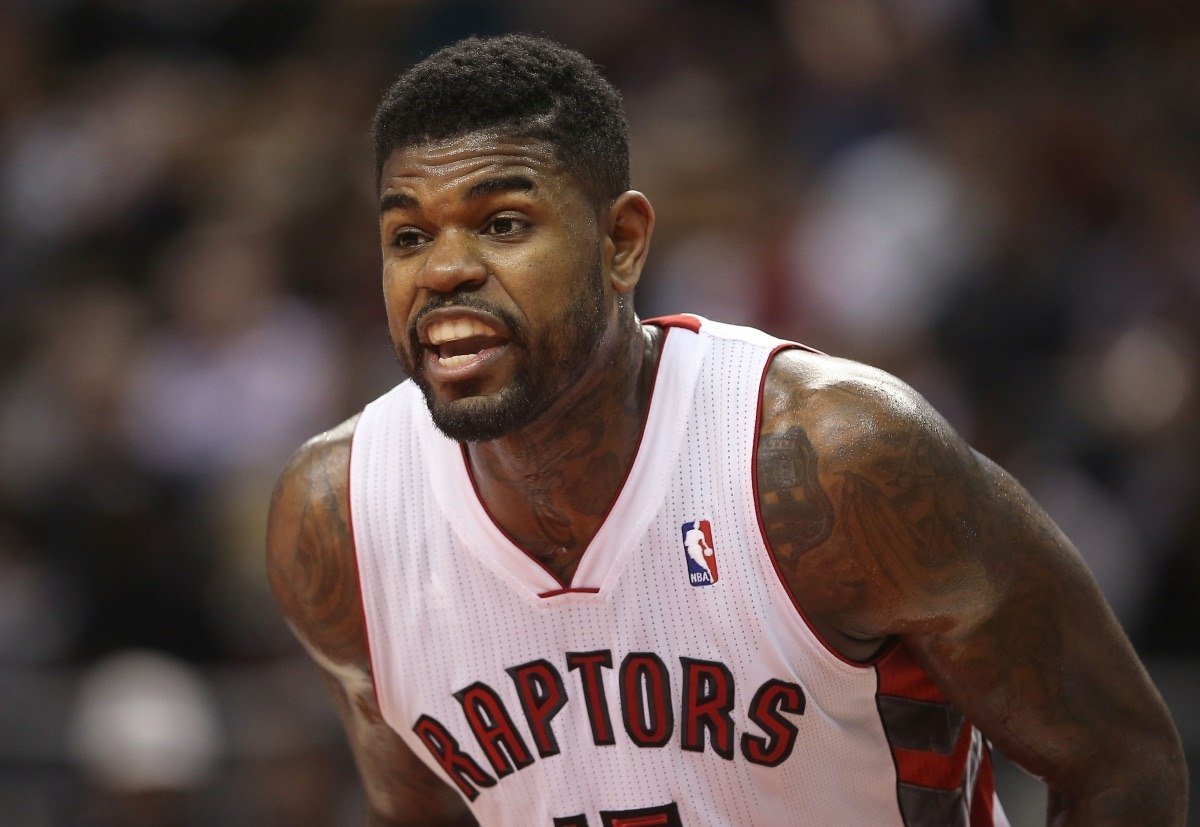
The last pick of the prep-to-pro era was not the last pick of its draft. Detroit took Amir Johnson 56th on June 28, 2005, and four more names followed him, ending with Alex Acker of Pepperdine at No. 60. But he was the last high school player chosen before the age rule took effect, and the NBA G League’s own biography of him calls him the last “prep to pro” player to join the league.
He had been California’s Mr. Basketball at Westchester High School in Los Angeles and had committed to Louisville, then decommitted to enter the draft. In Detroit, the Philadelphia Inquirer reported, Rasheed Wallace used to batter the 18-year-old in practice and once blackened his eye with an elbow, then advised him to make a career out of rebounding, defending and setting screens. It was good advice. Johnson played 14 straight seasons for Detroit, Toronto, Boston and Philadelphia, longer than ten of the 14 lottery picks from his draft.
In Toronto he became something of a folk figure. When Drake released Nothing Was The Same in September 2013, Johnson bought out two record stores’ stock and handed the CDs to fans in the street. That December he scored a career-high 32 points on 14-of-17 shooting against the Lakers in his hometown. Detroit had drafted Alex Acker that same night with the 60th pick. Acker played two NBA seasons, and the 56th pick played 14.
Frequently Asked Questions
Why can’t NBA teams draft players straight out of high school anymore?
The age rule agreed on June 21, 2005, and kept in later agreements, requires a player to be at least 19 during the draft’s calendar year and, for a US player, at least one NBA season removed from his high school class’s graduation. It began with the 2006 draft. The one-and-done year that followed is a nickname, not a rule.
Was Darryl Dawkins the first high school player drafted by an NBA team?
No. Reggie Harding of Detroit’s Eastern High School was drafted by the Pistons in the fourth round in 1962 and again in the sixth round in 1963, without playing college basketball, and debuted on Jan. 20, 1964. Dawkins and Bill Willoughby were the only high school players drafted in 1975, where this list begins.
Was Moses Malone drafted out of high school?
Yes, but by the ABA rather than the NBA. The Utah Stars took Moses Malone out of Petersburg High School in Virginia in the third round of the ABA draft on April 17, 1974, and signed him that August, at 19, after he had signed to play at Maryland. He reached the NBA through the 1976 ABA dispersal draft.
Which NBA draft took the most high school players?
The 2005 draft, the last before the age rule, took nine high school players, six of them in the second round. The 2004 draft holds the Guinness World Record for the most high school seniors chosen in the first round: eight, all within the first 19 picks, beginning with Dwight Howard at No. 1.
Did any NBA players drafted from high school never play in the NBA?
Yes, two. Ousmane Cisse, a second-round pick by Denver in 2001, and Ricky Sanchez, chosen by Portland in 2005, never appeared in an NBA game. Leon Smith, who never played for San Antonio, the team that drafted him, did get onto the court, for Atlanta and later Seattle, after being waived by Dallas without playing.
Who declared for the NBA draft out of high school and went undrafted?
Lenny Cooke is one example. Ranked the No. 1 high school player in the country in 2001, he declared for the 2002 draft out of Northern Valley Regional High School in Demarest, New Jersey, and no team picked him. His story is told in the 2013 documentary Lenny Cooke.
Why aren’t Darko Milicic and other teenage draftees on this list?
Because they never attended a US high school. Darko Milicic, the second pick in 2003, Nikoloz Tskitishvili in 2002 and Yaroslav Korolev in 2005 came from European clubs. Sasha Danilovic and Bruno Sundov did attend American high schools but are excluded because their last team before the draft was professional, as was Peter John Ramos’s.
Why is Ricky Sanchez included if he spent only one year at a US high school?
The rule requires attending a US high school, not graduating from one. Sanchez left Puerto Rico and played one year of American high school basketball at IMG Academy in Bradenton, Florida, then entered the 2005 draft at 17, eight days short of his 18th birthday, and Portland took him 35th.
- Basketball-Reference – 2005 NBA Draft
- Basketball-Reference – 1975 NBA Draft
- NBA.com – Who are the youngest NBA players in history?
- Naismith Memorial Basketball Hall of Fame – Moses Malone
- Sports Illustrated – Darryl Dawkins, 1957-2015
- The Seattle Times – Bill Willoughby: Before his time
- Grantland – The Life of Korleone Young
- Blazer’s Edge – Martell Webster retires