Every Senator Who Voted Against the Louisiana Purchase
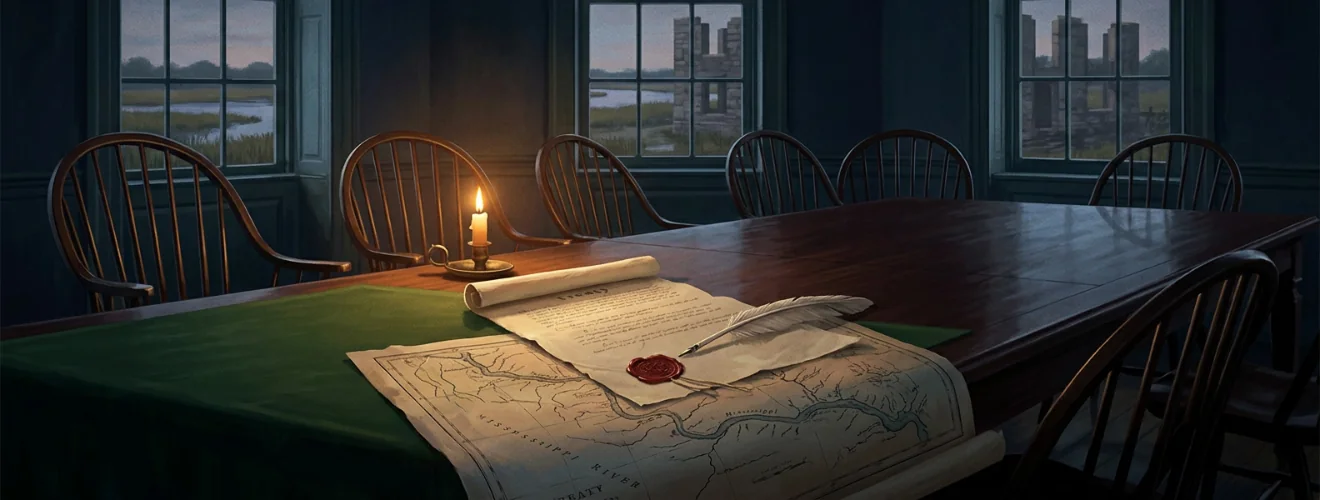
Congress was not supposed to be in Washington yet. Jefferson had called it into session on October 17, 1803, three weeks ahead of the date fixed by law, and the reason lay on the Senate’s table in the north wing of an unfinished Capitol: a treaty with France, dated at Paris on April 30, 1803, ceding Louisiana to the United States. The Senate had sat in the city for not quite three years. Washington was the newest of the cities that have served as the U.S. capital, and its one finished wing held the Senate and the Supreme Court together. Jefferson’s message pledged him to ratify if the Senate advised it, and Senator William Plumer of New Hampshire noted sourly that the President “takes it for granted that the Senate will sanction them.” On October 20 it did.
The strange part is that Jefferson agreed with much of what the seven were about to say. In August he had written to John Breckinridge that “the constitution has made no provision for our holding foreign territory, still less for incorporating foreign nations into our union,” and in September he told Wilson Cary Nicholas he would rather ask the nation for more power than “make it a blank paper by construction.” He drafted an amendment, showed it to his cabinet, and put it away. It makes an odd line in the record of every U.S. president: one of them sent the Senate a treaty he privately believed the Constitution did not cover, and asked that the difficulty get as little debate as possible.
Every vote against came from New England or Delaware, four of the thirteen original colonies, and the seven men who cast them are listed below in delegation order from north to south. They did not agree with one another. John Breckinridge told the Senate on November 3 that “no two of them can agree on the same set of objections”: one thought the price enormous, one doubted France’s title, and one, Uriah Tracy, had no objection to the price and thought the title good. In one thing only, he said, did they seem to agree, and that was to vote against the bill. He meant the bill that paid for Louisiana, which only five of the seven opposed; Olcott and Plumer voted for it. On the treaty itself all seven had said no, and that is the only thing this list requires.
Seven senators voted against the Louisiana Purchase: Simeon Olcott and William Plumer of New Hampshire, Timothy Pickering of Massachusetts, James Hillhouse and Uriah Tracy of Connecticut, and William Hill Wells and Samuel White of Delaware. All were Federalists. The Senate consented to the treaty and its two conventions on October 20, 1803, by 24 votes to 7.
Simeon Olcott
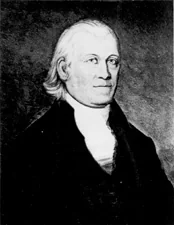
Sixty-eight years old on the day of the vote, Simeon Olcott was the oldest of the seven by nearly 10 years. He had come to the Senate late and sideways. Born in Bolton, Connecticut, on October 1, 1735, a Yale graduate of 1761, he made his name on the New Hampshire bench, ending as chief justice of the Superior Court from 1795 to 1801. That year the legislature sent him to fill the seat Samuel Livermore had resigned, and he served from June 17, 1801 until March 3, 1805.
His Louisiana votes are the interesting part. He said no to the treaty on October 20, no on October 26 to letting the President take possession, and no on February 18, 1804 to giving the territory a government. In between, on November 3, 1803, he voted yes to the $11,250,000 in stock that actually paid for it, leaving five of the original seven opposed. Plumer, who did the same, explained himself at length in his diary. Olcott, so far as the record shows, explained nothing.
He was still keeping Federalist company a year on. In November 1804 he went with Pickering and Hillhouse on what Plumer called “a visit of ceremony” to General Turreau, Napoleon’s new minister, whom Plumer sized up as “48 years of age middle sized – top of his head bald” and four weeks into learning English. Olcott retired when his term ran out and died at Charlestown, New Hampshire, on February 22, 1815, at 79.
William Plumer
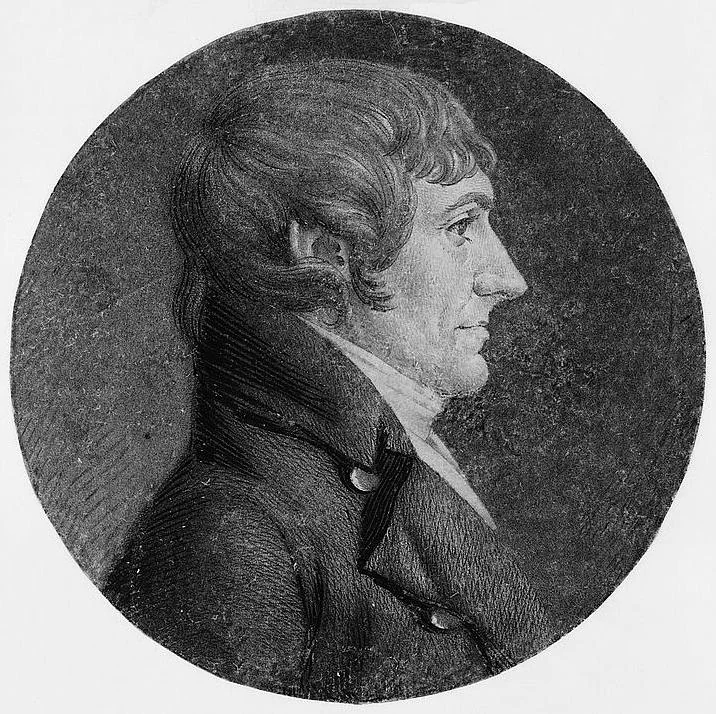
The reason anyone can say what happened in the room that day is that William Plumer wrote it down. From October 17, 1803 until March 1807 he kept “an almost daily record of sessions in the Senate.” It went largely unprinted until Everett Somerville Brown’s edition of 1923. His October 20 entry records the count: “Thirty one senators were present,” and “the seven federal senators against it.”
Bonaparte, he wrote, “has sold his claim to a Country that he never possessed.” The Senate had “taken less time to deliberate on this important treaty, than they allowed themselves on the most trivial Indian contract.” Yet on November 3 he voted to issue the $11,250,000 of stock. A ratified treaty bound the government: “Perish the eleven millions of stock; but preserve the faith of the nation.”
The diary is not the strangest thing he did. He drifted from the Federalists. He was elected governor of New Hampshire as a Jeffersonian Republican for 1812 to 1813 and 1816 to 1819, and in 1820, as an elector, he cast the one electoral vote in the country against James Monroe, for John Quincy Adams. That he did it to keep Washington the only unanimous president is a legend; his editor says it was “not, as has so often been stated, to protect Washington’s fame,” but to promote Adams and protest Monroe’s “wasteful extravagance.” His son was blunter: he “thought Mr. Monroe’s capacity by no means equal to the place.”
Timothy Pickering
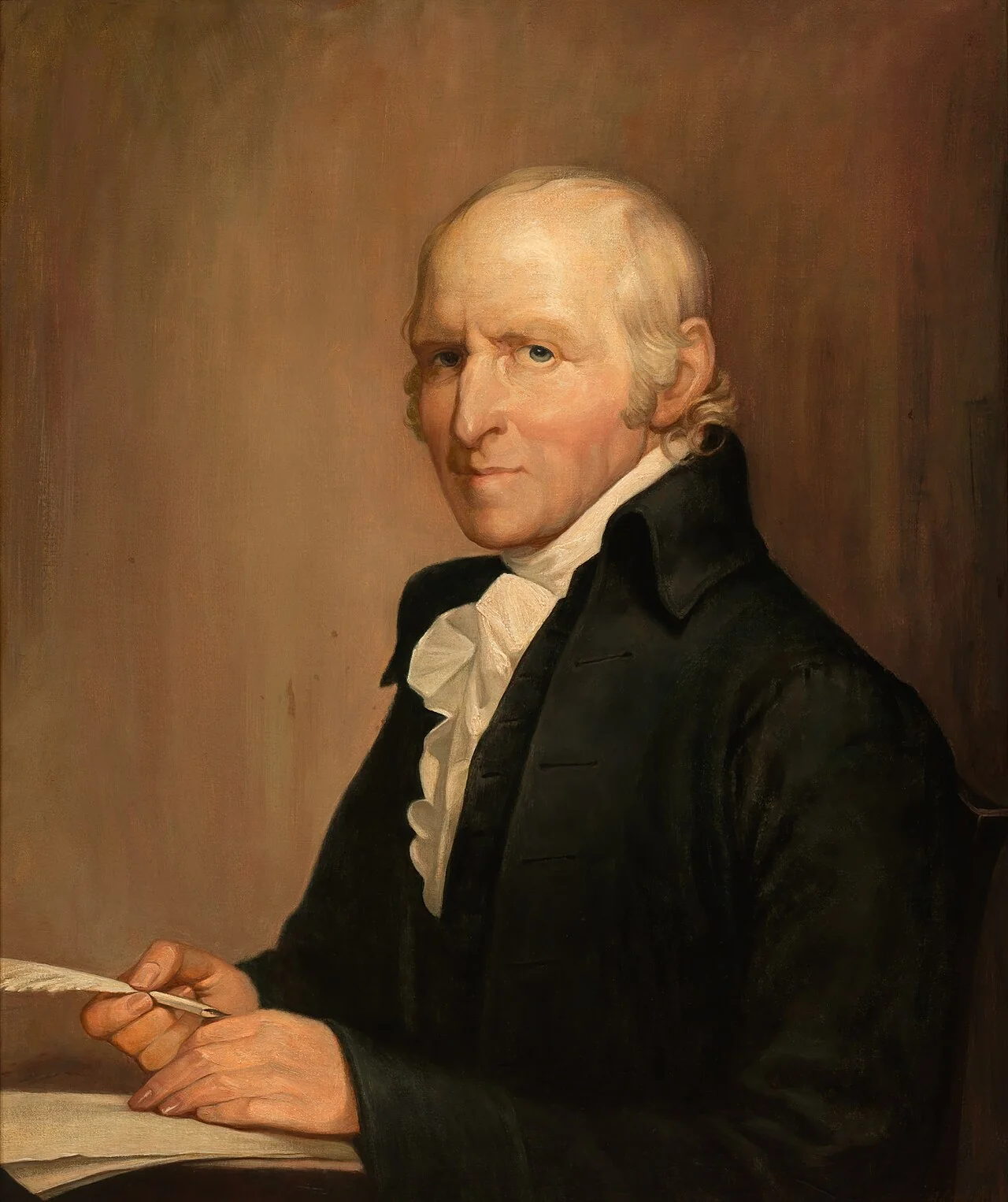
Of the objections to the Louisiana Purchase, Timothy Pickering’s was a matter of title: the United States, he argued, had bought a bad one. Not that the treaty overstepped the Constitution, though he thought that too. France, he said, had acquired no title from Spain, so it had none to sell. He opposed the treaty, the taking of possession and the $11,250,000 alike, one of three men to vote against all three, and in January 1804, debating a delegate to Congress for the territory, he put the Federalist position in a sentence: “That is a purchased province, & as such we must govern it.”
He had arrived in 1803 with a record like a cabinet list: Postmaster General from 1791 to 1795, Secretary of War in 1795, Secretary of State from 1795 until John Adams dismissed him in May 1800 for working against a settlement with France.
What the Senate remembers came later. On December 31, 1810, attacking Madison’s seizure of West Florida, he read aloud a confidential Talleyrand letter still under an injunction of secrecy. Samuel Smith of Maryland asked whether it had ever been made public. It had not. Henry Clay introduced a resolution the same day, and on January 2, 1811 the Senate passed it, 20 to 7, calling the reading “a palpable violation of the rules of this body.” Pickering was the first senator the Senate ever censured. He lost his seat that year and died in Salem, his birthplace, on January 29, 1829.
James Hillhouse
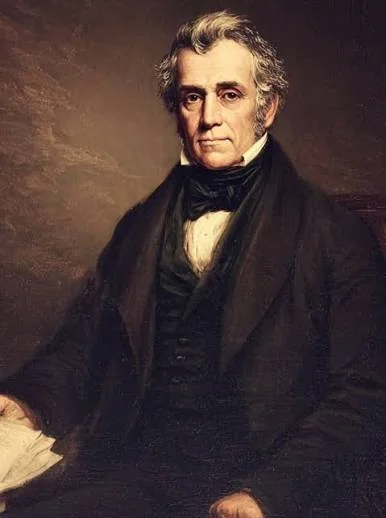
James Hillhouse turned 49 the day the Senate voted. Born in Montville, Connecticut, on October 20, 1754, he spent his birthday seconding a motion, which the majority refused, to see the papers behind the treaty, then voting no on it. He voted no again on possession and on the stock, and on February 18, 1804 on the bill that gave the territory its government.
That last vote is the odd one. The bill carried his handiwork. On January 26, 1804 the Senate adopted, 21 to 6, an amendment making it unlawful to bring slaves into the territory “from any port or place without the limits of the United States.” The Annals name no author; Plumer’s diary does: “This amendment was presented by Mr. Hillhouse.” His attempt to cap servitude there failed, 11 to 17, but the import ban survived as Section 10 of the act, with a $300 fine for every slave and freedom for anyone brought in unlawfully, covering the Territory of Orleans south of the 33rd parallel. Jefferson, one of the presidents who owned slaves while in office, approved it on March 26, 1804.
New Haven remembers other things. He was treasurer of Yale for 50 years, from 1782 to 1832, sat at the Hartford Convention in 1814, and lined a street with elms from his own land, which helped make New Haven the City of Elms, the nickname Charles Dickens noticed in 1842. He died there on December 29, 1832, at 78.
Uriah Tracy
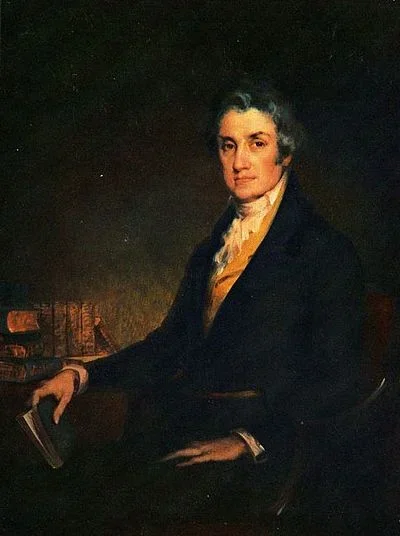
Arithmetic was the objection the majority could least afford to answer, and it belonged to Uriah Tracy. The Union, he argued on November 3, 1803, was a partnership, and Congress had “no power to admit new foreign States into the Union, without the consent of the old partners.” Two-thirds of the members were needed for the least alteration in the Constitution, yet a bare majority proposed to admit foreign states and “swallow up, by it, the old partners.” Then he said what the others only implied: “the relative strength which this admission gives to a Southern and Western interest, is contradictory to the principles of our original Union.” Connecticut was going to be outvoted. He knew it.
He was Yale class of 1778, Litchfield Law School, the bar in 1781. He had entered the Senate in 1796 to fill the seat Jonathan Trumbull resigned, served as president pro tempore, and in December 1803 chaired the committee that wrote the rules for the impeachment trial of Judge John Pickering. Treaty, possession, money: he voted no on all of them, one of the three who never wavered.
Tracy died in Washington on July 19, 1807, still a senator, and was buried in the new Washington Parish Burial Ground, about three months after the stonecutter William Swinton became its first occupant. He was the first member of Congress laid there, and the ground came to be called Congressional Cemetery.
William Hill Wells
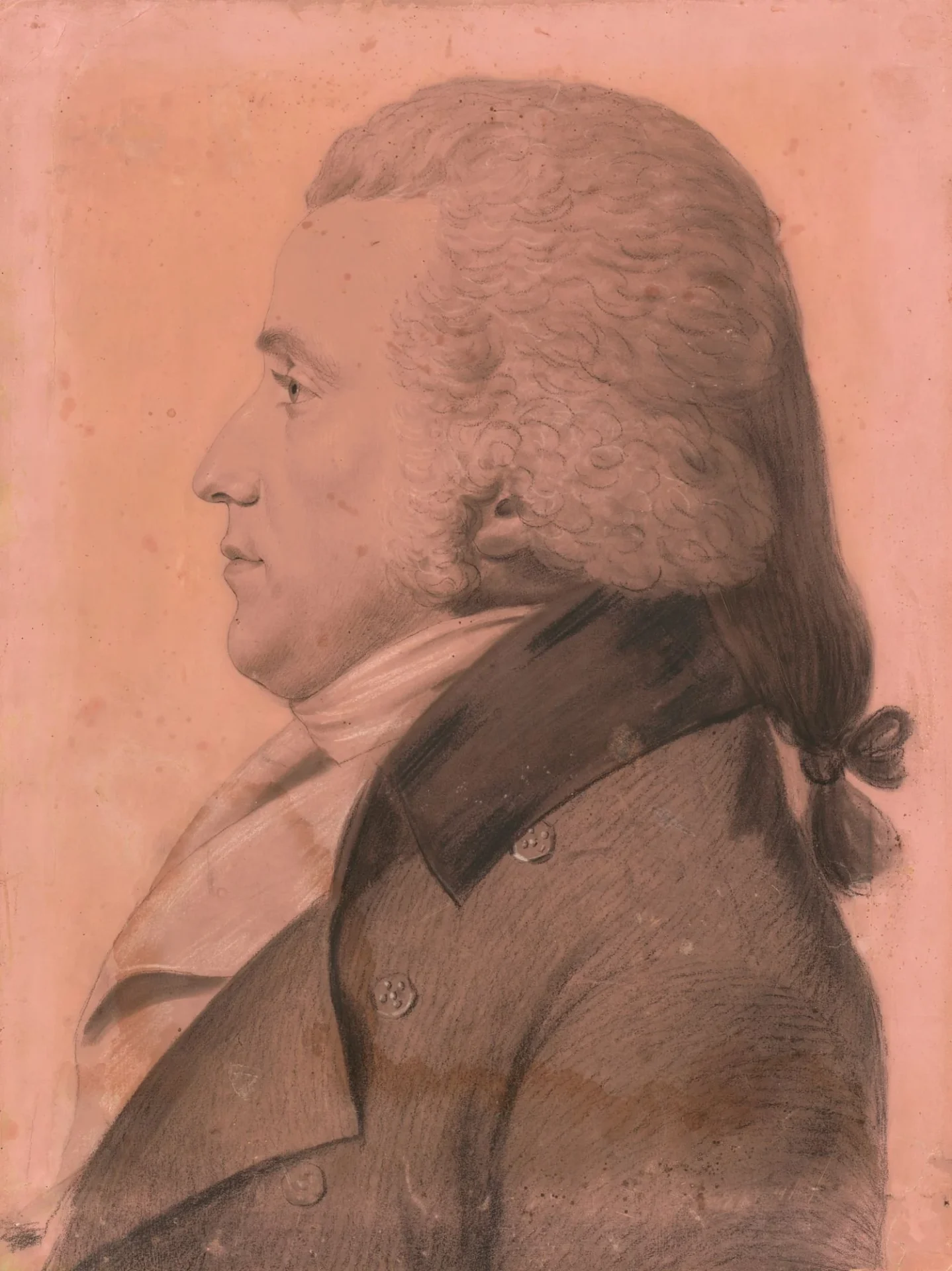
The treaty was on its third reading when William Hill Wells stood up and asked to see the paperwork. On October 20, 1803 he moved, and Hillhouse seconded, a resolution asking the President for the journal the American ministers had kept at Paris and for “the papers containing the title that France had acquired to Louisiana.” The majority voted it down. Plumer recorded it “affirming, with unblushing front, that the information was unnecessary.”
That request explains a record that looks inconsistent and is not. On October 26 Wells voted yes to taking possession. On November 3 he voted no to the $11,250,000 that paid for it, having “always held to the opinion that, when a treaty was duly made under the constituted authorities of the United States, Congress was bound to pass the laws necessary to carry it into effect,” but there were papers in the Senate’s archives “to justify an apprehension that the French Government was not invested with the capacity to convey this property to us.” He would hold the money until France proved title and possession; possession, as Robert Wright of Maryland quoted him, might mean only “the delivery of a twig and turf, or the knocker of a door.” Wright answered from the treaty: Louisiana, New Orleans, forts and arsenals.
Wells was 34, born in Burlington, New Jersey, on January 7, 1769. He resigned on November 6, 1804, returned in 1813 to finish James A. Bayard’s term, and died near Dagsboro, Delaware, on March 11, 1829.
Samuel White
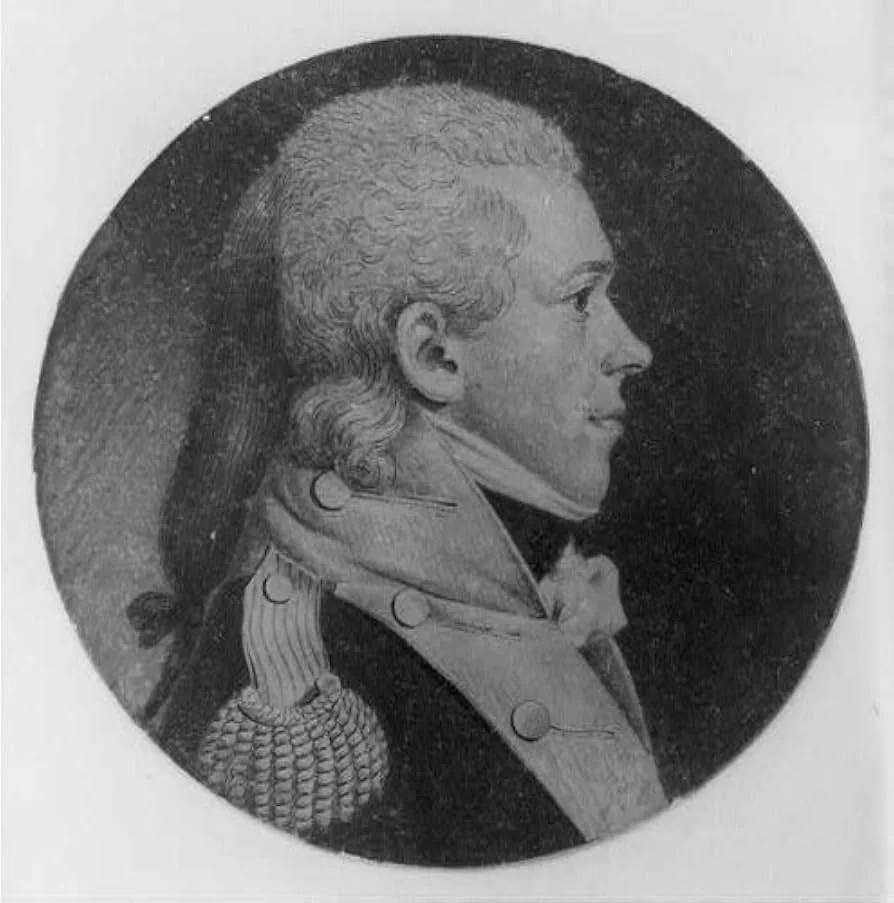
Samuel White wanted New Orleans and nothing else. “Possession of it we must have,” he told the Senate on November 2, 1803, “I mean of New Orleans.” The rest was the problem: “But as to Louisiana, this new, immense, unbounded world, if it should ever be incorporated into this Union,” he went on, “I believe it will be the greatest curse that could at present befall us.” He would rather “see it given to France, to Spain, or to any other nation of the earth” than “see the territory sold for a hundred millions of dollars, and we retain the sovereignty.”
His votes look odd and are not. He and Wells, the Delaware pair, voted yes on October 26 to taking possession and no on November 3 to paying the $11,250,000. Six months earlier, White argued, the United States could have taken New Orleans by force “with one-sixth of fifteen millions of dollars.” Spain, he added, “considers herself injured by this treaty.” That was the Federalist way of saying France had sold a house it did not own. Citizens carried “two or three thousand miles from the capital of the Union” would find “their affections will become alienated.”
White was the youngest of the seven, 32, born in Kent County, Delaware, in December 1770. He died in office in Wilmington on November 4, 1809. James Jackson of Georgia answered that within a century the settlers would turn a “wilderness” into a “seat of science and civilization.” Jackson was closer.
Frequently Asked Questions
Did John Quincy Adams vote against the Louisiana Purchase?
No. Adams was not yet a senator when the Senate voted on October 20, 1803; he took his seat the next day, writing in his diary, “At eleven this morning I took my seat in the Senate of the United States.” He then voted against taking possession, for the stock bill, and against the territorial government bill in February 1804.
Did any Federalist senator vote for the Louisiana Purchase?
One. Jonathan Dayton of New Jersey was the only Federalist to vote yes, joining the Democratic-Republican majority. Jefferson noticed: writing to Meriwether Lewis on November 16, 1803, he called the ratification votes “precisely party votes, except that General Dayton has separated from his friends on these questions, and voted for the treaties.”
Why did Federalist senators oppose the Louisiana Purchase?
Mainly because they believed Jefferson had acted without constitutional authority; the Senate’s own history says the seven “objected to Jefferson’s exercise of executive authority in the absence of any specific constitutional authorization.” Individual senators added that France held no valid title from Spain, that the price was too high, and that distant settlers would weaken the Union.
How much did the Louisiana Purchase cost?
About $15 million. The first convention set the price at 60 million francs, paid with $11,250,000 in United States stock; the second let the United States assume claims by American citizens against France, capped at 20 million francs, or $3,750,000. For roughly 828,000 square miles, the National Archives puts that at about 4 cents an acre.
Which senators did not vote on the Louisiana treaty?
Three of the Senate’s 34 members were not there. John Quincy Adams of Massachusetts was sworn in on October 21, John Smith of Ohio on October 25, and Thomas Sumter of South Carolina was not in attendance. By Plumer’s count 31 senators were present on October 20, and every one of them voted.
When did the United States actually take possession of Louisiana?
On December 20, 1803, at New Orleans, when lower Louisiana was formally handed over at the Cabildo. Spain had transferred the colony to France only on November 30, 1803, and the ratifications of the treaty had been exchanged on October 21, the day after the Senate’s vote, by James Madison and the French envoy Louis-Andre Pichon.
- Library of Congress, Louisiana Purchase: A Legislative Timeline, 1803-1804 (citing the Senate Executive Journal)
- Annals of Congress, 8th Congress, 1st Session, in Benton’s Abridgment of the Debates of Congress, vol. 3
- U.S. Senate, Senate Approves Louisiana Purchase Treaty
- National Archives, Louisiana Purchase Treaty (Milestone Documents)
- William Plumer’s Memorandum of Proceedings in the United States Senate, 1803-1807, ed. Everett Somerville Brown (1923)
- Founders Online, Thomas Jefferson papers (National Archives)
- Biographical Directory of the United States Congress, 1774-2005 (GPO)
- History, Art & Archives, U.S. House of Representatives: Timothy Pickering