Every Triple Crown Winner in Horse Racing History
Real Quiet was four lengths clear at the eighth pole of the 1998 Belmont Stakes, one furlong from the Triple Crown, and lost it by a nose to Victory Gallop. He had a great deal of company. In the years after Affirmed and before American Pharoah, thirteen horses won the Kentucky Derby and the Preakness; twelve of them went on to New York and lost the Belmont, and the thirteenth, I’ll Have Another, never got the chance, scratched with a tendon injury the day before the 2012 race. One of the twelve, Spectacular Bid, had stepped on a safety pin the morning of his. The roll of Triple Crown winners works like baseball’s record of every perfect game in MLB history: it keeps only the days when nothing went wrong.
After Justify the three races began to drift apart. Sovereignty won the 2025 Kentucky Derby, skipped the Preakness and won the Belmont; Golden Tempo did precisely the same in 2026, a year in which not one horse in the Preakness field had run in the Derby at all. Winning two of the three is a fine thing to have done. For the purposes of this list it counts for nothing whatsoever.
Churchill Downs counts 152 Kentucky Derby winners through 2026, and the few that went on to win all three make a small and oddly clannish club. Two stables, Belair Stud and Calumet Farm, supplied two members apiece, every one of them a horse its owner had bred. What follows is the whole membership, in the order they got in, from a colt entered in 1919 as a pacemaker for his stablemate to one that had never raced at two.
Thirteen horses have won the American Triple Crown – the Kentucky Derby, Preakness Stakes and Belmont Stakes in the same year – as of the 2026 Belmont Stakes on June 6, 2026. Sir Barton was the first, in 1919, and Justify the thirteenth, in 2018. The order, tracks and distances of the races have varied; the requirement has not.
Sir Barton
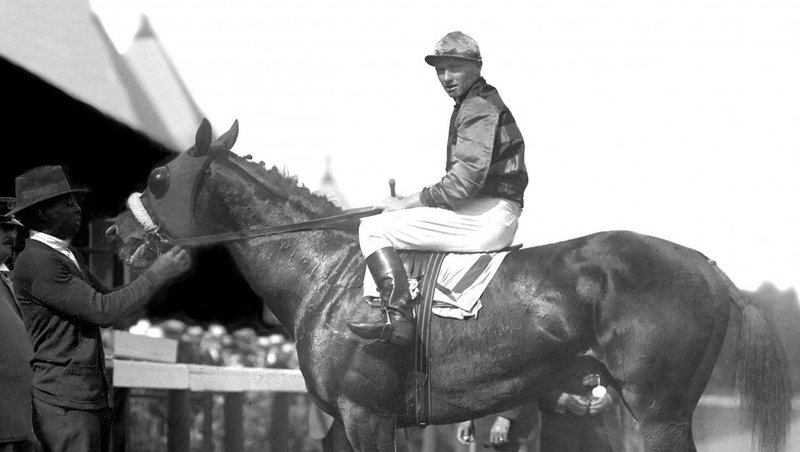
The first Triple Crown winner was sent out in the first race as a decoy. Sir Barton came to the 1919 Kentucky Derby a maiden, winless in six starts, and his owner, the Canadian businessman J.K.L. Ross, entered him as a rabbit, a pacemaker meant to run the field ragged for his stablemate Billy Kelly. Earl Sande, given the choice, took Billy Kelly. Johnny Loftus got the rabbit. Sir Barton led all the way and won by five lengths, and no other horse on this list was winless on Derby day.
He was also hard to like. One old newspaper account called him a sore-footed old grouch who did not like other horses or people, and his hooves were so soft and shelly that trainer H. Guy Bedwell had a blacksmith slip piano felt between shoe and hoof. In the Belmont he faced only two rivals and won by five lengths in 2:17 2/5, an American record for what was then a mile and three-eighths.
The rest of his life went downhill. After a poor stud career he passed through the U.S. Army Remount Service in Nebraska to a Wyoming ranch, where he died of colic in 1937 and was buried by his paddock under a painted slab. In 1968 his bones were moved to a park in Douglas, Wyoming, beneath a statue, where, by a Casper newspaper’s account, an anonymous admirer once hung wreaths of roses on Derby day, Black-Eyed Susans on Preakness day and carnations on Belmont day.
Gallant Fox
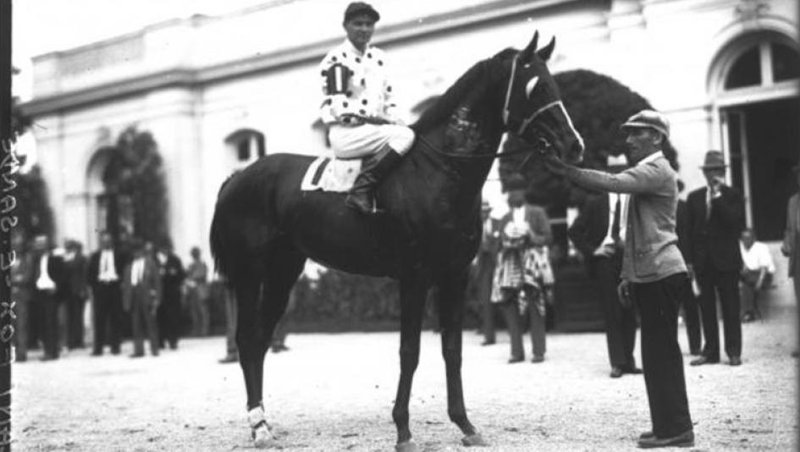
Earl Sande had already retired by the time Gallant Fox needed a jockey. The man who picked the wrong horse in Sir Barton’s Derby came back for the 1930 season, rode the Fox for trainer Sunny Jim Fitzsimmons and William Woodward’s Belair Stud, won his third Kentucky Derby on him and then retired all over again, this time to become a trainer.
They took the Preakness first that spring and the Derby after it, an order that still catches out anyone who assumes the Kentucky race always leads off. The Belmont drew a field of four, began with a false start for which Gallant Fox himself was responsible, and ended with him three lengths clear of Whichone in the rain. It paid $66,040, the richest Belmont purse to that point, and by the time he was retired no horse had ever earned more.
He lost once that year, and memorably. In the Travers at Saratoga in August he went off at 1-2 and was beaten on a muddy track by a 100-1 shot called Jim Dandy, in front of a crowd that included the governor of New York, Franklin D. Roosevelt. Saratoga has since made a race called the Jim Dandy its stepping-stone to the Travers, which is one way of making sure nobody forgets.
Omaha
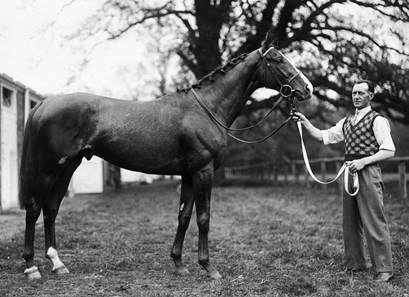
Omaha is the only horse on this list whose sire is also on it, and for most of 1935 hardly anyone treated him like royalty. He went into the Kentucky Derby as the second choice, behind a filly, Calumet Farm’s Nellie Flag, who was ridden by Eddie Arcaro and finished fourth. Omaha, under the 20-year-old Willie Saunders, won by a length and a half.
Between the Preakness and the Belmont he lost the Withers as the 1-2 favorite, then won the Belmont in the slop by a length and a half over Firethorn. Two weeks later he finished a distant third to Discovery, and Discovery, not Omaha, was Horse of the Year. A shoulder injury ended his American season, so in 1936 his owner, William Woodward, sent him to England, where he was beaten in the two-and-a-half-mile Ascot Gold Cup by another filly, Quashed – by a nose or a head, depending on whose account you trust.
At stud he was a disappointment, with seven stakes winners from 206 foals, and in 1950 he was shipped to Nebraska. When he died he was buried whole at the Ak-Sar-Ben racetrack in Omaha, rather than the customary head, heart and hooves. A clubhouse was later built over the general area, the track closed, and the Omaha World-Herald reports that his remains have never been found. Woodward had named him after the city, which has since mislaid him.
War Admiral
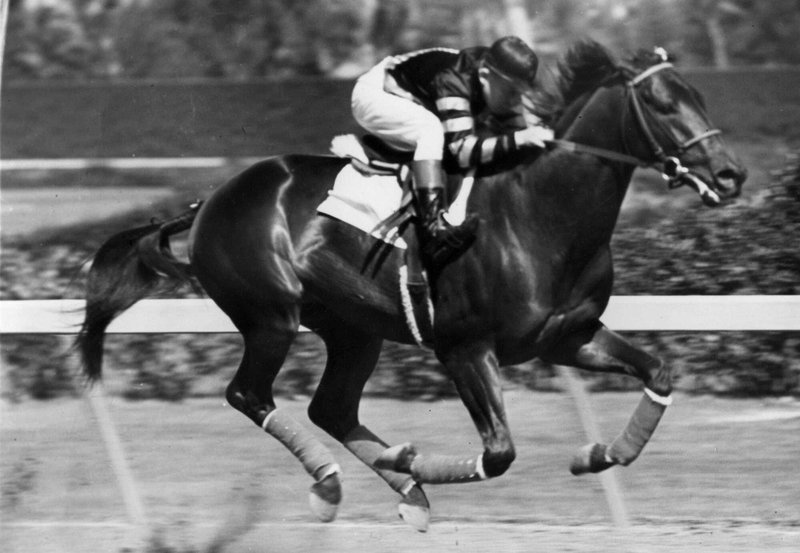
Samuel Riddle owned Man o’ War, which ought to have made him a sound judge of Man o’ War’s sons, and he tried to pass this one on to his nephew by marriage, Walter Jeffords. The colt was small and dark, nicknamed the Mighty Atom, and looked nothing like his big chestnut father; the Hall of Fame puts him at 15.3 hands fully grown, NYRA at 15.2. Jeffords declined.
Riddle had kept Man o’ War out of the Kentucky Derby, thinking a mile and a quarter in early May too much for a young horse, and the Hall of Fame says it was never known why he let War Admiral run in it. War Admiral won it, then the Preakness by a head, then a Belmont that nearly did not start. He held it up for about eight minutes, stumbled when it opened, sliced a chunk out of his right forefoot and ran the mile and a half bleeding. He won by three lengths in 2:28 3/5, a track record.
He was unbeaten in eight starts that year and Horse of the Year, but the race people remember is one he lost: the 1938 Pimlico Special, a match against Seabiscuit, Man o’ War’s grandson, who beat him by four lengths. When he died in 1959 he was buried beside Man o’ War, and the graves were later moved to the Kentucky Horse Park, so War Admiral, the colt Riddle tried to pass on, lies next to his father after all.
Whirlaway

In the 1940 Saratoga Special a two-year-old Whirlaway nearly fell at the start, was last of eight at the far turn, went straight on instead of turning, ran into the outer rail and still won. That was the whole problem in miniature. Ben Jones, who trained him, called him the dumbest horse he ever trained, and his favorite trick was veering toward the outside fence.
Jones’s cure, before the 1941 Kentucky Derby, was a blinker cut down so that only the cup over the right eye remained. To test it he sat on a stable pony ten feet from the rail at the head of the stretch and told Eddie Arcaro to steer the colt through the gap. It worked. Whirlaway won the Derby by eight lengths, tying the record margin, in 2:01 2/5, a time that stood as the race record for 21 years.
Only three rivals turned up for the Belmont, and when they dawdled Arcaro, by BloodHorse’s account, told the other riders he was leaving, and left. Calumet Farm’s owner, Warren Wright, followed it on the radio in Denver at his son’s college graduation. Whirlaway, called Mr. Longtail for the tail that streamed behind him, died at stud in France in 1953 and came home in the end to the cemetery at Calumet Farm, a long way round for a horse who never could go straight.
Count Fleet
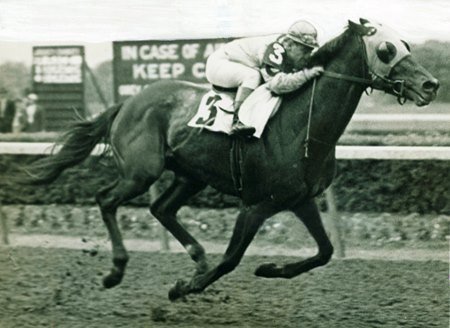
As a two-year-old Count Fleet was so unruly that he was put up for sale at $4,500, and nobody would pay it. His owner of record was Fannie Hertz, wife of John D. Hertz, the businessman who bought a rental-car company in 1923 and put his own name on it, and Hertz warned the jockey Johnny Longden that the colt would one day do him serious injury. Longden said he was not afraid, and the colt stayed.
Nobody wanted much to do with him in 1943 either. He won the Derby, beat three rivals in the Preakness by eight lengths, and then took on two more in the Belmont. The betting was so lopsided that the race produced a minus pool: so much was bet on Count Fleet that the legal minimum payout came to more than the money wagered, and the track covered the gap of $15,912. He won by 25 lengths, the Hall of Fame’s figure and a Belmont record until Secretariat. On the same card Whirlaway, due to make his 1943 debut, was scratched with a tummyache.
Count Fleet was hurt in that Belmont and never raced again. He did rather better at stud. In 1951 his son Count Turf won the Kentucky Derby, another son, Counterpoint, won the Belmont, and he was the leading sire in America; Lloyd’s of London insured him for a record $550,000. His daughters went on to produce 119 stakes winners, among them Kelso, five times Horse of the Year.
Assault
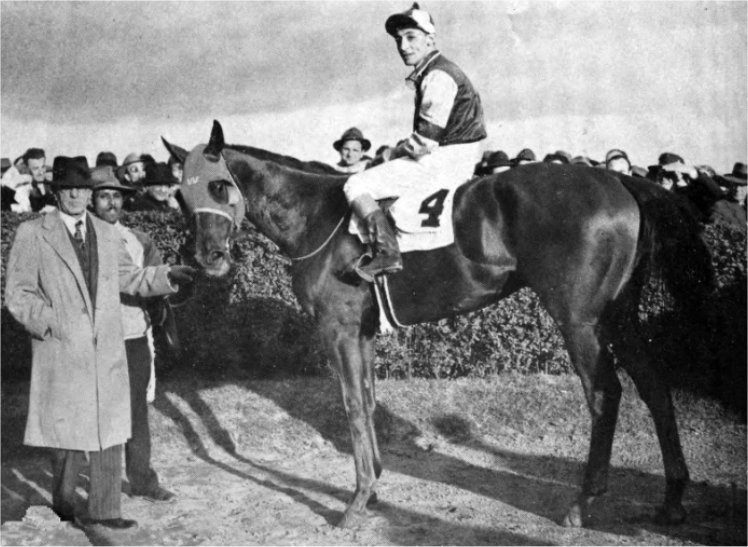
Assault walked like a lame horse and galloped like a sound one, which is how a Triple Crown winner came to be called the Club-Footed Comet. As a weanling on the King Ranch in Texas he stepped on something sharp that went through his right front hoof: a surveyor’s stake by Churchill Downs’ account, a nail or a sharp stick by the Hall of Fame’s. He is the only Texas-bred horse on this list.
Four days before the 1946 Kentucky Derby he finished a dull fourth in the Derby Trial. He then won the Derby itself by eight lengths at 8-1, prompting the writer Walter Haight to observe that Assault was his name but he looked like Murder, Inc. In the Belmont he stumbled leaving the gate, trailed by eight lengths going into the second turn and won by three.
He was delicate for a champion, troubled by his kidneys and by bleeding, and in 1947 he broke Whirlaway’s career earnings record with a win in the Brooklyn Handicap. Then he went to stud at the King Ranch and turned out to be sterile, never siring a registered foal. So the King Ranch sent him back to the races, and in 1949 he won the Brooklyn Handicap again. He died on the ranch in 1971, having been, in every sense that mattered to a breeder, a one-off.
Citation
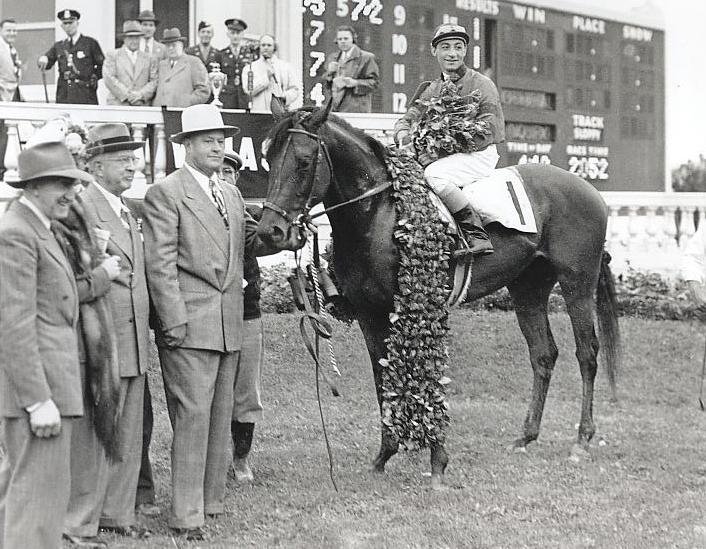
Depending on which race you ask about, Citation had two trainers. The Kentucky Derby’s record names Ben Jones, under whose name the colt ran so that Ben could tie Derby Dick Thompson’s record of four Derby winners; the Preakness and Belmont charts name his son, H.A. “Jimmy” Jones, the colt’s regular trainer.
He had also lost his jockey. Al Snider, who had ridden him to nine of his first twelve wins, went fishing off the Florida Keys in March 1948 and never came back; he was presumed drowned, his body was never recovered, and his damaged skiff turned up eight days later. Eddie Arcaro, a friend, took the mount, won the Derby by 3 1/2 lengths over Calumet Farm’s other entry, Coaltown, and gave Snider’s widow a share of the purse.
The Derby came early in a run of 16 straight wins that stretched into January 1950. In the 1948 Pimlico Special nobody would take him on, so Arcaro rode him around the track alone, a walkover that Calumet’s Whirlaway had also made in the same race in 1942. After a year lost to injury Calumet kept him racing so that he could become the first horse to earn $1 million, which owner Warren Wright very much wanted, and on July 14, 1951 he got there in the Hollywood Gold Cup. Wright had died the previous December and never saw it.
Secretariat
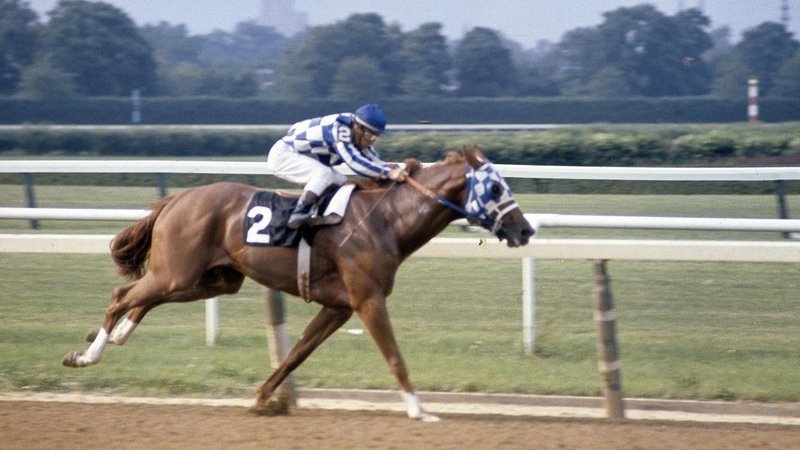
Penny Chenery lost the coin toss, which is how she got Secretariat. Under a foal-sharing deal with the Phipps family, a coin toss in the fall of 1969 gave the winner first pick of that year’s foals and left the loser the second pick plus the foal of 1970. Ogden Phipps called tails, won, and chose a weanling filly called The Bride, who never won a race. Chenery’s consolation prize was Somethingroyal’s unborn colt.
The colt ran the 1973 Kentucky Derby in 1:59 2/5, the first Derby under two minutes, and ran each of his five quarter-miles faster than the one before. He took the Preakness too, though his official time there, 1:53, was settled only in 2012, after a timer malfunction and a vote of the Maryland Racing Commission. Then came the Belmont, against four rivals, which he won by 31 lengths in 2:24, a world record for a mile and a half on dirt. His trainer was Lucien Laurin and his jockey Ron Turcotte, who rode him in 18 of his 21 starts.
Through 2026 no other winner of a mile-and-a-half Belmont had bettered 2:26 flat, the time of Easy Goer in 1989 and A.P. Indy in 1992, exactly two seconds slower. Easy Goer was bred and owned by Ogden Phipps, the man who won the coin toss.
Seattle Slew
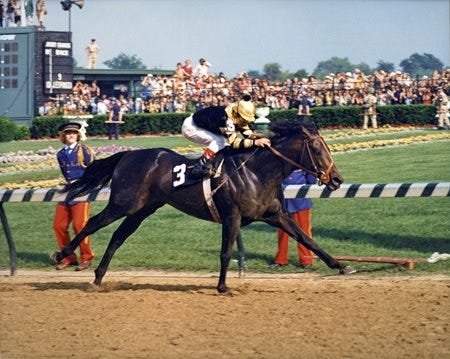
For $17,500, at a Fasig-Tipton yearling sale in Kentucky in July 1975, Seattle Slew changed hands, and Churchill Downs counts him as the first Triple Crown winner sold at public auction. He very nearly was not sold to the people who raced him. They had come shopping in a lower price range, by BloodHorse’s account, and when the bidding passed their limit Karen Taylor kept her husband Mickey going with an elbow in the ribs.
The official owner of record was Karen Taylor alone, a former flight attendant who said that spring that she lived in a mobile home and drove a pickup truck, but had a hell of a horse. She did. Slew won the Kentucky Derby, the Preakness and then the Belmont, where jockey Jean Cruguet stood up in the saddle and waved before the wire, and he finished the series nine for nine, the first horse to sweep the Triple Crown undefeated.
It lasted three more weeks. His owners overruled trainer Billy Turner and shipped him to Hollywood Park for the Swaps Stakes, where he went off at 1-5 and finished fourth, 16 lengths behind J.O. Tobin. It was the first defeat of his career, and Turner was replaced as his trainer that December. Slew went on to win 14 of his 17 starts. He died on May 7, 2002, the 25th anniversary of his Kentucky Derby win.
Affirmed
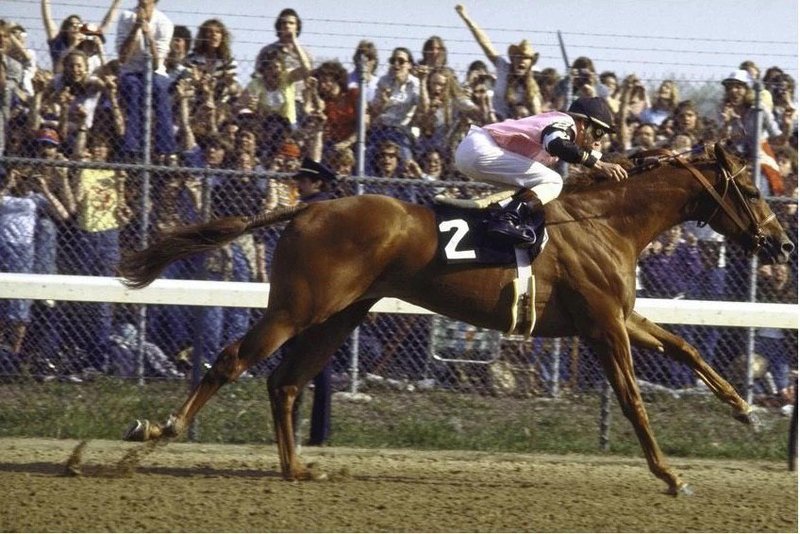
In the 1978 Belmont Stakes Steve Cauthen did something he had never done to Affirmed, and hit him left-handed. Alydar was running so close that Cauthen could not use the whip in his right hand, so in the final furlongs the 18-year-old switched hands, and the official chart records that Affirmed was under left-handed urging to prevail. He won by a head. Cauthen stood up past the wire waving the whip, in his left hand.
It was the third time that spring that Alydar had finished second to him: by 1 1/2 lengths in the Kentucky Derby, by a neck in the Preakness, and by a head in the Belmont. The two met ten times over 1977 and 1978, and Affirmed won seven. One of Alydar’s three came in the 1978 Travers at Saratoga, where Affirmed, under Laffit Pincay Jr. while Cauthen was out hurt, cut Alydar off, crossed the line first and was disqualified to second.
Affirmed’s trainer was Laz Barrera, a native of Havana, and his owners were Louis and Patrice Wolfson’s Harbor View Farm. That autumn he met Seattle Slew twice, in the Marlboro Cup and the Jockey Club Gold Cup, the only meetings between Triple Crown winners, and lost both. He was Horse of the Year anyway, in 1978 and again in 1979. Cauthen’s own verdict on the Belmont was that they had been four inches good enough to win the Triple Crown.
American Pharoah
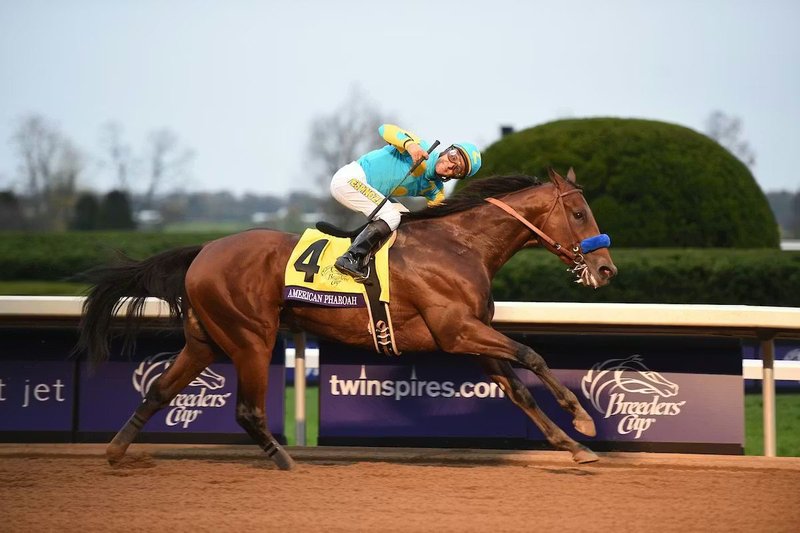
The name is spelled wrong. It should be Pharaoh, and the fan who suggested it in a naming contest run by owner Ahmed Zayat’s stable, Marsha Baumgartner of Barnett, Missouri, says she may have switched the letters herself. Nobody caught it. The Jockey Club approved the name exactly as it was entered, and the misspelling has been official ever since.
Nor was anyone keen on the horse at first. At the 2013 Fasig-Tipton Saratoga yearling sale the bidding stalled at $300,000, and Zayat’s agent bought him back. His debut, at Del Mar in August 2014, was, in trainer Bob Baffert’s phrase, a complete disaster: he finished fifth. Baffert decided the colt was bothered by noise, took off his blinkers and put in earplugs, an investment of about $6.
With Victor Espinoza riding, he won the Kentucky Derby by a length, the Preakness by seven lengths in a downpour, and then went straight to the front in the Belmont and stayed there, winning by 5 1/2 lengths on June 6, 2015, the first Triple Crown since Affirmed’s. He lost the Travers that August to Keen Ice, the horse who had finished third behind him in the Belmont, then won the Breeders’ Cup Classic at Keeneland on Halloween by 6 1/2 lengths. That made him the first horse to win what the sport, never shy of borrowing a name, calls the Grand Slam.
Justify
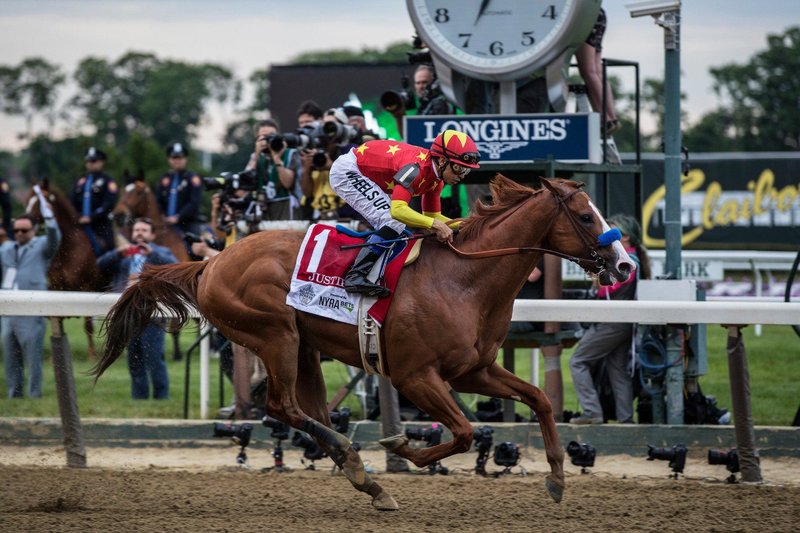
No horse had won the Kentucky Derby without racing at two since Apollo, in 1882, and Justify did not race at all as a two-year-old. Justify ran for the first time on Feb. 18, 2018, at Santa Anita. He was a Triple Crown winner 111 days later, the first one unraced at two, having run only six times, fewer races than any other horse on this list.
The Preakness was run in a white fog so thick that Justify and Good Magic disappeared from view between the quarter pole and mid-stretch, and Bob Baffert, his trainer, saw WinStar’s white silks turn for home and prayed for the wire. He won by half a length. In the Belmont he went wire to wire to beat Gronkowski by 1 3/4 lengths, which made Baffert the second trainer to win the Triple Crown twice and Mike Smith, at 52, the oldest jockey to win it. Justify never raced again; swelling in a left front ankle retired him that July.
He crossed the finish line first in all six of his starts, but the record no longer says so. On March 30, 2024, California stewards disqualified him from the 2018 Santa Anita Derby, his third race, because a post-race sample had contained scopolamine, and the California Horse Racing Board upheld the ruling on Aug. 25, 2025. Churchill Downs declined to revisit his Kentucky Derby, and the Triple Crown stands. So he was never beaten to the wire, and is no longer, officially, unbeaten.
Frequently Asked Questions
Do the Triple Crown races have to be won in order?
No. A horse has only to win all three races in the same year. In 1930 Gallant Fox won the Preakness on May 9, the Kentucky Derby on May 17 and the Belmont on June 7, and in 1919 Sir Barton won the Preakness just four days after his Derby.
Has the Triple Crown schedule ever changed?
Several times. In 2020, during the COVID-19 pandemic, the Belmont went first, on June 20 at 1 1/8 miles, followed by the Derby on September 5 and the Preakness on October 3. The 2024, 2025 and 2026 Belmonts were run at Saratoga over 1 1/4 miles, the Derby’s distance, while Belmont Park was rebuilt.
Was Sir Barton called a Triple Crown winner in 1919?
No. Sir Barton was recognized as a Triple Crown winner only after the fact. The phrase was in American print by 1927, when the Daily Racing Form called him the winner of this American triple crown, and its columnist Charles Hatton popularized it around 1930. Cartier made the first trophy in 1950, and the first eight winners received it retroactively.
Are there Triple Crowns in other countries?
Yes. England’s, the 2,000 Guineas, the Derby and the St Leger, is the original: West Australian won it in 1853, and Nijinsky in 1970 was its latest winner through 2026. Canada runs the King’s Plate, the Prince of Wales and the Breeders’ Stakes, and Japan has its own. None counts here, and neither does New York’s Triple Tiara for fillies.
Has any jockey or trainer won the Triple Crown twice?
Through 2026 Eddie Arcaro was the only jockey to have won it twice, on Whirlaway in 1941 and Citation in 1948, both for Calumet Farm. Two trainers were credited with two: Sunny Jim Fitzsimmons, with Gallant Fox and Omaha, and Bob Baffert, with American Pharoah and Justify. Ben Jones trained Whirlaway and is Citation’s Derby trainer of record.
What is the longest gap between Triple Crown winners?
Thirty-seven years, from Affirmed in 1978 to American Pharoah in 2015, the longest wait through 2026. The next longest was 25 years, from Citation in 1948 to Secretariat in 1973. Between those two droughts came the only Triple Crowns won in consecutive years, by Seattle Slew in 1977 and Affirmed in 1978.
- Churchill Downs: The Triple Crown
- Churchill Downs: Kentucky Derby Past Winners
- California Horse Racing Board: Board Decision on the 2018 Santa Anita Derby (Justify)
- National Museum of Racing Hall of Fame: War Admiral
- NYRA: Triple Crown Winners – War Admiral
- Daily Racing Form: Triple Crown Winners – Gallant Fox
- BloodHorse: Triple Crown Heroes – Whirlaway
- Omaha World-Herald: Triple Crown-winning racehorse Omaha dies in Nebraska (Back in the Day, April 24, 1959)