Every Potion Named in Harry Potter
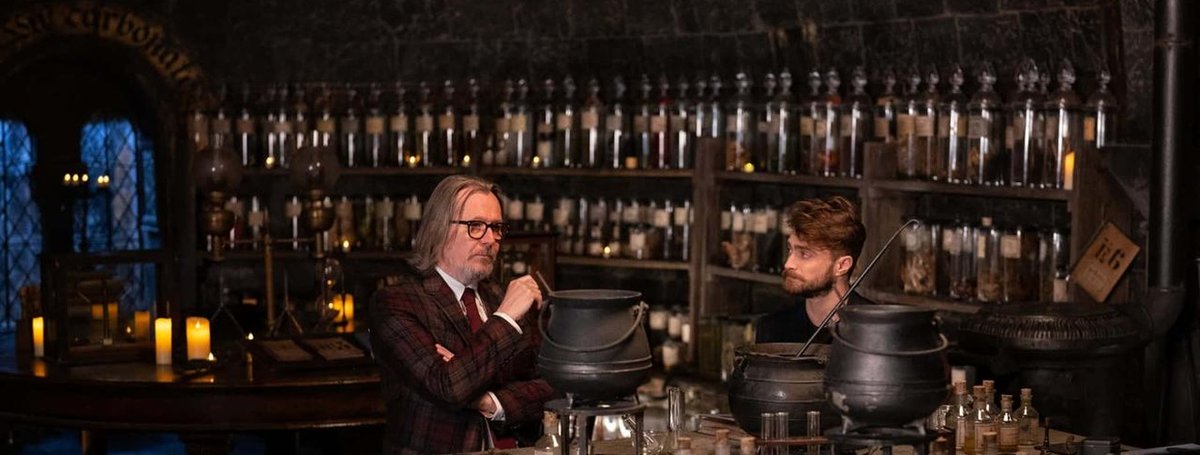
Severus Snape opened Harry Potter’s first Potions lesson by telling a room of first-years that there would be little foolish wand-waving, that many of them would hardly believe this was magic, and that he could teach them how to “bottle fame, brew glory, even stopper death” – provided they were not as big a bunch of dunderheads as he usually had to teach. It was a Friday in the first week of term, and the subject had found its villain before anyone had lit a fire under a cauldron.
The odd thing about potions in the novels is how carefully they are named and how carelessly the most important ones are not. A schoolboy’s prank brew gets a proper noun and a chapter. Dumbledore drinks a basin of emerald liquid to the dregs in a sea cave to reach a locket, one stop on the hunt for every Horcrux Voldemort created, and the books never call that potion anything at all; neither do they name the potion in the graveyard cauldron that gives Voldemort his body back. The names those two go by online were supplied later by fans and by the official website, which files the second under Voldemort’s Resurrection Potion. Rowling has written that a Muggle handed a Potions book and the right ingredients could not brew one, because there is always some wandwork involved; without it, she says, dead flies and asphodel in a pot over a fire give you poisonous soup.
So the test for this list is the plain one the title promises. A potion is here if one of the seven books prints its name and the thing named is a brewed liquid. A name printed once in a mail-order brochure counts exactly as much as one that runs through five books, and the test turns away the pastes, sprays and sweets the books also name, along with the potions invented for the games, the cards and the films. Those get their own answers in the FAQ. The rest is below.
Thirty-one potions are named in the seven Harry Potter novels, counting only a proper name the books print for a brewed liquid. Pastes, sprays, extracts and sweets are left out, and so are names that exist only in the films, video games, trading cards or Pottermore. The earliest is the Draught of Living Death, in Harry’s first lesson.
Amortentia

Horace Slughorn opened the first Potions lesson of Harry’s sixth year with a cauldron whose contents had a mother-of-pearl sheen and gave off steam that rose in spirals, and the class reacted to it in as many ways as there were students. It was Amortentia, and it smells different to everyone who leans over it, according to what attracts them; to Hermione it smelled of parchment and freshly-mown grass, and Rowling has said since that the third scent was Ron’s hair. Slughorn, whom Dumbledore had recruited that summer to rejoin every professor who taught at Hogwarts, called it the most dangerous potion in the room, because it does not make love. It makes an obsessive infatuation. That is a different thing and a worse one.
The books treat it accordingly. Love potions are banned at Hogwarts, a rule that had no visible effect on Romilda Vane, who sent Harry a box of Chocolate Cauldrons laced with one; Ron ate them instead and fell for her until Slughorn mixed an antidote. Further back, Merope Gaunt kept Tom Riddle Sr. under a love potion long enough to marry him, and when she stopped dosing him he left her, pregnant. Whether hers was Amortentia is not stated.
Dumbledore keeps the last word. The locked room in the Department of Mysteries, he tells Harry, holds a force “more wonderful and more terrible than death, than human intelligence, than the forces of nature”. Slughorn’s cauldron was the classroom version.
Polyjuice Potion
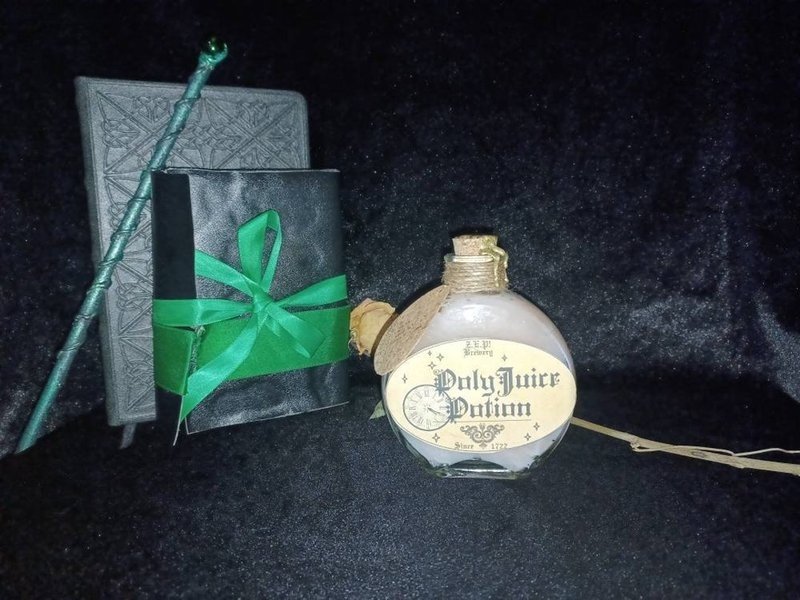
The recipe lives in Moste Potente Potions, in the Restricted Section of the library, and it takes over a month to make: the lacewing flies must stew for 21 days and the fluxweed can only be picked at the full moon. Three second-years brewed it anyway, in a bathroom nobody used because the most put-upon of the Hogwarts ghosts kept flooding it. Before the last ingredient goes in it looks like thick, dark mud; add a hair of the person you mean to become and it froths and changes colour to match them. One dose lasts an hour.
On Christmas Day Crabbe and Goyle were drugged, their hair was stolen, and Harry and Ron walked out of the bathroom wearing their faces. Neither boy knew where the Slytherin common room was. They were rescued by Draco Malfoy, who led the two disguised Gryffindors down to the dungeons himself and into the common room, which is how a Slytherin entry came to sit among every password used in the Harry Potter series. Hermione stayed behind, having come out of her dose with the features of a cat.
The potion never left the series. It is cited across fifteen chapters of five of the seven books, turns up on Harry’s written O.W.L., and in the last book six of his friends drink it to become decoy Harry Potters for the flight from Privet Drive. One Restricted Section recipe, borrowed by a second-year, ends up carrying the war.
Veritaserum
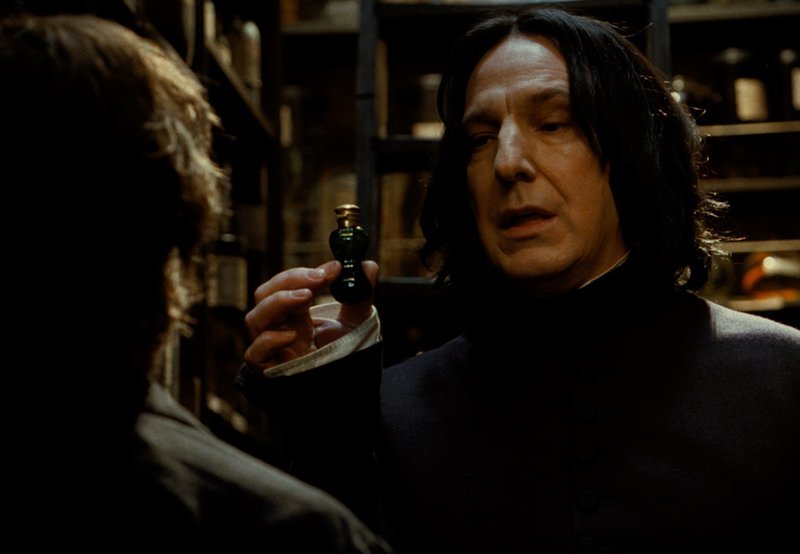
Snape produced a small crystal bottle of a completely clear liquid in a fourth-year lesson and explained that it was Veritaserum, a Truth Potion so powerful that three drops would have Harry spilling his innermost secrets for the entire class to hear. Its use was controlled by very strict Ministry guidelines, he added, and then threatened to put some in Harry’s evening pumpkin juice regardless, because ingredients were going missing from his stores. The thief was in the castle, but it was not Harry.
It was Barty Crouch Jr., and Veritaserum is what undoes him. After the Triwizard maze Dumbledore sends for the strongest Truth Potion Snape possesses, and Crouch, unmasked at last as one of every confirmed Death Eater in Harry Potter, confesses the whole year. The chapter is simply titled Veritaserum. The potion is colourless and odourless and looks like plain water, so Dolores Umbridge felt safe stirring it into Harry’s tea the next year; she did not know that Snape had handed her a fake. When she demanded more, he told her it takes a full moon-cycle to mature, and she put him on probation.
An alert wizard who is good at Potions can keep an antidote handy. That is as close as the books come to explaining why Dumbledore never simply doses Slughorn. Rita Skeeter had no such scruples. She used it on Bathilda Bagshot to research a biography, and boasted about the effort of procuring it in the book.
Wolfsbane Potion
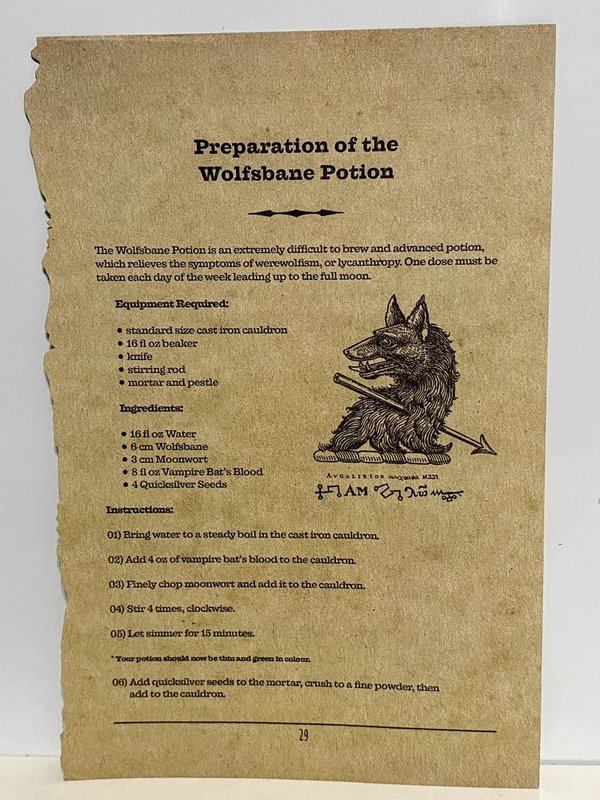
Professor Lupin drank a smoking goblet of something so foul that Harry assumed Snape was poisoning him. Lupin’s version was that Snape had very kindly concocted a potion for him, that he had been feeling a bit off-colour, and that there were not many wizards up to making it. All of that was true. The full moon was the part he left out.
Wolfsbane Potion does not cure lycanthropy. It lets a werewolf keep his human mind through the transformation, and the official site adds that a drinker may take it every day for a week before the moon and that missed doses leave a full transformation possible. It was invented by Damocles Belby, who received an Order of Merlin for it, a detail the books deliver through his nephew Marcus, and that is about all they say of its origin. The potion exists for one reason, the werewolf, which for one year among the magical creatures of the novels held a Hogwarts teaching post.
The arrangement held for most of a year. Snape made it for Lupin every month, and Lupin later said he made it perfectly, so that he did not have to suffer as he usually did. Then came the night in the Shrieking Shack, Sirius Black, Peter Pettigrew and a rising moon, and Lupin transformed. He resigned once the school knew what he was.
Felix Felicis
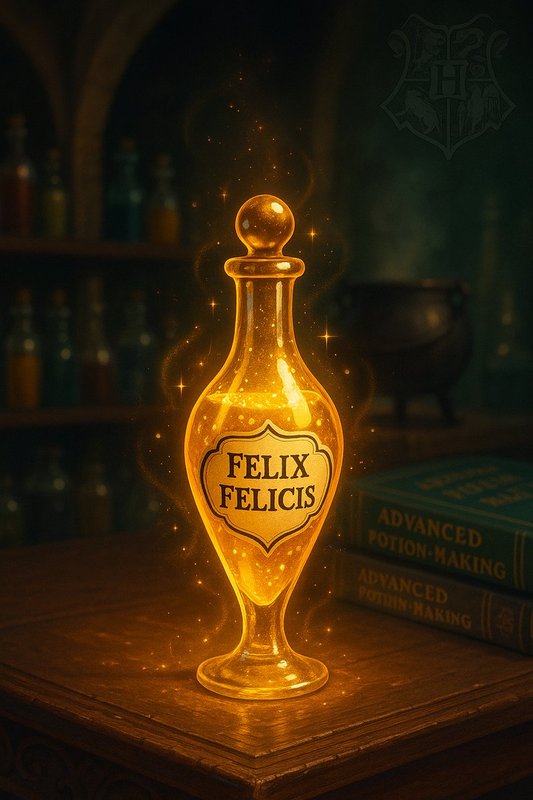
The potion is the colour of molten gold, and when it meets the air large drops leap above the surface like goldfish without a single one spilling. Slughorn held up one miniscule bottle of it as a prize in his first lesson, enough for 12 hours of luck, and told the class it was banned in sporting events, examinations and elections. Hermione’s summary was shorter. It is liquid luck. It makes you lucky.
Taken in excess it produces giddiness, recklessness and dangerous overconfidence, and in large quantities it is highly toxic. The book treats it the same way: one dose, spent carefully. Harry drank a single mouthful on the night Hagrid buried Aragog, and the evening rearranged itself around him. He wandered down to the burial, Slughorn came too, both adults got drunk on mead, and by the end of the night Slughorn had handed over the true memory he had been hiding, one of the memories Harry views in the Pensieve that mattered most to the war.
What was left of the bottle went to Ron, Hermione and Ginny on the night Harry and Dumbledore left the castle for the sea cave, along with the Marauder’s Map. The luck stayed at Hogwarts. Dumbledore did not.
Skele-Gro
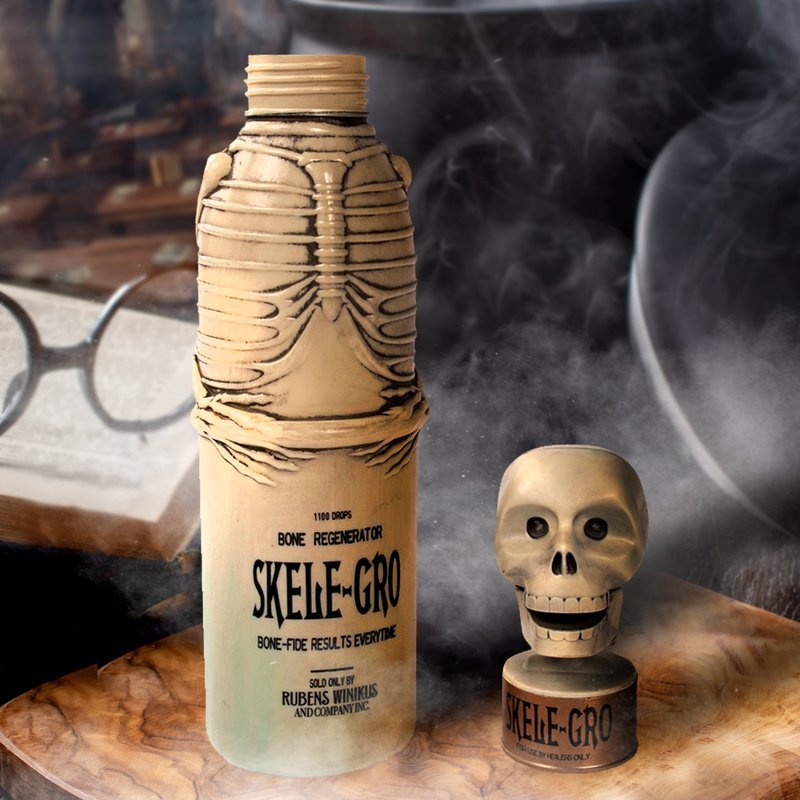
Gilderoy Lockhart tried to mend Harry’s broken arm after a Quidditch match and vanished the bones instead. That is how Harry met Skele-Gro. Madam Pomfrey told him he was in for a rough night, since regrowing bones is a nasty business, and she was not exaggerating. The stuff comes in a large bottle and is dispensed by the steaming beaker-full. It burns the mouth going down, and the regrowth felt like an arm full of large splinters, stabbing, for hours.
The official site describes it as a horrible-tasting healing potion for restoring, mending or regrowing bones, and that is the whole of its job in the books, a narrower brief than most of the roster can claim. It is the potion for after something has gone badly wrong. Draco Malfoy once suggested that Hagrid had drunk too much of it as a child, which was unkind and, as an explanation for Hagrid, wrong.
It returns at the far end of the series in a cottage by the sea. After the escape from Malfoy Manor, Fleur Delacour uses Skele-Gro to heal Griphook’s legs at Shell Cottage, a goblin being patched up with school-nurse medicine in the last chapter of the series to name it. Nobody comments on the taste.
Pepperup Potion
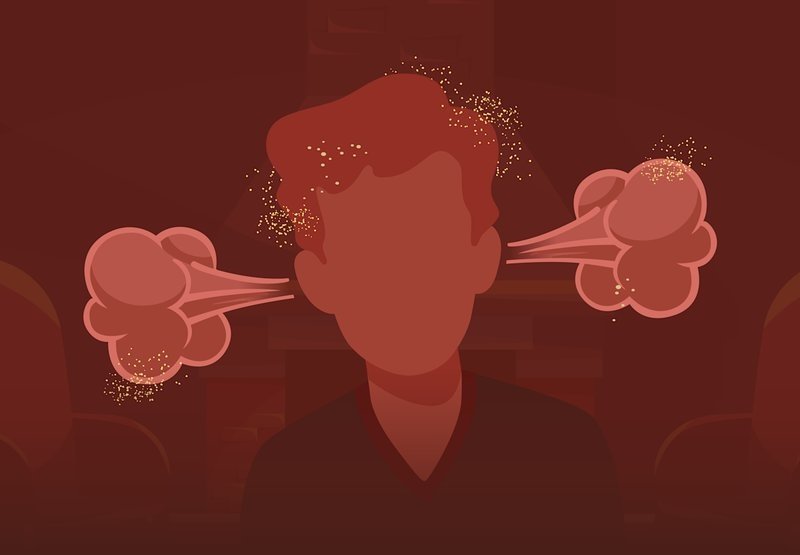
When winter reached Hogwarts in Harry’s second year, Madam Pomfrey dispensed a great deal of Pepperup Potion, and for several hours afterward the patients walked the corridors with steam pouring from their ears. Ginny Weasley took a dose and looked as though her head had caught fire. The books mention it in passing, in the chapter built around Nearly Headless Nick’s five-hundredth deathday party, and never explain what is in it.
The official site fills in the label: a handy potion offering warmth and energy, usable as a cure for the common cold, with the single listed danger that ears can steam excessively for hours afterward. That is the entire pharmacology. It is a wizarding hot toddy with a side effect you can see across the Great Hall.
Harry’s own dose comes two books later, after the second task of the Triwizard Tournament, when he surfaces from the lake chilled through and is dosed with Pepperup. Unlike most of the medicine on this list, it never drives a plot. Nobody is poisoned with it, nobody steals it, and no exam turns on it. It is simply what the school gives you when you have a cold, and the fact that your head then smokes for the rest of the afternoon is treated by every character as entirely normal.
Mandrake Restorative Draught
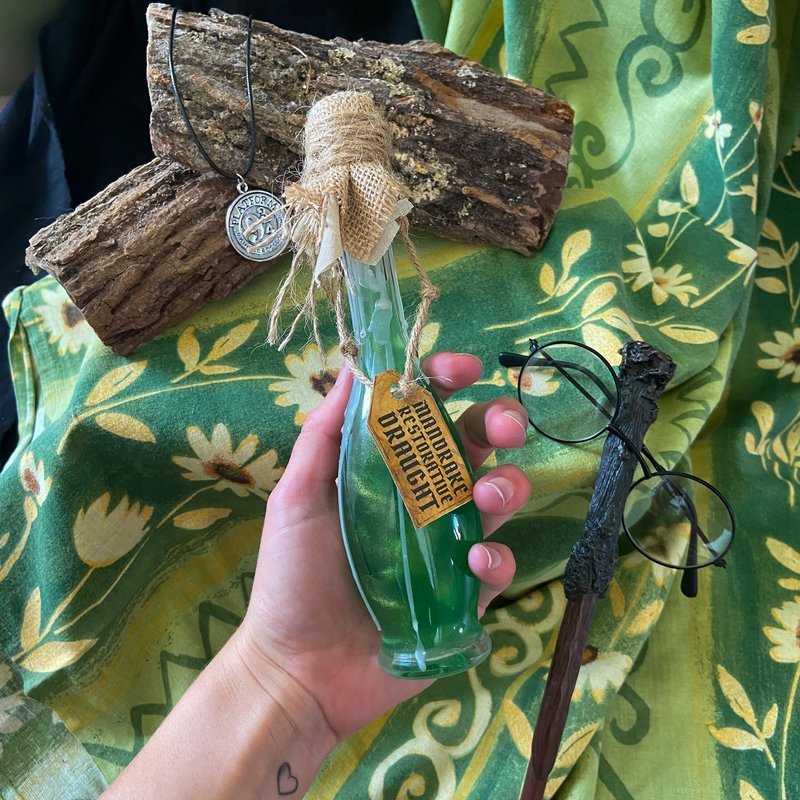
The cure for the Petrified was named the night Mrs Norris was found and took until May to arrive. Gilderoy Lockhart announced on the spot that he must have made it a hundred times and could whip up a Mandrake Restorative Draught in his sleep, and Snape cut in: he believed he was the Potions master at this school. That is the first time the books print the name, and the exchange tells you everything about both men. It also tells you the cure was slow, because the mandrakes were seedlings and would not be ready for months.
The whole second year runs on that schedule. Professor Sprout’s mandrakes have to grow up before they can be cut and stewed, and the school waits through their adolescence while the Basilisk’s victims lie in the hospital wing. Sprout told Filch that the moment their acne cleared up they would be ready for repotting, and that he would have Mrs Norris back in no time. Snape finally brewed the potion in May 1993.
By then the name had shortened. Harry, facing Tom Riddle in the Chamber of Secrets, tells him that in a few hours the Mandrake Draught will be ready and everyone who was Petrified will be all right again. Both forms are printed in the same book, so both are correct, and the shorter one is the one people use. Lockhart, for the record, never brewed a drop.
Draught of Living Death
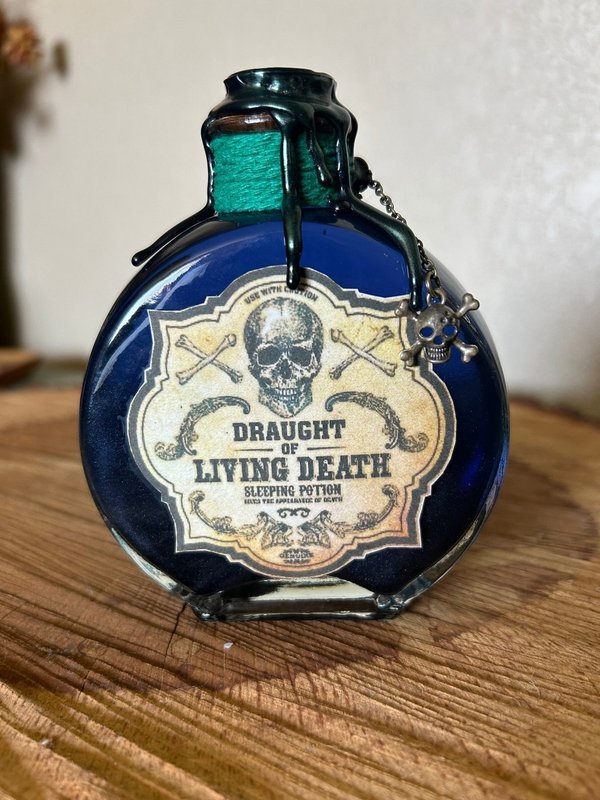
Harry could not answer the question about asphodel and wormwood that Snape fired at him in his first lesson, and in his sixth year he brewed the answer well enough to win a prize for it. The answer, delivered with contempt, was a sleeping potion so powerful it is known as the Draught of Living Death. Harry did nothing with the information for years.
Then Slughorn set it in his first N.E.W.T. lesson, with a bottle of Felix Felicis for the best attempt, and Harry had a second-hand copy of Advanced Potion-Making whose previous owner had corrected the recipe in the margins: crush the sopophorous bean with the flat of a silver dagger rather than cutting it, and add a clockwise stir after every seventh counter-clockwise one. The potion gives off blue steam, should reach a blackcurrant colour at the halfway point, turns lilac, and finishes clear as water. Harry’s did. Slughorn told him he had his mother’s potions skills. The margins held more than brewing tips; they are also where the spells the Half-Blood Prince invented were written down.
The official site adds sloth brain to the ingredients and notes that the potion was rarely achieved by students at Hogwarts. That is a polite way of saying the boy who got it right was cheating. Snape, who had asked the question in the first place, had written the corrections.
Shrinking Solution

Five points from Gryffindor was the price of Hermione’s whisper to Neville, and a tadpole was the reward. Snape had announced that at the end of the lesson he would feed a few drops of Neville’s Shrinking Solution to Neville’s toad: if it was brewed correctly the toad would shrink to a tadpole, and if, as he did not doubt, it was brewed wrong, the toad was likely to be poisoned. Hermione asked whether she could help Neville put it right. Snape told her he did not remember asking her to show off, and docked the points anyway when she did.
The correct potion is bright acid green. Too many rat spleens or too much leech juice turns it orange, and orange is the poisonous version; Neville’s, Snape did not doubt, was wrong. The full recipe runs to daisy roots, Abyssinian shrivelfigs, caterpillars, rat spleen and leech juice, with the daisy roots chopped evenly, five ingredients the official site repeats exactly. Trevor the toad drank his few drops and turned into a tadpole. That was the expected effect and, for Neville, a triumph.
Harry had already met the potion in a worse form. His holiday homework the summer before had included a particularly nasty essay on Shrinking Potions, plural, the other way the books print the name. The toad survived.
Strengthening Solution
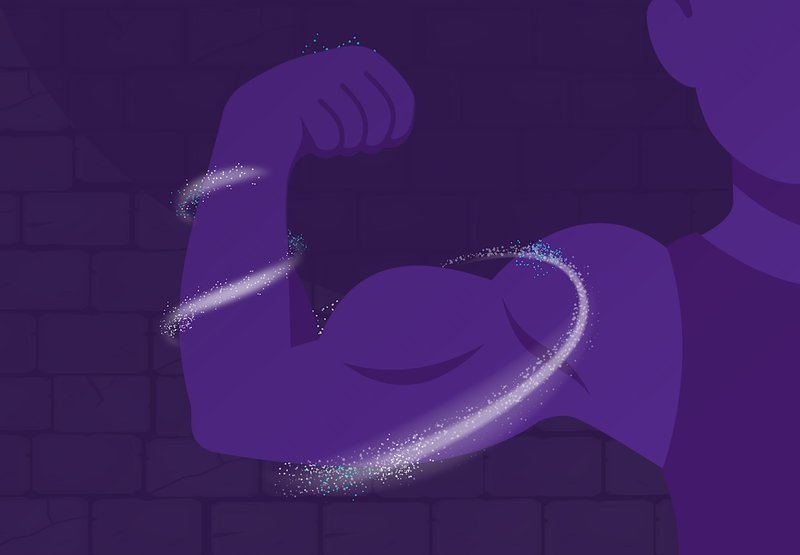
Dolores Umbridge’s inspection of Snape’s fifth-year class fell on the day the Strengthening Solution was on the tables, and it is the potion she chose to object to. Her verdict was that she would question whether it was advisable to teach them a potion like that, and that the Ministry would prefer it removed from the syllabus. The books do not record what the Ministry thought of the Draught of Peace.
Harry watched the two of them so closely that he nearly put pomegranate juice into his cauldron where salamander blood belonged, and when the lesson ended his potion was congealing foully and smelling strongly of burned rubber. He was set an essay on how and where he had gone wrong. The class had let the mixtures mature over a weekend, so the thing takes days rather than a double period, and the official site says a properly brewed one is turquoise and offers immense strength to the drinker. The books themselves never say what it does; the name is the only description they give.
It was the second potion of Harry’s fifth year, after the Draught of Peace, and it went the same way. Umbridge’s inspection is remembered for the exchange with Snape, not the potion. That is about right for a brew whose only recorded effect is on the Ministry’s view of the syllabus.
Confusing and Befuddlement Draughts
Nobody brews this one. The Confusing and Befuddlement Draughts appear in exactly one place, a textbook Harry was reading for homework in his fifth year, in the spelling of a much older wizarding world: these plantes are moste efficacious in the inflaming of the braine, and are therefore much used in Confusing and Befuddlement Draughts, where the wizard is desirous of producing hot-headedness and recklessness. The plantes in question are sneezewort, scurvy-grass and lovage.
All three are real plants with entries in any good encyclopaedia. Sneezewort is a Eurasian perennial whose dried leaves were once made into sneezing powder, and lovage is a parsley-family herb from southern Europe that turns up in herbal tea and seasons meat. Rowling reached for actual apothecary stock, and the book Harry was reading has the cadence of a medieval herbal. Whether anyone in the series ever produced hot-headedness on purpose is not recorded. The passage is the whole of the potion’s existence.
The name is plural in the text and stays plural here, as a category rather than a single recipe. Harry’s own reaction to the passage is the last thing the books say about it: reading about a draught designed to inflame the brain, he dozed off.
Wit-Sharpening Potion

Scarab beetles ground with a pestle, ginger roots sliced, armadillo bile: the Wit-Sharpening Potion is a recipe the books hand over almost ingredient by ingredient, and the official site repeats all three. The fourth-years were making it not long after the Triwizard Tournament’s second task, in the lesson where Snape told Harry, Ron and Hermione that he had better separate the three of them so they could keep their minds on their potions rather than on their tangled love lives. He then moved on to accusing Harry of raiding his stores.
That is the same lesson as the Veritaserum threat, and it was not finished with them yet. Igor Karkaroff walked in during the lesson and showed Snape the Dark Mark on his arm while Harry eavesdropped. A potion for clearing the mind was the lesson’s work, and the Dark Mark was uncovered in the same room.
What the potion does is stated more firmly by the official site, where the drinker’s mind becomes clearer, than by the books, which leave it to the name. Nothing about its colour, smell or taste survives. It is one of the plainest entries on the roster attached to one of the busiest lessons in the series, and the potion had nothing to do with why.
Swelling Solution
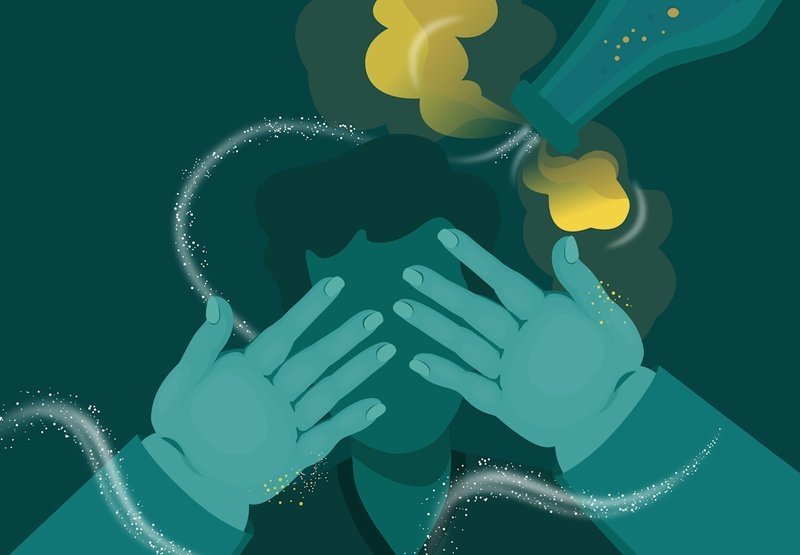
The most useful thing a Swelling Solution ever did in the books was explode. The second-years were brewing it in the Duelling Club chapter of Harry’s second year when Harry lobbed a firecracker into Goyle’s cauldron, and where the solution splashed, arms, noses and eyes swelled grotesquely; the official site puts it as melon-sized noses and oversized lips and arms. The point was never the potion. The point was that while Snape dealt with the swelling, Hermione was in his private store cupboard collecting what she needed for Polyjuice Potion.
The official site calls the projectile a stray firework, and agrees on every detail that matters, including the antidote Snape dispensed afterward. What no source says is who got which symptom. The scene is written as a crowd of swollen faces, not a set of named ones, and it stays that way here, whatever the internet has decided since.
The ingredients, as the official site gives them, are puffer-fish eyes, dried nettles and bat spleens. That sounds about right for something that makes a nose the size of a melon. The books never say what a Swelling Solution is for when it is not being sabotaged. Its best work was done on the floor.
Blood-Replenishing Potion
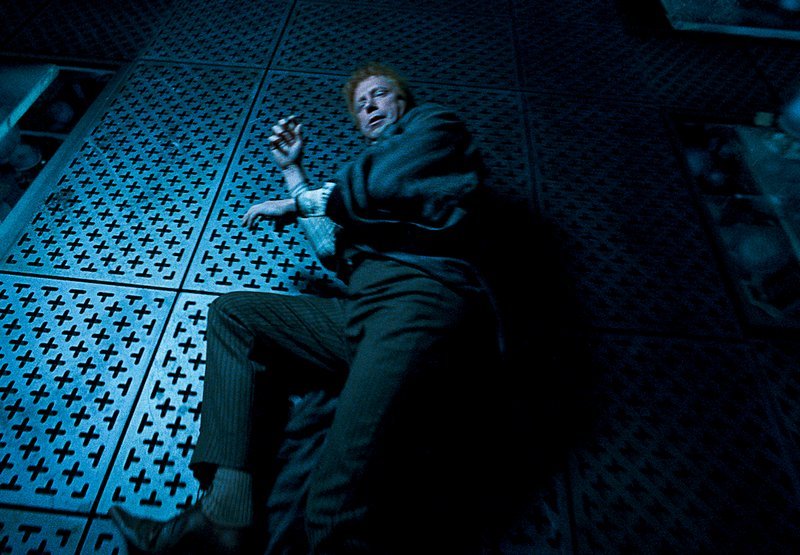
Arthur Weasley, propped up in a bed at St Mungo’s with a snakebite that would not close, explained the treatment himself: there was some rather unusual kind of poison in the snake’s fangs that kept wounds open, the Healers were sure they would find an antidote, they had had much worse cases than his, and in the meantime he had to keep taking a Blood-Replenishing Potion every hour. He said all this cheerfully. The snake was Nagini, and the bite had come at the Department of Mysteries.
The potion does what the name says. It replaces lost blood, rather like a transfusion, and it appears in the books in one chapter, doing exactly that, and the chapter is named for the hospital. The official site confirms the case and the mechanism: a poison that stopped the wound healing, and a healing potion used to treat blood loss. No colour, smell or taste is recorded for it. For a wizarding medicine that is almost a compliment.
What the chapter remembers is the patient. Arthur, hourly dose and all, worked up real enthusiasm about the possibility of meeting a few Muggle patients on the ward, and Fred and George arrived with the correct number of Extendable Ears so that the children could hear what the adults were saying about him. The potion kept him alive. His curiosity did the rest.
Sleeping Draught
Two chocolate cakes, filled with Sleeping Draught, are the first thing the potion does in the books. Hermione filled them, Harry and Ron used them to knock out Crabbe and Goyle, and the two boys woke up to find an hour missing. It is the same night as the cat features and the walk to the Slytherin common room, and the cakes are the part of the plan that went exactly as intended.
The books hand the potion two names. It is a Sleeping Draught when Hermione is filling cakes with it, Sleeping Draughts when the dragons for the first task of the Triwizard Tournament are dosed with them for transport to Hogwarts, and a Sleeping Potion in Dumbledore’s mouth, in the hospital wing on the night Cedric Diggory died: a Sleeping Potion, and some peace.
The official site titles its page Sleeping Potion, allows Sleeping Draught in the text, calls it dark purple and says it caused a deep and instantaneous sleep, though it was less powerful than the Draught of Living Death and did not last as long. That is the right order of things. One is a schoolgirl’s cake filling. The other is the potion Snape chose to humiliate Harry with.
Ageing Potion
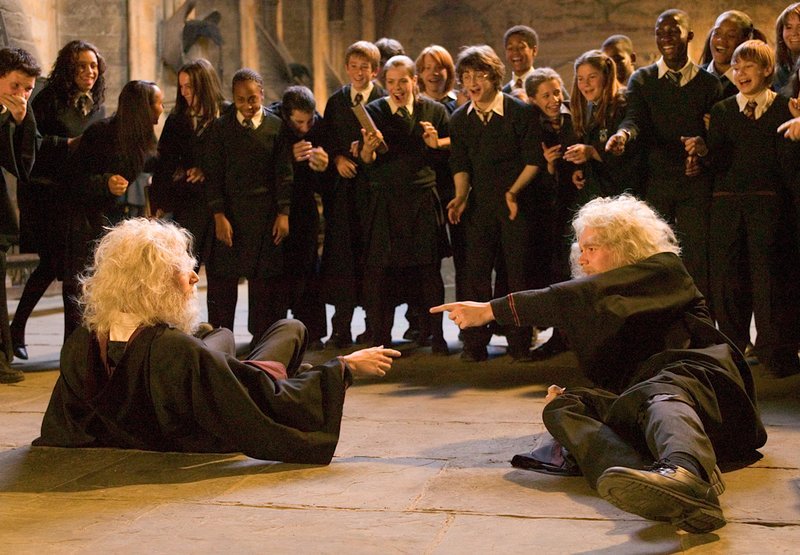
Three Gryffindors, one Age Line and a few drops of Ageing Potion: that was the whole of the Weasley twins’ plan for the Triwizard Tournament. Fred laid it out for Harry and Ron with total confidence. Dumbledore’s line around the Goblet of Fire should be fooled by an Aging Potion, he reasoned, and once your name was in that goblet, you were laughing. He spelled it the American way because the quote comes from the American edition; the potion is Ageing in Britain and on the official site, and Aging in the United States, and it is one potion either way.
The potion does what it says. The drinker grows older, and the more of it one drinks the more one ages, which is why a few drops seemed like the right dose. Fred, George and Lee Jordan took theirs on 31 October 1994, stepped over the line, and were thrown back out of the circle. All three then sprouted full beards, which is the part everyone remembers and the part the official site leaves out; it records only that the brothers tried and failed to trick their way past the age line.
Dumbledore had drawn the line himself, and it held. Three beards, no champions, and a potion that did precisely what it was supposed to, which was the problem.
Elixir of Life

The Elixir of Life is the potion the first book is about, and it never appears. Harry works it out in the Forbidden Forest, out loud: the Philosopher’s Stone, of course, the Elixir of Life. The Stone makes the Elixir, the Elixir makes the drinker immortal, and Voldemort, reduced to whatever it is that kills unicorns in a forest, wants it as one step on his road back. Nobody in the story ever brews it or drinks it on the page. Its owners are elsewhere, and old.
Those owners are Nicolas Flamel and his wife Perenelle, who had lived over 650 years by drinking the Elixir. Hermione finds the figure in an enormous old library book, which reports that Mr Flamel celebrated his 665th birthday the previous year, a fact the books hand over as a bit of light reading and never revisit. The terms of the arrangement come later, in a different book: the Elixir must be taken regularly for all eternity, and someone dependent on it can die if the supply runs out or is contaminated. Immortality, in other words, on a subscription.
Rowling has written that Flamel was a real person, a wealthy Parisian businessman and philanthropist who supposedly spent his life chasing the Stone after buying a book called The Book of Abraham the Jew. The Elixir has two drinkers in the series, a married couple, and the husband is one character in it she did not have to invent.
An Elixir to Induce Euphoria
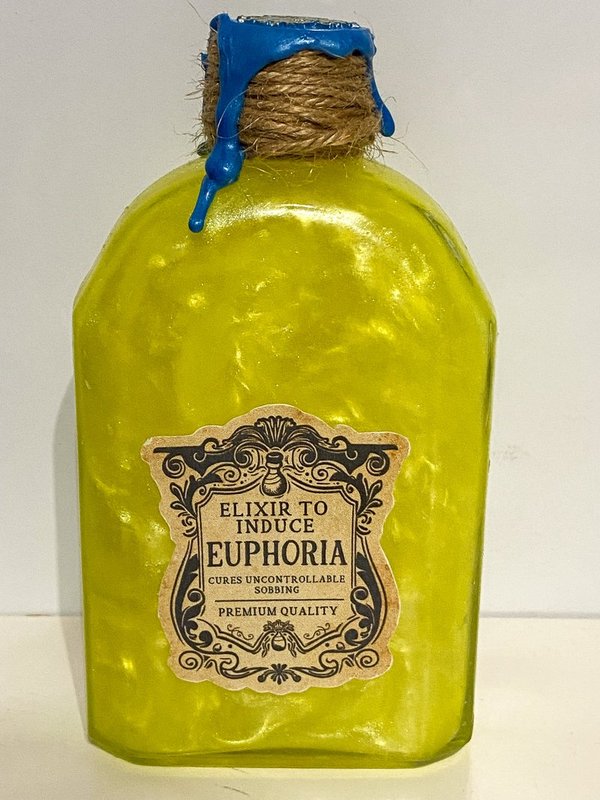
Slughorn smelled the peppermint before he reached the cauldron. Euphoria, he took it, and what was that he smelled, a sprig of peppermint, unorthodox but what a stroke of inspiration, Harry. The inspiration was not Harry’s. It was a note in the margin of his second-hand textbook, and the peppermint was there to counterbalance the potion’s side effects, which are excessive singing and nose-tweaking.
Correctly made it is sunshine-yellow, which the official site confirms, and it does what the name promises: intense excitement and happiness, with the singing as the price. Harry brewed it for the lesson in which Slughorn asked the sixth-years to make something amusing, and, according to the official site, in the hope of putting Slughorn in a good enough mood to hand over a memory. The instructions are in Advanced Potion-Making, the same book the Half-Blood Prince had improved.
The odd thing is the name. Slughorn, at Harry’s cauldron, says only Euphoria, and the official site drops the An from its own page title. The full form survives as a heading, which is where most people meet it, and it is kept here because a heading is what a list is made of. A potion that makes you sing has spent its whole existence with nobody quite agreeing what to call it.
Forgetfulness Potion

The Forgetfulness Potion is what Hogwarts examines its first-years on, and the exam is very nearly all the books say about it. At the end of Harry’s first year the class sat a Potions practical with Snape breathing down their necks while they tried to remember how to make a Forgetfulness Potion, a sentence that carries its own joke and does not need another. The official site confirms it was taught in first-year lessons and says only that it causes memory loss.
That is the entire record. No ingredient is named in the novels, no colour, no scene in which anyone drinks it and forgets anything. The official site lists ingredients, but it sources them to Pottermore, and under this list’s rules Pottermore is colour, not canon. What the books give you is a potion for forgetting, tested by memory, in a room run by a man who forgot nothing.
It is worth keeping straight which lesson this was. Harry’s first Potions class, with the speech about bottling fame and stoppering death, comes near the start of the book; the Forgetfulness Potion belongs to the end-of-year exam, chapters later, and the two are easy to run together. The books keep them apart. Appropriately, this is the potion the series itself forgets: named for an exam, and never brewed again on the page.
Invigoration Draught

Nothing was wrong with Harry’s Invigoration Draught. Snape dropped the flask anyway. It was a fifth-year lesson in the run-up to the O.W.L.s, and Harry found the potion rather easy to make, for the odd reason that Snape was pretending he was invisible. This was retaliation. Harry had looked into Snape’s Pensieve and seen a memory Snape had not intended anyone to see, and the silent treatment was the first instalment.
The second came when the lesson was over. Harry did just fine, and Snape intentionally dropped and broke the flask, so Harry received a zero for the class. The official site tells the same story with the container as a phial and the adjective as malicious; the books do not editorialise, which somehow makes it worse. A zero for a potion that was fine, from a teacher who had decided not to see you, in a year when the marks were supposed to matter.
What the draught does is presumed rather than described. It invigorates, says the official site, and the books leave it there: no ingredients, no colour, no smell, and no one on the page who is shown drinking it. Its only recorded act is to hit the dungeon floor. It is the one potion on this list that Harry got right and lost anyway.
Potion for Dreamless Sleep
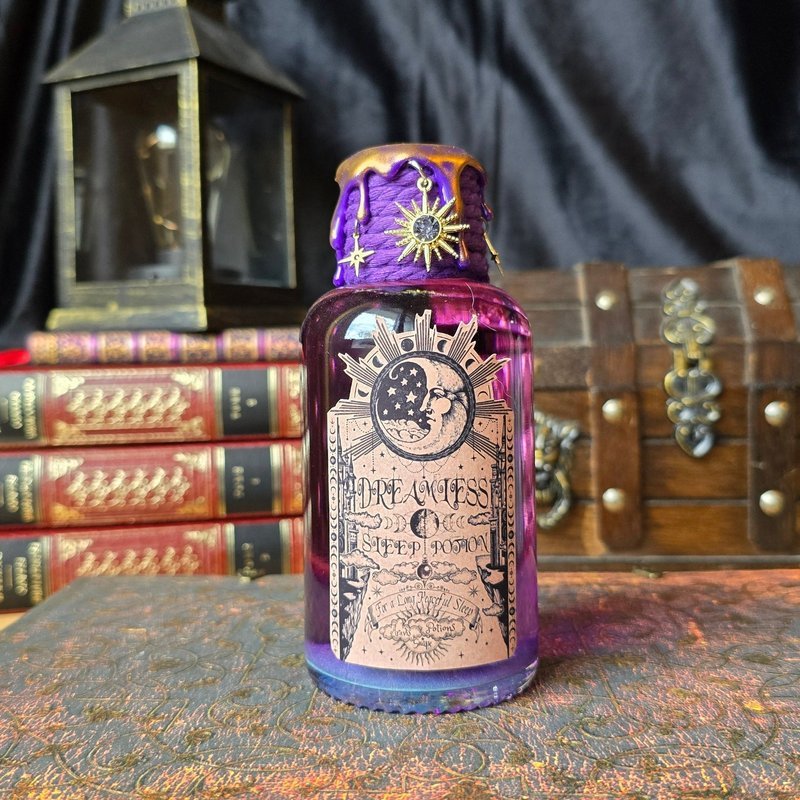
Purple, in a small bottle, and Harry was told to drink all of it and only managed a few sips. That is the Potion for Dreamless Sleep as the books deliver it, in the hours after Cedric Diggory’s death. Harry had come back from the graveyard with the body, had been made to tell the whole story to Dumbledore while it was still fresh, and was finally handed over to Madam Pomfrey, who gave him the potion in the hospital wing. Mrs Weasley gave him the rest of it later, and heavy, irresistible waves of dreamless sleep broke over him.
It does precisely what it says: a deep sleep without dreams. The official site, in a lighter feature that calls it Madam Pomfrey’s Potion for Dreamless Sleep, says she prescribed it because Harry was susceptible to disconcerting nightmares after the Tournament, and recommends it for the restless sleeper. The sensation, as the books describe it, is of sinking deeper into the warmth of a feather mattress.
This is the only chapter in which the potion is named, and Harry’s is the only dose on the page. It is a small entry for a large night: a purple bottle, a few sips, and the first sleep without dreams he had been allowed in a year of them. The books needed it once. That was the night.
Draught of Peace

Powdered moonstone and syrup of hellebore, added in the right order and the right quantities with the right number of stirs in the right directions, and a light silver vapour should now be rising from your potion. That last clause is Snape’s, and it was the whole of his encouragement to the fifth-years on the first day of their O.W.L. year. The Draught of Peace relieves anxiety and soothes agitation, and Snape set it as an introduction to the kind of potion the examiners like.
It did not go well. Goyle set his robes on fire with his attempt. Harry, according to the official site, forgot the syrup of hellebore, and Snape Vanished his potion and gave him zero marks, despite his not being the worst in the room. The official site adds a danger the lesson did not need: too heavy a hand with the ingredients risks putting the drinker into a heavy and sometimes irreversible sleep. A calming draught that can be overdone into a coma is a fair summary of fifth year.
The chapter that teaches it is titled Professor Umbridge, after the woman who arrived at Hogwarts that term and proceeded to give everyone in the building a reason to need it. The potion was on the syllabus before she was.
Deflating Draught
Silence! SILENCE! Anyone who had been splashed was to come to the front for a Deflating Draft, and when Snape found out who had done this. He did not finish the sentence. A Swelling Solution had just exploded out of Goyle’s cauldron, students were carrying arms and noses and eyes of the wrong size, and the antidote was, as it happened, already there. Snape had some on hand while the second-years were brewing the solution, which turned out to be a handy thing.
That is the Deflating Draught’s entire career: one chapter, one line, one classroom. It is the antidote to the Swelling Solution and nothing else, and the official site, which gives it no page of its own, names it only in passing as the dose that cured the students after the stray firework. The quoted line spells it Draft, Draught is the form on every heading, and the two are one word.
What makes it worth an entry is the preparedness. Snape did not brew it on the spot; he had it ready, because a room of second-years making a potion that enlarges whatever it touches is a room in which something is going to get enlarged. It exists on this list because another potion went wrong, and it was in Snape’s cupboard because he expected one to.
Confusing Concoction
Harry’s third-year Potions exam was a Confusing Concoction, and he could not get it to thicken. Snape gave him a zero for the lesson. That is the potion’s entire appearance in the novels: one exam, one failure, one mark, in the chapter where exams in every subject are the main business and Buckbeak’s appeal is scheduled for the same week. The official site agrees on all of it, placing the potion in the third-year end-of-year exams and crediting Snape with setting it.
Its effect is described as befuddling and bewildering the drinker, which is what the name says and all anyone adds. No colour is recorded, no smell, and no scene in which it is drunk. Its ingredients are not given in the chapter that names it. It is a potion whose whole identity is that Harry could not make it, which, given the state he was in that week, is about the most human thing on this list.
The name has a wobble. One heading somewhere renders it Confusion Concoction, but the text and the official site both print Confusing Concoction, and that form wins. It is a separate potion from the Confusing and Befuddlement Draughts of Harry’s fifth-year reading, a distinction the FAQ below spells out, and the exam is the only place it belongs. Harry sat it, failed it, and moved on to a hippogriff.
Hair-Raising Potion
Ron wished he had asked Hermione how many rat tails you were supposed to add to a Hair-Raising Potion. That is the sentence that puts this potion on the list: a line of homework grumbling in Harry’s second year, delivered while the two of them worked through a pile of Snape’s assignments so large that Harry thought he would be in the sixth year before he finished it. Rat tails, then, are an ingredient. How many is not stated, because Ron never asked.
The official site supplies the effect, which the books do not: the drinker’s hair stands on end. It also confirms the second-year homework framing and lists rat tails as the known ingredient, which leaves the potion better attested than most of the one-line entries here. It is a second-year staple, set by Snape, complained about by Ron, and mentioned exactly once.
The scene it sits in is a larger one. The same chapter is the one with the very secret diary, and the homework conversation is the quiet before it. A potion that makes hair stand on end, in a chapter that does the same to the reader, and neither of the boys notices the joke. Rat tails: some. Effect: upward. That is the whole entry, and it is enough.
Scintillation Solution
Madam Z. Nettles of Topsham had no memory for incantations and her potions were a family joke. Then she took a Kwikspell course, and now she is the centre of attention at parties and friends beg for the recipe of her Scintillation Solution. That is the only place the potion exists: a testimonial in a mail-order brochure that Harry reads in Filch’s office, having been dragged there for dripping mud on the carpet.
The brochure is Filch’s. He is a Squib, which is why he has sent for a correspondence course in beginners’ magic, and why Harry, reading it, discovers that the caretaker is not a wizard. The other testimonial on the page is from a Warlock D. J. Prod of Didsbury, whose wife used to sneer at his feeble charms until one month into the course he succeeded in turning her into a yak. Thank you, Kwikspell.
Nothing is known about what a Scintillation Solution does, whether Madam Nettles is real, or whether the brochure is honest advertising, and the books do not care. It is on this list because the test is a name printed for a brewed liquid, and the name is printed. The potion has one appearance, in one chapter, on one page of a brochure, and it is an entry that a Squib could, allegedly, make.
Hiccuping Solution
Draco Malfoy made a Hiccuping Solution in sixth-year Potions, and that is nearly the whole of what the books say about it. The lesson was the one in which Slughorn asked for something amusing, the same brief that produced Harry’s Euphoria, and there were only three students in the room that afternoon, Harry, Ernie Macmillan and Malfoy, it being the day of the Apparition tests. Malfoy’s contribution was a potion for hiccups.
Which way it works, causing them or curing them, the novels never say, and this list will not guess. The official site mentions a Hiccoughing Potion in a lighter feature, useful if the hiccups are getting you down and a good early potion to teach students learning the ropes, and that is as much corroboration as the concept gets. The spelling differs between the two, and neither is wrong; both are given here so that nobody goes looking for a third potion.
The chapter is the one titled After the Burial, the burial being Aragog’s, and the potion is the least of what happens in it. Malfoy, Harry was convinced all that year, was carrying the Dark Mark and had larger projects than hiccups. The assignment asked for amusement; what he handed in was the only thing in his sixth year that was.
Everlasting Elixirs
Nobody brews an Everlasting Elixir in the books. Sixth-years research the topic in Advanced Potion-Making, and Harry copied down some additional tips on making them from the margins of his second-hand copy, the one the Half-Blood Prince had annotated. That is the record. It is homework, not a lesson; a subject, not a scene.
The chapter it belongs to is a busy one. It is the chapter of Slughorn’s Christmas party, of Malfoy caught prowling the corridors by Snape, and the elixirs sit in it only as the thing Harry was supposed to be reading about while all of that went on. No source anywhere says what an Everlasting Elixir does, what it looks like, or why it is everlasting, though the name suggests the alchemists’ old business of solutions that keep you alive. That is a suggestion, not a fact, and it stays one.
The Prince’s tips are the interesting part. Whatever he knew about Everlasting Elixirs he wrote in the margin of a schoolbook, and Harry copied it out without knowing whose handwriting he was reading. The books give the potion a homework topic, a margin note and a plural. That is a whole entry by the standards of the back end of this list, and it is honestly earned.
Babbling Beverage
Potter, when I want nonsense shouted at me I shall give you a Babbling Beverage. Snape said it coldly, in front of Umbridge, after Harry had shouted at him that he had got Padfoot in the place where it was hidden, and it is one of the better lines in the series because both of them knew exactly what it meant. Snape pretended not to understand. Then he left the room and, out of Umbridge’s hearing, got word to the Order.
The line goes on. Crabbe was to loosen his hold a little, because if Longbottom suffocated it would mean a lot of tedious paperwork and Snape would have to mention it on his reference if ever he applied for a job. The official site reproduces the whole speech word for word in a feature on Snape, files the potion under its ranked list as a swig that will have you chatting for hours until the babbling itself becomes a new problem, and calls the scene one of the briefest mentions of a potion in the books.
A Babbling Beverage, then, makes you talk nonsense, or that is the inference, since nobody in the novels drinks one. It exists for a single insult, delivered as cover for an act of loyalty, and the insult was the loyalty. Snape’s best potions were the ones he never had to make.
Baruffio’s Brain Elixir
A Ravenclaw called Eddie Carmichael offered Harry and Ron a pint of Baruffio’s Brain Elixir, and Hermione disposed of it. That is the whole transaction, in the chapter that takes its title from the exams, and it is enough to put the potion on the list, since the elixir is named and Carmichael was selling it as a drink.
The Baruffio of the name has his own history. He is the wizard Professor Flitwick warned the first-years about in their Levitation Charm lesson, the one who said s instead of f and found himself on the floor with a buffalo on his chest. By Order of the Phoenix his name is on a patent medicine of dubious value, which is either a tribute or a warning, and the books do not say which. A man remembered for one mispronunciation is not the obvious endorsement for a brain tonic, and it is possible that this was the joke.
What the elixir does is not stated, beyond the name and the salesman’s confidence. Whether it worked for Carmichael is not stated either, and whether Hermione poured it down a sink or somewhere less polite is left to the reader. It is the last name on this list, and among the slightest the books hand over: a potion that appears, is offered, is refused, and is gone.
Frequently Asked Questions
Why isn’t the Drink of Despair on this list?
Because the novels never call it that. The emerald liquid in the sea-cave basin is described and given no name; Drink of Despair is a label from fan wikis, and the official site calls it only a burning potion. This list admits a potion when a book prints its name, so the cave potion stays out.
Is there a Regeneration Potion in Harry Potter?
Not under that name. The potion that restores Voldemort’s body in the graveyard is made from bone of the father, flesh of the servant and blood of the enemy, and the books name none of it. The official site heads its own page Voldemort’s Resurrection Potion and uses regeneration only as a lower-case description.
Are Wiggenweld Potion, the Girding Potion and the Antidote to Common Poisons in the books?
No. Wiggenweld Potion comes from a Famous Wizard card and the Electronic Arts video games, the Girding Potion from the Book of Potions game, and the Antidote to Common Poisons from Pottermore. None of the novels prints any of the three, so all three are named here and kept off the roster.
Is there a Cheering Potion?
There is a Cheering Charm. It is part of the third-year Charms curriculum and turns up in that year’s exam, where Professor Flitwick tests the class on it, and again on the written Charms O.W.L. Nothing in the novels names a Cheering Potion, so what the exam tested was wandwork, not brewing.
Why are Essence of Dittany, Doxycide and the Skiving Snackboxes left out?
They are named in the novels but are not brewed liquids. Essence of Dittany is an extract Hermione uses on Ron’s splinching injuries, Doxycide is a spray Mrs Weasley hands out at Grimmauld Place, and the Skiving Snackboxes are sweets. Burn-healing paste is a paste, and the Flesh-Eating Slug Repellent Hagrid shops for is never given a form at all.
Are the Confusing Concoction and the Confusing and Befuddlement Draughts the same potion?
No. The Confusing Concoction is Harry’s third-year exam potion; the Confusing and Befuddlement Draughts are a category he reads about in a fifth-year textbook, in a later book. The official site folds them into one page and calls the first a Confusing Draught, which is why the two are so often run together.
Is a bezoar a potion?
No. A bezoar is a stone taken from the stomach of a goat that will save you from most poisons, as Snape puts it in Harry’s first lesson, and it belongs with the ingredients. Harry saves Ron with one after the poisoned mead, and Rowling has written that the real object was once believed to cure poisoning.
What about the Calming Draught?
The scene exists and the name does not. Madam Pomfrey gives Hannah Abbott something after she bursts into tears in Herbology and says she is too stupid to take exams, but the passage never prints the name of the dose, and the official site has no page for it. A potion the books administer without naming stays off the roster.