Every Minister for Magic in Wizarding World History
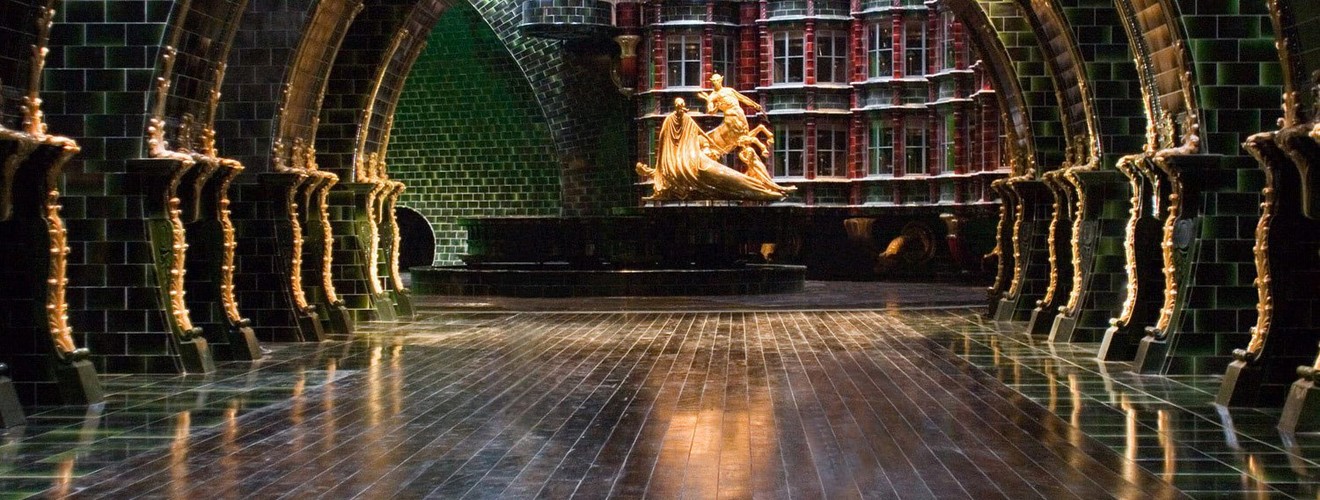
In the Prime Minister’s study at Number 10 Downing Street there hangs a small, dirty oil painting of a froglike little man in a long silver wig, and it is his job to announce a visitor. The novels never name him. Rowling’s essay does: he is Ulick Gamp, the first Minister for Magic, and the portrait is how the wizarding government lets the Muggle one know it is on its way over. The courtesy runs one way. The Muggle Prime Minister has no part in choosing the Minister for Magic, and no Muggle Prime Minister has ever set foot inside the Ministry.
The job itself is elected, with a vote required at least every seven years, though in a crisis, the essay says, the post has simply been offered to someone without one. Albus Dumbledore was made that offer and turned it down repeatedly, preferring to remain the most famous of the Hogwarts professors, which, given what the office did to most of the people who accepted it, looks less like modesty than good sense. Ministers for Magic tend to last much longer than Muggle ministers, Rowling writes, and their community, grumbling aside, is behind them in a way rarely seen on the other side. That is true on average. It hides a great deal.
Rowling published the complete roll in August 2015, each name with its term of office and a line or two of verdict, from Gamp’s appointment in 1707 to Kingsley Shacklebolt, listed as serving to the present. Her footnote sets the boundary, and so does this list: only those who actually held the title. The Wizards’ Council that governed before 1707 is out. Dolores Umbridge, who ran a great deal of the Ministry without ever being its Minister, is out. What remains is every name on Rowling’s list, in her order, with the Muggle history that was happening at the same time filled back in, because the two governments turn out to have kept remarkably close company.
Thirty-five witches and wizards have held the title Minister for Magic, according to J.K. Rowling’s essay ‘Ministers for Magic’ on harrypotter.com: from Ulick Gamp, appointed in 1707 when the Ministry was founded, to Kingsley Shacklebolt, in office from 1998. The count includes only formal title-holders, so Dolores Umbridge and Albus Dumbledore are not among them.
Ulick Gamp
On 1 May 1707 the Acts of Union came into force and England and Scotland became a single Kingdom of Great Britain. By Rowling’s reckoning the island’s wizards acquired a government of their own the same year: the Ministry of Magic was formally established with the appointment of Ulick Gamp, the first man to hold the title Minister for Magic. He came to it from the head of the Wizengamot, which harrypotter.com’s fact file describes as wizarding Britain’s equivalent of the high court, so the first Minister was a judge handed a country.
It was not a happy country. Rowling’s essay dates the imposition of the International Statute of Secrecy to 1692, while the novels, per Deathly Hallows chapter 16, put its signing in 1689; on either date, Gamp inherited a community that had only just gone into hiding and was, in the essay’s words, fractious and frightened. His task was policing it. His answer was the Department of Magical Law Enforcement, which he founded and which the essay calls his greatest legacy. Pius Thicknesse, near the bottom of this list, was running that department when he was moved upstairs, and not under his own power.
That is the whole of the record: a new Statute, a new Department, eleven years in the chair. As opening acts go it is modest, and as the next two entries make clear, modesty was about to go out of fashion.
Damocles Rowle
Damocles Rowle ran on a platform of being ‘tough on Muggles’, won, and spent eight years showing what that meant. The essay’s entry on him is two sentences: he was censured by the International Confederation of Wizards, a body Rowling has likened to the Muggle United Nations, and he was eventually forced to step down. It is the first recorded instance of the international community telling a British Minister for Magic to behave himself. It would not be the last.
What the entry leaves out, Rowling’s separate writing on Azkaban supplies. When Rowle took office, plans had been drawn up for a purpose-built prison on a remote Hebridean island. Rowle, whom that essay calls authoritarian and sadistic by nature, scrapped them and insisted on using Azkaban, a Dementor-infested fortress in the North Sea that had never been a prison at all, on the grounds that the Dementors could be harnessed as guards and would save the Ministry time, trouble and expense. Prisoners went in. None ever emerged. One later Minister questioned that and died before changing it; from his death until Kingsley Shacklebolt, Rowling writes, no Minister ever seriously considered closing the place.
Then there is the name. The Death Eater Thorfinn Rowle, who attacks Harry in a Muggle cafe in London in Deathly Hallows, shares the surname, and both belong to one of the Sacred Twenty-Eight families. The Lexicon floats Damocles as a possible ancestor, no more. Wizarding Britain is small, and its stock of surnames is smaller.
Perseus Parkinson
A bill to make it illegal to marry a Muggle: that was Perseus Parkinson’s great idea, and it sank him. He had, the essay says, misread the public mood: a community tired of anti-Muggle sentiment and wanting peace voted him out at the first opportunity. Under the rules the essay lays out, that opportunity comes at most every seven years, and Parkinson’s term ran from 1726 to 1733, which is exactly seven. He did not lose an election so much as arrive at one.
The arithmetic has a Muggle echo. The Septennial Act of 1716 had just fixed seven years as the maximum life of a British Parliament, a limit that stood until 1911, so for most of the eighteenth century the two governments of the island were made to face their voters on precisely the same clock. Whether Rowling chose the number for that reason is not recorded. Parkinson’s whole term, meanwhile, fell inside a single Muggle premiership: Robert Walpole, generally counted the first Prime Minister, held power from 1721 to 1742, a span in which the wizarding side got through three Ministers.
He was, Rowling’s Azkaban essay adds, ‘likewise pro-Azkaban’, keeping the Dementors his predecessor had installed. His surname surfaces again in Harry’s generation in Pansy Parkinson, though no source connects the two beyond the Sacred Twenty-Eight, where the family also appears. The marriage bill did not survive him. The prejudice behind it did rather better.
Eldritch Diggory
The prison had been running for fifteen years with no breakouts and no breaches when Eldritch Diggory went to look at it, and that, in a sense, was the end of him. He took office in 1733, and on paper Azkaban was a success. Then the Minister visited. What he found, Rowling writes, was a population of prisoners who were mostly insane and a graveyard dug to hold the ones who had died of despair. Back in London he set up a committee to find an alternative, or at the very least to get the Dementors off guard duty. The experts told him the creatures stayed on the island only because it fed them, and that starved of prisoners they would head for the mainland. He pressed on regardless. Before the committee could decide anything, Diggory caught dragon pox and died in office.
His essay entry is brisker: a popular Minister who first established an Auror recruitment programme. That is a larger legacy than it sounds, since the essay counts three ex-Aurors among the Ministers who came after him. Dragon pox, Rowling has written elsewhere, was originally contracted by wizards working closely with Peruvian Vipertooths.
He also owned a poplar wand, Ollivander-made, which the wand-woods essay uses to introduce him and Evangeline Orpington as two of the Ministry’s most accomplished Ministers for Magic. It says something about the office that one of its most accomplished early holders is remembered chiefly for a committee that never reported.
Albert Boot
‘Likeable, but inept.’ That is the whole of Rowling’s verdict on Albert Boot, and the Harry Potter Lexicon, which likes to sum a character up in a phrase, files his distinguishing feature as ‘Overwhelmed by goblin rebellion’. Between them they cover his five years in office fairly completely. A goblin rebellion broke out, he mismanaged it, and in 1752 he resigned.
Goblin rebellions are a fixture of wizarding history, and the Lexicon’s index notes they were most prevalent in the 1600s and 1700s. Boot’s was different in that it did not end when he left. His successor, Basil Flack, inherited it and lasted two months before it finished him too, and Flack’s successor, Hesphaestus Gore, spent a good part of his eighteen years putting it down. Three Ministers, one uprising. Boot was simply the first to be found wanting by it.
The Muggle side of 1747 to 1752 was, by comparison, winding down: the War of the Austrian Succession, which had been running across Europe since 1740, ended in 1748, so the Muggles were making peace on the Continent while the wizards were losing one at home. The surname turns up again in Harry’s year in Terry Boot, though as with most names on this list nobody official has drawn a line between them. Likeable, inept and quickly forgotten: as political epitaphs go, only the first word is unusual.
Basil Flack
Two months. That is the entire term of Basil Flack, who took over from Albert Boot in 1752 and resigned the same year after the goblins joined forces with werewolves. The essay does not say what the alliance did. It does not need to: the point is that a Minister appointed to end a rebellion watched it acquire a second species instead.
Both parties to that alliance are on the roster of the magical creatures of the Harry Potter books, and both belong to the class of creature the Ministry would spend decades trying to define. The framework for that did not exist yet. The Being Division, the office that would eventually decide who counted as a Being and who as a Beast, was not founded until 1811, by a Minister further down this list, and the only werewolf policy on the books, the Werewolf Code of Conduct of 1637, had already failed because no undeclared werewolf would walk into the Ministry and admit to being one. Flack, in other words, was asked to negotiate with two groups his government had never got around to recognising.
Muggle Britain lost time that year as well, if less dramatically. Under the Calendar Act, Wednesday 2 September 1752 was followed directly by Thursday 14 September, and eleven days vanished from the national record. Flack’s two months would have felt shorter still.
Hesphaestus Gore
One of the earliest Aurors got the job next, and governed like one. Hesphaestus Gore had been catching Dark wizards before there was much of a system for it. The essay credits him with successfully putting down a number of revolts by magical beings, which the Lexicon dates to 1752, the year the goblins had already finished Boot and then Flack, and with renovating and reinforcing the prison of Azkaban. Eighteen years, 1752 to 1770, of law and order, in a period when Muggle Britain was fighting the Seven Years’ War across three continents and had rather less attention to spare for domestic reform.
There is a but, and the essay supplies it. Gore refused to contemplate rehabilitation programmes for werewolves, and historians, Rowling writes, feel that this refusal ultimately led to more attacks. That is as close as the essay comes to editorialising about anyone, and the blame lands on the hard line, not on the werewolves. Gore inherited a policy vacuum: the one framework in existence, a werewolf code dating to 1637, had been a dead letter for over a century. He chose not to fill it.
Two footnotes. Rowling’s separate essay on Azkaban, which walks through the prison’s history Minister by Minister, never mentions Gore’s renovation at all, jumping from Diggory’s death to the long silence that followed. And his first name is spelled Hesphaestus everywhere it appears, one letter off the Greek god of the forge, and nobody has corrected it since. Perhaps nobody dared.
Maximilian Crowdy
Father of nine. Rowling opens Maximilian Crowdy’s entry with his family before his politics, and the Lexicon reads the name as roughly what it sounds like, a maximum crowd. He was, the essay continues, a charismatic leader who rooted out several extremist pure-blood groups planning attacks on Muggles, which makes him the first Minister on this list to treat blood-purity militancy as a policing problem rather than a platform. Rowle had run on it. Parkinson had legislated for it. Crowdy arrested it.
Then he died, in 1781, in office, and nobody knows why. The essay says only that his mysterious death has been the subject of numerous books and conspiracy theories, and declines to name a single one of them, which is either discretion or mischief. A Minister who had spent eleven years breaking up secret societies of pure-blood extremists dying unexplained is the kind of coincidence the wizarding press would have chewed on for decades, and apparently did.
His term took in the opening of the American War of Independence, which broke into armed conflict in 1775, so the Muggle government across town was busy losing a continent at the time. His name, meanwhile, comes with a small mess of its own: Rowling spells it Maximilian and the Lexicon spells it Maximillian. This list keeps Rowling’s. She named him, after all, and she may know why he died.
Porteus Knatchbull
In 1782 the Muggle Prime Minister, Lord North, quietly sent for the Minister for Magic. King George III’s mental instability was, in the essay’s phrase, emerging, and North wanted to know whether Porteus Knatchbull could help. The consultation was supposed to be confidential. Word leaked that the Prime Minister believed in wizards, and North, the essay says, was forced to resign after a motion of no confidence.
The Muggle record agrees on the outcome and offers a different cause. North resigned on 20 March 1782 after the surrender at Yorktown the previous autumn had cost him the confidence of Parliament, only the second Prime Minister ever removed that way, after Walpole in 1742. Rowling’s version and the historians’ can both be true; a government that has just lost America can afford very little additional embarrassment. The timing on the King’s side is the more interesting detail. George III’s famous breakdown, the long and well-documented one, did not begin until the summer of 1788. In 1782 whatever North had noticed was six years ahead of the doctors.
Knatchbull himself sailed on. His term ran to 1789, seven years past the man who had summoned him, and the essay records nothing else he did. A Minister whose only known act was to take a discreet meeting that ended someone else’s career has, you feel, understood the job completely.
Unctuous Osbert
The entry is a single sentence: ‘Widely seen as too much influenced by pure-bloods of wealth and status.’ Rowling gives Unctuous Osbert nine years of office, 1789 to 1798, and one line, and the name does most of the work. Unctuous comes, by way of Medieval Latin, from a word meaning greasy or oily, and the Lexicon reads the surname’s Old English root as bright, so the whole thing amounts to brilliant flattery. He was named to be despised.
Who was doing the influencing is answered in another of Rowling’s essays, on the Malfoy family. Septimus Malfoy, she writes, was greatly influential at the Ministry in the late eighteenth century, with many claiming that Osbert was little more than his puppet. Septimus held no elected office. He did not need one. The Lexicon dates his influence to 1789 to 1798, which is to say it began the day Osbert’s term did and ended with it, and the arrangement is the earlier of two the same essay records between a Malfoy and a Minister on this list; the other comes a good deal later.
Nothing else is recorded. No legislation, no scandal with a name attached, no death worth a conspiracy. Osbert is the first name on the roster about whom the record says, in effect, that someone else was in charge, and he will not be the last. The difference is that the later one had the excuse of a curse.
Artemisia Lufkin
The first woman to hold the office arrived in 1798, ninety-one years after the Ministry was founded, and the essay leads with that fact before anything Artemisia Lufkin did. What she did was substantial. She established the Department of International Magical Co-operation, whose name explains itself, and she lobbied, in the essay’s words, hard and successfully to have a Quidditch World Cup tournament held in Britain during her term.
Which tournament is not settled. The Lexicon notes she was in office for the 1801 World Cup but had only just arrived, and suggests 1805 as the likelier one; that is the Lexicon’s reasoning, not Rowling’s statement, and this list leaves it open. Either way it took the Ministry the best part of a century to produce a woman Minister, and she used the job to bring the Quidditch World Cup home. Rowling made her Wizard of the Month on her old website in February 2005, the Lexicon records, which is a modest honour for a Minister but a sign that her author remembered her fondly.
Her first name is a genus of herbs, wormwood and mugwort among them, named for the goddess Artemis. Her surname, less grandly, marks the point at which the roster stops being entirely male. Nine more women follow her on it. None of them is introduced as the first anything, because she had already taken care of that.
Grogan Stump
Tutshill is a real village in the Forest of Dean, on the Gloucestershire bank of the Wye opposite Chepstow, and Rowling gave it a Quidditch team. Grogan Stump supported it. The essay records him as a passionate Quidditch fan and puts the Tutshill Tornados in brackets after the phrase, the only club named anywhere on the list, which makes him the one Minister for Magic whose loyalties among the professional Quidditch teams of the wizarding world are a matter of record. The Tornados, per Quidditch Through the Ages, date from 1520 and play in sky blue with a dark blue double T on the chest.
A fan in office does what fans do: he established the Department of Magical Games and Sports. Here the canon argues with itself. Quidditch Through the Ages gives the department’s founding as 1750, six decades before Stump, and the Lexicon flags the contradiction without resolving it. Neither does this list. His other achievement is less fun and more important. Stump, the essay says, managed to steer through legislation on magical beasts and beings that had long been a source of contention, and Fantastic Beasts, via the Lexicon, identifies the result: the Being Division, founded in 1811, the year he took office.
The essay calls him very popular, and the Lexicon’s one-line summary is ‘Very popular with the public’. Sport and a settled creature policy. It is not obvious which mattered more to the electorate.
Josephina Flint
The telegraph Josephina Flint disliked had not been invented yet. Her entry is short and unflattering: an unhealthy anti-Muggle bias, revealed in office, and a dislike of new Muggle technology such as the telegraph, which she claimed interfered with proper wand function. Her term ran from 1819 to 1827. The electrical telegraph, Cooke and Wheatstone’s system, arrived in 1837, a decade after she left.
There is a way to rescue her, and it is more interesting than the error. Britain had telegraphs before it had electricity to run them. The Admiralty accepted George Murray’s shutter telegraph in September 1795, a chain of hilltop stations relaying signals by opening and closing wooden panels, and shut it down in March 1816 in favour of a semaphore line that went up from July of that year, three years before Flint took office. So there was a telegraph in her Britain, a mechanical one, waving its arms on high ground, and if anything was going to interfere with a wand it would have been that. Whether Rowling meant the semaphore or simply reached for the word is not recorded. The wands, presumably, worked either way.
The Lexicon notes she is possibly related to Marcus Flint, a Slytherin of Harry’s era, and leaves it at possibly. She is the second woman on the list, and the first of them to be remembered chiefly for a prejudice. The men had got there long before her.
Ottaline Gambol
The Hogwarts Express exists because a Minister for Magic liked trains. Rowling’s essay on the train credits the solution to the thorny problem of moving a school’s worth of students to a hidden castle to Ottaline Gambol, who was much intrigued by Muggle inventions and saw the potential in trains, and the Lexicon dates the result to 1830. That is the year the Liverpool and Manchester Railway opened, on 15 September, the first inter-city line in the world and the first to run entirely on steam. The wizards, in other words, did not adopt the railway once it was proven. They adopted it the year it started.
How they came by a scarlet steam engine is the better story. Rowling’s train essay describes a mass operation involving one hundred and sixty-seven Memory Charms and the largest ever mass Concealment Charm performed in Britain, after which the villagers of Hogsmeade were astounded and some railway workers down in Crewe were left with the lingering feeling that they had mislaid something important. Rowling calls the operation alleged crimes and the train’s origin never conclusively proven, which is a generous way to put it.
The Ministers essay is drier. Gambol, it says, was a much more forward-looking Minister than her predecessor, and established committees to investigate Muggle brainpower, which seemed, during this period of the British Empire, to be greater than some wizards had credited. She held office from 1827 to 1835. Her committees concluded, evidently, that the Muggles were onto something.
Rodolphus Lestrange
There are two Rodolphus Lestranges in the record, and only one of them married Bellatrix. The other was Minister for Magic from 1835 to 1841, a reactionary, in the essay’s word, who attempted to close down the Department of Mysteries, which ignored him. That department is staffed by the Unspeakables, who research, in the Lexicon’s phrase, the mysteries of life and living and their relationship to magic, and it does not appear to answer to anyone. A Minister ordered it shut and it simply carried on. He eventually resigned, citing ill health, which the essay says was widely rumoured to be an inability to cope with the strains of office. Being ignored by your own civil service will do that.
The Death Eater who shares his name, husband of Bellatrix, is a separate man from Harry’s era, and Bellatrix herself was born a Black; she is a Lestrange only by marriage. No source connects the Minister to either of them. What the two Rodolphuses do share is a spelling problem: the Lexicon renders the Minister as Radolphus, the essay as Rodolphus, and this list follows Rowling.
His years match, to the year, the second ministry of Lord Melbourne, 1835 to 1841, Queen Victoria’s first Prime Minister. One government was steering a new monarch through her first years on the throne. The other was being ignored by its own researchers.
Hortensia Milliphutt
Hat pointiness. Of all the legislation Hortensia Milliphutt introduced, and the essay says she introduced more than any other sitting Minister, that is the item Rowling chose to preserve: a proposed law, the Lexicon confirms, on the pointiness of hats. Much of her output was useful, the essay allows. Some was wearisome, and the wearisome part is what ultimately resulted in her political downfall. She governed from 1841 to 1849 and was, on the evidence, legislated out of office by her own diligence.
It is a distinctly Victorian fate. Her Muggle counterparts across the same eight years were Sir Robert Peel, whose second ministry ran from 1841 to 1846, and then Lord John Russell, in office from 1846 to 1852. One Muggle government came and went while she was still drafting, and the next outlasted her by three years. The essay records no scandal, no illness and no death for Milliphutt, which on this list is almost a distinction in itself. She was simply, in the end, too much.
The Lexicon sums her up in two words: ‘Wearisome ideas’. It is hard to think of a crueller two words to be remembered by, and harder still to argue with them. Somewhere in the Ministry’s archives, one assumes, the hat regulations are still on file, precisely specified and never once enforced.
Evangeline Orpington
Queen Victoria had a good friend who was a witch, and never knew it. The friend was Evangeline Orpington, Minister for Magic from 1849 to 1855, and the essay’s phrasing is careful: the Queen never realised she was a witch, let alone Minister for Magic. Victoria reigned from 1837 to 1901 and was, for the whole of that time, head of a state with a second government operating inside it that she had never heard of. She was on friendly terms with the head of that government. Nobody told her.
Orpington’s other distinction is less cosy. She is believed, the essay says, to have intervened magically, and illegally, in the Crimean War, which ran from October 1853 to February 1856, with Britain joining in March 1854. The illegality would be under the Statute of Secrecy, the law the entire office exists to uphold. Which side she helped, and how, Rowling does not say, and a Minister for Magic breaking her own founding law on behalf of a Muggle war is left hanging there, as it should be.
She also appears in Rowling’s writing on wand woods, where Ollivander, in whose voice the piece is written, names her alongside Eldritch Diggory among the most accomplished holders of the office, poplar wands both. Of those two, only one was a friend of the Queen’s, and only one is suspected of meddling in a war. They are the same one.
Priscilla Dupont
Two days. That is the interval the essay puts between the fall of Priscilla Dupont and the fall of the Muggle Prime Minister she could not stand. Dupont, Minister from 1855 to 1858, conceived what Rowling calls an irrational loathing of Lord Palmerston, and acted on it in the way the office allowed: coins in his coat pockets turned to frogspawn, and there was, the essay adds, an et cetera. It caused enough trouble that she was forced to step down. Ironically, the entry concludes, Palmerston was forced to resign by the Muggles two days later.
The Muggle record fits neatly around this. Palmerston’s first ministry ran from 1855 to 1858, the exact span of Dupont’s, and it ended in February 1858, when his Conspiracy to Murder bill, drawn up to placate France after Felice Orsini tried to blow up the French emperor with a bomb made in Britain, was defeated. The Lexicon dates Dupont’s own resignation to 17 February. So the essay’s two days are not a joke about timing; they slot into a week of real British history in which the Prime Minister was in fact losing his job, for reasons that had nothing whatever to do with frogspawn.
Palmerston was back in Downing Street the following year. Dupont was not back. On the evidence of this list, the Muggles are simply more forgiving of their ministers than the wizards are of theirs, though in fairness nobody had been turning the Muggles’ change into spawn.
Dugald McPhail
‘Their puir wee braines couldnae cope wi’ it.’ That is Dugald McPhail, quoted in the essay’s own introduction, explaining why the Ministry of Magic has never had a Muggle Prime Minister through its doors, and it is one of the very few things any Minister on this list is recorded as actually saying. It is in Scots, it is unkind, and it has evidently been Ministry policy ever since.
The entry itself is the calmest on the list. McPhail, in office from 1858 to 1865, was a safe pair of hands, and while the Muggle parliament underwent a period of marked upheaval, the essay says, the Ministry of Magic knew a period of welcome calm. The upheaval is real. His seven years took in Lord Derby’s brief second ministry of 1858 to 1859 and then the return of Lord Palmerston, the very man McPhail’s predecessor had lost her job for tormenting, who governed from 1859 until he died in office on 18 October 1865, the year McPhail’s own term ended. Two Muggle governments, one of them led by a man with recent cause to dislike the Ministry, and not a single frog’s egg in anyone’s pocket.
There is nothing else. No legislation is named, no crisis, no scandal. McPhail’s whole reputation rests on one sentence about the limits of the Muggle brain and seven years in which nothing went wrong, and on this list that combination makes him something very close to a statesman.
Faris “Spout-hole” Spavin
Somewhere in the crowds at Queen Victoria’s funeral on 2 February 1901 stood a wizard in an admiral’s hat and spats, and he was the Minister for Magic. Faris Spavin had held the office since 1865, longer than anyone before or since, and the essay reports that it was at this point, watching him attend a state funeral dressed as a naval officer, that the Wizengamot suggested gently that it was time he move aside. He went in 1903. He was 147.
No entry on the list carries more colour. He was the most long-winded Minister as well as the longest-serving, which the Lexicon guesses is where the nickname Spout-hole came from, and he survived what Rowling puts in inverted commas as an ‘assassination attempt’, which is to say a kicking, from a centaur who resented the punchline of Spavin’s infamous joke about a centaur, a ghost and a dwarf walking into a bar. What the punchline was is not recorded. That a centaur waited for it and then kicked him suggests it was not good.
His surname is a real word: a spavin is a bony swelling on a horse’s hock. The Lexicon’s funeral page puts him at 145, squaring with the essay’s arithmetic, and has the Wizengamot doing the nudging, as Rowling does; only its character page hands the job to ‘the Ministry’. Nearly four decades in office, a kick from a centaur, and retirement at 147 in an admiral’s hat. Nobody has come close.
Venusia Crickerly
Venusia Crickerly was the second ex-Auror to take office, and the essay keeps count. Hesphaestus Gore, one of the earliest Aurors, was the first; Crickerly, in 1903, was the second; and Rufus Scrimgeour, at the far end of the list, would be the third. Three Dark-wizard-catchers by the essay’s count in nearly three hundred years is not many, and it says something about the job that the electorate reached for one only when the previous holder had been in the chair since 1865.
She was, the essay says, considered both competent and likeable, a pairing the Lexicon’s summary of her repeats almost word for word, and she served nine years, from 1903 to 1912, spanning the last seven years of Edward VII’s reign and the first two of George V’s. Then she died in a freak gardening accident. The essay adds, in brackets, that it was Mandrake related, and leaves it there, and so does this list.
One small point of bookkeeping. The essay records a death in office for exactly four Ministers, and Crickerly is not one of them; her term simply ends in the year of her accident. So she is counted here as a Minister whose death ended her term rather than as a fifth who died in the chair. It is a fine distinction. It is also, in a list built on one essay, the only honest one available, and Rowling, who chose her words for the other four, presumably chose them here too.
Archer Evermonde
Britain went to war on 4 August 1914, and the Ministry of Magic passed a law telling wizards to stay out of it. Archer Evermonde, Minister from 1912 to 1923, was in post for the whole of the Muggle First World War, and his response, the essay says, was emergency legislation forbidding witches and wizards to get involved, lest they risk mass infractions of the Statute of Secrecy. The reasoning was sound by the Ministry’s own lights. A wizard who saved a trench with a wand was a Statute breach with a battalion of witnesses.
Then comes the sentence that makes the entry. Thousands defied him, aiding Muggles where they could. Rowling does not say how, or where, or what it cost them. What is on the record is the number. Thousands of British witches and wizards broke their own government’s emergency law, somewhere between the outbreak on 28 July 1914 and the Armistice of 11 November 1918, to help people who did not know they existed and could never thank them.
Evermonde held on until 1923, well past the Armistice, which suggests the electorate did not hold the law against him even as it ignored it. Eleven years in office, and he is the one Minister on this list whose defining act is a law his own people declined to obey. Rowling’s phrasing leaves no doubt which side of that she is on, and it is not the Minister’s.
Lorcan McLaird
The Minister who communicated in puffs of smoke lasted two years, which is roughly as long as anyone could stand it. Lorcan McLaird, in office from 1923 to 1925, was by the essay’s account a gifted wizard but an unlikely politician, an exceptionally taciturn man who preferred to communicate in monosyllables and expressive puffs of smoke produced through the end of his wand. He was forced from office, Rowling says, out of sheer irritation at his eccentricities. Not incompetence, not scandal, not a goblin uprising. Irritation.
Set against the rules of the office it is a striking exit. Ministers are obliged to face an election only every seven years, the essay explains, and generally outlast their Muggle counterparts by a wide margin. McLaird did not get near an election. He is not the shortest-serving Minister, since Basil Flack’s two months in 1752 are safe for all time, but he is the shortest-serving one removed for being annoying, which is a distinct category and possibly a lonelier one.
Muggle Britain’s premiership was, if anything, less stable across the same two years: Stanley Baldwin took office in 1923, lost it in 1924 and was back before the year was out. The Lexicon takes the name to be an Irish high king’s first name joined to the Scots word for a landed lord, a man of high birth in other words, which fits the smoke rather well. He does not appear to have said much about it either way.
Hector Fawley
Having endured two years of smoke and monosyllables, the electorate went looking for the opposite and found Hector Fawley. He was, the essay says, undoubtedly voted in because of his marked difference to McLaird: ebullient, flamboyant, and, it turned out, not nearly worried enough. Fawley did not take sufficiently seriously the threat presented to the world wizarding community by Gellert Grindelwald. He paid with his job. That is the entire entry, and its last sentence is five words long, which for Rowling counts as a slammed door.
His term, 1925 to 1939, is a long run by this list’s standards, and the dates do most of the talking. Grindelwald, per the Lexicon’s timeline, had been expelled from Durmstrang as far back as 1899; the threat was not new when Fawley arrived, only louder. He left office in 1939, the year the Muggle Second World War began on 1 September, and the wizarding one was not settled until 1945, when Dumbledore beat Grindelwald, six years after Fawley had gone.
One detail sharpens it. Rowling’s writing on pure-blood families lists Fawley among the Sacred Twenty-Eight, the families an anonymous directory of the early 1930s judged truly pure-blood, and that directory was published during his own term. A Minister from a registry of pure-blood houses spent fourteen years underestimating Grindelwald. Whether that is coincidence or explanation, the essay does not say. It merely puts the two facts within reach of each other.
Leonard Spencer-Moon
He started as the tea-boy. Leonard Spencer-Moon rose through the ranks, the essay says, from making the tea in the Department of Magical Accidents and Catastrophes to running the Ministry from 1939 to 1948, and Rowling calls him a sound Minister, which after Fawley reads as relief. He presided over a great period of international wizarding and Muggle conflict, and he enjoyed, the entry adds, a good working relationship with Winston Churchill.
The dates make that relationship precise. Churchill was Prime Minister from 10 May 1940 to 26 July 1945, entirely inside Spencer-Moon’s term, so for most of both wars the same two men were in charge: the Muggle war ran from 1 September 1939 to 2 September 1945, the wizarding one until Dumbledore defeated Grindelwald in 1945, the year Churchill left office. Neither man’s war ended up in the other’s headlines. Given the Statute of Secrecy, that was rather the point.
Then there are the names. Churchill was born Winston Leonard Spencer-Churchill. The Minister for Magic who got on so well with him was Leonard Spencer-Moon, and the Lexicon, which noticed, wonders aloud whether Rowling meant to hint at a family connection through the Spencer line. She has not said. A tea-boy carrying two of the Prime Minister’s names who ended up running the other government is either a very good joke or a very long one, and with Rowling it is usually both.
Wilhelmina Tuft
A cheery witch, eleven years of peace and prosperity, and then a piece of fudge. Wilhelmina Tuft presided, the essay says, over a period of welcome peace and prosperity from 1948 to 1959, and died in office after discovering, too late, her allergy to Alihotsy-flavoured fudge. Alihotsy leaves, per the wizarding herbal the Lexicon cites, cause uncontrollable laughter. So the Minister for Magic was killed by a confection designed to make people giggle, which is either the most Rowling sentence on this list or the cruellest, and probably both.
Her decade lines up with a crowded Muggle one. The Lexicon counts four Prime Ministers across her term, Attlee, Churchill, Eden and Macmillan, and the official record bears it out: Attlee’s government ran to 1951 and Macmillan’s began in 1957 and lasted until 1963. Four Muggle governments, one witch, no crises. If the wizarding world has a golden age in the twentieth century, this is where the essay puts it, and it is over in a sentence.
Her name looks like another of the essay-versus-Lexicon spellings and is not quite one: Rowling writes Wilhelmina, and so does the Lexicon’s page heading, though its web address and timeline entries drop the second l, and this list follows Rowling. She was succeeded by her son, the only time on this list the office has passed from parent to child. He would not do nearly as well with it. Peace and prosperity, it turns out, are not hereditary.
Ignatius Tuft
‘Son of the above.’ Rowling introduces Ignatius Tuft with a phrase that could have come from a ledger, and the entry does not warm up from there. He was a hard-liner who capitalised on his mother’s popularity to gain election in 1959, and he then promised to institute what the essay calls a controversial and dangerous Dementor breeding program. He was forced from office in 1962. Three years, start to finish.
The breeding program deserves a moment, because it is the only one of its kind in the record. Rowling’s essay on Azkaban describes the abandoned fortress as a home to continually breeding Dementors, creatures that multiply of their own accord in a place steeped in misery, and it describes the Ministry’s long, uneasy policy of leaving them there. What nobody in the official writing describes is breeding them on purpose; the only such program anywhere is the one Tuft proposed and never built. He was run out of office for a plan whose feasibility nobody has ever confirmed. That the public did not wait to find out is to its credit.
His Muggle counterpart, the Lexicon notes, was Harold Macmillan, in office from 1957 to 1963, so a single Muggle government comfortably bracketed the whole of Tuft’s. On this occasion the Muggles had the steadier hand, and by some distance. His mother had given the wizarding world a golden decade. Her son gave it three years and a proposal to farm the things that eat souls.
Nobby Leach
England won the World Cup on 30 July 1966, beating West Germany 4-2 after extra time at Wembley, and the Minister for Magic has always denied having anything to do with it. That is the essay’s line, and it does a lot of work. Nobby Leach, in office from 1962 to 1968, was the first Muggle-born Minister for Magic, and Rowling files the World Cup denial between the consternation his appointment caused among the old pure-blood guard, many of whom resigned government posts in protest, and his exit, after contracting a mysterious illness, about which, she notes, conspiracy theories abound.
Look at the match and you can see why the rumour would not die. Geoff Hurst scored a hat-trick, and the goal that put England ahead in extra time bounced down off the crossbar and was given by the referee, Gottfried Dienst, on the word of a linesman, Tofiq Bahramov, over West German protests that it had never crossed the line. The British television audience peaked at 32.3 million. If a wizard had wanted to nudge one moment in Muggle history, that goal is where the money would go.
The illness has a suspect too, and it is Rowling who names him. In her essay on the Malfoy family, Abraxas Malfoy was widely believed to be part of the shady plot that saw the first Muggle-born Minister leave his post prematurely in 1968, though nothing was ever proven against him. Leach denied the football. Nobody, apparently, denied the Malfoy.
Eugenia Jenkins
In the late sixties the Squibs marched for their rights, the pure-bloods rioted in reply, and Eugenia Jenkins, the essay says, dealt with it competently. A Squib is a non-magical person born to at least one magical parent, rarer than a Muggle-born, and that such people needed marches at all is a detail Rowling drops without comment. Jenkins handled it. Then she was confronted with the first rise of Lord Voldemort, and was, in Rowling’s blunt phrase, soon ousted from office as inadequate to the challenge.
She had been in office since 1968, so her seven years ran across two Muggle Prime Ministers, Harold Wilson and Edward Heath, whose terms between them span hers, and it is probably fair to say neither of them faced anything comparable. The Lexicon dates Voldemort’s rise to around 1970, which puts the crisis at the start of her term, not the end; she governed for five years with it building and was judged inadequate only when it became undeniable. On this list that is a familiar shape. Fawley did not take Grindelwald seriously enough and lost his job. Jenkins drew Voldemort and lost hers.
One curiosity of the record: the Lexicon admits, in its own timeline note, that it assigned the riots to 1968 partly to coincide with the worst of the race riots in the United States, adding that it could find no equivalent incident in Britain in those years. The essay says only ‘the late sixties’. So does this list.
Harold Minchum
More Dementors. That was Harold Minchum’s answer to the rise of Lord Voldemort, and the essay’s verdict is that it did not work: seen as a hard-liner, he placed even more Dementors around Azkaban, but was unable to contain what looked like Voldemort’s unstoppable rise to power. His five years, 1975 to 1980, are the ones in which the first war went from a threat to a fact, and his response was to reinforce a prison.
It was, to be fair to him, a very old response. Rowling’s essay on Azkaban traces the policy back to Damocles Rowle in 1718, who argued that the resident Dementors made cheap guards, and it describes how the Ministers after Eldritch Diggory’s death let the place be magically enlarged, rarely visited it, and mostly justified the arrangement by pointing to the prison’s perfect record at keeping prisoners locked up. Minchum did not invent the idea. He simply bought more of it, two and a half centuries on, from a species of guard that the same essay says would one day give its allegiance to Voldemort.
His name, the Lexicon points out, is a near-homophone of Harold Wilson, whose second term as Prime Minister ran from 1974 to 1976 and overlapped Minchum’s first two years; James Callaghan and then Margaret Thatcher followed on the Muggle side before Minchum was out. Three Prime Ministers, one Minister for Magic, and the wrong kind of guard on the door.
Millicent Bagnold
‘I assert our inalienable right to party.’ Millicent Bagnold said it to the International Confederation of Wizards, which had summoned her to answer for the number of breaches of the Statute of Secrecy on the day and night following Harry Potter’s survival of Voldemort’s attack, and the essay records that it drew cheers from all present. She had been in office a year. Voldemort had fallen on 31 October 1981, and wizarding Britain celebrated in a way Muggle newscasters could not help noticing: owls flying by daylight, and a downpour of shooting stars seen from Kent to Yorkshire to Dundee. The first book opens on exactly that news bulletin. Bagnold is the Minister who had to explain it.
She is also one of the few Ministers on this list the novels name: Order of the Phoenix has her as Fudge’s predecessor, and the Lexicon files her as a Ravenclaw and a politician, in that order. The essay calls her a highly able Minister and leaves the evidence at the party line, which is fair, since a leader who can turn a disciplinary hearing into a standing ovation has demonstrated most of what the job requires.
Her ten years, 1980 to 1990, sit almost exactly inside Margaret Thatcher’s eleven at Downing Street, a coincidence the Lexicon notices with some relish. Bagnold retired in 1990, the year before Harry arrived at Hogwarts, and handed the office to Cornelius Fudge. It is the last voluntary exit on the list.
Cornelius Fudge
A lime-green bowler hat, a pinstriped suit, pointed purple boots: Cornelius Fudge arrives in the books dressed like a man who has never had to hurry. Hagrid gets to him first. They wanted Dumbledore for Minister, of course, he tells Harry in the first book, but Dumbledore would never leave Hogwarts, so old Cornelius Fudge got the job, a bungler if ever there was one, and he pelts Dumbledore with owls every morning asking for advice. That is the whole man in one speech.
The essay is blunter: a career politician overly fond of the old guard, whose persistent denial of the continuing threat of Lord Voldemort ultimately cost him his job. He held it from 1990 to 1996. His Ministry ordered the execution of a hippogriff, which escaped on 6 June 1994, and hauled Harry before a full disciplinary hearing on 12 August 1995 for using magic underage against Dementors that Dolores Umbridge, it turned out, had sent without Fudge’s knowledge. The hearing is where Harry learns the visitors’ entrance to the Ministry, a telephone box where you dial 6-2-4-4-2, which spells MAGIC, one of the passwords used across the series and easily the least secret.
Fudge saw Voldemort with his own eyes in the Ministry Atrium and was sacked roughly eleven days later. His surname is English for evading an obligation. His election slogan, per the Daily Prophet, was ‘A fair deal for wizards who deal fair with Muggles’. Hagrid had it right.
Rufus Scrimgeour
The third ex-Auror lasted a year. Rufus Scrimgeour ran the Auror Office when he replaced Fudge in June 1996, and the Lexicon describes him, from his first chapter as Minister, as a man with a leonine air, tawny hair streaked with grey, wire-rimmed spectacles and a limp. He looked like what he was, which after Fudge was the point. The essay’s entry is two clauses long: the third ex-Auror to gain office, he died in office at the hands of Lord Voldemort.
The novels give that year its texture. He came to the Burrow on Christmas Day 1996 to ask Harry to be seen with the Ministry and was refused. Harry’s stated reason was Stan Shunpike, arrested that autumn on suspicion of Death Eater activity, whom Harry believed Scrimgeour was holding as a scapegoat so the Ministry would look busy; the belief is Harry’s, and the books never settle it. On 31 July 1997 Scrimgeour turned up again to hand over Dumbledore’s bequests, argued with Harry and left in anger. The next day the Ministry fell.
He died on 1 August 1997, and the Lexicon’s account, paraphrasing the chapter, is that he died under torture, refusing to reveal where Harry was. A Minister who spent a year asking Harry for favours he did not get, then would not give him up when it mattered. Rufus is Latin for red-haired; Scrimgeour, the Lexicon suggests, comes from a word for a skirmisher. He was well named on the second count.
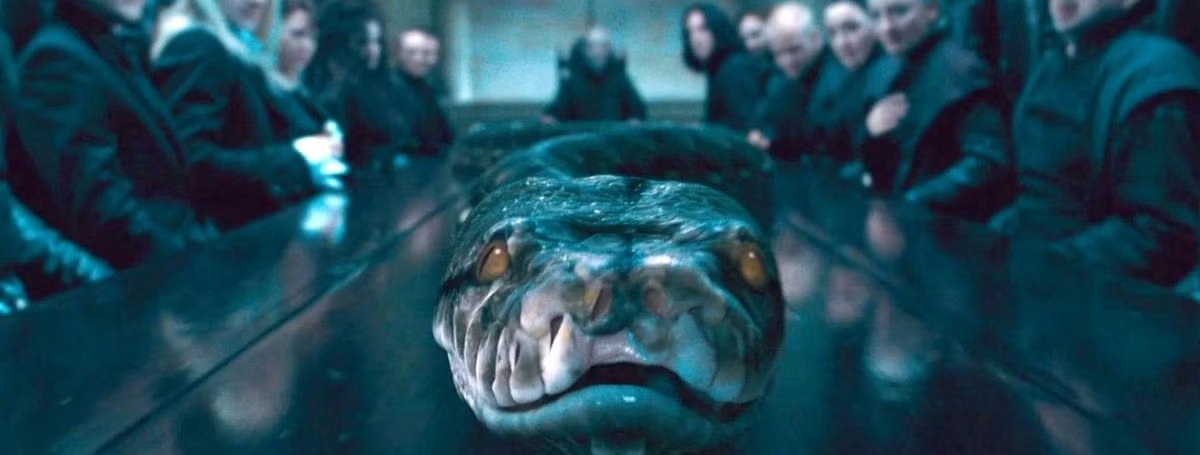
Pius Thicknesse
For the whole of his term the Minister for Magic was not, in any meaningful sense, present. Pius Thicknesse, the essay says, is omitted from most official records, having been under the Imperius Curse for his entire term and unconscious of anything he was doing. He had been running Magical Law Enforcement, Ulick Gamp’s old department, when Yaxley cursed him earlier in the summer of 1997; when Scrimgeour was killed on 1 August, the Ministry did not fall to an assault. It fell to a promotion.
What his Ministry did meanwhile is the darkest material on the list. It became a crime to be Muggle-born. A Muggle-born Register was set up to establish how such people had come by magical secrets, backed by research claiming they had stolen their magic, and a commission under Dolores Umbridge sat in judgment. Into that Ministry Harry, Ron and Hermione walked in disguise, and from Umbridge, inside the building, Harry took Slytherin’s locket, one of the Horcruxes Voldemort made, which the regime had been carrying about with no idea what it was.
Thicknesse fought on the Death Eaters’ side at Hogwarts and was hexed by Percy Weasley, who shouted as he fired that he was resigning, and then floored again by Percy and his father. The Lexicon glosses the name as pious stupidity and notes that Rowling says Thick-NESS. It is the one entry on this list where the name is unfair. He was not stupid. He was not there.
Kingsley Shacklebolt
A lynx walked into a wedding. On 1 August 1997, at the marriage of Bill Weasley and Fleur Delacour, a Patronus in that shape arrived with a message in Kingsley Shacklebolt’s voice: the Ministry has fallen, Scrimgeour is dead, they are coming. It is the most efficient piece of government communication in the series, sent by a man then assigned to undercover security for the Muggle Prime Minister, where the Lexicon records he had made himself invaluable.
An Auror and Order member since his first appearance escorting Harry out of Privet Drive, he spent the year the Ministry was Voldemort’s broadcasting on Potterwatch under the code name Royal. On 2 May 1998, the day of the Battle of Hogwarts, he became temporary Minister. The essay puts it more formally: initially named as caretaker Minister, Shacklebolt was subsequently elected to the office, and he oversaw the capture of the Death Eaters the novels name and Voldemort’s other supporters once the war was over.
Then he did the thing no Minister since 1718 had done. Under Kingsley Shacklebolt, Rowling’s Azkaban essay says, Azkaban was purged of Dementors; the guards are now Aurors, rotated from the mainland, and there has been no breakout since. The essay, published in 2015, lists his term as 1998 to the present. Thirty-four Ministers and the best part of three centuries after Ulick Gamp, the list ends on the one who closed the file Damocles Rowle opened. It is a good place to stop.
Frequently Asked Questions
Was Dolores Umbridge ever Minister for Magic?
No. Umbridge was Senior Undersecretary to the Minister under Fudge and later ran the Muggle-born Registration Commission under Thicknesse, but she never held the title, and Rowling’s essay counts only those who did. Dumbledore is absent for the opposite reason: he was offered the post and kept refusing it.
Is Hermione Granger Minister for Magic?
In Harry Potter and the Cursed Child, the stage play, Hermione Granger holds the office, and the Harry Potter Lexicon lists her term as unknown, serving during the years the play covers. She does not appear in Rowling’s 2015 essay, which ends with Kingsley Shacklebolt, so this list, built on that essay, leaves her to the theatre.
Which Ministers for Magic appear in the Harry Potter books?
Four serve on the page: Cornelius Fudge, Rufus Scrimgeour, Pius Thicknesse and Kingsley Shacklebolt, in that order, covering the seven novels between them. A fifth, Millicent Bagnold, is named in Order of the Phoenix as Fudge’s predecessor. Every other name on the roster comes from Rowling’s essay and her related writing.
How many women have been Minister for Magic?
Ten of the thirty-five, by Rowling’s essay: Artemisia Lufkin, Josephina Flint, Ottaline Gambol, Hortensia Milliphutt, Evangeline Orpington, Priscilla Dupont, Venusia Crickerly, Wilhelmina Tuft, Eugenia Jenkins and Millicent Bagnold. Lufkin, appointed in 1798, was the first. On Rowling’s list, no woman has held the office since Bagnold retired in 1990.
How long does a Minister for Magic serve?
There is no fixed limit, but a Minister must hold an election at least every seven years, and Rowling notes they generally last far longer than their Muggle counterparts. In practice the range is enormous: Basil Flack resigned after two months in 1752, while Faris Spavin held the office for thirty-eight years, from 1865 to 1903.
How many Ministers for Magic died in office?
Four, by the essay’s own wording: Eldritch Diggory of dragon pox in 1747, Maximilian Crowdy mysteriously in 1781, Wilhelmina Tuft of a fudge allergy in 1959, and Rufus Scrimgeour at Voldemort’s hands in 1997. Venusia Crickerly’s gardening accident ended her term in 1912, but Rowling does not use the phrase for her, so she is counted here separately.