Every Confirmed Death Eater Named in the Harry Potter Series

At the end of Harry’s fourth year, in the hospital wing, Severus Snape pulled up his left sleeve and showed the Minister for Magic what was on his forearm. The Dark Mark, he told Fudge, had been burned into every Death Eater by the Dark Lord, as a way of knowing one another and of being summoned: when Voldemort touched the Mark on any one of them, the rest were to appear at his side. Fudge had just let a Dementor destroy the one witness who had confessed. He decided to believe neither of them.
That sleeve is the standard this list uses. The word itself reaches Harry from Bill Weasley, on the night of the World Cup riot, as what You-Know-Who’s supporters called themselves, and from then on the novels reveal them one scene at a time: a school gang Sirius ticks off on his fingers, a hearing Harry watches inside a Pensieve, a graveyard circle Voldemort addresses by name, a fight in the Department of Mysteries, a party on the Astronomy Tower. Two of the people below were trusted with pieces of his soul. Of every Horcrux Voldemort created, the diary went into Lucius Malfoy’s keeping and the cup into the Lestrange vault at Gringotts.
Everyone here passes one test – named in the seven novels, and identified as a Death Eater either there, by the Mark, the narration or a speaker with reason to know, or by Rowling in her own words – and they run in the order the books reach them, from Sirius’s roll call in Goblet of Fire to the last surnames Deathly Hallows adds. Some familiar names are missing on purpose. Fenrir Greyback fights beside them; Pius Thicknesse and Stan Shunpike are made to; the schoolfriends of the young Tom Riddle are only ever described as a group. The questions at the end name each of them and say where the text stops short. Films and Cursed Child get no vote; Rowling’s own word does. The list opens with the son of the man who ran the trials.
Twenty-eight people are named in the seven Harry Potter novels and identified as Death Eaters by the novels themselves – the Dark Mark shown, the narration or a reliable speaker saying so – or by J.K. Rowling in her own writing and interviews. Films and Cursed Child are excluded, as are allies, the Imperiused and unnamed figures.
Barty Crouch Jr.
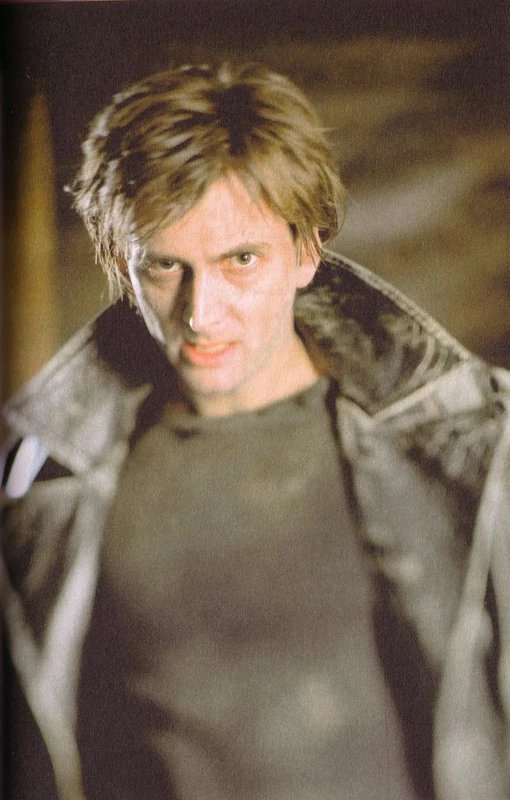
A Ministry official famous for keeping every rule had a Death Eater for a son, and Harry learns it from Sirius Black in a single sentence: “Crouch’s own son was caught with a group of Death Eaters who’d managed to talk their way out of Azkaban.” The books never print “Barty” or “Jr.” for him in their own voice. He is Crouch’s own son, and then, in the Pensieve, a boy in his late teens who begins to scream when the jury votes in unison for life.
He did not stay in Azkaban. His mother took his place and, as the chapter records it, chose to live out what was left of her life among the Dementors so that he could go free. His father hid him at home, where Bertha Jorkins heard enough to guess who was under the Invisibility Cloak, and paid for it with her memory.
The rest is Harry’s fourth year. He spent most of it wearing Alastor Moody’s face, kept up by the real Moody locked in a seven-lock trunk and by a hip flask everyone assumed held something stronger than Polyjuice, one of the potions the books name and the one the whole year rested on. Under Veritaserum he confessed to everything, down to the aside that he had loved Quidditch. Fudge then let a Dementor take his soul before Dumbledore could use him as a witness. The one confession that Voldemort had returned was gone within hours, on the Minister’s order.
Rabastan Lestrange
Two of the four people chained in the dock at the Longbottom trial are never described beyond a thickset man and a thinner, more nervous one, and the Lexicon’s own annotator admits there is not enough information to tell which brother is which. That is Rabastan Lestrange’s lot in the books: present, sentenced, undescribed. Mr. Crouch charges “the four of you” with capturing the Auror Frank Longbottom and putting him under the Cruciatus Curse, then with doing the same to his wife, and the jury raises its hands in unison for life. Three of the four rise quietly from their seats, Bellatrix among them; then she shouts that the Dark Lord will rise again.
He escapes with her in the mass breakout, when Fudge confirms to the Daily Prophet that ten high-security prisoners have left Azkaban in a single night. The paper prints ten faces; the text reads three of the names. His is not one of them.
The one time the books put his first name in anyone’s mouth is the Ministry fight, where Lucius Malfoy divides up his search party in a string of orders and sends “Crabbe, Rabastan” to the right. A brother, a sister-in-law, a life sentence, a breakout and one shouted instruction: for a man convicted of the Cruciatus Curse on two people, the record is very nearly silent about him. Harrypotter.com, which found room for a feature on Crookshanks the cat, has no page of any kind for him.
Rodolphus Lestrange
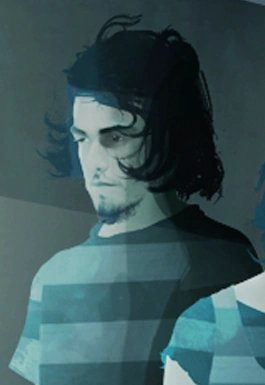
A wife, a brother and one shouted order: that is what the books give Rodolphus Lestrange. Sirius supplies the wife without a name: “The Lestranges – they’re a married couple – they’re in Azkaban.” The Pensieve trial supplies the sentence, life, for the Cruciatus Curse on Frank Longbottom and his wife, with Rodolphus as one of two undescribed men beside Bellatrix in the chained chairs. And Lucius Malfoy, dividing the Department of Mysteries between his fighters, supplies the order: “Bellatrix, Rodolphus, you take the left.”
That is the whole of him. He is captured in the first war, freed in the breakout of ten from Azkaban, and then he simply stops appearing under his own name; the Battle of Hogwarts chapters do not mention him once. Harrypotter.com adds that he was injured in that battle, which the novels never say, and that he and Bellatrix were among Voldemort’s most loyal followers, which they do.
It is an odd position for the husband of the most memorable villain in the series: married to the woman who shouts defiance at her own sentencing, and reduced by the text to the man standing quietly next to her. The Lexicon cannot even say for certain which of the two figures in the dock was him. Whatever Rodolphus wanted from the Death Eaters, the books were not interested enough to ask.
Wilkes
Wilkes exists in a single clause. Sirius Black, ticking off on his fingers the Slytherin gang Snape ran with at school – the ones who “nearly all turned out to be Death Eaters” – reaches him early: “Rosier and Wilkes – they were both killed by Aurors the year before Voldemort fell.” Then he moves on to the Lestranges, and the books never say the name again. No first name, no Dark Mark, no scene, no line of dialogue.
He is here because of who says it and what the sentence claims. The line has an exception, and Sirius names it soon after – “as far as I know, Snape was never even accused of being a Death Eater” – which leaves the men he actually ticks off as the ones the phrase covers. Rosier, named in the same breath, is separately confirmed at Karkaroff’s hearing, where Crouch reports that he was killed resisting arrest. Wilkes gets no hearing, no Prophet caption and no breakout. He was dead before the first book opened.
What the line does not say matters too. Sirius does not say the two died together, does not say where, and does not say who killed whom. Moody’s nose, the famous casualty of the fight that ended Rosier, is not connected to Wilkes anywhere in the text. He died in the year before Voldemort fell, at the hands of Aurors, and that is the entire record. Some Death Eaters get a chapter. Wilkes got a comma.
Antonin Dolohov
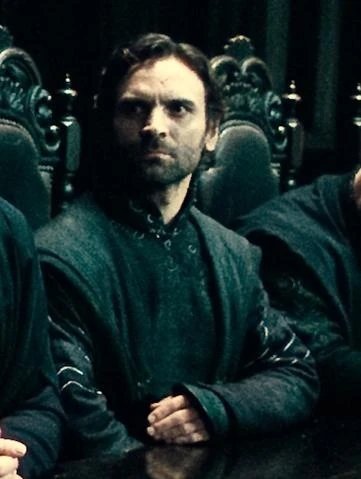
A long, pale, twisted face, sneering up out of a Daily Prophet photograph: that is how Harry meets Antonin Dolohov, in a caption recording his conviction for the murders of Gideon and Fabian Prewett. He is one of only three escapees the text names after ten prisoners break out of Azkaban. The other two are Bellatrix Lestrange and a man captioned Algernon in the first British printings.
Karkaroff had given him up years earlier, at his own hearing, saying he had watched Dolohov torture “countless Muggles and – and non-supporters of the Dark Lord”, to which Moody muttered that Karkaroff had helped him do it. The betrayal bought nothing. Crouch replied that Dolohov had already been caught, shortly after Karkaroff himself.
Free again, he is handed a door of his own at the Department of Mysteries – “Jugson, Dolohov, the door straight ahead” – and in the last book he walks into a Muggle cafe on Tottenham Court Road with Thorfinn Rowle, duels three teenagers, and loses. Of the two things everyone knows about Dolohov, the novels carry one. That he killed Remus Lupin comes from Rowling’s own essay on harrypotter.com, which calls him one of the longest-serving and most sadistic of all Voldemort’s Death Eaters; that Flitwick finally brought him down is one line in the last battle, quoted by the Lexicon and missing from the chapter’s own page. The text gives him a caption, a confession, a cafe and a fall, and leaves Lupin’s killer unnamed.
Augustus Rookwood
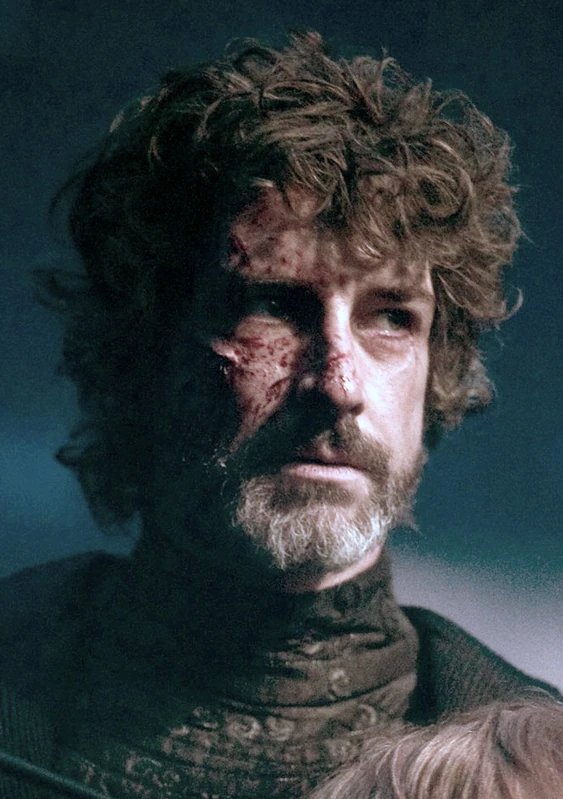
The name that bought Igor Karkaroff his freedom was the one the newspaper later got wrong. At the hearing, Dolohov, Rosier, Travers and Mulciber earned Karkaroff nothing, because the Ministry already held them or had killed them. Then he offered “Rookwood, who was a spy, and passed He-Who-Must-Not-Be-Named useful information from inside the Ministry itself”, and the court sat up. “Augustus Rookwood of the Department of Mysteries?” “The very same,” said Karkaroff eagerly. Harrypotter.com calls it his high-value card. It worked.
Rookwood went to Azkaban for it and came out again in the breakout of ten. The Daily Prophet ran his photograph: a pockmarked man with greasy hair, leaning against the edge of his picture, looking bored. The caption beneath him, in the first British editions, read “Algernon Rookwood”. Later printings corrected it to Augustus.
He gets one more order in the text, at the Department of Mysteries, where Lucius Malfoy waves him off with “Rookwood, over there”. The credit fans like to give him is harder to find on the page. The Devil’s Snare that throttled Broderick Bode in his hospital bed is sent by nobody the books name, and Rookwood’s briefing to Voldemort about the prophecy, which his Lexicon page codes to a chapter, is not reproduced on that chapter’s own page. A spy inside the most secretive department in the Ministry, unmasked by a man trying to save his own skin, and misnamed in print: the record is thin, and even that is smudged.
Evan Rosier
“Took a bit of me with him, though,” Moody whispers to Harry, and the court has just been told why. Evan Rosier is dead: caught shortly after Karkaroff, he “preferred to fight rather than come quietly and was killed in the struggle”. The struggle cost Mad-Eye Moody a piece of his nose, which is the detail that follows Rosier through the series far more closely than anything he did alive.
He is confirmed from two directions. Sirius names him among Snape’s old Slytherin gang, killed by Aurors, he says, the year before Voldemort fell, and Karkaroff names him at the hearing Harry watches in the Pensieve, where Crouch supplies the death. Harrypotter.com’s Sacred Twenty-Eight feature, which tracks the old pure-blood families, agrees on the timing: a Death Eater killed the year before Voldemort’s first downfall.
There is a second Rosier in the books, or possibly the same one. Dumbledore’s account of the friends Tom Riddle kept after leaving school includes a Rosier, and the Lexicon says plainly that whether that man was the Evan Rosier who died fighting Moody “is uncertain”. This list keeps the one the text confirms and leaves the question where the books left it. He died the year before Voldemort fell and still managed to be present, in a small way, at every meal Moody ate in the Great Hall.
Mulciber
“Mulciber! What do you see in him, Sev, he’s creepy!” Lily Evans is talking to Snape, and the name she detests is the same one Karkaroff will later hand to a courtroom with a specialty attached: “he specialized in the Imperius Curse, forced countless people to do horrific things!” Crouch’s reply is that the Ministry already has him.
The books print the surname alone; the chapter pages carry it in three scenes: in the memory of Karkaroff’s hearing, in Lucius Malfoy’s roll call at the Department of Mysteries – “Mulciber, come with me!”, the one partner Lucius keeps for himself – and in the memory Snape leaves Harry, where Lily asks what he tried to do to Mary Macdonald. She never says what it was. Whether that is one man or two is a question the Lexicon answers one way, with a page declaring “There are two Death Eaters named Mulciber”, and the text answers another, by never distinguishing them. The page for the chapter on Riddle’s schoolfriends, where the older Mulciber is supposed to live, carries no sentence about him. This list follows the text: one surname, one entry, no era claimed.
That leaves a Death Eater whose defining trait, in the one description anyone gives, is making other people do things. He is in Ministry hands by the time of Karkaroff’s hearing, back on his feet for the Department of Mysteries, and never once shown casting the curse he was known for. Lily’s verdict stands unanswered. Creepy.
Severus Snape
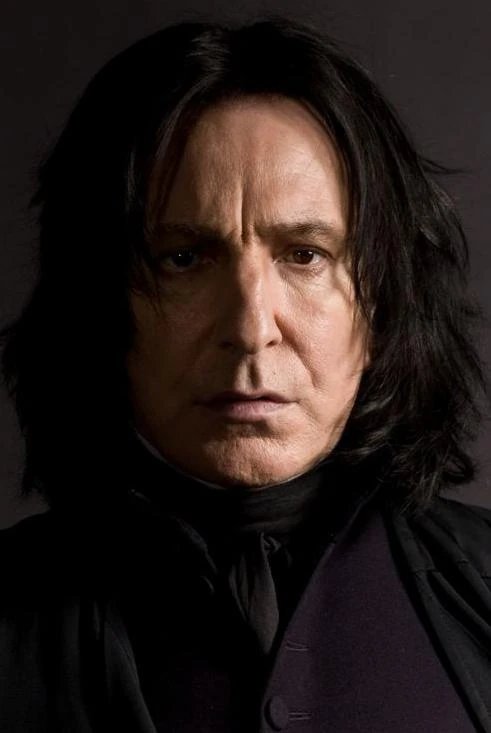
Dumbledore says it to a courtroom, in a memory Harry was never meant to see: “Severus Snape was indeed a Death Eater.” Then he finishes the sentence with the part that matters: “However, he rejoined our side before Lord Voldemort’s downfall and turned spy for us, at great personal risk.” A few lines later he adds that Snape is now no more a Death Eater than he is. The books then spend the rest of the series testing whether that was true.
Snape confirms the first half himself, sleeve rolled up in front of Fudge on the night Voldemort returns. What follows is the Unbreakable Vow at Spinner’s End, with Bellatrix Lestrange as Bonder; the murder on the Astronomy Tower, where he joins the other Death Eaters and blasts Dumbledore’s body off the battlements; and the Headmaster’s office of a Hogwarts run for Voldemort.
Two things the text keeps for him alone. The battered Potions book Harry found was his own schoolboy copy, and the spells of his own invention written in its margins include Sectumsempra, which Harry uses on Draco without knowing what it does and which Snape, furious, has to undo. And the whole account of why he changed sides arrives only at the end, in the memories he gave Harry for the Pensieve as he died in the Shrieking Shack. One of them ends on a silver doe and one word. Always.
Travers
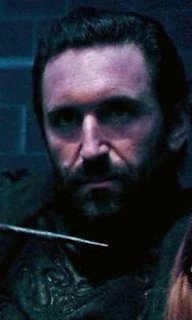
Karkaroff’s whole case against Travers fits in one breath: he helped murder the McKinnons. It is delivered at a hearing where it did the witness no good, since Crouch’s answer was that the Ministry already held Travers and Mulciber both. For most of the series that is where he stays: a surname with a crime attached and no face.
The last book gives him one. He is cursed by Kingsley Shacklebolt in the Seven Potters chase and survives it; he and Selwyn arrive at the Lovegoods’ house after Luna is taken and come close to catching Harry there; and, in the best scene he gets, he meets Hermione at Gringotts while she is wearing Bellatrix Lestrange’s face. He is not fooled so much as chatty. He complains about the Wandless who pester him to plead their cases at the Ministry, mentions that the inhabitants of Malfoy Manor have been confined to the house since the “escape”, and walks into the vaults beside her. Harry puts him under the Imperius Curse and leaves him tucked into a crack in the tunnel wall.
The curse wears off that night, and he is duelling Parvati Patil at the Battle of Hogwarts before the fighting is done. For a man who helped murder a family, the books never let him be frightening; his signature moment is small talk in a bank. At Karkaroff’s hearing the McKinnons get one line. So, in the end, does he.
Avery
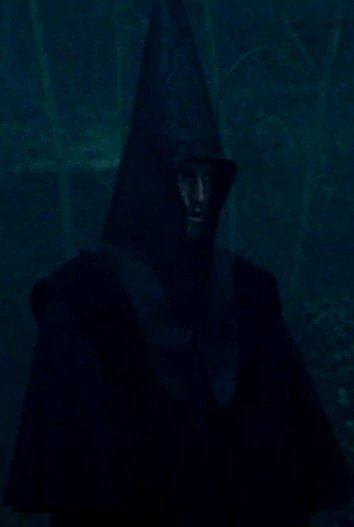
Sirius has a verb for how Avery avoided Azkaban: he wormed. “From what I’ve heard he wormed his way out of trouble by saying he’d been acting under the Imperius Curse – he’s still at large.” It is the last name Sirius ticks off from Snape’s old gang, and by his account the only one still free.
The freedom did him no good. When Voldemort returns and walks the circle in the graveyard, Avery is the one who breaks ranks to beg forgiveness, and gets the Cruciatus Curse for it: “You ask for forgiveness? I do not forgive. I do not forget.” Crabbe, Goyle and Nott, nearby, keep their mouths shut and their bones intact. The evening’s lesson is that the Imperius defence works on the Ministry and on nobody else.
He is back in the ranks for the Department of Mysteries, paired off by Lucius Malfoy – “Macnair and Avery, through here” – and that is his last appearance in the text. The Lexicon’s page for him adds that he led Voldemort to believe Broderick Bode could take the prophecy, coded to a chapter whose own page carries nothing of the kind, and Bode’s murderous houseplant has no sender in the novels. There is also a second Avery, Tom Riddle’s schoolmate in Slughorn’s memory, whom the Lexicon calls probably related and the books never connect. This is the other: the man who talked his way out of prison and could not talk his way out of a curse.
Crabbe
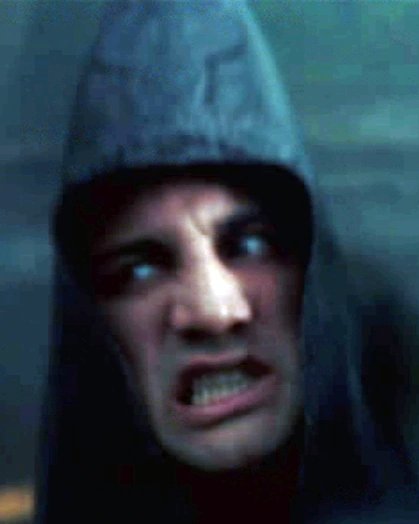
“The two largest hooded figures” is all the description the graveyard spares for Crabbe and Goyle, and Voldemort’s greeting is a jab rather than a welcome: “we have Crabbe . . . you will do better this time, will you not, Crabbe?” What he did badly last time the books never say. The failure exists only as a taunt, delivered in front of the whole circle, and Crabbe answers it, as far as the text records, with silence.
He has one more outing. At the Department of Mysteries, Lucius Malfoy pairs him with Rabastan Lestrange and sends the two of them to the right, an order preserved word for word in the Lexicon’s account of the chapter. After that the surname belongs to the son. Vincent Crabbe, who spent the series as Draco’s larger shadow, turns on him in the Room of Requirement once Draco and his father have fallen from power, conjures a fire he cannot control, and dies in it. The father’s fall from favour is the son’s stated reason for switching sides, and it is the closest the text comes to reporting what became of the elder Crabbe at all.
The books never give him a first name and never print “Sr.”; the label is the Lexicon’s, and the heading above does without it. He is Crabbe, one of the two largest hooded figures, told to do better. Whether he ever did, the novels decline to report.
Goyle
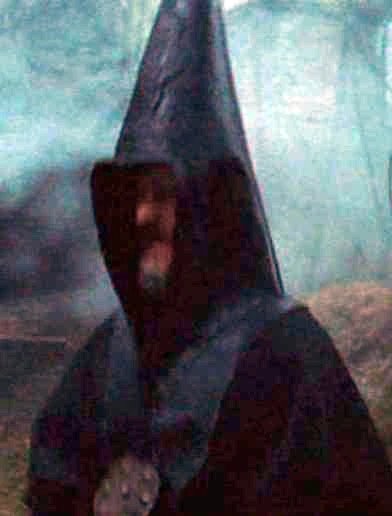
One scene, no lines, and the shortest greeting Voldemort gives anyone in the graveyard: “And you, Goyle?” Four words, tacked onto the end of the jab at Crabbe, and the two largest hooded figures are dealt with.
That is the whole of Goyle in the seven novels, and it is worth saying plainly because the record has been padded elsewhere. He is not at the Department of Mysteries; the chapter pages for that fight do not carry his name in the narrative or anywhere else. He is not the Death Eater Voldemort tortures in the graveyard for begging forgiveness; that is Avery. Every later appearance of the surname belongs to Gregory, the son, whom the official fact file calls the son of a Death Eater and nobody calls one himself, and who survives the fire that kills his friend Crabbe.
What the one scene establishes is enough for the test this list uses. Goyle stands in the circle Voldemort addresses as “Death Eaters”, and Voldemort speaks to him by name. He is confirmed in the same breath as Crabbe and never mentioned again. That fact-file line is, in the end, the most anyone official has ever written about Goyle: he is somebody’s father, and he was there.
Lucius Malfoy
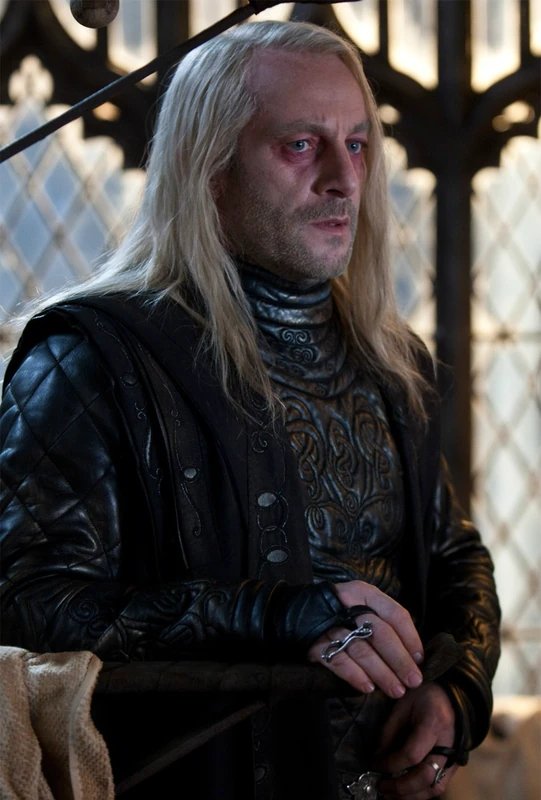
“Lucius, my slippery friend,” Voldemort calls him in the graveyard, and the name sticks: harrypotter.com files him as the slippery one. The greeting is a reproach. Lucius has not renounced the old ways, Voldemort says, and is still ready to take the lead in a spot of Muggle-torture, but he never tried to find his master. Respectable face to the world, Death Eater underneath, and a lazy one.
He had done Voldemort his most consequential favour long before, without knowing what it was. The diary that opens the Chamber of Secrets was in his keeping, and he slipped it into Ginny Weasley’s second-hand cauldron; Harry worked out the rest and tricked him into freeing Dobby on the way out. He leads the ambush at the Department of Mysteries, fails to get the prophecy, and goes to Azkaban for it.
By the time Voldemort holds court at Malfoy Manor, Lucius is the host who is not allowed a wand. “Lucius, I see no reason for you to have a wand anymore,” Voldemort tells him, and takes it. The wand’s end is the neatest thing in his story. Voldemort is carrying it in the Seven Potters chase when Harry’s wand sends golden fire back at him, and Lucius’s wand breaks – destroyed protecting the boy the Malfoys had spent the series trying to ruin. The books never pardon him. They leave him huddled in the Great Hall with his wife and son, alive, and let the reader decide what that was worth.
Nott

A stooped figure in Goyle’s shadow is how the graveyard introduces Nott, and he gets the circle’s most abject line: “My Lord, I prostrate myself before you, I am your most faithful -”. Voldemort cuts him off. “That will do.” The Death Eater who wanted to be counted most faithful is not allowed to finish.
He is hurt at the Department of Mysteries badly enough that Lucius Malfoy orders the others to abandon him: “Leave Nott, leave him, I say, the Dark Lord will not care for Nott’s injuries as much as losing that prophecy”. Hermione had Stunned him earlier in the fight. He does not speak again in the books. The graveyard line is the one time he is given any dialogue at all.
The novels do not confirm two things the fan record attaches to him. That he was one of the earliest Death Eaters, one of Tom Riddle’s first followers, is a Lexicon phrase harrypotter.com repeats, but the chapter’s own page has no sentence with his name in it; and that he was an elderly widower comes from Rowling, outside the books. What the books do give him is a son. Theodore is tagged as the Death Eater’s boy from the first book, sits in the library with Malfoy, Crabbe and Goyle plotting revenge on Harry, and never, so far as the text says, follows his father anywhere. His father asked to be called most faithful and was told that would do. It did.
Peter Pettigrew
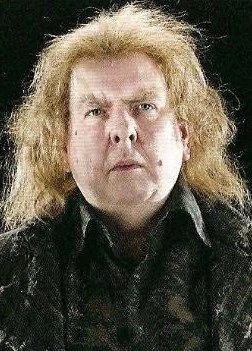
Voldemort needed a Death Eater’s forearm to summon the rest of them, and the arm he used was Wormtail’s. “The other arm, Wormtail,” he says in the graveyard, presses the Mark, and the circle Apparates in around him. Pettigrew has just cut off his own hand for the potion that gave Voldemort a body; in return he gets a new one, silver, “shining and powerful”, which is the kind of reward that turns out to have terms.
The books had already shown what he was. For twelve years he lived as a rat named Scabbers in the Weasley household, an unregistered Animagus who had faked his own death, framed Sirius Black for the murders, and let him go to Azkaban for them. When Lupin finally unmasks him in the Shrieking Shack the greeting is “Well, hello, Peter. Long time, no see.” Lupin’s other question is the one the reader is asking: why an innocent man would want to spend twelve years as a rat. He escapes that night, in the confusion of Lupin’s transformation, and goes to find his master. It is Wormtail who kills Cedric Diggory on Voldemort’s order, and Wormtail who binds Harry to the headstone.
The silver hand collects at Malfoy Manor. Harry reminds him of the life debt between them, Pettigrew hesitates, and the hand Voldemort gave him turns and closes on his own throat. Ron takes his wand as he dies. He is the one Death Eater on this list killed by a present.
Walden Macnair
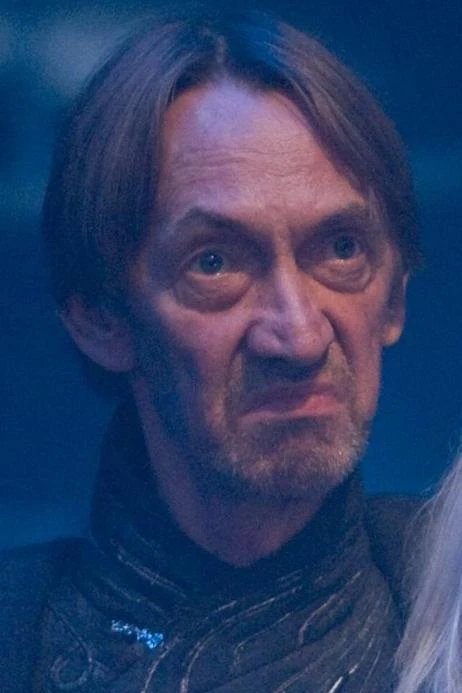
On the sixth of June at sundown, by decision of the Committee for the Disposal of Dangerous Creatures, the Hippogriff Buckbeak, “hereafter called the condemned”, was to be executed, and the executioner the Ministry sent to Hogwarts for the job was Macnair. That is how the books introduce him: as a civil servant with a specialty. Voldemort joins the two halves in the graveyard. “Macnair . . . destroying dangerous beasts for the Ministry of Magic now, Wormtail tells me? You shall have better victims than that soon.” “Thank you, Master . . . thank you,” Macnair murmurs.
His later career is mostly failure. Sent to the giants as Voldemort’s envoy, he did somewhat better than Hagrid, which was not difficult. At the Department of Mysteries he ends up with a wand jabbed into the eyehole of his mask. At the Battle of Hogwarts, by the Lexicon’s account, Hagrid throws him into a wall, and he finishes the war crumpled on the floor of the Great Hall, beaten by the man whose Hippogriff he had come to behead.
Two corrections. “Walden” is a first name the seven novels never print; the text calls him Macnair and nothing else. And the Devil’s Snare that killed Broderick Bode is attributed to him only on Rowling’s planning chart for Order of the Phoenix, which the Lexicon labels non-canon. He executed magical creatures the Ministry deemed dangerous for a living. On the page, that remains the most dangerous thing he ever managed.
Igor Karkaroff
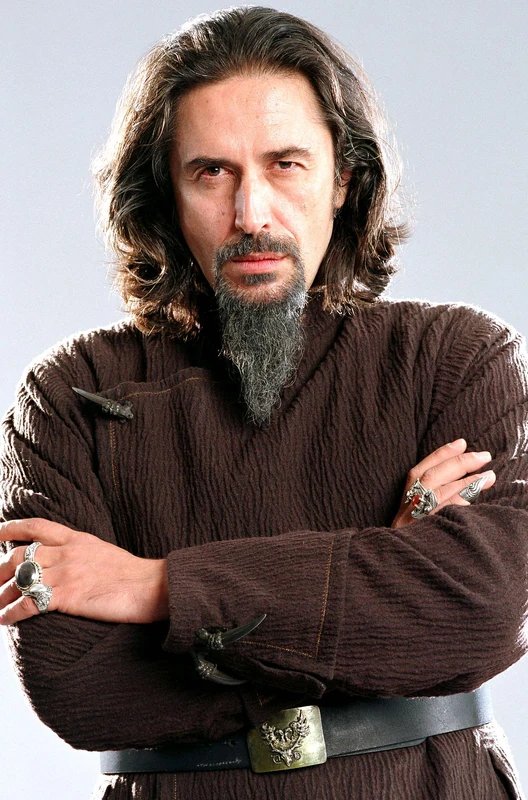
Snape’s Mark grew clearer all year, and so did Karkaroff’s. That is what Snape tells the Minister in the hospital wing – “We both felt the Mark burn. We both knew he had returned” – and Karkaroff, Headmaster of Durmstrang and a Triwizard guest at Hogwarts, fled the same night, because “he betrayed too many of his fellow Death Eaters to be sure of a welcome back into the fold”.
The betrayal is the hearing in Dumbledore’s Pensieve. Chained in his chair, visibly younger, hair and goatee still black, Karkaroff trades names for his freedom – Dolohov, Rosier, Travers, Mulciber, Rookwood and Snape, six of them – while pleading that the Death Eaters never knew each other’s names: “He alone knew exactly who we all were.” Most of the names are worthless to the court, because the men are dead or already caught. Rookwood, the spy inside the Ministry, is neither, and Rookwood buys him out.
Harrypotter.com, in a feature called “In defence of Igor Karkaroff”, notes that he had already spent time pondering his life choices with the Dementors before he talked. It did not save him twice. The novels’ word on his end comes second-hand, at the Burrow, the summer after he ran: he had survived about a year, which surprised Lupin, and his body had been found in a shack with the Dark Mark hanging over it. Regulus Black, Lupin adds, had managed a few days. Karkaroff spent his year running and got the sky sign anyway.
Bellatrix Lestrange
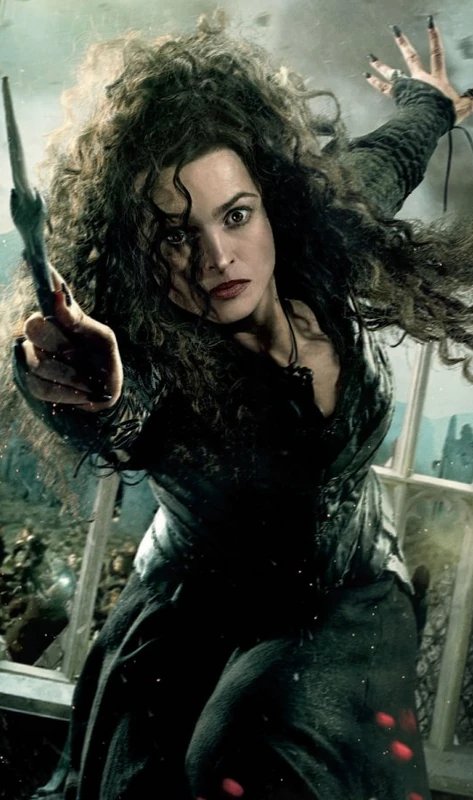
Kreacher calls her Miss Bella. Voldemort calls her Bella. The Daily Prophet, printing her photograph after the Azkaban breakout, calls her “Bellatrix Lestrange, convicted of the torture and permanent incapacitation of Frank and Alice Longbottom”, the more useful introduction. She and three others tortured the Longbottoms while hunting for Voldemort after his fall, and at the sentencing hers is the voice promising the court that Voldemort will return.
He does, and she is his. The chapter that names her a Death Eater is the Ministry fight, where she arrives with Lucius Malfoy, sends her cousin Sirius through the veiled archway, and is chased into the Atrium by Harry, who learns there that he cannot cast an Unforgivable Curse. At Spinner’s End she stands as Bonder for Snape’s Unbreakable Vow and tells Narcissa she would gladly give up sons of her own to the Dark Lord. At Malfoy Manor she tortures Hermione for the sword of Gryffindor and loses her wand to Harry.
That wand, walnut and dragon heartstring by the Lexicon’s record, is among the named wands of the series, and Hermione carries it into Gringotts along with Bellatrix’s face, borrowed by Polyjuice, to rob the Lestrange vault of Hufflepuff’s cup. Molly Weasley kills her in the Great Hall; the Lexicon dates it 2 May 1998. The books never say she killed Tonks; Rowling did, afterwards. What the text gives her is enough: the loudest voice in the dock, and a wand that ended up in a Muggle-born’s hands.
Jugson
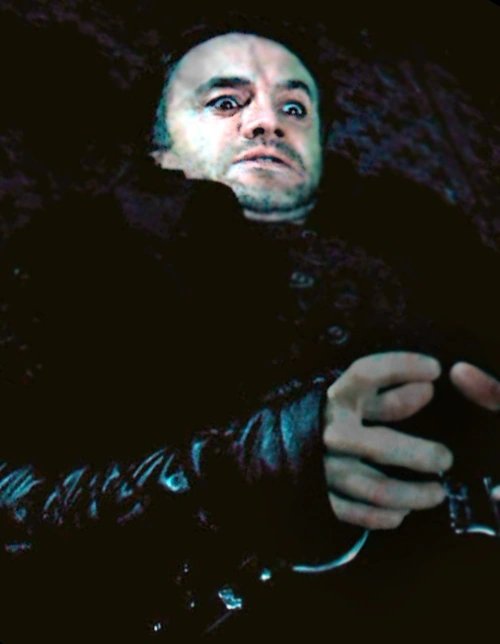
Lucius Malfoy shouts the name in the Department of Mysteries, while trying to hold his fighters together as the prophecy slips away: “Jugson, come back here, we need to organize!” That line, kept on the Lexicon’s essay about the battle, and the door order he shares with Dolohov in the same fight are the only times anyone in the seven novels says it aloud.
Everything else about Jugson is inference from a fight. Harry hits him with a Body-Bind; he gets free and rejoins the battle in the Death Chamber; the Lexicon’s page for the chapter lists him in the Death Eater party beside Avery, the Lestranges, Dolohov, Macnair, Nott and the rest. The chapter after the fight does not mention him. No first name, no wand, no fate, no later appearance, and on harrypotter.com not one page in the whole of the site’s map that so much as prints the word.
He makes the list at the thinnest grade it allows, and the reason is worth stating. The Lexicon’s entry, coded to the chapter, records him as a Death Eater at the Ministry fight; Lucius’s order is given to him as one of the party; and the party is one the narration names as Death Eaters when it arrives. That is a name inside a confirmed group, which passes the test, and nothing more. If the books ever meant to tell us who Jugson was, they forgot. He came back when he was called, and then he was gone.
Regulus Arcturus Black
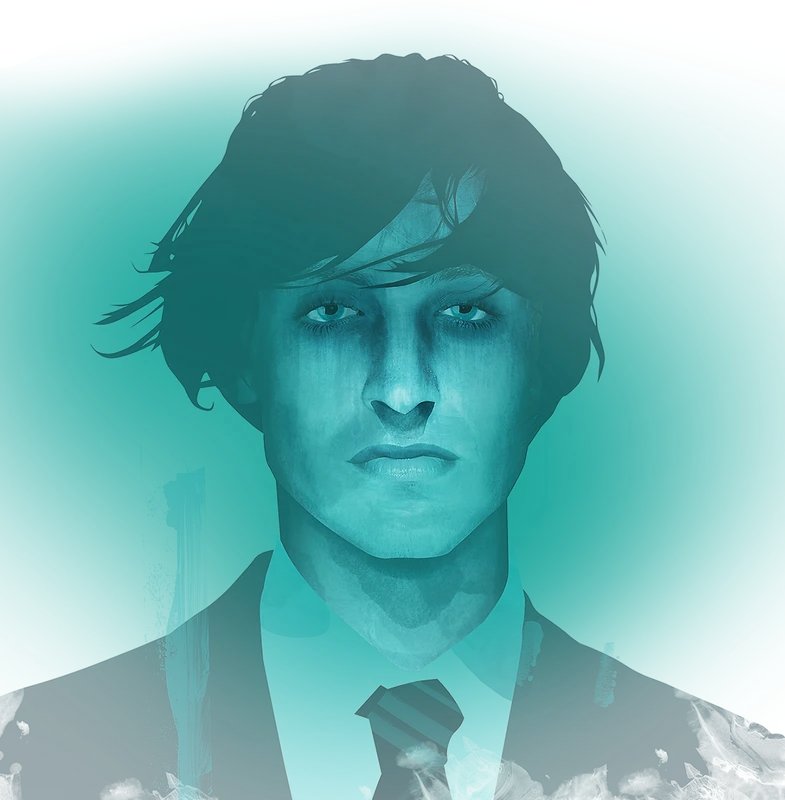
A house-elf tells the story, and only because Harry thinks to ask. Regulus Black, Sirius’s brother, had been a Death Eater; then, Kreacher explains, he ordered the elf to take him to the cave where Voldemort had hidden a locket, drank the basin’s potion himself rather than make Kreacher do it – “And he drank – all the potion -” – swapped in a fake, and was dragged under by the Inferi while Kreacher escaped with the real one.
The books had already told the reader how it ended, unnoticed. At the Burrow a year before, Lupin remarks that Sirius’s brother had only managed a few days after deserting the Death Eaters, which reads at the time as a footnote to Karkaroff. Then the fake locket gives up a note signed R.A.B., promising the real Horcrux has been stolen and will be destroyed, and Ron puts it together at Grimmauld Place: “Regulus Arcturus . . . Regulus . . . R.A.B.! The locket -”
He never finished the job. The locket stayed with Kreacher until Mundungus Fletcher stole it, and Harry, Ron and Hermione had to steal it back and destroy it themselves. Harrypotter.com’s line is that he switched sides and tried to destroy a Horcrux, which is the whole of it. Harry let Kreacher keep the fake, and Kreacher wore it into the Battle of Hogwarts. The Death Eater who lasted a few days is the one whose orders were still being followed at the end.
Alecto Carrow
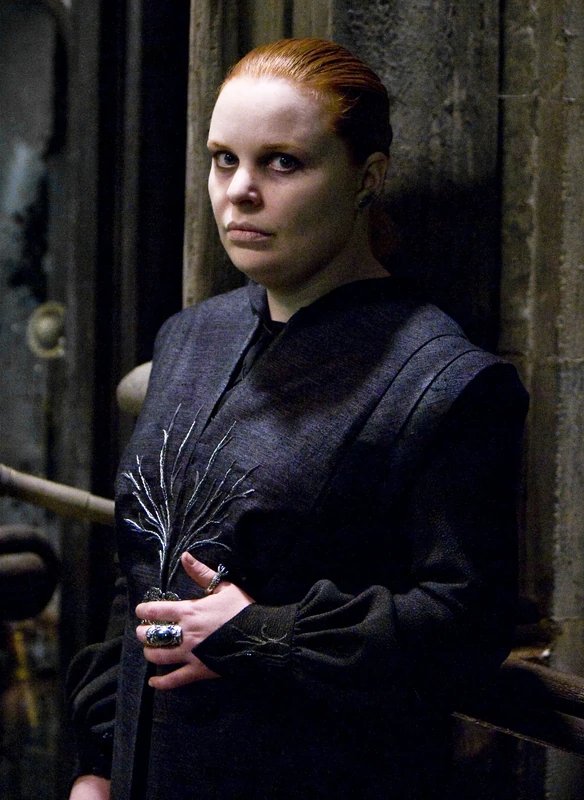
Muggle Studies became compulsory in Harry’s seventh year, and the teacher was a Death Eater. Alecto Carrow took the post when Voldemort’s Ministry took the school, and Neville’s account of her classes is short: the whole school has to listen to her explain how Muggles are “like animals, stupid and dirty”, and how the natural order is being re-established. Harrypotter.com’s summary of the Carrows runs to “a pair of rancid Death Eater siblings”, made Deputy Headmasters under Snape, and “a brother-and-sister Death Eater double-act, recruited to instil some discipline”.
She had arrived the year before, in the party of Death Eaters Draco let into the castle through the Vanishing Cabinet, the night Dumbledore died on the Astronomy Tower. That scene is what puts her on this list; the teaching post is what makes her memorable.
Her last act in the books is in the Ravenclaw common room, where she presses her Dark Mark to call Voldemort to the castle and is Stunned before he arrives. Who Stunned her the Lexicon answers two ways, Harry on the chapter’s page and Luna on hers, so this list leaves the wand unassigned. McGonagall ties her up beside her brother and tells the pair of them that the difference between truth and lies, courage and cowardice, is one they seem unable to appreciate. It is as close as the books come to a staff appraisal, and it was delivered while she was tied up.
Amycus Carrow
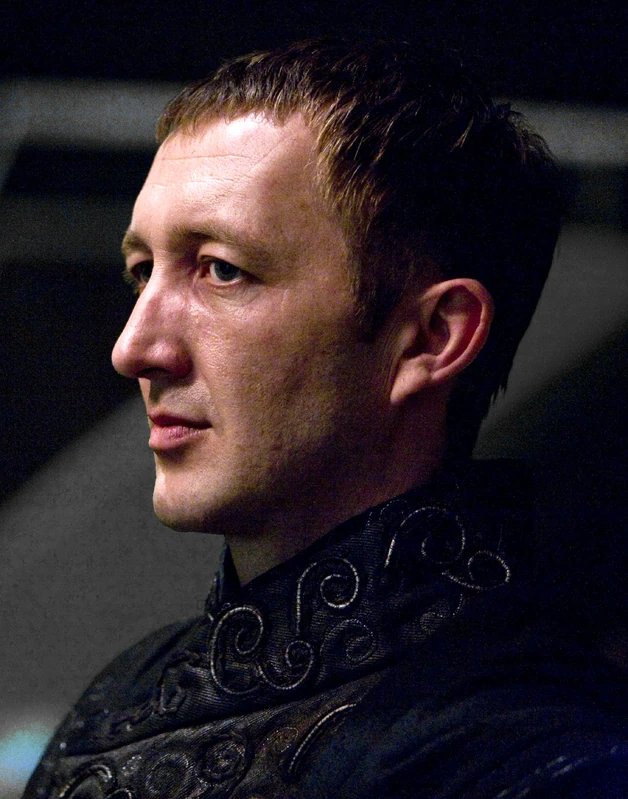
He spat in McGonagall’s face. That is the moment the last book gives Amycus Carrow, in the Ravenclaw common room on the night of the Battle of Hogwarts, after she refuses to let him pass off his many ineptitudes on the students; Harry, watching from under the Invisibility Cloak with Luna, attacks him for it, and learns something about himself in the process: “I see what Bellatrix meant, you need to really mean it.” The curse is never named on the chapter’s own page. Harrypotter.com supplies it, calling it “the dreaded Cruciatus Curse”, which is as close as this list will get.
He had come to Hogwarts as a teacher, of a kind. When Snape became Headmaster the Carrows took two posts on the Hogwarts teaching staff, his sister in Muggle Studies and Amycus in the Dark Arts, the subject having lost its “Defence Against” somewhere in the changeover.
He was a Death Eater before he was a teacher. He is in the party on the Astronomy Tower the night Dumbledore dies, urging Draco to get on with it, and he is at the Malfoy Manor table when Voldemort opens the last book, a squat man the Lexicon identifies as almost certainly him. McGonagall’s verdict, before the spitting, was that he would not pass his failings off on the children of Hogwarts. She then tied him up beside his sister and went to fight a war.
Yaxley
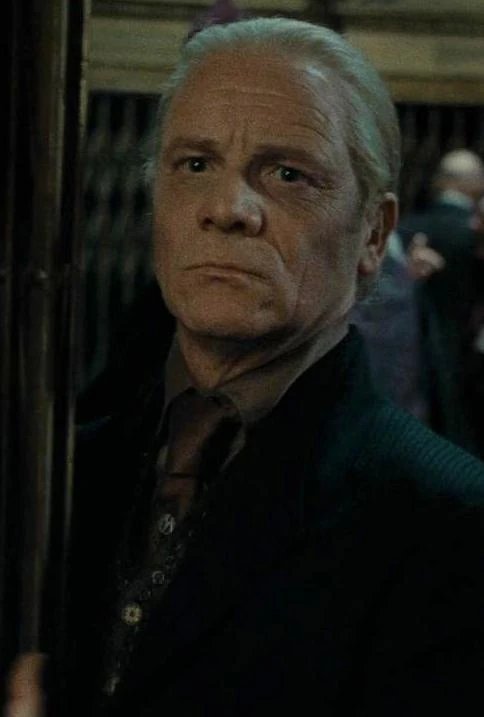
Number Twelve, Grimmauld Place, fell to a hand on a sleeve. As the trio Disapparated out of the Ministry, Yaxley caught hold of Hermione’s arm and came with them as far as the doorstep, which was enough: the Fidelius Charm hiding the house was broken, and they could never go back. It is a large result for a man who got no further than the doorstep.
The book had introduced him a few chapters earlier at Malfoy Manor, seated at Voldemort’s table while Snape reported that Potter would not be moved until the thirtieth, and it is Yaxley whose Imperius Curse on Pius Thicknesse, cast earlier that summer, put a puppet among the Ministers for Magic once Scrimgeour was dead. Yaxley took over Magical Law Enforcement himself and ran his office with rain coming through the ceiling, which was Reg Cattermole’s fault, and with Mary Cattermole’s blood status as the case on his desk.
He had been a Death Eater before any of that: one of the four who broke through the Order’s defenders and reached the top of the Astronomy Tower, where he was among those telling Draco to hurry up and the one Harry left Petrified on the floor. “Corban”, the first name fans use for him, is never printed in the novels. The record’s last sight of him is at the Battle of Hogwarts, slammed to the floor by George Weasley and Lee Jordan. Whether he got up, the books do not say.
Draco Malfoy
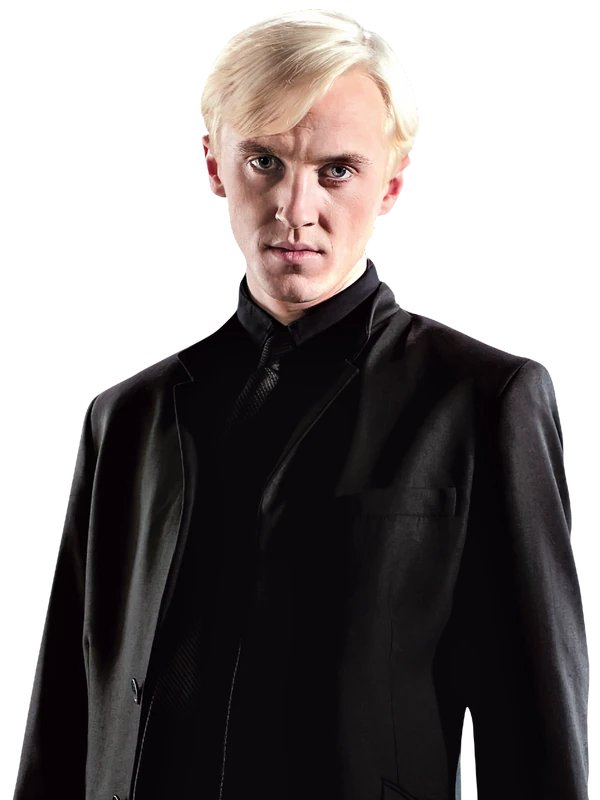
Harry spends most of his sixth year insisting Draco Malfoy is a Death Eater, and nobody believes him. He has overheard a conversation at Borgin and Burkes, listened to Draco bragging on the train, and told Mr. Weasley his suspicions. The famous moment where Draco shows Borgin the Mark on his arm is not in the book. It is overheard, not seen, and Harry’s certainty is a theory he cannot prove.
What the text shows is the Astronomy Tower. Draco has spent the year repairing a Vanishing Cabinet, and through it lets a party of Death Eaters into the castle; on the Tower he disarms Dumbledore and cannot make himself kill him. The cursed necklace that nearly killed Katie Bell and the mead that nearly killed Ron were his, too.
The books never show the Mark on his arm, and the Tower chapter’s own words stop short of the label. Rowling does not: on harrypotter.com she writes that Draco “accepted full membership of the Death Eaters”, and in a 2007 web chat that Harry knows he “hated being a Death Eater”. Her word is what puts him here. What the novels give him instead is Malfoy Manor, where he is asked to identify a disfigured prisoner as Harry and will not quite, and the forest, where his mother lies to Voldemort to learn whether he is alive. The Death Eater who could not commit the murder is the one the books let go home.
Gibbon
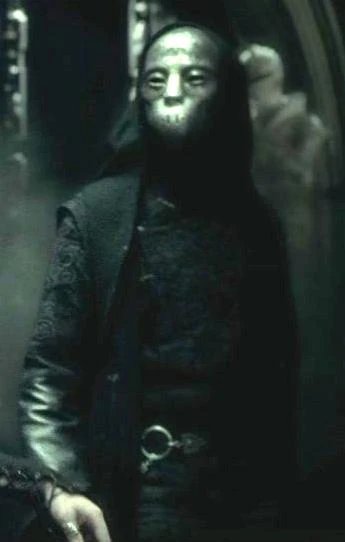
Nobody at the official website has ever written his name down. A search of every page on harrypotter.com turns up no Gibbon of any kind, which puts him with Jugson among the names the Wizarding World’s own website has never printed: a Death Eater the books kill off and the official site has never mentioned.
The books do not say much either. He is in the party that gets into Hogwarts the night Dumbledore dies, and he is dead by the end of it, killed by a curse from a fellow Death Eater who was aiming at Lupin and missed. That is the whole of his story, and it is told after the fact, in the chapter where the survivors count the cost.
Which Death Eater fired it the Lexicon answers with Rowle’s name, on two pages, coded to the chapter on only one of them; the page for the night carries no such sentence. So this list says only what the text says: friendly fire, aimed at a werewolf, that found a Death Eater instead. His Dark Mark, the one the fan record says he set off over the castle that night, is another uncoded line, and stays off the page with the killer’s name. That leaves a man with one chapter, one sentence and one distinction. Of everyone here, Gibbon is the one killed by a curse meant for somebody else, and the one whose entire existence is an afterthought in another character’s grief.
Thorfinn Rowle
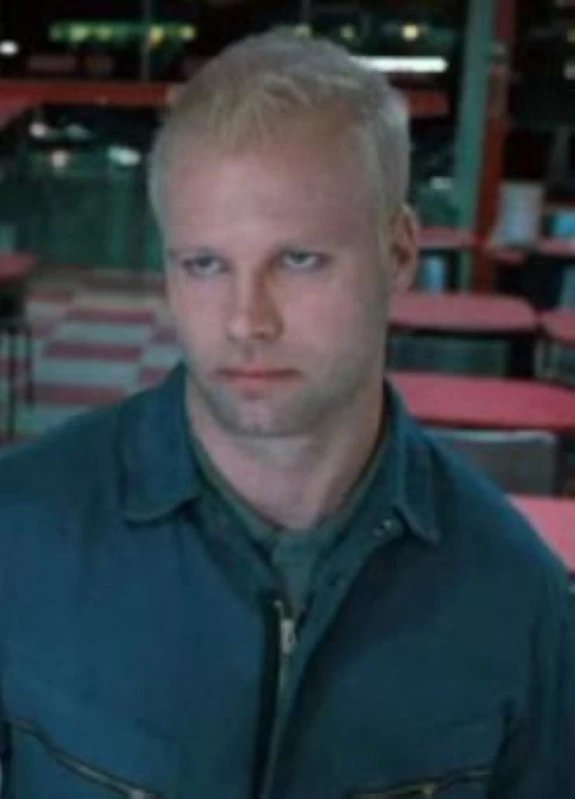
Ron knew the name from a wanted poster. When two Death Eaters found the trio in a London cafe on the night they fled the wedding, Harry recognised one face from the night Dumbledore died and Ron supplied the name: Thorfinn Rowle, the big blond one. The duel went the trio’s way, and Hermione, who had never done a Memory Charm, did one before they left.
Voldemort’s response is the scene the books give Rowle. Harry sees it through his scar: a petrified Draco Malfoy being made to use the Cruciatus Curse on him – “More, Rowle, or shall we end it and feed you to Nagini?” – as punishment for letting Harry go. Narcissa remembers it too, at Malfoy Manor, when the family is deciding whether to summon Voldemort over a prisoner who might not be Harry: remember what he did to Rowle and Dolohov.
He was there the year before, on the Astronomy Tower, a huge blond Death Eater who did tremendous damage and then set fire to Hagrid’s hut with Fang inside on the way out. The Lexicon also credits him with the curse that killed Gibbon, on a line his page leaves uncoded, so the credit stays there. Harry last sees him in the forest with an injured lip, silencing Hagrid as Harry walks out to Voldemort. Harrypotter.com sums him up as big and blond and in trouble with Voldemort. For a man fed to a snake in prospect, that is not a bad summary.
Selwyn
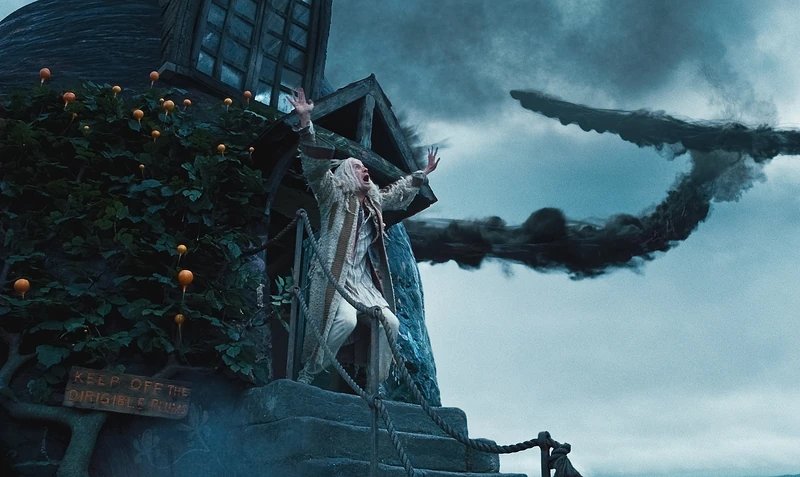
A rough voice and one afternoon: that is Selwyn. He arrives at the Lovegoods’ house with Travers after Luna has been taken, summoned by her father, who has been holding the trio in the hope of trading them for his daughter, and spends the scene threatening Xenophilius Lovegood. The trio get out, and Selwyn’s part in the seven novels is over.
The Lexicon’s fact file gives him a rough voice and nothing else by way of description, and its own page for him opens by putting him in the Seven Potters chase, which that chapter’s page does not support; he is filed there as a cross-link, not a character in a scene, and this list does not count it. Dolores Umbridge, earlier in the same book, claims kinship with “the Selwyns” while wearing Slytherin’s locket, and that is the one place the Lexicon’s chapter pages quote the surname, about the family rather than the man.
The official site’s feature on the pure-blood families keeps him to a single sentence: a Death Eater named Selwyn was involved in the kidnap of Luna Lovegood, but his appearance in the Potter stories was brief. He is the last surname the books confirm, and the last name on this list, which he shares with a pure-blood family, a locket, and a Ministry official who wanted the connection more than he ever seemed to. It is a small afternoon to hang an entry on. It is also, for Selwyn, the entire war.
Frequently Asked Questions
Is Fenrir Greyback a Death Eater in the books?
Not by the test this list uses. Greyback fights beside the Death Eaters on the Astronomy Tower and later runs with the Snatchers who catch Harry, but the novels never show him Marked, no reliable voice in them calls him one, and Rowling’s own essay on Remus Lupin, which tracks him, never does either. An ally, not a member.
Why is Pius Thicknesse not on the list?
Because he spent his whole term as Minister under the Imperius Curse, which is why Rowling’s own writing on the Ministers for Magic says most official records leave him out. Yaxley cursed him before Deathly Hallows opens; he took office after Scrimgeour died and was still controlled when Percy Weasley jinxed him at Hogwarts. A puppet is not a member.
Was Stan Shunpike a Death Eater?
No. Stan was arrested on suspicion of Death Eater activity in Harry’s sixth year, and in the Seven Potters chase the narration calls a hooded rider “the closest Death Eater” a moment before his hood slips and Harry sees Stan’s strangely blank face, the look of the Imperius Curse. He rode with them because he was made to.
Were Tom Riddle’s school friends Death Eaters?
Not as individuals. Slughorn’s memory and Dumbledore’s account of Riddle’s circle place a Lestrange and an Avery among his schoolfriends, and the Lexicon files Nott, Rosier, Mulciber and Dolohov under Dumbledore’s account, but no sentence there calls any of those boys a Death Eater. Where a surname is confirmed later, this list counts only the man the text confirms.
Are Crabbe, Goyle and Theodore Nott Death Eaters?
No. Their fathers are: Crabbe, Goyle and Nott all stand in the graveyard circle when Voldemort returns, and Theodore is described as the son of the Death Eater Nott. The sons are never marked or named as members. Vincent Crabbe dies in the Room of Requirement, killed by a fire he cast and could not control; Gregory Goyle survives it.
Is Narcissa Malfoy a Death Eater?
No. Narcissa sits at the table when Voldemort holds his meeting at Malfoy Manor, but nothing in the scene calls her a Death Eater or puts a Mark on her, and Rowling, asked in a 2007 web chat, answered that she “never had the Dark Mark and was never a fully paid-up member”. Presence at a meeting is not membership.
Is Quirrell a Death Eater?
Not in the novels or in Rowling’s writing on him. Quirrell serves Voldemort through the first book and ends it with two faces, but no sentence calls him a Death Eater, no Mark is mentioned, and Rowling’s harrypotter.com piece has Voldemort take possession of him, which is not membership. A harrypotter.com feature still calls him “the two-faced one”.
- J.K. Rowling, Harry Potter, books 1-7 (Bloomsbury, 1997-2007), chapters as cited in the evidence record
- Harry Potter Lexicon – Death Eaters list, the chapter-citation index consulted for every entry
- Harry Potter Lexicon – The Death Eaters: A Guide To Who Was Where
- Wizarding World – Who are the Sacred Twenty-Eight?
- J.K. Rowling, “Remus Lupin”, “Ministers for Magic”, “Draco Malfoy” and “Professor Quirrell”, writing published on harrypotter.com
- J.K. Rowling web chat transcript, 2007 (The Leaky Cauldron)