Every Professional Quidditch Team in the British and Irish League

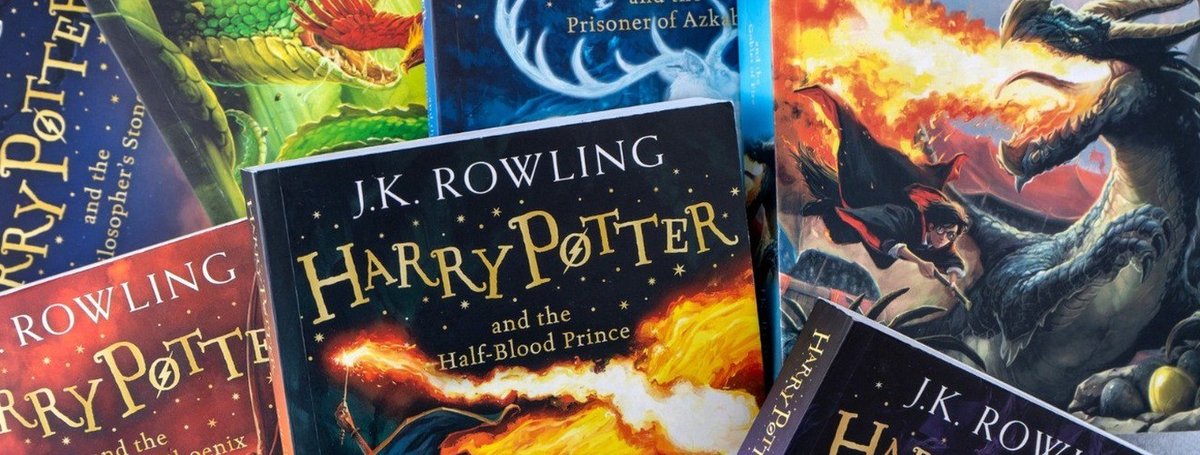
The copy of Quidditch Through the Ages that Harry reads in his first year did not stay with him long. It was a library book, lent to him by Hermione before his first match, and Snape confiscated it in Philosopher’s Stone with the words ‘Library books are not to be taken outside the school’, plus five points from Gryffindor for good measure. The real book got out anyway. Rowling published it on 12 March 2001 under the name Kennilworthy Whisp, one of two Harry Potter books published for Comic Relief that day, with a foreword in which Dumbledore admits that Madam Pince had suggested ‘telling the people from Comic Relief U.K. that the library had burned down’. Hogwarts staff, it seems, do not like this book leaving the building.
Its seventh chapter is where the teams live. The League, the book explains, was established in 1674, when the best teams in Britain and Ireland ‘were selected to join the League’, and professional Quidditch teams have been ‘limited in number since’. Selected is the word to notice. The League did not found its clubs; it chose them, and every club whose founding year the book records was already playing by then, several of them for centuries.
The clubs follow in alphabetical order, and the Banchory Bangers take their alphabetical place, labelled for what they are. Four clubs – the Bats, the Cannons, the Falcons and the Magpies – arrive with no founding year at all, which in the Cannons’ case may be a kindness.
The British and Irish Quidditch League has thirteen professional clubs, plus one disbanded side worth counting: the Banchory Bangers, the one other British or Irish club Quidditch Through the Ages shows playing a League team, who never played again once the Ministry of Magic caught up with them. That book and the seven novels decide every entry.
Appleby Arrows

Every time their Chasers scored, supporters of this club used to fire arrows into the air from their wands. The Department of Magical Games and Sports banned the habit in 1894, after one of the arrows went through the nose of a referee named Nugent Potts, and it is difficult to feel the Department overreacted.
The Arrows were founded in 1612 in the town of Appleby and play in pale blue robes with a silver arrow across the chest, a club that settled on its theme early and saw no reason to revisit it. Quidditch Through the Ages is unusually certain about their finest moment: ‘Arrows fans will agree that their team’s most glorious hour was their 1932 defeat of the team who were then the European champions, the Vratsa Vultures, in a match that lasted sixteen days in conditions of dense fog and rain.’ Sixteen days of fog is a long time to be glorious in. Their rivals are the Wimbourne Wasps, for reasons the Wasps’ own name records.
Rowling’s Daily Prophet newsletters gave the Arrows a Seeker, Gregory Cotton, and a less glorious hour to set beside the first. In a match against Pride of Portree, the opposing Seeker turned Cotton’s head into a cabbage.
Ballycastle Bats

Twenty-seven League titles make the Ballycastle Bats the second most successful team in League history, a distinction that sounds grand right up to the moment somebody asks about first place. They are Northern Ireland’s most celebrated Quidditch team besides, which is harder to quibble with.
The robes are black, with a scarlet bat across the chest, and the club mascot is Barny the Fruitbat, who keeps a second career going outside the stadium in advertisements for Butterbeer. A sports club whose fruitbat moonlights in drinks advertising is the sort of detail Quidditch Through the Ages drops in passing, which is precisely why it sticks in the mind.
Rowling’s Daily Prophet newsletters filled in more of the picture. They gave the Bats a captain, Finbar Quigley, and a win over the League leaders, the Tutshill Tornados, helped along by some suspicious Bludger work from Quigley himself and cheered by ‘a packed crowd of black-clad Bat fans’. When harrypotter.com gathered the favourite teams its fan club members had chosen, the Bats turned out to be the club Slytherins were most likely to pick. Black robes, a bat on the chest and a name for suspicious Bludger work: the Slytherin vote more or less explains itself.
Banchory Bangers

Being shut down by the Ministry of Magic is not the usual route onto a list of professional Quidditch clubs, but the Banchory Bangers were not a usual club. Quidditch Through the Ages remembers the Scottish side for two things, its appallingly awful Quidditch and its wild after-match parties, and nothing in the record suggests the players ranked them in that order.
Their undoing came in 1814, at a fixture with the Appleby Arrows, the one League club the book ever shows them playing and the reason they have a place here at all. The Bangers let their Bludgers loose and went off to catch a Hebridean Black, a dragon, to serve as the team mascot. Of all the magical creatures of the Harry Potter books, it is hard to think of one less suited to standing on a touchline in a scarf.
The book ends the story in a single flat sentence: ‘Ministry of Magic representatives apprehended them as they were flying over Inverness and the Banchory Bangers never played again.’ It sits in the chapter on anti-Muggle precautions, and that placement says exactly how the Ministry saw the affair. A Quidditch club chasing a dragon across the Scottish sky with its Bludgers loose was not a sporting problem. It was a secrecy problem, and the Ministry dealt with it accordingly.
Caerphilly Catapults

When ‘Dangerous’ Dai Llewellyn was eaten by a Chimaera while on holiday in Mykonos, Welsh witches and wizards observed a national day of mourning. He was the Caerphilly Catapults’ most famous player, known for a reckless and foolhardy style of play, and the manner of his death suggests he never quite switched it off. Oddly, the record does not say what position he played. Quidditch remembers him with the ‘Dangerous’ Dai Commemorative Medal, awarded each season to the most reckless player in the game, which is less a memorial than an open invitation.
The club behind him was founded in 1402 and plays in vertical stripes of light green and scarlet, a kit that would be hard to miss on any pitch in Wales. Eighteen League wins sit on its record, and so does the 1956 European Cup final, in which the Catapults beat the Norwegian side the Karasjok Kites.
Llewellyn’s name survives somewhere more sobering as well, and it is not a trophy cabinet. When Arthur Weasley is taken to St Mungo’s in Order of the Phoenix, his bed is on the Dai Llewellyn Ward. Naming a hospital ward after a man who took no care of himself whatsoever is either a tribute or a warning, and St Mungo’s does not say which.
Chudley Cannons

‘Ninth in the league,’ says Ron Weasley in Chamber of Secrets, pointing at an orange bedspread emblazoned with two giant black C’s and a speeding cannonball. Around him nearly every inch of the shabby wallpaper has vanished under posters of the same seven witches and wizards in bright orange robes, carrying broomsticks and waving energetically, which is a good deal more energy than the League table suggests they spend on matches.
It was not always so bleak. The Chudley Cannons have won the League Cup twenty-one times, although the last of those came in 1892. In 1972 the club gave up pretending and changed its motto from ‘We shall conquer’ to ‘Let’s all just keep our fingers crossed and hope for the best.’ It may be the most honest motto in sport.
The novels keep the joke running. In Deathly Hallows Harry silently recites the record of one Dragomir Gorgovitch, ‘transferred to the Chudley Cannons for a record fee two years ago’ and ‘Record-holder for most Quaffle drops in a season’. When Harry insists he is definitely not thinking of Gorgovitch, Ron replies, ‘I try not to, either.’ Asked in a 2007 web chat whether the Cannons would ever win the Quidditch World Cup, Rowling was kinder than the fixture list: ‘Bless them, perhaps. But they’d need to replace the entire team and down several cauldrons of Felix Felicitas.’ Several cauldrons, note. Not one.
Falmouth Falcons

The Falmouth Falcons are known for hard play, and the club has put its philosophy on the record in the form of a motto: ‘Let us win, but if we cannot win, let us break a few heads.’ Winning comes first. Heads are a close second.
They play in dark grey and white, with a falcon’s head on the chest, and for a club devoted to breaking things, their most useful former players turned out to be inventors. Randolph Keitch and Basil Horton both played for Falmouth before retiring to found the Comet Trading Company in 1929. Its first broom, the Comet 140, carried the pair’s patented braking charm, the Horton-Keitch Braking Charm, and there is something pleasing about two Falcons building a business on a device for slowing down.
Rowling’s Daily Prophet newsletters added one more Falmouth fixture worth knowing about, against Pride of Portree at a new stadium on Exmoor with an Invisibility Charm on it. Supporters were warned: ‘Please collect Re-Visibility Spectacles from ticket office or you will not be able to find the pitch.’ A later issue reported that the spectacles had left Falcon fans and players thoroughly confused. A club that promises to break a few heads can do very little about it when nobody can find the pitch.
Holyhead Harpies

At the end of a seven-day match in 1953, the captain of the Heidelberg Harriers, Rudolf Brand, got off his broom and proposed marriage to the captain of the Holyhead Harpies, Gwendolyn Morgan. She concussed him with her Cleansweep Five. Her side had just won what Quidditch Through the Ages calls ‘one of the finest Quidditch games ever seen’, and she saw no reason to let the day end on anybody else’s terms.
The Harpies were founded in 1203, play in dark green robes with a golden talon on the chest, and hire only witches. The official Harry Potter site goes further and calls them ‘unique amongst Quidditch teams around the globe’ on that account; the book states the rule and leaves the comparisons to other people.
The club also has a friend at Hogwarts. Horace Slughorn, one of the Hogwarts professors and a keen collector of famous acquaintances, makes sure Harry knows about ‘Gwenog Jones, who of course captains the Holyhead Harpies’, and adds, in Half-Blood Prince, that ‘people are always astonished to hear I’m on first-name terms with the Harpies, and free tickets whenever I want them!’ It is the most Slughorn sentence in the series. The friendship and the free tickets arrive in the same breath, and it is not entirely clear which he values more.
Kenmare Kestrels

Leprechauns serve as the club’s mascots and its supporters are known for playing the harp at matches, which gives a home game in Kenmare something of the air of a very cheerful state occasion. Nobody could accuse the Kestrels of underplaying where they come from.
Founded in 1291, they play in emerald green with two yellow Ks back to back on the front of the robes. The great name in their history is Darren O’Hare, the Kestrels’ Keeper from 1947 to 1960, who also captained the Ireland national team and is credited with inventing the Hawkshead Attacking Formation. A Keeper devising an attacking formation is the kind of thing that ought not to happen in a sensibly organised sport, and in Quidditch evidently does. It says a good deal about O’Hare, and possibly about how much time Keepers spend watching everyone else.
In the novels the Kestrels turn up on a dormitory wall. In Order of the Phoenix, Seamus Finnigan is found fussing over his Kenmare Kestrels poster, making sure it hangs perfectly straight, in the same chapter that finds Harry kneeling on his bed with his wand pointed at Seamus, and Seamus standing there with his fists raised. The poster, at least, was straight.
Montrose Magpies

Eunice Murray found the Snitch too easy. The Magpies’ Seeker, who died in 1942, asked in all seriousness for a ‘faster Snitch because this is just too easy’, which is the kind of complaint only the very best are ever in a position to make.
She was in the right team for it. The Montrose Magpies are the League’s most successful team, with thirty-two League titles and two European Cups, and they play in black and white with a magpie on the chest and another on the back, so that opponents get a good look at one whichever way the game is going. Hamish MacFarlan captained them from 1957 to 1968 and went on to run the Ministry’s department of games and sports, a promotion from winning the game to governing it. Even this club has off days: in 1986 the Patonga Proudsticks held it to a draw, a result the book offers as evidence of how strong the new African teams had become. Rowling has written that Minerva McGonagall is a Magpies supporter, which fits her standards perfectly.
The real Montrose, or at least its Montrose Basin nature reserve, is short of magpies. When the club’s banner went up there in 2020, the Scottish Wildlife Trust noted that magpies are unusual enough to go under the ‘less common’ section of the sightings board, alongside spoonbills and cranes.
Pride of Portree

Two League titles, a Keeper and a lead guitarist all came out of one family. Catriona McCormack was the Chaser and captain who led Pride of Portree to those titles in the 1960s. Her daughter, Meaghan, followed her onto the pitch and became the club’s Keeper. Her son, Kirley, went another way and is lead guitarist for the Weird Sisters, the group Dumbledore booked for the Yule Ball in Goblet of Fire, where Harry found them ‘all extremely hairy and dressed in black robes that had been artfully ripped and torn’.
The club comes from Portree, on the Isle of Skye, was founded in 1292 and plays in deep purple robes with a gold star on the chest. It is known as the Prides. Rowling’s Daily Prophet newsletters record the Prides scraping a win 270-200, and a Seeker called Dougal McBride who used an illegal wand to turn the head of his opposite number, the Arrows’ Seeker Gregory Cotton, into a cabbage, alleging that Cotton had used a Jelly-Fingers Curse. One illegal wand, one cabbage.
On the evidence of Quidditch Through the Ages, Catriona McCormack is not so much the high point of the club’s history as very nearly the whole of it.
Puddlemere United

Albus Dumbledore could have used his foreword to Quidditch Through the Ages for anything, and he spent a line of it on this: ‘May I also take this opportunity to wish Puddlemere United the best of luck next season.’ A headmaster is supposed to be neutral. On Quidditch, Dumbledore was not.
His club is the oldest in the League, founded in 1163, and plays in navy-blue robes with two crossed golden bulrushes. It has won the European Cup twice, and harrypotter.com credits it with twenty-two League titles. Its anthem is ‘Beat Back Those Bludgers, Boys, and Chuck That Quaffle Here’, which the book says the singing sorceress Celestina Warbeck recorded to raise funds for St Mungo’s Hospital for Magical Maladies and Injuries. According to harrypotter.com, Warbeck is also Molly Weasley’s favourite singer.
In Goblet of Fire, Oliver Wood, once Gryffindor’s Quidditch captain, has joined Puddlemere United’s reserve team. Rowling’s Daily Prophet newsletters add a star Chaser, Wilda Griffiths, bought from the Holyhead Harpies for a large fee, who helped Puddlemere climb from fifth in the league to second and then, during a grudge match against her old club on Ilkley Moor, vanished in the middle of chaotic scenes. The newsletters do not say where she went.
Tutshill Tornados

The Quibbler had a theory about the Tutshill Tornados. Reading Luna Lovegood’s copy in Order of the Phoenix, Harry comes across ‘an accusation that the Tutshill Tornados were winning the Quidditch League by a combination of blackmail, illegal broom-tampering and torture’, which is the Quibbler’s usual standard of evidence applied to a club that genuinely was top of the League.
They had form. The Tornados, founded in 1520 and dressed in sky blue with a dark blue double T on the chest and back, won the League five times in a row early in the twentieth century, a run no other British or Irish team has matched. Their Seeker Roderick Plumpton set the British record in 1921 by catching the Snitch in three and a half seconds against the Caerphilly Catapults. Some critics called it an accident. Plumpton, the book reports, ‘maintained until his death that he had meant to do it.’
The club draws its fans young and high. Cho Chang has supported the Tornados since she was six, and Rowling’s own essay on every Minister for Magic describes Grogan Stump, Minister from 1811 to 1819, as ‘a passionate Quidditch fan (Tutshill Tornados)’. Her Daily Prophet newsletters went further and credited the club with a ‘nine-hundred year history’, which a founding date of 1520 makes rather difficult to arrange.
Wigtown Wanderers

Walter Parkin, a butcher, used to stand on the sidelines with a wand in one hand and a meat cleaver in the other while his children played. There were seven of them, four sons and three daughters, and in 1422 they founded the Wigtown Wanderers. Quidditch Through the Ages is candid about why the family side ‘rarely lost a match’: it was ‘partly, it is said, because of the intimidation felt by opposing teams at the sight of Walter standing on the sidelines’. Parental support has rarely been so literal.
The Wanderers have kept the image. They play in blood-red robes with a silver meat cleaver on the chest, and the Parkin’s Pincer, one of the named moves the book lists, carries the family name onto the pitch. According to harrypotter.com, a Parkin descendant often turns up in the team, so the family has evidently kept its hand in.
The book’s own author is a supporter. The note on Kennilworthy Whisp in Quidditch Through the Ages says he divides his time between his home in Nottinghamshire and ‘wherever Wigtown Wanderers are playing this week’, and credits him with a book called The Wonder of Wigtown Wanderers. Every club should have a historian this devoted, and most would settle for one this cheerful.
Wimbourne Wasps

In the middle of the seventeenth century, during a match against the Appleby Arrows, a Beater noticed a wasps’ nest in a tree by the pitch and batted it towards the Arrows’ Seeker. The Seeker was stung so badly that he had to retire from the game, and the club had its name.
The Wimbourne Wasps were founded in 1312 and play in thick horizontal stripes of yellow and black with a wasp on the front, which at least makes the story easy to remember. Their supporters, known as the Stingers, buzz loudly to put off opposing Chasers taking penalties. It is the sort of habit a club with this particular origin was always going to develop.
Ludo Bagman played Beater for them, and harrypotter.com recalls that he was once described as the ‘best Beater the Wimbourne Wasps ever had’. ‘He was a great Beater,’ Ron says in Goblet of Fire, adding that ‘the Wimbourne Wasps won the league three times in a row while he was with them.’ Bagman also appears among the memories Harry watches in Dumbledore’s Pensieve, answering charges relating to the Death Eaters, until a witch in the gallery congratulates him ‘on his splendid performance for England in the Quidditch match against Turkey last Saturday’. He was acquitted.
Frequently Asked Questions
Does Quidditch Through the Ages name any teams outside Britain and Ireland?
Yes, a good many, though none plays in the British and Irish League. In Europe the book names the Bigonville Bombers, Braga Broomfleet, Gorodok Gargoyles, Grodzisk Goblins, Heidelberg Harriers, Karasjok Kites, Quiberon Quafflepunchers and Vratsa Vultures. The Bulgarian Vultures are the standout: ‘Seven times European Cup winners’, in the book’s own phrase.
Which Quidditch teams does the book name outside Europe?
It names teams from North America (the Fitchburg Finches, Sweetwater All-Stars, Haileybury Hammers, Moose Jaw Meteorites and Stonewall Stormers), Peru (the Tarapoto Tree-Skimmers), Africa (the Gimbi Giant-Slayers, Patonga Proudsticks, Sumbawanga Sunrays and Tchamba Charmers), Japan (the Toyohashi Tengu) and Australasia (the Moutohora Macaws, Thundelarra Thunderers and Woollongong Warriors).
Which Quidditch team did Ginny Weasley play for?
The Holyhead Harpies, by Rowling’s own account. She said so in a Bloomsbury web chat in 2007: ‘After a few years as a celebrated player for the Holyhead Harpies, Ginny retired to have her family and to become the Senior Quidditch correspondent at the Daily Prophet!’ She went from playing the game to reporting on it.
Are the Harry Potter Quidditch teams named after real towns?
Eleven of the League clubs are. In October 2020 Bloomsbury named those eleven real towns Honorary Quidditch Towns to mark the illustrated edition of Quidditch Through the Ages, from Appleby to Portree. Chudley and Puddlemere, which do not exist, were honoured as well. The book’s Wimbourne is spelled Wimborne on the map.
Why are other British teams like Ilkley or Barnton not on this list?
Because the book never shows them playing a League club. It mentions an Ilkley side from the game’s early history, teams from Norfolk and a team near Barnton whose baskets were so small ‘you couldn’t get a grape in them’, and none of them meets a League side. Puddlemere United’s reserve team counts as part of Puddlemere.
Does this list include teams from the films or video games?
No. It follows Quidditch Through the Ages and the seven novels, and Rowling’s other writing, such as her Daily Prophet newsletters, appears only credited to her; harrypotter.com’s own features are credited to the site. The films, the Famous Wizard Cards and video games such as Harry Potter: Quidditch Champions, released on 3 September 2024, are left out.
- Harry Potter Lexicon – Quidditch Through the Ages, Chapter 7: Quidditch Teams of Britain and Ireland
- Harry Potter Lexicon – Quidditch Through the Ages, Chapter 5: Anti-Muggle Precautions
- harrypotter.com – Harry Potter 101: Quidditch, Part Three
- J.K. Rowling – Quidditch Through the Ages
- Bloomsbury web chat with J.K. Rowling, July 2007 (Accio Quote archive)
- Holyhead Town Council – Holyhead celebrates Honorary Quidditch Town status
- Scottish Wildlife Trust – Montrose Magpies: a wildlife perspective